
Introduction
My garage hit a point where I could not park a car in it despite that being its entire purpose. Three years of tools, holiday boxes, broken equipment, and things I kept meaning to deal with had turned a two-car garage into a single-file walking path between piles. I cleared it, deep cleaned it, and organized it in one weekend without renting a dumpster or hiring anyone. What made the difference was working in the right order with the right methods instead of randomly attacking piles until exhaustion won. If you want cleaning methods that work just as hard inside the house as these work in the garage, these Baking Soda Cleaning Hacks That Save Money and Scrub Smarter belong in your routine alongside this list.
Empty the Garage Completely Before Cleaning Anything
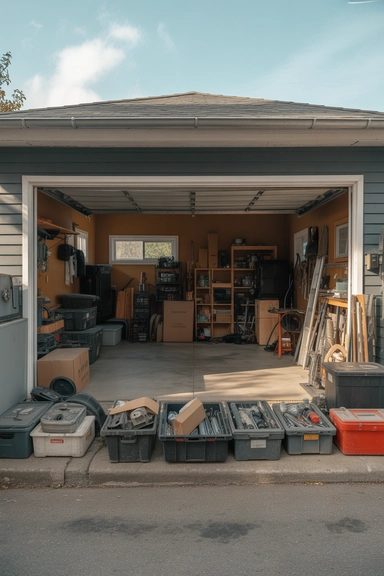
Every garage cleaning attempt that fails does so because people try to clean around the contents rather than removing them first. You cannot sweep, scrub, or organize a space you cannot fully see or access.
Pull everything out onto the driveway before touching a single cleaning product. Group items into categories as you remove them: keep, donate, trash, and not sure. The not sure pile needs a deadline. If you cannot decide within sixty seconds whether something stays, it goes.
I resisted doing this for two years because it felt like too much work for one day. The Saturday I finally emptied everything onto the driveway was the day I realized how much space I actually had. Half the garage floor had been invisible under accumulated junk for three years.
Sweep from Back to Front and Top to Bottom
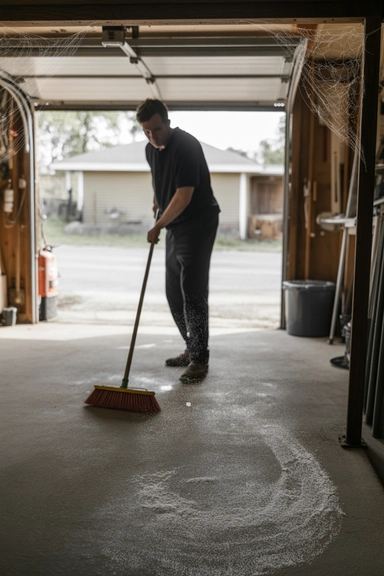
Garage floors collect a specific combination of debris that regular indoor sweeping does not prepare you for. Dried leaves, oil-absorbent granules, sawdust, insulation particles, and general grit all behave differently under a broom and need to come out in the right order.
Start at the back wall and work toward the garage door opening. Sweep walls and shelving first so debris falls to the floor before you address the floor itself. Cobwebs in ceiling corners come down with a long-handled broom before anything on the floor gets touched.
A stiff-bristled push broom handles garage floors better than any indoor broom. The wide head covers more ground per stroke and the stiff bristles move heavy debris that a soft broom would leave behind.
Cat Litter Absorbs Fresh Oil Stains Before They Set
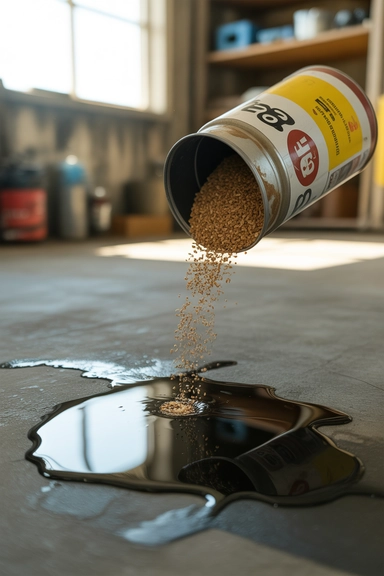
Oil stains on a garage floor look permanent within hours of the spill because oil bonds to concrete at a molecular level as it dries. The window for easy removal is the first thirty minutes after a spill occurs.
Pour clumping cat litter generously over any fresh oil spill and press it down firmly with your foot to maximize contact with the oil. Leave it for fifteen minutes then sweep it away. The absorbent clay pulls the oil up out of the concrete surface before it can bond.
For oil stains that have already dried and set, apply the cat litter on top of a generous pour of dish soap and a small amount of water. The soap breaks the dried oil bond while the cat litter absorbs what lifts. Scrub with a stiff brush and rinse with a hose.
Dish Soap and a Stiff Brush Remove Ground-In Floor Grime

Garage floors accumulate a layer of compacted grime from years of foot traffic, tire marks, and general use that sweeping alone cannot address. This layer needs a scrubbing solution and physical agitation to break it loose.
Squirt dish soap generously across a manageable section of floor, add hot water from a bucket, and scrub with a stiff-bristled deck brush in circular motions. Work in four-foot sections so the soap does not dry before you can rinse it. A garden hose directed toward the garage door opening flushes the loosened grime out efficiently.
For a complete deep cleaning system that covers every surface in and around your home, these Deep Cleaning Hacks That Work in Every Room of Your Home give you a room by room framework that applies as much to garages as to interior spaces.
Trisodium Phosphate Cuts Through the Worst Garage Floor Grease
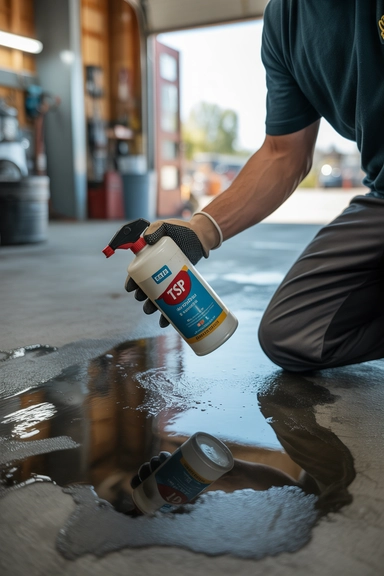
Dish soap handles general grime. Trisodium phosphate, sold as TSP cleaner at hardware stores, handles the heavy industrial grease and embedded oil residue that dish soap cannot touch on seriously neglected garage floors.
Mix TSP according to package directions, apply to the affected floor area, and let it dwell for ten minutes before scrubbing with a stiff brush. Wear rubber gloves and eye protection because TSP is a strong alkaline cleaner that irritates skin and eyes on contact. Rinse thoroughly with a hose.
I used TSP on the section of my garage floor under where an old car had leaked for two years. Three dish soap treatments had done almost nothing. One TSP treatment and a thorough rinse brought the concrete back to a workable surface.
A Pressure Washer Finishes the Floor in Half the Time
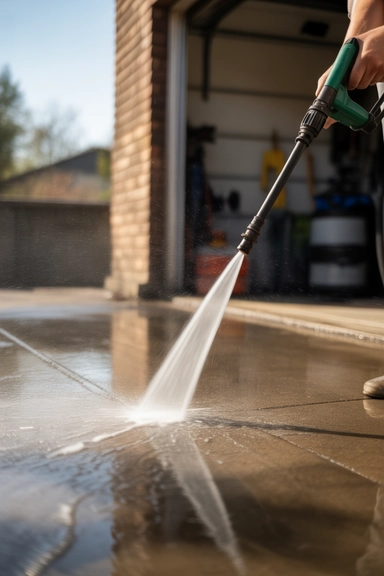
Hand scrubbing a garage floor is effective but slow. A pressure washer covers the same ground in a fraction of the time and the pressurized water gets into the texture of concrete in a way that brush scrubbing cannot match.
Work from the back of the garage toward the door opening so dirty water runs out rather than across already-cleaned sections. Keep the nozzle moving constantly and maintain a consistent distance from the floor surface. Stopping the nozzle in one spot concentrates pressure and can etch concrete if held too long.
Let the floor dry completely before moving any contents back in. Concrete looks dry on the surface long before it is dry internally. A full twenty-four hours of drying time prevents moisture from being trapped under storage items and causing mold underneath.
Garage Walls Need Cleaning Before Organizing Begins
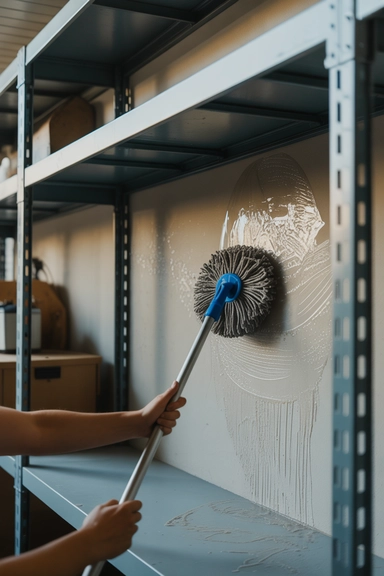
Most people clean garage floors and ignore the walls entirely. Garage walls collect dust, cobwebs, grease mist from power tools, and exhaust residue that falls back onto everything stored against them over time.
Wipe walls down with a solution of dish soap and warm water using a long-handled mop or sponge on an extension pole. Start at the top and work down. Pay particular attention to the wall sections directly above workbenches and tool storage areas where grease and dust concentrate.
Cleaning walls before installing any new shelving or storage systems means the storage goes onto a clean surface rather than trapping existing grime behind it for the next decade.
Wall-Mounted Storage Reclaims the Most Floor Space
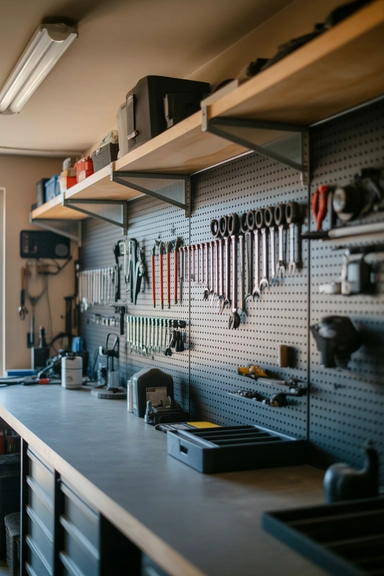
Floor space in a garage is the most valuable real estate in the space because floor space is what allows you to park vehicles and move around comfortably. Everything that can come off the floor and go onto a wall should.
Wall-mounted pegboards, slat wall panels, and heavy-duty shelving brackets all move storage vertical and free up floor area. Tools, garden equipment, sports gear, and seasonal items all store effectively on walls when the right mounting system is in place. For specific garage storage ideas that maximize every inch of wall and ceiling space, these Smart Garage Organizing Ideas That Actually Work cover every system worth considering.
Install shelving at a height that allows items to be retrieved without a ladder for frequently used things and reserve higher wall space for seasonal items accessed only a few times per year.
Label Everything Before Putting It Back
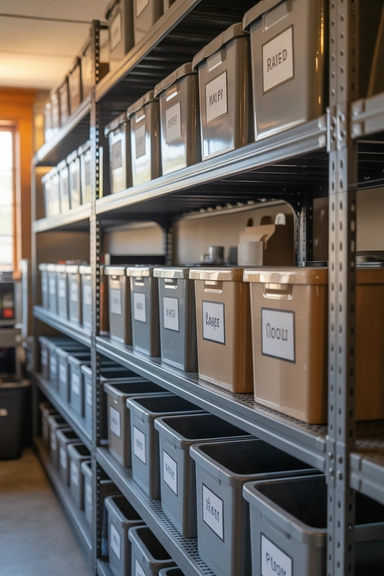
Returning items to the garage without labeling storage containers is how garages become disorganized again within three months of a full cleanout. If you cannot identify the contents of a box without opening it, you will open every box every time you need something.
Use a label maker or permanent marker on every container, bin, and shelf section before anything goes back into the garage. Label the front and the top of bins so contents are identifiable from both above and in front when shelves are full.
Clear bins eliminate the labeling problem entirely for frequently accessed items because the contents are visible without reading anything. Reserve opaque bins for seasonal and rarely accessed items where labels are the only identification.
Ceiling Storage Handles Seasonal Items Nobody Needs Daily
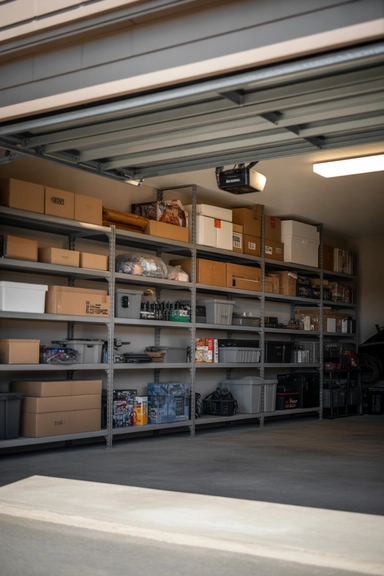
Garage ceilings are almost always wasted space. The area between the ceiling joists and above the car hood height is usable storage for holiday decorations, camping equipment, and seasonal sports gear that gets accessed only a few times per year.
Ceiling-mounted storage platforms made from plywood and joist hangers cost under forty dollars in materials and take an afternoon to build. Overhead storage racks designed for garage ceilings are a commercially available alternative that installs in a few hours with basic tools.
Keep heavy items off ceiling storage regardless of how solid the mounting feels. Ceiling storage is ideal for lightweight bulky items like sleeping bags, holiday wreaths, and inflatable pool toys that take up disproportionate floor space relative to their weight.
Rubber Floor Mats Protect Cleaned Concrete Long Term
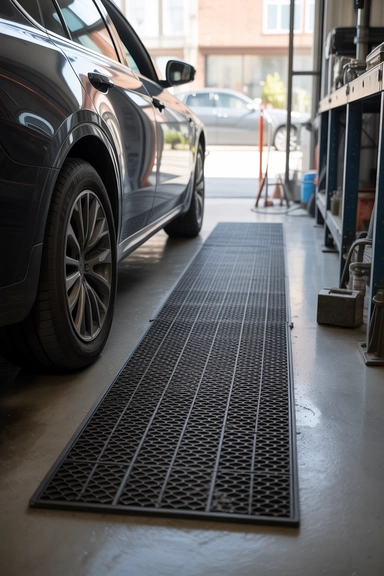
A freshly cleaned and sealed garage floor stays cleaner and is easier to maintain when rubber floor mats or interlocking floor tiles cover the areas that receive the heaviest use.
Place mats under the vehicle parking areas where oil drips, tire marks, and road grime land. Add mats in the workshop area where tool use, spills, and foot traffic concentrate. The mats take the abuse and can be pulled out and hosed down independently rather than requiring the full floor to be scrubbed.
Interlocking rubber tiles cover large areas affordably and lift individually when a section needs cleaning or replacing. The floor underneath stays protected and the tile surface is far easier to clean than bare concrete.
Rust Remover Restores Metal Shelving and Tool Surfaces
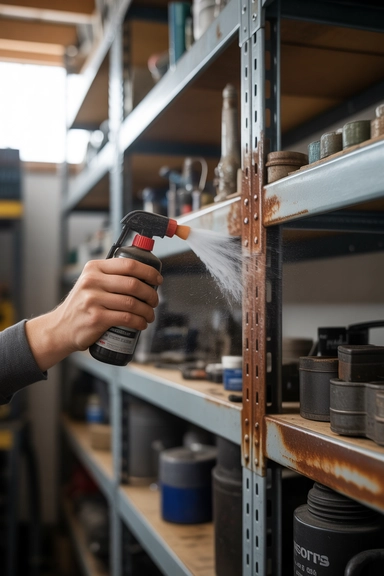
Garage metal surfaces rust faster than indoor metal because garages experience humidity fluctuations, temperature swings, and exposure to road salt tracked in on tires and boots during winter months.
Apply a phosphoric acid based rust remover to affected metal surfaces and let it dwell according to product directions. The phosphoric acid converts rust into a stable iron phosphate compound rather than just removing it, which slows re-rusting significantly compared to simply scrubbing rust off mechanically.
Wipe away the treated rust, dry the surface completely, and apply a light coat of WD-40 or machine oil to bare metal surfaces before storing them. The oil layer creates a barrier against moisture that prevents rust from returning immediately.
Vinegar Removes Hard Water Stains from Garage Windows
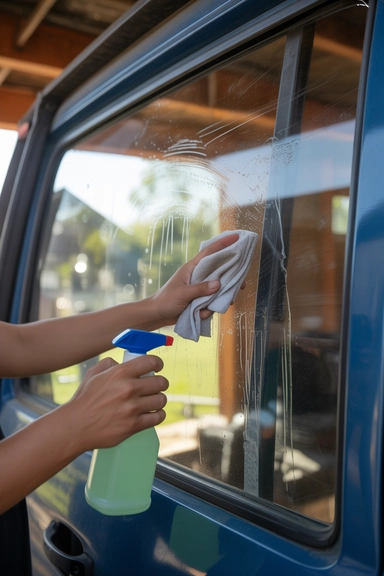
Garage windows are often the last thing anyone thinks about cleaning and the first thing that makes a garage feel dingy even after everything else has been addressed. Hard water spots and grime on garage windows block natural light and make the space feel darker and smaller.
Spray undiluted white vinegar onto the glass and let it sit for three minutes to dissolve mineral deposits. Wipe with a microfiber cloth in a top to bottom S-stroke and follow with a rubbing alcohol wipe to eliminate streaking. Clean garage windows genuinely change how the space feels during daylight hours.
Clean the window tracks at the same time using a toothbrush dipped in undiluted vinegar. Garage window tracks collect grit and debris that prevents smooth opening and traps moisture against the frame.
Pest Prevention Belongs in Every Garage Cleaning Session
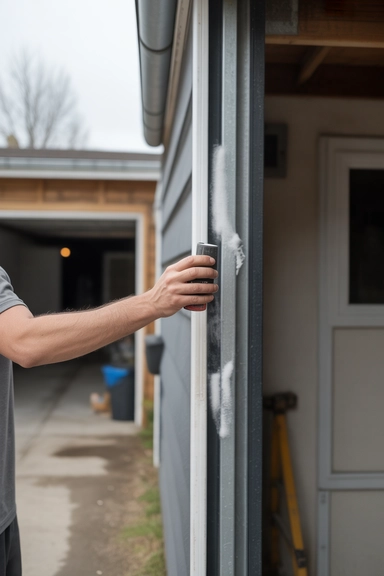
Garages are entry points for rodents, insects, and spiders because gaps around doors, utility penetrations, and foundation cracks all provide access. A garage cleaning session is the best time to address pest prevention because the space is already empty and every corner is visible.
Seal gaps around garage door frames with weatherstripping and fill larger penetrations with expanding foam before putting anything back. Place peppermint oil cotton balls in corners and along the wall base perimeter. The scent disrupts insect navigation trails and deters rodents from establishing pathways along the walls.
Check the garage door seal along the floor for gaps or damage. A damaged door seal allows both pests and weather into the garage and is one of the most cost-effective repairs in any garage improvement project.
A Monthly Five Minute Sweep Keeps the Garage Clean Long Term
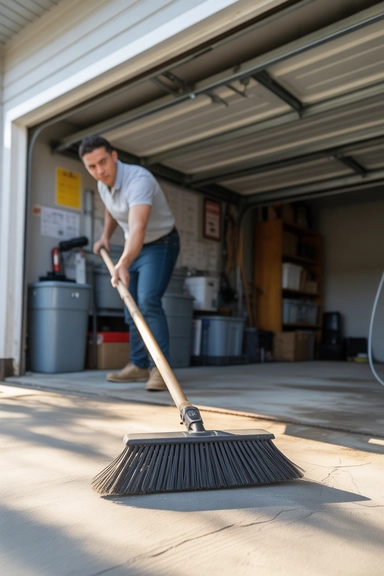
A fully cleaned and organized garage stays that way only if maintenance happens before disorder accumulates back to the starting point. Monthly prevention takes five minutes. Waiting until it becomes a problem again costs an entire weekend.
Sweep the floor, check that items are in their labeled storage positions, wipe down the workbench surface, and empty any trash that has collected near the door. These four tasks done monthly prevent the six-month drift back toward chaos that undoes a full garage cleanout.
The garage is the room most people treat as a consequence-free dumping ground for things they cannot decide about. Every item that enters the garage without a designated storage location is the beginning of the next full cleanout.
Final Thoughts on Garage Cleaning Hacks
Garage cleaning hacks work best when they follow a sequence: empty first, clean top to bottom, address the floor last, organize before returning contents, and maintain monthly. Skipping the empty step or the sequence makes every individual hack less effective because you are working around obstacles rather than addressing the space itself.
The floor is where most garage cleaning effort goes and where most effort gets wasted by using the wrong product for the wrong type of staining. Match the cleaning method to the soil type using the comparison in this list and you will get results in one session that years of generic cleaning never delivered.
A clean organized garage is not a weekend project you do once. It is a system you build once and maintain in five minutes a month. The weekend is the investment. The monthly sweep is what protects it.
FAQ About Garage Cleaning Hacks
What is the fastest way to clean a garage floor without a pressure washer?
Divide the floor into four-foot sections and work through each section with dish soap, hot water, and a stiff deck brush before moving to the next. Rinsing each section with a garden hose immediately after scrubbing prevents soap from drying onto the surface and leaving a residue that attracts new dirt faster than bare concrete. Working in sections rather than attempting the whole floor at once keeps the process manageable and produces better results than spreading effort thinly across the full area at once.
How do you get rid of the musty smell in a garage after cleaning?
Musty garage odors come from mold growing in wall cavities, under floor mats, and in stored cardboard boxes rather than from surface dirt. After cleaning, place open boxes of baking soda in corners and run a fan continuously for forty-eight hours to dry the space thoroughly. Remove any cardboard storage boxes because cardboard absorbs moisture and grows mold internally even when the exterior looks fine. Plastic bins with lids replace cardboard for all garage storage and eliminate the primary source of musty odor in most garages.
How long does a full garage cleanout and deep clean realistically take?
A two-car garage that has accumulated several years of clutter takes a full weekend for one person working consistently. Day one covers emptying, sorting, and decision-making on contents. Day two covers cleaning the empty space and returning only what belongs there in an organized system. Attempting to do both in one day consistently results in rushing the organization phase and returning to disorder within weeks because the storage system was not properly established.
Sarah Mitchell’s Take
The thing about a garage cleanout that nobody warns you about is the decision fatigue. Cleaning is physical. Deciding what stays and what goes is mental and it is exhausting in a completely different way. By hour three of pulling things off shelves I was making keep decisions on things I should have thrown away just to stop thinking about them. The system that saved me was the sixty second rule. If I could not decide in sixty seconds it went in the donate pile. Harsh but the garage has stayed clean for fourteen months since I used it.