
Introduction
Two years of ignoring the grout in my kitchen floor turned what was originally a warm cream color into something closer to charcoal gray. I scrubbed it once with a generic bathroom spray and a sponge, got nowhere, and convinced myself the grout had permanently stained. It had not. After testing every method I could find across my kitchen floor, bathroom shower, and laundry room tiles, I found fifteen approaches that actually pull grout back from what looks like permanent damage. If you want a broader cleaning system that works on every surface beyond grout, these Baking Soda Cleaning Hacks That Save Money and Scrub Smarter pair well with everything in this list.
Baking Soda Paste Is the Starting Point for Every Grout Job
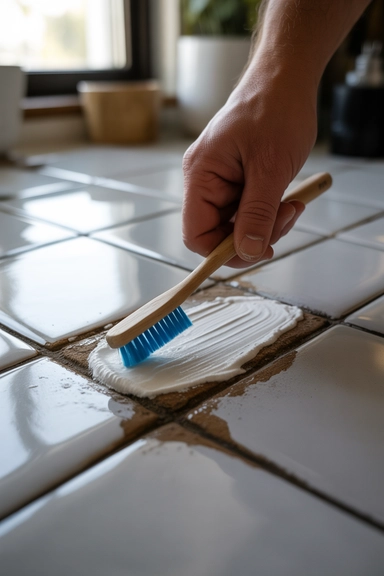
Before reaching for anything stronger, baking soda paste deserves the first attempt on dirty grout. It handles light to moderate staining without any risk of damaging the grout surface or the surrounding tile.
Mix two parts baking soda with one part water to form a thick paste. Press it directly into the grout lines with an old toothbrush and let it sit for ten minutes before scrubbing. The mild alkaline abrasion lifts surface staining without the chemical harshness that eats into grout sealant over time.
I use this as my starting point on every grout cleaning job regardless of how bad the staining looks. Sometimes it handles more than expected. When it does not, it still loosens the surface layer before I move to stronger methods, which makes everything that follows work faster.
Hydrogen Peroxide Bleaches Grout Without Damaging It
Chlorine bleach is the instinct most people reach for on discolored grout. It works but it also degrades grout sealant with repeated use and makes the grout more porous, which means it stains faster and deeper after every bleach treatment.
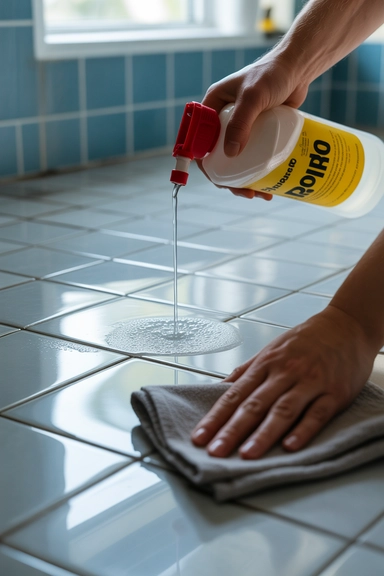
Three percent hydrogen peroxide, the standard brown bottle from any pharmacy, bleaches grout through oxidation rather than chemical corrosion. Apply it directly to the grout lines with a spray bottle or cotton ball, let it sit for fifteen minutes, then scrub and rinse.
On my bathroom shower grout, hydrogen peroxide alone lightened moderate staining by about sixty percent in one treatment. Combined with the baking soda paste method first, the result was closer to eighty percent improvement without touching a drop of bleach.
An Electric Toothbrush Changes How Hard You Work
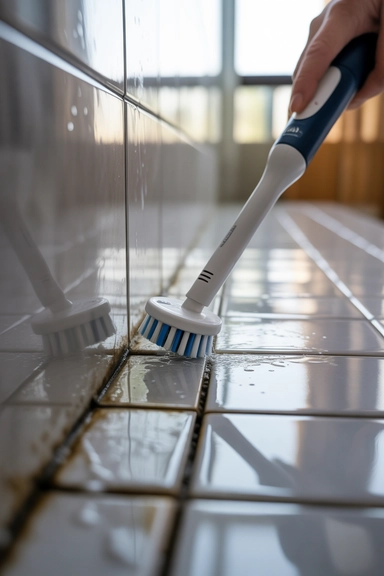
The single biggest physical limitation in grout cleaning is scrubbing pressure and endurance. Grout lines are narrow, the toothbrush handle is small, and scrubbing a full floor or shower by hand leaves your wrist aching before the job is half finished.
An electric toothbrush does the oscillating work for you. Apply your chosen cleaning paste to the grout lines first, then run the electric toothbrush along the lines at low speed. The rapid oscillation cleans faster and more consistently than manual scrubbing and reaches into the texture of porous grout better than a stiff-bristled hand brush.
I switched to an old electric toothbrush for grout cleaning three years ago and cut my shower grout cleaning time from forty minutes to eighteen. The result was also more consistent because the oscillation pressure stayed constant across the entire job.
Oxygen Bleach Powder Cleans Large Floor Areas Without Scrubbing
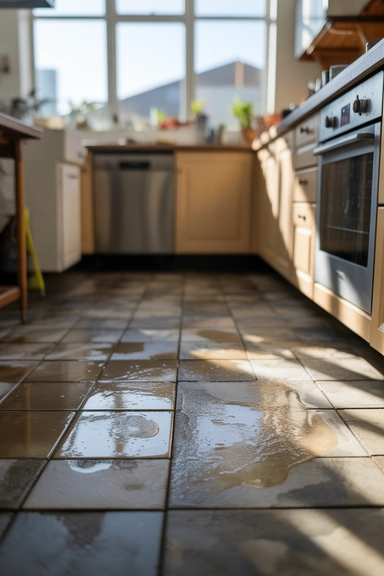
Oxygen bleach powder, sold under names like OxiClean, dissolves in hot water and releases oxygen that breaks down organic staining in grout without requiring aggressive manual scrubbing. This makes it the most practical method for large tiled floor areas where scrubbing every line by hand is genuinely unrealistic.
Mix oxygen bleach powder with hot water according to package directions and pour it across the tile floor. Let it sit for thirty minutes, keeping it wet by adding more solution if it starts to dry. The oxygen release works into the grout during the dwell time. Mop away the solution and rinse with clean water.
My kitchen floor has about forty square feet of tile. Scrubbing it line by line took me two hours. The oxygen bleach soak handled the same floor in thirty minutes of dwell time plus fifteen minutes of mopping.
White Vinegar Works on Ceramic Tile Grout Only
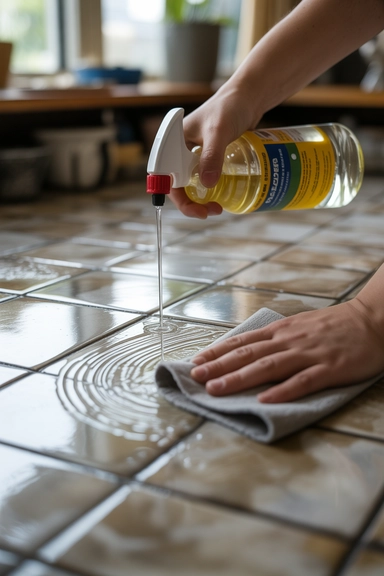
White vinegar dissolves mineral deposits in grout and lightens surface staining through its acetic acid content. It is cheap, effective on the right surfaces, and genuinely useful for bathroom and kitchen grout maintenance cleaning.
The critical limitation is surface type. Never use white vinegar on grout surrounding natural stone tile. The acid etches marble, travertine, limestone, and slate permanently and the damage is irreversible. On ceramic and porcelain tile only, spray undiluted white vinegar onto grout lines, let it sit for five minutes, scrub with a toothbrush, and rinse thoroughly.
I learned this limitation the hard way on a small section of travertine tile in my entryway. The vinegar left dull etched patches on the stone surface that no amount of polishing recovered. Ceramic and porcelain only from that point forward.
Steam Cleaning Penetrates Porous Grout Without Chemicals
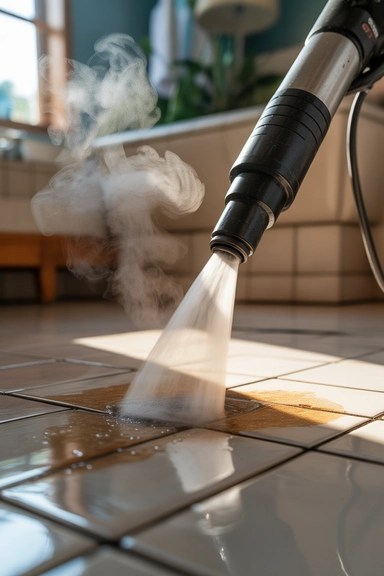
Steam cleaners produce temperatures above 100 degrees Celsius at the nozzle, which kills bacteria and mold spores living inside porous grout while the pressure physically drives the steam into the grout surface rather than just heating the top layer.
Move the steam nozzle slowly along each grout line, spending two to three seconds per inch. Speed is the enemy of steam cleaning because moving too fast only heats the surface without penetrating the porous interior where bacteria and mold actually live.
For a complete room by room deep cleaning approach that covers every surface beyond grout, these Deep Cleaning Hacks That Work in Every Room of Your Home give you a full system worth following alongside these methods.
Clove Oil Stops Grout Mold from Coming Back
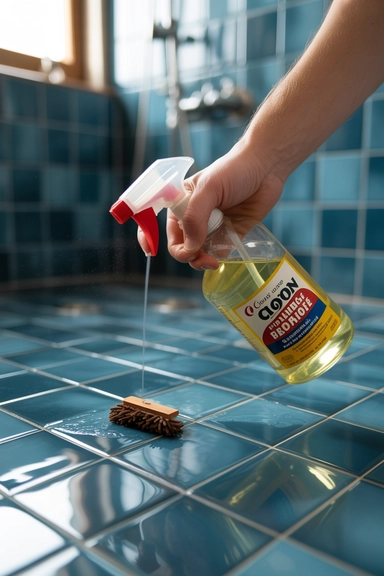
Cleaning visible mold from grout is straightforward. Keeping it from returning within two weeks is the actual problem. Most cleaning products kill surface mold but leave spores embedded in the porous grout that regrow almost immediately in the warm moist bathroom environment.
Clove essential oil contains eugenol, a compound that research has shown inhibits mold spore germination rather than just killing surface growth. Mix one teaspoon of clove oil with one liter of water and spray it onto clean grout lines after any mold cleaning session. Leave it without rinsing.
I treated my shower grout with clove oil after a hydrogen peroxide cleaning session and the mold stayed away for six weeks. My previous record using bleach alone was twelve days before visible regrowth appeared.
Cream of Tartar Removes Rust Staining from Grout
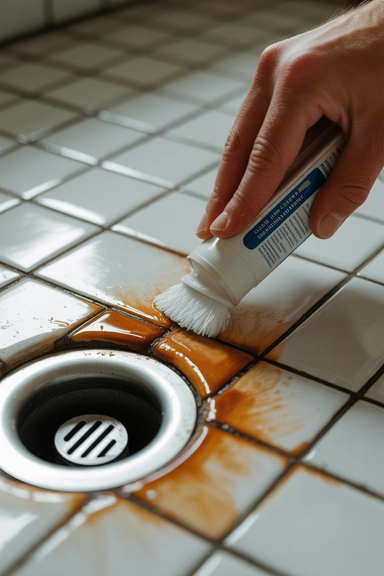
Orange-brown rust staining in grout near metal fixtures, drain covers, and shower hardware looks permanent because regular cleaners have no effect on iron oxide compounds. Cream of tartar contains tartaric acid, which dissolves rust specifically.
Mix cream of tartar with lemon juice to form a paste and apply it directly to rust-stained grout. Leave it for fifteen minutes then scrub and rinse. The tartaric acid breaks down the iron oxide and lifts the orange staining from the grout surface in one or two treatments.
This is one of those solutions that sounds too simple to work until you watch orange grout lines turn back to their original color in front of you. I used it on the grout around my shower drain after years of rust staining from the metal cover and the result was immediate and dramatic.
Grout Sealer After Cleaning Locks the Result In
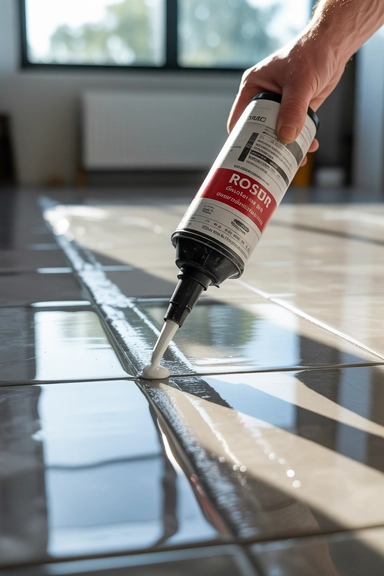
Cleaning grout and not sealing it afterward is the most common mistake people make. Clean grout is more porous than stained grout because the cleaning process removes the compacted debris that was partially blocking the pores. Unsealed clean grout restains faster than it did before you cleaned it.
Apply a penetrating grout sealer with a small brush or applicator bottle along every grout line after the grout has dried completely following any cleaning session. Let the sealer cure for the time specified on the product directions before exposing it to water.
| Grout Problem | Best Method | Contact Time | Safe On Stone |
|---|---|---|---|
| General discoloration | Baking soda paste | 10 minutes | Yes |
| Deep staining | Oxygen bleach powder | 30 minutes | No |
| Mold | Hydrogen peroxide | 15 minutes | Yes |
| Rust staining | Cream of tartar paste | 15 minutes | Yes |
| Mineral deposits | White vinegar | 5 minutes | No |
| Mold prevention | Clove oil spray | No rinse | Yes |
Toothpaste Brightens Individual Stained Grout Sections
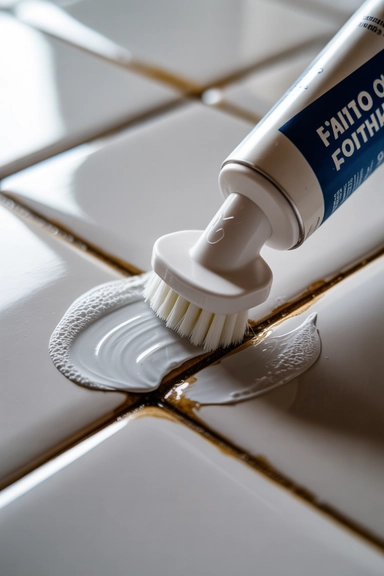
White non-gel toothpaste is a mild abrasive that polishes grout the same way it polishes tooth enamel. For isolated heavily stained sections where a full floor treatment is unnecessary, toothpaste applied with an old toothbrush handles the job without mixing any cleaning solution.
Apply a generous amount directly to the stained section and scrub in short strokes along the grout line rather than across it. Scrubbing across grout lines wastes effort on the tile surface rather than concentrating on the narrow channel where the staining lives.
This works best as a spot treatment rather than a whole floor solution. The quantity of toothpaste required for a full floor makes it impractical, but for a single stained section near a doorway or under a counter it is the fastest grab-and-go method available.
Dish Soap and Hot Water Maintain Clean Grout Weekly
Once grout has been properly cleaned and sealed, weekly maintenance with dish soap and hot water prevents staining from building up to a level that requires deep cleaning again. Prevention at this stage costs almost nothing in time or money.
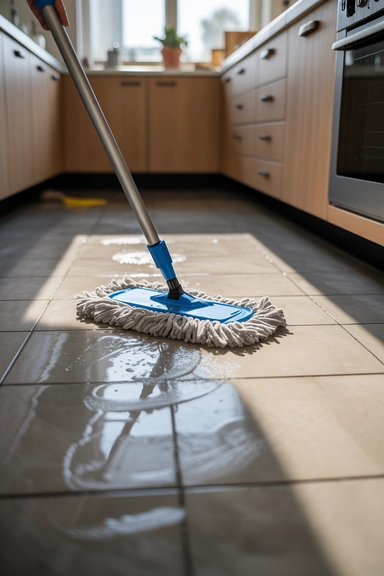
Add two teaspoons of dish soap to a bucket of the hottest tap water available and mop tile floors normally. The hot water opens the grout surface slightly and the dish soap surfactants lift any fresh soil before it can bond. Rinse with clean water to prevent soap residue from attracting new dirt.
This weekly habit is what separates homes where grout stays clean for years from homes where grout needs deep cleaning every few months. The deep clean removes the damage. The weekly habit prevents it from returning.
Lemon Juice Brightens Light Grout Between Deep Cleans
Lemon juice is citric acid at a lower concentration than white vinegar, which makes it gentler on grout sealant while still providing enough acidity to dissolve light mineral deposits and brighten surface staining between deep cleaning sessions.
Squeeze fresh lemon juice directly onto grout lines, let it sit for three minutes, then scrub lightly and rinse. The brightening effect is subtle compared to hydrogen peroxide but it is safe for use on sealed grout every two weeks without degrading the sealant the way stronger acids would.
I use lemon juice on my kitchen floor grout every two weeks as a maintenance step between monthly baking soda treatments. The grout has stayed at a consistent light color for eight months without needing a full deep clean in that time.
A Grout Pen Covers What Cleaning Cannot Fix
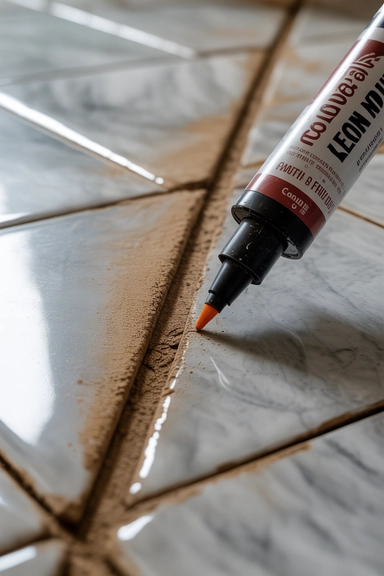
Some grout staining goes deep enough that cleaning improves it without fully restoring the original color. Grout that has been neglected for years, grout in rental properties with unknown histories, and grout that was never sealed can fall into this category.
A grout pen filled with grout colorant covers residual staining and restores the appearance of clean grout without replacing it. Apply it along the grout lines after cleaning and let it dry completely before exposing it to water. The colorant bonds to the grout surface and resists light cleaning.
This is not a cleaning solution. It is a cosmetic restoration tool for situations where cleaning alone cannot achieve the result you need. Used after proper cleaning and sealing it produces results that look like fresh grout installation.
Nail Polish Remover Tackles Adhesive and Paint on Grout
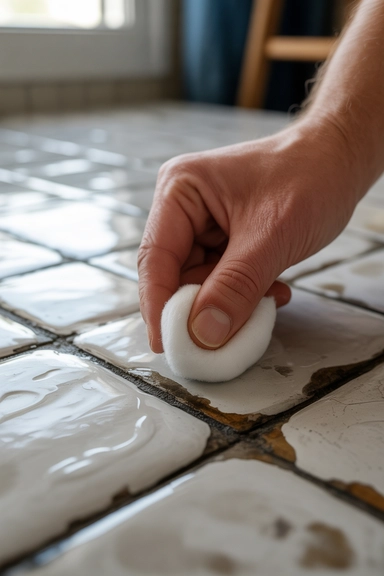
Renovation adhesive, paint drips, and caulk residue on grout do not respond to any cleaning method because they are not soil. They are bonded substances that require a solvent rather than a cleaner.
Apply acetone nail polish remover to a cotton ball and press it against the adhesive or paint residue for thirty seconds. The acetone softens the bond and allows the residue to be lifted away with a plastic scraper or old toothbrush. Work in a ventilated area because acetone fumes are strong in enclosed spaces.
Test on a hidden grout section first. Acetone is safe on ceramic and porcelain tile grout but can affect certain epoxy grout formulations and should not be used on colored grout without testing the colorfastness first.
Regrouting Is the Final Option When Nothing Else Works
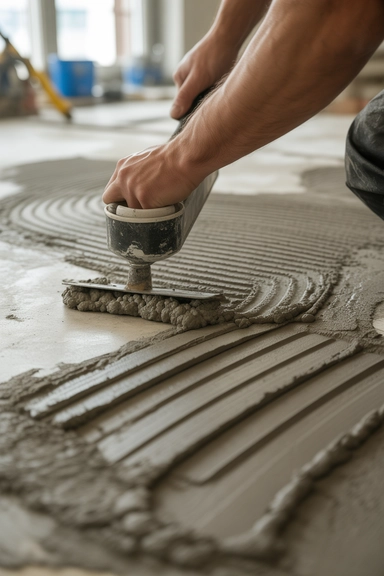
Every grout cleaning method has a limit. Grout that has physically crumbled, grout with deep structural cracking, and grout with mold penetration so deep that surface treatment cannot reach it needs replacement rather than cleaning.
Regrouting a small section is a DIY job that costs under twenty dollars in materials and takes an afternoon. Remove the damaged grout with a grout saw or oscillating tool, clean the joints thoroughly, apply fresh grout with a float, let it cure for the specified time, and seal it immediately.
Fresh grout sealed on the same day is the most stain-resistant grout surface possible. Starting with a sealed joint and maintaining it weekly puts you in a position where none of the deeper cleaning methods on this list ever become necessary.
Final Thoughts on Grout Cleaning Hacks
Grout cleaning hacks work in a sequence rather than in isolation. Baking soda paste first, then hydrogen peroxide for staining, then oxygen bleach for large areas, then clove oil for mold prevention, then sealer to lock the result in. Skipping steps or jumping straight to the strongest method wastes effort and risks damaging grout sealant unnecessarily.
The single most valuable thing you can do after any grout cleaning session is seal the grout before it gets dirty again. Clean unsealed grout restains within weeks. Clean sealed grout stays clean for months with basic weekly maintenance.
Pick the method that matches your specific grout problem from the comparison table in this list and work through the sequence from gentle to aggressive. Most grout that looks permanently ruined is not.
FAQ About Grout Cleaning Hacks
How do you clean grout without scrubbing on hands and knees for hours?
Oxygen bleach powder dissolved in hot water and poured across the floor handles large tiled areas without manual scrubbing. Let it dwell for thirty minutes while you do something else, then mop it away. An electric toothbrush cuts the scrubbing effort on smaller areas like shower walls and backsplashes by doing the oscillating work automatically. Combining dwell time with the right tool eliminates most of the physical labor from grout cleaning.
What is the fastest way to clean grout in a shower versus a floor?
Shower grout responds fastest to hydrogen peroxide spray left for fifteen minutes followed by electric toothbrush scrubbing because shower grout staining is primarily mold and soap scum. Floor grout staining is primarily tracked-in soil and food residue, which responds better to oxygen bleach powder soaks that penetrate horizontally into the grout surface. The surface orientation changes which method works fastest because gravity affects how cleaning solutions interact with the grout.
How often should you reseal grout to keep it stain resistant?
High traffic areas like kitchen floors and shower walls need resealing every twelve months. Lower traffic areas like bathroom floor grout away from the shower need sealing every eighteen to twenty-four months. The simple test is to drop a few water droplets onto the grout surface. If the water beads up the sealant is still working. If the water absorbs into the grout within thirty seconds the sealant has worn through and resealing is overdue.
Sarah Mitchell’s Take
The grout in my kitchen floor is the cleaning job I am most proud of in this house and also the one that took the longest to get right. Two years of buildup did not come out in one session. It took three separate treatments over three weekends, a lot of patience with dwell times, and finally sealing it properly at the end. The before and after difference looked like someone had replaced the floor. Nobody replaced anything. The grout was always that color underneath. It just took the right sequence of methods and enough time to let them work.