
Introduction
I thought my kitchen floor was clean until I mopped it with plain water after a proper deep clean and watched the water turn brown within two passes. The mop had been moving a thin layer of grease and debris around for months without ever actually lifting it. That is what kitchen floors do. They look acceptable right up until the moment you clean them properly and realize they were not. These kitchen floor cleaning hacks go after the buildup that regular mopping leaves behind. If your fridge area needs the same treatment, kitchen fridge cleaning hacks tackles that space directly.
Sweep Before You Do Anything Else
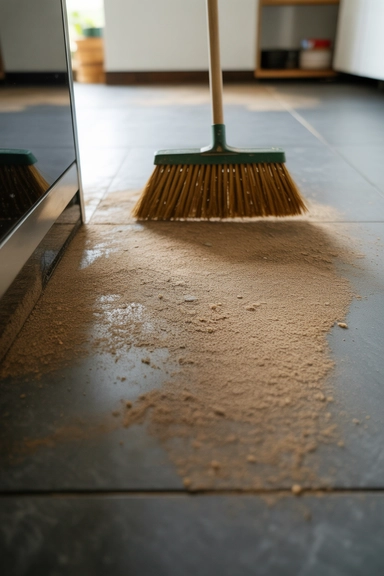
Mopping a floor with loose debris on it pushes that debris into the grout lines and corners rather than removing it. Every mop stroke on an unswept floor makes the grout dirtier and the corners worse.
Sweep or vacuum the entire floor before any wet cleaning starts. Get into the corners with the broom rather than sweeping toward them and stopping short. Debris sitting in corners does not mop out easily once wet.
This takes three minutes. Skipping it adds twenty minutes of work at the end when grout lines need scrubbing that would have been unnecessary on a swept floor.
Hot Water Works Harder Than Cold
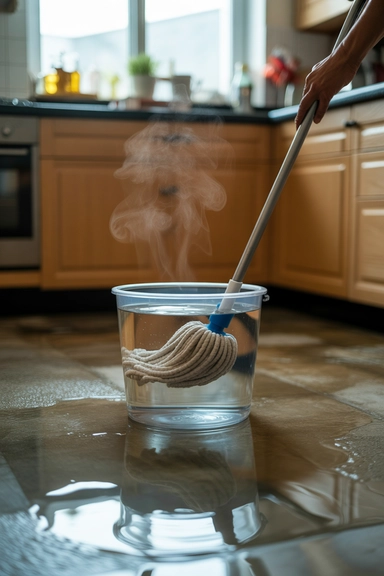
Cold water does not dissolve grease. Kitchen floors near the stove and sink accumulate a thin layer of cooking grease and food fat that cold water mop sessions redistribute without removing. The floor looks mopped. The grease is still there.
Use the hottest tap water available for kitchen floor mopping. The heat softens grease and allows the cleaning solution to penetrate rather than slide across the surface on top of the fat layer.
Change the mop water when it turns visibly grey or brown. Mopping with dirty water deposits a thin layer of diluted grime back onto the floor with every pass.
Dish Soap in the Mop Bucket Cuts Grease
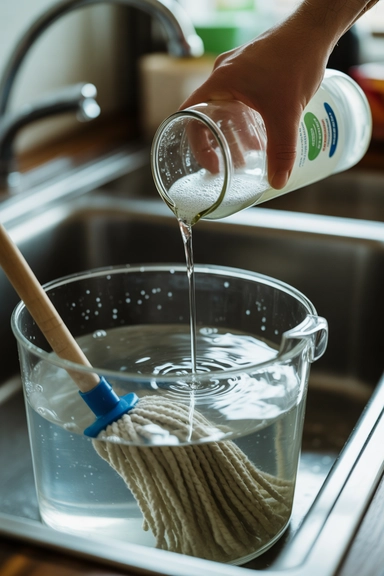
Plain water and most floor cleaners do not contain enough surfactant to cut kitchen grease properly. Dish soap is specifically formulated to break down fat. A small amount in the mop bucket changes what the mop actually lifts off the floor.
Add one tablespoon of dish soap to a bucket of hot water. That is enough. More soap does not clean better and excess soap leaves a residue that makes the floor feel sticky after drying, which then attracts new debris faster.
One tablespoon. Hot water. That combination handles kitchen floor grease better than most dedicated floor cleaning products at a fraction of the cost.
Grout Lines Need a Brush Not a Mop
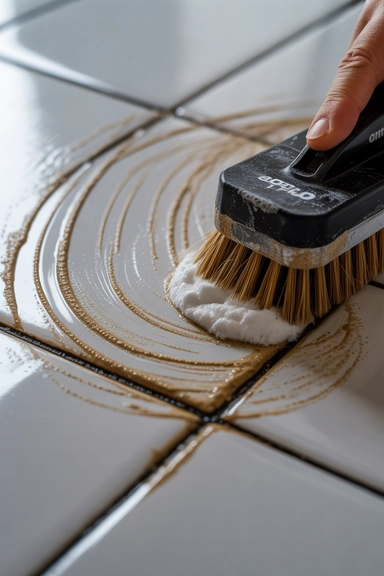
A mop head passes over grout lines without entering them. The grease, food particles, and bacteria living inside grout lines sit there untouched through every mop session and accumulate into the dark discoloration most people assume is permanent staining.
Mix baking soda with enough water to form a paste. Apply it along the grout lines in the cooking zone near the stove and sink. Leave it five minutes. Scrub with a stiff brush pressing the bristles directly into the grout lines rather than across them.
Rinse with hot water and mop the area after. The grout color after one proper scrub session is often dramatically different from what it looked like before. Not stained permanently. Just never properly cleaned.
The Corners Every Mop Misses
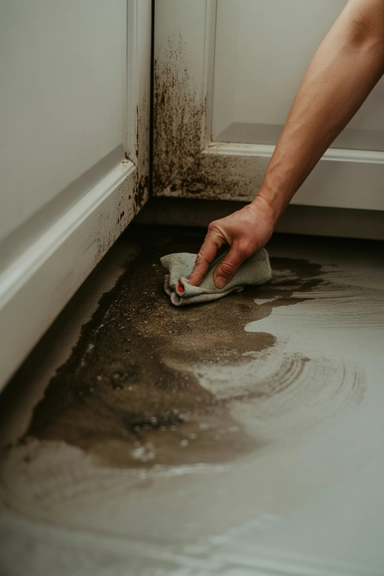
Mop heads do not fit into floor corners. The debris and grease that accumulate there receive essentially no attention from regular mopping and build up continuously. In a kitchen those corners also collect cooking grease from the air which makes the buildup sticky rather than just dusty.
Get on your hands and knees with a damp cloth or a small scrub brush for the corners. Apply dish soap solution directly to the corner area and work the cloth or brush into the full depth of the corner. Rinse with a damp cloth and dry.
Do this once a month. Corners that get this attention monthly never reach the level of buildup that requires serious scrubbing.
Under the Appliances Is Its Own Problem
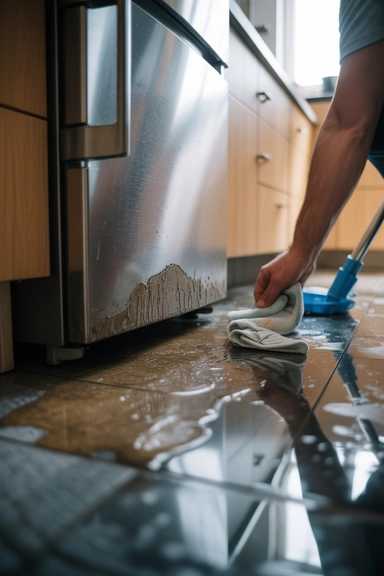
The floor under the refrigerator, stove, and dishwasher collects years of debris in some homes without ever being cleaned. Grease, dust, food particles, and moisture build into a layer that produces odor and in some cases mold growth that nobody can locate because nobody looks there.
Pull appliances out completely at least every three months. Sweep the exposed floor section first, then mop with hot dish soap water. Pay particular attention to the area directly under where each appliance sits because that spot gets zero airflow and stays damp longer than surrounding areas.
The amount of debris that comes out from under a refrigerator that has not been moved in two years is genuinely surprising. Do it once and you will not wait two years again.
Tile Floors and the Grease Film on the Surface
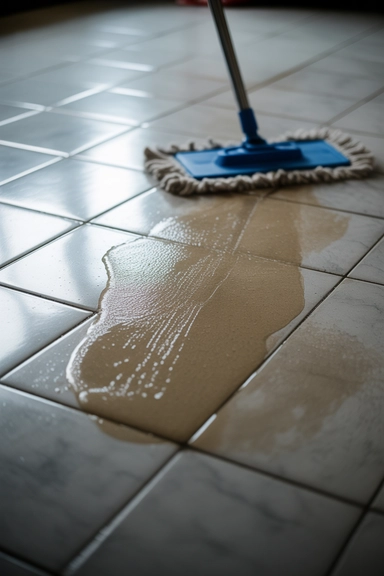
Ceramic and porcelain tile in a kitchen develops a thin grease film from cooking vapors that settle on every horizontal surface including the floor. That film is not visible as grease but it makes the floor look dull and feel slightly tacky even after mopping.
Add half a cup of white vinegar to the hot dish soap mop water. The vinegar cuts through the grease film that dish soap alone leaves slightly behind on tile surfaces. Mop with the combined solution and the floor dries with a noticeably cleaner finish.
Do not use vinegar on natural stone tile. The acid etches the surface permanently on marble, travertine, and limestone floors regardless of how diluted it is.
Hardwood Kitchen Floors Need Less Water
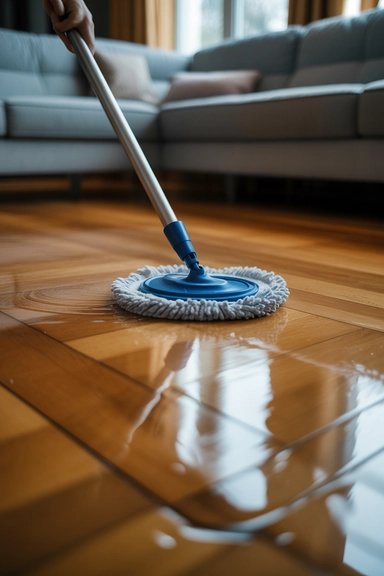
Excess water warps hardwood floors and gets into the seams between boards where it causes the wood to swell and eventually buckle. Most people who damage their hardwood floors with mopping use too much water, not the wrong cleaning product.
Wring the mop until it is barely damp before touching a hardwood floor. The mop should feel damp when pressed against your hand, not wet enough to leave standing water. Dry the floor immediately after mopping with a dry cloth or towel rather than letting it air dry.
Use a hardwood-specific cleaner like Bona rather than dish soap or vinegar on sealed hardwood. Both dish soap and vinegar degrade the finish on hardwood floors over time with repeated use.
Vinyl and Laminate Floors Have Seams That Trap Debris
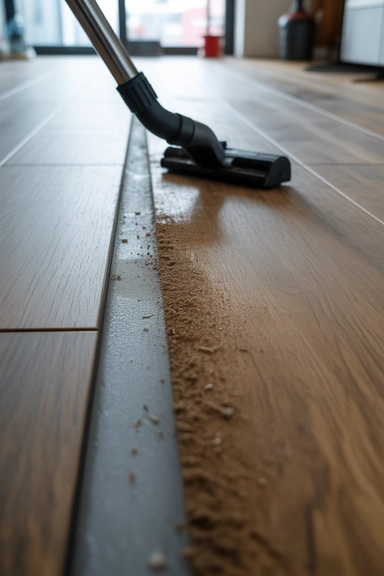
Vinyl plank and laminate flooring have seams between each plank where liquid and debris collect continuously. Those seams develop a dark line over time that looks like permanent discoloration but is usually just compacted debris and dried liquid.
Dry sweep or vacuum those seams before wet cleaning. A vacuum with a hard floor setting pulls debris out of seams better than a broom pushes it. After sweeping, mop with a barely damp mop because excess water in laminate seams causes the same swelling problem as on hardwood.
For debris already compacted into seams, a toothpick or the corner of a damp cloth pressed into the seam removes what suction cannot.
Kitchen Floor Cleaning by Floor Type
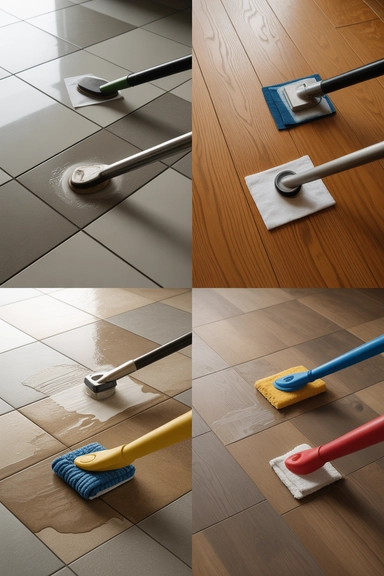
| Floor Type | Best Cleaner | Water Amount | Avoid |
|---|---|---|---|
| Ceramic tile | Dish soap and vinegar in hot water | Normal mop | Abrasive scrubbers on glaze |
| Natural stone | pH neutral cleaner only | Normal mop | Vinegar, any acid |
| Hardwood | Hardwood specific cleaner | Barely damp mop | Excess water, vinegar, dish soap |
| Vinyl plank | Dish soap in hot water | Barely damp mop | Excess water in seams |
| Laminate | Laminate specific cleaner | Barely damp mop | Steam mops, standing water |
Wrong cleaner on the wrong floor type creates surface damage that makes the floor harder to clean permanently. Match the method to the material first.
The Area in Front of the Stove
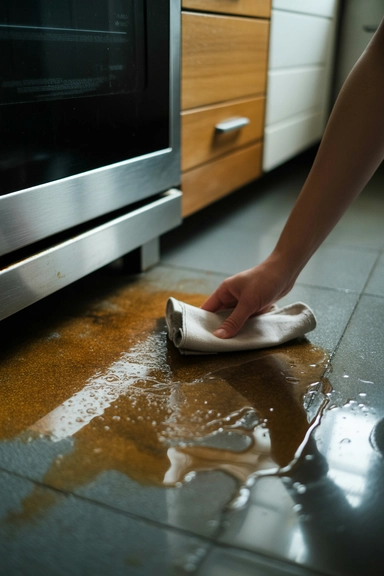
The floor directly in front of the stove receives more grease splatter than any other section of the kitchen floor. Oils and fats from frying and sautéing land there during every cooking session and get walked into the surface by foot traffic before they can be wiped up.
Wipe the floor in front of the stove with a damp cloth after every cooking session while the grease is still fresh. Fresh grease on a kitchen floor takes seconds to remove. Grease that has been walked into the surface repeatedly and dried takes baking soda paste and real scrubbing to lift.
A silicone mat in front of the stove catches splatter and protects the floor underneath. Wash the mat weekly in the sink. Far easier than scrubbing the floor itself.
Baking Soda for Stubborn Floor Stains
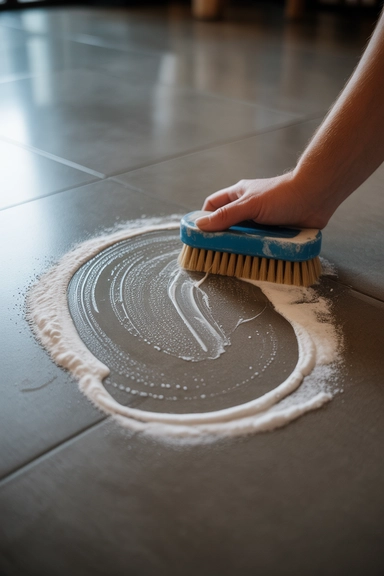
Grease stains that have been on a kitchen floor long enough to partially bond to the surface do not lift with a mop pass. They need something to break the bond rather than just dissolve the surface layer.
Sprinkle dry baking soda directly onto the stain. Add a few drops of dish soap on top of the baking soda. Leave the combination for five minutes. Scrub with a stiff brush using straight strokes rather than circular ones. Rinse with hot water and mop the area.
This method works on tile, vinyl, and sealed hardwood stains without damaging any of those surfaces when applied with a brush rather than an abrasive pad.
Steam Mops and Where They Actually Help
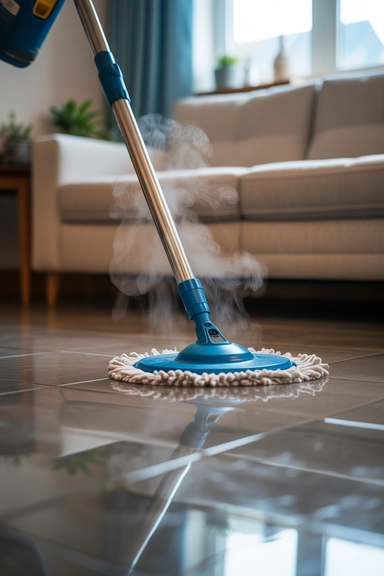
Steam mops sanitize and degrease tile and sealed stone floors effectively without any chemical product. The heat kills bacteria and softens grease simultaneously. On those surfaces they outperform traditional mopping for deep cleaning sessions.
Never use a steam mop on hardwood, laminate, or vinyl plank flooring. The steam forces moisture into seams and causes warping and swelling that is irreversible. The floor damage from one steam mop session on laminate can permanently lift the planks at the seams.
Use steam mops on ceramic tile and sealed natural stone only. For every other floor type, a barely damp traditional mop with the right cleaning solution does the job without the risk.
Dealing With Grout That Has Gone Dark
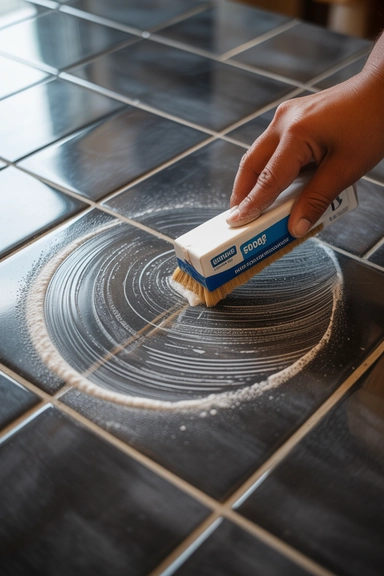
Grout that has turned dark brown or black from years of kitchen use looks like it needs replacing. In most cases it does not. It needs a proper cleaning method applied directly rather than a mop passing over it.
Apply a paste of baking soda and hydrogen peroxide directly to the dark grout lines. Leave it fifteen minutes. Scrub with a stiff grout brush pressing into the lines. Rinse with hot water and mop the area clean.
For grout that does not fully lighten after two treatments, a grout pen in a matching color restores the appearance without re-grouting. Re-grouting is a last resort, not a first response to dark grout.
The Drying Step That Most People Skip
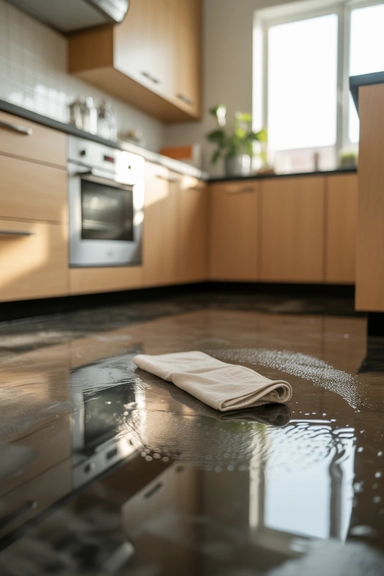
A kitchen floor mopped and left to air dry collects airborne debris from the kitchen before the surface is fully dry. Cooking vapors, dust, and anything disturbed by foot traffic land on the wet surface and stick as it dries.
Dry the floor with a clean dry mop head or towels immediately after the final mop pass. This removes the last of the moisture and any debris that landed during drying. The floor dried this way stays cleaner longer than one left to air dry.
It adds three minutes to the cleaning session. The result lasts noticeably longer between cleans than a floor that dried on its own.
Final Thoughts on Kitchen Floor Cleaning Hacks
Kitchen floors accumulate in layers. Grease from cooking settles on the surface continuously, foot traffic works it into the material, and mop sessions that use cold water or insufficient surfactant redistribute it without removing it. The floor looks mopped without getting clean.
Hot water with dish soap handles grease. A stiff brush handles grout. Pulling appliances out handles the floor sections that never otherwise get touched. Those three address what regular mopping consistently misses.
Match the cleaning method to the floor material before starting. The wrong product on the wrong floor creates damage that makes cleaning harder permanently.
FAQ About Kitchen Floor Cleaning Hacks
Why does my kitchen floor feel sticky after mopping? Sticky floors after mopping almost always come from one of two things. Too much cleaning product left in the mop water deposits a residue on the floor surface as it dries, and that residue attracts debris and feels tacky underfoot. The second cause is mopping with dirty water that deposits a diluted layer of grime back onto the floor. Use one tablespoon of dish soap per bucket maximum and change the mop water when it turns visibly grey.
How do I get old grease stains off a kitchen floor? Sprinkle dry baking soda directly on the stain, add a few drops of dish soap on top, and leave the combination five minutes before scrubbing with a stiff brush. For stains that have been there long enough to oxidize and darken, apply baking soda paste mixed with hydrogen peroxide and extend the dwell time to fifteen minutes. Rinse thoroughly with hot water after scrubbing and mop the area clean.
Can I use vinegar to clean all kitchen floor types? No. White vinegar works well on ceramic and porcelain tile floors and cuts through the grease film that settles on those surfaces from cooking. It damages natural stone floors including marble, travertine, and limestone permanently because the acid etches the surface. It also degrades the finish on sealed hardwood floors over time with repeated use. Check the floor material before using vinegar and use a pH neutral cleaner on stone and a hardwood-specific product on wood floors.
Sarah Mitchell’s Take
The floor under the refrigerator is the one spot in a kitchen that tells you the true cleaning history of the space. Pull it out once and look. Whatever is under there has been sitting in warm air collecting grease and debris since the last time someone moved it, which in most homes is never. That floor section under the fridge, the corner behind the stove, and the grout lines in front of the sink are the three spots where a kitchen floor actually gets clean or does not. Everything else is just surface maintenance.