
Introduction
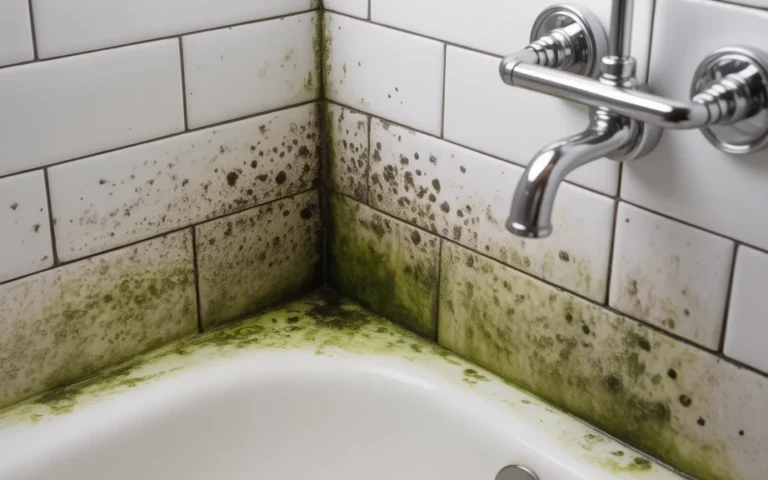
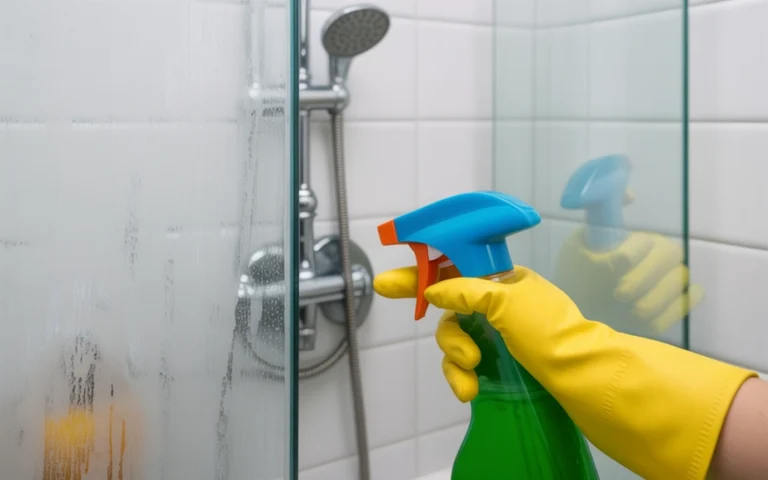
The faucet in my master bathroom looked like it had been left outside for a decade. White chalky crust around the base, cloudy mineral film across the chrome finish, and water spots so thick on the glass shower door that light barely passed through. I live in an area with genuinely hard water and spent two years buying specialty descaling products that worked partially and temporarily. Then I started understanding what hard water stains actually are chemically and everything changed. These fifteen hacks treat the cause rather than the symptom and most of them cost almost nothing. If you want cleaning methods that tackle mineral buildup and every other tough cleaning challenge across your whole home, these Baking Soda Cleaning Hacks That Save Money and Scrub Smarter pair well with everything in this list.
White Vinegar Is the Foundation of Every Hard Water Hack
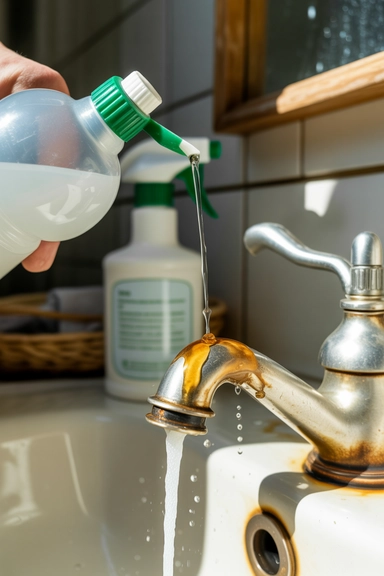
Hard water stains are calcium and magnesium carbonate deposits left behind when mineral-rich water evaporates. They are alkaline compounds. White vinegar is acetic acid. Alkaline deposits dissolve in acid. Everything else on this list builds on this basic chemistry.
Undiluted white vinegar applied directly to hard water deposits and left to dwell is the starting point for every hard water cleaning situation. The contact time matters more than the concentration. Five minutes of contact does far less than thirty minutes of contact even with the same vinegar.
I wasted money on expensive descaling sprays for two years before accepting that cheap white vinegar with adequate dwell time outperformed every commercial product I tried. The commercial products often contain diluted acid anyway. Vinegar is simply the honest version of the same chemistry.
Paper Towel Soaks Hold Vinegar Against Vertical Surfaces
Vinegar poured onto a vertical surface like a faucet base or shower wall runs straight down before it has time to dissolve mineral deposits. The solution is holding the vinegar in contact with the surface long enough to work.
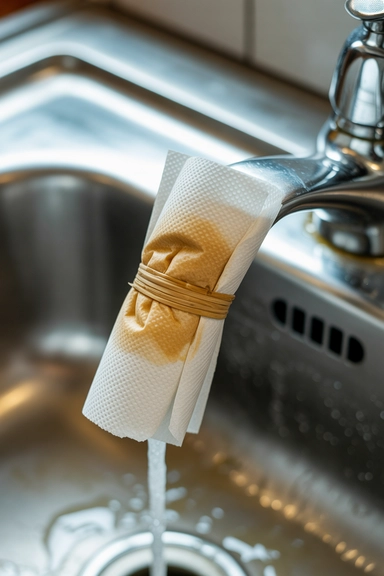
Soak paper towels in undiluted white vinegar and press them flat against the affected surface. The paper towel holds the vinegar against the deposit rather than letting it drain away. Leave the soaked towels in place for a minimum of thirty minutes and up to overnight for heavy buildup.
I wrapped vinegar-soaked paper towels around the base of my kitchen faucet and secured them with a rubber band overnight. The mineral crust that had resisted three different commercial sprays wiped away the next morning with almost no pressure.
Lemon Juice Works on Surfaces Where Vinegar Smell Is a Problem
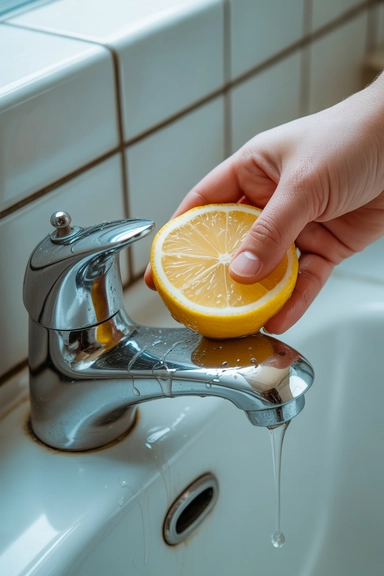
White vinegar is effective but its smell in an enclosed bathroom lingers for hours after cleaning. Lemon juice contains citric acid that dissolves hard water deposits through the same mechanism as acetic acid in vinegar with a significantly more tolerable scent.
Cut a lemon in half and rub the cut face directly across hard water spots on faucets, sink basins, and tile surfaces. The juice releases as you rub and works into the mineral deposits on contact. Leave the juice on the surface for ten minutes before wiping and rinsing.
Lemon juice is slightly less acidic than white vinegar so it needs longer contact time on heavy deposits. For light to moderate hard water spotting it performs equally well and leaves the bathroom smelling clean rather than like a salad dressing.
CLR Applied Correctly Handles the Heaviest Deposits
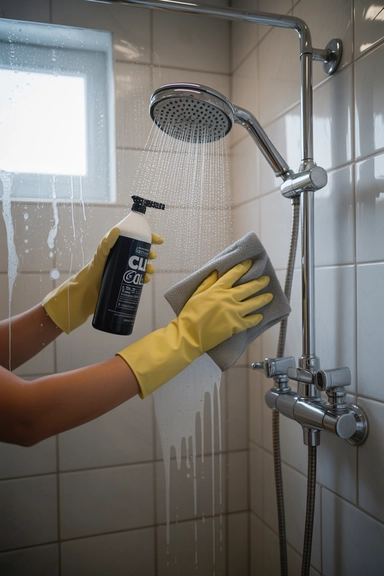
CLR, which stands for Calcium Lime Rust, is a commercial acid-based cleaner designed specifically for mineral deposit removal. It contains a blend of acids stronger than vinegar and handles deposits that have been building for years rather than weeks.
Apply CLR with a cloth or brush directly to the affected surface and let it dwell for two minutes maximum. CLR is strong enough that extended contact damages chrome finishes, grout sealant, and certain tile glazes. Two minutes is the effective window for dissolving deposits without surface damage.
Rinse thoroughly with cold water immediately after the two-minute dwell time. Never mix CLR with bleach or any other cleaner. The chemical reaction produces toxic fumes in an enclosed space.
Baking Soda Paste Adds Abrasion When Acid Alone Is Not Enough
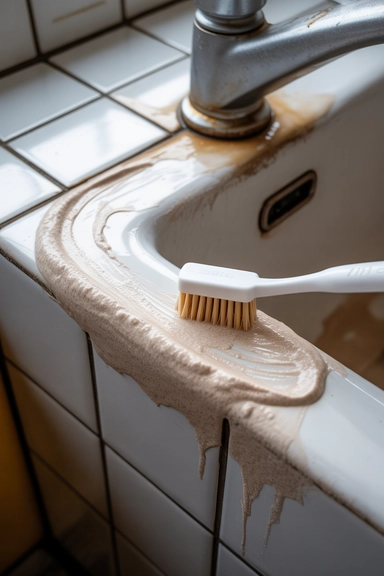
Some hard water deposits have built up in layers over months or years and reach a thickness where acid alone dissolves the outer layer but cannot penetrate to the bond between the deposit and the surface underneath. Physical abrasion combined with acid breaks this situation open.
Mix baking soda with enough white vinegar to form a thick paste rather than a liquid. The initial fizzing reaction settles within thirty seconds leaving a mildly abrasive alkaline paste that you can apply directly to deposits and scrub with a toothbrush or non-scratch pad.
The abrasion removes the outer deposit layers while the residual acid in the paste works on the layers beneath simultaneously. I use this on my shower door frame where deposits build up in the metal channel and resist vinegar soaking alone.
Steel Wool Grade 0000 Polishes Hard Water off Glass
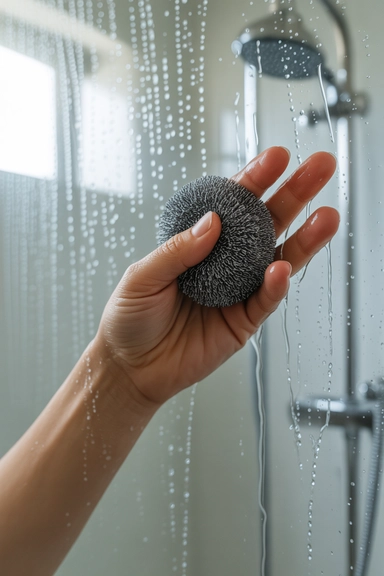
Glass shower doors with severe hard water etching sometimes need physical polishing rather than chemical dissolution because the mineral deposits have actually altered the glass surface texture rather than just sitting on top of it.
Grade 0000 steel wool, the finest grade available, polishes glass without scratching when used wet with a few drops of dish soap as lubrication. Rub in circular motions with light pressure. The ultra-fine steel wool removes surface mineral deposits and light etching marks through gentle abrasion that does not damage the glass.
Never use any grade of steel wool coarser than 0000 on glass. Grades 000 and coarser leave visible scratches that permanently damage the glass surface and make future cleaning harder by giving deposits more surface texture to bond to.
Toothpaste Removes Hard Water Spots from Chrome Fixtures
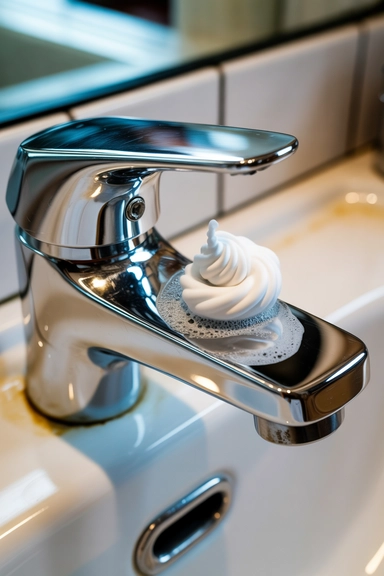
White non-gel toothpaste is a mild abrasive polish that removes light hard water spots from chrome faucets and fixtures through the same gentle abrasion it uses on tooth enamel. It is safe on chrome because the abrasive particles are fine enough to polish without scratching the plated surface.
Apply a small amount to a damp cloth and rub it into the hard water spots in circular motions for one minute. Rinse thoroughly because toothpaste residue left on chrome attracts dust and creates a new film within hours. Buff dry with a clean cloth immediately after rinsing for a streak-free finish.
For a complete deep cleaning system that addresses hard water stains and every other tough cleaning challenge throughout your home, these Deep Cleaning Hacks That Work in Every Room of Your Home give you a room by room framework worth following.
Hydrogen Peroxide and Cream of Tartar Remove Toilet Bowl Stains
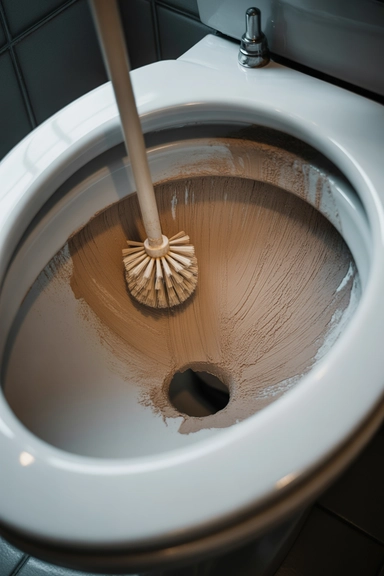
Hard water stains in toilet bowls are among the most stubborn in any home because the water line area experiences constant mineral deposit accumulation and the curved surface makes direct application of most cleaning methods difficult.
Mix hydrogen peroxide with cream of tartar to form a paste and apply it directly to the hard water stain line inside the bowl. The tartaric acid in cream of tartar dissolves calcium deposits while the hydrogen peroxide oxidizes the discoloration simultaneously. Leave the paste in contact for twenty minutes before scrubbing with a toilet brush.
This combination handles staining that toilet bowl cleaners containing only bleach cannot touch because bleach addresses discoloration without dissolving the mineral deposit causing it.
Bar Keeper’s Friend Outperforms Most Specialty Cleaners
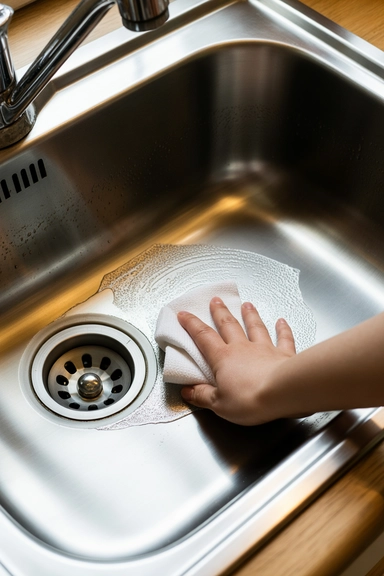
Bar Keeper’s Friend powder contains oxalic acid combined with a mild abrasive that handles hard water stains on sinks, tubs, tile, and stainless steel more aggressively than baking soda while remaining safe for most surfaces.
Make a paste with water and apply it to the stained surface with a damp cloth. Work in circular motions for two minutes then rinse thoroughly. The oxalic acid dissolves iron and mineral staining simultaneously which makes it particularly effective on hard water deposits that have combined with rust staining near metal fixtures and drain areas.
| Surface | Best Method | Contact Time | What to Avoid |
|---|---|---|---|
| Chrome faucets | Vinegar paper towel soak | 30 min to overnight | CLR extended contact |
| Glass shower door | Vinegar soak then steel wool 0000 | Overnight soak | Coarse abrasives |
| Toilet bowl | Hydrogen peroxide and cream of tartar | 20 minutes | Bleach alone |
| Tile and grout | Baking soda paste with vinegar | 15 minutes | Vinegar on natural stone |
| Stainless steel sink | Bar Keeper’s Friend | 2 minutes | Steel wool any grade |
| Natural stone | pH neutral cleaner only | Per product | Any acid including vinegar |
Dryer Sheets Remove Light Hard Water Spots from Glass
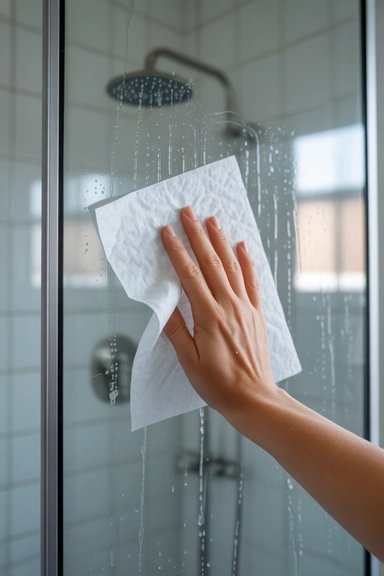
Dampened dryer sheets remove light hard water spots from glass surfaces through a combination of mild surfactant action and the slightly abrasive texture of the sheet material. This works on shower doors, mirrors, and windows with light to moderate spotting.
Dampen a dryer sheet and rub it across the spotted glass in circular motions with moderate pressure. The spots lift within thirty seconds of contact on light buildup. Follow with a rubbing alcohol wipe to remove any dryer sheet residue and leave the glass streak-free.
This is my preferred weekly maintenance method on the shower door between monthly vinegar soaks because it takes two minutes, requires no mixing or preparation, and leaves the anti-static coating that slows future spot formation.
Vinegar Ice Cubes Descale Coffee Makers and Kettles
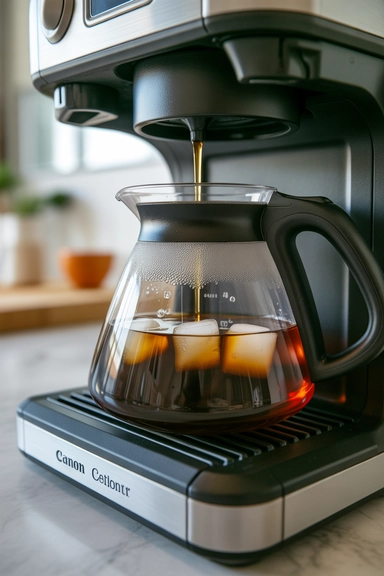
Hard water buildup inside coffee makers and electric kettles reduces heating efficiency and eventually affects the taste of hot drinks. The internal scale is identical chemically to surface hard water stains but requires a method that reaches internal surfaces.
Freeze white vinegar in an ice cube tray and run the frozen vinegar cubes through a coffee maker brew cycle or dissolve them in a kettle with water before boiling. The concentrated vinegar solution circulates through internal components and dissolves scale from heating elements, water lines, and internal surfaces.
Run two plain water cycles through the coffee maker after the vinegar cycle to flush any residual vinegar taste before brewing coffee again. The ice cube format allows controlled dosing rather than pouring liquid vinegar directly which can result in too much or too little concentration.
Pumice Stone Removes Hard Water Scale from Toilet Bowls Safely
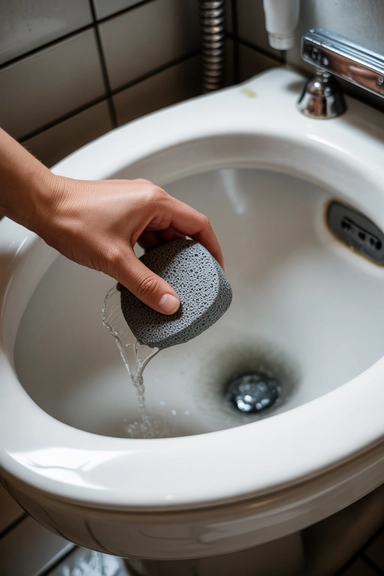
Pumice stone is a volcanic rock with an abrasive texture that removes hard water scale from toilet bowl ceramic without scratching the vitreous china surface when used wet. It handles scale buildup that acids cannot dissolve because the deposit has reached a thickness that chemical action alone cannot penetrate.
Wet both the pumice stone and the toilet bowl surface before use. Never use a dry pumice stone on any surface. Rub the stone gently against the scale deposit with light pressure. The pumice wears away gradually as it removes the scale and the worn particles act as additional abrasive in the water.
Pumice stone works only on vitreous china toilet bowls and unglazed ceramic. Never use it on colored toilet bowls, plastic surfaces, or fiberglass because it will scratch those surfaces permanently.
Shower Head Descaling Restores Full Water Pressure
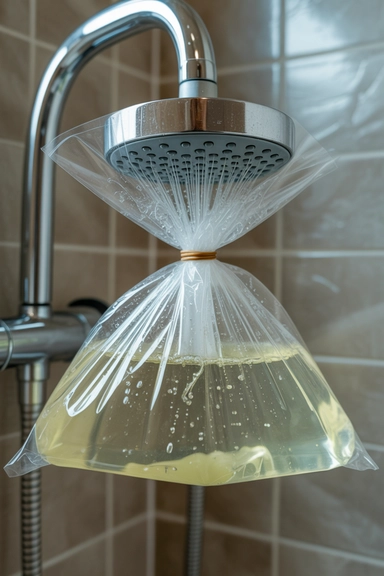
Hard water deposits inside shower head nozzles block individual spray holes and reduce water pressure gradually enough that most people do not notice it happening until the flow is significantly reduced. A full descaling restores pressure immediately.
Fill a plastic bag with undiluted white vinegar and submerge the shower head in it, securing the bag around the neck with a rubber band so the head stays fully immersed. Leave it overnight. The vinegar dissolves the mineral deposits blocking the nozzle holes and the flow returns to full pressure after rinsing.
For shower heads that cannot be easily submerged, remove the head completely and soak it in a bowl of vinegar overnight. Reconnect in the morning and run the shower for thirty seconds to flush any loosened mineral particles before using it normally.
Wax Coating Prevents Hard Water Spots from Bonding
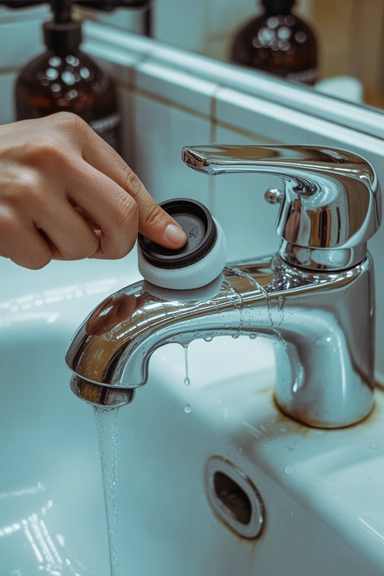
Cleaning hard water stains repeatedly without applying a protective coating afterward means the same deposits return to the same surfaces on the same timeline indefinitely. A wax or hydrophobic coating changes the surface chemistry so water beads and rolls off rather than sitting and evaporating into mineral deposits.
Apply car wax to cleaned chrome faucets and buff to a clear finish. The wax coating makes water bead off the chrome rather than spreading into thin films that dry into spots. Reapply every four to six weeks as the coating wears from daily water exposure.
Rain-X applied to shower glass and mirrors creates a similar hydrophobic barrier that dramatically reduces hard water spot formation between cleaning sessions. Applied after a thorough vinegar cleaning it extends the time between deep cleaning sessions from weeks to months in most hard water areas.
A Water Softener Solves the Problem at the Source
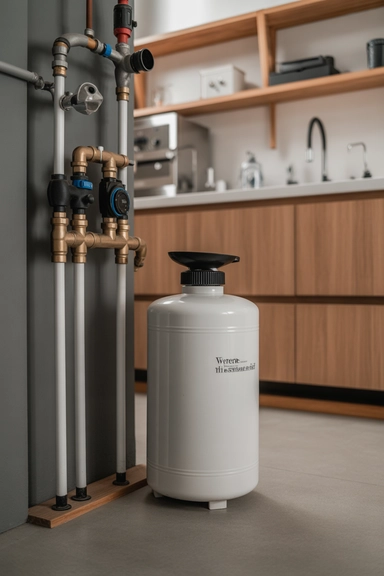
Every cleaning method on this list treats the symptoms of hard water rather than the cause. A whole-house water softener removes the calcium and magnesium ions from the water supply before they reach any fixture or surface in the home.
Hard water areas with mineral concentrations above 180 parts per million cause enough ongoing surface damage, appliance scale buildup, and soap inefficiency that the cost of a water softener system pays back in cleaning product savings, appliance longevity, and reduced plumbing maintenance within three to five years for most households.
A water softener does not eliminate the need for cleaning but it transforms hard water stain removal from a recurring battle into an occasional maintenance task. The difference in how fixtures, glass, and tile look in a softened water home versus a hard water home is visible within weeks of installation.
Final Thoughts on Hard Water Stain Cleaning Hacks
Hard water stain cleaning hacks work when the method matches the severity and surface type of the deposit. Light spots respond to lemon juice and dryer sheets. Moderate buildup needs vinegar soaks with adequate dwell time. Heavy scale requires acid plus abrasion or commercial acid cleaners like CLR used correctly.
Prevention through wax coatings, Rain-X on glass, and daily squeegeeing after showers dramatically extends the time between deep cleaning sessions. Addressing hard water stains before they reach the heavy buildup stage keeps every cleaning method on this list in the quick and manageable category rather than the frustrating and time-consuming one.
The single most effective change most households in hard water areas can make is adding a daily squeegee habit in the shower and a weekly vinegar wipe on faucets. Those two habits prevent ninety percent of hard water stain problems before they require any significant cleaning effort.
FAQ About Hard Water Stain Cleaning Hacks
Why do hard water stains come back so quickly after cleaning them?
Hard water stains return because the surface has no protective barrier preventing minerals from bonding to it after cleaning. Every time water sits on an unprotected surface and evaporates it leaves mineral deposits behind. Applying a hydrophobic coating like car wax on chrome or Rain-X on glass immediately after cleaning creates a surface that water beads off rather than spreading across, which is what prevents the rapid return of deposits that most people experience after cleaning without sealing.
Are hard water stain cleaning hacks safe to use on natural stone surfaces like marble?
Acid-based methods including white vinegar, lemon juice, CLR, and cream of tartar are never safe on natural stone. The acid etches marble, travertine, limestone, and granite permanently and the surface damage cannot be reversed. Natural stone hard water deposits require a pH neutral stone cleaner specifically formulated for the surface. A stone sealer applied annually prevents mineral deposits from penetrating the stone surface and keeps cleaning manageable without any acid contact.
How do you remove hard water stains from stainless steel appliances without scratching them?
Apply undiluted white vinegar with a soft cloth and rub in the direction of the grain visible on the stainless steel surface. Rubbing against the grain creates micro-scratches that dull the finish permanently. Bar Keeper’s Friend paste applied with a soft cloth in the grain direction handles heavier deposits. Never use steel wool, abrasive pads, or circular scrubbing motions on stainless steel regardless of the cleaning product being used.
Sarah Mitchell’s Take
Living with hard water for twelve years in this house taught me that the battle is not really about cleaning products. It is about time and surfaces. Vinegar beats every commercial descaler I have ever bought when given enough contact time. The products win in marketing because they come in spray bottles that feel convenient and most people spray and wipe immediately instead of waiting. Waiting thirty minutes costs nothing and changes everything. That one shift, letting the chemistry work instead of doing the work yourself, is the actual hard water cleaning hack that nobody puts on the bottle.