
Introduction
A garage often becomes the default storage zone for everything that has no clear home. Tools, sports gear, seasonal décor, and forgotten boxes quietly accumulate until the space feels impossible to use. Smart garage organizing focuses on structure rather than constant tidying, creating zones where every item has a defined place and easy access. When storage works with daily routines, clutter stops returning and the garage becomes functional again. If you’re also tackling other high-traffic storage areas, 25 Home Organizing Ideas That Make Every Room Work Better pairs naturally with these strategies for whole-home order.
1-Wall-Mounted Storage Systems for Vertical Control
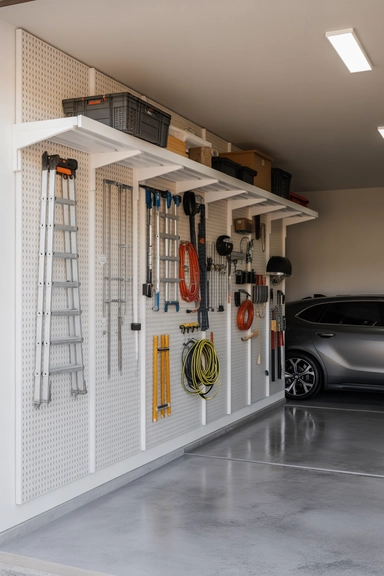
Floor space in a garage disappears quickly when storage relies only on shelves and boxes. Wall-mounted storage systems shift organization upward, turning blank walls into active zones for tools, ladders, extension cords, and garden equipment. Pegboards, rail systems, and modular panels allow items to hang visibly rather than hiding in piles. This visual access prevents duplicate buying and reduces time spent searching for basic tools during projects.
For smart garage organizing, vertical wall systems also protect floor flow. When equipment stays off the ground, sweeping and cleaning become simple, and parking space remains usable. Over time, this structured visibility builds natural habits. Items return to hooks instead of leaning in corners, keeping the garage consistently tidy without constant effort.
2-Overhead Ceiling Racks for Seasonal Storage
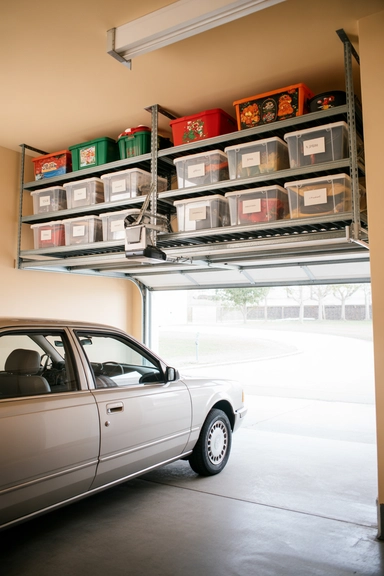
Ceiling space in garages is often wasted despite offering valuable square footage. Overhead storage racks capture this unused zone by lifting seasonal and rarely used items above everyday activity areas. Holiday decorations, camping gear, and bulk storage bins can stay accessible yet out of the way. This keeps prime eye-level and floor-level zones free for frequently used equipment.
In smart garage organizing, ceiling racks also protect stored items from moisture and accidental damage. Elevated placement reduces dust accumulation and keeps boxes dry during wet seasons. The result is a garage that feels open, navigable, and efficient, even when storing large volumes of belongings.
3-Heavy-Duty Shelving for Structured Load Zones
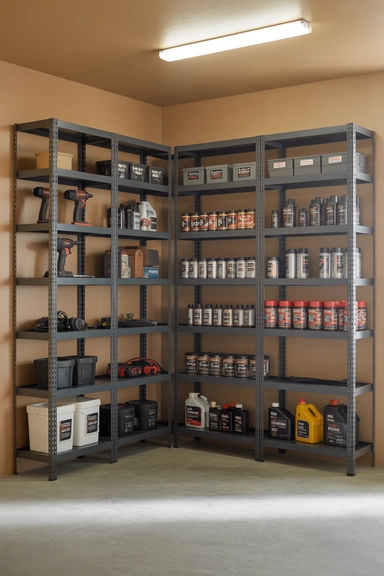
Garages require stronger shelving than interior closets due to heavier equipment and irregular item sizes. Heavy-duty shelving units provide stable platforms for power tools, paint cans, hardware boxes, and automotive supplies. Adjustable shelf heights allow customized spacing, preventing stacked piles that become unstable over time.
For smart garage organizing, structured shelving zones also define category boundaries. When each shelf level serves a specific purpose, items stop migrating randomly across the space. This clarity makes inventory checks simple, reduces clutter buildup, and supports long-term organization without repeated reorganizing.
4-Clear Storage Bins for Instant Visibility
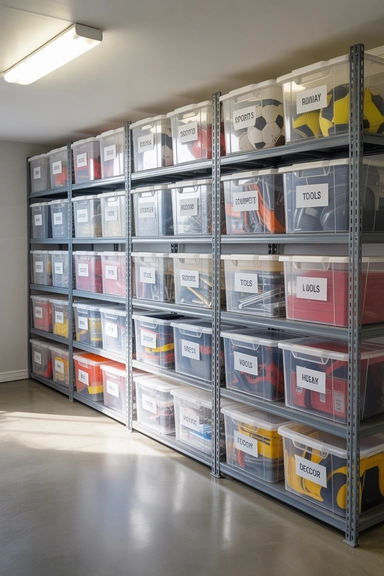
Cardboard boxes in garages quickly become mystery containers. Clear storage bins solve that problem by revealing contents without opening lids. Tools, hardware, sports gear, and seasonal accessories stay identifiable at a glance, preventing duplicate purchases and wasted searching time. Sturdy plastic bins also protect items from dust, humidity, and pests, which are common garage issues.
In smart garage organizing, clear bins support consistent category systems. When each bin holds a defined group of items, putting things back becomes automatic. Labels can reinforce order, but transparency alone maintains visual clarity. Over time, this simple visibility keeps the garage structured, reduces overflow, and prevents forgotten stock from accumulating.
5-Workstation Zones for Functional Flow
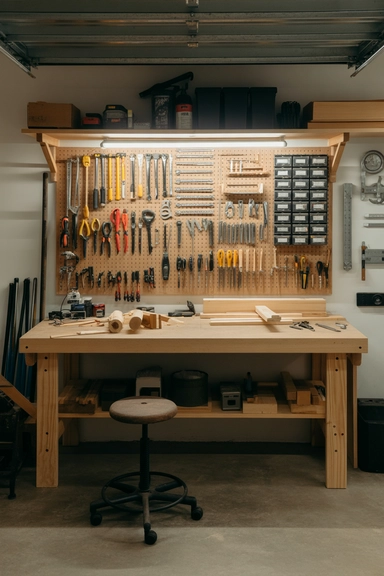
A garage that serves as a workspace needs more than storage. Creating a defined workstation zone keeps tools, materials, and safety equipment close to where projects happen. A solid workbench paired with pegboards, drawers, and nearby shelving forms a self-contained activity area. This prevents tools from spreading across the entire garage after each task.
For smart garage organizing, workstation zones also improve efficiency. When every project begins and ends in the same dedicated space, cleanup becomes part of the routine rather than a separate chore. This structure keeps the garage usable for both work and parking without constant rearranging.
6-Floor Marking Systems for Space Definition
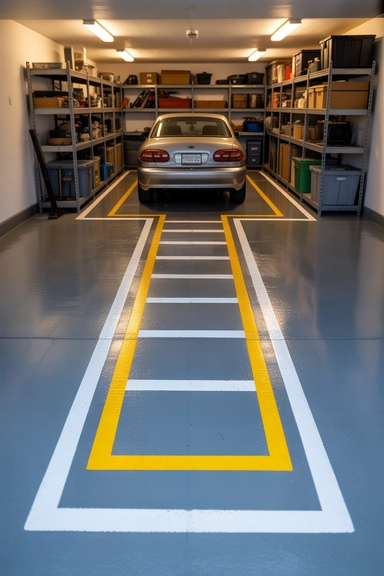
Large garages often feel chaotic because areas lack clear purpose. Floor marking systems create visual boundaries for parking zones, storage sections, and workspaces. Simple tape lines or painted guides signal where each category belongs, reducing random placement of boxes and equipment.
In smart garage organizing, defined floor zones also improve safety. Clear walking paths prevent tripping hazards, and designated parking areas protect stored items from vehicle damage. This subtle guidance helps maintain order long after the initial setup, keeping the garage easy to navigate and consistently clutter-free.
7-Magnetic Tool Strips for Quick Access
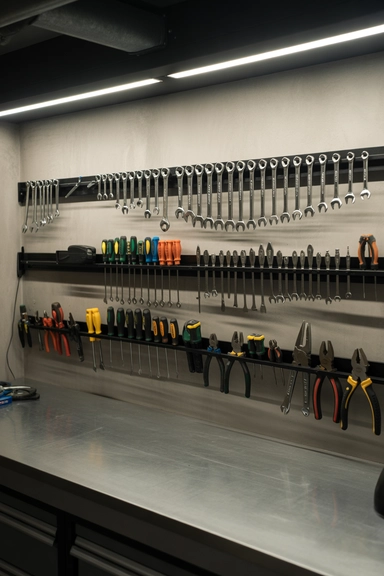
Loose tools scattered across drawers waste time and create visual clutter. Magnetic tool strips mounted on garage walls keep frequently used tools visible, reachable, and off work surfaces. Wrenches, screwdrivers, and pliers attach securely and release easily, turning blank wall space into an active organization zone. This prevents drawers from becoming tangled storage pits.
In smart garage organizing, magnetic strips also protect tool condition. Keeping metal tools separated reduces scratching and rust caused by trapped moisture. Over time, this method builds consistent habits. Tools return to the same spot after each use, keeping work areas clear and improving efficiency during projects.
8-Cabinet Systems for Hidden Storage Control
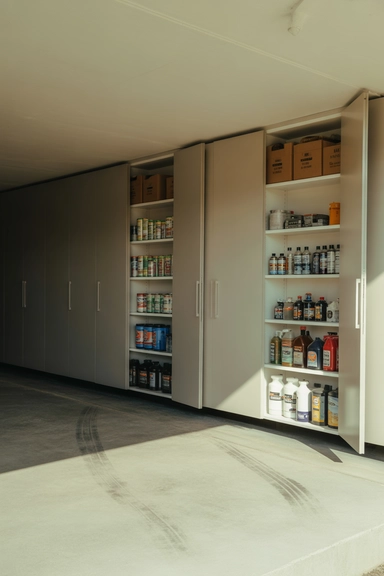
Not every garage item needs to remain visible. Lockable cabinet systems provide enclosed storage for chemicals, paints, automotive fluids, and small hardware. This keeps hazardous materials away from children and pets while maintaining a clean visual environment. Cabinets also prevent dust buildup that commonly affects open shelving.
For smart garage organizing, closed cabinets introduce balance. Visible storage handles everyday tools, while cabinets contain irregular or sensitive items. This mix of open and closed storage keeps the garage looking calm instead of industrially cluttered. Over time, defined cabinet zones prevent random piling on shelves and countertops.
9-Sports Gear Stations for Active Households
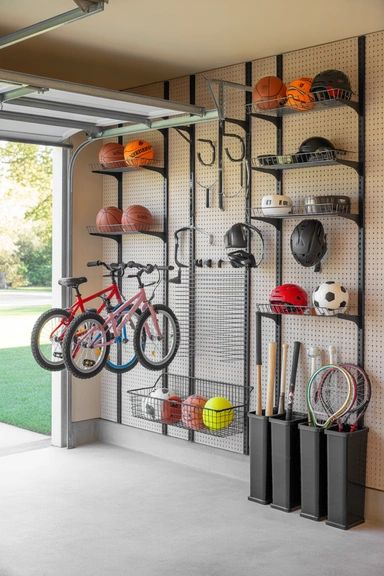
Sports equipment easily overtakes garage floors when it lacks a defined home. A dedicated sports gear station uses wall hooks, ball racks, and vertical bins to hold bikes, helmets, bats, and balls. This keeps frequently used equipment accessible without spreading across the garage.
In smart garage organizing, sports stations also reduce damage. Bikes stay off the ground, balls avoid deformation, and helmets remain ventilated. When each family member has a designated zone, returning equipment becomes automatic. This keeps high-traffic households organized without daily reminders or cleanups.
10-Labelled Hardware Drawer Units
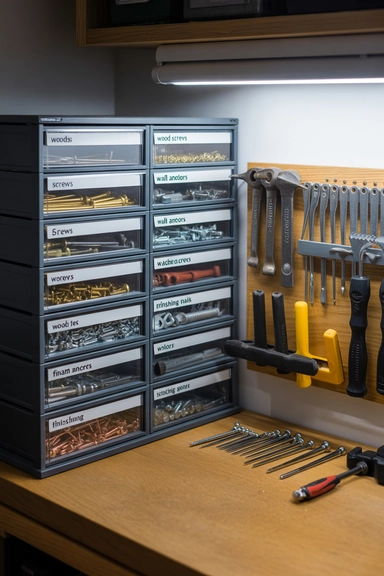
Small hardware items like nails, screws, anchors, and washers often end up mixed in random containers. Labelled hardware drawer units provide shallow compartments that keep each type separated and visible. Transparent fronts allow quick identification without opening every drawer.
For smart garage organizing, these drawer systems also support project efficiency. When hardware stays sorted, DIY tasks move faster and excess buying is reduced. Over time, the drawer unit becomes a reliable inventory hub that prevents cluttered workbenches and misplaced small parts.
11-Garden Tool Storage Walls
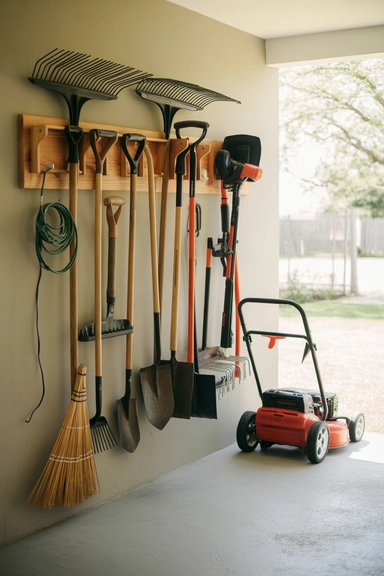
Long-handled garden tools rarely fit neatly on standard shelves. Wall-mounted garden tool storage systems use hooks and holders designed specifically for rakes, shovels, brooms, and trimmers. This keeps tools upright, accessible, and safely off the floor.
In smart garage organizing, vertical garden tool walls also protect tool lifespan. Handles avoid warping from leaning, and metal ends stay dry. Keeping outdoor equipment in one dedicated zone prevents cross-clutter with automotive or workshop areas, maintaining clean category separation.
12-Fold-Down Work Tables for Space Efficiency
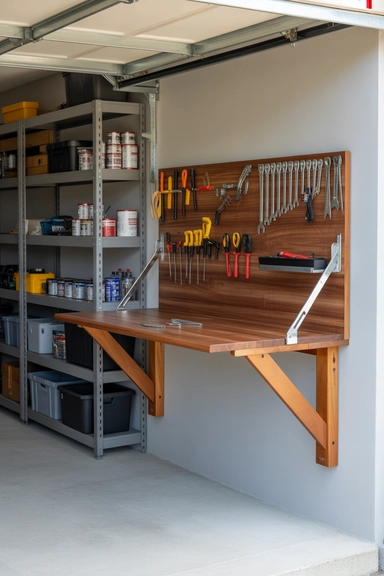
Garages often need flexible workspace without sacrificing parking or storage room. Fold-down work tables mount to walls and drop into position only when needed. When folded up, they disappear into slim profiles that keep walking paths clear.
For smart garage organizing, fold-down tables also create multi-use adaptability. You gain a stable surface for repairs, crafts, or potting plants without dedicating permanent floor space. This flexibility keeps the garage functional for diverse activities while preserving long-term order.
13-Stackable Storage Systems for Bulk Items
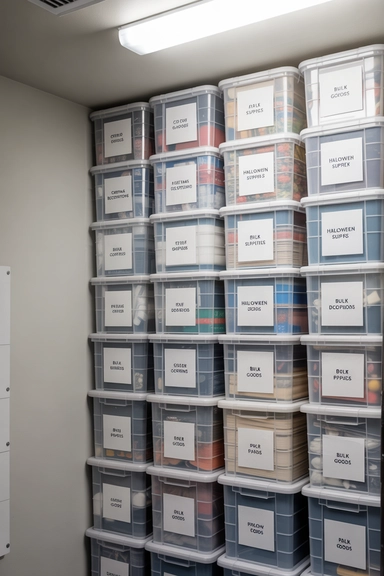
Garages often store bulky household supplies, seasonal decorations, and backup goods that don’t fit neatly on standard shelves. Stackable storage systems create vertical order by allowing containers to lock securely on top of each other. This prevents shifting piles and collapsing towers that lead to scattered clutter. Clear or labeled bins make contents identifiable, reducing time spent opening boxes during seasonal changes.
In smart garage organizing, stackable systems also maximize ceiling height without requiring permanent fixtures. When bins stack safely, floor space stays open for movement or parking. Over time, this method prevents random box piles from forming in corners and keeps bulk storage contained within a predictable footprint.
14-Laundry and Utility Supply Zones
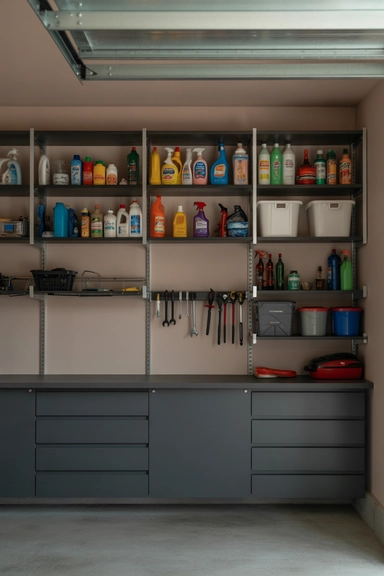
Garages frequently double as laundry or utility overflow areas, which can easily become messy without defined zones. Creating a dedicated supply station with shelves or cabinets for detergents, cleaning tools, and utility items keeps these products contained. Spill trays and closed-door cabinets add safety and protect other stored items from leaks or strong odors.
For smart garage organizing, utility zones also streamline household routines. When cleaning supplies stay in one predictable location, restocking and usage become efficient. This prevents bottles and tools from spreading across unrelated shelves and maintains a consistent system that supports daily home operations.
15-Tool Drawer Inserts for Precision Sorting
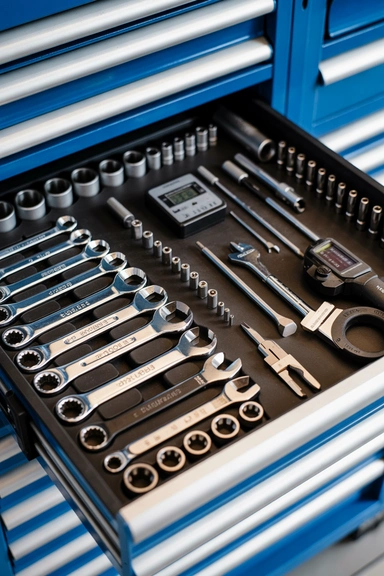
Even when a garage has drawers, tools often become tangled without internal structure. Tool drawer inserts create defined compartments for wrenches, sockets, drill bits, and measuring tools. Each item rests in a designated space, preventing shifting and damage when drawers open and close. This precision layout keeps frequently used tools instantly accessible.
In smart garage organizing, drawer inserts also encourage tool return habits. When every piece has a visible outline or fitted slot, missing tools are immediately noticeable. Over time, this reduces tool loss, speeds up projects, and keeps work surfaces clear of scattered equipment.
16-Recycling and Waste Sorting Stations
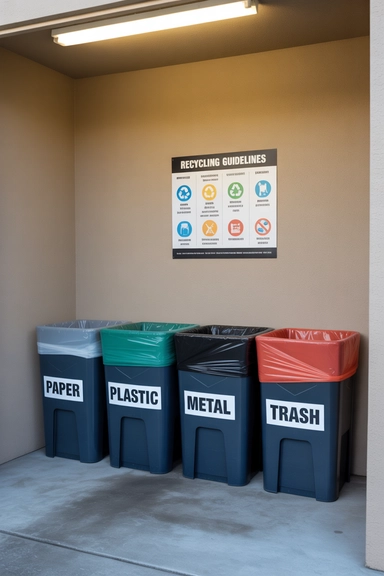
Garages commonly become temporary holding zones for recyclables and waste, which can quickly look disorderly. A dedicated sorting station with separate labeled bins for paper, plastic, metal, and trash keeps waste controlled. Sturdy containers prevent leaks and odors while making disposal routines smoother.
For smart garage organizing, waste stations also protect the rest of the storage system. By giving recycling a defined home, bags and boxes don’t end up stacked randomly in corners. This maintains cleanliness, supports environmental habits, and prevents clutter from re-entering the garage after clean-up days.
17-Bike Storage Solutions for Floor Freedom
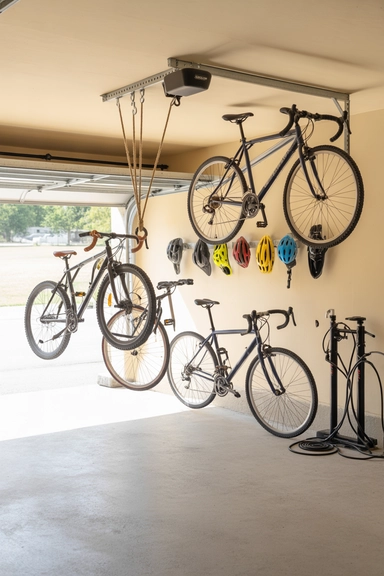
Bicycles consume significant floor space when left standing or leaning against walls. Wall-mounted bike hooks, ceiling pulley systems, or vertical bike racks lift them into dedicated zones. This keeps bikes secure, prevents scratches, and frees walking and parking space.
In smart garage organizing, bike storage systems also improve safety. With bikes elevated or locked into racks, there’s less risk of tripping or damaging vehicles. Creating a defined cycling zone also keeps helmets, pumps, and repair kits nearby, building a complete activity station instead of scattered equipment.
18-Seasonal Rotation Shelving
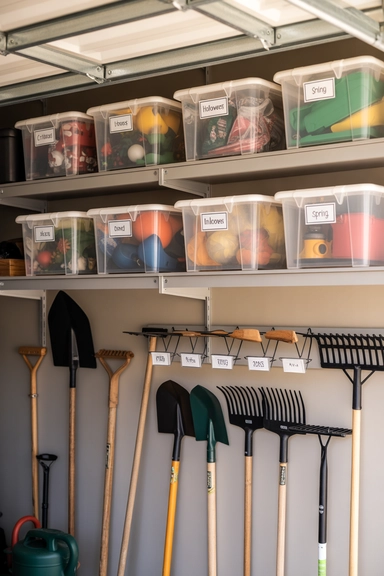
Garages store many items used only part of the year, such as holiday décor, camping gear, or winter tools. Seasonal rotation shelving keeps these items grouped and placed according to usage frequency. Frequently used seasonal items stay at reachable heights, while off-season goods move to higher or lower shelves.
For smart garage organizing, this approach reduces repeated reorganizing. Instead of shifting random boxes each season, entire zones rotate with predictable structure. This keeps the garage adaptable throughout the year while preserving order, visibility, and efficient access.
19-Automotive Supply Stations for Car Care Order
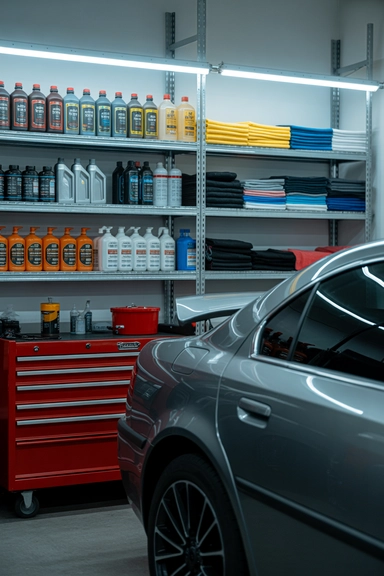
Car-related supplies often end up scattered across shelves, floors, and workbenches. Creating a dedicated automotive supply station keeps oils, fluids, tools, and cleaning products contained in one structured zone. Sturdy shelving or closed cabinets prevent spills from spreading and protect other stored items from contamination. Grouping these products together also keeps them away from household storage, maintaining safety and clarity.
In smart garage organizing, automotive stations improve routine maintenance. When every car-care item has a predictable home, checking fluid levels, cleaning supplies, or tire tools becomes faster and more consistent. This defined zone reduces clutter migration and ensures the garage remains functional rather than chaotic.
20-Safety and Emergency Storage Zones
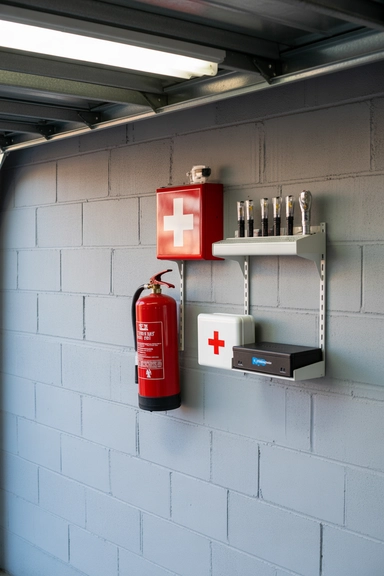
Garages often hold hazardous or emergency-use items such as fire extinguishers, first aid kits, batteries, and power backups. Without defined placement, these items can become buried behind everyday storage. A safety zone with labeled shelving or wall-mounted holders keeps critical equipment visible and accessible at all times.
For smart garage organizing, dedicated safety storage also supports household preparedness. When emergencies arise, there is no searching through boxes or cabinets. Clear visibility and fixed placement keep response time fast and prevent safety items from being blocked by routine clutter.
21-Multi-Zone Layout Planning for Long-Term Success
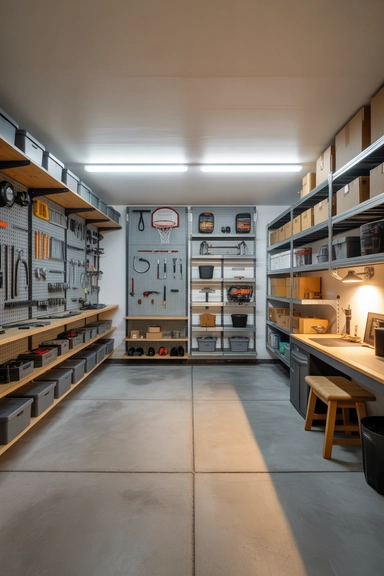
The most effective garages function through zoning rather than individual storage solutions. A multi-zone layout assigns areas for tools, sports equipment, seasonal goods, automotive care, and household overflow. Each zone has storage suited to its purpose, preventing overlap that leads to disorder. This planning approach turns the garage into a structured environment rather than a catch-all space.
In smart garage organizing, zoning ensures long-term success. When every category has a defined territory, items naturally return to their place. The system becomes self-maintaining, reducing the need for repeated large-scale reorganizing and keeping the garage consistently clutter-free.
Conclusion
Smart garage organizing is not about filling every wall with storage. It is about creating purposeful zones, stable systems, and predictable placement that support daily routines. When visibility, access, and structure work together, clutter stops returning and the garage becomes a usable extension of the home. With thoughtful planning and the right storage choices, even a busy garage can stay organized, safe, and easy to maintain year-round.