
Introduction
I refinished the hardwood floors in my hallway four years ago. Cost a lot of money and took a full weekend. Six months later they looked dull in the traffic areas and I could not figure out why until a flooring guy came to look at something else and pointed at my mop. I was using a standard string mop with too much water. The moisture was getting into the wood grain and clouding the finish from underneath. Six months of cleaning was undoing the refinish I had paid for. Getting hardwood floor care right is less about the product and more about understanding what the finish actually is and what damages it. If you want floor cleaning that covers more surfaces, these floor cleaning hacks are worth reading alongside this.
Dry Dust Mop Before Anything Wet Touches the Floor
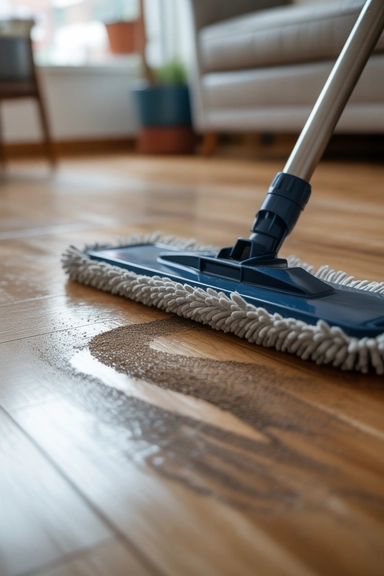
A microfiber dust mop run across the floor before any liquid cleaning. Every single time.
Grit and fine particles dragged across hardwood under a damp mop act like sandpaper on the finish. Each pass creates micro-scratches that scatter light and make the floor look dull over time. The dullness is not from lack of product. It is physical damage from skipping the dry step.
Soft microfiber only. Stiff bristles scratch. Vacuum with a hard floor setting as an alternative but check that the attachment has no exposed metal edges that contact the floor surface.
Damp Mop Only, Never Wet
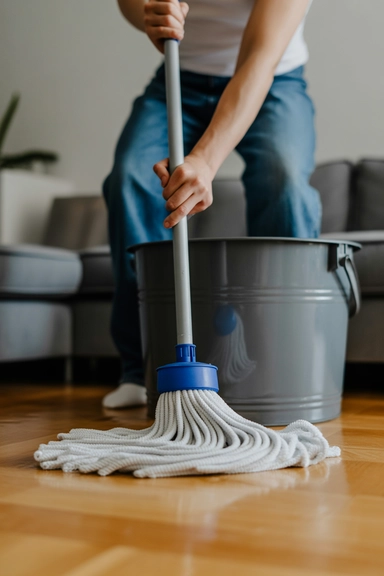
Wring the mop until it feels nearly dry before it contacts the floor. If water is pooling behind the mop, it is too wet.
Water sitting on hardwood seeps into the grain, swells the wood fibers, and clouds the finish from underneath. That cloudiness looks like dullness but it is moisture damage and it does not reverse with more cleaning. The damage is structural.
A spray mop used sparingly is the right tool. One press of the trigger every four or five steps rather than continuous spraying. The floor should feel dry within a minute of mopping. If it stays wet longer, the mop is too wet.
Dish Soap and Warm Water for Everyday Cleaning
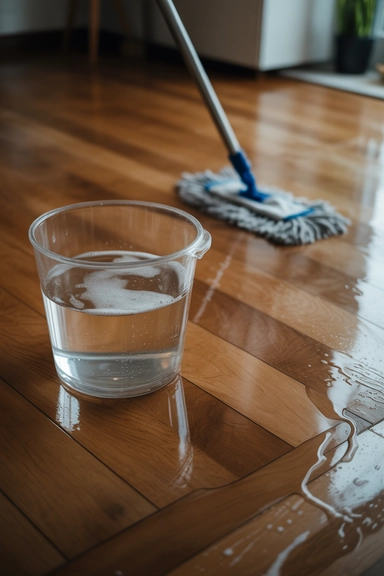
Two drops of dish soap in a bucket of warm water. Wring the mop thoroughly. Clean in sections.
More soap does not clean better. Excess dish soap leaves a film on hardwood that builds up over repeated cleaning and creates a sticky surface that attracts dust and scuffs faster than a clean floor does. Two drops for a large room. That is genuinely enough.
I used dish soap on hardwood for years before I understood the ratio mattered. The film buildup from too much soap is what I was cleaning off every time I mopped, not the actual floor dirt.
White Vinegar Solution for Dull and Streaky Floors
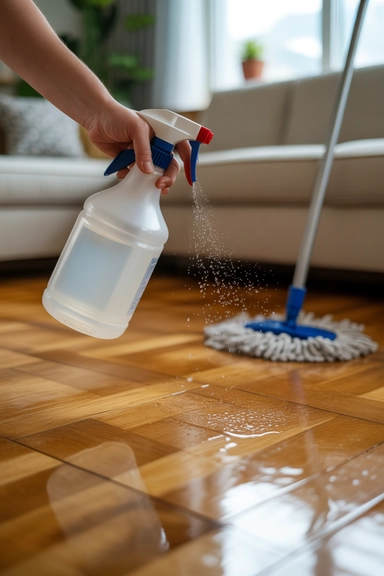
Mix half a cup of white vinegar with a gallon of warm water. Use this when the floor looks dull or streaky from soap buildup.
The mild acidity cuts through the soap and product residue that accumulates on hardwood finish over months of regular cleaning. That residue is usually the actual cause of dullness rather than anything wrong with the finish itself.
Do not use undiluted vinegar on hardwood. Full strength acid used repeatedly breaks down polyurethane finish over time. The diluted ratio cleans effectively without affecting the finish. Once a month for maintenance, not weekly.
Rubbing Alcohol on Scuff Marks
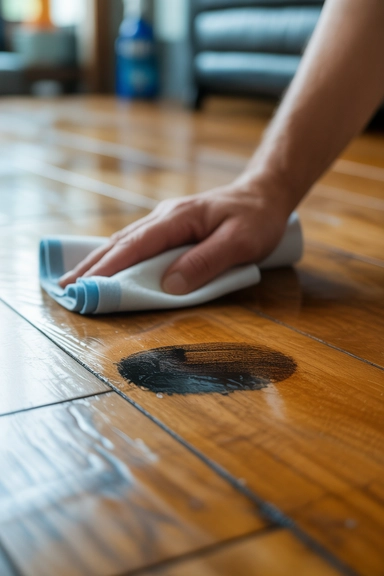
Dab rubbing alcohol on a cloth and rub directly on the scuff mark. Gone in under a minute usually.
Scuff marks on hardwood are surface transfers of rubber from shoe soles. They sit on top of the finish rather than in it. Alcohol dissolves the rubber compound without touching the finish underneath.
Water and soap do nothing on scuff marks because rubber is not water soluble. This is one of those clean wood floors naturally methods that feels too simple until you watch a scuff mark that has been there for weeks disappear in thirty seconds.
Ice and Plastic Scraper on Wax and Gum
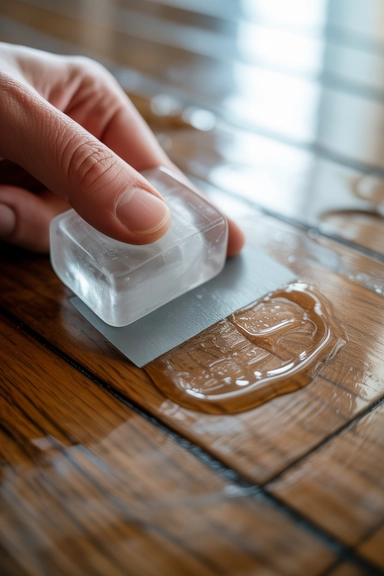
Press an ice cube onto wax or chewing gum stuck to the floor. Hold sixty seconds. Use a plastic scraper to lift the hardened piece off.
The cold makes it brittle and it snaps away cleanly. Never metal scrapers on hardwood. Metal scratches the finish in one pass and those scratches do not buff out easily.
Work quickly after the ice. The piece softens again fast once the cold is gone. One clean lift is better than multiple attempts as the material warms back up.
Black Tea for Shine Between Cleans
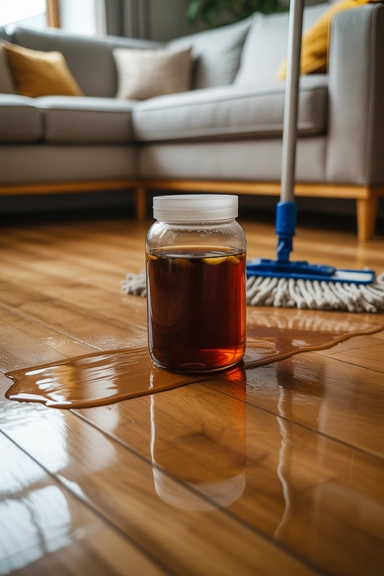
Brew four bags of black tea in a liter of hot water. Cool completely. Damp mop the floor with it.
Tannic acid in the tea enhances the warmth and depth of hardwood finish and reduces the static charge that makes dust cling to the floor surface. The floor stays visibly cleaner between moppings.
Cool completely before use. Warm tea applied to hardwood opens the grain slightly and allows moisture in faster than room temperature solution does. Room temperature or cold only and wrung as dry as usual.
Olive Oil and Vinegar for Scratched Hardwood
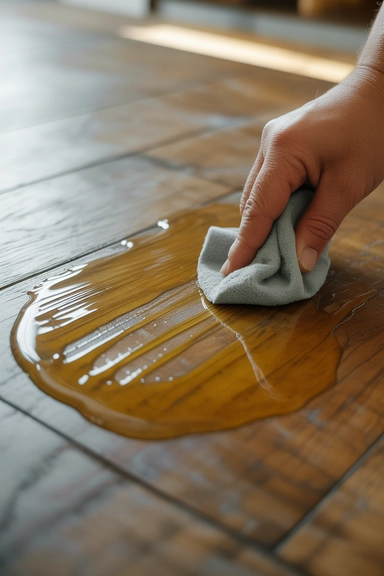
Mix three parts olive oil with one part white vinegar. Apply a small amount to a soft cloth and rub into light surface scratches in the direction of the grain.
The oil fills the scratch and reduces how much light it scatters. The scratch does not disappear but becomes significantly less visible. On light to moderate surface scratches this makes a noticeable difference without refinishing.
This is not a repair. It is a cosmetic improvement. Deep scratches that go through the finish layer into the wood itself need proper filling and refinishing. This handles the everyday surface marks from furniture and normal use.
Baking Soda Paste on Stubborn Stains
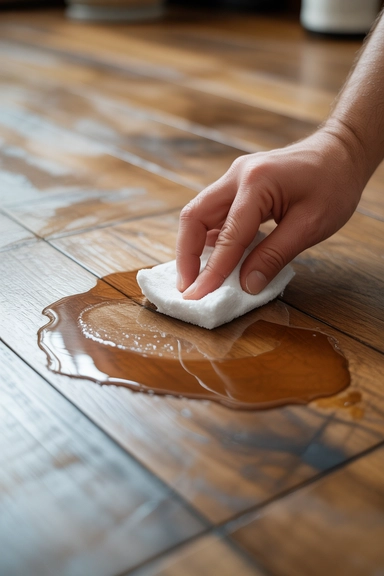
Mix baking soda with a small amount of water to form a paste. Apply to the stain, leave five minutes, wipe away gently with a damp cloth.
Do not scrub. Baking soda is mildly abrasive and scrubbing it across hardwood finish creates micro-scratches. Apply, leave, wipe with light pressure. The mild alkalinity lifts the staining without requiring physical force.
For dried food stains that have hardened onto the surface, the paste softens them enough to wipe cleanly. For stains that have penetrated the finish into the wood itself, the paste does less and the floor may need professional attention.
Microfiber Cloth for Spills Instead of Paper Towel
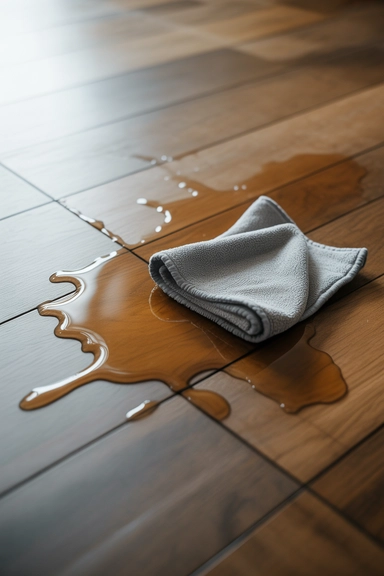
Wipe spills with a microfiber cloth rather than paper towel. Paper towel absorbs liquid but presses some of it into the grain edges and seams between boards as you press down. Microfiber lifts the liquid up.
Near the seams between boards this matters. A spill wiped with paper towel directly over a seam forces liquid into the gap and down into the subfloor. Over time that causes swelling at the board edges that looks like warping and is extremely difficult to reverse.
Keep a dedicated microfiber cloth in the kitchen. Spills wiped within thirty seconds of happening cause almost no damage to hardwood. Left for five minutes the liquid starts working into any available gap.
Mineral Spirits on Oil and Grease Stains
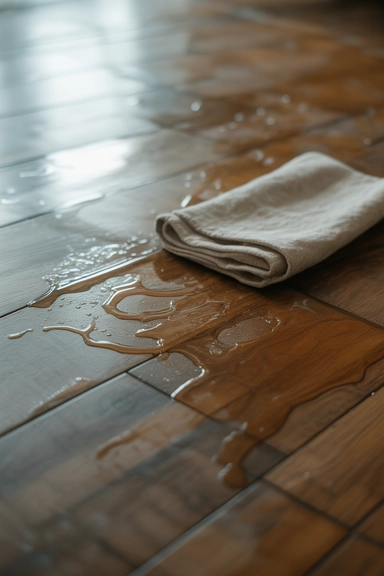
Apply a small amount of mineral spirits to a cloth and rub gently over an oil or grease stain on hardwood. Wipe away with a clean dry cloth.
Oil and grease penetrate hardwood finish and the wood grain underneath if not removed quickly. Mineral spirits dissolve oil-based stains without damaging polyurethane finish when used sparingly and wiped away promptly.
Test in a hidden corner first. Some older or unusual finishes react differently to mineral spirits. On standard polyurethane finished hardwood it is safe and effective. Leave no residue behind. Wipe thoroughly dry after the stain lifts. For more methods using common household products across different surfaces, these easy cleaning hacks go into more detail.
Felt Pads and Entry Mats Prevent Most Damage
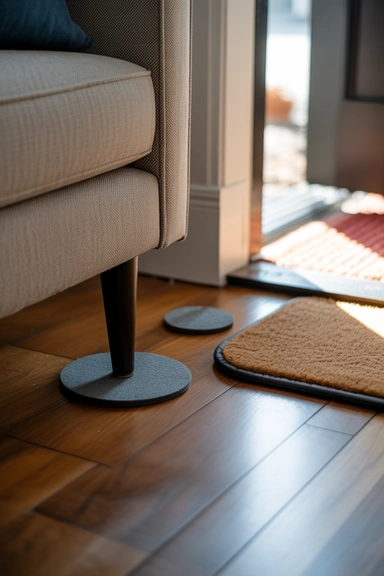
Felt pads under every furniture leg. Entry mats at every door. Area rugs in high traffic zones.
Grit tracked in from outside is responsible for most of the micro-scratching that dulls hardwood finish over time. A mat that catches most incoming dirt reduces how much reaches the floor surface. Furniture legs without felt pads leave scratches in patterns that become visible within months and do not buff out.
This is prevention rather than cleaning but it has more impact on how the floor looks over time than any cleaning method does. The floors that look best after years of use are the ones where the right habits were in place from the beginning.
Steam Mop Is the Wrong Tool for Hardwood
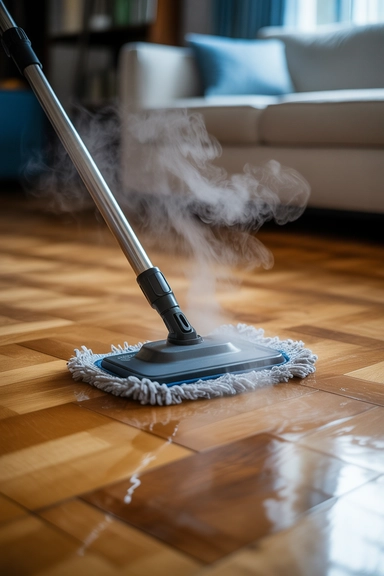
Do not use a steam mop on hardwood floors. Not on sealed hardwood, not on engineered hardwood, not briefly, not on a low setting.
Steam forces heat and moisture simultaneously into the wood grain and the seams between boards. The finish lifts, the boards swell, the edges cup. That damage looks like warping and in many cases is permanent without sanding and refinishing.
This comes up because steam mops market themselves as safe for sealed floors and hardwood appears on some packaging. The flooring and wood industry is consistent on this point. Steam and hardwood are not compatible regardless of what the mop packaging says.
Mayonnaise on White Water Rings
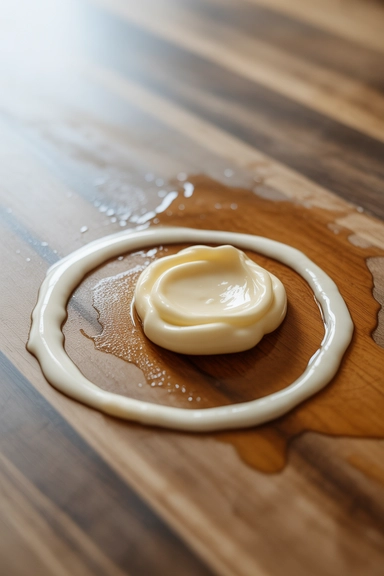
Apply a small amount of mayonnaise to a white water ring on hardwood. Leave for several hours or overnight. Wipe away.
White water rings are moisture trapped in the finish layer rather than in the wood itself. The oils in mayonnaise penetrate the finish slowly and displace the trapped moisture. The ring fades and often disappears completely after one overnight treatment.
This sounds implausible. It works on white rings specifically because of the oil displacement mechanism. It does not work on dark water stains which indicate moisture has penetrated through the finish into the wood and requires a different approach.
Floor Polish Every Few Months to Restore Shine
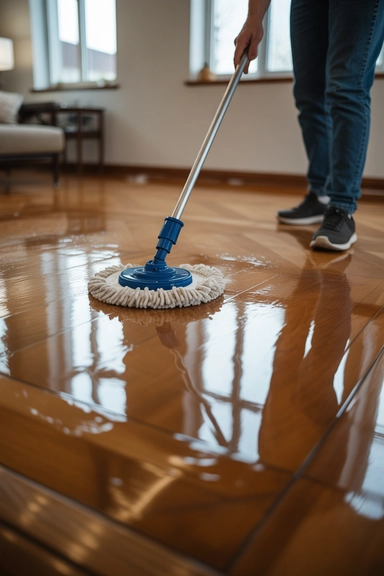
Apply a hardwood-specific floor polish designed for the finish type on your floor, following the product directions, every three to four months.
Polish fills micro-scratches in the finish and restores the light-reflective surface that makes hardwood look shiny. Cleaning maintains the floor but does not restore shine lost to micro-scratching. Polish does.
Use only polish designed for your specific finish type. Wax polish on a polyurethane finished floor builds up into a cloudy layer that is difficult to remove. Polyurethane compatible polish on a wax finished floor does not bond properly. Match the product to the finish.
How Hardwood Floor Cleaning Methods Compare
| Method | Best Use | Risk Level | Frequency |
|---|---|---|---|
| Dry dust mop | Daily debris removal | None | Daily |
| Damp mop dish soap | Regular surface cleaning | Low if wrung well | Weekly |
| Vinegar solution | Soap buildup and dullness | Low if diluted | Monthly |
| Rubbing alcohol | Scuff marks | None | As needed |
| Black tea mop | Shine and dust reduction | None | Monthly |
| Floor polish | Restoring shine | Low if correct product | Every 3 to 4 months |
| Steam mop | Nothing | High, permanent damage | Never |
Final Thoughts on Hardwood Floor Cleaning Hacks That Protect Shine
Moisture is the consistent threat to hardwood floors. Every method here works within that constraint. Damp not wet, dry spills fast, never steam. Getting that right matters more than which cleaning product is used.
Match the method to the problem. Scuffs need rubbing alcohol. Dullness from soap buildup needs vinegar solution. Shine lost to micro-scratching needs polish. Using the same method for every problem is what leads to floors that look worse after cleaning than before.
Prevention has more long term impact than cleaning. Felt pads, entry mats, a dry dust mop before mopping, microfiber for spills. Those habits protect the finish in a way that no cleaning product can restore once the damage is done.
FAQ About Hardwood Floor Cleaning Hacks That Protect Shine
Why do my hardwood floors look dull even after mopping? Dullness after mopping has three common causes. Too much soap leaving a film that builds with each clean. Too much water clouding the finish from moisture absorption. Micro-scratches from grit dragged across the surface under the mop. Identify which one applies by testing with the diluted vinegar solution on a small section after the regular mop. If that section looks clearer, soap buildup is the cause. If not, the dullness is physical micro-scratching that needs polish rather than cleaning to address.
Can I use the vinegar solution on all types of hardwood floors? The diluted vinegar solution at half a cup per gallon of water is safe on polyurethane sealed hardwood used occasionally. Avoid it on wax finished floors where the acid strips the wax layer. Avoid it on floors with an oil finish where it interferes with the penetrating oil. If unsure of the finish type, test in a hidden corner and check after drying. Floors refinished professionally in the last ten years are almost certainly polyurethane sealed unless specified otherwise.
My hardwood floor has a board that has started to cup at the edges. Can cleaning fix it? Cupping at board edges is moisture damage. The wood has absorbed enough water to swell unevenly and the board has deformed. Cleaning does not reverse this. The floor needs to dry out completely which can take weeks with good ventilation and low humidity. In some cases the board returns to flat as it dries. In others the deformation is permanent and the board needs replacing. Prevent further cupping in adjacent boards by eliminating the moisture source and keeping all liquid off the floor in that area.
Sarah Mitchell’s Take
The string mop went in the bin the same day the flooring guy pointed at it. I had refinished those floors myself over a weekend and spent six months quietly undoing the finish with too much water and the wrong mop. The spray mop I replaced it with was fifteen dollars and the floors have looked better consistently since. The mayonnaise on water rings is the one I tell people about because the reaction is always the same. Disbelief, then they try it, then they send me a message. Leave it overnight. It works on white rings in a way that nothing else I have tried does.