
Introduction
The pan I grabbed last Tuesday had a quarter-inch ring of black grease baked onto the bottom and I genuinely thought it was ruined. I had tried dish soap twice, soaked it overnight, even used a scrubbing pad so rough it scratched the surface. Nothing. Turns out, I was using the wrong approach for the wrong type of buildup. Most people treat every dirty pan the same way, and that is exactly where the cleaning goes wrong. These kitchen pan cleaning hacks changed how I handle every single pan in my kitchen. If your stovetop is also collecting grease, kitchen cleaning hacks will save you a lot of scrubbing time too.
Baking Soda and Dish Soap Paste Works Better Than You Think
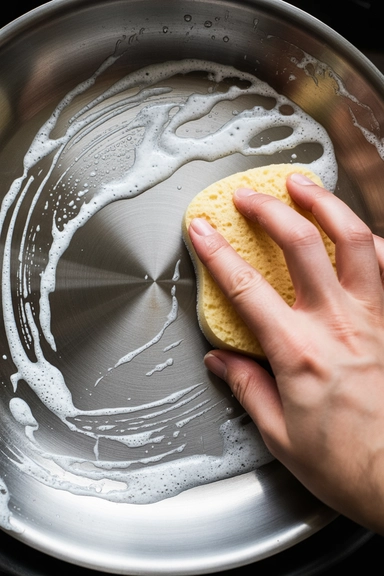
Mix three tablespoons of baking soda with enough dish soap to form a thick paste. Apply it directly to the dirty surface and let it sit for twenty minutes before scrubbing.
The paste clings to the sides and bottom in a way that liquid soap never does. That contact time is what actually breaks down the grease, not the scrubbing.
I used to skip the wait and just scrub immediately. The buildup barely moved. Letting it sit is not optional.
Why Salt Is the First Thing I Reach For
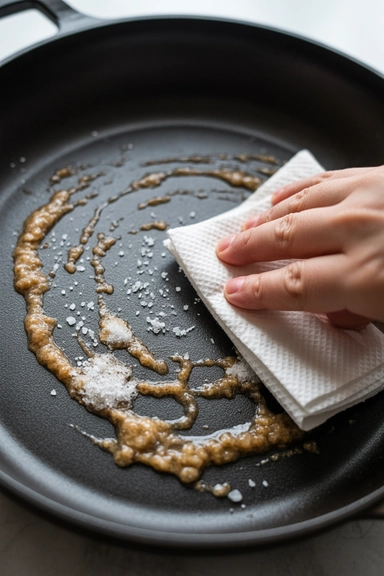
Coarse salt works as a physical abrasive that scrubs without scratching the way metal pads do. Pour a generous amount directly into the pan with a small splash of oil and scrub with a folded paper towel.
It pulls up residue and stuck bits that have been baked onto the surface over weeks of cooking. Works especially well on cast iron where you cannot use soap.
The trick is using enough salt to create actual friction. A pinch does nothing. A full tablespoon or two is what gets the job done.
Boiling Water Loosens Stuck Food Fast
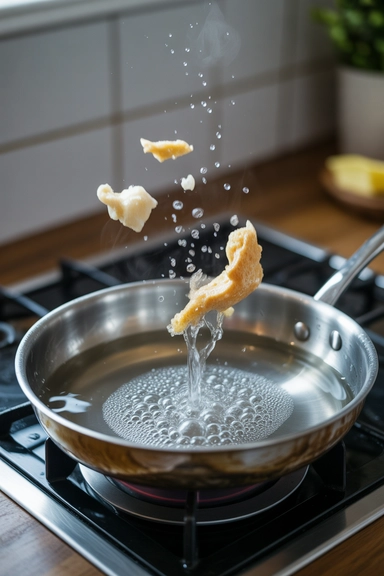
Fill the pan with water and bring it to a boil on the stove. Let it bubble for five minutes. The stuck food lifts on its own.
I do this the moment I finish cooking something that left a mess. Doing it while the pan is still warm speeds things up. Waiting until the pan is cold and the residue has hardened means you are doing this twice.
This works on stainless steel, non-stick, and enamel pans. Not the most glamorous tip but it saves a huge amount of scrubbing.
The Vinegar and Baking Soda Reaction Actually Clears Burnt Rings
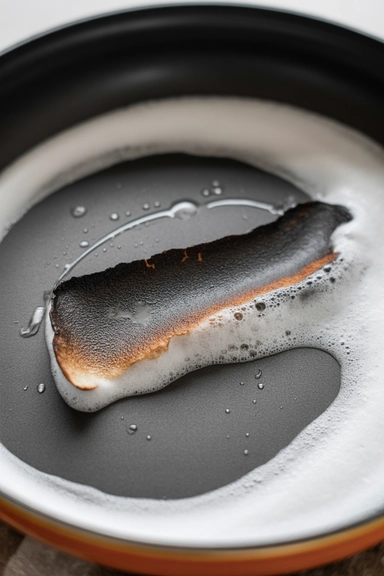
Pour a thin layer of white vinegar into the pan and bring it to a simmer. Remove from heat and add two tablespoons of baking soda. It will foam. That foam gets under the burnt layer.
Wait five minutes after the fizzing stops, then scrub with a soft sponge. The burnt residue comes up in sheets instead of flakes.
Do not add the baking soda while the pan is still on the burner. The reaction is fast and it will bubble over the edges.
Bar Keepers Friend Is the Product I Recommend to Everyone
I spent years using generic cleaners before someone handed me a can of Bar Keepers Friend at a kitchen store. It contains oxalic acid, which dissolves rust and mineral deposits without needing heavy scrubbing.
Wet the pan surface, sprinkle a small amount on, and rub in circles with a damp cloth. Rinse well. The pan looks almost new.
It works on stainless steel better than anything else I have tested. I keep a can under my sink and replace it every few months.
Dryer Sheets Remove Stuck Food Without Scrubbing
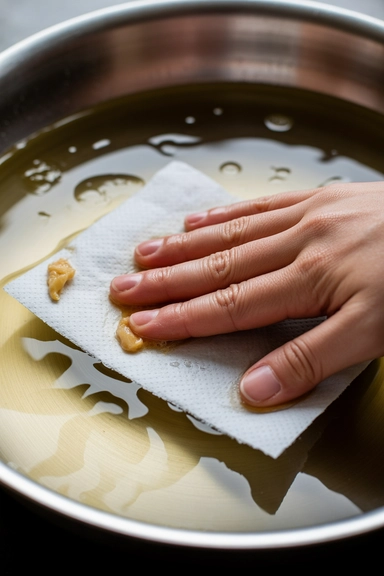
Place a dryer sheet in the pan, fill with warm water, and leave it for an hour. The sheet releases fabric softener compounds that break down the bond between food and the pan surface.
Drain the water and wipe. The residue comes off with almost no effort. I tested this on a casserole pan that had egg baked onto the bottom, and it worked better than soaking in soap water overnight.
The water only needs to cover the bottom. Using hot water speeds up the process to around thirty minutes.
Lemon and Salt Cuts Through Grease on Stainless Steel
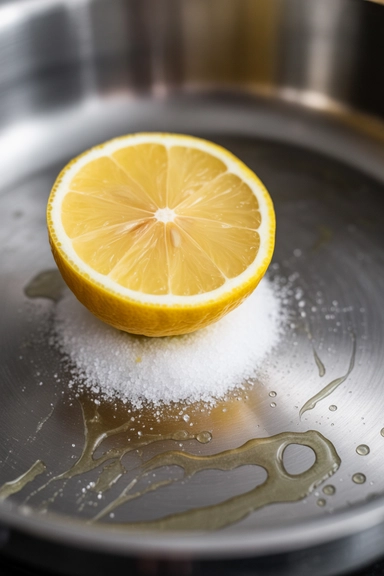
Cut a lemon in half, dip the cut side into coarse salt, and scrub directly on the pan surface. The citric acid in the lemon breaks down grease while the salt scrubs the residue loose.
This is my preferred method for how to clean stainless steel pans that have that dull greasy film from months of cooking. The lemon smell is a bonus. The clean surface is the real result.
Rinse well after because the acid will continue working on the metal if you leave it on too long.
Hydrogen Peroxide and Baking Soda on Baked-On Grease
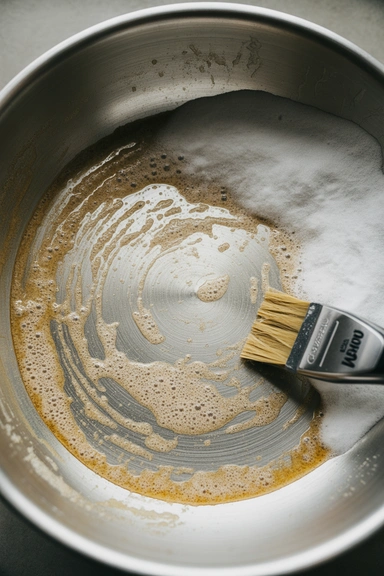
Sprinkle baking soda over the surface, then pour a small amount of hydrogen peroxide on top. Let the mixture sit for fifteen minutes before scrubbing.
The peroxide lifts the oxidized grease layer. The baking soda provides the grit. Together they work on the kind of baked-on grease that has been building for weeks.
I tried this on an old aluminum pan with thick brown buildup around the outside bottom. It did not fully remove every bit of that exterior buildup, but it took off around eighty percent in one pass, which is more than any other method managed.
Cream of Tartar Paste for Aluminum Pans
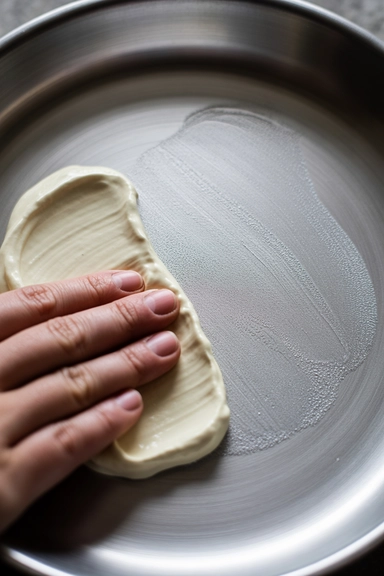
Mix two tablespoons of cream of tartar with enough water to form a paste. Apply to discolored or stained aluminum pans and let it sit for ten minutes.
Aluminum pans discolor easily and regular scrubbing makes it worse. Cream of tartar is slightly acidic and lifts the discoloration without damaging the surface.
This is not something most people have in their kitchen for this purpose. Most people use it for baking. It doubles as one of the best pan cleaning tips for aluminum specifically.
Oven Cleaner on Exterior Pan Bottoms
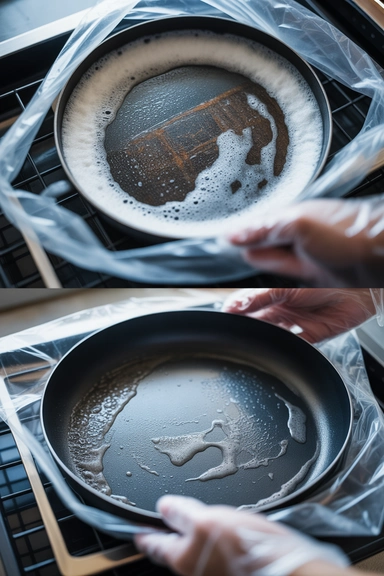
Spray the outside bottom of pans with oven cleaner, place them in a garbage bag, seal it, and leave overnight. Rinse the next morning.
The exterior bottom of pans gets ignored until the black buildup is half an inch thick. Regular methods barely touch it. Oven cleaner dissolves it.
Wear gloves. Rinse extremely well. Do not use this on non-stick surfaces or any interior surface. The exterior of stainless steel and aluminum handles it without damage. For tackling deeper buildup around your whole kitchen, these deep cleaning hacks cover methods that work on more than just pans. INTERNAL LINK
Ketchup Removes Tarnish from Copper Pans
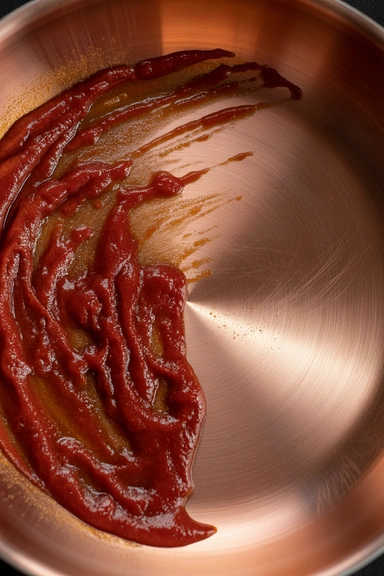
Spread a thin layer of ketchup directly onto copper or copper-bottomed pans. Leave it for twenty minutes. Rinse and buff dry.
Ketchup contains acetic acid from the vinegar and citric acid from the tomatoes. Both react with copper tarnish and lift it. I discovered this by accident and thought it sounded ridiculous. It works.
The pan needs to be dry before you apply it. Wet copper dilutes the acid concentration and the reaction is much slower.
Dishwasher Tablet Scrubbing Method
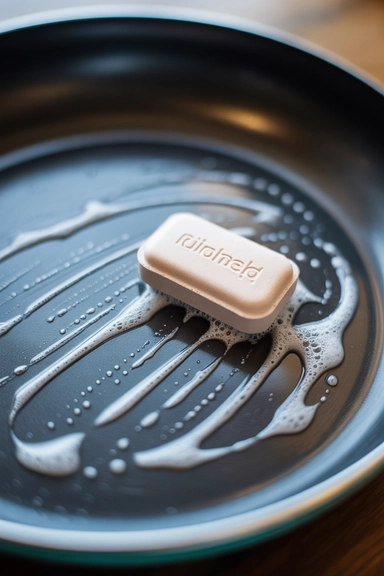
Wet a dishwasher tablet slightly, just enough to activate the surface. Use it directly as a scrubbing block on the stained areas.
The enzymes in dishwasher tablets target food proteins and grease in a way that dish soap does not. Rubbing the tablet directly on the surface concentrates those enzymes exactly where the problem is.
This works on the inside and outside of pans. The tablet crumbles as you use it. One tablet handles two or three pans before it is gone.
Comparison of Pan Cleaning Methods by Pan Type
| Method | Best Pan Type | How Long to Wait | Effort Level |
|---|---|---|---|
| Baking soda paste | All types | 20 minutes | Low |
| Bar Keepers Friend | Stainless steel | 5 minutes | Low |
| Salt and oil scrub | Cast iron | No wait | Medium |
| Boiling water | Stainless, enamel | 5 minutes boiling | Low |
| Oven cleaner | Exterior bottoms only | Overnight | Very low |
| Vinegar and baking soda | Stainless, enamel | 10 minutes | Low |
| Lemon and salt | Stainless steel | No wait | Medium |
Steel Wool Only on the Right Surfaces
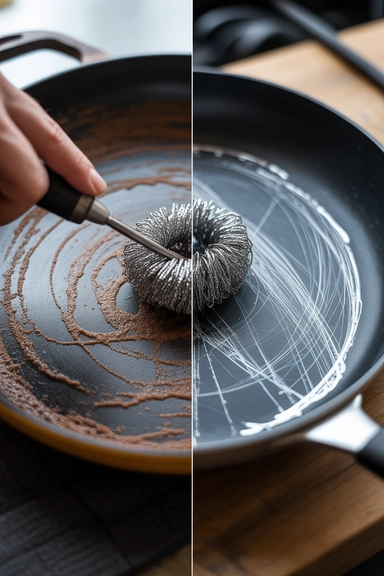
Steel wool removes stubborn burnt buildup fast. It also permanently damages non-stick coatings and scratches stainless steel badly enough to create grooves where bacteria collect.
Use steel wool only on cast iron and the exterior bottoms of stainless steel pans where scratching the finish does not matter. Anywhere else, use a nylon scrubbing pad or a soft sponge.
I learned this the hard way on a stainless steel pan I had owned for two years. The scratches filled with grease and the pan was harder to keep clean after, not easier.
Soaking in Washing Soda for Burnt Pan Cleaning
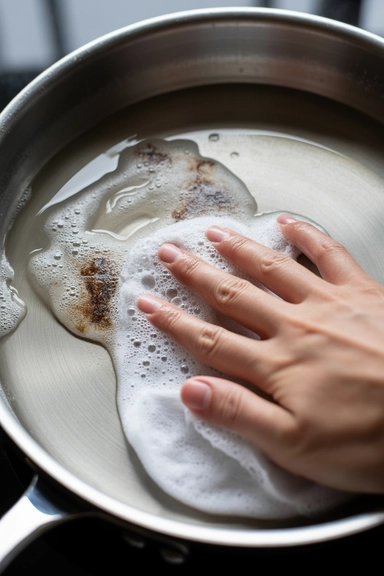
Washing soda, which is different from baking soda, dissolves stubborn burnt residue that other methods leave behind. Add two tablespoons to a pan of hot water and let it soak for two to three hours.
The alkalinity cuts through carbonized food and grease. After soaking, the burnt layer scrubs off with a regular sponge. No aggressive scrubbing needed.
Washing soda is inexpensive and available in the laundry section of most stores. It works on remove grease from pans that have been neglected for months.
Hairspray Gets Lipstick Out of Fabric
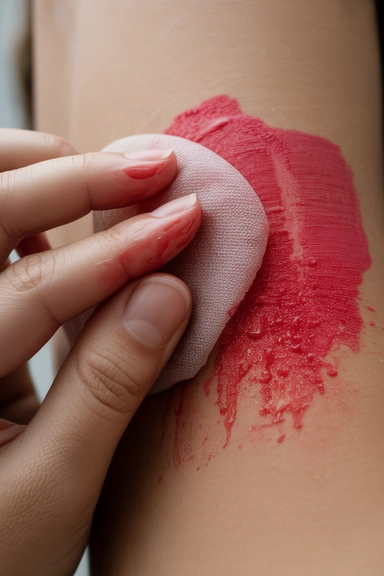
Spray a small amount of hairspray directly onto a lipstick stain and let it sit for five minutes. Blot with a clean damp cloth, working from the outer edge inward. Repeat once if needed before rinsing.
Lipstick contains wax, oil, and pigment. Hairspray breaks down the waxy binder holding the pigment to the fabric fiber. Once that bond loosens, blotting lifts the color rather than pushing it deeper.
Aerosol hairspray works better than pump spray here. The fine mist coats the stain more evenly. Use just enough to dampen the area, not soak it through.
Final Thoughts on Kitchen Pan Cleaning Hacks
The biggest lesson from testing all of these methods is that contact time matters more than scrubbing force. Most of the kitchen pan cleaning hacks here work because they let a chemical reaction do the heavy lifting before you touch the pan.
Match the method to the pan material. Cast iron, non-stick, stainless steel, aluminum, and copper all respond differently. Using the wrong method can leave the surface worse than before.
For everyday buildup, baking soda paste and boiling water handle most situations. For older, heavier buildup, Bar Keepers Friend on stainless and oven cleaner on exterior bottoms are the approaches that actually work.
FAQ About Kitchen Pan Cleaning Hacks
Can I use these cleaning methods on non-stick pans? Avoid anything abrasive on non-stick surfaces, including salt scrubs, steel wool, and dishwasher tablets used as scrubbers. Stick to the boiling water method, baking soda paste with a soft cloth, or soaking in dish soap and warm water. The coating scratches permanently and once it is gone, the pan is not safe to cook with.
How do I remove the black buildup from the outside bottom of pans? The exterior bottom buildup is carbonized grease from the burner. Regular dish soap does nothing to it. Oven cleaner left overnight in a sealed bag is the most effective method. For lighter buildup, a baking soda and hydrogen peroxide paste left for thirty minutes then scrubbed with a stiff brush takes off a significant amount.
Why does my stainless steel pan have a rainbow discoloration and how do I remove it? The rainbow pattern on stainless steel comes from heat discoloration, which happens when the pan gets too hot. It is not damage. Remove it by rubbing the surface with white vinegar on a soft cloth, or using Bar Keepers Friend. Both remove the discoloration completely in one pass.
Sarah Mitchell’s Take
Honestly, the pan I almost threw away last year is now one of the cleanest pans in my kitchen. I used the oven cleaner method on the outside bottom, then Bar Keepers Friend on the interior, and it looked nearly new. The thing most people miss is that the exterior gets just as dirty as the interior and needs its own approach. Start there. Most pan cleaning frustration comes from ignoring that bottom layer of baked-on grease entirely.