
Introduction
I used to keep seven different cleaning products under my kitchen sink. One for the toilet, one for glass, one for the stovetop, one for the bathroom tiles. Each one with a smell that lingered for an hour after using it in a small space. Then I ran out of the bathroom spray mid-clean and used diluted vinegar out of desperation. Worked the same. Actually better on the mineral deposits around the taps. I started testing the others one by one and replaced most of them within a month. Natural cleaning solutions are not a compromise. For a lot of jobs they outperform what they replace. If you want the broader set of methods without overcomplicating it, these easy cleaning hacks cover more ground the same way.
White Vinegar Replaces Most Surface Sprays
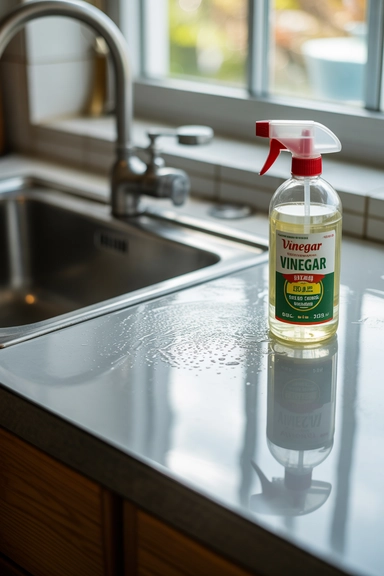
Equal parts white vinegar and water in a spray bottle. That is the all-purpose cleaner most homes need and almost none have.
It cuts grease, removes mineral deposits, kills surface bacteria, and leaves no residue film that attracts dust the way commercial sprays do. On kitchen counters, bathroom surfaces, stovetop spills, it handles all of it.
Do not use it on natural stone. Marble and granite get etched permanently by acid. Every other hard surface in a standard home is fine.
Baking Soda Scrubs Without Scratching
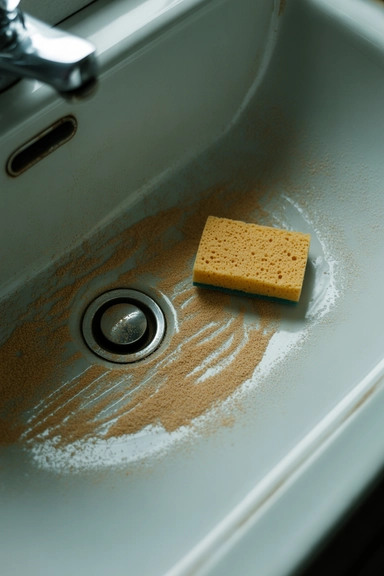
Sprinkle baking soda directly onto a surface and scrub with a damp cloth or sponge. Rinse after.
Baking soda is mildly abrasive in a way that lifts grime and staining without scratching the surface underneath. Sinks, oven interiors, tile grout, bathtubs. It works on all of them without the fumes that commercial abrasive cleaners produce in an enclosed bathroom.
For extra cleaning power, apply the baking soda first then spray vinegar on top. The fizzing reaction loosens surface buildup before scrubbing starts. Better than either one alone on stubborn spots.
Lemon Juice on Grease and Mineral Deposits
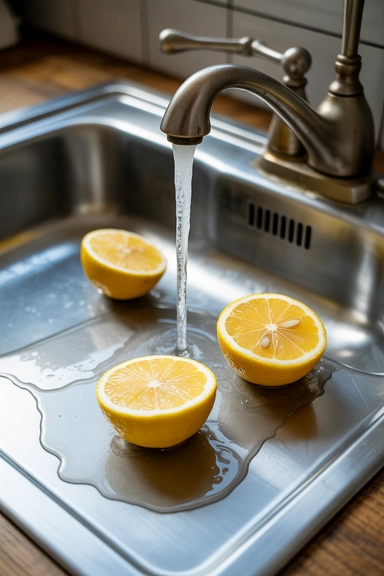
Squeeze lemon juice onto a greasy surface or a mineral deposit, leave ten minutes, wipe away.
Citric acid cuts through grease and dissolves calcium carbonate the same way commercial descalers do. The smell it leaves behind is clean rather than chemical. On stainless steel sinks and taps it removes water spots and leaves a faint protective layer from the peel oils.
Spent lemon halves still have enough acid to clean a stovetop after juicing. Use them before they go in the bin. One lemon doing two or three jobs before disposal is the version of natural cleaning that actually makes sense financially.
Castile Soap for Everything Dish Soap Does and More
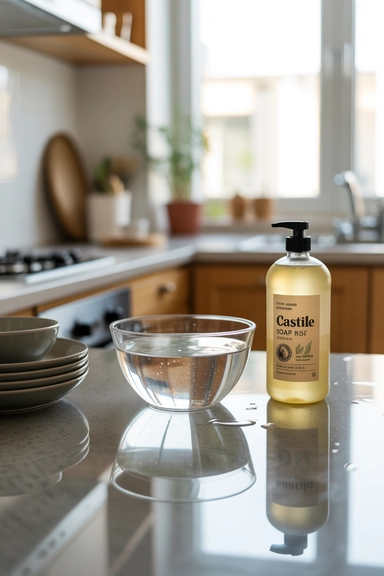
A few drops of castile soap in warm water handles dishes, floor mopping, surface wiping, and bathroom cleaning.
Castile soap is made from plant oils and biodegrades completely. It produces no fumes, leaves no synthetic residue, and is safe around food preparation surfaces without rinsing twenty times. Dr. Bronner’s is the brand I have used for years and the one I actually recommend rather than just mentioning generically.
Dilute it well. Concentrated castile soap leaves a white film on surfaces if not diluted enough. A few drops in a bucket of water is the right ratio for most jobs.
Salt as a Physical Abrasive on Stubborn Stains
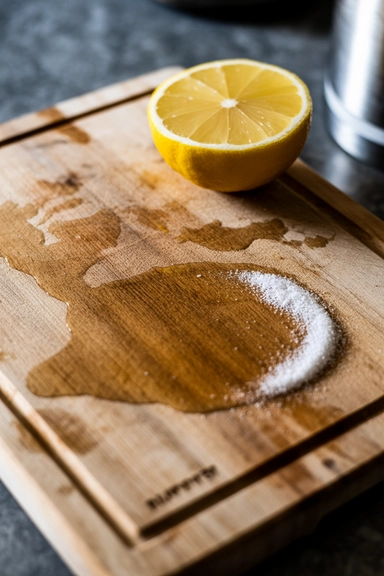
Coarse salt scrubbed directly onto a stained surface with a cut lemon or damp cloth removes buildup that baking soda alone cannot shift.
Wooden chopping boards, stained mugs, the inside of cast iron pans. Salt provides more physical abrasion than baking soda without scratching in the way that commercial scouring powders sometimes do on softer surfaces.
The lemon and salt combination specifically is better than either ingredient separately. The acid softens the stain while the salt scrubs it loose. Two minutes of actual scrubbing with this combination beats ten minutes with a sponge and dish soap on a stained wooden board.
Hydrogen Peroxide as a Non-Toxic Bleach Alternative
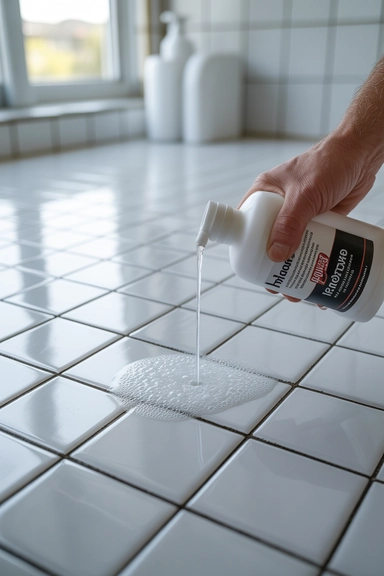
Spray three percent hydrogen peroxide onto surfaces that need disinfecting or whitening. Leave ten minutes, wipe away.
It kills bacteria, mold spores, and viruses on contact without the fumes that chlorine bleach produces. On white grout, white fabric, and bathroom tiles it brightens without the harsh chemical smell that makes bleach unpleasant to use in small spaces.
Do not mix it with vinegar in the same spray bottle. They form peracetic acid together which is corrosive and hard on lungs. Use them separately with a rinse in between if combining treatments on the same surface. For more ways to use hydrogen peroxide across different cleaning jobs, these baking soda cleaning hacks pair well with the hydrogen peroxide approach across the home.
Essential Oils for Antimicrobial Cleaning Power
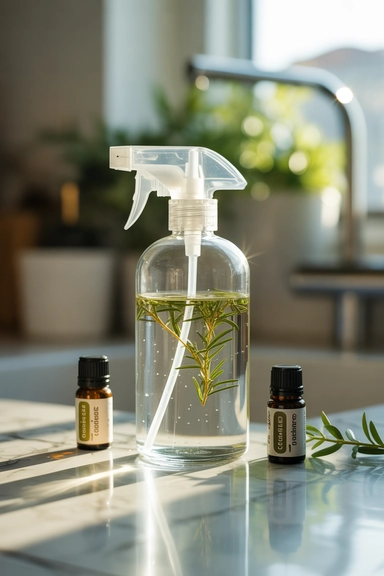
Add ten drops of tea tree oil or eucalyptus oil to a vinegar spray solution or a castile soap cleaning mix.
Tea tree oil is genuinely antifungal and antibacterial, not just pleasant smelling. It adds cleaning function to a natural solution rather than just masking the vinegar smell. Eucalyptus does similar work and cuts through grease better than tea tree on kitchen surfaces specifically.
These are not aromatherapy additions. The antimicrobial compounds in both oils are the reason they work. The smell is a side effect of those compounds, not the point.
Cornstarch for Windows and Glass Surfaces
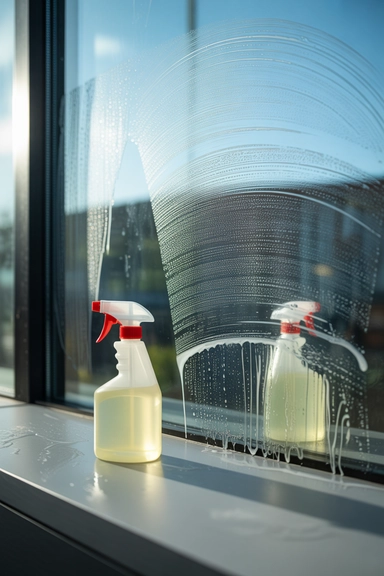
Mix one tablespoon of cornstarch with half a cup of white vinegar and two cups of warm water. Use it on windows and mirrors.
Cornstarch polishes glass at the same time as cleaning it. The result is streak free in a way that vinegar solution alone sometimes is not, particularly on large windows where the solution can dry before buffing. The cornstarch slows that evaporation slightly and fills micro-scratches on the glass surface.
Shake before each use. Cornstarch settles to the bottom within minutes of mixing.
Borax for Heavy Duty Natural Cleaning
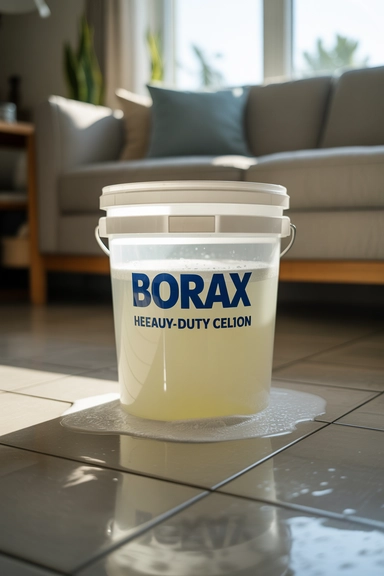
Mix half a cup of borax with a gallon of warm water for floor mopping, toilet cleaning, and mold treatment on grout.
Borax is a naturally occurring mineral that disinfects, deodorizes, and inhibits mold growth. It is stronger than vinegar for heavy cleaning jobs and safer than bleach on porous surfaces. Available in the laundry section of most supermarkets.
Not edible and should be kept away from children and pets during use and storage. Natural does not automatically mean harmless in every context. Borax is safe used as directed and rinsed properly, but it is not something to handle carelessly.
Olive Oil and Vinegar for Wood Furniture Polish
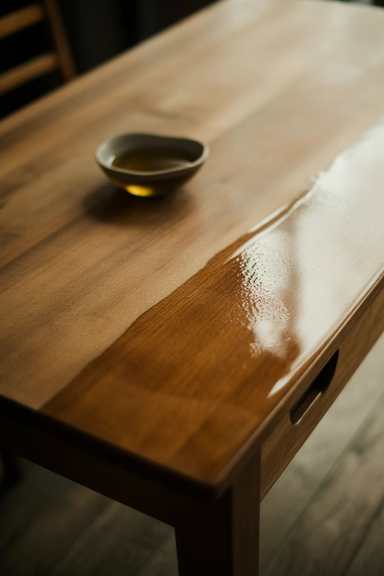
Two tablespoons of white vinegar, one tablespoon of olive oil, mixed and applied with a soft cloth in the direction of the wood grain, buffed dry.
The vinegar strips the residue left behind by commercial furniture polishes that builds up over months of use. The olive oil moisturizes and protects the wood underneath. One step cleans and conditions rather than adding another layer of synthetic wax on top of the previous layers.
Works on unfinished, waxed, or lightly oiled wood. Not on lacquered furniture where neither ingredient can penetrate the finish.
Newspaper for Streak Free Glass

Scrunch a sheet of newspaper into a loose ball and buff mirrors and windows dry after cleaning with any solution.
Newspaper leaves no lint. Even good microfiber cloths shed slightly on glass in certain light. The ink and paper texture polishes as it buffs and the result is visibly clearer than cloth on mirrors and windows. An old method that still outperforms most modern alternatives on glass specifically.
Use it for the buffing step only, not for applying the cleaning solution. Apply solution with a cloth first, then buff dry with the newspaper.
Baking Soda and Vinegar in Drains
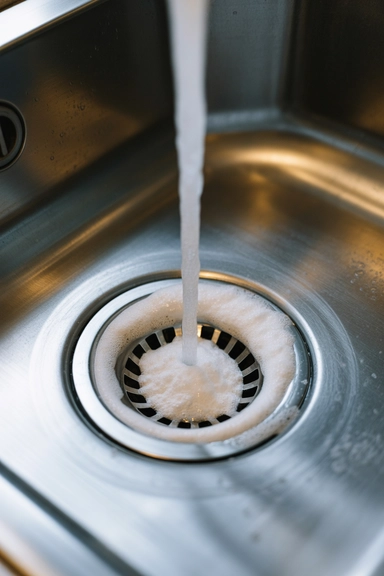
Pour half a cup of baking soda down a slow drain, follow with half a cup of white vinegar, leave thirty minutes, flush with boiling water.
The fizzing reaction breaks up the organic buildup, grease, and soap scum that slow drains down over time. Does the same job as chemical drain cleaners without the caustic compounds that damage pipes over years of use.
Do this monthly on kitchen and bathroom drains before they slow down rather than waiting until there is a blockage. Prevention takes three minutes. Dealing with a blocked drain takes considerably longer.
Club Soda on Fresh Spills and Stains
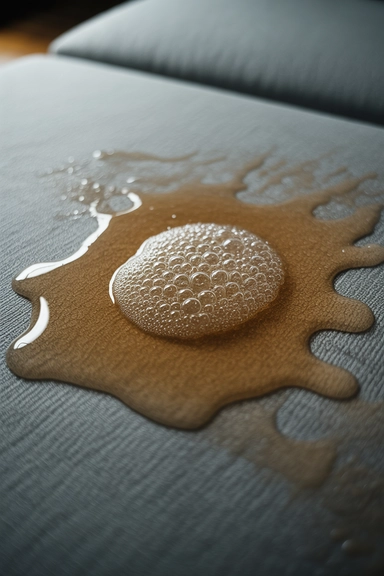
Pour club soda directly onto a fresh spill on carpet or fabric and blot immediately with a clean cloth.
The carbonation lifts the spill from the fibers before it bonds. Works on wine, juice, coffee, most liquid spills if done within the first minute or two. After that the stain starts setting and club soda loses its advantage over plain cold water.
Keep a bottle under the kitchen sink. The window for this method is narrow and having it immediately available is what makes it useful. A bottle you have to go searching for while a red wine spill is soaking into the carpet defeats the purpose.
Rubbing Alcohol as a Natural Disinfectant Spray
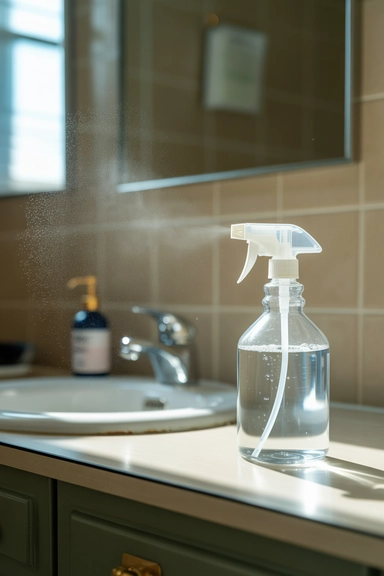
Mix two parts rubbing alcohol with one part water and ten drops of tea tree oil in a spray bottle.
Rubbing alcohol at seventy percent concentration kills bacteria and viruses on hard surfaces within thirty seconds of contact. The tea tree adds antifungal coverage. Together they disinfect without bleach fumes or synthetic compounds in a formulation that costs almost nothing to make.
This is the spray I keep by the bathroom sink for daily surface wiping. It dries fast, leaves no residue, and the smell of the tea tree fades within minutes. Commercial disinfectant sprays do the same job and cost significantly more per use.
Cream of Tartar on Metal Stains and Discoloration
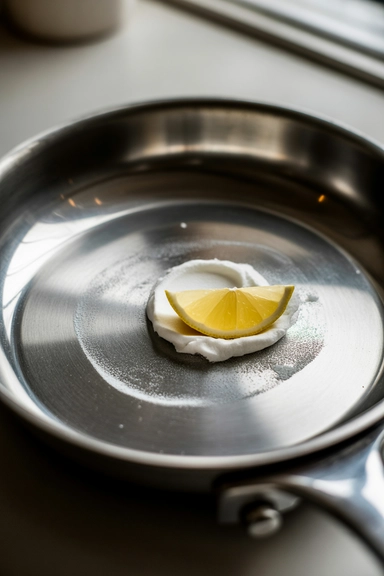
Mix cream of tartar with enough lemon juice or white vinegar to form a paste. Apply to metal staining, rust marks, or discolored aluminum, leave ten minutes, scrub and rinse.
Cream of tartar is mildly acidic and works on metal oxidation stains that baking soda alone does not shift. Aluminum pans that have gone dark inside, chrome fixtures with rust staining, stainless steel with discoloration from heat. All of them respond to this paste in one treatment.
Most people have cream of tartar in the kitchen for baking and never think to use it for anything else. It costs almost nothing and handles metal staining better than most products sold specifically for that purpose.
How Natural Cleaning Methods Compare to Commercial Products
| Natural Method | Replaces | Works As Well | Cost Comparison |
|---|---|---|---|
| Vinegar spray | All-purpose cleaner | Yes on most surfaces | Much cheaper |
| Baking soda | Abrasive scrub powder | Yes | Much cheaper |
| Hydrogen peroxide | Bleach disinfectant | Yes on most jobs | Cheaper |
| Castile soap | Dish soap and surface cleaner | Yes | Similar or cheaper |
| Borax solution | Heavy duty floor cleaner | Yes | Cheaper |
| Lemon juice | Descaler and degreaser | Yes | Cheaper |
| Rubbing alcohol mix | Disinfectant spray | Yes | Much cheaper |
Final Thoughts on Natural Cleaning Hacks That Skip Harsh Chemicals
The switch from commercial cleaners to natural cleaning solutions is not about ideology. It is about finding out that most of what is in a commercial cleaner is either fragrance, preservatives, or marketing. The active cleaning compounds in most products are acids, alkalis, or surfactants. Vinegar is an acid. Baking soda is an alkali. Castile soap is a surfactant. The natural versions do the same chemical work at a fraction of the cost.
The situations where commercial products genuinely outperform natural alternatives are heavy mold infestations, serious drain blockages, and deep grease buildup that has been accumulating for years. For everything else, the natural methods in this list handle it without the fumes, the expense, or the cupboard full of single-purpose bottles.
Start with vinegar, baking soda, and castile soap. Those three cover probably eighty percent of what a household needs to clean. Everything else in this list handles the specific situations those three do not.
FAQ About Natural Cleaning Hacks That Skip Harsh Chemicals
Are natural cleaning solutions actually as effective as commercial cleaners at killing germs? For everyday surface bacteria yes. White vinegar kills many common bacteria and some viruses on contact. Hydrogen peroxide at three percent concentration kills a broader range of pathogens including mold spores and some viruses. Rubbing alcohol at seventy percent is one of the most effective surface disinfectants available regardless of whether it is natural or commercial. The situations where commercial disinfectants have a genuine advantage are hospital-grade sanitization requirements that household cleaning does not actually need to meet.
Can I mix natural cleaning ingredients together to make them stronger? Some combinations work well and some are dangerous. Vinegar and baking soda together fizz effectively for drain cleaning but neutralize each other’s cleaning power on surfaces so using them simultaneously on a stain is less effective than using either one properly alone. Hydrogen peroxide and vinegar should never go in the same bottle. Bleach, even natural sodium hypochlorite, should never be mixed with anything acidic. When in doubt, use ingredients separately and rinse between applications.
Will switching to natural cleaners save money? Yes significantly for most households. A large bottle of white vinegar, a box of baking soda, and a bottle of castile soap together cost less than most single commercial cleaning products and between them replace five or six of them. The ongoing cost per clean drops considerably. The one area where natural cleaning costs more is essential oils, which are optional additions rather than necessary components of any method in this list.
Sarah Mitchell’s Take
Seven bottles under the sink became three within about six weeks of testing this properly. Vinegar spray, castile soap, baking soda. That is genuinely what I use now for most of the house. The thing nobody tells you is how much easier it is to clean regularly when you are not dealing with fumes in a small bathroom or worrying about mixing products accidentally. I clean more often now partly because it is less unpleasant to do. That was not a benefit I expected and it turned out to be one of the more useful ones.