
Introduction
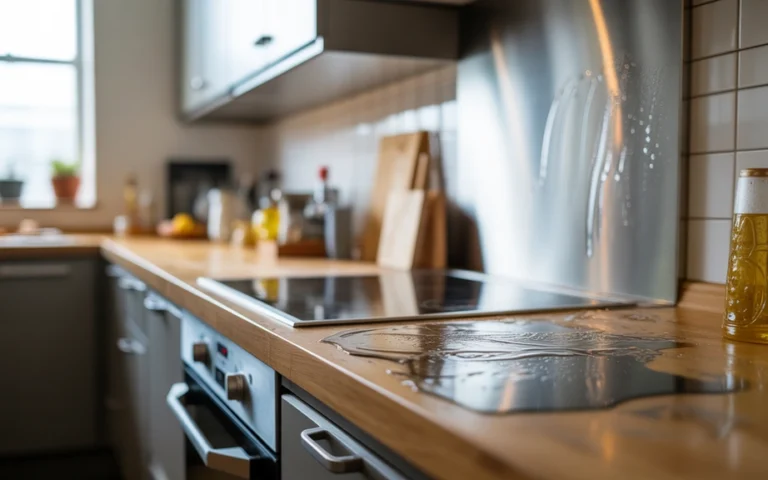
The grease behind my stove sat there for eight months before I dealt with it, and when I finally did, I understood why people just move instead. Kitchen grease is a different problem from regular dirt. It bonds to surfaces, traps odors, and builds up in layers that surface sprays barely touch. These kitchen cleaning hacks are the ones that actually work on grease, not just dust and crumbs. If your kitchen storage situation makes cleaning harder than it needs to be, kitchen storage hacks will help you clear the clutter that gets in the way.
Dish Soap Is Your Best Degreaser
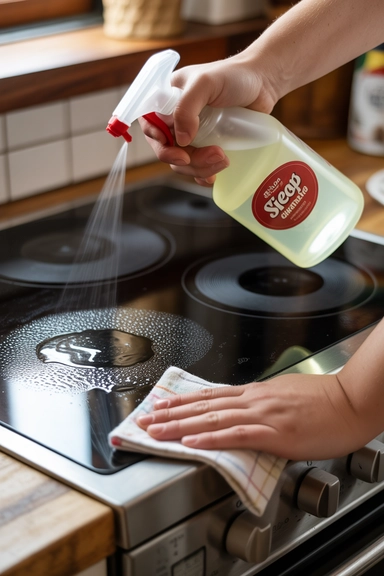
Commercial degreasers get all the attention, but plain dish soap outperforms most of them on kitchen grease. Dish soap is specifically formulated to break down fat and oil molecules. That is its entire purpose.
Mix a few drops of dish soap with warm water in a spray bottle and use it on stovetops, cabinet fronts, and range hood surfaces. Let it sit for two minutes before wiping. The grease lifts off cleanly without the harsh chemical smell most commercial sprays leave behind.
I switched to this after a commercial degreaser left a white film on my cabinet doors that took longer to remove than the original grease.
The Range Hood Filter Nobody Cleans Often Enough
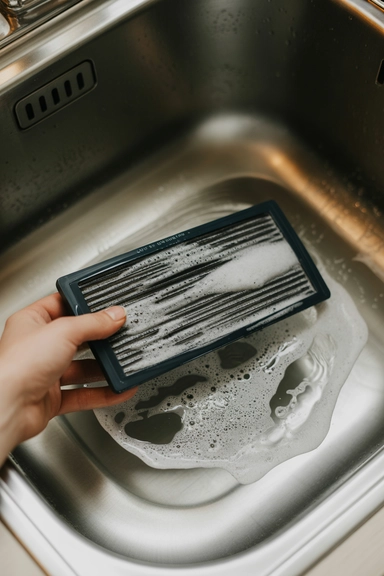
Pull your range hood filter out right now and hold it up to the light. If you cannot see through it, it has not been cleaned in too long. A clogged filter stops capturing grease and starts recirculating it back into your kitchen air.
Submerge the filter in a sink of very hot water with two tablespoons of dish soap and two tablespoons of baking soda. Leave it for 15 minutes. The grease dissolves without any scrubbing. Rinse under hot running water and dry completely before replacing.
Do this every six to eight weeks and the filter never reaches the point where soaking alone stops working.
Baking Soda Paste for Stovetop Grease
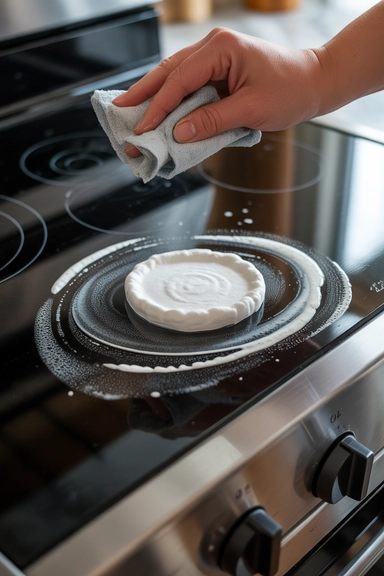
Liquid sprays run off vertical and textured stovetop surfaces before they have time to work. A paste stays in contact with the grease long enough to break it down properly.
Mix three tablespoons of baking soda with enough dish soap to form a thick paste. Apply it directly to the greasy surface and leave it for ten minutes. Scrub with a damp cloth using straight strokes. The mild abrasion from the baking soda combined with the degreasing action of the soap cuts through baked-on grease without scratching the surface.
This paste works on ceramic, gas burner grates, and enamel stovetops equally well.
Why Your Microwave Smells and How to Fix It Fast
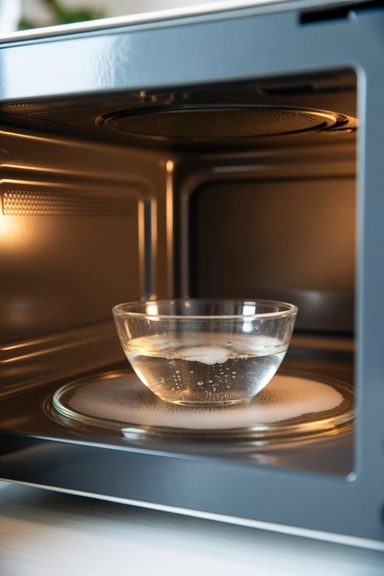
Splatter builds up on microwave walls and gets reheated hundreds of times until it bonds to the surface and turns into a smell source that no wipe-down reaches. The trick is steam, not scrubbing.
Fill a microwave-safe bowl with one cup of water and two tablespoons of white vinegar. Heat it on high for five minutes. Leave the door closed for another three minutes after it stops. The steam loosens every layer of splatter and the vinegar neutralizes the odor at the same time.
Open the door and wipe every surface with a damp cloth. Nothing requires scrubbing. The whole process takes under ten minutes including wait time.
Cleaning Oven Grease Without Harsh Chemicals
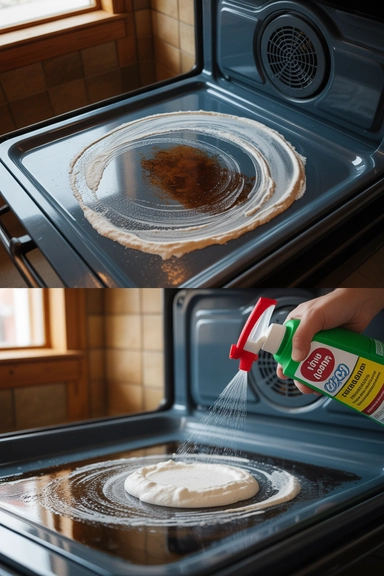
Commercial oven cleaners work but the fumes are genuinely unpleasant and the product requires careful rinsing to avoid leaving residue. Baking soda and hydrogen peroxide handle most oven grease without either problem.
Coat the oven interior with a thick layer of baking soda paste made with just enough water to spread. Spray hydrogen peroxide over the paste and leave the combination overnight. In the morning, wipe out the loosened grease with a damp cloth. For burned-on spots, a plastic scraper removes the residue without scratching the enamel.
This method takes longer than commercial cleaner but leaves no chemical smell and requires no protective gloves.
The Backsplash Grease That Keeps Coming Back
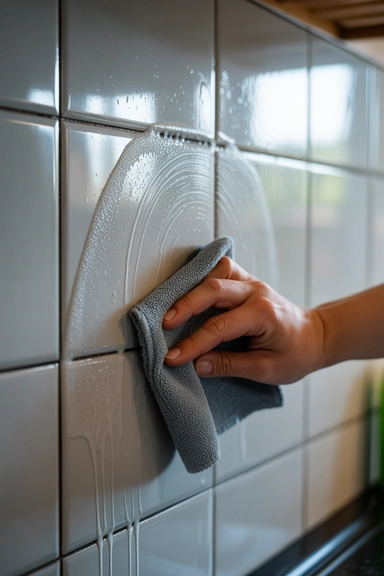
Kitchen backsplashes attract a constant mist of cooking grease that builds into a sticky film. Wiping it with a dry cloth just moves it around. Water alone does not cut through it.
Spray the backsplash with diluted dish soap solution and let it sit for two minutes. Wipe with a damp microfiber cloth using horizontal strokes from one end to the other. Dry immediately with a second cloth to prevent water spots on tile grout.
For grout lines that have turned brown from grease buildup, apply baking soda paste directly to the grout, leave it five minutes, and scrub with a stiff brush. The difference after one treatment is significant. For more on tackling grout throughout your kitchen and bathroom, grout cleaning hacks covers every method worth knowing.
Cabinet Fronts Collect More Grease Than You Think
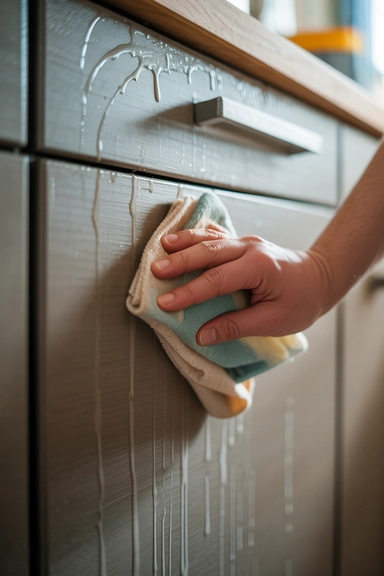
Open your kitchen cabinets and feel the fronts of the doors closest to the stove. That tacky film is cooking grease that has been settling there every time you cook. It attracts dust on top of it and eventually turns into a layer that plain spray cannot penetrate.
Mix equal parts white vinegar and warm water with a few drops of dish soap. Apply with a cloth and let it sit for one minute before wiping. For heavier buildup, use the baking soda and dish soap paste and leave it two minutes before wiping clean.
Wipe cabinet fronts every two weeks to prevent the buildup from reaching the stage where soaking is required.
What to Do With a Greasy Cast Iron Pan
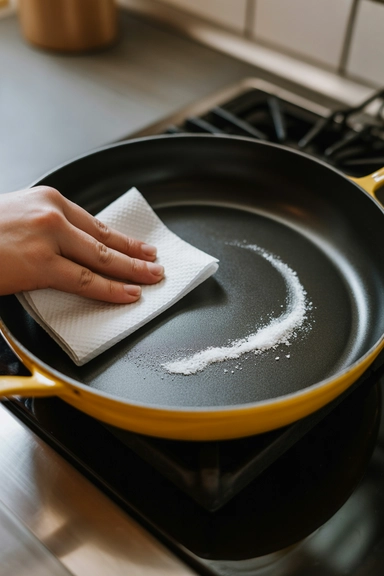
Water and soap strip the seasoning from cast iron, but leaving grease buildup on the pan creates rancid residue that affects the flavor of everything cooked in it. The right method cleans the pan without destroying what makes it worth using.
While the pan is still warm from cooking, pour a small amount of coarse salt into it and scrub with a folded paper towel. The salt acts as an abrasive that lifts food and grease residue without touching the seasoning. Wipe out the salt, rinse quickly with warm water only, and dry immediately over low heat on the stove for one minute.
Never soak cast iron and never put it in the dishwasher. Two minutes of warm care after each use keeps it in better condition than any cleaning product.
Cutting Boards Hold Grease and Odor Together
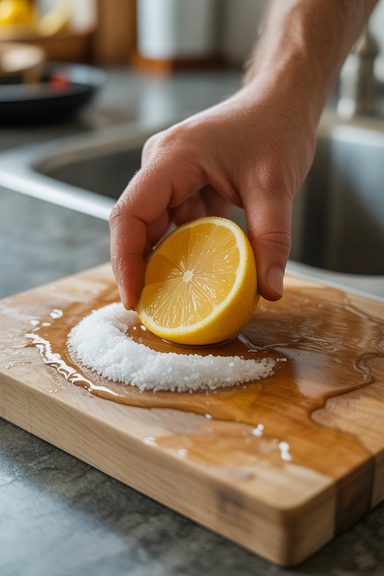
Wooden cutting boards absorb grease from meat and fish into the grain, which causes persistent odors that soap alone never fully removes. Plastic boards develop knife grooves that trap the same residue in channels a cloth cannot reach.
Sprinkle coarse salt over the board and rub half a lemon across the surface using the cut side down. The salt scrubs while the lemon acid breaks down grease and neutralizes odor. Leave the combination on the board for three minutes before rinsing with hot water.
Do this weekly on wooden boards and after every raw meat use on plastic boards.
Comparison: Grease Cleaning Methods by Surface
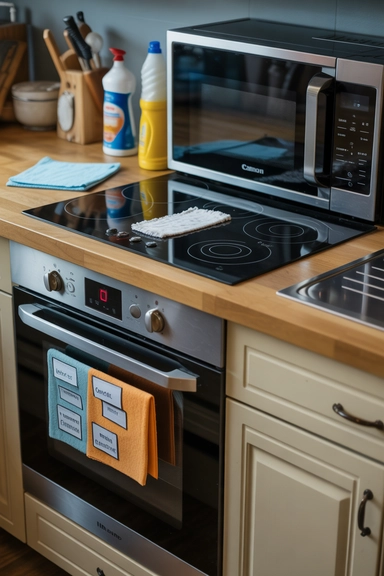
| Surface | Best Method | Dwell Time | Scrubbing Needed |
|---|---|---|---|
| Stovetop | Baking soda and dish soap paste | 10 minutes | Light |
| Microwave | Steam with vinegar water | 5 minutes | None |
| Cabinet fronts | Vinegar, water, and dish soap | 1 to 2 minutes | Light |
| Oven interior | Baking soda paste and hydrogen peroxide | Overnight | Minimal |
| Range hood filter | Hot water, dish soap, baking soda soak | 15 minutes | None |
Every surface in this list responds better to dwell time than to immediate scrubbing. The method matters less than giving the product time to work.
Garbage Disposal Grease and Odor Combined
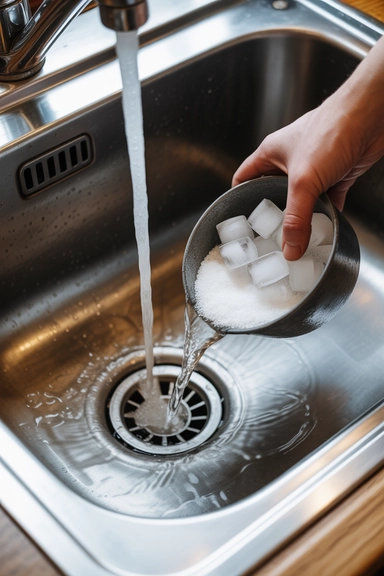
A garbage disposal that smells is almost always a grease problem, not a drainage problem. Grease coats the rubber splash guard and the interior walls and goes rancid over time. Deodorizing sprays mask the smell without touching the source.
Drop six ice cubes and two tablespoons of coarse salt into the disposal and run it for thirty seconds with cold water. The ice and salt scour the interior walls and break up grease deposits. Follow immediately with half a cup of baking soda and half a cup of white vinegar. Let the fizzing run for one minute before flushing with hot water.
Repeat this once a week and the disposal stays odor-free without any commercial product.
The Grease Splatter Behind Your Stove
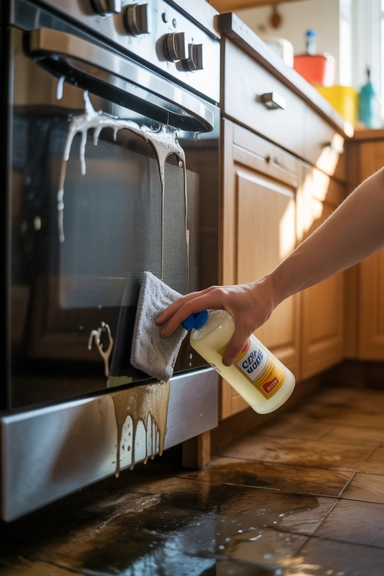
Pulling the stove out from the wall is the cleaning task most people delay for years. The wall behind it and the floor beneath it collect a concentrated layer of grease splatter from every cooking session.
Pull the stove out once every three months. Wipe the wall with a dish soap and warm water solution, leaving it two minutes before wiping clean. Sweep and mop the floor section underneath. Push the stove back and seal the gap on each side with a silicone stove gap cover, which stops the next three months of splatter from reaching the floor and wall entirely.
The covers cost very little and eliminate one of the most unpleasant recurring cleaning jobs in any kitchen.
Dish Rack Buildup That Never Looks Clean
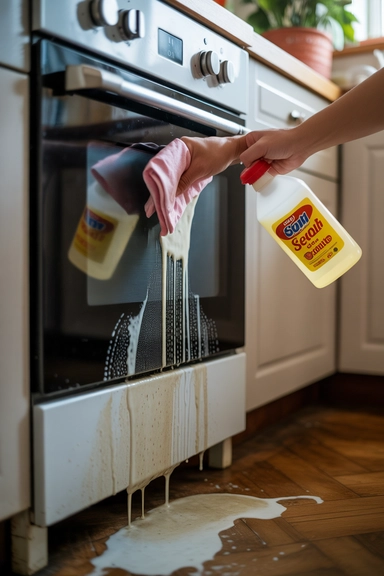
Dish racks develop a white mineral crust from hard water combined with soap residue and food particles from draining dishes. Scrubbing it with a sponge spreads the residue without removing it.
Soak the entire rack in a sink filled with equal parts white vinegar and warm water for thirty minutes. The vinegar dissolves mineral deposits and soap scum simultaneously. Rinse under running water and dry with a cloth before replacing.
Do this monthly and the rack stays visibly clean between soaks with a simple weekly rinse.
Greasy Stovetop Knobs and the Spots Around Them
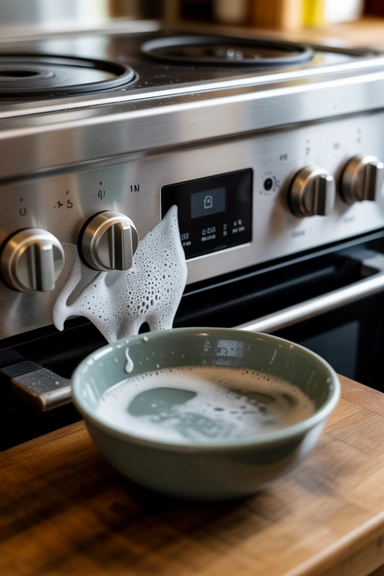
Stovetop knobs and the panel around them collect a combination of cooking grease and hand oils from daily use. They are touched constantly and cleaned almost never.
Remove the knobs completely. Soak them in warm soapy water for five minutes while you wipe the panel behind them with a dish soap solution. The grease on the panel is often heaviest directly behind each knob where splatter accumulates and cloths cannot reach when the knobs are in place.
Dry the knobs completely before replacing them. Moisture trapped between the knob and the panel causes the same buildup to return faster.
The Last Step That Makes a Kitchen Feel Actually Clean
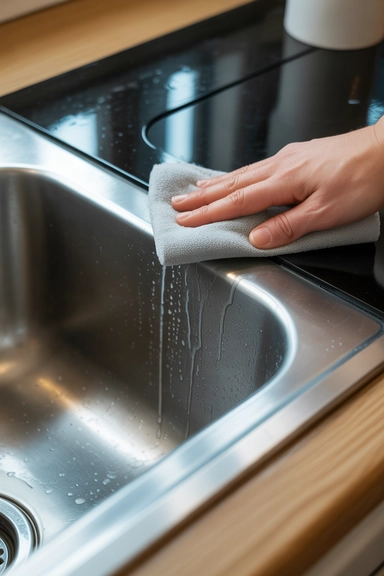
A kitchen can be fully degreased and still feel unclean because of one overlooked surface: the inside edge of the sink where it meets the counter. Food particles, grease, and moisture collect in that seam constantly and produce a sour smell that no amount of surface wiping removes.
Run a damp cloth along the full seam where the sink meets the counter every time you wipe down the kitchen. Follow with a dry cloth to remove moisture. For the drain itself, pour boiling water down it after every cooking session. Boiling water melts grease that has coated the drain walls before it has a chance to solidify and build up.
This two-minute habit at the end of every kitchen session keeps the space smelling genuinely clean rather than just looking clean.
Final Thoughts on Kitchen Cleaning Hacks
Kitchen grease is a waiting game. Every method on this list works better with dwell time than with immediate effort. Spray, paste, or soak, then wait, then wipe. Fighting grease in a hurry produces mediocre results regardless of the product you use.
The surfaces most people miss, range hood filters, cabinet fronts, the wall behind the stove, and the sink seam, are the ones that determine how a kitchen actually smells and feels. Clean those consistently and the kitchen stays at a baseline that routine wiping can maintain.
Start with the stovetop paste and the microwave steam method. Those two alone will change how your kitchen looks within one session.
FAQ About Kitchen Cleaning Hacks
How do I remove grease from kitchen walls without damaging the paint? Mix a few drops of dish soap into warm water and apply with a soft cloth. Wring the cloth nearly dry before touching the wall so excess moisture does not soak into the paint. Wipe gently using straight strokes rather than circular scrubbing. For heavier grease near the stove, apply the dish soap solution and leave it thirty seconds before wiping. Always dry the wall immediately after cleaning to prevent moisture damage.
How often should I deep clean my kitchen to prevent grease buildup? Wipe stovetops and backsplashes after every cooking session to prevent fresh grease from bonding. Clean cabinet fronts, range hood filters, and the microwave every four to six weeks. Pull the stove out and clean behind it every three months. This schedule prevents grease from reaching the stage where soaking and extended dwell time become necessary.
Can I use the same cleaning method on all kitchen surfaces? No. Natural stone counters react badly to vinegar and acidic solutions. Stainless steel scratches from abrasive pastes applied with rough cloths. Cast iron loses its seasoning from soap and water soaking. Always match the method to the surface material rather than applying one solution across the whole kitchen.
Sarah Mitchell’s Take
The kitchen is the one room where skipping a two-minute wipe after cooking costs you an hour of work three weeks later. Grease does not stay soft and easy to remove. It cures onto surfaces the same way paint does, and by the time you notice it, you are dealing with a restoration job rather than a cleaning task. Wipe the stovetop while it is still warm. That single habit prevents more grease problems than every other hack on this list combined.