
Introduction
Four months. That is how long I assumed the low pressure in my shower was a plumbing problem before I actually looked at the showerhead up close. Every single nozzle was blocked solid with white mineral crust. I had been wiping around it for weeks and never once thought to soak the thing. Twenty minutes with white vinegar and a sandwich bag and the pressure came back completely. Most limescale problems are not complicated. They just get ignored until they look impossible. If your bathroom has buildup on more than just fixtures, these bathroom cleaning hacks cover the wider picture.
White Vinegar Wrapped Around Taps Actually Works
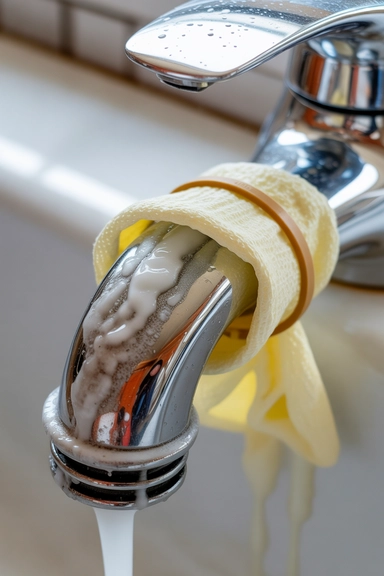
Soak a cloth in undiluted white vinegar, wrap it around the tap, and hold it in place with a rubber band. Leave it. Minimum two hours, overnight if the buildup is thick and crusty.
The acetic acid dissolves calcium carbonate deposits. That is the whole mechanism. No scrubbing needed during the soak, the acid does the work.
Rinse well after. Vinegar sitting on chrome once the limescale is gone starts affecting the finish. Remove it, rinse immediately, dry with a soft cloth.
The Sandwich Bag Trick for Showerheads
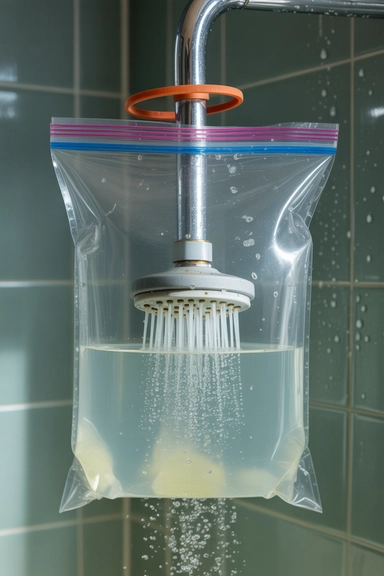
Fill a sandwich bag with white vinegar, pull it up over the showerhead so the nozzles sit fully submerged, and secure it with a rubber band. Leave it overnight.
Run the shower on full pressure for thirty seconds after removing the bag. The loosened deposits flush out and the pressure difference is immediate. This is genuinely the fix I wished someone had told me earlier.
I do this every three months now. Light regular soaks beat trying to shift six months of solid buildup in one session.
Lemon Juice on Tiles and Grout Lines
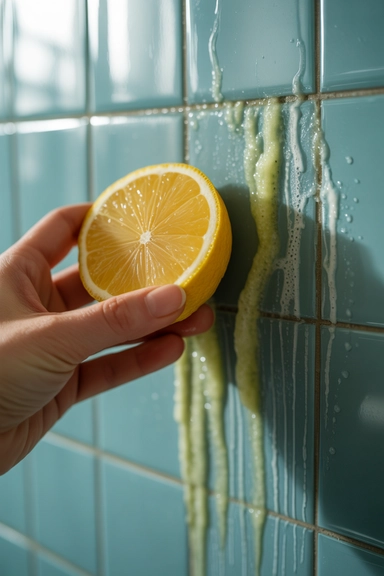
Cut a lemon in half and rub the cut side directly onto the deposit. Leave it ten minutes, scrub with an old toothbrush, rinse.
Citric acid works the same way as vinegar on calcium carbonate but without the sharp smell. On grout lines specifically, an old toothbrush gets the acid into the porous surface where the mineral layer actually sits.
Bottled lemon juice is easier for larger areas. Pour it on, spread it around, let it sit. Same result without squeezing twelve lemons.
Baking Soda and Vinegar in Sinks
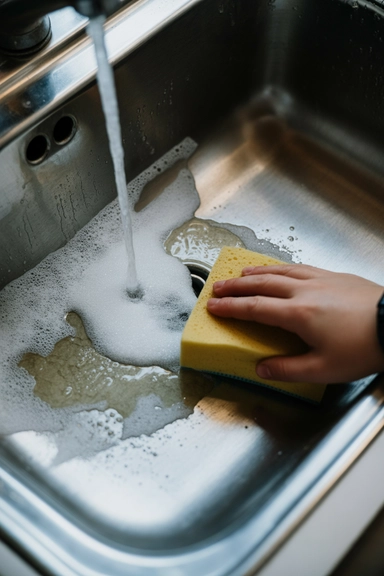
Sprinkle baking soda over the deposit, pour white vinegar on top, watch it fizz. Leave it fifteen minutes then scrub with a non-scratch sponge.
The fizzing loosens the surface layer fast. The baking soda stays behind after the reaction and adds physical scrubbing grit. Better on sinks than vinegar alone for that reason.
Do not do this on marble or natural stone. Acid etches those surfaces permanently. Ceramic, porcelain, stainless steel, all fine.
Descaling Tablets in the Kettle
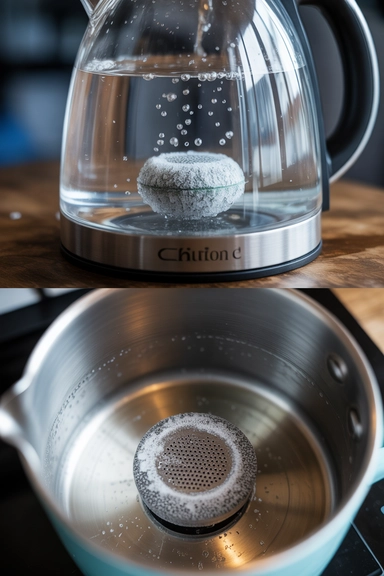
Two tablets, full kettle of water, bring to a boil, leave twenty minutes, discard, rinse three times. That is the whole process.
Limescale on the heating element makes the kettle work harder and use more electricity. It also flakes into drinks eventually, which is unpleasant in a way that is hard to un-notice once you have seen it happen.
Every six to eight weeks in a hard water area. More often than that is unnecessary, less often and the buildup gets ahead of you.
Citric Acid Powder for the Really Stubborn Stuff
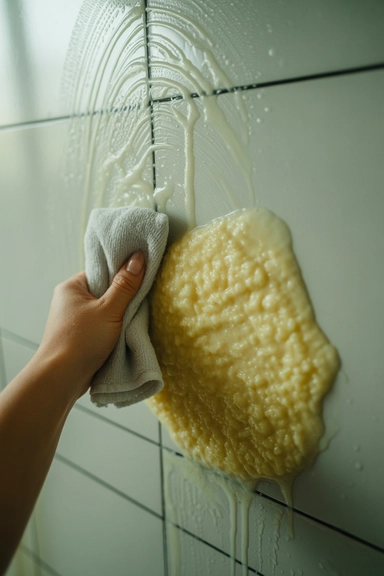
Two tablespoons dissolved in half a liter of warm water. Apply with a cloth, leave thirty minutes, scrub, rinse.
Citric acid powder is stronger than white vinegar on thick old deposits. Faster too. And no vinegar smell, which matters when you are cleaning a small bathroom with the door closed.
Available in the baking aisle of most supermarkets. I switched to this for anything with serious buildup after vinegar started feeling too slow on the really neglected surfaces.
Cola in the Toilet Bowl
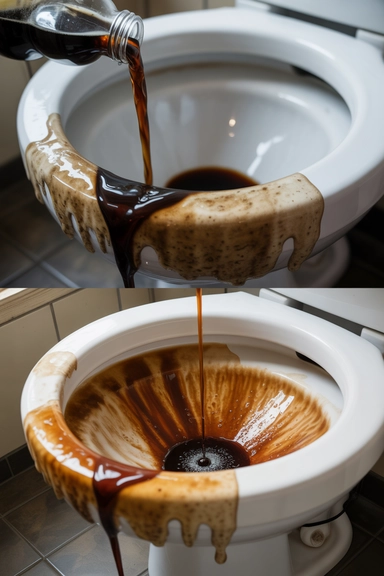
Pour a full can around the inside of the bowl, make sure it reaches under the rim, leave it an hour. Scrub with the toilet brush, flush twice.
Cola contains phosphoric acid. Same principle as vinegar but in a form most people already have in the house. The carbonation helps lift the loosened deposits off the surface.
For heavy buildup under the rim that commercial toilet cleaner has not shifted, leave the cola overnight. Flush twice in the morning. It works on rust-colored mineral stains at the same time.
Cling Film to Keep Vinegar in Contact Longer
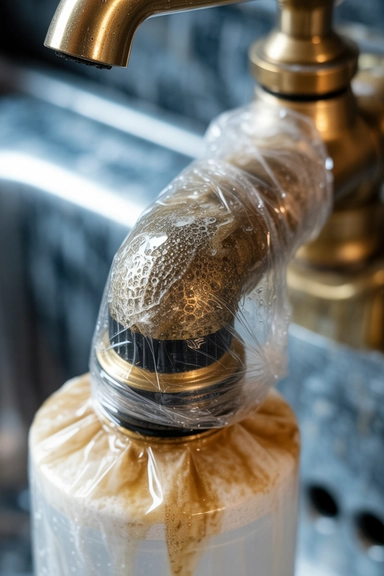
Apply vinegar to the tap or fixture with a cloth, then wrap the whole thing tightly in cling film. Leave overnight.
Vinegar on a vertical surface runs off within minutes without the wrap. The cling film seals it against the deposit for hours. More contact time means the acid does more work before you have to scrub anything.
This handles buildup that a short soak cannot shift. No extra product needed, just cling film from the kitchen drawer.
Bar Keepers Friend on Sinks and Steel
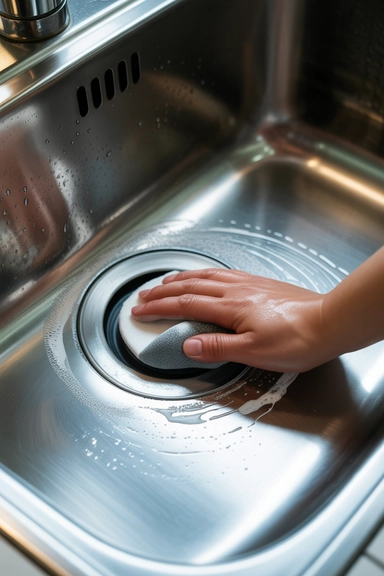
Wet the surface, sprinkle Bar Keepers Friend on, scrub in circles with a damp cloth, rinse after two minutes. Not longer than two minutes.
The oxalic acid in it dissolves mineral deposits and rust stains faster than vinegar on most hard surfaces. Works on sinks, tiles, taps, stainless steel. Does not scratch with a soft cloth.
Two minutes maximum. Extended contact on chrome and stainless dulls the finish. Apply, scrub, rinse. The speed is the point with this product.
Salt and Vinegar Paste on Textured Surfaces
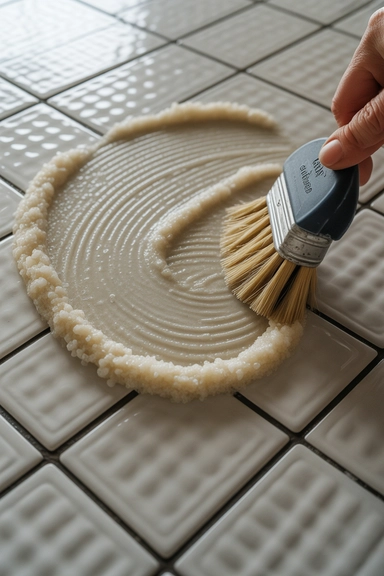
Mix coarse salt with white vinegar into a thick paste. Scrub it onto the deposit with a stiff brush or old toothbrush, rinse well.
Pure vinegar runs off textured tiles and shower trays before it has time to work. The salt holds the acid against the surface and adds physical abrasion at the same time. For anything with a texture or pattern that limescale has settled into, this combination works better than either ingredient alone.
Smooth surfaces are fine with vinegar only. Textured ones need the paste. For more methods that use common household products on hard water deposits, these hard water stain cleaning hacks go into the toughest mineral buildup situations in detail.
Denture Tablets for Vases and Narrow Containers
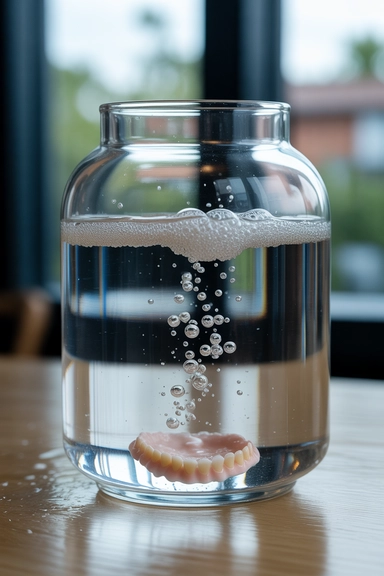
Two tablets, warm water, leave thirty minutes, rinse.
That is genuinely the whole method. Denture tablets contain citric acid and mild abrasives that reach every internal surface of a container regardless of shape. No brush needed, no scrubbing. The fizzing does the physical work.
Glass vases, water bottles, coffee carafes. Anything where you cannot get a cloth or brush inside properly. Cheap, available everywhere, and most people already have them somewhere.
Toothpaste on Light Chrome Deposits
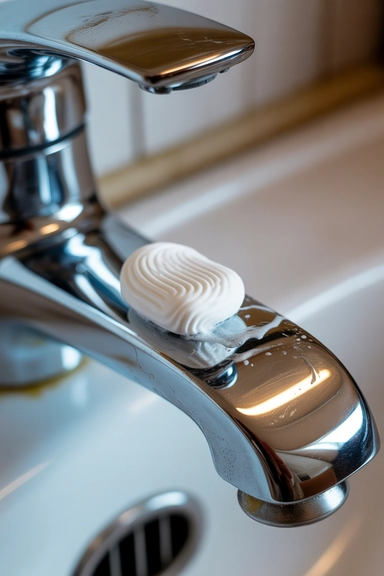
Plain white toothpaste on a soft cloth, rub onto light deposits on chrome, leave five minutes, buff and rinse.
Works on light to moderate buildup only. Thick crusty deposits laugh at toothpaste. Use an acid soak for those first, then toothpaste for the final surface polish afterward.
Gel toothpaste does not work here. Only plain white paste. I use this between deeper cleans for a quick touch-up on taps that are starting to look dull but do not need a full treatment yet.
Washing Up Liquid and Hot Water on Glass Shower Screens
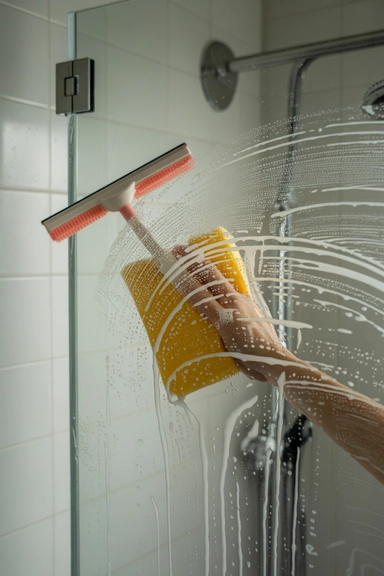
A few drops of washing up liquid in very hot water, apply with a sponge, scrub in circles, rinse with hot water, squeegee dry immediately.
Limescale on glass is a calcium film left behind by evaporating water droplets. The washing up liquid emulsifies it and the hot water helps it release. Simple and effective for regular maintenance.
Squeegeeing the screen dry after every shower stops the film forming in the first place. Two minutes of squeegee use after each shower cuts descaling sessions from weekly to monthly. That is the actual time-saving hack here.
Vinegar Spray as a Prevention Layer
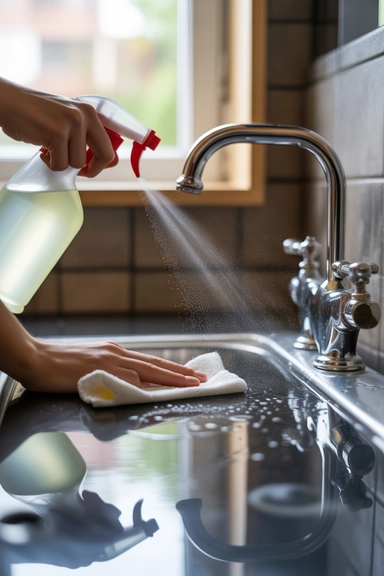
One part white vinegar, three parts water, spray bottle. After descaling any surface, mist it lightly and wipe dry.
The thin acid layer slows new deposit formation. Does not stop it entirely but extends the gap between deep cleaning sessions. I started doing this on the shower screen and taps after every weekly clean. Buildup that used to reappear within ten days now takes closer to three weeks.
Thirty seconds of prevention versus thirty minutes of descaling. Not a difficult trade.
Steel Wool on Exterior Surfaces Only
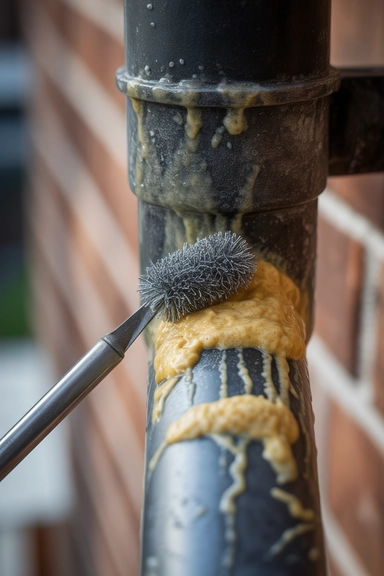
Finest grade steel wool, labeled 0000, used only on surfaces where scratching does not matter. Exterior of pipes, behind fixtures, areas no one sees.
Apply vinegar first, wait twenty minutes to soften the deposit, then use the steel wool to remove what remains. The chemical softening does most of the work and reduces the physical force needed.
Never on chrome, ceramic, or any visible finished surface. Even fine steel wool leaves marks on those. This is for the hidden thick crusty buildup that chemical methods alone take too long to shift.
How Common Descaling Methods Compare
| Method | Best Surface | Strength | Wait Time |
|---|---|---|---|
| White vinegar soak | Taps, showerheads, tiles | Moderate | 2 hours to overnight |
| Citric acid powder | Heavy buildup anywhere | Strong | 30 minutes |
| Bar Keepers Friend | Sinks, stainless steel | Strong | 2 minutes maximum |
| Lemon juice | Tiles, grout, light deposits | Mild | 10 minutes |
| Cola | Toilet bowl | Moderate | 1 hour to overnight |
| Denture tablets | Narrow containers, vases | Mild to moderate | 30 minutes |
| Descaling tablets | Kettles and appliances | Strong | 20 minutes |
Final Thoughts on Limescale Cleaning Hacks
Contact time is the thing most people skip. The acid needs to sit against the deposit long enough to dissolve it before any scrubbing starts. Rushing that step is why most attempts at removing limescale feel like they are not working.
Match the method to how bad the buildup actually is. Light deposits respond to lemon juice and short soaks. Old thick buildup needs citric acid powder or Bar Keepers Friend with proper dwell time. Using a mild method on serious buildup just wastes the afternoon.
Prevention is faster than descaling every single time. Squeegee the screen, spray the vinegar solution, dry the taps. The buildup that causes the most work is always the buildup that got ignored the longest.
FAQ About Limescale Cleaning Hacks
Is limescale actually harmful to health? Limescale itself is not harmful. It is calcium carbonate, the same compound in chalk and some antacid tablets. The damage is functional. It blocks nozzles, coats heating elements, reduces appliance efficiency, and forces components to work harder than they should over time. In kettles it eventually flakes into drinks, which is unpleasant rather than dangerous but still a reason to descale regularly.
Why does limescale come back so fast after cleaning? Hard water contains high mineral content that deposits calcium carbonate every time water evaporates from a surface. Cleaning removes existing buildup but does nothing to change the water composition. The only ways to slow regrowth are drying surfaces immediately after water contact, applying a thin acid barrier spray after cleaning, or installing a water softener that removes minerals before they reach fixtures.
Can vinegar damage chrome taps if used too often? Yes, if left on too long or used undiluted repeatedly over time. White vinegar at the contact times listed here is safe on chrome. The risk comes from leaving acid solutions on the surface after the limescale is already gone, or soaking chrome in undiluted vinegar for longer than needed. Always rinse immediately once the deposit lifts and dry with a soft cloth. The finish stays intact with correct use.
Sarah Mitchell’s Take
I have wasted more time scrubbing limescale dry than I care to admit. No product, just physical effort, convinced that harder scrubbing would eventually shift it. It never did. What actually works is patience with the soak and almost no scrubbing at all. Wrap the tap, leave it overnight, come back in the morning, wipe it off. The first time that worked I genuinely stood there annoyed at myself for all the time spent scrubbing before I tried it. Apply the acid, leave it alone, come back later. That is the whole thing.