
Introduction
Grease does not announce itself. It builds in a thin layer, then another, then another, until the day you run your hand along the top of a cabinet or the side of the stove and realize what you have been living with. I had that moment in my kitchen about eighteen months into living in my current place. The surface felt tacky in a way that wiping had never fixed because wiping was never the right approach. These kitchen grease cleaning hacks are the ones that actually cut through it. For the stove specifically, kitchen stove cleaning hacks goes deeper on that one surface.
Dish Soap Is a Degreaser Already
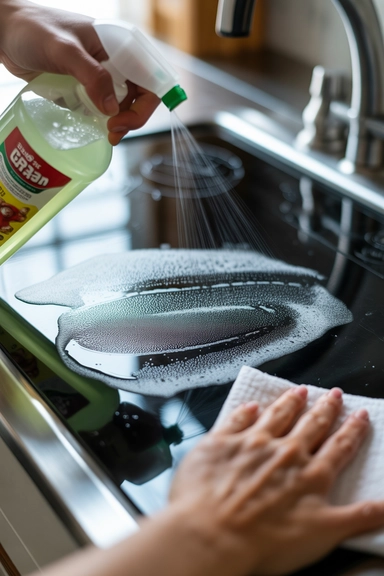
People spend money on specialty degreasers without realizing dish soap is already formulated to break down fat. That is its entire job. The reason it works on dishes covered in cooking grease is the same reason it works on every greasy surface in a kitchen.
Mix a few drops into warm water in a spray bottle. Spray greasy surfaces and leave it two minutes before wiping. The surfactants in the soap attach to grease molecules and lift them off the surface when you wipe.
For heavier buildup spray it on and leave it five minutes. Still no scrubbing required on fresh grease.
Baking Soda Paste for Grease That Has Hardened
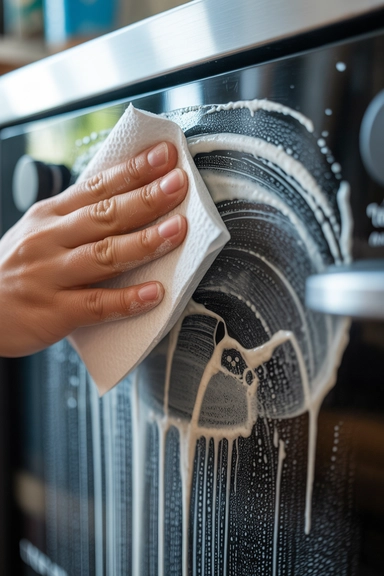
Fresh grease and hardened grease are two different problems. Dish soap solution handles fresh grease easily. Grease that has been reheated and cooled repeatedly has partially cured onto the surface and needs something with physical lift as well as chemical action.
Mix baking soda with enough dish soap to form a thick paste. Apply it directly to the hardened grease and leave it for ten minutes. The baking soda provides mild abrasion and the dish soap breaks down the fat. Wipe away with a damp cloth using straight strokes.
This paste works on stovetops, cabinet fronts, range hoods, and backsplash tiles without scratching any of them.
Heat Makes Every Grease Method Work Better
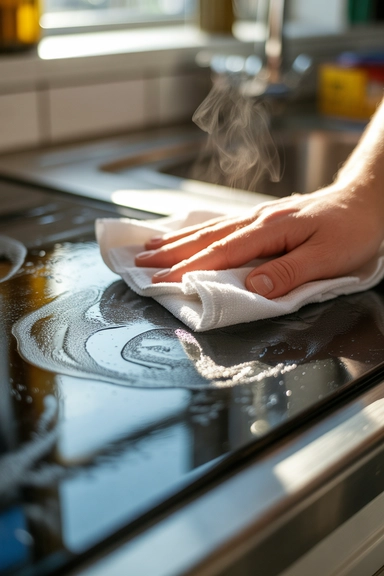
Cold grease resists cleaning. Warm grease releases from surfaces with a fraction of the effort required on a cold surface. Fat is a lipid and lipids soften with heat the same way butter softens when you leave it on the counter.
Hold a warm damp cloth against a heavily greased surface for thirty seconds before applying any cleaning method. The warmth softens the grease layer and opens the surface so whatever you apply next penetrates rather than sitting on top.
This works especially well on the side panels of a stove and the wall behind it where grease has been repeatedly heated and cooled into a harder layer than anywhere else in the kitchen.
White Vinegar Has a Specific Job in Grease Cleaning
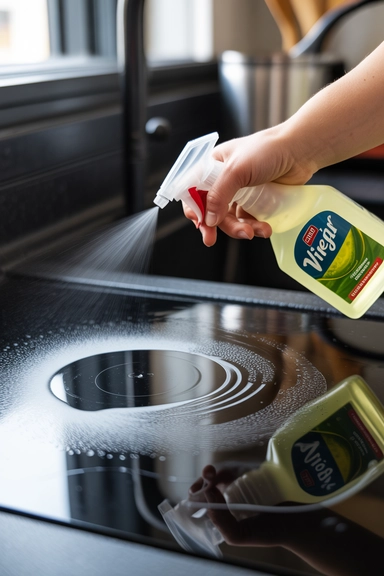
A common mistake is using white vinegar as a primary degreaser. Vinegar is acidic and works on mineral deposits, hard water stains, and soap scum. Grease is fat-based and does not respond to acid the way mineral buildup does.
Use vinegar as a finishing rinse after degreasing, not as the degreasing agent itself. After removing grease with dish soap or baking soda paste, spray diluted vinegar over the surface and wipe clean. It removes any remaining soap residue and leaves the surface streak-free.
Mixing vinegar and dish soap together in one bottle neutralizes both products. Use them as separate steps in sequence.
The Range Hood Filter Is the Most Neglected Grease Trap
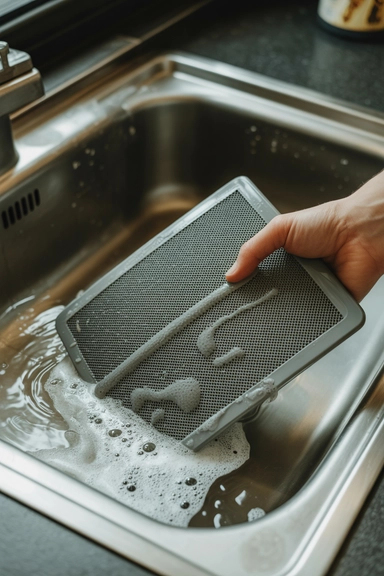
Every cooking session sends grease-laden air upward into the range hood. The filter catches that grease. Over months it builds into a layer thick enough to see light through and the filter stops working, recirculating grease back into the kitchen air instead of trapping it.
Remove the filter and submerge it in very hot water with two tablespoons of dish soap and two tablespoons of baking soda. Leave it fifteen minutes. The grease dissolves during the soak without scrubbing. Rinse under hot running water and dry completely before replacing.
Do this every six weeks. A clean filter genuinely reduces how much grease lands on every other kitchen surface.
Cabinet Fronts Near the Stove Need Weekly Attention
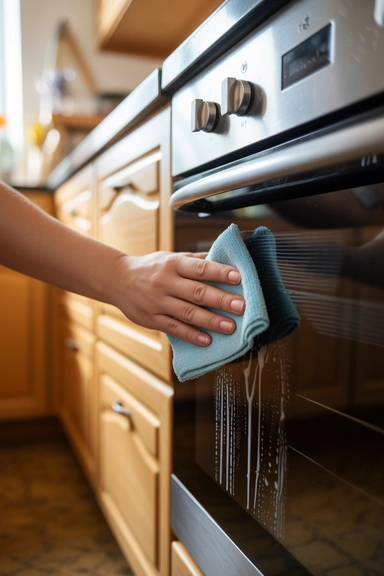
The cabinets directly above and beside the stove collect more cooking grease than any other cabinet in the kitchen. Most people wipe them down occasionally during a general kitchen clean. That is not often enough for the cabinets in the cooking zone.
Wipe those specific cabinets weekly with a dish soap solution applied to a damp cloth. Two minutes. The grease has not had time to harden at that frequency and it comes off with almost no effort.
Leave it for a month and the same surface needs baking soda paste and real dwell time to clean properly. The difference in effort between weekly and monthly is not small.
Hydrogen Peroxide on Oxidized Grease Stains
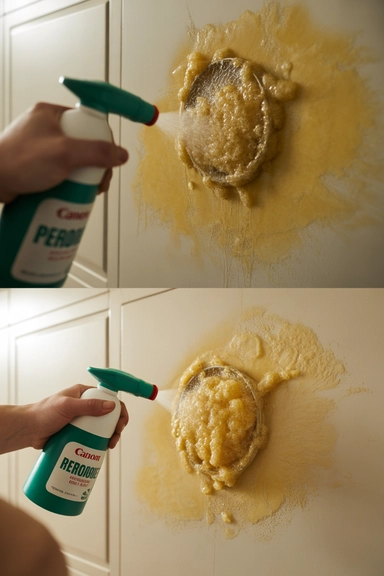
Grease that has been sitting long enough turns from a clear tacky film into a brownish-yellow stain. That discoloration is oxidized fat and it looks like permanent damage on cabinet surfaces and walls. It is not permanent but dish soap alone will not remove it.
Apply baking soda paste to the stain and spray hydrogen peroxide directly over it. The peroxide activates the baking soda and together they break down the oxidized compounds causing the discoloration. Leave the combination for fifteen minutes before wiping away.
Two applications remove what one aggressive scrubbing session cannot. Work gently and give the chemistry time to do the job.
Grease Behind the Stove and Above the Cabinets
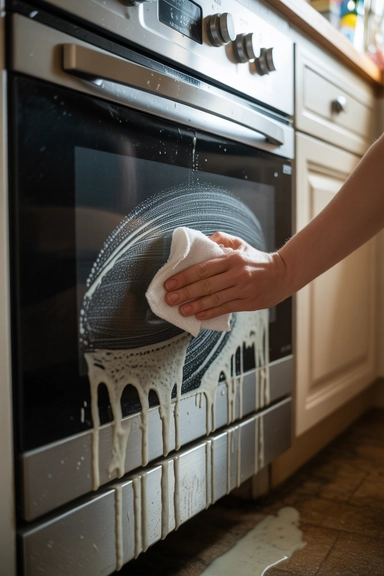
These two surfaces collect the heaviest grease deposits in any kitchen because heat rises and carries grease vapor with it. Cabinet tops and the wall behind the stove receive concentrated grease from every cooking session and almost never get cleaned.
Pull the stove out every three months. Wipe the wall behind it with dish soap solution and leave it two minutes before wiping clean. Wipe cabinet tops with the same solution applied to a cloth rather than sprayed directly.
Line cabinet tops with parchment paper after cleaning. Replace the liner every two months instead of scrubbing the surface each time.
Kitchen Grease Cleaning Methods by Surface
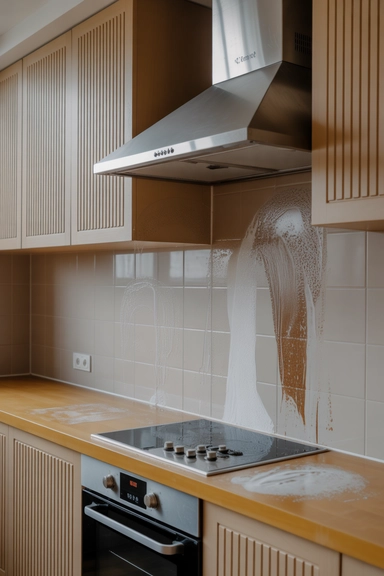
| Surface | Best Method | Dwell Time | Avoid |
|---|---|---|---|
| Cabinet fronts | Dish soap solution | 2 minutes | Abrasive pads |
| Range hood filter | Hot water baking soda soak | 15 minutes | Dry scrubbing |
| Stovetop | Baking soda and dish soap paste | 10 minutes | Oven cleaner |
| Wall behind stove | Dish soap solution, barely damp cloth | 2 minutes | Excess moisture |
| Cabinet tops | Dish soap solution on cloth | 2 minutes | Direct spraying |
Every surface responds better to dwell time than to immediate scrubbing. Apply the method, wait, then wipe.
Grease on Kitchen Walls Without Damaging Paint
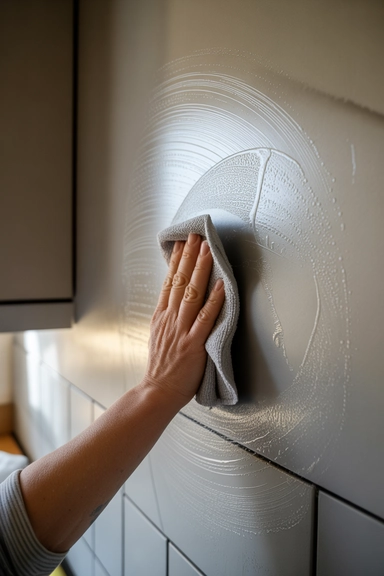
Kitchen walls near the stove develop a grease film that attracts dust and eventually shows as a yellowish discoloration. The cleaning mistake that causes damage here is using too much moisture on painted drywall.
Apply dish soap solution to a cloth and wring it nearly dry before touching the wall. Wipe with straight strokes and dry the wall surface immediately with a second dry cloth. Never let moisture sit on painted drywall even briefly.
For oxidized grease stains on walls, the baking soda and hydrogen peroxide paste applied with a soft cloth works without requiring the scrubbing pressure that damages paint.
The Backsplash Grease That Returns Every Week
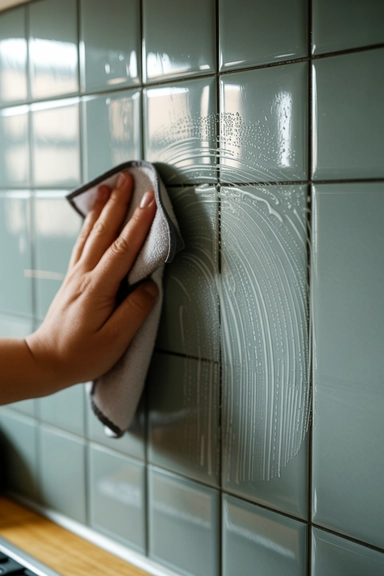
Backsplash tiles behind the stove receive a constant mist of cooking grease that builds into a sticky film between cleanings. Wiping with a dry cloth just moves it around. Water alone does not cut through it.
Spray the backsplash with dish soap solution and leave it two minutes. Wipe with a damp microfiber cloth using horizontal strokes from one end to the other. Dry immediately with a second cloth to prevent water spots forming in the grout lines.
For grout lines that have turned brown from trapped grease, apply baking soda paste directly to the grout, leave it five minutes, and scrub with a stiff brush. One treatment removes what months of tile wiping never touched.
Degreasing the Stove Knob Panel Properly
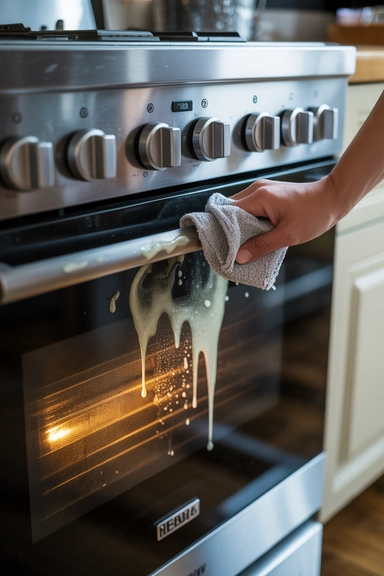
The panel behind stove knobs collects cooking grease in a concentrated band that a cloth cannot reach properly with the knobs in place. Most stove cleaning routines wipe around the knobs and leave the panel behind them untouched.
Remove the knobs completely. Apply dish soap solution to the panel and leave it two minutes. Wipe clean with a damp cloth paying attention to the area directly behind where each knob sits. Dry the panel completely before replacing the knobs.
Moisture trapped between knob and panel accelerates grease buildup in that spot. Dry surfaces go back together only.
Cutting Through Grease on Stainless Steel Appliances
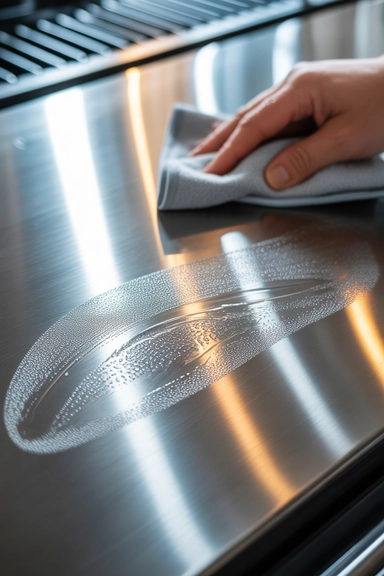
Stainless steel appliances attract fingerprints and cooking grease in a combination that standard sprays smear rather than remove. The grain direction of stainless steel determines whether cleaning leaves the surface looking clean or streaky.
Apply a small amount of dish soap to a damp microfiber cloth. Wipe in straight lines following the grain direction of the steel. Rinse the cloth and wipe again with clean water following the same direction. Dry immediately.
Finish by buffing a few drops of mineral oil into the dry surface with a soft cloth. The oil fills the microscopic grain lines and creates a barrier that repels both grease and fingerprints for several days.
The Evening Wipe That Prevents Everything
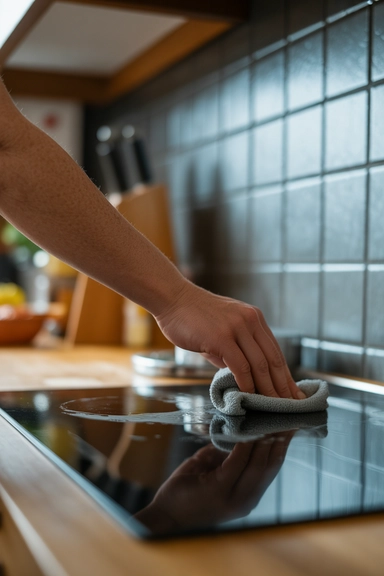
Every grease problem in a kitchen is a delayed consequence of not wiping down surfaces after cooking. Grease that is hours old takes seconds to remove. Grease that is days or weeks old and has been reheated multiple times requires paste, dwell time, and real effort.
A two-minute wipe of the stovetop, knob panel, and backsplash while surfaces are still warm after cooking prevents every baked-on grease situation on this list. Keep a damp microfiber cloth beside the stove for exactly this purpose.
This is the one habit that makes the rest of this list largely unnecessary on a day-to-day basis.
Getting Grease Off the Floor Near the Stove
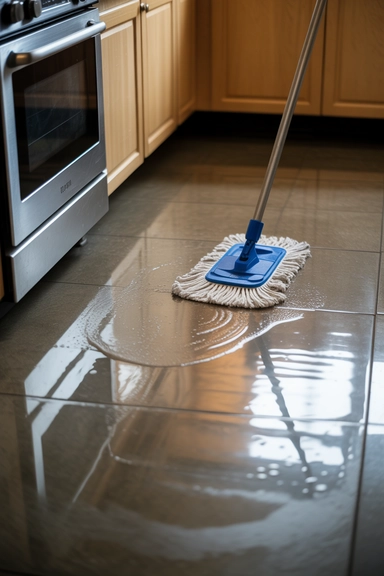
The floor in front of and beside the stove collects grease from splatter and drips that land during cooking. It builds into a film that makes the floor feel slightly tacky underfoot and attracts every piece of debris that crosses it.
Add a few drops of dish soap to a bucket of hot water and mop the cooking zone floor weekly. Hot water softens the grease and the dish soap lifts it off the floor surface. Rinse with clean water and dry to prevent the soap residue from attracting new debris faster than an uncleaned floor would.
For tile grout on the kitchen floor near the stove, the same baking soda paste and stiff brush method used on backsplash grout removes the concentrated grease deposits that mop water never reaches.
Final Thoughts on Kitchen Grease Cleaning Hacks
Kitchen grease builds invisibly until it becomes a problem that looks permanent. It is almost never permanent. Dish soap, baking soda paste, and hydrogen peroxide handle every stage of grease from fresh film to oxidized stain when matched to the right surface and given enough dwell time.
The surfaces most routines skip, range hood filters, cabinet tops, the wall behind the stove, and the knob panel, are where grease concentrates most heavily. Cleaning those specifically changes how a kitchen smells and feels more than scrubbing the visible surfaces ever will.
Two minutes after cooking every night. That single habit does more than every other hack combined.
FAQ About Kitchen Grease Cleaning Hacks
What cuts through old baked-on kitchen grease the fastest? A paste of baking soda and dish soap applied thickly and left for ten to fifteen minutes penetrates baked-on grease better than any spray product. For grease that has oxidized into a brownish stain, add hydrogen peroxide sprayed over the paste and extend the dwell time to twenty minutes. Two applications with proper dwell time remove what single-session scrubbing cannot.
How do I stop grease from building up so fast in my kitchen? Wipe down the stovetop, backsplash, and knob panel while surfaces are still warm after every cooking session. Clean the range hood filter every six weeks so it captures grease from the air rather than recirculating it. Those two habits address grease at the source before it reaches every other surface in the kitchen.
Is it safe to use baking soda paste on all kitchen surfaces? Baking soda paste is safe on most kitchen surfaces including enamel stovetops, cabinet fronts, backsplash tiles, and stainless steel when applied with a soft cloth. Avoid using it on natural stone counters like marble or granite because the mild abrasion scratches polished stone surfaces permanently. On glass ceramic stovetops use baking soda paste with a soft cloth only and never with a scrubbing pad.
Sarah Mitchell’s Take
Grease is a patience problem more than a product problem. People spray something on a greasy surface, wipe immediately, see it has not fully worked, and spray more product. The issue is almost never the product. It is the dwell time. Apply the paste, walk away, come back in ten minutes. That gap between applying and wiping is where the actual cleaning happens. Everything else is just moving grease from one spot to another.