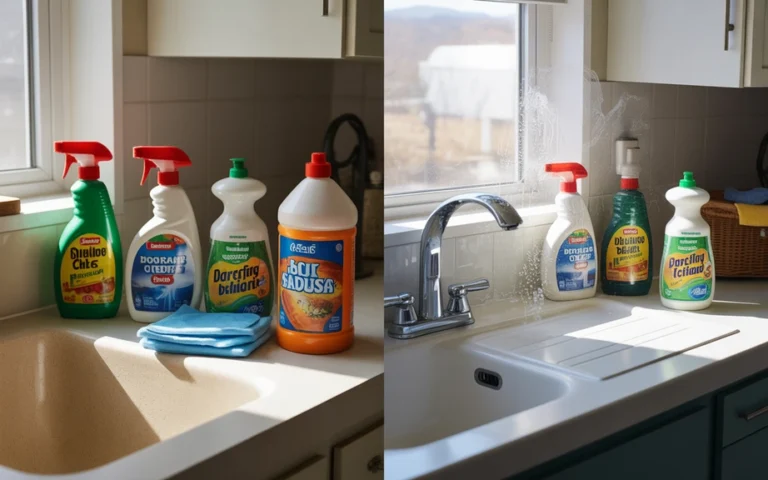

There was a wine stain on my couch for four months. Not a small one either. I tried everything I could think of and nothing touched it. Turns out the whole time I was using a water based cleaner on a microfiber couch that needed solvent only. Four months. One tag I never bothered to read.
If that sounds familiar these 21 couch cleaning hacks are going to save you a lot of frustration. Everything from fresh spills to the kind of smell that has been living in your cushions for years. And if your floors took a hit too, these carpet cleaning hacks handle stains and dirt just as well.
Check the Care Tag Before You Clean Anything
This is not optional. Seriously.
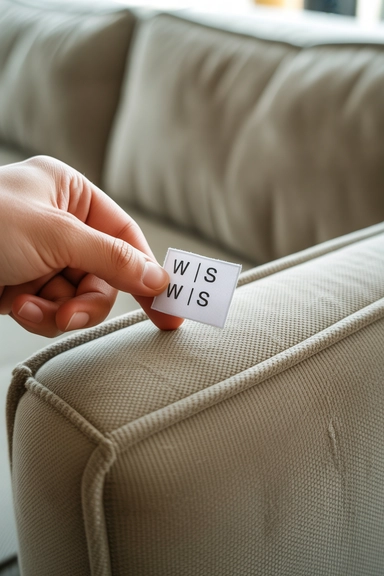
Every couch has a care tag sewn into the cushion seam and it tells you exactly what you can and cannot use on the fabric. The cleaning code is either W, S, WS, or X. W means water based cleaners are safe. S means solvent only, rubbing alcohol being the go-to. WS means either works. X means vacuum only, nothing else.
I ignored this for years and wondered why cleaners left weird marks. The tag is there for a reason and reading it takes about thirty seconds.
Always Vacuum Before You Touch Anything Else
Most people skip this and go straight to spraying something on the stain. Bad idea.
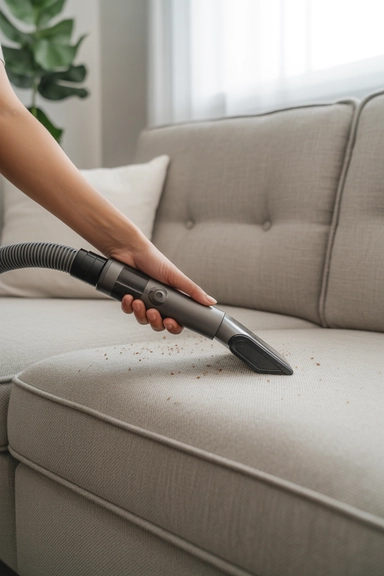
Rubbing a cleaner into fabric that still has crumbs, dust, and pet hair sitting on it just pushes all of that deeper into the weave. You end up with a muddy mess that is harder to deal with than the original problem. Vacuum first, every single surface including the back, the arms, underneath the cushions, and both sides of each removable cushion.
The base underneath the cushions is genuinely disgusting in most homes. Worth knowing.
Does Baking Soda Actually Remove Couch Odors?
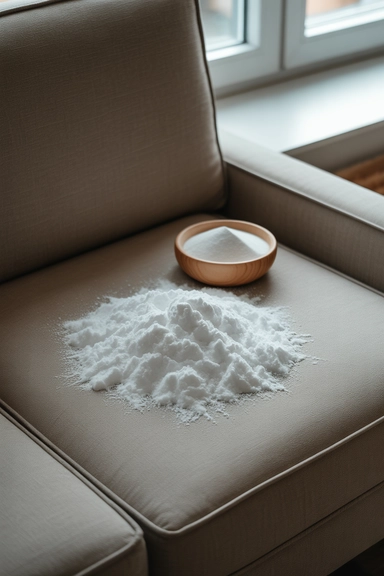
It does, and better than any spray I have ever tried for couch odor removal. Sprinkle a generous layer over the entire surface and leave it for at least 20 minutes. Strong odors like pet smell or cigarette smoke need overnight.
Baking soda pulls odors out of fabric rather than covering them with fragrance. That is the whole difference. Use a soft brush to work it into the seams and crevices before vacuuming because that is where the smell is actually coming from most of the time. Works on fabric, microfiber, and leather.
The Vinegar Spray That Handles Most Everyday Stains
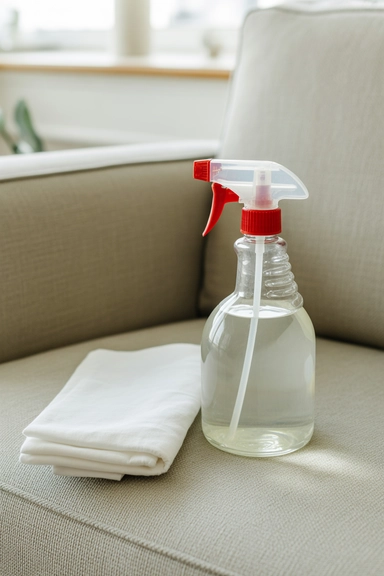
Equal parts white vinegar and warm water in a spray bottle. That is it.
Mist the stained area lightly and leave it for 5 minutes. Then blot with a clean white cloth working from the outside of the stain inward. Never rub outward because you just spread the stain into clean fabric. The vinegar smell is gone once the fabric dries completely, usually within an hour.
For greasy stains add a few drops of dish soap to the mixture before spraying. This combination handles most everyday sofa cleaning hacks without any risk of damaging the fabric underneath.
Dish Soap Solution for W Coded Fabric Couches
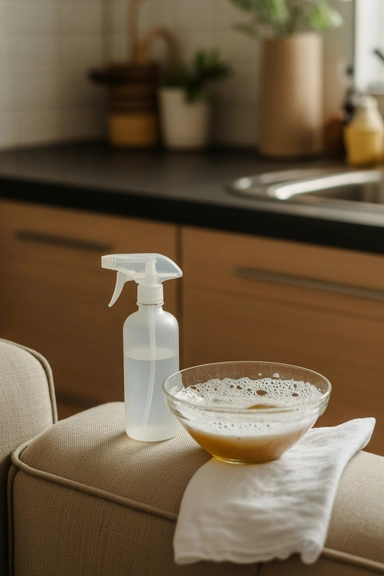
Quarter cup white vinegar, three quarters cup warm water, one tablespoon dish soap. Spray bottle. Done.
This DIY upholstery cleaner works on most fabric couches with a W code and deals with food stains, drink spills, and general grime that builds up over months. Mist lightly, scrub gently with a soft cloth, then go back over with a second cloth dampened with clean water to lift the soap out. Dry immediately with a towel after that.
Leaving soap residue in fabric is a mistake I made for years. It attracts dirt and makes the couch feel sticky within days.
Rubbing Alcohol Is the Secret for Microfiber Couches
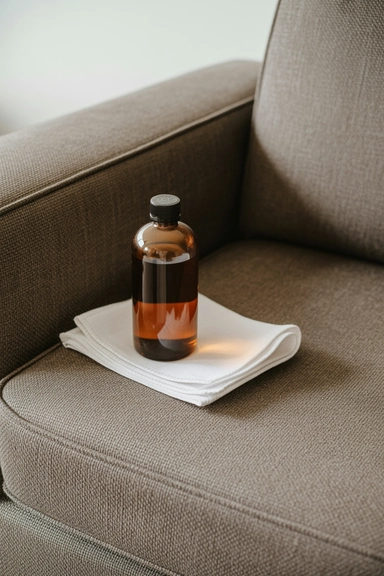
If your microfiber couch has an S code this is your cleaner. Not water. Not vinegar. Rubbing alcohol.
Pour it into a spray bottle and spray directly onto stains and armrests which are almost always the dirtiest part of any couch. Use a white cloth only when blotting because colored cloths transfer dye onto light microfiber and create a whole new problem. Alcohol evaporates fast which is exactly why it works so well on microfiber. No water rings, no streaks, no damage.
Once the couch dries, brush the fabric in gentle circular motions with a soft bristle brush. This fluffs the microfiber back up. Skip this and the couch looks worse after cleaning than before, which is why people think clean microfiber couch methods never work.
Cornstarch for Grease Stains on Upholstery
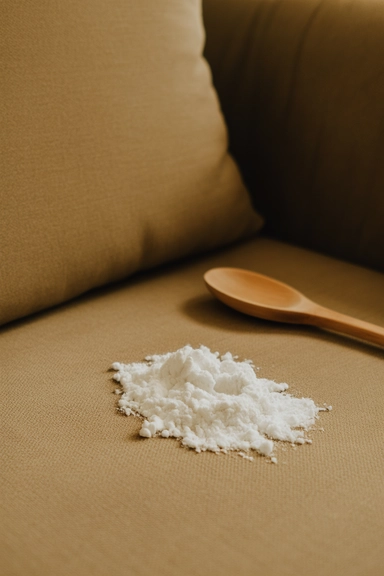
Grease stains need something different. Dish soap alone does not cut it if the grease has already started to set.
Sprinkle cornstarch directly onto the stain the moment you notice it and leave it for 15 minutes. The cornstarch pulls oil out of the fabric fibers the same way it absorbs oil from skin. Brush it away then follow up with the dish soap solution. Baking soda does the same job if cornstarch is not available.
The window for catching a grease stain while it is still fresh is short. Once it sets properly it takes real effort to remove and sometimes it just does not come all the way out.
Hydrogen Peroxide for Blood Stains
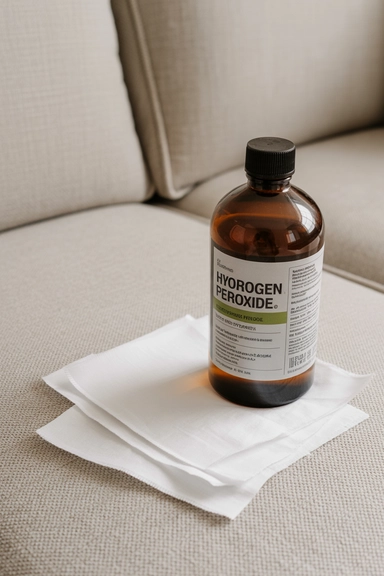
Cold water first. Always cold water with blood. Hot water sets the protein permanently and you will never get it out.
Apply 3 percent hydrogen peroxide to the stain with a clean cloth and blot gently. Test it on a hidden area beforehand because it can lighten darker fabrics. Rinse with cold water after blotting and dry immediately. Do not rub at any point because rubbing drives the stain further down into the weave where it becomes genuinely impossible to reach.
This is one of those upholstery cleaning hacks most people discover the hard way by ruining a cushion first.
Club Soda Works But Only If You Are Fast
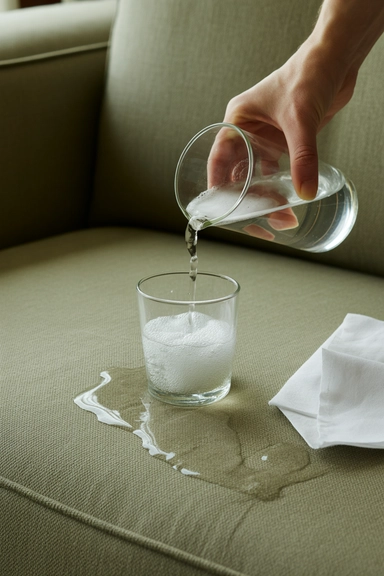
The carbonation in club soda lifts liquid up out of fabric fibers before it bonds with the material. Pour it directly onto a fresh spill immediately and blot with a clean white cloth working toward the center.
Keep blotting with fresh sections of cloth until nothing more transfers. Follow with a light vinegar spray to neutralize any remaining residue. The honest truth about this hack is that timing is everything. Same spill treated in 60 seconds versus 10 minutes is a completely different problem to deal with.
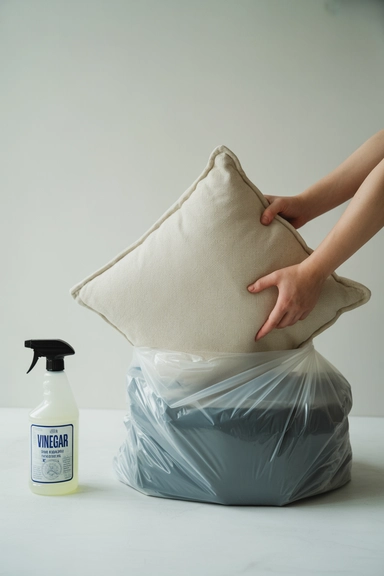
The Trash Bag Hack for Deep Cushion Odors
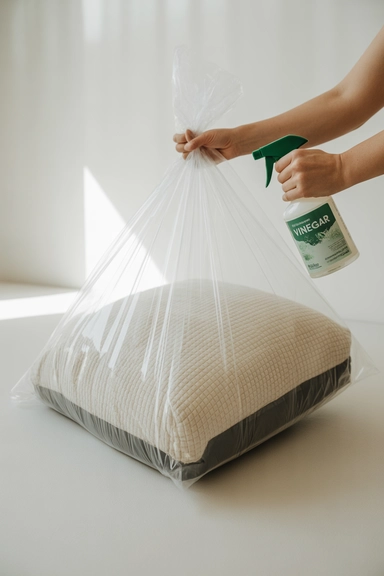
This one genuinely surprised me the first time I tried it. Professional upholstery cleaners use a version of this and almost nobody talks about it.
Spray a removable cushion with white vinegar solution, put it inside a large sealed trash bag, and leave it for several hours. The bag compresses the cushion and forces the vinegar deep into the foam layers where the smell is actually coming from. The surface treatment most people do never reaches that far. When you take the cushion out the vinegar smell fades as it airs and takes the embedded odor with it.
Works on pet smell, cigarette odor, and general mustiness that has built up inside foam over months.
Is Shaving Cream Actually Useful for Couch Stains?
It sounds strange but yes, plain white shaving cream works surprisingly well on general fabric stains.
Apply a small amount directly to the stain, work it gently into the fabric with a soft cloth, and leave it for 5 minutes before wiping away with a damp cloth. The surfactants in shaving cream lift a wide range of stains including food, drink, and grime that has been sitting for a while. Use plain white shaving cream only, not gel. Gel formulas contain different ingredients that leave residue behind and make things worse.
This is the hack I personally reach for when I genuinely have no idea what caused the stain.
Salt and Lemon for Stubborn Microfiber Stains
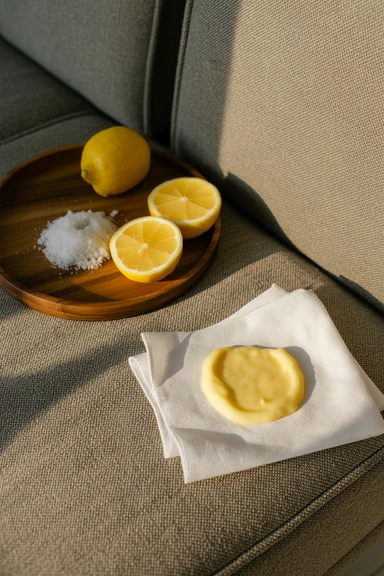
Juice three lemons, mix in enough salt to form a paste, and rub it onto the stain with a clean cloth. The lemon acidity breaks down the stain while the salt acts as a gentle abrasive that lifts residue from tightly woven microfiber without damaging the fibers.
Rinse and dry completely before using the couch again. Repeat after the first treatment dries if the stain is still there. This works on microfiber with W or WS codes and leaves things smelling fresh rather than like chemicals. Not the hack I would use first, but for a stubborn microfiber stain that has resisted everything else it is worth trying.
Enzymatic Cleaners for Pet Stains
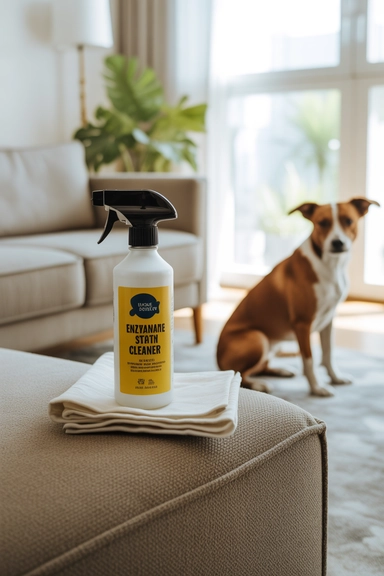
Vinegar and baking soda handle fresh pet stains. For anything older or deeper, enzymatic cleaners are the only thing that actually works.
These cleaners contain bacteria that break down uric acid crystals in pet urine at a molecular level. That is the actual source of the smell. Every other method just deals with the surface. Blot up moisture first, apply the enzymatic cleaner generously, and leave it for 10 to 15 minutes before blotting away.
One important thing. Never steam clean pet urine. Heat sets the odor permanently into the fabric and you will not get it out. Products like Rocco and Roxie or Natures Miracle work well and are designed specifically for upholstery.
Olive Oil and Vinegar for Leather Couch Cleaning
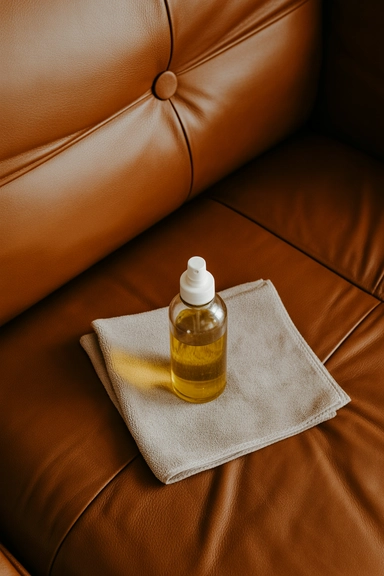
Half a cup of olive oil, a quarter cup of white vinegar, in a spray bottle. This is your leather couch cleaning solution.
Spray it on and buff with a soft microfiber cloth wiping in the direction of the leather grain. The vinegar cleans the surface while the olive oil conditions the leather and keeps it from cracking over time. Air dry for 24 hours away from direct sunlight or heat. Also apply a dedicated leather conditioner every 6 to 12 months after cleaning.
Leather that gets conditioned consistently looks and feels completely different after a few years compared to leather that only ever gets wiped down.
How to Get Gum Off a Couch Without Making It Worse
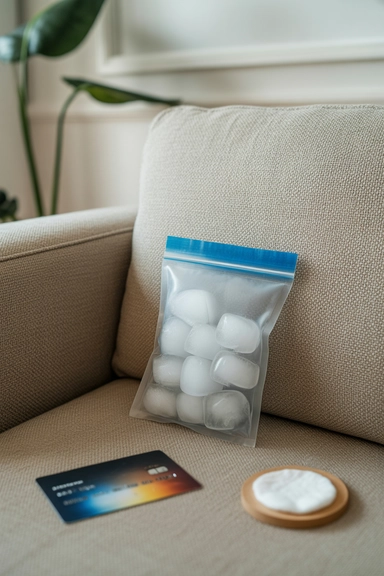
Ice first. Always ice first. Hold a bag of ice cubes directly on the gum until it freezes completely solid and loses its stickiness. Then snap it off in pieces using a butter knife or the edge of a credit card, working from the outside edge inward.
For any residue left behind, dab rubbing alcohol onto a cotton pad and blot gently. The alcohol dissolves what is left without damaging most fabric types.
The thing people get wrong is trying to pull gum off while it is still warm and soft. It stretches into the fibers and turns a small fixable problem into a genuine mess that takes hours.
Is Steam Cleaning Safe for Every Couch?
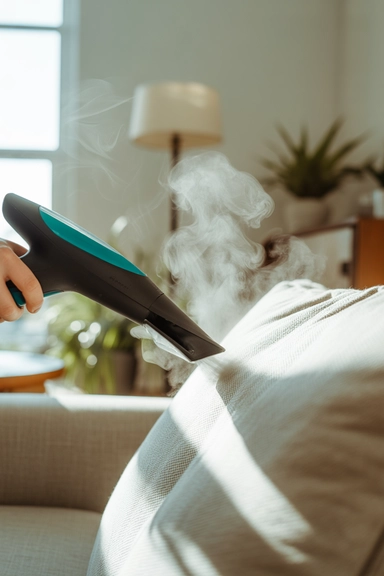
No, and this is one of the most common how to clean a couch mistakes people make.
Steam cleaning works well on W and WS coded fabric couches. It penetrates fabric layers and removes dirt and bacteria without chemicals. But use it on an S coded couch and you damage the fabric permanently. Use it on leather and the heat causes warping and cracking that cannot be undone. After steam cleaning any fabric couch, point a fan at the surface to speed drying. Moisture sitting in foam cushions is how mold starts.
Restoring Microfiber Texture After Cleaning
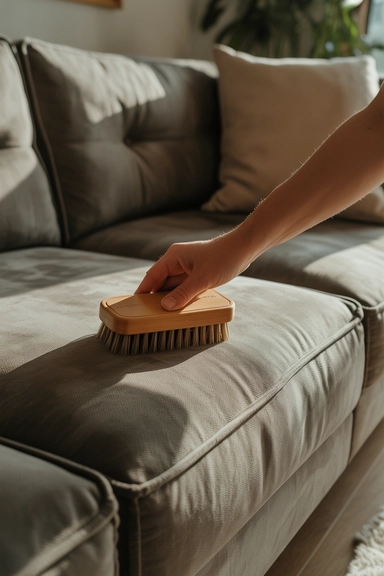
Microfiber dries stiff and flat after cleaning. Every single time. This is normal and not a sign that something went wrong.
Wait until the fabric is completely dry then use a soft bristle brush in circular motions across the whole surface. This lifts the nap back to its original position and restores the texture. Five minutes of brushing and the couch feels like it did before cleaning. A clean toothbrush with soft bristles handles the armrests and crevices. Most people skip this step and then complain that microfiber never looks right after cleaning.
Wash the Removable Cushion Covers
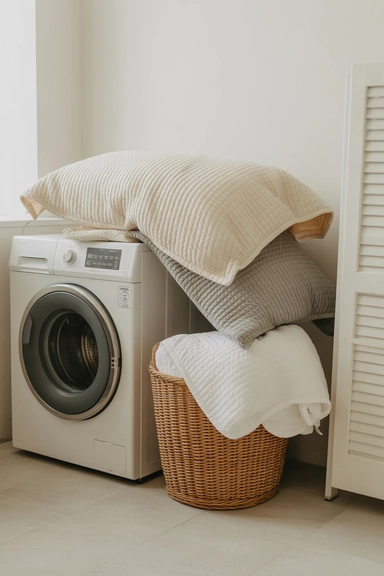
Check the care label first, always. Most machine washable covers do best on a gentle cold cycle and should air dry rather than go in the tumble dryer.
Never put a cover back on a cushion while it is still damp. Trapped moisture inside the foam grows mold and creates a musty smell that is very hard to remove once it starts. Wash covers every 3 to 6 months for a couch that gets heavy daily use or every 6 to 12 months for something in a less used room.
Fabric Protector Spray After Every Deep Clean
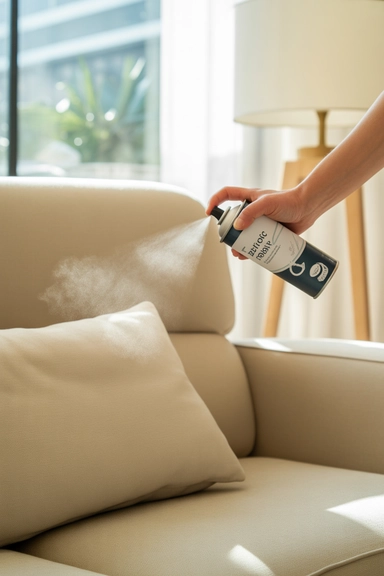
Once the couch is clean and completely dry, apply a fabric protector like Scotchgard. This creates a barrier on the fabric surface that causes liquids to bead up instead of soaking straight into the fibers.
It gives you a 30 to 60 second window to blot up a spill before it becomes a stain. Reapply every 6 to 12 months and always after a deep clean. FYI this single step reduces how often the couch needs a full deep clean and makes every spill easier to deal with from the moment it happens. Under ten dollars at most supermarkets.
Sunlight and Fresh Air for Natural Couch Odor Removal

Take removable cushions outside on a dry sunny day and leave them in direct sunlight for 2 to 4 hours. UV light kills odor causing bacteria and fresh air pulls trapped smells out of foam layers better than anything you can do indoors.
Rotate the cushions halfway through so both sides get sun. Bring them back inside before evening dew comes in because damp cushions stored indoors overnight will develop the exact musty smell you are trying to get rid of. Costs nothing. Works better than most people expect.
Rotate and Flip Cushions Every Few Months
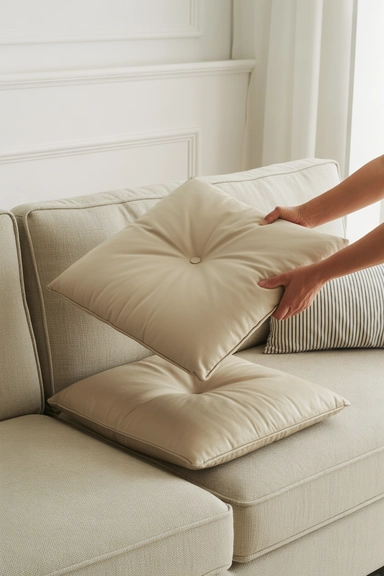
Most people sit in the same spot on the couch every single day. The foam in that spot compresses and stays compressed while the rest of the cushion barely gets used.
Rotate and flip cushions every 2 to 3 months. It takes two minutes and it spreads the wear evenly across all surfaces. Cushions that get rotated last noticeably longer and the couch looks more even and less worn out overall. Also helps with odors because different surfaces get exposed to air instead of the same section being covered and compressed continuously.
Cleaning Method by Couch Type
| Couch Type | Best Cleaner | What to Avoid |
|---|---|---|
| Fabric W code | Dish soap and water, white vinegar | Solvent cleaners |
| Microfiber S code | Rubbing alcohol, solvent cleaner | Water, steam |
| Microfiber WS code | Rubbing alcohol or mild soap solution | Excess moisture |
| Leather | Olive oil and vinegar, leather conditioner | Steam, harsh chemicals |
| Suede | Rubbing alcohol, stiff dry brush | Water, soap |
| Velvet | Soft brush, gentle upholstery cleaner | Rubbing, excess moisture |
How Often Should You Clean Your Couch
Weekly: Vacuum all surfaces including under and behind cushions.
Monthly: Spot clean visible stains and use baking soda for 20 minutes to refresh odors.
Every 3 to 6 months: Full deep clean for your couch type. Wash removable covers. Apply fabric protector after drying.
Yearly: Professional upholstery cleaning for heavily used couches or anything DIY methods have not fully resolved.
Frequently Asked Questions
Q: What is the best homemade cleaner for a couch? For fabric couches with a W code, mix a quarter cup of white vinegar with three quarters of a cup of warm water and one tablespoon of dish soap in a spray bottle. Handles most everyday stains and costs almost nothing.
Q: How do you get rid of smell in a couch fast? Sprinkle baking soda generously over the entire couch and leave it for 20 minutes minimum. Vacuum thoroughly. For odors trapped deep inside removable cushions use the trash bag method with white vinegar for a deeper couch odor removal result that surface treatment cannot reach.
Q: How do you remove old set-in stains from a couch? Make a paste of equal parts baking soda and water, apply directly to the stain, leave for 15 to 20 minutes, then scrub gently and wipe away. For pet stains use an enzymatic cleaner because it breaks down the organic compounds at a molecular level rather than just lifting surface residue.
Final Thoughts on Couch Cleaning Hacks
You do not need expensive products or a professional cleaner for most couch problems. These 21 couch cleaning hacks cover everything using stuff you already own or can pick up for a few dollars.
The four things that actually matter are checking your care tag before using anything, vacuuming before any wet cleaning, blotting instead of rubbing every single time, and never leaving moisture in foam cushions after cleaning. Get those four right and everything else on this list works the way it is supposed to.
Pick two or three hacks and try them today. Your couch will feel different by tonight. 🙂