
Introduction
My laminate floors looked worse after I cleaned them than before, and I spent three months thinking I had bought a bad product. Turns out I was using a steam mop, which is one of the worst things you can run over laminate flooring. The moisture gets under the planks and causes swelling that looks permanent. Once I stopped doing that one thing, the floors improved on their own within a week. Most laminate floor cleaning problems come from too much water, not too little effort. If you want practical floor care that covers more surfaces, these floor cleaning hacks are worth reading alongside this.
Dry Sweep Before Any Wet Cleaning
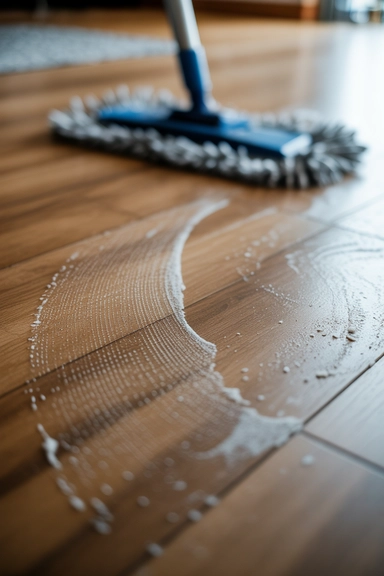
Laminate scratches from grit and dust particles being dragged across the surface during mopping. Dry sweep or vacuum first, every single time, before any liquid touches the floor.
Use a soft-bristle broom or a microfiber dust mop. Stiff bristles and rough vacuum attachments leave fine scratches over time that dull the finish permanently.
This one step prevents most of the damage people blame on their cleaning products. The liquid is not the problem. The grit underneath the mop is.
Damp Mop Only, Never Wet Mop
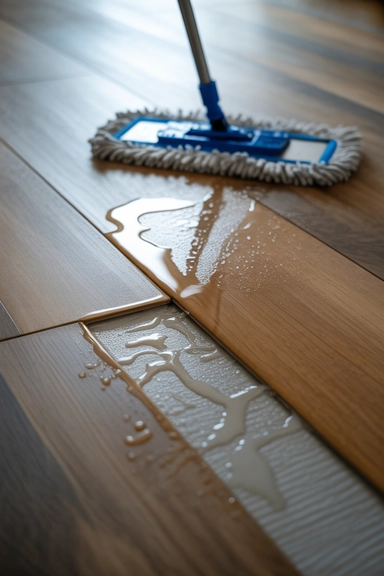
Wring your mop until it feels almost dry to the touch before it contacts the floor. A damp mop leaves barely any moisture behind. A wet mop pushes water into the seams between planks.
Water sitting in those seams causes the core to swell, the edges to lift, and the surface to bubble. That damage is not reversible without replacing the planks.
I use a spray mop now and press the trigger once every four or five steps rather than continuously. That level of moisture cleans the surface without penetrating the seams.
Dish Soap and Warm Water for Everyday Grime
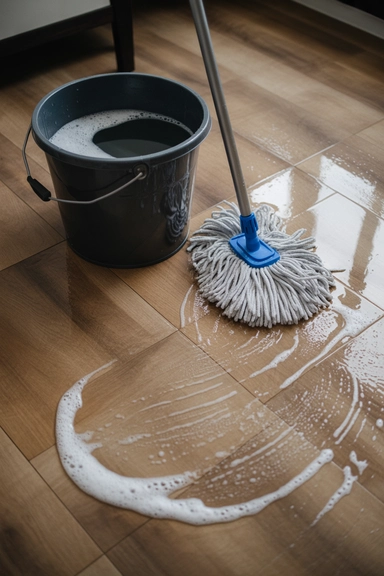
Add two drops of dish soap to a bucket of warm water. Dip your mop, wring it thoroughly, and clean the floor section by section.
More soap does not mean cleaner floors. Excess soap leaves a filmy residue that attracts dirt faster and makes the floor look dull within days of cleaning.
Two drops sounds like almost nothing. It is genuinely enough for a large room. I doubled the amount once thinking it would work better and spent an extra twenty minutes rinsing the residue off with a clean damp cloth.
White Vinegar Solution Cuts Streaks and Dullness
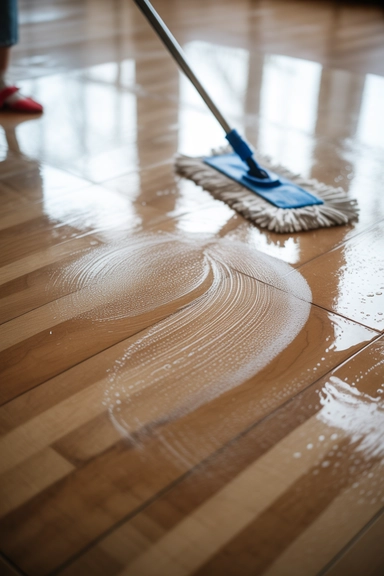
Mix half a cup of white vinegar with a gallon of warm water. Use this instead of commercial floor cleaner when the floor looks streaky or has lost its sheen.
The acidity cuts through soap buildup and mineral deposits from hard water, which are the two main causes of dull laminate. Regular detergent does not remove these, it adds to them.
Do not use undiluted vinegar on laminate. The acidity at full strength breaks down the protective coating over time. The diluted ratio is effective without causing any surface damage.
Rubbing Alcohol Lifts Scuff Marks Instantly
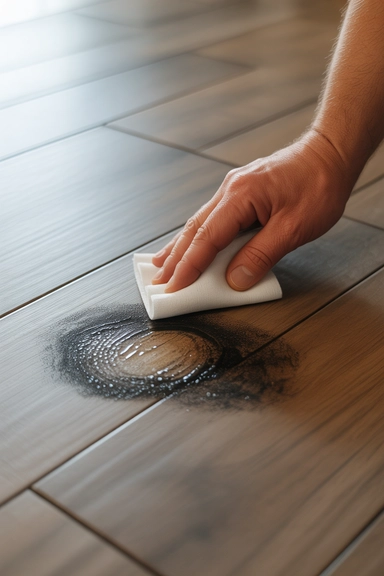
Apply a small amount of rubbing alcohol to a clean cloth and rub directly on the scuff mark in a circular motion. The mark lifts within thirty seconds in most cases.
Scuff marks from shoe soles are not scratches, they are surface transfers of rubber or sole material. Alcohol dissolves that material without touching the laminate finish underneath.
Water and soap do nothing on scuff marks because the material is not water-soluble. This is one of those laminate floor cleaning tips that feels too simple until you try it and watch a mark disappear in under a minute.
Ice Cubes Harden Gum and Wax for Easy Removal
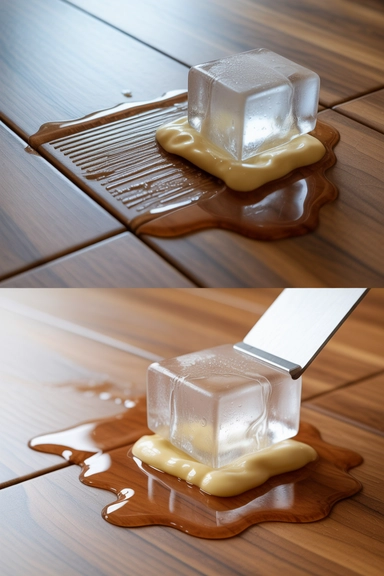
Press an ice cube directly onto chewing gum or candle wax stuck to the floor and hold it there for sixty seconds. The material hardens and becomes brittle.
Use a plastic scraper or an old credit card to lift the hardened piece off the floor. It snaps away cleanly without pulling at the surface below.
Never use a metal scraper. Metal scratches laminate instantly. Plastic gives you the leverage to remove the piece without any risk to the finish underneath.
Microfiber Cloth Picks Up Spills Better Than Paper Towel
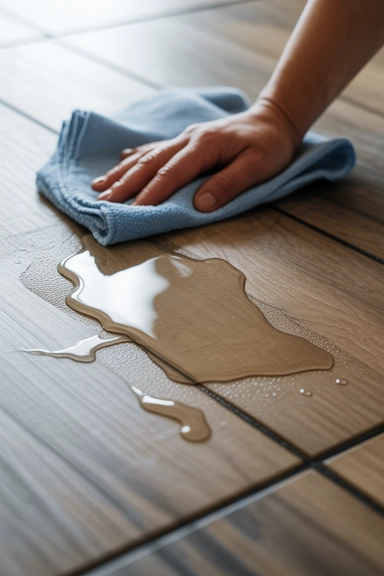
Wipe spills with a microfiber cloth rather than paper towel. Paper towel absorbs liquid but pushes some of it into the seams as you press down. Microfiber lifts the liquid up instead.
The difference matters most near the edges of planks where the seams are. Pressing down with paper towel on a spill close to a seam forces liquid exactly where you do not want it.
Keep a dedicated microfiber cloth in the kitchen and another near the dining area. Picking up spills within sixty seconds prevents almost all liquid-related laminate damage.
Baking Soda Paste on Dried Food Stains
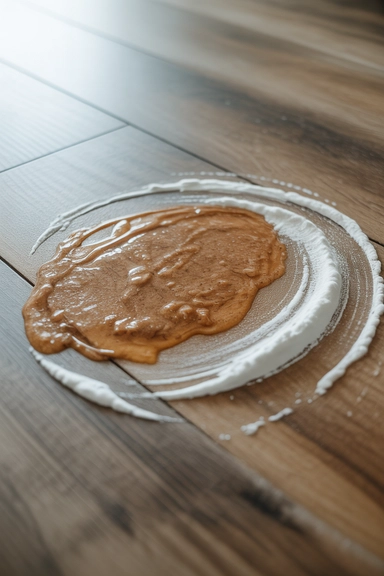
Mix baking soda with a small amount of water to form a paste. Apply it to a dried food stain, leave it for five minutes, then wipe away with a damp microfiber cloth.
Dried food stains bond to the surface coating as they harden. Baking soda softens them without scratching the way abrasive scrubbers do.
Do not scrub the paste in aggressively. Apply it, let it sit, then wipe. The baking soda does the work during the wait time, not during the wiping.
Baby Oil Buffs Dull Laminate Back to Life
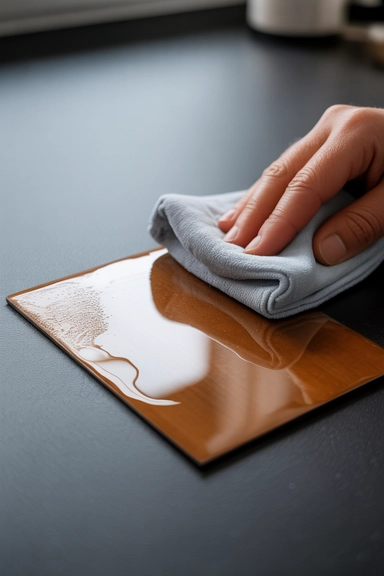
Apply a few drops of baby oil to a clean microfiber cloth and buff it across a dull section of laminate in small circles. Wipe away any excess with a dry cloth immediately after.
Baby oil fills in fine surface scratches that make laminate look hazy. It does not repair the scratches but reduces how much light they scatter, which makes the floor look noticeably cleaner and shinier.
Use a very small amount. Too much leaves a greasy film that attracts dust and footprints faster than an untreated floor. A few drops covers about four square feet comfortably.
Nail Polish Remover Clears Ink and Marker Stains
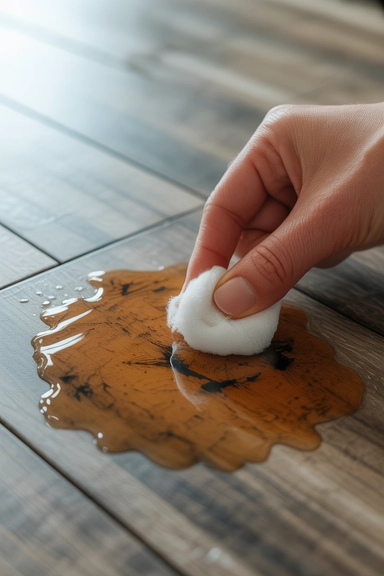
Apply a tiny amount of acetone-based nail polish remover to a cotton ball and dab it directly onto an ink or permanent marker stain. Do not rub. Press and lift.
Acetone dissolves pigment compounds in ink and marker without damaging the laminate surface when used in a small amount and removed quickly. Leaving it on for more than thirty seconds starts to affect the finish.
Rinse the area with a damp cloth immediately after the stain lifts. Acetone residue left on the surface dulls the coating if it dries in place. Work fast and rinse faster.
WD-40 Removes Heel Marks and Sticky Residue
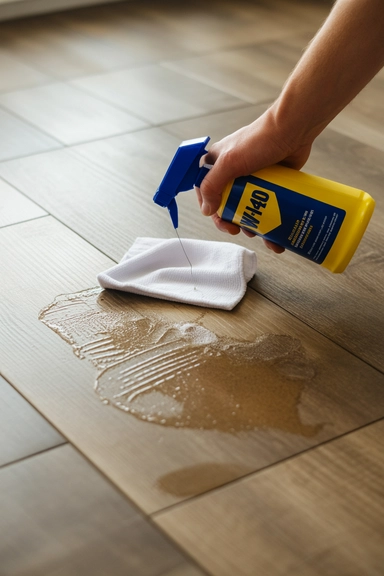
Spray a very small amount of WD-40 onto a cloth, not directly onto the floor, and rub it over heel marks or sticky adhesive residue. Wipe away completely with a clean dry cloth.
Heel marks and adhesive residue are not water-soluble. WD-40 breaks down the compounds and lifts them from the surface coating without scratching.
The key is removing every trace of the WD-40 afterward. Any residue left on the floor becomes a slip hazard and attracts dust aggressively. Wipe, then wipe again with a second clean dry cloth. For more approaches using common household products across different surfaces, these easy cleaning hacks are worth keeping handy.
Black Tea Adds Shine and Reduces Dust Cling
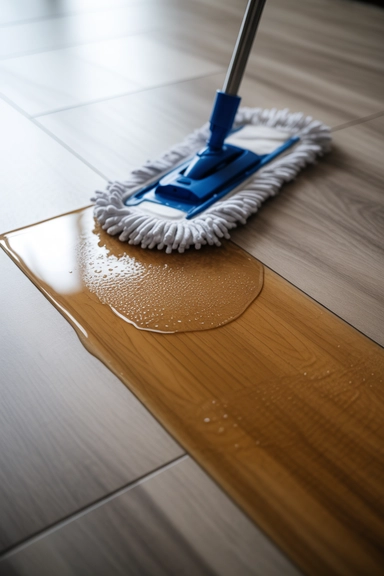
Brew two bags of black tea in a liter of hot water and let it cool completely before use. Dip a well-wrung microfiber mop into the tea and clean the floor normally.
The tannic acid in black tea adds a light shine to the surface and reduces the static charge that makes dust cling to laminate. The floor stays cleaner for longer between moppings.
I tested this side by side on two sections of the same floor. The tea section stayed visibly cleaner for two extra days before needing another pass. Not dramatic but genuinely noticeable.
Felt Pads and Mats Prevent Most Damage Before It Starts
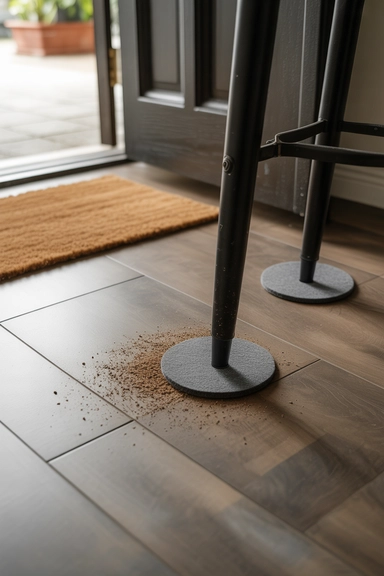
Place doormats at every entry point and small rugs in front of the kitchen sink and stove. These two spots collect more grit, grease, and moisture than anywhere else in a home.
Grit tracked in from outside causes most of the fine scratching that dulls laminate over time. A mat that catches the majority of incoming dirt means far less aggressive cleaning is ever needed.
Felt pads under furniture legs matter just as much. Chair legs dragged across laminate without felt pads leave scratch patterns that become visible within months. A pack costs almost nothing and prevents damage that no cleaning method can reverse.
Toothpaste on Small Surface Scratches
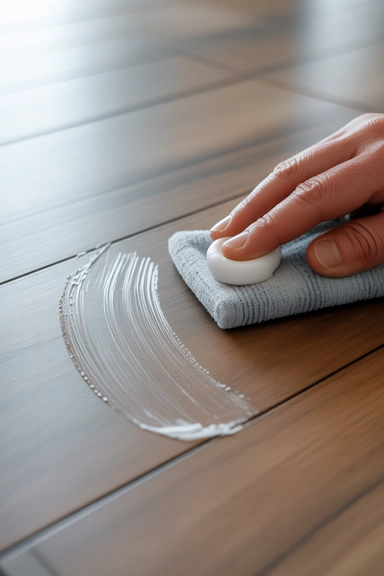
Apply a small amount of plain white non-gel toothpaste to a soft cloth and rub it gently over a shallow surface scratch in a circular motion. Wipe away with a damp cloth.
Toothpaste contains mild abrasive compounds that buff the scratch edges smooth. This works on light surface scratches only. Deep scratches that go through the wear layer need a laminate repair kit, not toothpaste.
Use only plain white paste. Gel toothpaste and whitening formulas contain different compounds and leave residue on the floor surface that is difficult to remove completely.
Commercial Laminate Cleaner Applied the Right Way
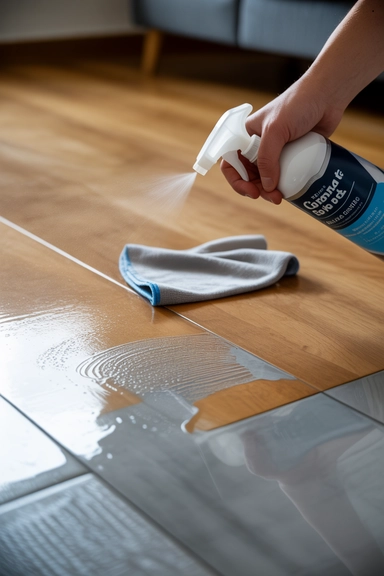
Bona makes a laminate-specific cleaner that works without leaving residue if used correctly. The mistake most people make is applying too much product at once.
Spray directly onto a microfiber cloth, not onto the floor. Mist the cloth lightly, clean a section, then move to the next. Spraying the floor directly pools liquid near the seams before the cloth can pick it up.
Check that the product is specifically labeled for laminate, not hardwood or tile. Hardwood cleaners often contain oils that leave a haze on laminate and are genuinely difficult to remove once they build up.
How Cleaning Methods Compare for Laminate Floors
| Method | Best Use | Risk Level | Frequency |
|---|---|---|---|
| Dry microfiber mop | Daily dust and debris | None | Daily |
| Dish soap and water | Regular surface cleaning | Low if wrung well | Weekly |
| White vinegar solution | Streaks and dullness | Low if diluted | Monthly |
| Rubbing alcohol | Scuff marks | None | As needed |
| Baking soda paste | Dried food stains | Low | As needed |
| Baby oil buff | Restoring shine | Low if used sparingly | Every few months |
| Steam mop | Nothing | High, causes swelling | Never |
Final Thoughts on Laminate Floor Cleaning Hacks
The most damaging thing you can do to laminate is consistent excess moisture. Every laminate floor cleaning hack here works within that single constraint. Keep water minimal, keep it brief, and dry the surface quickly.
Match your method to the specific problem. Scuffs, stains, dullness, and sticky residue all need different approaches. One product or one method does not handle all of them equally well.
Daily dry sweeping and prompt spill cleanup prevent the majority of cleaning problems before they develop. The floors that need the least aggressive cleaning are the ones maintained most consistently.
FAQ About Laminate Floor Cleaning Hacks
Can I use a robot vacuum on laminate floors? Yes, provided the model has a soft roller or a hard floor setting. Robot vacuums with stiff beater bars scratch laminate the same way a stiff-bristle broom does. Check the vacuum specifications before using it on laminate and disable any wet mopping function if the model has one, as the moisture output from most robot mop attachments is too high for laminate seams.
How do I remove white haze from laminate floors? White haze is almost always soap residue or hard water mineral buildup from repeated mopping with too much product. Clean the affected area with the diluted white vinegar solution using a well-wrung microfiber mop. One or two passes usually removes it. If the haze covers the entire floor, mop the whole surface with the vinegar solution and the improvement becomes visible once it dries.
My laminate floor has a plank lifting at the edge. Can cleaning fix it? Lifting edges come from moisture that has already penetrated the seam and swollen the core. Cleaning will not reverse this. The plank needs to dry out completely, which takes several weeks in a well-ventilated room, and in many cases the damage is permanent and the plank needs replacing. Prevent further damage in adjacent planks by keeping all moisture away from nearby seams going forward.
Sarah Mitchell’s Take
The steam mop sitting in my garage is a reminder of how confidently wrong I was about laminate care for years. I genuinely thought more heat and moisture meant a deeper clean. The floor told me otherwise. What I wish someone had said earlier is that laminate rewards restraint. Less water, less product, less scrubbing. The floors I clean least aggressively always look the best. That still feels counterintuitive but the evidence in my own hallway makes it hard to argue with.