
Introduction
For three weeks I kept opening my fridge and immediately wanting to close it again. I wiped the shelves. Still there. Wiped them again with a stronger cleaner. Still there. The smell was coming from the rubber door seal, which I had never cleaned once in two years, and there was a ring of mold sitting in the folds of it that no shelf wipe was ever going to touch. That is the thing about fridge odors. They almost never live where the cleaning happens. If your kitchen grease situation needs the same kind of targeted fix, kitchen grease cleaning hacks is worth a read before your next kitchen session.
Take Everything Out First
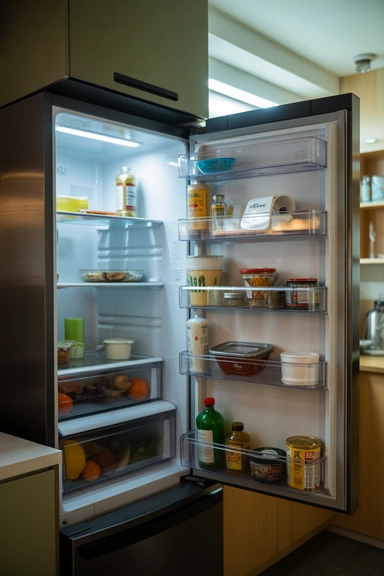
This sounds obvious. Most people do not actually do it. They wipe around containers, move a few things, wipe the visible spots, and call it clean. The residue causing the smell is almost always sitting under something that never moved.
Pull everything out. Check dates while you go. Anything questionable goes in the bin now, not back in the fridge to deal with later. If the cleaning will take more than twenty minutes put the cold stuff in a cooler.
A fridge cleaned around its contents is not really cleaned.
Baking Soda Paste for Stuck Spills
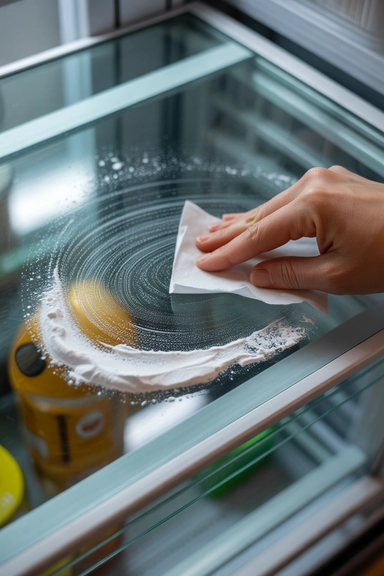
A damp cloth handles fresh spills fine. The ones that have been sitting for two weeks and dried into a hard patch need something with a little abrasion or they just smear.
Mix baking soda with water into a paste. Apply it to the stuck spot and leave it three minutes. Wipe away with a damp cloth. It lifts the residue without scratching glass or plastic shelving.
Rinse the shelf after to get the baking soda off completely. Dry before putting food back. Wet shelves grow bacteria faster than dry ones, which defeats the whole point.
The Door Seal Is Where the Mold Is
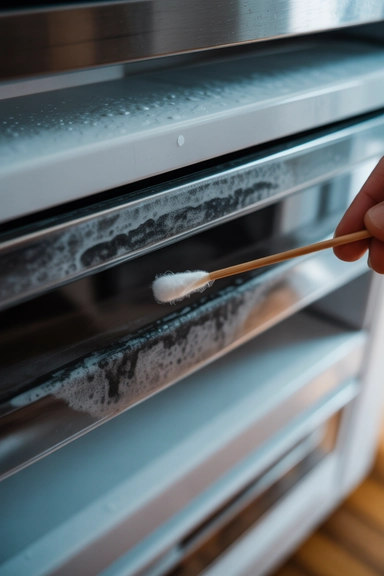
The rubber gasket around the fridge door has folds. Those folds stay damp, stay dark, and trap food particles from every time the door closes on something slightly sticky. Mold grows in there constantly and a surface wipe does nothing because the problem is inside the fold not on top of it.
Cotton swab dipped in diluted white vinegar. Run it into every fold around the full perimeter of the door. Press into the crease rather than just running across the surface.
First time doing this after neglecting it for a year the swabs will come out dark. After that, monthly maintenance keeps it clean in about four minutes flat.
White Vinegar Spray After Wiping
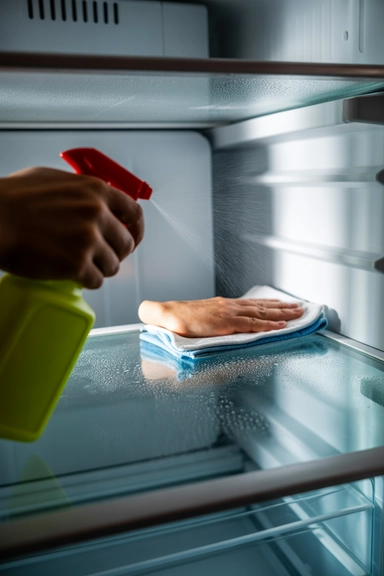
Commercial fridge sprays leave a fragrance that transfers to food. Not strongly, but enough that butter and cheese sitting in a freshly sprayed fridge pick up whatever scent the spray left behind. White vinegar does not do that.
Equal parts vinegar and water in a spray bottle. Spray the walls, shelves, and drawer interiors after removing the visible residue. Leave it two minutes. Wipe with a clean damp cloth.
The vinegar smell is gone within thirty minutes of closing the door. Nothing lingers, nothing transfers, and the bacteria that cause odor are dealt with properly rather than just masked.
Crisper Drawers Are Worse Than They Look
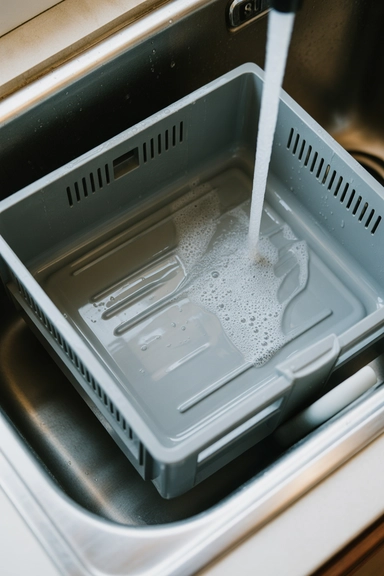
The bottom drawers collect vegetable debris, moisture, and the kind of slow leak from produce that goes unnoticed until the drawer smells like a compost bin. The corners especially. A quick swipe with a cloth misses everything that has built up in there.
Take both drawers out completely. Wash them in the sink with warm soapy water and a soft brush that reaches the corners. Dry them all the way through before putting them back.
The tracks the drawers slide on need wiping too. Wet tracks grow mold fast and it is usually the tracks, not the drawer itself, that cause the smell people notice when they open that section of the fridge.
Activated Charcoal Over Baking Soda
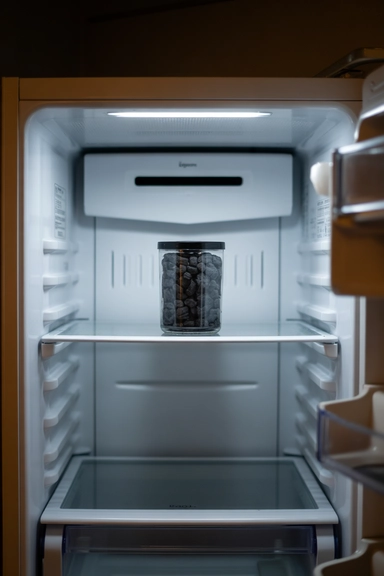
Baking soda in an open box does absorb some odor. Activated charcoal absorbs significantly more because the porous structure gives odor molecules vastly more surface to attach to. It is not a small difference.
Small container of activated charcoal on a middle shelf. Replace every two months. It sits there doing its job with zero maintenance in between.
I switched from baking soda to charcoal and noticed a difference in baseline fridge smell within a week. Baking soda is better than nothing. Charcoal is actually better.
The Drip Tray Underneath
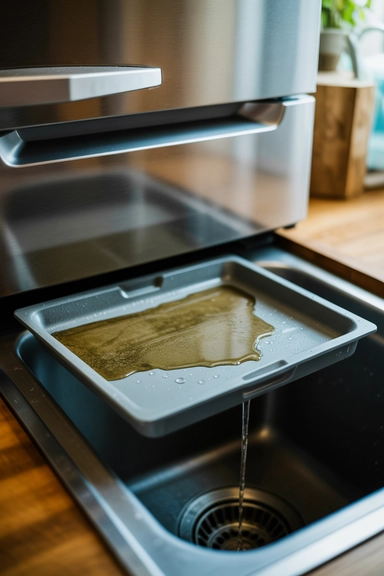
Most fridges have a drip tray at the base that collects condensation from the defrost cycle. It sits in warm air, stays permanently damp, and almost nobody knows it exists let alone cleans it. The mold and mildew smell it produces travels up into the fridge interior.
Remove the kick plate at the bottom of the fridge or pull the fridge slightly away from the wall to access it. Slide the tray out. Wash it in the sink, dry it completely, replace it.
Do this every three months. A lot of mystery fridge smells that survive every cleaning session are coming entirely from this tray.
Coffee Grounds for Emergencies
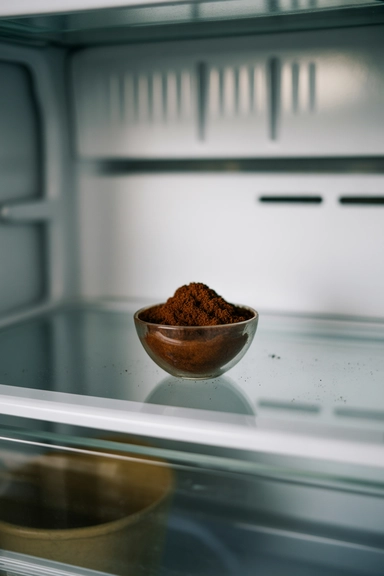
Fresh coffee grounds absorb odors fast. Faster than baking soda. A small bowl of grounds on a shelf will noticeably reduce a strong smell within a few hours, which makes them useful when guests are coming and the fridge needs to smell better right now.
They are not a long term solution. Grounds lose their absorbing capacity quickly and if left too long they transfer a coffee scent to neutral foods nearby. Use them for the situation that needs fixing in the next few hours. Let activated charcoal handle the rest.
Odor Control Methods Side by Side
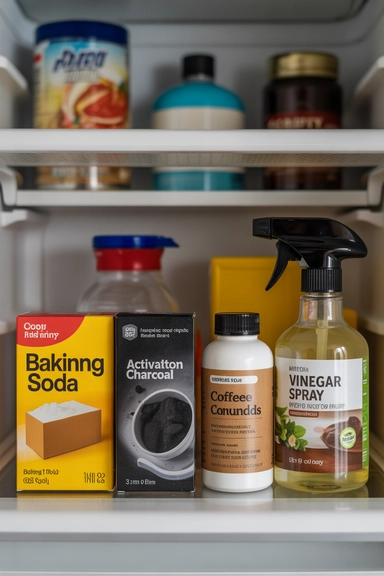
| Method | Best Use | How Long It Lasts | Notes |
|---|---|---|---|
| Baking soda | Mild everyday odors | 30 days | Better than nothing |
| Activated charcoal | Strong persistent odors | 60 days | Noticeably more effective |
| White vinegar spray | Bacteria and immediate odor | Single treatment | No fragrance transfer |
| Coffee grounds | Emergency short-term fix | 2 to 4 hours | Single use only |
| Vinegar cotton swab | Mold in door seal folds | One-time then monthly | Most overlooked fix |
Pick the method that matches the problem. Using all of them at once does not produce better results than using the right one.
Spills on the Fridge Floor
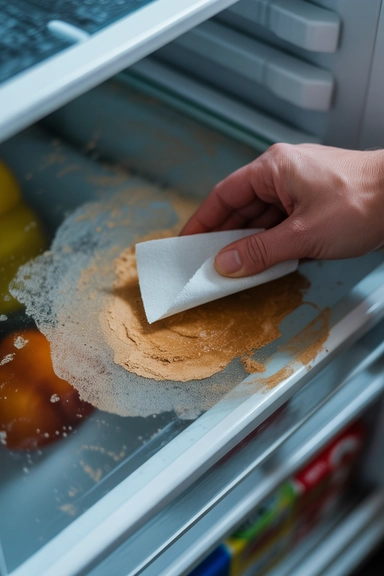
The floor of the fridge interior catches every drip that misses the shelves. Those drips dry, get covered by more drips, and eventually build into a sticky patch that a damp cloth smears around rather than lifts.
Baking soda paste directly on the dried spill. Five minutes. Wipe away with a damp cloth. Follow with a vinegar spray to sanitize the area after.
Check the fridge floor every full cleaning session. It accumulates faster than the shelves because everything drips down eventually, and it gets cleaned the least thoroughly because it requires actually bending down to reach it properly.
After Spoiled Food or a Power Outage
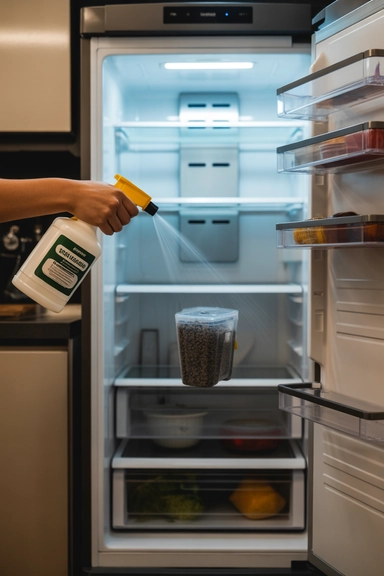
A standard clean does not fix a fridge that held spoiled food. The smell from decomposed food gets into the plastic interior surfaces and the door seal and wiping does not reach it.
Empty and wipe everything first. Then spray every interior surface with undiluted white vinegar, leave the door open thirty minutes, and wipe clean. Place a large container of activated charcoal inside before closing the door and leave it working for 48 hours before adding food back.
That combination clears severe odors that a normal cleaning session leaves behind. The 48-hour charcoal window is not optional if the smell was bad.
Water Dispenser and Ice Maker
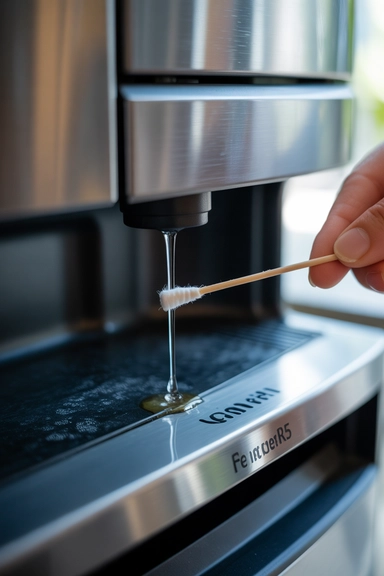
Built-in water dispensers and ice makers develop a stale mineral taste in the lines over time. That taste shows up in water and ice and the smell from the ice maker opening affects the fridge interior.
Replace the water filter every six months on schedule. Run two full batches of ice after a filter change and throw them away to flush stale water from the lines. Wipe the dispenser nozzle weekly with a vinegar-dampened cloth.
The nozzle tip has a small gap that collects mineral buildup and mold. A cotton swab with vinegar reaches that gap where a cloth just slides past it.
Cleaning the Condenser Coils
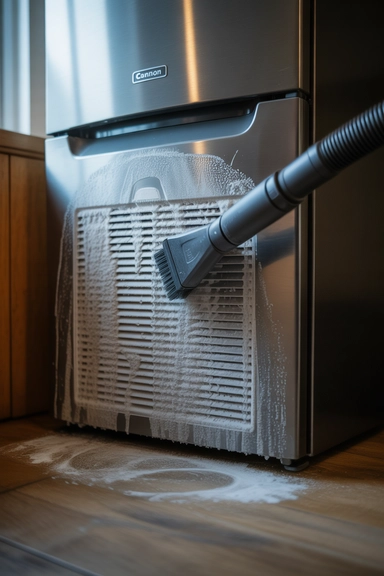
Dusty coils make the fridge run warmer than it should. A warmer fridge speeds up food spoilage, which increases how often odor problems develop. Cleaning the coils does not directly fix a smell but it addresses one of the reasons smells keep coming back.
Pull the fridge from the wall. Coils sit at the back or underneath depending on the model. Vacuum them with a brush attachment. Six months between cleanings is enough.
Better temperature control means food stays fresher longer. Fewer spoilage incidents mean fewer odor situations to deal with.
Store Food Properly
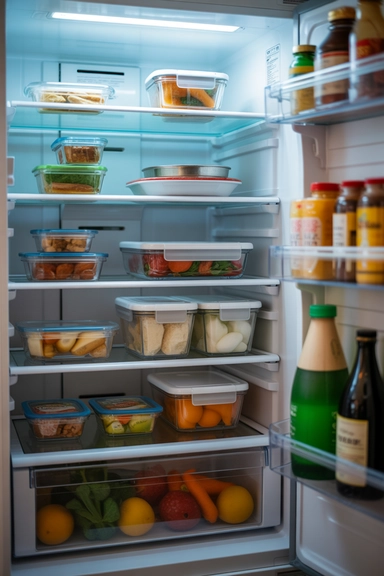
No cleaning routine fixes a smell problem that is actively being created by uncovered food inside the fridge. Cut onions, raw fish, strong cheese, and leftovers sitting in the pot they were cooked in release odor compounds into the fridge air continuously.
Airtight containers for anything with a strong smell. Covered containers for all leftovers, not the cooking pot with a loose lid on top. Cut fruit covered or in a sealed container, not sitting open on a plate.
These habits reduce the cleaning frequency required by a noticeable amount. The fridge cannot stay odor-free if what is inside it keeps creating odor.
The Final Wipe Most People Skip
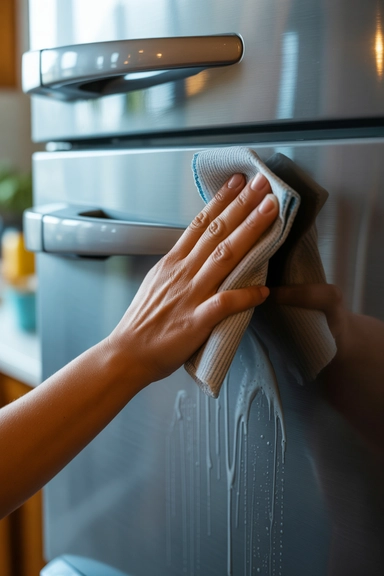
Interior cleaned, food replaced, door closed. Most fridge cleaning sessions end there. The door handle, the top of the fridge, and the sides near the door opening do not get touched.
The handle picks up hand oils and food residue from every person who opens the fridge with cooking-covered hands. The top collects kitchen grease and dust that falls into the fridge interior every time the door swings fully open.
Thirty seconds on those three spots at the end of every cleaning session. It is not dramatic but it extends how long the clean result lasts by a meaningful amount compared to stopping at the interior alone.
Final Thoughts on Kitchen Fridge Cleaning Hacks
Shelf wiping is the least effective part of fridge cleaning. The door seal folds, the drip tray underneath, and the crisper drawer tracks are where persistent odors actually live. Cleaning the shelves while leaving those three untouched produces a fridge that smells better for about two days.
Activated charcoal on a shelf and airtight containers for strong-smelling food handle the ongoing maintenance between full sessions. Those two things reduce how often a full clean is necessary.
The drip tray is the one most people have never checked. Check it this week.
FAQ About Kitchen Fridge Cleaning Hacks
How do I remove a strong smell after spoiled food? Spray every interior surface with undiluted white vinegar and leave the fridge door open for thirty minutes. Wipe clean and place a large container of activated charcoal inside before closing. Leave the charcoal working for 48 hours before adding food back. Clean the door seal folds with a vinegar-dampened cotton swab during that same session because spoilage smell gets into the gasket and a surface wipe does not reach it.
How often should a fridge be fully cleaned? Wipe spills as they happen. Full empty-and-clean every one to three months depending on how quickly residue builds. Door seal with a cotton swab monthly. Drip tray every three months. Condenser coils every six months. Those five intervals cover every part of the fridge that contributes to smell and performance problems.
What foods cause the most fridge odor? Cut onions left uncovered, raw fish on open plates, and strong cheese stored without airtight lids produce the most persistent odors because they release compounds into the enclosed air continuously. Leftovers stored in the cooking pot rather than a sealed container release moisture and smell at a rate a covered container does not. Overripe fruit left uncovered also releases gases that speed up spoilage of nearby food and contribute to a fermented smell over time.
Sarah Mitchell’s Take
Pull the fridge away from the wall this week and look at the drip tray underneath it. If you have never done that before, what you find there will explain a lot about why the fridge never quite smells clean no matter how many times the shelves get wiped. That tray sitting in warm air collecting condensation for months at a time is the answer to a smell mystery most people never solve because they never think to look there. Five minutes. Worth it every time.