
Introduction
I left the area behind my stove burners alone for almost a year because I told myself it was not that bad. When I finally pulled everything apart to clean properly, the grease had baked into a layer that took three separate sessions to fully remove. That is what stove grease does when you give it time. These kitchen stove cleaning hacks work on fresh grease and the stubborn baked-on kind that has been there longer than you want to admit. If your sink area needs the same attention, kitchen sink cleaning hacks tackles that buildup directly.
Dish Soap Paste Beats Every Commercial Degreaser
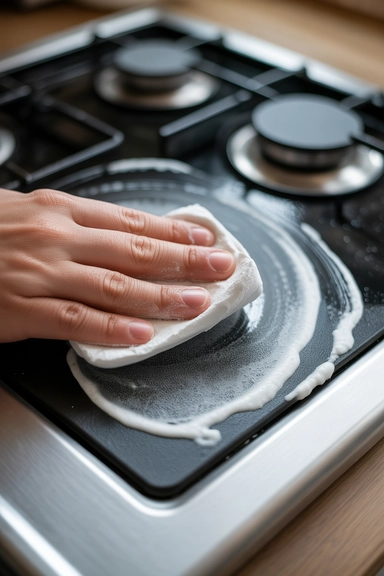
Walk past the commercial degreasers at the store. Plain dish soap mixed with baking soda into a thick paste outperforms most of them on stove grease and costs almost nothing.
Mix two tablespoons of baking soda with enough dish soap to make a spreadable paste. Apply it directly to the greasy surface and leave it five minutes before wiping. The baking soda gives mild abrasion and the dish soap breaks down the fat molecules in the grease. That combination does what spray-and-wipe-immediately never manages.
I tested four commercial degreasers against this paste on my own stovetop over two months. The paste won every time on baked-on grease.
Why You Should Clean the Stove While It Is Still Warm
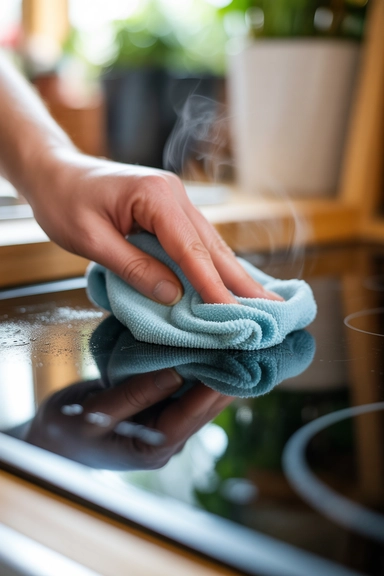
Cold grease is harder to remove than warm grease. Fat solidifies as it cools and bonds more tightly to the surface underneath it. Cleaning a stove after it has been cold for hours means fighting grease that has had time to harden.
Wipe the stovetop down while it is still slightly warm after cooking. Not hot enough to burn, just warm enough that the grease has not fully set. A damp microfiber cloth picks up fresh warm grease with almost no effort at all.
This single habit prevents most of the baked-on buildup that makes stove cleaning feel like a major project.
Gas Burner Grates Need Soaking Not Scrubbing
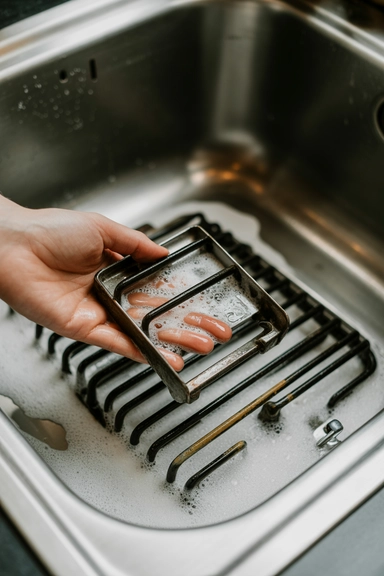
Scrubbing gas burner grates with a brush moves grease around without removing it from the cast iron surface. The grease sits in the textured surface and scrubbing just redistributes it. Soaking is the only method that actually works.
Fill the sink with very hot water, two tablespoons of dish soap, and two tablespoons of baking soda. Submerge the grates completely and leave them for 20 minutes. The grease releases from the surface on its own during the soak. Scrub lightly after to remove anything remaining, rinse, and dry completely before replacing.
Never put wet grates back on the stove. Moisture trapped under a grate causes rust faster than almost anything else.
Electric Coil Burners and the Drip Pans Below Them
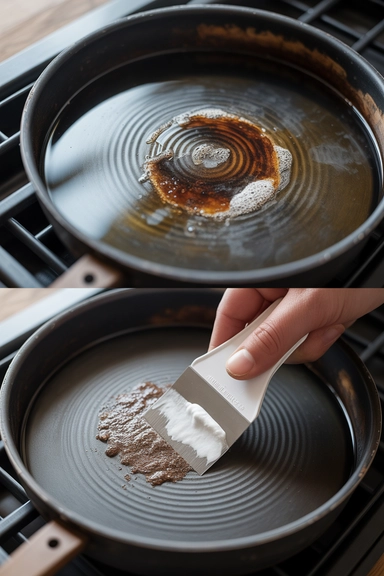
The drip pans under electric coil burners collect spills that get reheated hundreds of times until they bond to the metal in a dark crust. Most people try to scrub them clean. That crust does not respond to scrubbing.
Remove the drip pans and soak them in hot water with dish soap and baking soda for 30 minutes. For the burnt-on spots that remain after soaking, apply baking soda paste directly and leave it another ten minutes before scrubbing. A plastic scraper removes the loosened crust without scratching the metal.
Replace drip pans when the crust has burned through the metal coating entirely. Cleaning a pan that has burned through just moves black residue around.
The Area Around the Burners Nobody Wipes Down
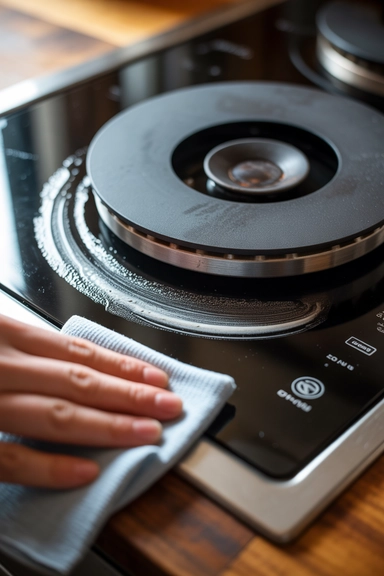
The flat surface immediately surrounding each burner collects splatter from every cooking session. Grease lands there, gets reheated the next time the burner runs, and gradually bakes into a film that routine wiping never fully removes because most people wipe across it rather than treating it directly.
Apply dish soap paste to the area around each burner and leave it three minutes. Wipe with a damp cloth using straight strokes from the outer edge inward toward the burner. Rinse the cloth between each burner so you are not just moving grease from one area to another.
Dry the surface completely after. Moisture sitting in the gap around a burner causes the same baked-on residue to return faster next time.
Oven Cleaner on the Stovetop Is the Wrong Product
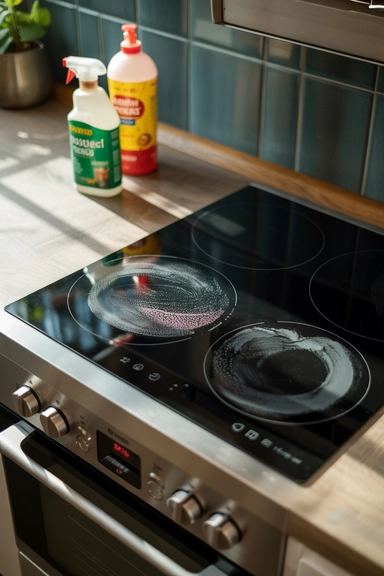
This took me longer to figure out than I want to admit. Oven cleaner is formulated for oven interiors, which are sealed enamel surfaces designed to handle harsh chemicals. Stovetop surfaces, especially glass ceramic and painted enamel, react badly to oven cleaner and can dull or etch permanently.
Use the baking soda and dish soap paste on stovetop surfaces. Use oven cleaner only inside the oven cavity where it belongs. The packaging rarely makes this distinction clearly and a lot of people damage their stovetops this way.
If your stovetop finish looks dull after cleaning, check what product was used on it before assuming the dullness is permanent.
Glass Ceramic Stovetops Scratch Easier Than They Look
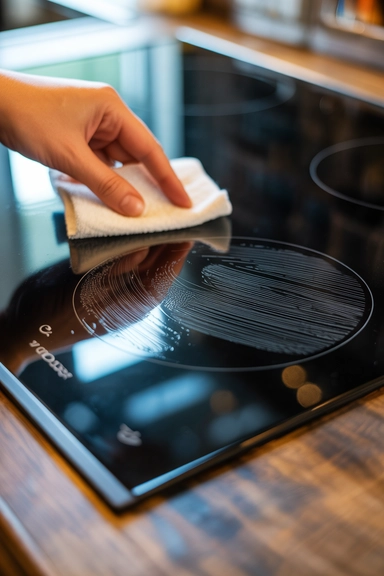
Glass ceramic looks tough. It scratches from sugar spills that have been wiped while still hot, from abrasive scrubbing pads, and from cleaning powders that seem mild. The scratches are permanent and they collect grease inside them which makes the surface look permanently dirty.
Use only a soft cloth or a dedicated glass ceramic scraper held at a 45 degree angle for stuck-on residue. Apply a paste of baking soda and water, leave it five minutes, and wipe with a damp soft cloth only. Finish with a glass ceramic polish like Cerama Bryte applied with a soft cloth to restore the surface and create a light barrier against future sticking.
Never use circular scrubbing motions on glass ceramic. Straight strokes only.
The Stove Knobs and the Panel Behind Them
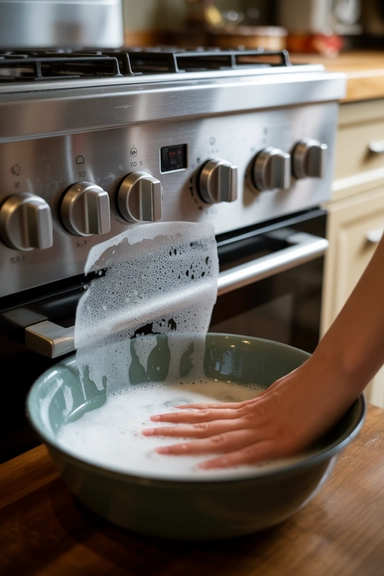
Stove knobs transfer hand grease onto themselves every single time they get touched. The panel immediately behind each knob collects cooking grease and splatter in a concentrated spot that a cloth cannot reach properly while the knob is in place.
Remove the knobs. Soak them in warm soapy water five minutes. While they soak, wipe the panel behind each knob with dish soap solution, paying attention to the area directly behind where the knob sits. Dry the knobs completely before replacing them.
Moisture trapped between a knob and the panel behind it accelerates the grease and grime buildup in that spot dramatically. Dry knobs go back on dry panels only.
Stove Cleaning Methods Compared
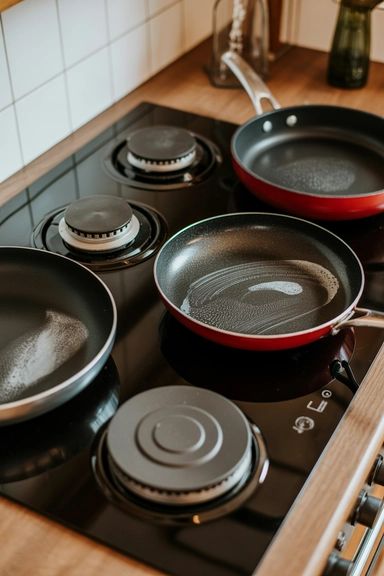
| Surface | Best Method | Dwell Time | What to Avoid |
|---|---|---|---|
| Gas burner grates | Hot water soak with dish soap and baking soda | 20 minutes | Dry scrubbing |
| Electric drip pans | Soak then baking soda paste | 30 minutes plus 10 | Oven cleaner |
| Glass ceramic top | Baking soda paste, soft cloth only | 5 minutes | Abrasive pads, circular scrubbing |
| Enamel stovetop | Dish soap and baking soda paste | 5 minutes | Steel wool, harsh chemicals |
| Stove knobs | Warm soapy water soak | 5 minutes | Submerging in water if electrical |
Matching the method to the surface saves time and prevents the kind of damage that makes grease harder to remove permanently.
The Gap Between the Stove and the Counter
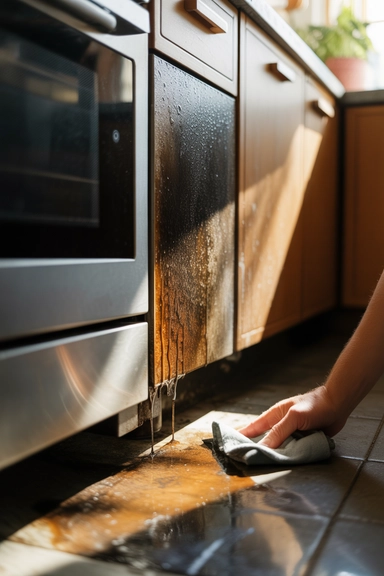
Grease, crumbs, and liquid spills fall into the gap between the stove and the counter constantly during cooking. That gap collects everything and most people never clean it because reaching it requires moving the stove.
Pull the stove out from the wall completely. Wipe the side panels of the stove and the adjacent counter edges with dish soap solution. Sweep and mop the floor section underneath. Push the stove back and fit silicone gap covers along both sides. They cost very little, sit flush with the counter surface, and stop the next year of cooking debris from falling into that gap at all.
Clean behind the stove once every three months. The gap covers eliminate the need to do it more often.
Baked-On Grease That Has Been There a Long Time
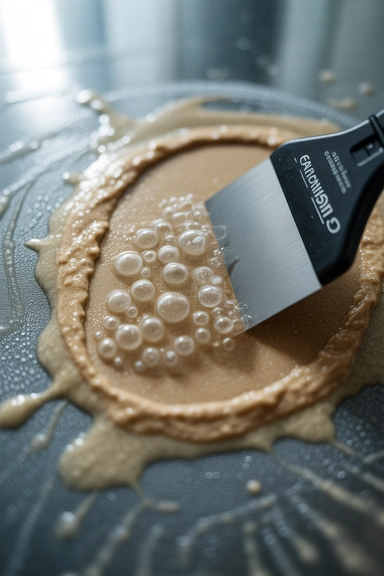
Old grease that has been reheated and cooled repeatedly develops a hard layer that paste and normal dwell time do not fully penetrate. It needs extended contact time with the cleaning agent, not more scrubbing force.
Apply baking soda paste thickly to the area. Spray hydrogen peroxide directly over the paste and leave the combination for 20 minutes rather than the usual five. The hydrogen peroxide activates the baking soda and together they break down oxidized grease that standard methods leave behind.
Wipe away with a plastic scraper first, then a damp cloth. Repeat the application if the first round does not fully clear it. Two gentle applications remove what aggressive scrubbing in a single session cannot.
The Exhaust Fan Above the Stove
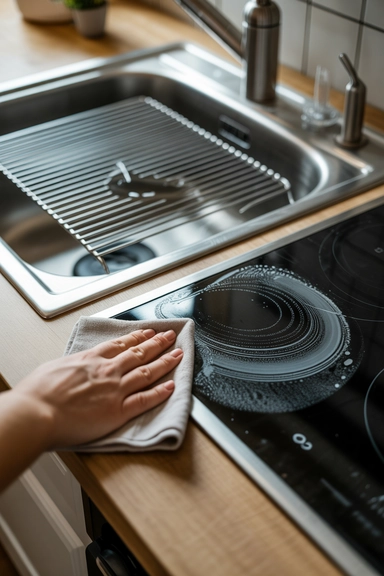
The exhaust fan or range hood above the stove collects a combination of grease and dust that builds into a thick sticky film on the exterior surface and the grille. That film drips grease back onto the stovetop during cooking once it gets heavy enough.
Wipe the exterior surfaces with dish soap solution weekly. Remove the grille monthly and soak it in hot water with dish soap and baking soda for 15 minutes. The grease releases without scrubbing after soaking. Rinse and dry before replacing.
The filter inside the hood needs the same treatment. A clogged filter stops capturing grease and starts pushing it back into the kitchen air instead.
Cleaning the Oven Window From the Stove Side
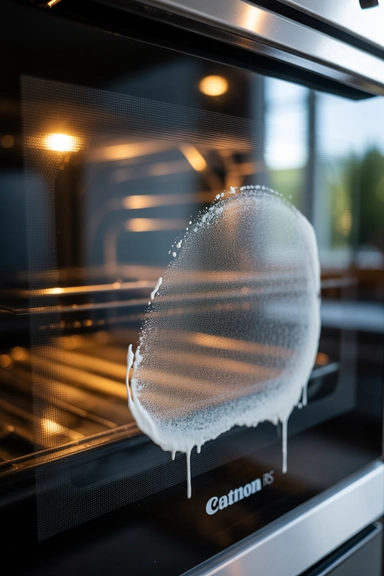
The interior side of the oven window gets splattered with grease during every oven use. It bakes on with every subsequent use until the window goes from slightly hazy to nearly opaque. Most oven cleaning routines miss this surface entirely.
Make a paste of baking soda and water. Apply it to the inside of the oven window, avoiding the edges where it can seep between the glass panels. Leave it 15 minutes. Wipe away with a damp cloth and dry with a clean cloth immediately.
For heavy buildup on the window, a plastic scraper at a low angle removes the loosened crust without scratching the glass.
The Stovetop Wipe That Should Happen Every Night

A two-minute wipe after every cooking session prevents every baked-on grease problem on this list. Grease that is one day old takes seconds to remove. Grease that is one week old and has been reheated multiple times takes paste, dwell time, and real effort.
Keep a damp microfiber cloth beside the stove. After cooking, while the surface is still slightly warm, wipe down the stovetop, the knob panel, and the area around each burner. Rinse the cloth and hang it to dry.
That is the whole routine. Two minutes every night replaces a 45-minute cleaning session every few weeks.
Dealing With Grease Splatter on the Wall Behind the Stove
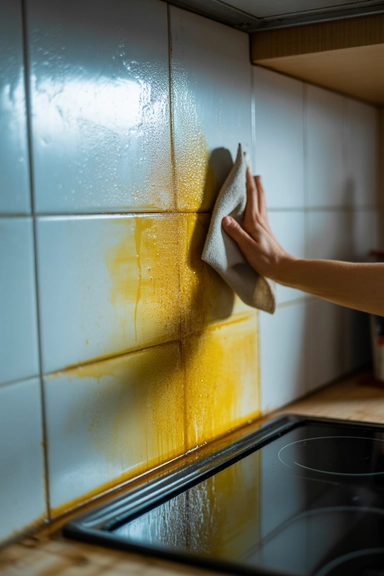
The wall directly behind the stove receives grease splatter from every frying and sautéing session. Without a backsplash it builds into a film that attracts dust and eventually becomes visible as a yellowish discoloration on the paint or wall surface.
Wipe the wall behind the stove weekly with a barely damp cloth and a small amount of dish soap solution. Wring the cloth nearly dry before touching the wall to prevent moisture soaking into the paint or drywall behind it. Dry the wall surface immediately after wiping.
For walls without a backsplash, a removable peel-and-stick backsplash panel behind the stove catches splatter on a washable surface instead of the wall itself. Worth considering if you rent or do not want to install permanent tile.
Final Thoughts on Kitchen Stove Cleaning Hacks
Stove grease has two states. Fresh grease wipes off with almost no effort. Baked-on grease that has been reheated repeatedly requires paste, dwell time, and patience. The entire goal of a stove cleaning routine is keeping grease in the first state by never giving it the chance to reach the second one.
The two-minute wipe after cooking is the habit that makes every other hack on this list less necessary. The gap covers stop debris from reaching the floor. The weekly knob removal keeps the panel behind them reachable.
None of this requires specialty products. Dish soap, baking soda, and a microfiber cloth handle everything here.
FAQ About Kitchen Stove Cleaning Hacks
How do I remove grease that has been on the stove for months? Apply a thick layer of baking soda paste mixed with a small amount of hydrogen peroxide directly to the grease. Leave it for 20 minutes rather than the usual five. Use a plastic scraper to lift the loosened crust before wiping with a damp cloth. Repeat the application if needed rather than scrubbing harder on the first pass. Two rounds of paste and dwell time remove what single-session scrubbing cannot.
Can I put gas burner grates in the dishwasher? Cast iron grates should not go in the dishwasher. The heat and detergent strip any seasoning from the surface and the prolonged moisture exposure causes rust. Enameled grates tolerate the dishwasher better but the high heat cycles degrade the enamel finish over time. Soaking in hot soapy water in the sink for 20 minutes produces better results with less surface damage than the dishwasher on either type.
What is the safest cleaner for a glass ceramic stovetop? Baking soda paste applied with a soft cloth is the safest daily method. For stuck-on residue, a dedicated glass ceramic scraper held at a 45 degree angle removes crust without scratching. Finish with a glass ceramic polish to restore the surface and reduce future sticking. Avoid abrasive pads, oven cleaner, and any powder-based cleanser on glass ceramic regardless of how gentle the label claims it is.
Sarah Mitchell’s Take
The stove is the one surface in a kitchen that gets used at high heat every single day and wiped down properly almost never. People wipe the visible flat parts and ignore the knob panel, the burner surrounds, the gap along the counter edge, and the wall behind it. All of that adds up into the kind of kitchen that smells like old cooking no matter how clean everything else is. Two minutes after cooking tonight. That is the whole fix.