
Introduction
There was a moment last year where I opened my microwave to heat something up and genuinely could not identify what half the mess on the ceiling was. Brown, hardened, splattered in a pattern that suggested something had exploded weeks ago and I had just been reheating food around it ever since. I tried wiping it cold with a cloth and nothing moved. Not even slightly. Most microwave mess is not difficult to remove. It just needs heat and moisture to loosen it before anything touches it. That order matters more than the product. If the rest of your kitchen needs the same approach, these kitchen cleaning hacks cover more ground.
Steam Loosens Everything Before You Touch It
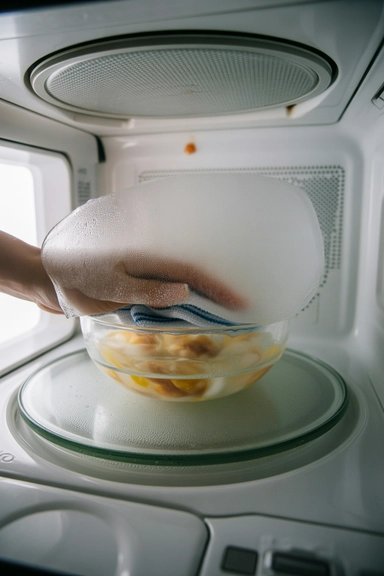
Fill a microwave-safe bowl with water, add a few drops of dish soap or a halved lemon, microwave on high for three minutes, leave the door shut for five more.
The steam soaks into every hardened splatter on the walls, ceiling, and floor of the microwave. When you open it, everything wipes off with a damp cloth in one pass. Nothing to scrub.
Running the microwave dry and scrubbing cold is why most people find microwave cleaning difficult. The steam step makes everything else almost unnecessary.
Lemon Steam for Smell and Mess Together
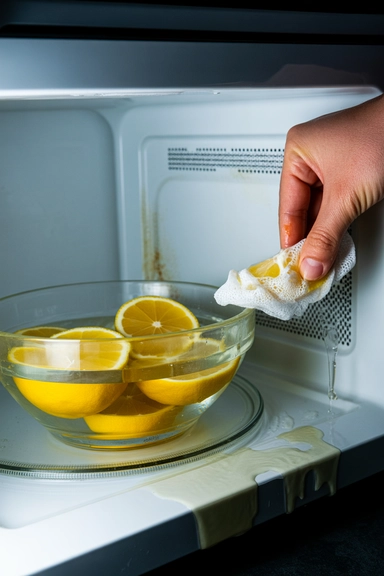
Cut a lemon in half, squeeze the juice into a bowl of water, drop the halves in, microwave three minutes, door shut five minutes after.
Same steam mechanism as above but the citric acid in the lemon breaks down grease on the surfaces at the same time. The smell afterward is clean rather than just neutral. Two problems handled in one step.
This is the version I use now over plain water. The result on grease buildup around the door frame is noticeably better. Plain water steam lifts splatter. Lemon steam lifts splatter and grease film.
White Vinegar Steam on Stubborn Odors
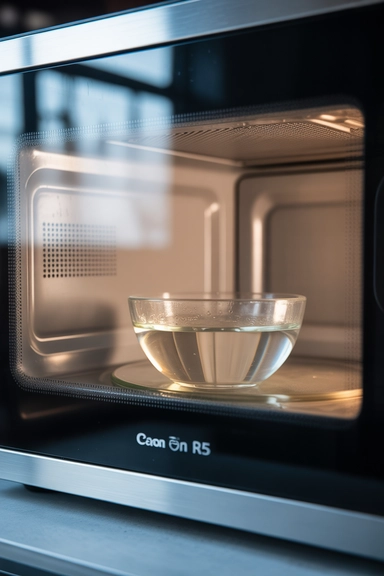
Half a cup of white vinegar in a bowl of water, microwave three minutes, leave five minutes with the door closed.
Vinegar steam neutralizes the odor compounds that get absorbed into the microwave interior walls over months of heating fish, garlic, and reheated leftovers. The smell while it runs is sharp. The smell afterward is gone.
Do not skip the five minutes with the door closed. That is the time the steam is actively working on the surfaces. Opening it early cuts the contact time and the result is noticeably worse.
Dish Soap Directly on the Turntable
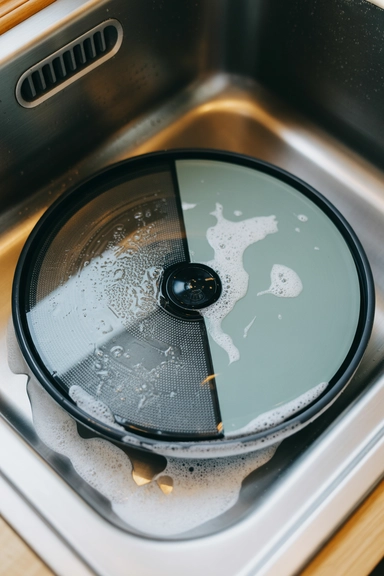
Remove the glass turntable, fill the sink with warm water and a few drops of dish soap, leave it to soak for ten minutes, wash normally.
The turntable collects more mess than any other part of the microwave and most people wipe it in place without actually cleaning it properly. Soaking it separately gets the underside and the rim where buildup hides.
Dry it completely before putting it back. Water sitting under a glass turntable causes the plastic ring underneath to go mouldy faster than almost anything else in the kitchen.
Baking Soda Paste on Baked-On Spots
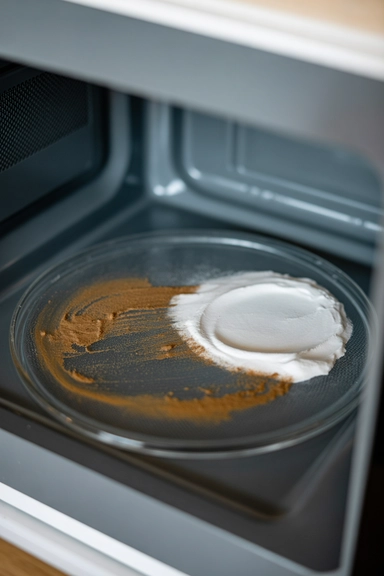
Mix baking soda with enough water to make a thick paste. Apply directly to a baked-on spot, leave five minutes, wipe with a damp cloth.
Steam loosens most mess but occasionally something has been in there long enough to harden past what steam alone shifts. Baking soda paste on those specific spots after steaming handles what remains without scratching the interior coating.
Do not scrub with anything abrasive inside a microwave. The interior coating scratches permanently and scratched areas absorb mess faster afterward.
The Toothpick Method for Vents and Crevices
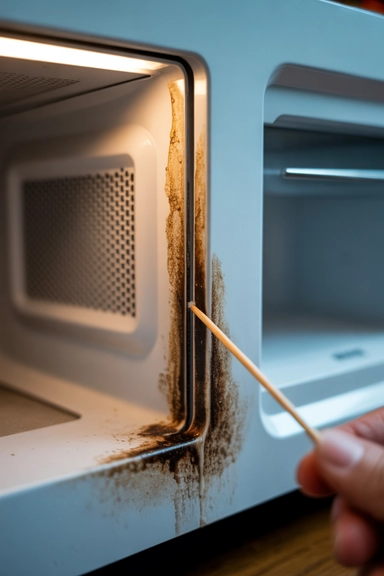
Run a toothpick along the rubber door seal, the vents around the interior edges, and the corners where the walls meet.
Grease and food residue collects in those gaps and never gets touched by regular wiping. Over time it hardens, discolors, and starts to smell when the microwave heats up. A toothpick dislodges it. A damp cotton bud gets into the rubber seal properly.
Takes about four minutes. Makes a noticeable difference to the smell specifically because those hidden deposits are usually the actual source.
Dish Soap and Warm Water on the Exterior
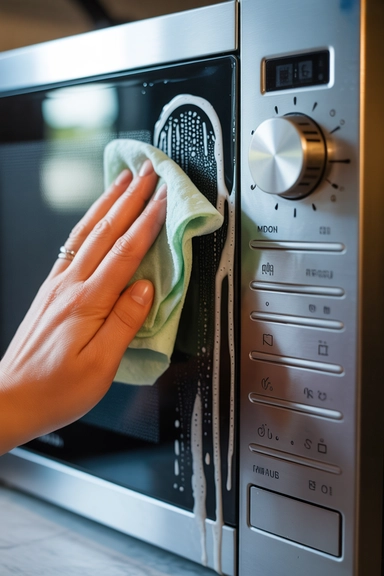
Damp cloth with a small amount of dish soap wiped over the exterior, handle, and control panel. Dry immediately after.
The exterior gets ignored until it is visibly sticky. Grease from hands, cooking vapor, dust. It builds up faster near the stovetop. A quick wipe takes ninety seconds and stops the kind of sticky buildup that needs real effort to shift later.
Do not let water run into the control panel area. Damp cloth, not wet cloth. The buttons stop responding if moisture gets behind them.
Rubbing Alcohol on Interior Stains That Will Not Shift
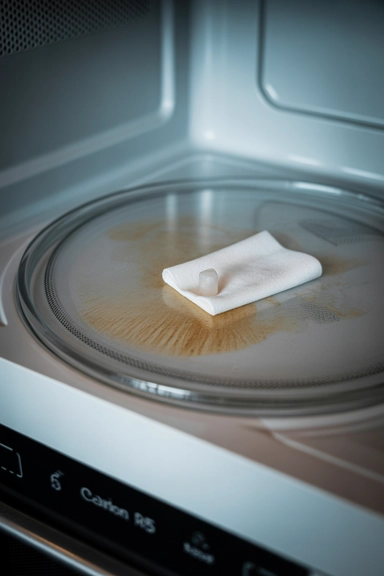
Dab rubbing alcohol onto a cloth and wipe directly over any stain remaining after steaming and wiping.
Some stains, tea, tomato sauce, anything with strong pigment, leave a shadow on the interior walls even after the physical mess is gone. Rubbing alcohol lifts the pigment residue without damaging the coating.
Test in a corner first if you have an older microwave with a worn interior coating. On a damaged coating the alcohol can lift paint rather than just pigment. On an intact surface it is safe and effective. For more household cleaning methods using products already in most homes, these easy cleaning hacks are worth keeping nearby.
Newspaper to Wipe the Interior Dry
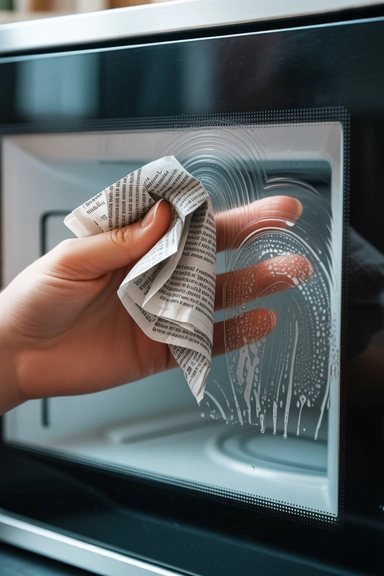
After steaming and wiping, use a sheet of newspaper to buff the interior walls dry.
Newspaper absorbs moisture without leaving lint behind the way cloth sometimes does. It also leaves the interior surface with a very slight shine. Sounds like an odd step. The interior of a microwave cleaned and buffed with newspaper looks noticeably cleaner than one wiped with a cloth and left damp.
Coffee Grounds Absorb Lingering Odors Overnight
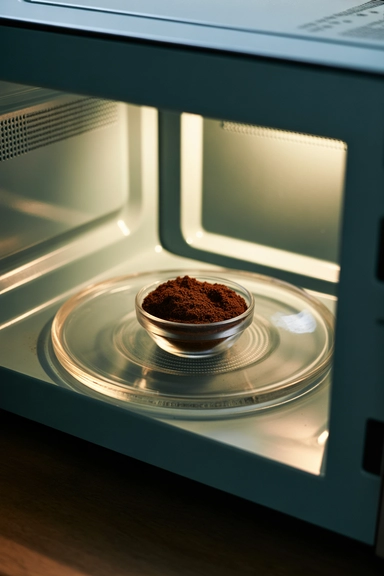
Place a small bowl of dry coffee grounds inside the microwave overnight with the door closed.
Coffee absorbs odor compounds from the air inside the microwave the same way baking soda absorbs fridge smells. For a lingering fish or garlic odor that vinegar steam has reduced but not fully eliminated, overnight with coffee grounds finishes the job.
Do not microwave the coffee grounds. Leave them cold overnight. Heating them releases the smell rather than absorbing surrounding odors.
Coconut Oil on the Interior Walls After Cleaning
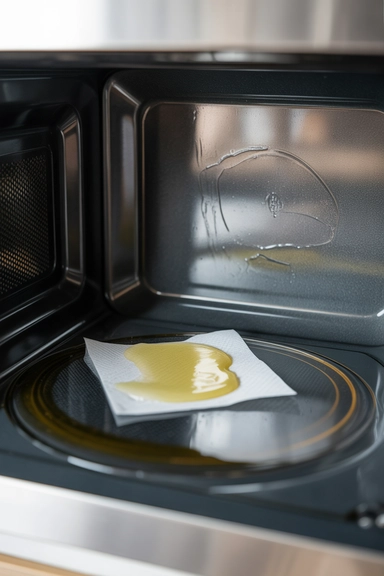
Apply a very thin layer of coconut oil to the interior walls and ceiling using a paper towel after the microwave is fully clean and dry.
The thin oil layer creates a barrier that stops splatter bonding directly to the surface. Next time something explodes in there, the mess sits on top of the oil rather than baking onto the coating. It wipes clean with almost no effort.
Thin layer only. Too much and the microwave smells of warm coconut every time it runs. A barely-there coating is enough to make a real difference to how easy the next clean is.
Salt and Dish Soap Scrub on the Turntable
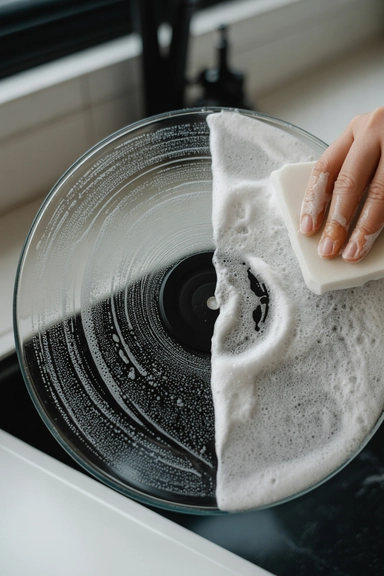
For a turntable with staining that soaking in soapy water has not shifted, pour coarse salt onto the surface, add a few drops of dish soap, scrub with a cloth in circles, rinse.
The salt adds physical abrasion. The dish soap emulsifies the grease underneath the staining. Together they shift the brown discoloration that bakes onto glass turntables over months of use.
This is for the turntable only, not the interior walls. Abrasive salt inside the microwave coating leaves permanent marks.
The Overnight Baking Soda Method for Persistent Smell
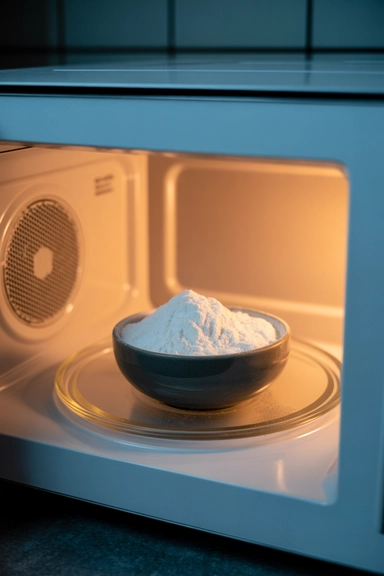
Leave an open box of baking soda or a bowl of dry baking soda inside the microwave overnight with the door closed.
Persistent smell in a microwave is usually absorbed into the interior walls rather than sitting in the air. Baking soda draws odor compounds out of the surface slowly over several hours. One night handles what a quick wipe cannot.
Do this after cleaning, not instead of it. The baking soda handles residual odor. It does not replace actual cleaning of the physical mess.
Warm Water and Dish Soap on the Door Glass
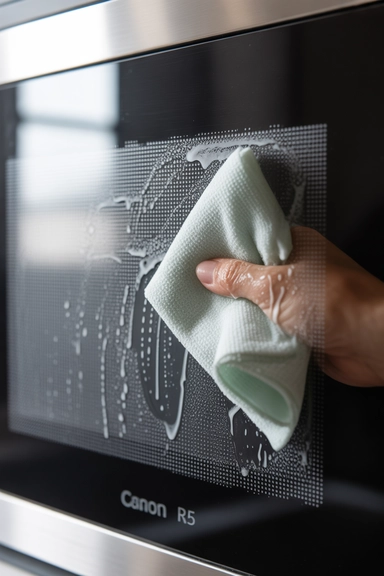
Spray warm water onto the inside of the door glass, add one drop of dish soap, let it sit two minutes, wipe with a microfiber cloth.
The inside of the door glass collects a grease film from cooking vapor that makes the whole microwave look dirty even when the interior is clean. Two minutes of contact time and the film wipes away cleanly.
The outside of the door glass is different, usually fingerprints and surface grime rather than grease film. A dry microfiber cloth handles the outside. The inside needs the soapy water soak.
Silicone Microwave Cover Prevents Most of This
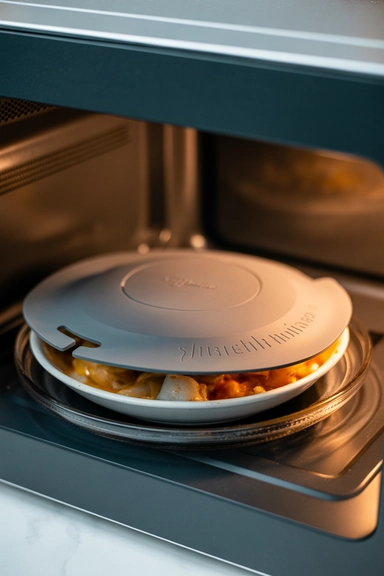
Place a silicone microwave splatter cover over food before heating.
Everything above assumes cleaning up after splatter has already happened. A cover stops most of it occurring in the first place. Splatter goes on the cover, which rinses clean in thirty seconds under the tap.
The microwave still needs periodic cleaning for the grease film that builds up from general use. But the baked-on explosion mess, the stuff that requires steam and paste and multiple passes, mostly stops happening.
How Microwave Cleaning Methods Compare
| Method | Best Use | Time Needed | Works On |
|---|---|---|---|
| Lemon steam | Grease and splatter | 8 minutes total | All interior surfaces |
| Vinegar steam | Odor removal | 8 minutes total | All interior surfaces |
| Baking soda paste | Baked-on spots after steaming | 5 minutes | Specific stubborn spots |
| Rubbing alcohol | Pigment stains | 2 minutes | Interior walls only |
| Coffee grounds overnight | Lingering odor | Overnight | Interior air and surfaces |
| Coconut oil barrier | Splatter prevention | 2 minutes | Interior walls and ceiling |
| Silicone cover | Ongoing prevention | 0 minutes | During cooking only |
Final Thoughts on Microwave Cleaning Hacks to Remove Stuck Mess
Steam first. Always. Every other step in this list works better after a steam cycle loosens whatever is on the surfaces. Skipping straight to scrubbing cold is what makes microwave cleaning feel harder than it is.
The interior coating is the thing worth protecting. Scratches from abrasive pads or scourers damage it permanently and damaged areas absorb mess faster, smell more, and are nearly impossible to clean properly afterward. Soft cloth, damp not wet, no abrasives inside.
Prevention is the part most people skip. A silicone splatter cover and a quick wipe after each use means a monthly deep clean instead of a weekly one. The microwave that looks clean most of the time is not cleaned more often. It is just covered while things heat.
FAQ About Microwave Cleaning Hacks
Is it safe to use vinegar or lemon juice inside a microwave? Yes. Both are food-safe acids that leave no harmful residue after wiping. The amounts used in steam cleaning are small and diluted further by the water in the bowl. Rinse the interior with a clean damp cloth after any acid-based steam clean and dry thoroughly before using. The only surface to be cautious with is a cracked or heavily worn interior coating where moisture can get into the material beneath.
How often should a microwave be deep cleaned? Once a month is enough for a microwave used daily with a splatter cover. Without a cover, weekly wiping after the steam method keeps mess from baking on between deeper cleans. The turntable needs washing separately every one to two weeks regardless of how clean the interior looks because it collects liquid spills and grease that are not always visible from above.
Why does my microwave still smell after cleaning? Smell that persists after cleaning is usually absorbed into the interior walls rather than sitting on the surface. The coffee grounds overnight method or an open box of baking soda left inside for several hours draws those absorbed compounds out. If the smell returns within a day or two of cleaning it is worth checking the door seal and the hidden crevices around the interior edges where old food residue collects and is not reached by regular wiping.
Sarah Mitchell’s Take
The ceiling of my microwave is where I judge how long it has been since I actually cleaned it properly. Not just wiped around. Actually steamed and dealt with it. There was a period of about three months where I kept wiping the turntable and the walls and telling myself it was fine. It was not fine. The ceiling was evidence. Steam it, do the whole thing including the door glass and the seal, then put a cover on it afterward. The cover is the part I put off buying for too long and the thing that changed how much time I spend on this the most.