
Introduction
I opened my kitchen cabinets one morning to grab a pan and noticed my hand stuck slightly to the door. Not dramatically, just enough to make me stop and actually look at the surface I had been wiping down for months without ever really cleaning. That tacky film was grease, and it had been building since the day I moved in. These kitchen cabinet cleaning hacks are the ones that finally got it off and kept it off. If your whole kitchen needs the same treatment, kitchen cleaning hacks covers every surface worth tackling.
Dish Soap and Warm Water Is Your Starting Point
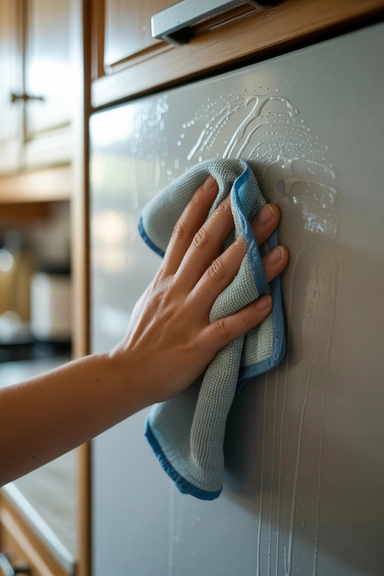
Before anything else, try the simplest method first. A few drops of dish soap in warm water handles light grease on cabinet surfaces faster than any specialty product I have tested.
Dampen a microfiber cloth in the solution, wring it nearly dry, and wipe the cabinet front using straight horizontal strokes. The surfactant in dish soap breaks down fresh grease without damaging paint, wood finish, or laminate surfaces.
This works best on grease that has not had weeks to cure onto the surface. For anything older or stickier, the methods below work better.
Why Vinegar Alone Does Not Cut Cabinet Grease
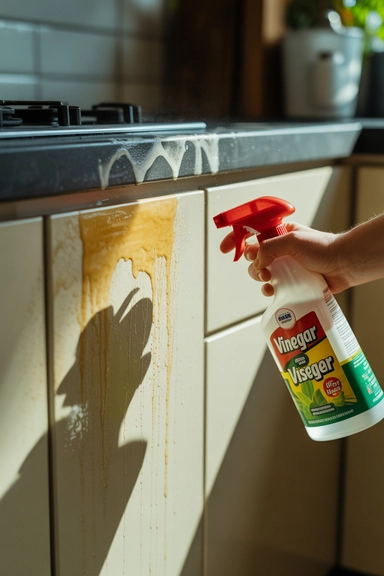
A lot of cleaning advice recommends straight white vinegar for kitchen cabinets. I tried it for three months and the results were consistently disappointing on anything beyond light dust.
Vinegar is acidic and works well on mineral deposits and soap scum. Grease is a fat-based residue and responds to surfactants, not acid. Spraying vinegar on a greasy cabinet front mostly just moves the grease around without breaking it down.
Use vinegar diluted with water as a finishing rinse after a degreasing method, not as the primary cleaning agent on greasy surfaces.
The Baking Soda Paste That Lifts Baked-On Grease
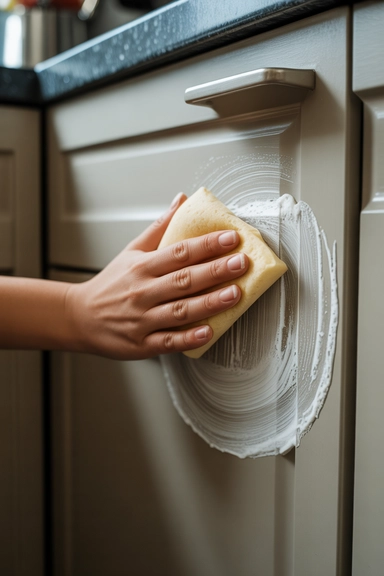
For grease that has been sitting long enough to harden, a paste outperforms any spray because it stays in contact with the surface rather than running off before it can work.
Mix two tablespoons of baking soda with enough dish soap to form a spreadable paste. Apply it to the greasy cabinet surface and leave it for five minutes. Wipe away with a damp microfiber cloth using straight strokes. The mild abrasion from the baking soda combined with the degreasing action of the soap removes layers that liquid cleaners cannot touch.
This paste is safe on painted wood, laminate, and MDF cabinet fronts without scratching.
Cabinet Corners and Edges Where Grease Hides
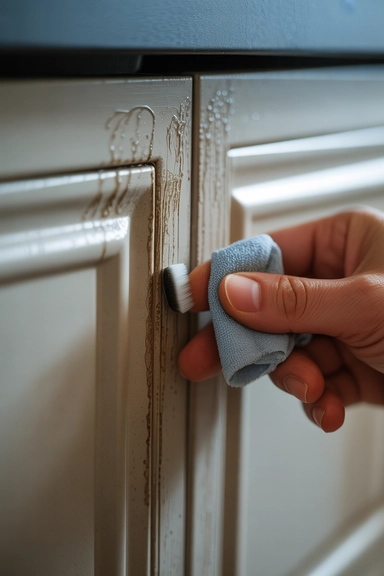
Flat cabinet surfaces get wiped regularly. The corners, edges, and the grooves in raised panel doors almost never do, and grease accumulates there in concentrated deposits that eventually become visible dark streaks.
Wrap a microfiber cloth around your index finger and press it into each corner and groove. Use the dish soap solution or baking soda paste depending on how much buildup you find. A soft toothbrush works even better for deep grooves in decorative cabinet fronts.
I spent two years wiping the flat panels on my cabinet doors before noticing the dark lines in the grooves. One session with a toothbrush removed more grime than two years of cloth wiping had.
How Heat Helps Loosen Stubborn Cabinet Grease
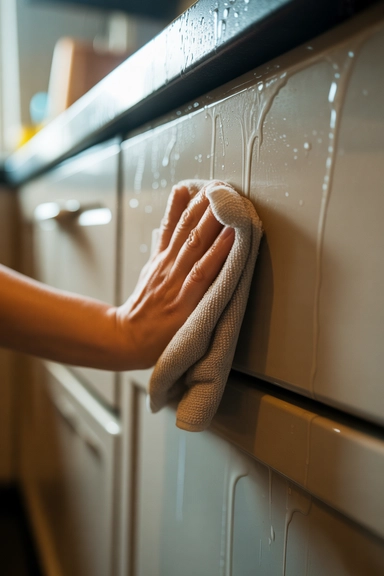
Cold grease is harder to remove than warm grease because fat solidifies at lower temperatures. Warming the surface slightly before cleaning makes every method work faster and with less effort.
Hold a warm damp cloth against the greasy area for thirty seconds before applying your cleaning solution. The heat softens the grease and opens the surface slightly so the cleaner penetrates rather than sitting on top.
This makes a noticeable difference on cabinets near the stove where grease has been repeatedly heated and cooled into a harder layer than grease found elsewhere in the kitchen.
The Inside of Cabinet Doors Gets Ignored Completely
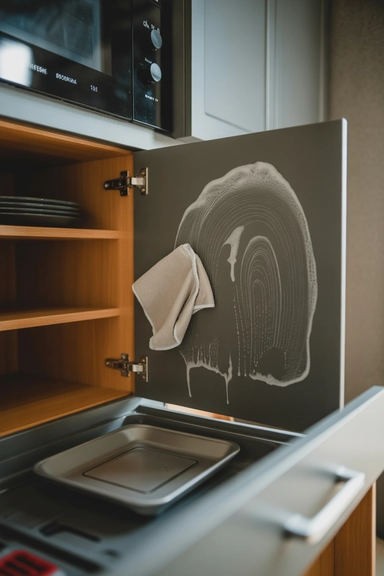
Most people clean the outside of cabinet doors and never think about the inside. The inside surfaces near the stove collect the same grease mist from cooking that the outside does, plus fingerprints and food splash from reaching in and out daily.
Wipe the inside of every cabinet door with the dish soap solution once a month. Pay attention to the area around the hinges where grease and dust combine into a thick residue that standard wiping misses entirely.
Pull everything out of one cabinet at a time, wipe the interior walls and shelves, dry completely, and replace the contents. This takes eight minutes per cabinet and prevents the musty smell that develops when grease and moisture sit on enclosed wood surfaces.
Dealing With the Grease Above the Cabinet Line
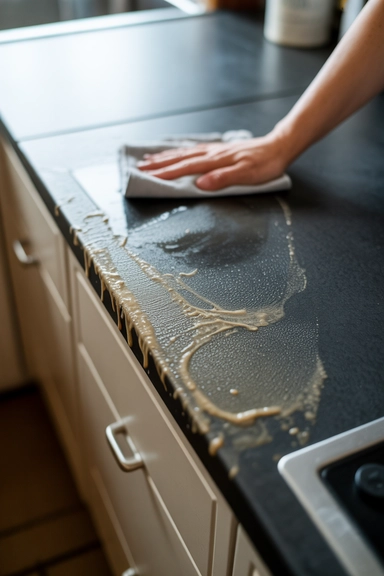
The tops of kitchen cabinets that do not reach the ceiling collect the heaviest grease deposits in the entire kitchen because heat and cooking vapors rise and settle there. Most people never look up there until the layer is thick enough to be genuinely unpleasant.
Wipe cabinet tops with a cloth dampened with the dish soap solution. Plain water and vinegar do not cut the greasy dust that forms up there because fat requires surfactant to release from a surface.
Line the tops with parchment paper after cleaning. Replace the liner every two months instead of scrubbing the surface each time.
Cabinet Hardware Carries More Grease Than the Doors
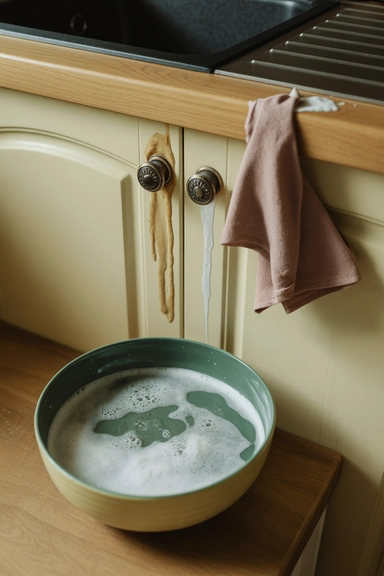
Handles and knobs transfer hand grease directly onto themselves hundreds of times a day. They also collect cooking grease from the air around them. The result is a buildup of combined oils that feels tacky and looks dull even when the cabinet doors around them look clean.
Remove handles and knobs completely. Soak them in warm soapy water for five minutes. Scrub with an old toothbrush, paying attention to the edges where the hardware meets the door, where grease accumulates in a ring. Dry completely before reattaching.
Do this monthly and the hardware stays visibly clean between soaks with a simple weekly wipe.
Comparing Kitchen Cabinet Cleaning Methods
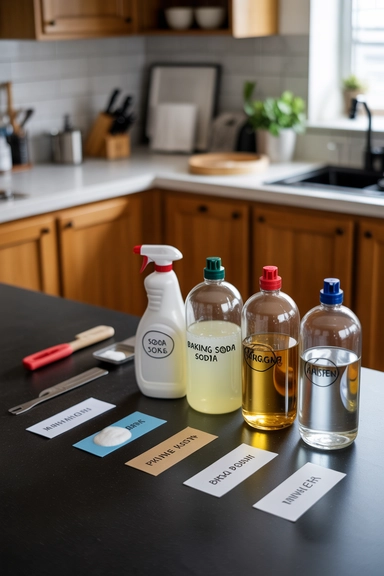
| Method | Best For | Dwell Time | Safe On All Finishes |
|---|---|---|---|
| Dish soap and warm water | Light fresh grease | None | Yes |
| Baking soda and dish soap paste | Baked-on heavy grease | 5 minutes | Yes |
| Vinegar and water rinse | Final residue removal | None | Avoid natural wood |
| Toothbrush scrub | Grooves and corners | None | Yes |
| Hardware soak | Handles and knobs | 5 minutes | Yes |
Matching the method to the level of buildup saves time and prevents unnecessary scrubbing on surfaces that only need a light clean.
What to Use on Greasy Wood Cabinet Finishes
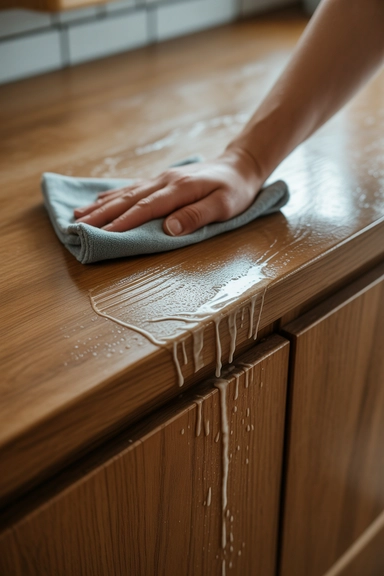
Sealed wood cabinets tolerate dish soap solutions well. Unsealed or waxed wood is different. Excess moisture warps the wood and soap strips the wax finish, leaving the surface dull and more vulnerable to future grease penetration.
For unsealed wood cabinets, mix a few drops of dish soap into one cup of warm water and apply with a cloth wrung almost completely dry. Wipe immediately and dry the surface with a second dry cloth before any moisture has time to absorb into the grain.
Follow up with a thin coat of furniture wax applied with a soft cloth to restore the protective layer that cleaning removes. For organizing what goes inside those cabinets once the outside is clean, kitchen cabinet organization ideas has practical setups worth trying.
Painted Cabinets and the Cleaning Mistake That Damages Them
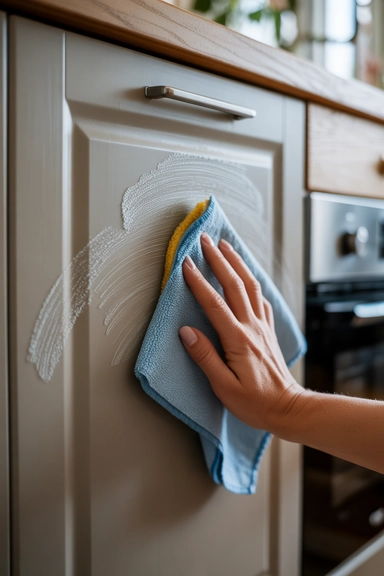
Painted cabinet surfaces scratch and dull from abrasive cloths and scrubbing pads. I ruined a section of my painted upper cabinets using a rough sponge on a grease spot, and the dull patch it left was more visible than the original grease.
Use only soft microfiber cloths on painted surfaces. Apply the baking soda paste with a finger or soft cloth rather than a brush if the grease requires something stronger than dish soap solution. Rinse with a clean damp cloth and dry immediately.
Never use steel wool, rough sponges, or dry powdered cleansers on painted cabinet surfaces regardless of how stubborn the grease appears.
The Weekly Habit That Prevents Heavy Buildup
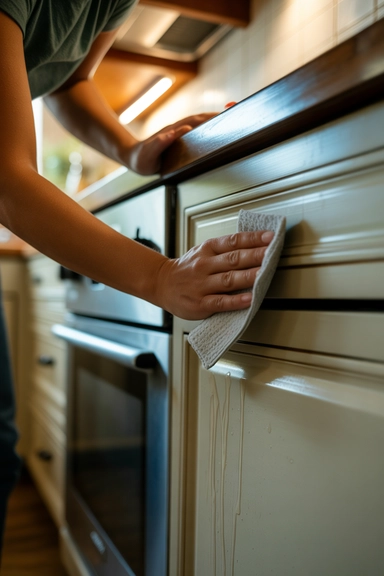
Every method on this list works better as a maintenance routine than as a rescue operation. Grease that sits for a week wipes off in seconds. Grease that sits for six months requires paste, dwell time, and real effort.
Wipe cabinet fronts nearest the stove with a damp dish soap cloth every week as part of your regular kitchen wipe-down. This takes two minutes and prevents the hardened buildup that makes cabinet cleaning feel like a major project.
The cabinets furthest from the stove need wiping every two to three weeks rather than weekly because they collect significantly less cooking grease.
Laminate Cabinets Need a Different Approach
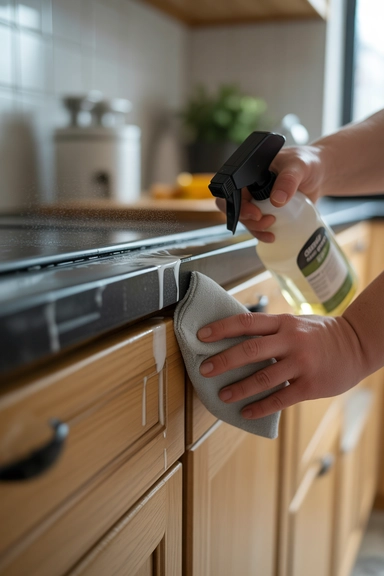
Laminate cabinet surfaces look durable but the seams and edges are vulnerable to water damage. Excess moisture seeps under the laminate at the edges and causes it to bubble and lift away from the substrate underneath.
Clean laminate cabinets with a cloth wrung nearly dry. Never spray liquid directly onto the surface because it runs into the seams before you can wipe it away. Apply the cleaning solution to the cloth, not the cabinet.
Dry laminate surfaces immediately after wiping. Leaving any moisture on laminate edges even briefly accelerates the lifting that eventually makes cabinets look damaged beyond cleaning.
Removing Old Grease Stains That Have Turned Dark
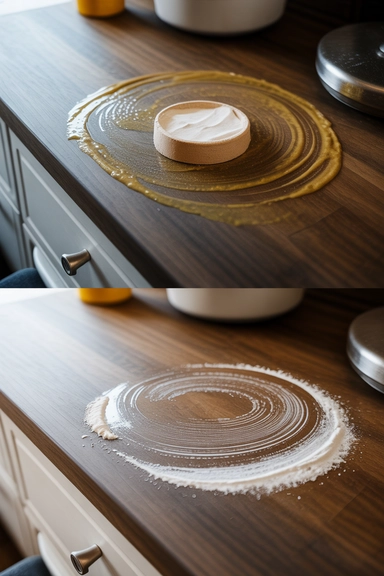
Grease that has oxidized over months turns from a clear tacky film into a brownish-yellow stain that looks like a permanent discoloration. It is not permanent, but it requires more than dish soap to remove.
Apply the baking soda and dish soap paste and extend the dwell time to ten minutes instead of five. For stains that do not fully lift after the first application, repeat the process immediately rather than scrubbing harder. Two gentle applications remove what one aggressive scrubbing session cannot.
Finish with a vinegar and water rinse to remove any baking soda residue, then dry the surface completely.
The Final Wipe That Makes Cabinets Look Professionally Clean
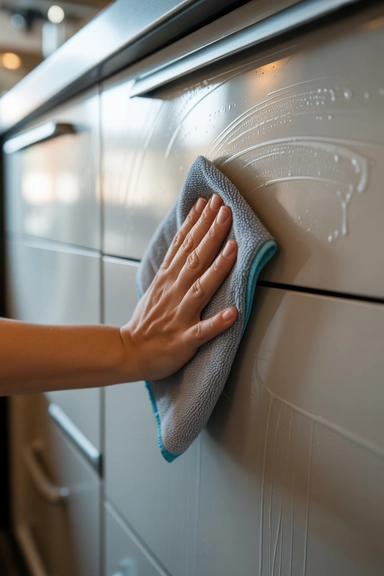
After degreasing, a finishing step separates a clean cabinet from one that looks properly maintained. Any cleaning residue left on the surface attracts new dust and grease faster than a bare surface does.
Wipe every cleaned cabinet front with a cloth dampened with plain warm water. Follow immediately with a dry microfiber cloth to remove all moisture. On wood cabinets, finish with a very light application of furniture oil on a cloth to restore the sheen that cleaning removes.
This three-step finish, clean, rinse, dry, takes ninety seconds per cabinet and makes the difference between a surface that looks clean and one that looks cared for.
Final Thoughts on Kitchen Cabinet Cleaning Hacks
Kitchen cabinet grease builds in layers and each layer makes the next one harder to remove. The most effective approach is frequent light maintenance rather than infrequent heavy cleaning sessions. Weekly wiping near the stove prevents the kind of buildup that requires paste, dwell time, and real effort to remove.
The spots most routines miss, corners, grooves, hardware, inside door surfaces, and cabinet tops, are where grease concentrates most heavily. Addressing those specifically changes how the whole kitchen looks and smells.
Match the method to the surface finish and the age of the grease. Fresh grease needs dish soap. Old grease needs paste and time.
FAQ About Kitchen Cabinet Cleaning Hacks
How do I clean kitchen cabinets without removing the finish? Use a soft microfiber cloth with a diluted dish soap solution applied to the cloth rather than sprayed directly onto the surface. Wring the cloth nearly dry before wiping and follow immediately with a dry cloth to remove moisture. Avoid abrasive cloths, rough sponges, and acidic solutions on waxed or oiled wood finishes.
How often should kitchen cabinets be deep cleaned? Wipe cabinet fronts near the stove weekly as part of your regular kitchen routine. Deep clean all cabinets including hardware, corners, and interior surfaces every two to three months. Cabinet tops above the cooking area need attention monthly because grease and dust accumulate there faster than anywhere else.
What removes grease from cabinets without damaging the wood? A paste of baking soda and dish soap applied with a soft cloth and left for five minutes removes heavy grease from sealed wood without scratching or stripping the finish. For unsealed wood, use a barely damp cloth with a tiny amount of dish soap and dry the surface immediately after wiping to prevent moisture absorption into the grain.
Sarah Mitchell’s Take
Cabinet grease is the kind of problem that sneaks up on you because it builds so gradually you stop seeing it. Then one day the light catches the surface at a certain angle and you realize every door in your kitchen is coated in a film you have been looking past for months. Start with the doors closest to your stove because those are always the worst. One good session with the baking soda paste and you will want to do every cabinet in the house the same afternoon.