
Introduction
I flipped my mattress for the first time in three years last spring and the underside was a different color from the top. Not slightly different. Visibly yellowed in a way that made me genuinely uncomfortable about what I had been sleeping on. Dust mites, sweat, dead skin cells. All of it accumulates in a mattress and none of it is visible from the top until the damage is already done. Most people wash their sheets regularly and never touch the mattress underneath. That is the part doing most of the work. If your bedroom needs a deeper reset beyond just the mattress, these bed cleaning hacks cover the full picture.
Vacuum First Before Anything Else Touches It
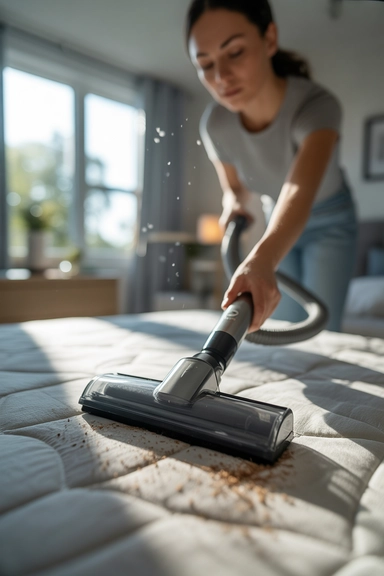
Strip the bed completely and vacuum the entire mattress surface with the upholstery attachment. Top, sides, and if you can manage it the underside too.
Dead skin cells, dust mite debris, pet hair, crumbs. All of it sits on and just below the surface. Applying any liquid to a mattress without vacuuming first turns dry debris into a paste that is harder to remove than either thing was separately.
Go slowly. The upholstery attachment needs contact time to pull material out of the fabric rather than just skimming over it. Two slow passes beats four fast ones.
Baking Soda Deodorizes the Whole Surface
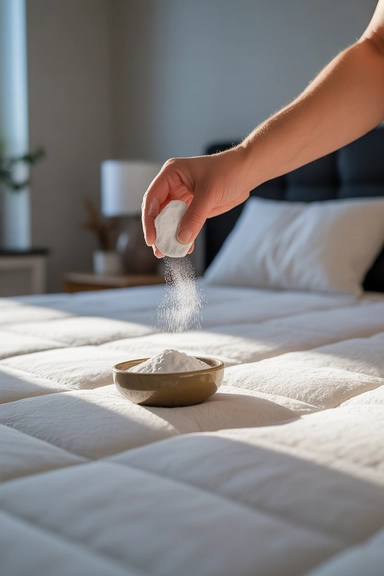
Sprinkle baking soda generously across the entire mattress surface. Leave it for a minimum of one hour. Vacuum it off completely.
Baking soda absorbs odor compounds and moisture from the mattress fabric. The longer it sits the more it draws out. One hour is the minimum. Four hours is better. Overnight is the best result.
I did this on a mattress that had a faint smell I could not place and had been attributing to the room. It was the mattress. One overnight baking soda treatment and the smell was gone. Should have done it years earlier.
Essential Oils Mixed Into the Baking Soda
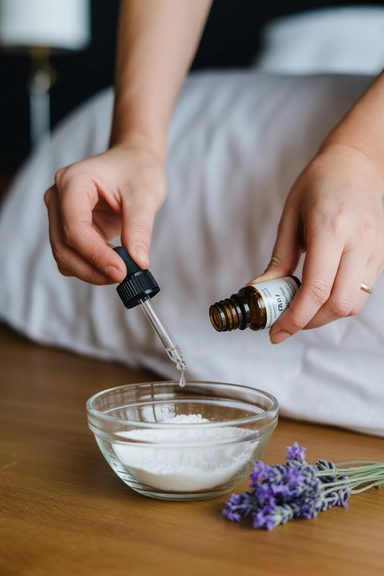
Add ten drops of lavender or tea tree essential oil to the baking soda before sprinkling and mix it through.
Tea tree has antimicrobial properties that work on the bacteria and dust mite populations in the mattress surface while the baking soda handles the odor. Lavender leaves a faint clean smell after vacuuming rather than the neutral nothing that plain baking soda leaves.
Mix the oil into the baking soda in a bowl or jar first. Dropping oil directly onto the mattress creates concentrated wet spots that take longer to dry and can leave faint marks on lighter mattress fabrics.
Cold Water Only on Blood Stains
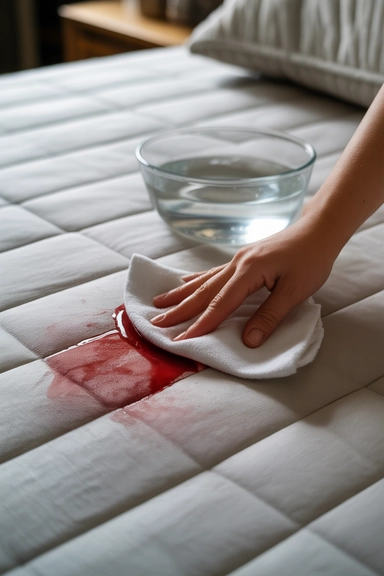
Fresh blood stain, cold water immediately. Blot with a clean cloth, work from the outer edge inward, never rub.
Hot water sets blood permanently into fabric. Cold water keeps it liquid long enough to blot out. This is the one rule that saves the mattress if you act fast enough.
For dried blood, make a paste of cold water and salt, apply it to the stain, leave twenty minutes, blot away. The salt draws the dried blood out of the fibers slowly. It does not fully remove old stains every time but it reduces them significantly in one treatment.
Hydrogen Peroxide on Stubborn Yellow Stains
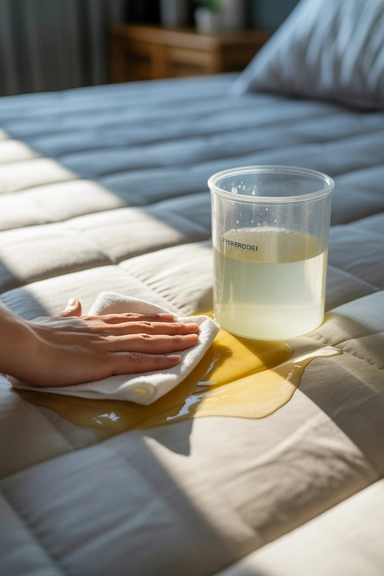
Mix one part hydrogen peroxide with one part cold water. Apply to yellow staining with a cloth, leave ten minutes, blot dry. Do not soak the mattress.
Yellow staining on a mattress is sweat and body oil that has oxidized into the fabric over time. Hydrogen peroxide bleaches the oxidized compounds without damaging most mattress fabrics.
Test on a hidden corner first. Some mattress covers have dyes that hydrogen peroxide affects. White and off-white mattress fabrics handle it without issue. Anything with a colored pattern needs the test first.
Dish Soap and Hydrogen Peroxide for Urine Stains
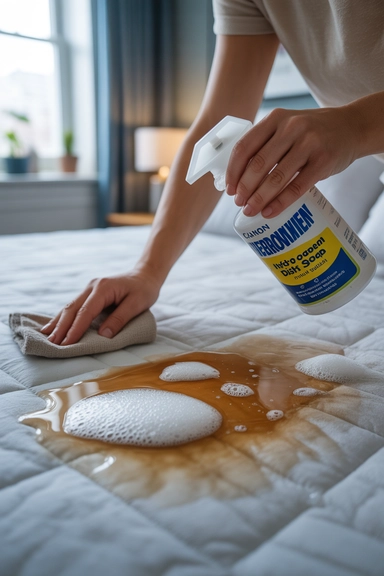
Mix two parts hydrogen peroxide, one part dish soap, two tablespoons of baking soda. Apply to the stain, leave ten minutes, blot away with a cold damp cloth.
Urine stains are a combination of organic compounds and ammonia. The hydrogen peroxide handles the organic component, the dish soap emulsifies the oils, and the baking soda neutralizes the ammonia odor. All three are needed. Using only one or two of them leaves the job half done.
The mattress needs to dry completely before putting sheets back on. A damp mattress covered with sheets develops mold inside the layers within days. Fan or open window, full dry, then make the bed.
White Vinegar Spray for Odor and Bacteria
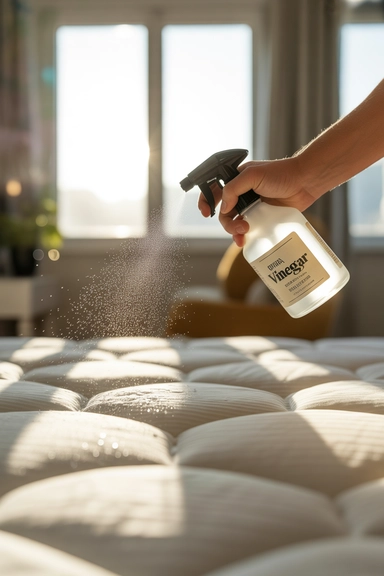
Pour undiluted white vinegar into a spray bottle and mist the mattress surface lightly. Leave to air dry completely, which takes two to three hours depending on ventilation.
Vinegar kills surface bacteria and neutralizes odor compounds. The vinegar smell fades completely as it dries and takes whatever was causing the underlying smell with it. The mattress smells of nothing afterward, which is exactly right.
Lightly mist. Do not soak. A mattress that gets too wet takes many hours to dry and risks mold growth in the inner layers where air does not reach. For more household uses of vinegar and other common products for deep cleaning, these baking soda cleaning hacks pair well with everything here.
Enzyme Cleaner on Organic Stains
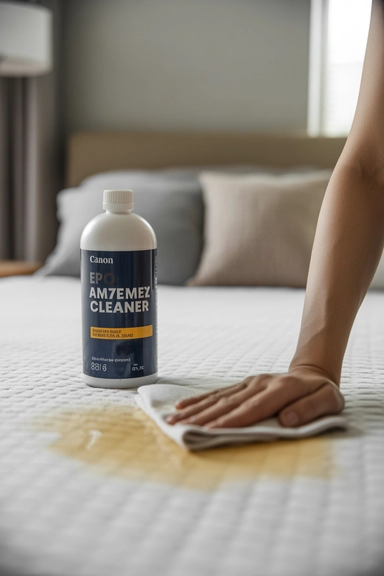
Apply enzyme-based cleaner directly to stains from food, sweat, urine, or blood. Leave for fifteen minutes before blotting away with a cold damp cloth.
Enzyme cleaners contain protease that digests protein-based compounds. Organic stains on a mattress are almost all protein-based. The enzyme breaks down the stain molecule by molecule rather than just bleaching the color away.
The stain may not look fully gone immediately after one treatment. The enzymatic reaction continues for several hours after application. Leave the mattress to dry and check the result the following day before deciding whether a second treatment is needed.
Cornstarch on Fresh Grease and Oil Stains
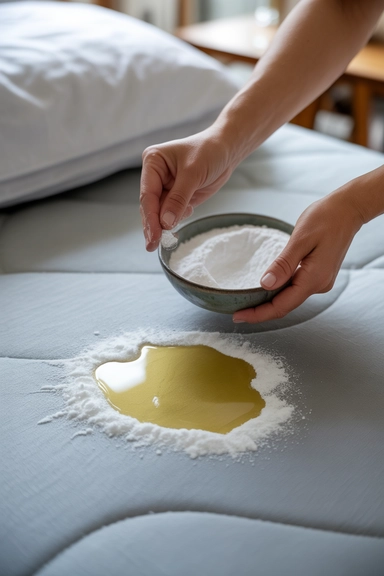
Sprinkle cornstarch directly onto a fresh grease or oil stain. Leave fifteen minutes. Brush off and follow with a dish soap treatment.
Cornstarch absorbs the oil from the fabric before it bonds permanently. Skipping this step and going straight to soap pushes some of the oil deeper into the mattress layers instead of lifting it out.
Body cream, food, hair oil transferred from a pillow. All of these leave oil marks on mattress fabric that respond to cornstarch first. The absorption step is what makes the soap treatment actually work afterward.
Mattress Protector Is the Real Long-Term Hack
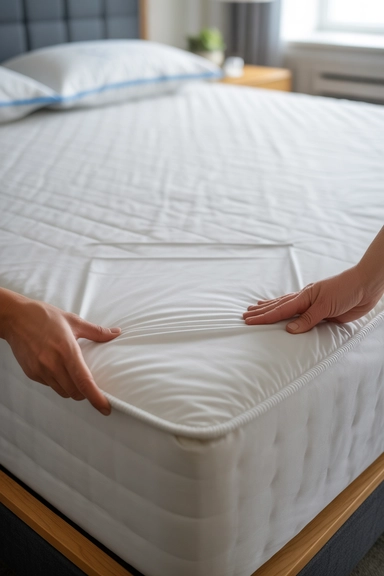
Put a waterproof mattress protector on immediately after deep cleaning.
Everything above is cleaning up problems that a protector mostly prevents from forming. Sweat, spills, stains, dust mite accumulation. A good protector stops most of it reaching the mattress at all.
Wash the protector every two to four weeks. A protector that sits unwashed for months collects the same buildup the mattress would have without it. The protector only works if it gets cleaned regularly too.
Steam Cleaning for Dust Mites
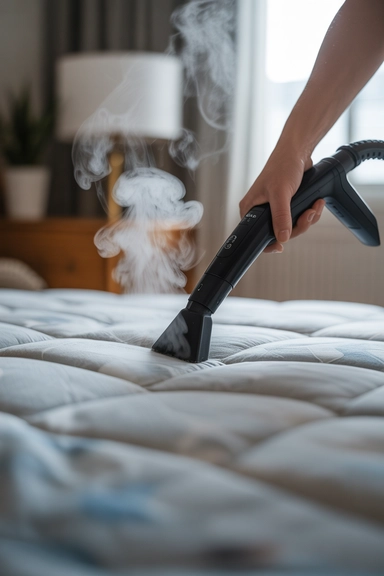
Run a handheld steam cleaner slowly across the mattress surface, keeping the head moving at a consistent pace.
Heat above 60 degrees Celsius kills dust mites. A steam cleaner reaches that temperature on contact. Vacuuming removes physical debris but does not kill live mites. Steam does both in one pass.
Allow the mattress to dry completely after steaming before adding bedding. This takes longer than it looks. The surface may feel dry while the inner layers are still damp. Two to three hours minimum with good ventilation.
Rubbing Alcohol on Ink and Dye Stains
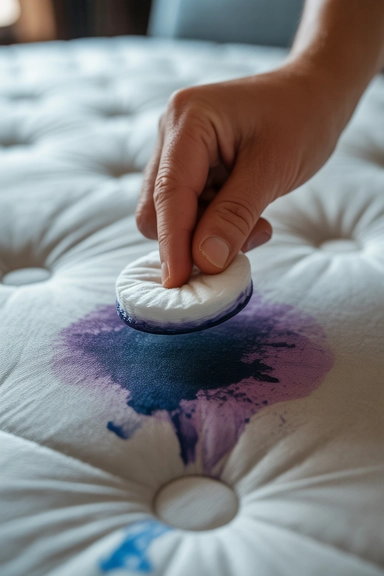
Dab rubbing alcohol onto a cotton pad and press it onto an ink or dye stain. Hold ten seconds, lift, repeat with a clean section of the pad.
Alcohol dissolves the pigment compounds and lifts them into the cotton. Rubbing spreads them sideways instead. Press and lift only, moving to a clean pad section each time so the lifted pigment does not go back onto the mattress.
Works on ballpoint pen, felt tip, and fabric dye transfer from colored sheets or clothing. Permanent marker needs multiple treatments and rarely comes fully out but alcohol gets most of it.
Sunlight as a Natural Sanitizer
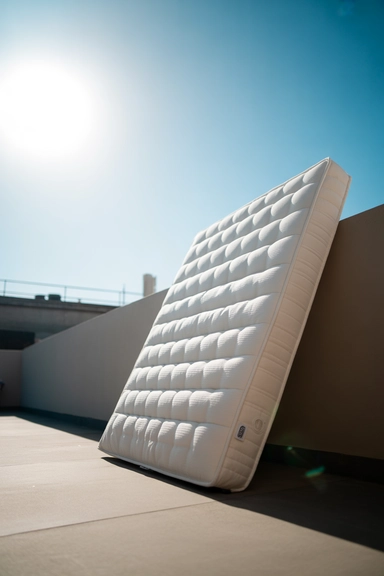
Take the mattress outside on a dry sunny day and leave it in direct sunlight for several hours. Rotate it to expose both sides.
UV light kills bacteria, dust mites, and mold spores on the surface. It also draws moisture out of the inner layers that accumulate from years of sleeping. A mattress aired in direct sun for a full day smells and feels noticeably different afterward.
Do this once or twice a year if the mattress can be moved. Not practical for everyone but worth doing when it is possible. The difference in how the mattress feels afterward is more obvious than most cleaning methods produce.
Flip and Rotate Every Six Months

Flip the mattress top to bottom and rotate it head to foot every six months.
Even wear distribution slows the development of body impressions and prevents one area accumulating more sweat and debris than the rest. A mattress cleaned but never rotated develops uneven wear and concentrated staining in the sleeping position area regardless of how well it is maintained.
Some mattresses are single sided and cannot be flipped. Those still benefit from rotating head to foot every six months to distribute wear across the surface.
Baking Soda and Lavender Final Treatment
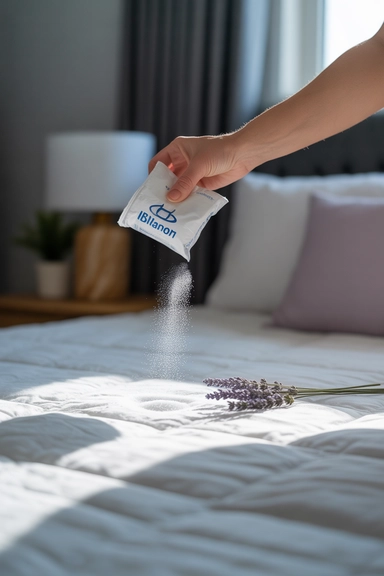
After all other cleaning is done and the mattress is fully dry, do a final light baking soda and lavender treatment before putting the protector and sheets back on.
Sprinkle lightly, leave thirty minutes, vacuum thoroughly. This seals everything that has been done, leaves the mattress surface fresh, and the lavender smell comes through the sheets faintly for a few days after.
Light application this time, not the heavy overnight treatment. This is a finishing step. The heavy work is already done by this point.
How Mattress Cleaning Methods Compare
| Method | Best Use | Contact Time | Frequency |
|---|---|---|---|
| Baking soda deodorize | General odor and freshness | 1 hour minimum | Every 3 months |
| Hydrogen peroxide | Yellow sweat stains | 10 minutes | As needed |
| Enzyme cleaner | Organic stains | 15 minutes plus dry time | As needed |
| White vinegar mist | Bacteria and odor | 2 to 3 hours dry time | Every 3 months |
| Steam cleaning | Dust mite removal | 2 to 3 hours dry time | Every 6 months |
| Sunlight airing | Deep sanitizing | Full day | Once or twice a year |
| Cornstarch | Fresh grease stains | 15 minutes | As needed |
Final Thoughts on Mattress Cleaning Hacks to Deep Clean Your Bed
The mattress is the most used piece of furniture in the house and the least cleaned. Most of what accumulates in it is invisible from the surface until it has been building for years. Getting into a habit of baking soda treatments every few months and a deeper clean twice a year prevents the kind of buildup that requires real effort to shift.
Act fast on stains. Cold water and blotting immediately after something happens saves the mattress from permanent marks that no cleaning method fully reverses later. The difference between a fresh stain and a dried one is the difference between a five minute fix and a stubborn problem.
A mattress protector after deep cleaning is not optional if you want the clean to last. Without one the mattress returns to its previous state faster than the cleaning took.
FAQ About Mattress Cleaning Hacks to Deep Clean Your Bed
How long does a mattress need to dry after cleaning before I can sleep on it? At least three to four hours with good ventilation for a light treatment. After a heavier clean using liquid products on larger areas, six to eight hours is safer. A mattress that feels dry on the surface can still be damp in the inner layers. Sleeping on a damp mattress compresses those layers and traps moisture inside where mold develops. Open a window, run a fan, and check the surface and sides feel genuinely dry before making the bed.
Can I use a carpet cleaner or wet vacuum on a mattress? A wet vacuum to extract moisture after cleaning is useful and speeds drying significantly. A carpet cleaner that injects cleaning solution into the mattress saturates the inner layers with liquid that takes many hours to dry and risks mold growth. If using a carpet cleaner, use it on extraction mode only to pull out moisture rather than inject solution in.
How do I know if my mattress has a dust mite problem? Dust mites are microscopic and not visible. Signs of a significant dust mite population include waking with unexplained sneezing, nasal congestion, or itchy eyes that improve when away from home. Allergy symptoms that are worse in the morning and better by midday are a strong indicator. Regular vacuuming, steam cleaning, and mattress protector washing reduce the population significantly even without confirming the presence directly.
Sarah Mitchell’s Take
The yellow underside of that mattress is something I think about when I am tempted to skip the baking soda treatment. Three years of not cleaning something I slept on every single night. The protector went on the same day I flipped it and has not come off since except to wash it. If there is one thing in this whole article worth doing before anything else it is that. Clean the mattress once properly, then put a protector on it and wash the protector regularly. Everything else is maintenance after that.