
You open the closet door and something falls on you. Every single time. That specific frustration the avalanche of a shelf, the tangle of hangers, the “I know it’s in here somewhere” spiral is exactly why closet organization feels endless.
I have reorganized my own closet eight times over 20 years. Eight. And each time I learned something the previous version of me got completely wrong. These 23 tips are the ones that actually stuck.
The difference between tips that work and tips that look pretty on Pinterest is specificity. What follows is practical, grounded, and honest about what fails.
Stop Buying Bins Before Doing This One Thing First
Most people buy the bins first. Wrong order. I did this repeatedly before I figured out why my closets kept reverting to chaos within weeks.
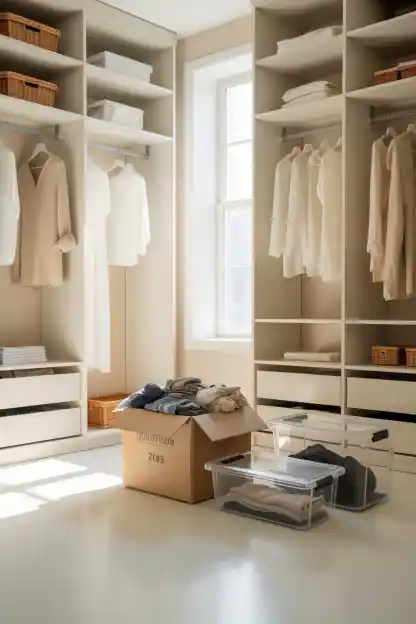
You need to declutter your closet first before a single organizational product enters the space. Bins purchased before purging just become expensive homes for things you should have thrown away. I once bought six iDesign bins for a linen closet that held three sets of sheets I never used.
The rule is simple. Empty everything. Sort into keep, donate, trash. Then measure what remains. Only then should you shop.
The Hanger Color Code Nobody Talks About
What if the obvious fix is the wrong one? Most closet advice jumps straight to matching velvet hangers. Matching hangers do help. But color coding them by category changes how fast you can grab and go.
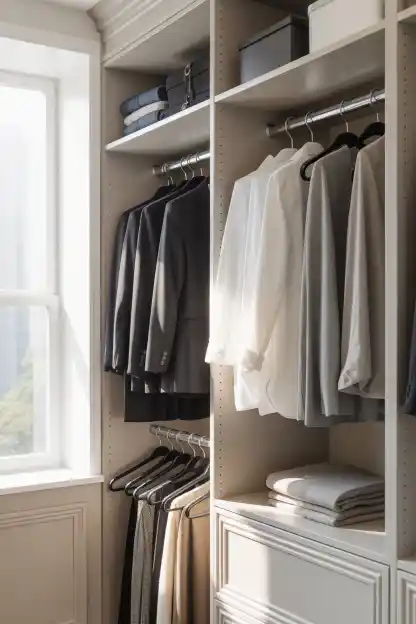
Assign a hanger color to each clothing type. Work clothes get black. Casual gets white. Seasonal gets grey. You see the section at a glance without reading labels or moving anything. This works especially well when you try to organize clothes in your closet by use frequency rather than just type.
I confess I resisted this for years. It felt fussy. Then I tried it during a busy work season and found my mornings genuinely faster.
Double Your Hanging Space for Almost Nothing
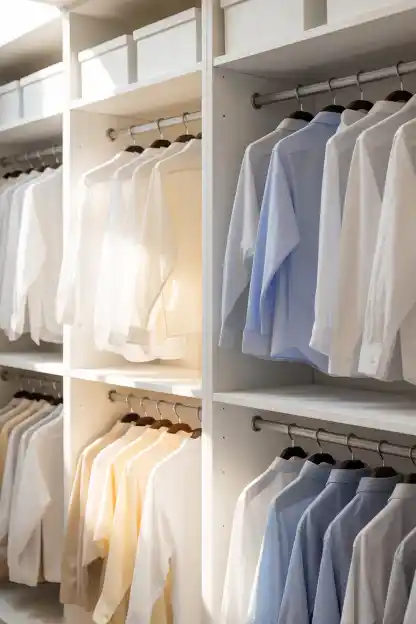
Folded sweaters fall sideways. Always. But the bigger waste in most closets is unused vertical air beneath short hanging items. Shirts end at hip height. Below them: dead space.
A simple closet doubler rod (a second bar that hooks onto your existing rod) fills that gap instantly. It costs under $15 at most home stores. You hang short items on both levels and suddenly a single rod section holds twice the clothes.
This is one of the most underrated closet organization hacks available without drilling a single hole. No tools, no commitment, no damage to rental walls.
The Shelf Divider Trick for Stacked Clothes
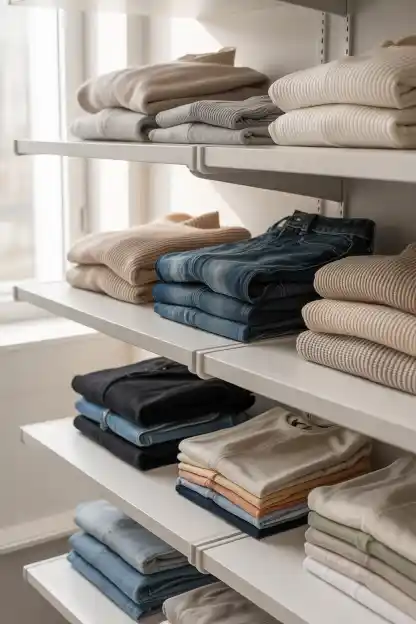
Three stacks. Every single time a sweater stack tips, it takes the neighboring stacks with it. Shelves without dividers are basically dominoes waiting to fall.
Shelf dividers clip onto the shelf edge and create a firm boundary between stacks. They prevent the cascade. They also visually define zones so you stop combining categories out of laziness. OXO makes a good adjustable version that actually grips without sliding.
The before and after here is dramatic in the most boring way. Before: a shelf of collapsed fabric piles. After: neat columns that stay put for weeks. Low cost. High daily impact.
Using the Floor Smarter Than You Are Right Now
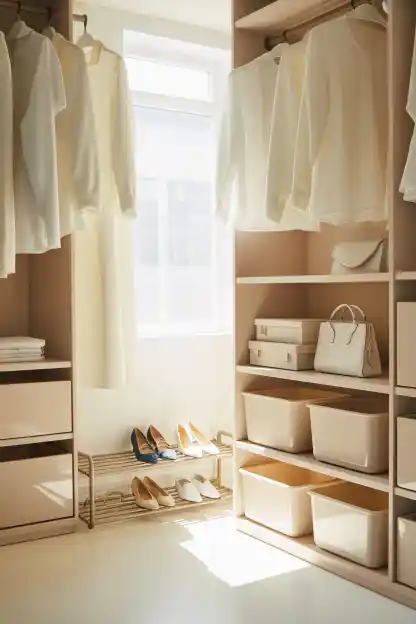
I watched a neighbor install a low shoe rack in her rental apartment with zero tools or wall damage. She used a freestanding unit under her hanging clothes and recovered floor space that had been collecting random bags and gym shoes for months.
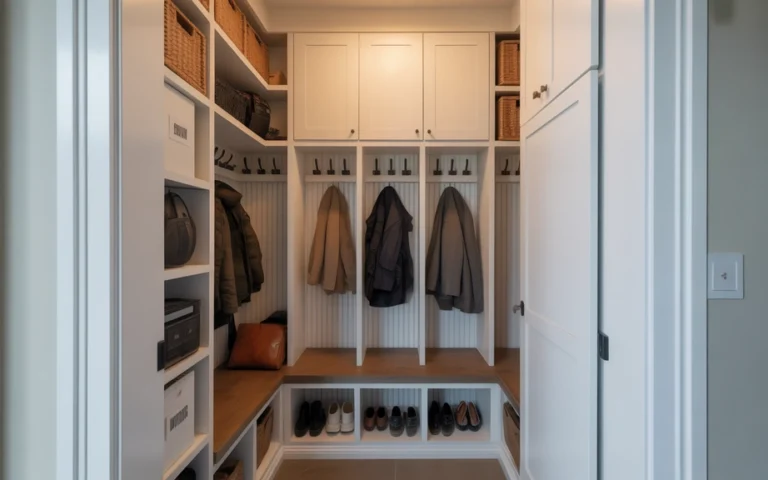
The floor of a closet is prime real estate. Most people treat it like a dumping zone. A low two-tier shelf for shoes, or mDesign stackable bins for bags, turns that floor into functional storage. Keep frequently used items at eye level and front. Reserve floor for once-a-week or seasonal things.
The key is not letting the floor become a transition zone. Things placed there “temporarily” live there permanently. Be strict about it.
The Door Is a Storage Wall You’re Ignoring
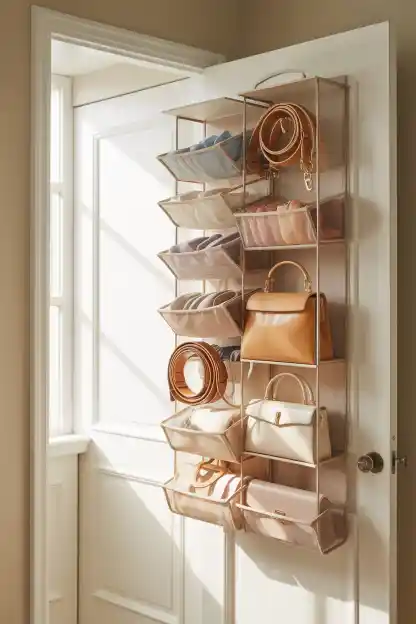
Behind your closet door is a flat, vertical surface doing absolutely nothing. Most closets waste this completely. Over-the-door organizers changed how I think about small spaces.
Command strips can hold lightweight pocket organizers without any hardware for renters. For heavier loads, an over-the-door rack with hooks handles belts, scarves, bags, and jewelry. This approach shows up in almost every list of practical small closet organization ideas for good reason. It adds storage without consuming floor or shelf space.
Pick a door organizer that matches your specific need. A shoe pocket works for accessories. A multi-hook bar works for bags. Don’t buy the generic option and hope it adapts to everything.
Why Your Top Shelf Is Working Against You
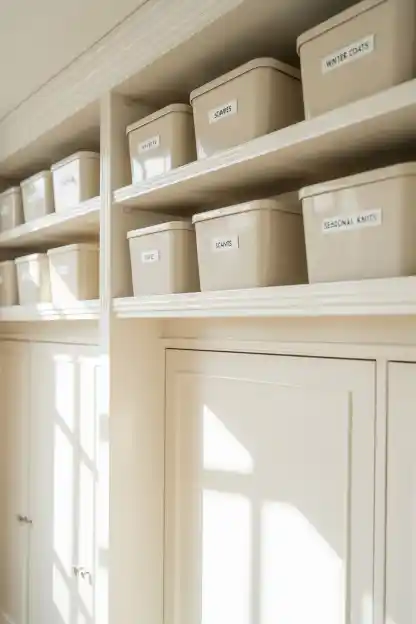
Alphabetizing is mostly wrong for small closets. So is storing your most-used items up high. Top shelves require effort. That effort means you skip them. Things stored up top become forgotten things.
Reserve your top shelf strictly for seasonal or rarely used items. Bins with lids work well here. Clear bins from IKEA or labeled opaque ones both work, depending on whether you need to see inside fast. The IKEA KALLAX system, while a floor unit, actually inspires this same logic: front and eye-level access beats high and hidden every time.
Here is the honest observation: most people store summer items in easy reach and winter items in hard reach, then wonder why they feel disorganized. Match access difficulty to use frequency.
A Folding Method That Holds Its Shape
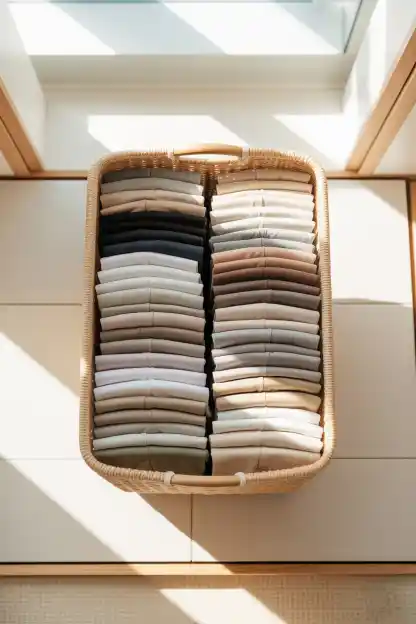
File folding changed my drawer game first. Then I realized it works in closets too, specifically in open shelf bins and canvas baskets. The vertical fold lets you see every item without disturbing the stack.
The method is simple. Fold into a tight rectangle. Fold again into thirds. Stand it upright. It holds because each piece supports the others. mDesign fabric baskets on open closet shelves work especially well as containers for file-folded t-shirts or leggings.
Here is the thing most folding tutorials skip. The method fails if your bin is too wide. Items need snug neighbors to stay upright. Size your bins to match your clothing stack width.
How Lighting Changes What You Can Actually Find
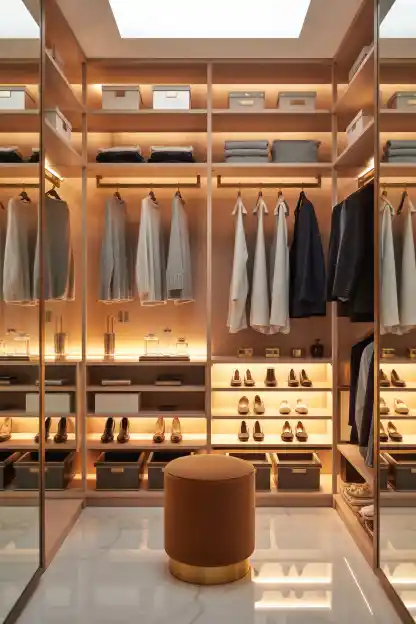
Dim closets create the illusion of disorganization. I spent two years convinced a closet was cluttered. Then I added a battery-powered LED strip along the top shelf edge. Everything became visible and findable.
Good lighting removes the guesswork that makes you tear through shelves to find one item. It also makes the space feel intentional rather than cramped. Stick-on LED strips with motion sensors are cheap, require no wiring, and last surprisingly long on batteries.
This is one of those upgrades that costs under $20 and delivers daily. The closet did not get bigger. It just became possible to actually use what was in it.
Grouping by Outfit Instead of by Category
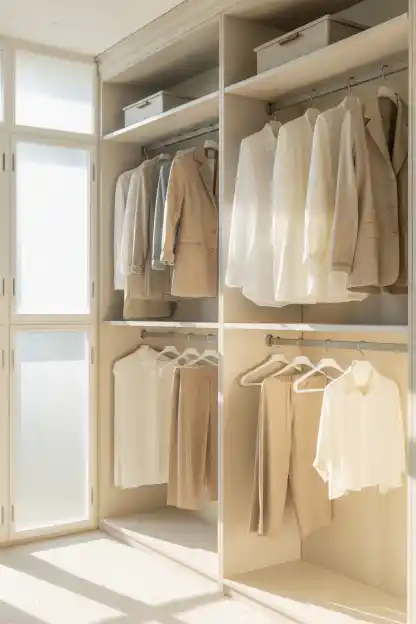
Here is where most people get stuck: sorting clothes by category (all pants together, all shirts together) makes logical sense. But it slows down mornings because you must mentally assemble outfits from separate zones.
Try grouping regular combinations together instead. Work outfit pieces hang side by side. Casual weekend pieces cluster separately. This is a soft system that works especially well in master closets. Check out these master closet organization ideas for how others have structured zones around lifestyle rather than just garment type.
Not every closet type suits this method. Small hall closets and coat closets work better by category. But for a main wardrobe closet, outfit-based grouping saves real time.
The Velvet Hanger Density Problem
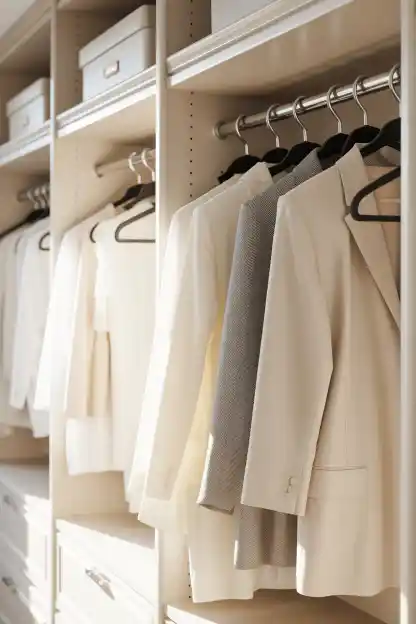
Velvet hangers are thinner, yes. Most people know this. But the common mistake is buying 50 velvet hangers and immediately filling every inch of the rod. A packed rod defeats the purpose.
The goal is a finger-width gap between each hanger. That gap allows you to pull one item without disturbing six others. It also lets you see each piece clearly, which means you actually wear more of what you own. The pieces you forget about are almost always the ones packed tightly in the middle of the rod.
Buy fewer hangers than you think you need. That constraint forces you to keep only what fits. Constraints create better closets more reliably than products do.
Clear Bins for Shelves, Opaque Bins for the Top
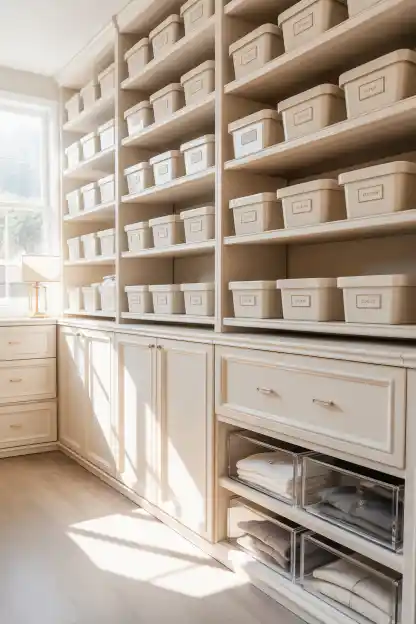
Two bin rules. Clear bins belong at eye level and below. You see the contents, you grab the right thing, you don’t dump everything out hunting for one item. This is practical daily-use logic.
Opaque bins with labels belong on top shelves. You cannot see into them easily anyway at that height. Labels become the navigation system. A label maker investment, around $20 for a basic model, pays off here. Handwritten labels work fine too.
The failure I’ve seen most is mixing these up. Clear bins on top shelves collect visual noise you see every time you look up. Opaque unlabeled bins at eye level guarantee you will forget what is inside within a week.
Using Tension Rods Horizontally for Clutches and Bags
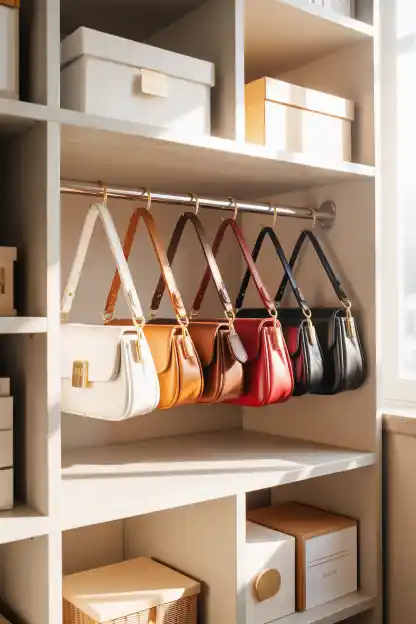
Bags are the hardest closet item to store neatly. They slouch, tip, collapse, and eat shelf space. The usual solution is a hook or a bin. But both have limits.
A tension rod mounted horizontally inside a shelf cubby or cabinet section lets you hang clutches and small bags by their straps between the rod and the shelf above. It is a compact system that keeps bags visible and upright. This works in IKEA KALLAX cubbies particularly well. The rod costs almost nothing.
If you want to go further with DIY closet organization ideas, tension rods offer several creative applications beyond bags, including dividing shelf sections and holding spray bottles upright.
The Seasonal Rotation System That Actually Sticks
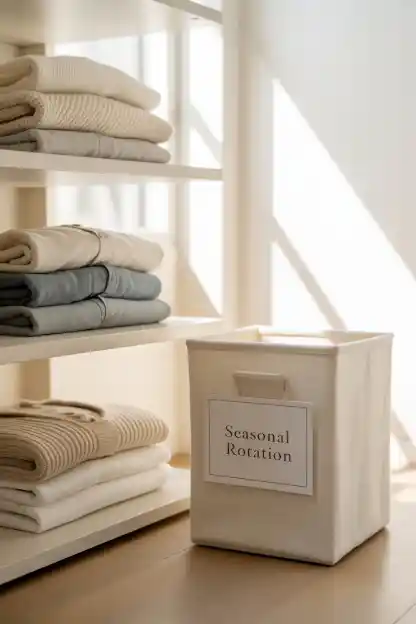
Seasonal rotation fails because it requires a big dedicated day of effort twice a year. Most people skip it, and the closet becomes a mixture of winter coats and swimsuits and everything in between.
The fix is a low-commitment rotation. Keep one small labeled bin accessible. When you notice a seasonal item during daily use, drop it into the rotation bin instead of rehang it. Once the bin fills, swap it out with the stored season bin. Small continuous action beats the twice-yearly overhaul.
This is a realistic system for real life, not a Pinterest closet. It builds the habit gradually and keeps the rotation from feeling like a project.
Drawer Inserts Inside Closet Shelves
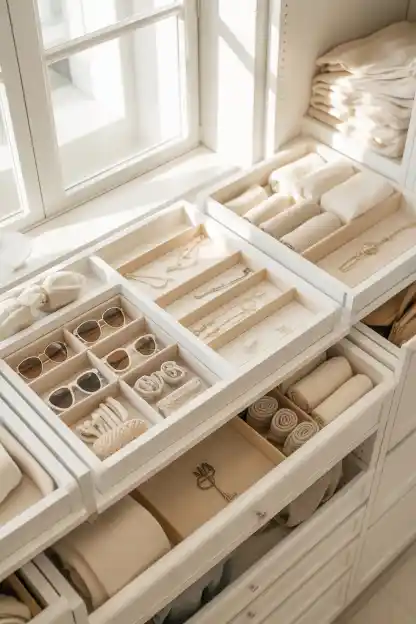
Most closets include shelves but no drawers. Small open surfaces become clutter magnets within days. A drawer insert or tray placed directly on the shelf creates defined compartments without buying furniture.
OXO drawer organizers work in closet shelves just as well as inside actual drawers. Place them in the section where small items live: hair accessories, folded underwear, socks, sunglasses. Defined compartments mean defined homes. Defined homes mean things get returned where they belong.
The observation here is simple. Humans do not naturally return things to undefined spaces. A tray with edges is a cue. An open shelf is an invitation to pile.
Why Your Shoe Situation Needs a Reset
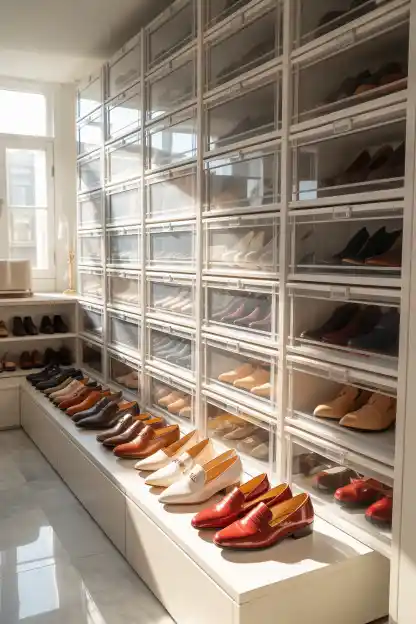
Shoes on the floor eat space and hide each other. Most shoe storage fails because it treats every shoe the same. Heels need different storage than sneakers, which need different storage than sandals.
Sort your shoes by use frequency first. Daily shoes get the most accessible spot. The shoes you wear twice a year live in clear stackable boxes on the upper shelf. This is a specific, practical starting point for budget-friendly closet organizing ideas since clear boxes are available inexpensively at dollar stores.
The one thing that consistently works: displaying only the shoes you will wear this season. Everything else goes into boxes or a separate storage area. Visual clutter from unused shoes is a constant source of false “full” feelings in closets.
The One-In, One-Out Rule Applied Strictly
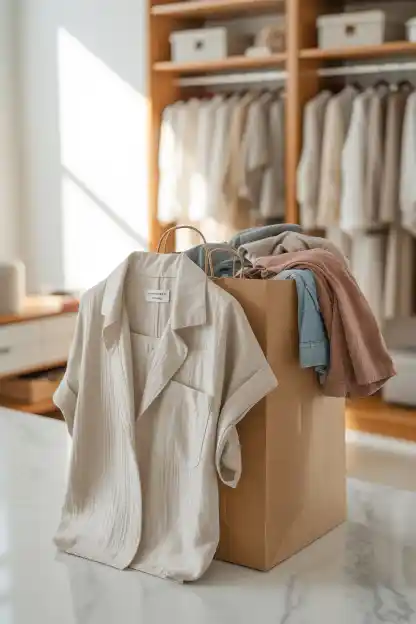
Closets do not overflow because people lack organization skills. They overflow because the volume of items grows unchecked. Products solve arrangement. Only discipline solves volume.
The one-in, one-out rule is not new. But most people apply it loosely. The strict version: before anything new enters the closet, one item leaves. Not “I’ll go through it this weekend.” Right now, before hanging the new thing.
This is the rule I failed at for years. I applied it to kitchen items, office supplies, everywhere except clothes. The clothes closet always suffered. The rule only works when applied consistently to the space that needs it most.
Adjustable Shelving Changes Everything Long-Term
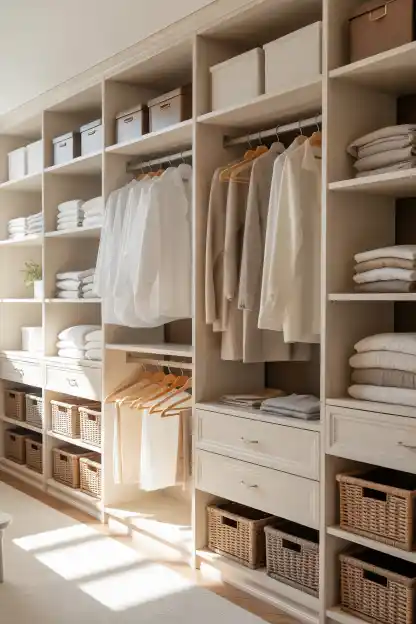
Fixed shelving forces you to organize around the closet. Adjustable shelving lets the closet organize around you. Most people never question the shelf heights they inherited.
Moving a single shelf up or down by a few inches can create space for an extra hanging rod or allow taller folded stacks. The difference between a shelf at 14 inches and one at 18 inches is significant for storage. If you’re building or retrofitting, adjustable shelf pins are inexpensive and widely available.
The investment is low. The flexibility is permanent. Adjustable shelving is especially valuable as your wardrobe and life change over years.
Making Shared Closets Work Without Conflict
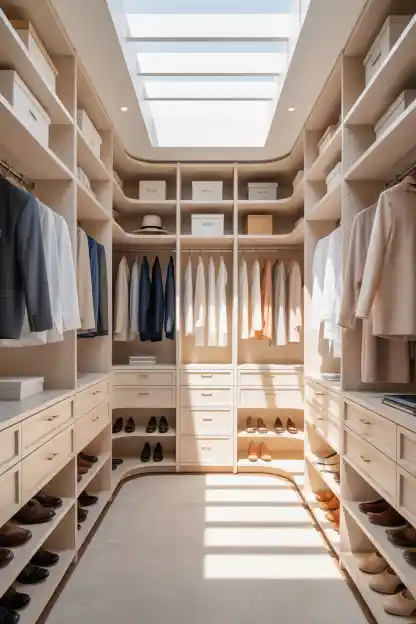
Shared closets create territory problems. Two people with different organization habits sharing one space almost always defaults to the more disorganized person’s system, meaning gradual chaos.
Define physical zones with clear boundaries. Left side belongs to one person, right side to the other. Shared items like extra blankets or luggage get a neutral designated zone you both agree on. The boundary removes the negotiation from daily use.
This is less about organization and more about spatial agreements. The physical division removes ambiguity. Without it, shared closets quietly become the more organized person’s ongoing frustration.
The Jewelry Problem That Simple Hooks Solve
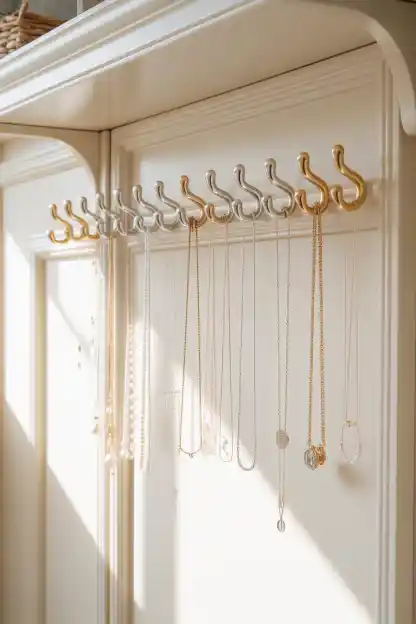
Jewelry drawers become knots. Jewelry boxes become layered confusion. The most functional jewelry storage I have seen is also the simplest: small Command hooks on the inside of the closet door or wall, holding necklaces and bracelets individually.
Each piece hangs visible and untangled. You see everything at once. Nothing is buried. A row of Command hooks costs under $5 and holds more necklaces than most jewelry organizers three times the price.
The downside: it looks informal. If visual uniformity matters to you, a wall-mounted jewelry frame behind the door achieves the same function with a cleaner look.
Luggage as Storage, Not Just Luggage
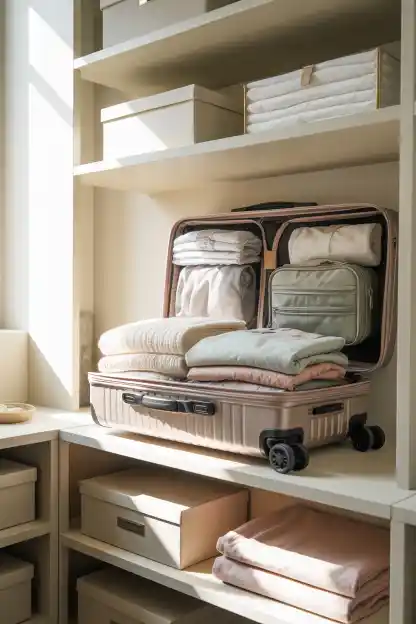
Suitcases stored empty are wasted volume. The inside of luggage is dry, enclosed, and perfect for out-of-season or rarely used items: extra bedding sets, formal wear you keep but rarely access, archive documents you cannot throw away.
Nesting smaller bags inside larger ones while filling both with seasonal items doubles the function of your luggage. The suitcase still travels. The contents move out before the trip.
This approach is especially useful in small apartments where dedicated storage is limited. The luggage is going in the closet regardless. It should earn its shelf space.
The Reset Rule That Keeps Closets Organized
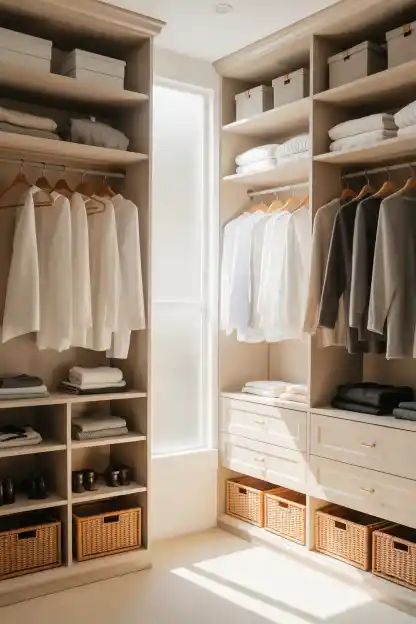
Organization collapses without maintenance. Most systems fail not because of a poor initial setup but because there is no reset mechanism built in. Things come out and do not go back correctly. Over two weeks, the system degrades.
A five-minute Sunday reset prevents the slow accumulation of disorder. Hang items properly. Return things to their designated zones. Fold what has been tossed. Five minutes at the end of a week is more effective than a two-hour reorganization every six months.
The reset is not a clean. It is a course correction. Build it into a fixed habit, same day, same time, and the closet holds its organization through normal daily use.
Labeling Is the Final Layer, Not the First
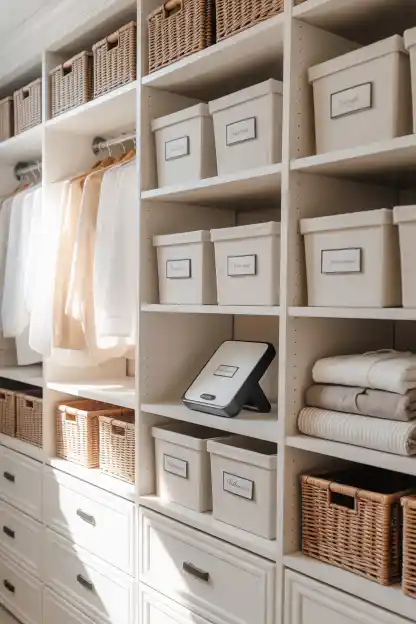
Labels feel like the finishing touch. They are. Apply them last, after the system has been tested for two weeks. Labeling before the system stabilizes means relabeling. Ask me how I know.
Two weeks of use reveals where the system is actually working and where it is failing. A bin labeled “Scarves” that naturally fills with hats tells you the bin location is wrong, not the hat habit. Adjust first, then label permanently.
A label maker, even a basic one, adds clarity that handwriting often does not. Clear, consistent labeling reduces the mental load of maintaining the closet. It tells every person using the space exactly where things live and where they return.
Final Thoughts on Closet Organization
A closet does not need to be perfect. It needs to be functional enough that you can find things without stress and return things without effort. That is the real standard.
The tips in this list work because they address specific failures, not generic messes. The system that sticks is the one built around how you actually live, not how closets look in design magazines.
Start with three tips. Not 23. Three that address your specific daily frustration. Build from there. Slow progress on a real system beats fast work on a system you abandon.
FAQ About Closet Organization Tips and Tricks
What is the most important closet organization tip for beginners?
Declutter before organizing. No storage product fixes a closet holding more than it should. Remove what you do not use, then organize what remains.
How do I keep a closet organized after I set it up?
Build a five-minute weekly reset into your routine. Return items to their zones, rehang clothes properly, and address anything out of place before it accumulates into disorder.
Can I organize a small closet without spending much money?
Yes. A doubler rod, tension rods, Command hooks, and over-the-door organizers collectively cost under $40 and dramatically increase small closet capacity and function.
Sarah Mitchell’s Take
I still reorganize my closet more than I probably should, which tells me the perfect system does not exist, only a better one for this season of life. The tips that lasted for me were always the boring ones: the reset habit, the one-in-one-out rule, the five-minute fix. The pretty bins helped less than I expected.
—