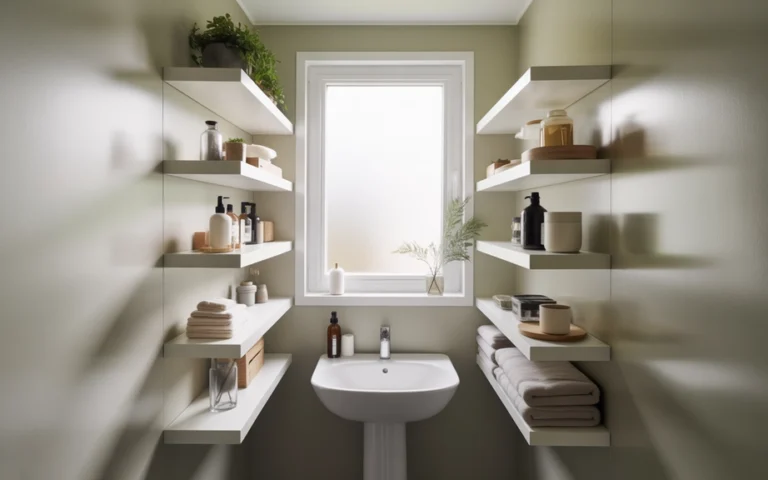

Introduction
I thought fabric storage was just about finding more space. It wasn’t. My fabric kept piling up because I had no system to control how it was stored and returned.
Once I focused on structure instead of just storage, everything changed. I could see what I had, stacks stopped collapsing, and I stopped wasting time digging through piles.
The real goal is simple. Keep fabric visible, easy to access, and easy to put back.
If your fabric stash keeps growing but never feels organized, fix it now before it gets harder to control clutter control methodsyou’ll wish you used earlier
Vertical Fabric Shelves That Turn Walls Into Storage
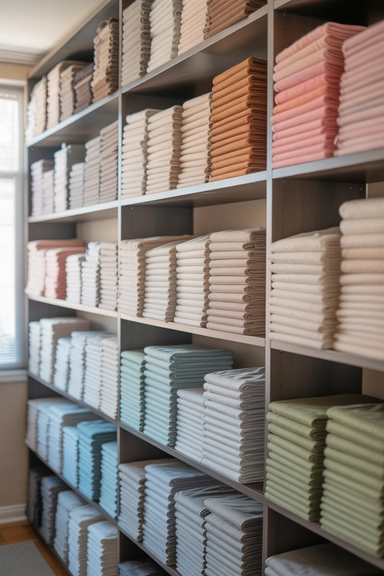
I used to keep fabric in small piles, thinking it looked organized. The moment I needed one piece, the whole stack would fall apart. Then I’d fix it again… and the same thing would happen later.
What actually helped was going vertical. Once I placed fabric on taller shelves, everything stayed visible and easier to handle. I didn’t have to dig or lift piles anymore.
Here’s what made the difference for me:
- Folding fabric the same way every time so stacks don’t shift
- Grouping by color so I can quickly pick what I need
- Using full-height shelves to store more without taking extra space
I did make one mistake. I packed everything too tightly at first. It looked neat, but using it was frustrating. Leaving small gaps between stacks made it much easier to pull things out without ruining the setup.
Now I can see most of my fabric in one glance, and it actually stays that way. I’m not constantly fixing piles or clearing space on my table anymore
Clear Fabric Bins That Keep Stacks Contained
I tried open stacks for a long time, but things kept mixing. Different fabrics ended up together, and I had to dig through everything just to find one piece.
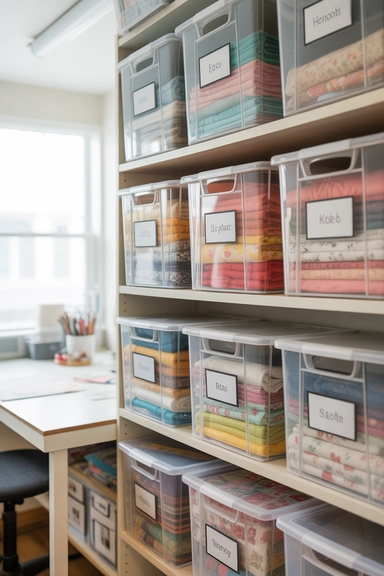
Switching to clear bins made a big difference. Once I gave each type its own container, I stopped searching and started grabbing what I needed right away.
Here’s what worked for me:
- One category per bin so nothing gets mixed up
- Clear bins so I can see what’s inside without opening them
- Same size bins so they stack properly and don’t wobble
I did mess this up at first. I kept adding more fabric into one bin until it overflowed. That’s when things started mixing again. Keeping bins limited and not overfilling them is what actually keeps the system working.
Now I can pull a bin, grab what I need, and put it back without everything falling apart. Much easier than dealing with random stacks everywhere.
If your bins keep turning into a mess again, it means they’re not being controlled properly → storage bin organization ideas most people ignore until the mess gets worse
Comic Board Folding for Uniform Fabric Storage
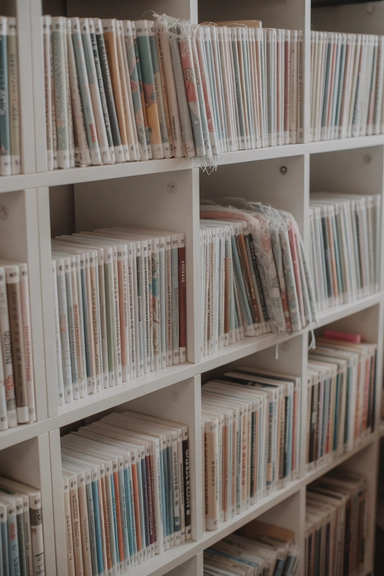
I didn’t expect this method to work, but it turned out to be one of the cleanest ways to store fabric. Before this, my smaller pieces kept disappearing inside stacks.
Wrapping fabric around boards changed that. Everything stood upright like books, so I could flip through instead of digging.
Here’s what worked for me:
- Using boards for smaller cuts so they don’t get lost in piles
- Keeping sizes consistent so shelves stay neat
- Grouping by color or collection to plan projects faster
At first, I folded some pieces loosely. That made them look uneven and messy. Once I stayed consistent with folding, the whole setup looked better and stayed stable.
Now I can scan my fabric quickly without touching every stack. It saves time and keeps everything in place.
If your stacks still feel uneven or fall apart easily, it usually means your folding system needs more structure drawer divider setups that keep everything aligned without constant fixing
Under-Table Fabric Storage That Uses Dead Space
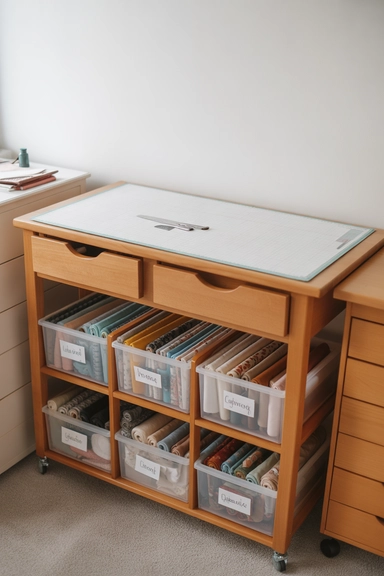
The space under my cutting table used to be a mess. I kept throwing fabric there thinking I’d organize it later. It never happened.
Once I gave that area a proper system, it actually became one of the most useful storage spots in the room.
Here’s what worked for me:
- Rolling drawers or bins so I can pull things out without digging
- One category per container to stop fabric from mixing
- Frequently used fabric in front so I don’t keep rearranging
I made the mistake of treating it like hidden storage. That just turned it into a dumping zone again. The moment I gave everything a fixed place, it started working.
Now that space stays clean, and my main shelves don’t get overloaded. It feels like extra storage without adding anything new.
If under-table storage keeps turning messy again, it usually means there’s no system controlling it under-space storage ideas that help you use hidden areas without letting clutter take over.
IKEA Cube Systems for Modular Fabric Storage
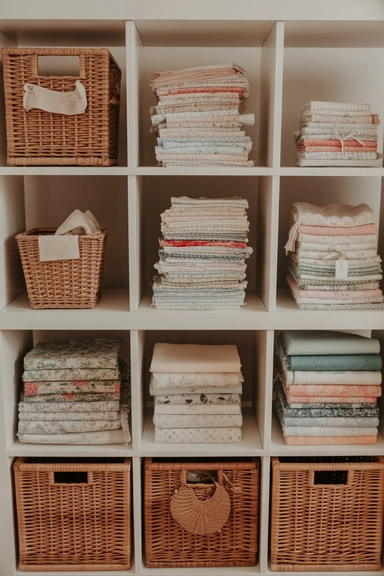
I tried open shelves before, but they quickly started looking chaotic. Too many colors, uneven stacks, and everything felt visually heavy.
Cube shelving worked better because it gave structure without closing everything off. Each section felt controlled instead of one big messy shelf.
Here’s what worked for me:
- One cube per category so fabric doesn’t spread everywhere
- Matching baskets to reduce visual clutter from different prints
- Heavier fabric in lower cubes so the setup feels stable
At first, I mixed everything randomly across cubes. That made it hard to find anything. Once I kept categories consistent, the system finally made sense.
Now the shelves look cleaner, and I can still see what I have without it feeling overwhelming.
If your shelves start looking too busy again, it usually means there’s no visual control in place shelf organization ideas that help keep everything structured without overloading the space
Fabric Drawers That Prevent Stack Collapse
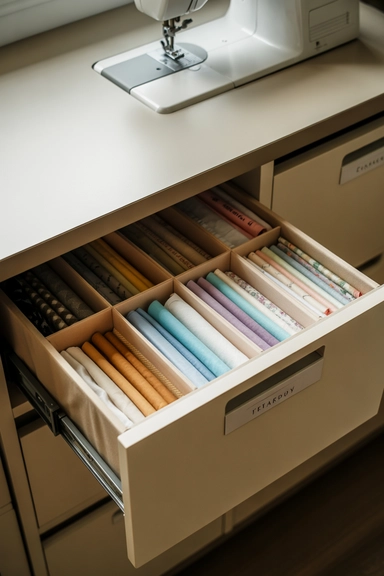
I liked the idea of open shelves, but they didn’t work for me long term. Dust built up, stacks shifted, and every time I pulled one piece out, something else moved.
Switching to drawers made things easier. Fabric stayed protected, and I didn’t have to keep fixing piles after every use.
Here’s what worked for me:
- Same-width folding so drawers close cleanly and don’t jam
- Simple dividers to keep categories from mixing
- Light labels outside so I know what’s inside without opening everything
At first, I didn’t use dividers. Everything slowly slid together and became messy again. Once I separated sections, it stayed organized without effort.
Now I can pull one piece without disturbing the rest, and the room feels less crowded even with a larger stash.
Rolling Fabric Carts for Flexible Storage
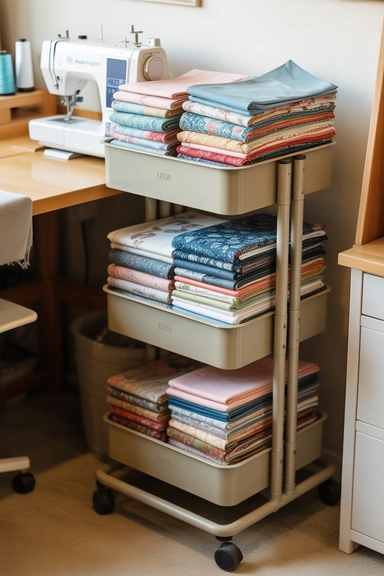
I used to leave fabric on the table during a project, and it would just spread. By the end, half the room looked like a work zone.
A rolling cart fixed that. I keep project fabric on the cart, pull it next to me while working, then roll it away when I’m done.
Here’s what worked for me:
- Top tier for current project so everything I need stays in reach
- Lower tiers for extra fabric to keep categories separate
- Deeper shelves so folded stacks don’t slide off
At first, I mixed everything on one level. That got messy fast. Once I gave each tier a purpose, it stayed organized.
Now my table stays clear, and the fabric moves with me instead of taking over the room.
Pegboard Fabric and Tool Zones on One Wall
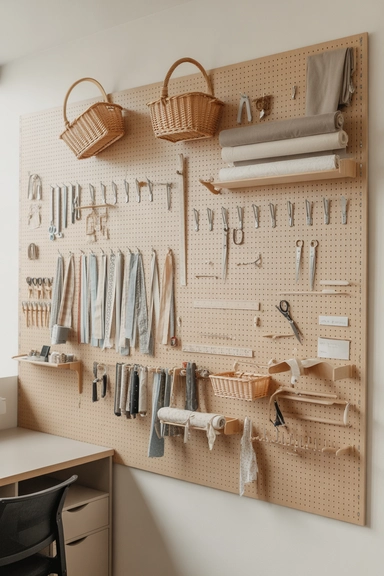
I always thought pegboards were just for tools. Then I tried using one for fabric, and it solved a space problem I kept dealing with.
Instead of filling shelves, I started using the wall. Small fabric rolls, rulers, and patterns all had their own spot without taking over my table.
Here’s what worked for me:
- Hooks and baskets to hold small cuts and rolled fabric
- Eye-level placement for things I use often
- Higher spots for seasonal or less-used items
At first, I mixed tools and fabric randomly. That made the board feel messy. Once I gave each section a purpose, it actually stayed organized.
Now my wall does most of the work, and my table stays clear. It feels more like a setup than just storage.
If your table keeps getting cluttered again, it usually means your vertical space isn’t being used properlypegboard organization ideas that help you control both tools and materials without overlap.
Pattern and Fabric Pairing Storage That Speeds Up Projects
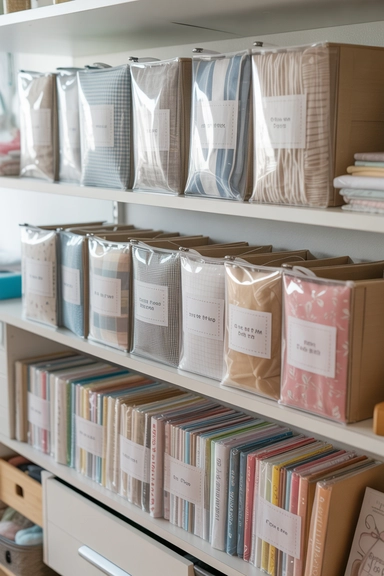
I used to store patterns in one place and fabric somewhere else. Every time I started a project, I had to search for both. It wasted time and honestly killed the momentum.
What helped was keeping them together. Once I paired fabric with its pattern, I could start projects immediately without digging around.
Here’s what worked for me:
- Zip pouches or flat boxes to hold fabric and pattern together
- One shelf for active projects so they don’t mix with regular fabric
- Return leftover fabric back after finishing instead of leaving it inside
At first, I kept everything inside the pouch even after finishing. That created a pile of half-used fabric that I forgot about. Moving it back to its main place fixed that.
Now when I want to start something, everything is already ready. No searching, no delay, just start working.
If projects keep piling up or feel unfinished, it usually means there’s no system connecting fabric and patterns → project organization ideas that help you finish what you start instead of letting it pile up
Closet-Based Fabric Storage That Hides Bulk
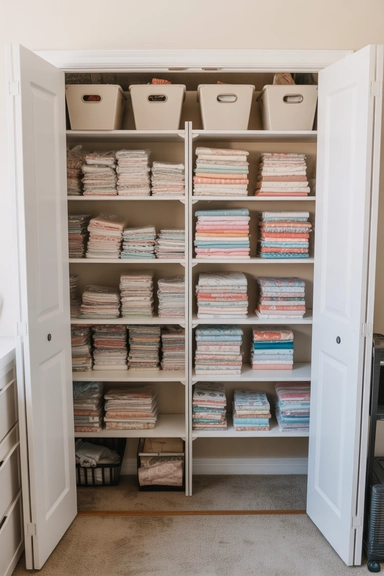
I didn’t realize how much visual clutter my fabric was creating until I moved most of it into a closet. The room instantly felt calmer without stacks everywhere.
Using a closet for bulk storage worked better than open shelves for me. It keeps fabric protected and out of sight, which makes the space easier to reset after working.
Here’s what worked for me:
- Adjustable shelves so I can change spacing as my fabric changes
- Matching bins or clean stacks so it doesn’t feel crammed inside
- Heavier fabric on lower shelves and lighter pieces above
At first, I just threw everything into the closet. It became a hidden mess. Once I organized it by type and kept it consistent, it finally worked.
Now most of my fabric stays behind closed doors, and my main sewing area feels open and easier to use.
If fabric keeps spilling out into the room, it usually means bulk storage isn’t properly handled closet organization methods that keep everything contained without letting it spread again.
Color-Zoned Fabric Storage That Simplifies Selection
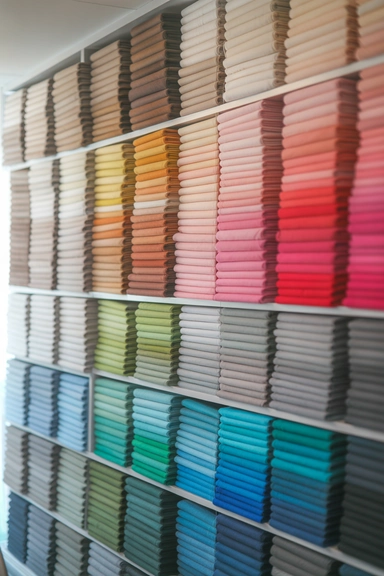
I used to keep all my fabric mixed together. Every time I started a project, I wasted time digging through everything just to find the right colors.
Once I grouped fabric by color, things got easier fast. I could look at one section and immediately know what would work together.
Here’s what worked for me:
- Grouping by color families so I don’t search through everything
- Arranging light to dark to make shelves easier to scan
- Keeping zones consistent so nothing drifts over time
At first, I kept mixing new fabric wherever it fit. That broke the system quickly. Once I stayed strict with color zones, everything stayed organized without effort.
Now I can pick fabric faster and plan projects without overthinking. The whole space feels calmer and easier to work in.
Deep Basket Storage for Bulky Fabric Types
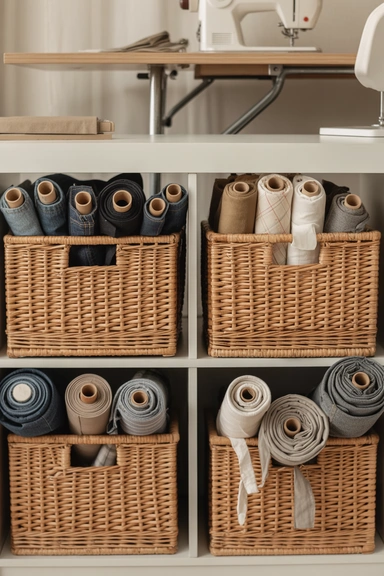
I struggled with thicker fabrics for a while. Denim, canvas, and heavy material just didn’t sit right on regular shelves. They pushed everything around and made the whole setup look messy.
Using deep baskets solved that. Instead of forcing bulky fabric into neat folds, I gave it a space where it could sit naturally without affecting lighter fabrics.
Here’s what worked for me:
- Deep, sturdy baskets so fabric doesn’t spill out or lose shape
- Grouping by fabric type instead of color for easier access
- Keeping heavy materials separate so they don’t crush lighter stacks
At first, I tried mixing heavy and light fabrics together. That ruined both sections. Once I separated them, everything stayed more stable and easier to manage.
Now bulky fabric stays in one place, and the rest of my storage doesn’t get disturbed. It feels more controlled and easier to maintain.
If heavy fabric keeps taking over your shelves, it usually means it’s not being contained properly basket organization ideas that help manage bulk without letting it spread.
Wall-Mounted Fabric Rods for Rolled Storage
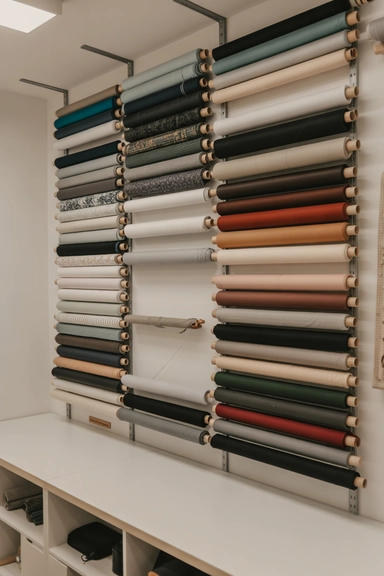
I used to fold larger fabric pieces, but they always ended up wrinkled or hard to find. The moment I needed a specific one, I had to go through stacks again.
Rolling fabric onto rods fixed that. Now everything hangs where I can see it, and I don’t deal with creases or digging.
Here’s what worked for me:
- Mounted rods on the wall to use vertical space instead of shelves
- Even spacing between rods so rolls don’t overlap
- Grouping by color or type to find fabric faster
At first, I placed rods too close together. The rolls started touching and looked messy. Giving them space made everything look cleaner and easier to manage.
Now I can grab fabric in seconds, and my shelves stay free for other materials. It’s one of the simplest setups that actually makes daily work easier.
Glass-Front Cabinets That Display Without Exposing
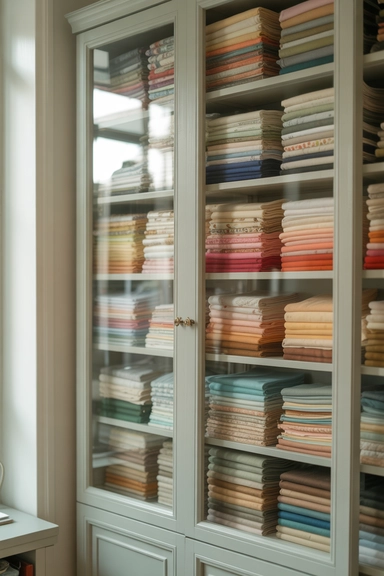
I liked open shelves, but dust and sunlight became a problem over time. Fabric looked good at first, then slowly started fading or getting dirty.
Glass-front cabinets gave me a better balance. I could still see everything, but it stayed protected.
Here’s what worked for me:
- Uniform folding so stacks look clean behind the glass
- One category per shelf to avoid visual overload
- Leaving space between stacks so it doesn’t feel crammed
At first, I overfilled the shelves. It looked packed and hard to use. Once I reduced the load and kept categories separate, it started to feel more like a display than storage.
Now my fabric stays visible, protected, and easy to manage. The room feels cleaner without hiding everything away.
If your storage looks crowded or hard to maintain, it usually means there’s too much packed into one space. Reducing volume and keeping categories separate usually fixes it.
Labeled Fabric Filing Drawers for Small Cuts and Scraps
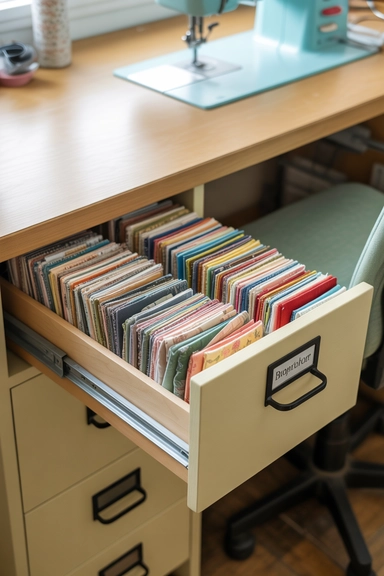
I used to throw small fabric pieces into one bin. After a while, I stopped using them because finding anything took too long.
Switching to a filing system changed that. When scraps stand upright, I can flip through them quickly instead of digging.
Here’s what worked for me:
- Standing fabric vertically like files so everything stays visible
- Sorting by color or type to find pieces faster
- Leaving a little space so I can actually flip through easily
At first, I packed too many scraps into one section. That made it hard to use again. Once I kept things lighter, the system worked properly.
Now I actually use my scraps instead of ignoring them. Nothing gets lost, and I don’t end up with random piles building up again.
Fold-Down Sewing Table With Built-In Fabric Storage
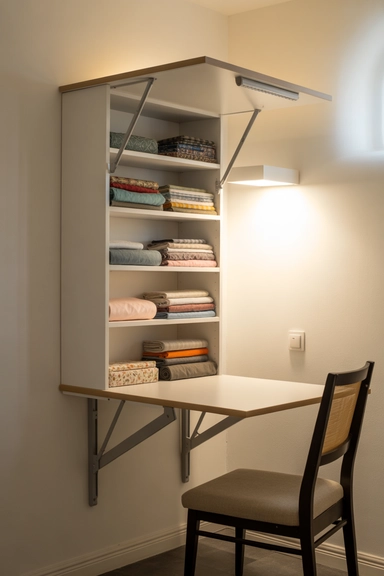
I didn’t have space for a permanent sewing table, so I tried a fold-down setup. At first, I thought it would just save space. Turns out, it also helped me control fabric better.
When the table opens, I get a proper work area. When it closes, everything disappears and the room feels clear again.
Here’s what worked for me:
- Narrow shelves inside so fabric doesn’t slide around
- Heavier fabric at the bottom to keep things stable
- Lighter pieces above so everything stays balanced
I made one mistake early. I didn’t add structure inside, and fabric kept shifting every time I opened or closed the table. Once I added simple shelves, it stayed organized.
Now I have a workspace and storage in one spot without taking up extra room. It keeps things simple and easy to manage.
Quilting Fabric Towers for Vertical Stash Control
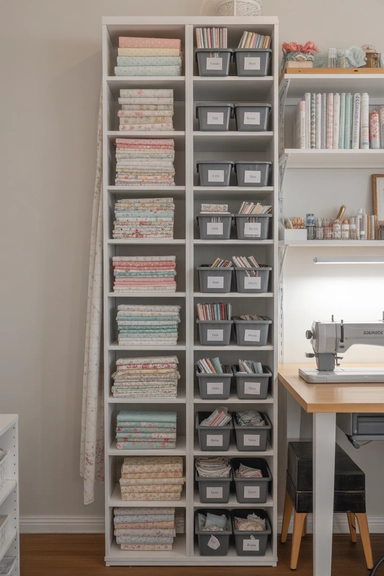
My quilting fabric used to spread everywhere. Precuts in one spot, bundles somewhere else, and yardage stacked randomly. It made planning a project slower than it should be.
Creating one vertical tower just for quilting fabric fixed that. Everything stayed in one place, and I didn’t have to keep moving things around.
Here’s what worked for me:
- Eye-level bins for precuts so I can grab them quickly
- Deeper shelves below for yardage to keep heavier fabric stable
- Keeping quilting fabric separate from other types so nothing mixes
At first, I tried combining quilting and apparel fabric. That just created confusion and constant rearranging. Once I separated them, everything stayed easier to manage.
Now I know exactly where my quilting fabric is, and planning projects feels faster instead of frustrating.
Corner Fabric Shelves That Capture Overlooked Space
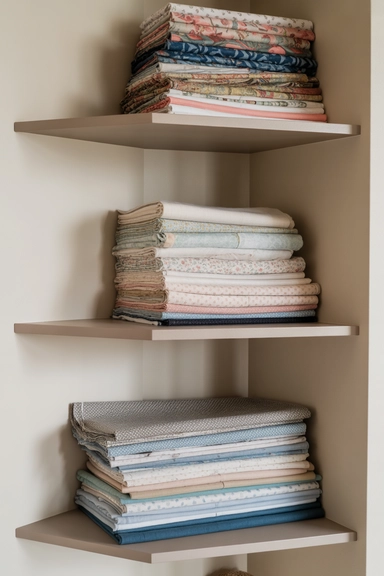
I used to ignore corners, and they slowly turned into a pile of random baskets. Nothing stayed organized there, and I rarely used what I stored.
Adding simple corner shelves changed that. It turned an awkward space into something I actually use.
Here’s what worked for me:
- Heavier fabric on the bottom shelf so everything feels stable
- Lighter pieces above to keep it balanced and easy to reach
- Neat folding so stacks don’t slide off the angled space
At first, I just placed baskets in the corner. That made it feel cluttered instead of useful. Once I added proper shelves, it became a real storage zone.
Now that space actually works for me instead of collecting overflow
Sliding Door Cabinets for Narrow Sewing Rooms
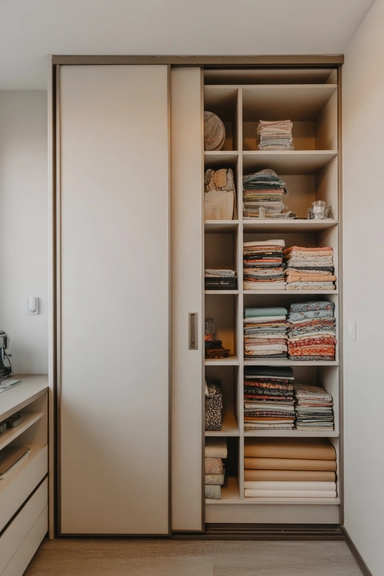
I didn’t think cabinet doors were a problem until I kept bumping into them in a narrow space. Every time I opened one, it blocked movement and made the room feel tighter.
Switching to sliding doors fixed that instantly. I could access fabric without blocking the walkway.
Here’s what worked for me:
- Sliding doors so nothing swings into the room
- Adjustable shelves inside to fit different fabric sizes
- Clear categories per shelf so I don’t mix everything together
At first, I tried using regular cabinets in a tight space. It felt cramped and annoying to use daily. Sliding doors made everything smoother.
Now I can move freely while still keeping fabric hidden and organized. The room feels bigger without changing the layout.
Fabric Library Walls That Turn Collections Into a System
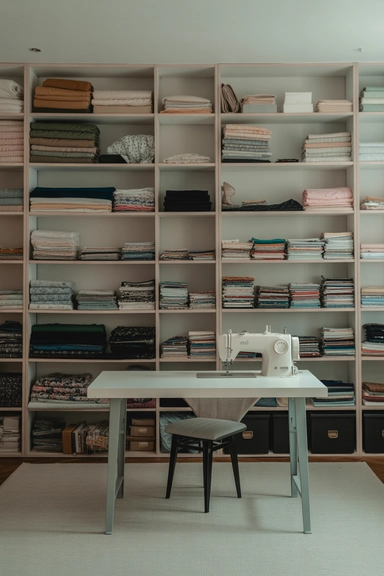
I reached a point where bins and random shelves stopped working. Fabric kept spreading into different areas, and I couldn’t see everything at once.
Creating one full fabric wall changed that. Instead of storing fabric in different spots, I kept it all in one place where I could see it clearly.
Here’s what worked for me:
- Uniform shelves across one wall so everything stays consistent
- Grouping by use like quilting, apparel, and lining fabrics
- Small gaps between stacks so nothing gets compressed or messy
At first, I tried organizing strictly by color. That didn’t work for me because I use different fabric types for different projects. Grouping by use made things faster and easier.
Now I can look at one wall and know exactly what I have. It stopped fabric from spreading across the room and made everything easier to manage
Dedicated Scrap Storage That Stops Overflow
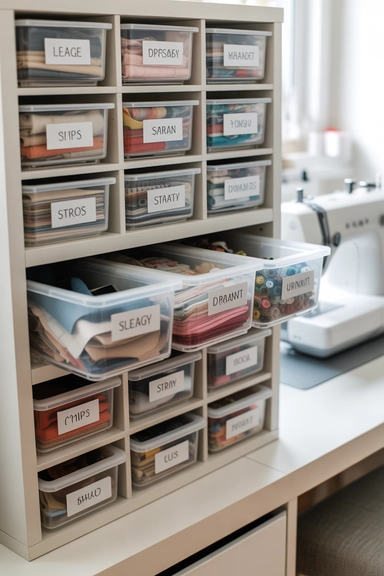
Scraps used to be my biggest problem. I kept telling myself I’d use them later, but they just kept piling up in random places.
What finally worked was giving scraps their own system. Once they had a fixed space, they stopped spreading into everything else.
Here’s what worked for me:
- Separate sections by size so I don’t mix large cuts with tiny pieces
- Shallow drawers or clear bins so I can actually see what I have
- Keeping scrap storage near my sewing area so I use it instead of ignoring it
I made one mistake early. I kept everything, even pieces I was never going to use. That filled the bins fast and made the system useless. Setting limits fixed that.
Now scraps stay under control, and I actually use them instead of letting them pile up everywhere. The whole space feels lighter and easier to manage.
Conclusion
I kept thinking the problem was space. It wasn’t. It was how I was handling the fabric after using it.
Once I started applying simple sewing room fabric storage ideas like keeping things visible and returning them to the same spot, the difference was clear. The mess stopped building up, and I didn’t waste time searching anymore.
The setup doesn’t need to be perfect. It just needs to match how you actually use your fabric every day.
Start with one small area. Fix it properly, use it for a few days, then expand the same system across the room.
That’s what finally made my fabric storage work long term.
Ignore it, and the fabric will slowly take over again. Fix it now, and it stays under control. pro organizing strategies show how to fix the system so it actually holds over time.