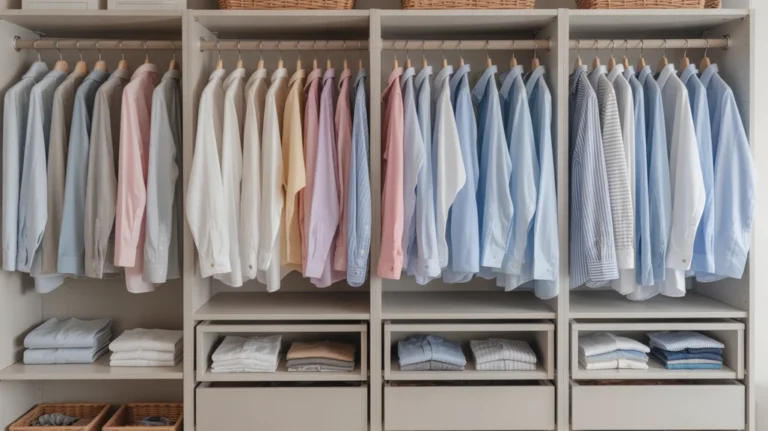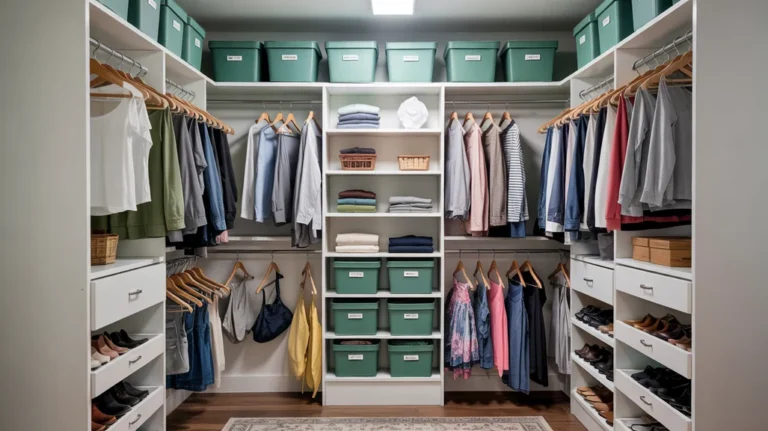
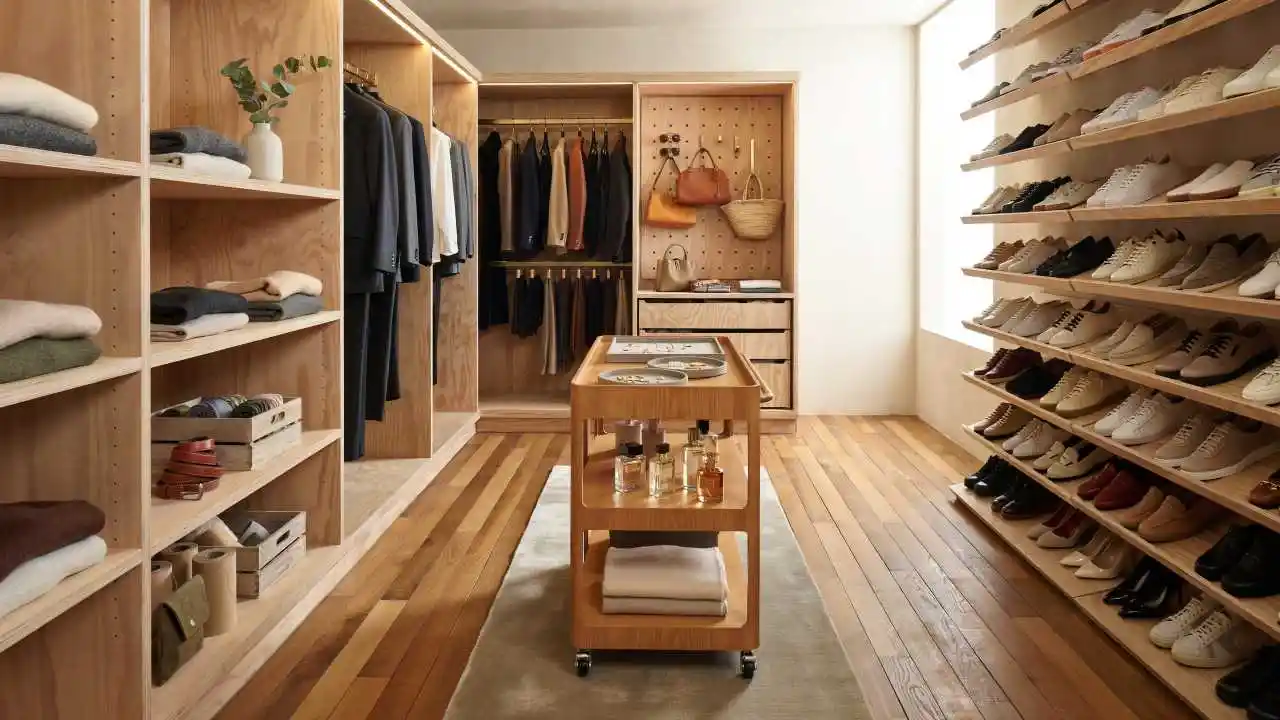
Your closet overflows because store-bought systems treat all spaces the same. You measure twice, buy organizers that almost work, and end up with gaps, wasted shelves, and money sitting in the garage. DIY closet organization solutions cost less because you build around your actual closet, not around what retailers decided to manufacture for generic dimensions.
Building your own storage means no more compromise between what exists and what actually solves your problem. Small spaces demand custom fits that off-the-shelf systems simply can’t deliver without modification or frustration.
Skipping closet-organization-hacks means spending hundreds on systems that require adapting your life to fit the storage instead of storage that fits your life.
Adjustable Plywood Shelves That Adapt With You
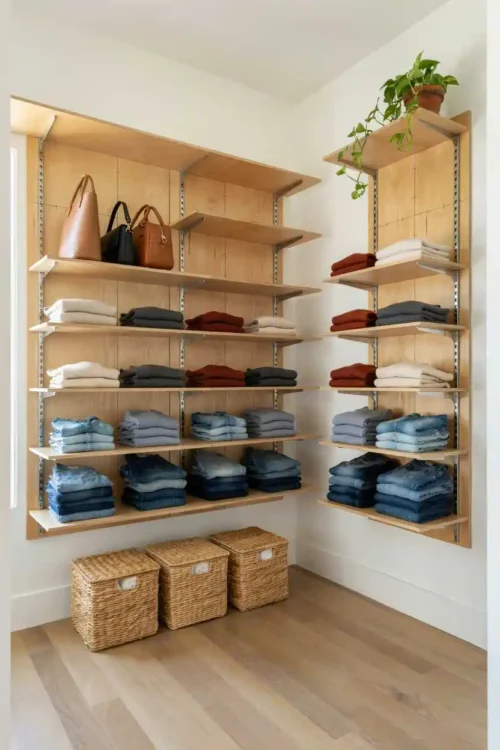
Fixed shelves waste vertical space. One shelf sits at eye level while everything below stays cramped and everything above remains inaccessible. Cut plywood to your exact closet width, sand the edges, and mount on adjustable metal brackets—now you control spacing.
Raise or lower shelves as seasons shift your storage needs. Sweaters take more space in winter. Summer demands room for lighter fabrics and beach bags. Your closet adapts instead of fighting you.
The math feels simple but changes everything: a shelf system that grows with you costs fifteen to thirty dollars per level instead of one hundred for fixed commercial systems that become obsolete the moment your needs shift.
Budget-Friendly Hanging Rods From Half-Inch PVC
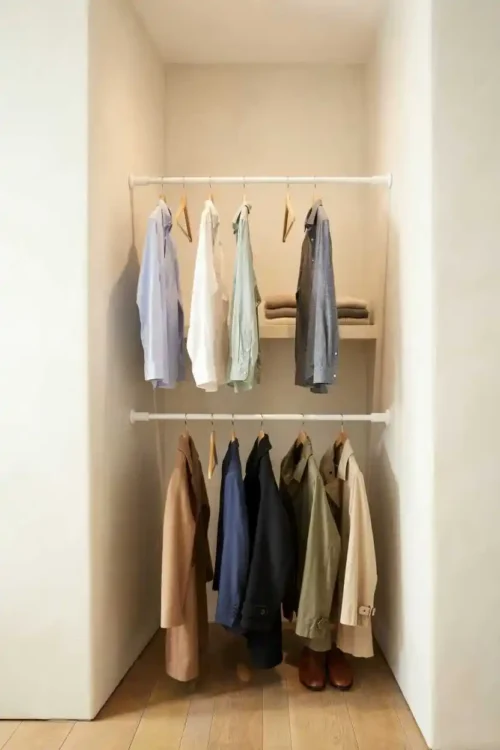
Most closets trap clothes in one awkward rod position. Short items bunch below hanging jackets. Medium-length pieces dangle uselessly. Install a second PVC rod at a lower height and suddenly you’ve doubled capacity without renovation.
Cut half-inch diameter PVC pipe to your closet width, paint it to match your space (or leave natural), and mount on simple brackets. The pipe costs pennies. Installation takes an afternoon. Your hanging capacity doubles.
This single addition transforms how many outfits actually fit. It’s why small closets suddenly feel spacious once you add intentional layering.
Wooden Crate Shelving That Shows Your Clothes
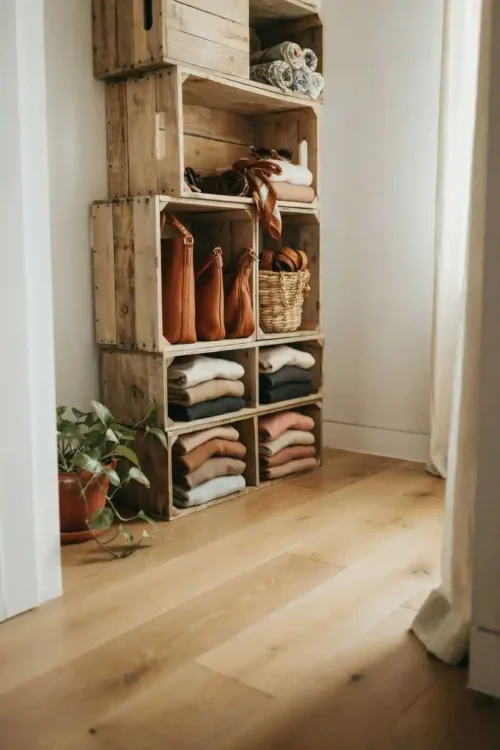
Plastic storage bins stack neatly but hide everything inside. You forget what you own. You buy duplicates. Nothing gets used because it disappeared into opaque boxes. Wooden crates stacked and secured do the opposite—they show what’s stored while looking intentional.
Stack crates in patterns that fit your closet exactly. Secure with brackets so nothing shifts. The natural wood aesthetic works better than plastic and actually improves with age instead of looking cheaper every season.
You see every folded stack. Everything feels deliberate instead of hidden. This visibility alone changes how organized a closet actually feels, regardless of the actual system.
Vertical Tension Rods for Impossible Corners
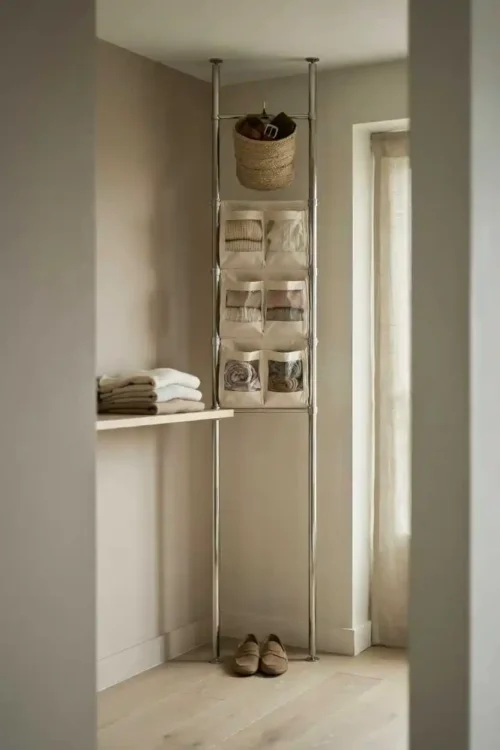
Narrow closet corners between walls sit completely empty. Floor space fills while corners waste. Install tension rods vertically across gaps and suddenly you have hanging space where commercial systems said impossible. Add a hanging organizer or lightweight shelves and the corner becomes functional.
This works especially well in closets with sloped ceilings, angled walls, or architectural quirks that commercial shelving completely ignores. You’re not fighting the space anymore—you’re working with it.
Most organizational failures happen because people ignore the weird spaces. Those gaps hold more than you’d think.
Pegboard Walls for Accessories Without Rod Space
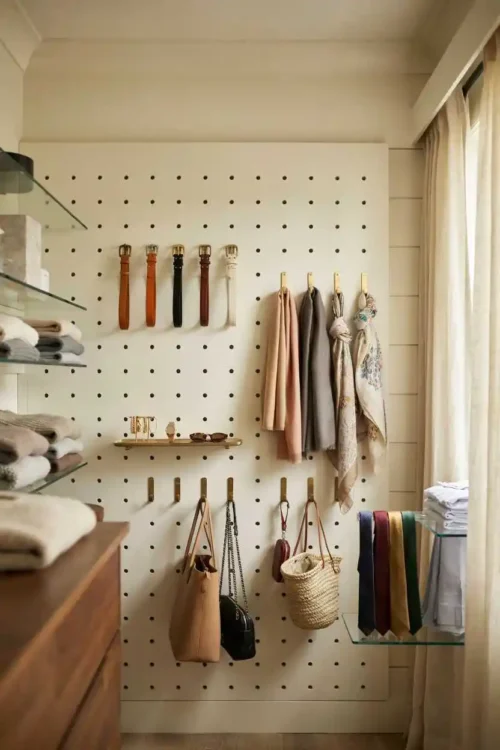
Belts tangle together in drawers. Scarves hang loosely on regular hangers. Bags bunch in corners. Paint pegboard to match your closet, cut it to size, mount it on one wall, and add hooks for everything currently occupying rod space. Suddenly your hanging rod has room for actual clothing.
Rearrange hook positions anytime your needs shift. The system is as flexible as your life actually is. Pegboard costs under thirty dollars and transforms a blank wall into organized storage that looks intentional.
This one change often frees up enough hanging space that the entire closet shifts into balance.
Corner Shelves That Capture Dead Space
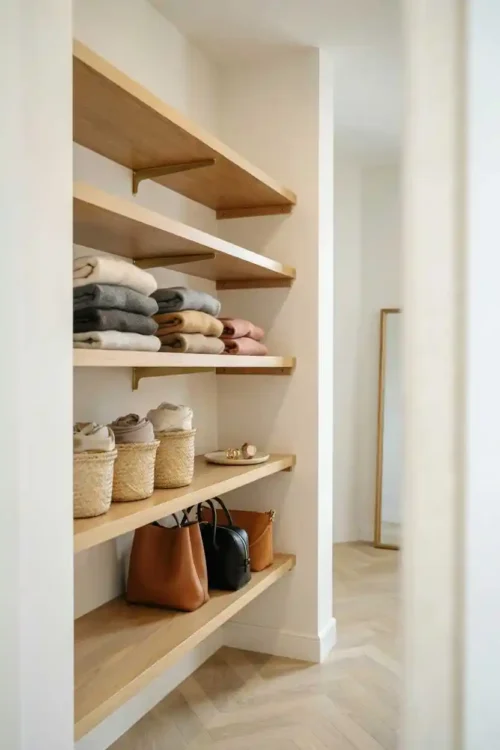
Every closet has a corner doing absolutely nothing. You stack overflow there because it’s the only option. Build simple L-shaped shelves from reclaimed wood or budget lumber, mount them in corners, and dead space becomes intentional storage.
Corner shelves cost less than straight shelves because they leverage existing walls instead of requiring extra support. The wood aesthetic feels warmer than metal and integrates with most closet styles naturally.
Corners stay the hardest spots to organize because commercial systems can’t fit them. Custom shelves solve what retailers ignore.
Under-Shelf Baskets That Maximize Existing Shelves
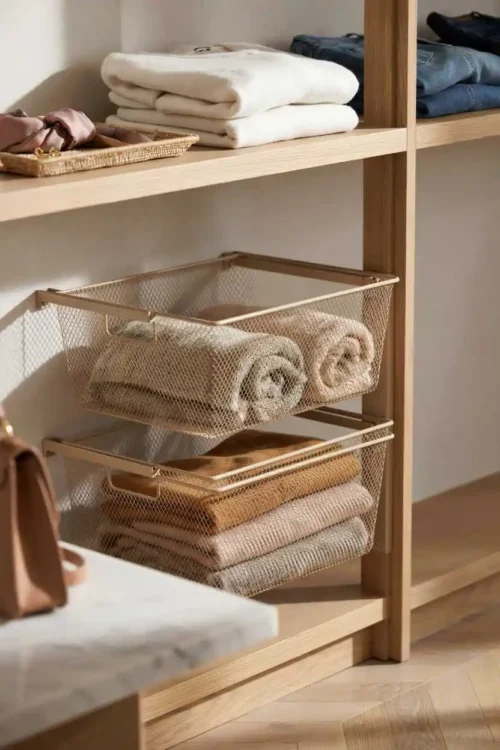
Existing closet shelves waste the space directly underneath. DIY wire baskets slide under shelves and double your capacity without adding furniture or eating floor space. You can remove baskets to access items above without moving everything.
This project costs under twenty dollars total and transforms shelves from single-use to dual-function. Installation takes minutes. The improvement is immediate.
Most people ignore the space below their shelves because they don’t think it exists. Once you use it, the closet suddenly feels enormous.
Scrap Wood Drawer Dividers for Folded Stability
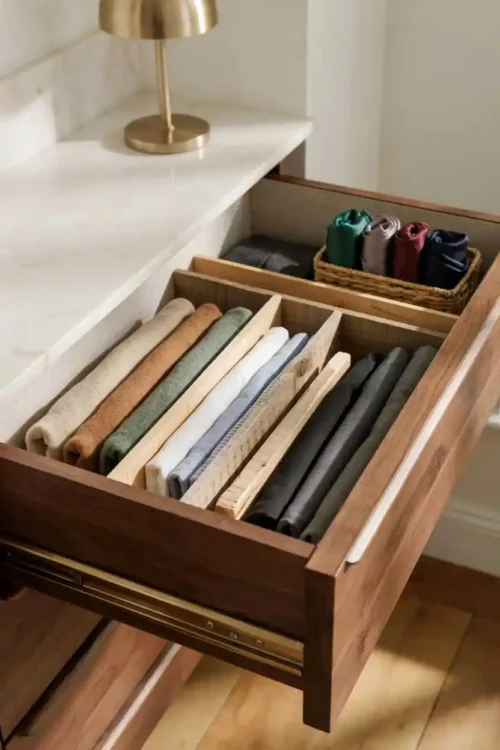
Folded items collapse the moment you reach into the middle of a stack. Build simple dividers from scrap plywood and insert them into drawers to create individual compartments. Now stacks stand upright independently.
You pull one item without triggering domino collapse. Each category stays separated and visible. The cost runs almost nothing. The change feels fundamental.
Drawer chaos usually happens because nothing holds stacks in place. Dividers don’t just organize—they protect your system from daily destruction.
Cascading Hangers That Stack Like A Magazine
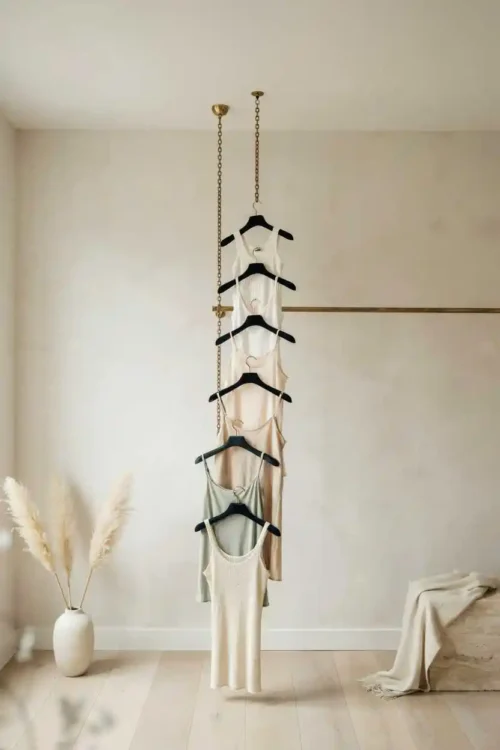
Regular hangers take one rod slot each, even though most people hang multiple lightweight items that could stack vertically. Cascading hangers clip one below another and hold five to six camisoles, tank tops, or lightweight pants in the space of a single hanger.
Similar items stay grouped so outfits coordinate without searching the entire closet. Your rod space stretches further than you calculated. The cascading effect looks intentional and feels organized.
This works especially well for anything lightweight that doesn’t stretch hangers or create stress. Tank tops, camisoles, and lightweight cardigans suddenly organize themselves.
Clip-Style Pant Hangers for Compressed Pant Storage
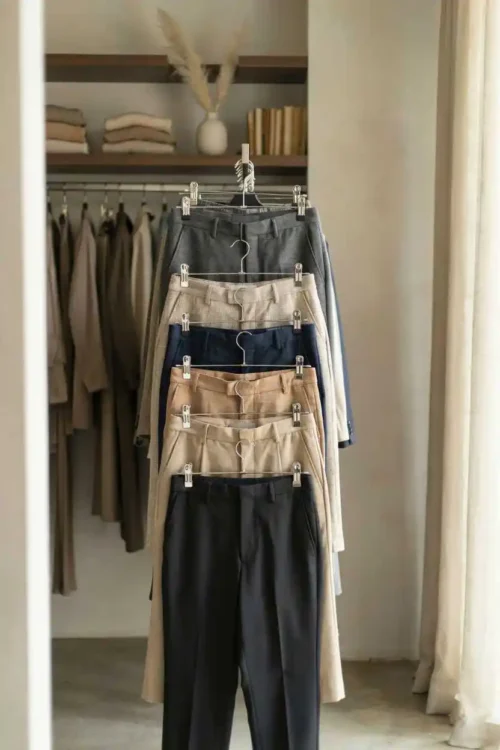
Individual pants hangers sprawl across your rod and force you to hunt through them one at a time. A clip-style pant hanger holds five to six pairs stacked vertically on a single hook. Your pant storage footprint shrinks in half.
Flip through pairs like a magazine instead of moving hangers around searching for the right color. Pairs stay folded and wrinkle-free. Installation costs nothing—just replace your existing hangers with clip-style versions.
One hanger type transforms how much space you actually need without sacrificing access.
Tiered Risers for Shelf Visibility
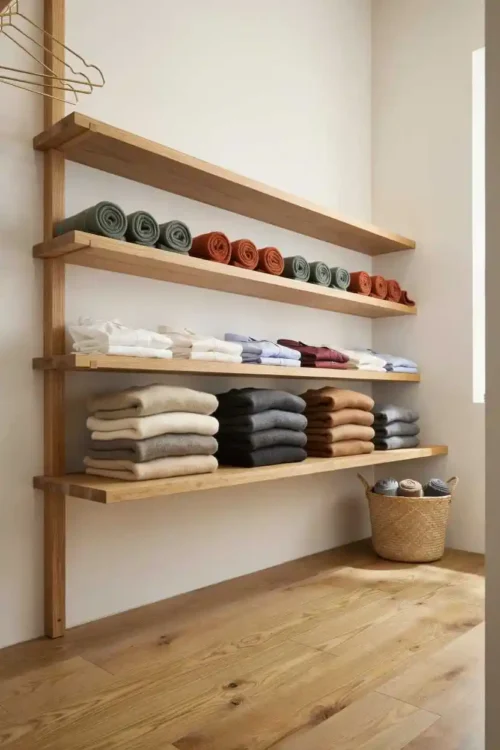
One deep shelf with folded items stacked flat disappears. Everything in the back hides under piles. Build simple tiered risers from wood or purchase them cheaply, and folded pieces stack at different heights. Now you see every stack without moving anything.
The shelf depth gets used vertically instead of horizontally. You might actually need fewer shelves because you’re using them smarter. Items become visible instead of disappearing into storage voids.
Most organizational failures happen because items literally vanish from view. Visibility changes everything.
Clear Plastic Boxes for Seasonal Storage
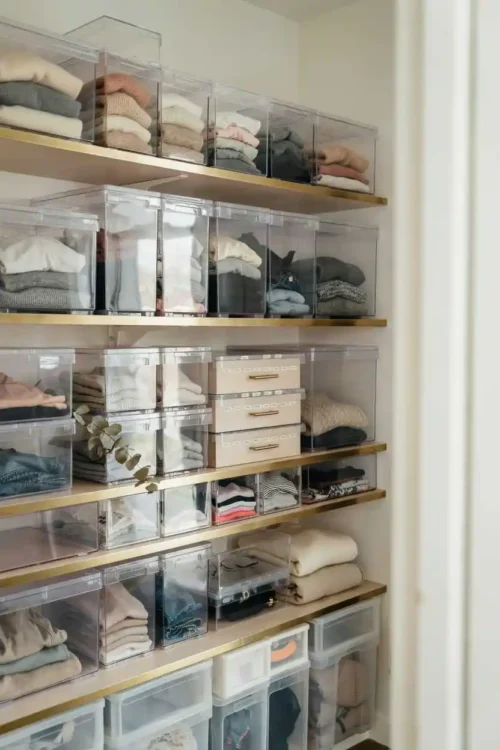
Opaque bins hide what’s inside and create mystery. You accumulate duplicate storage boxes. Clear plastic shows every item at a glance and stacks neatly on upper shelves. Off-season clothes stay organized instead of becoming unidentifiable mystery boxes.
Label the front so seasonal rotation becomes systematic. You know exactly what’s stored without opening anything. The transparency prevents the “I don’t remember what’s in this bin” problem that derails most systems.
Off-season storage should feel like a filing system, not a guessing game.
Wall Hooks for Items Taking Rod Space
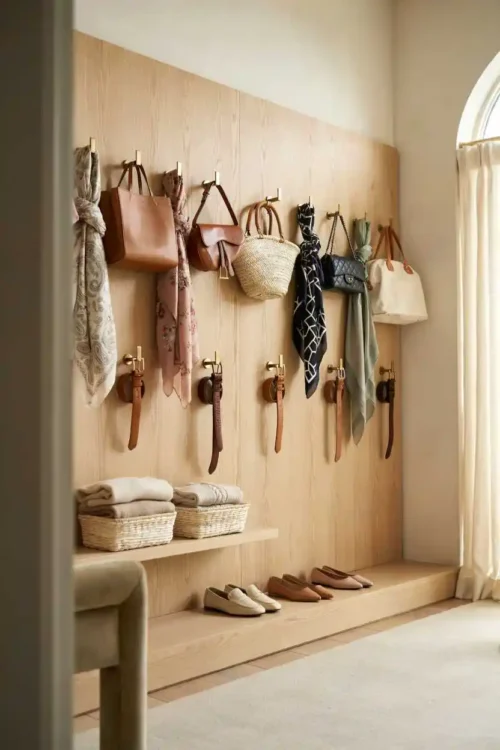
Belts hang loosely on regular hangers. Scarves drape over clothes. Bags sit in corners wasting actual closet real estate. Mount adhesive hooks or small mounted hooks on available wall space and every hook serves one purpose. Items hang visible and protected.
This project costs almost nothing and eliminates the accessories-eating-rod-space problem. You suddenly have actual hanging room for clothes instead of navigating around belts and scarves.
Wall space is the most underutilized real estate in most closets.
Slim Rolling Cart for Seasonal Flexibility
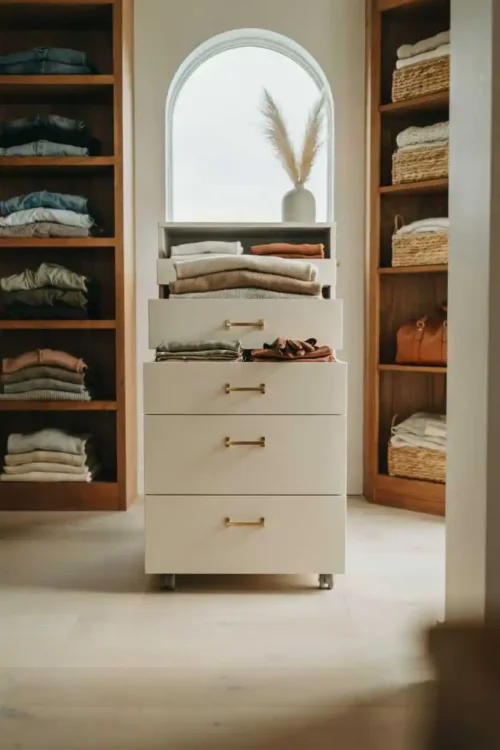
Seasonal items have nowhere to go when shelves fill up. A slim rolling cart with drawers slides into corner gaps and holds folded items without claiming permanent floor space. It tucks away during off-seasons when you need that corner back.
Mobility lets you adjust storage as your wardrobe shifts. The cart becomes more functional than permanent furniture because it adapts. Small closets need flexible systems instead of rigid structures.
This flexibility often prevents the “I need to reorganize everything” situation that happens twice a year in most closets.
Back Wall Hanging Organizer for Floor-Level Shoes
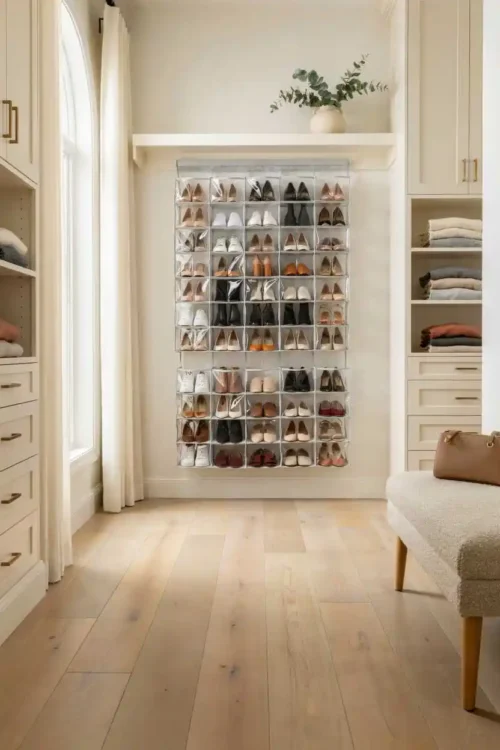
Shoes line the entire closet floor and block your walkway constantly. A 24-pocket hanging organizer mounts on the back wall and holds shoes in neat rows at eye level. You see every shoe without bending.
The entire floor opens up. Suddenly you can move through your closet without navigating shoe piles. The visual change matters more than people expect—clearing the floor is the fastest way to make a small closet feel spacious.
Floor clutter makes spaces feel cramped even when they’re actually organized.
Wooden Shelf Dividers for Stack Protection
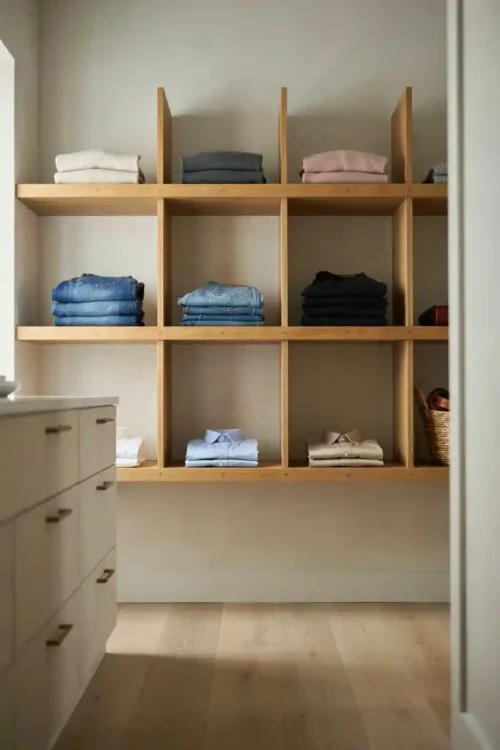
Folded stacks lean and topple when pressed together without boundaries. Wooden dividers create compartments so each stack stands independently. Nothing cascades when you grab one item.
Your organized system actually stays organized instead of collapsing daily. Dividers prevent the stack-destruction cycle that breaks most systems within a week. The investment is minimal but the payoff feels foundational.
Dividers turn stacks from temporary piles into actual storage categories.
Rope and Dowel Hanging Organizer for Rod Accessory Overflow
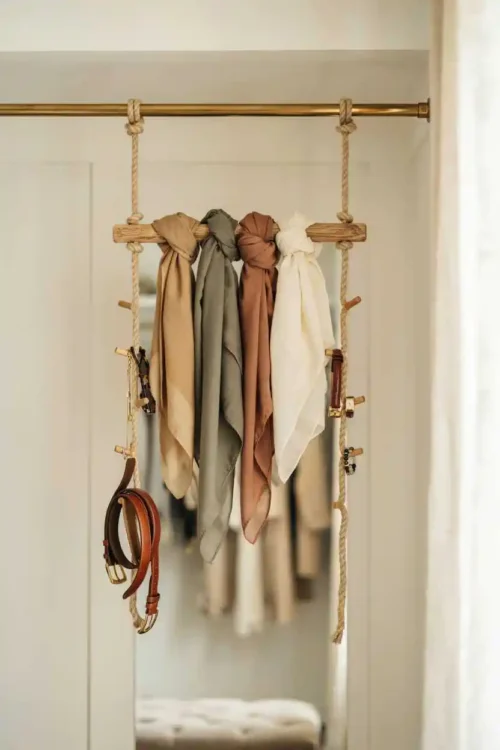
Small items hang loosely from hooks or disappear into drawers. Thread rope through wooden dowels, add clips and hooks, and hang from your existing rod to hold scarves, lightweight belts, and accessories without eating rod space. This costs under twenty dollars to build.
The rope-and-wood aesthetic adds visual interest while being completely functional. Accessories finally get their own system instead of sharing rod space with actual clothes.
This kind of custom solution works better than commercial organizers because it fits your exact rod and your exact needs.
Magnetic Spice Rack for Small Metal Items
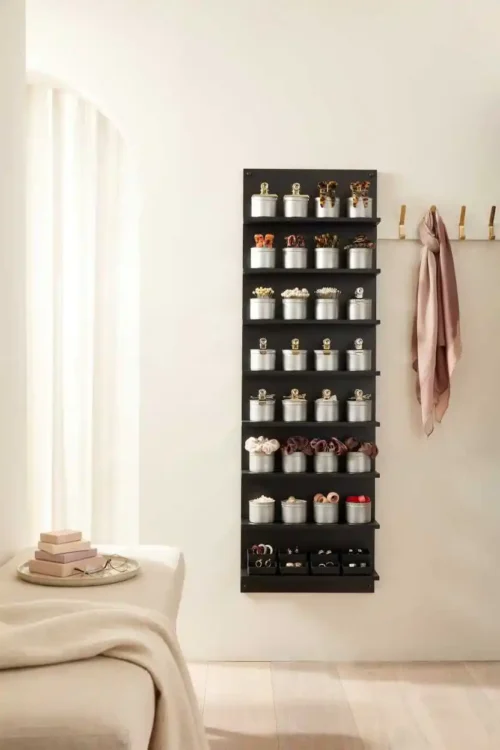
Bobby pins, hair clips, and jewelry scatter into drawers and disappear forever. Mount an inexpensive magnetic spice rack on your closet wall to hold metal items visible and organized by category. Metal items stick. Nothing falls.
This repurposing project costs under fifteen dollars and solves the small-item-chaos problem that drawers always create. Items stay visible instead of getting lost in the back of drawers.
Some of the best organizing solutions come from using things in ways they weren’t designed for.
Refurbished Pallet Shelving for Raw Aesthetic
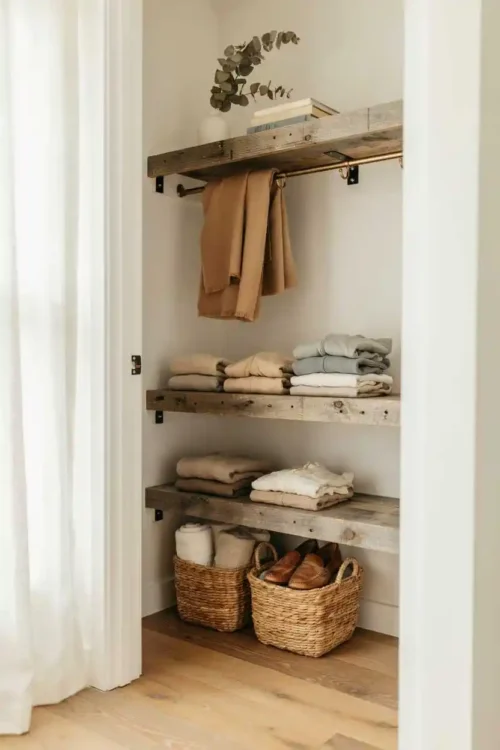
One wall sits empty while floor space overflows. Refurbish wooden pallets, sand them smooth, secure them to studs, and create rustic shelving that costs nearly nothing. Pallet shelves handle real weight when properly secured.
The weathered aesthetic works better in casual spaces than polished commercial shelving. The raw wood actually feels more honest than plastic-coated brackets. This is storage that looks like it belongs in your closet instead of looking like an afterthought.
Pallet shelving transforms empty walls into functional storage while keeping costs minimal and aesthetic authentic.
PVC Pipe Dividers for Organized Rod Sections
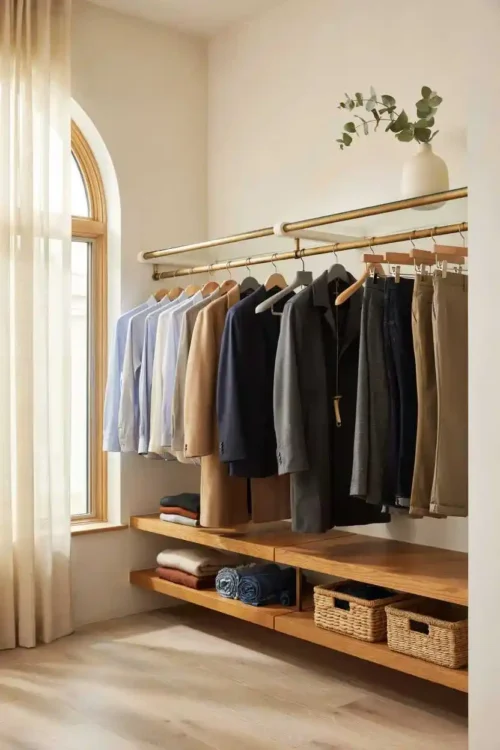
Clothes bunch together on one rod making categories impossible. Cut PVC pipe into short sections, mount them on the rod as dividers, and create sections that keep clothing separated. Installation takes minutes and costs under ten dollars.
Each section keeps categories visible and prevents clothes from mixing. You organize by type or color and everything stays where you put it. The dividers are minimal but solve the crowded-rod visibility problem completely.
Organization systems fail when you can’t see categories. Dividers fix that.
Wood Block Shelf Risers for Hidden Underspace
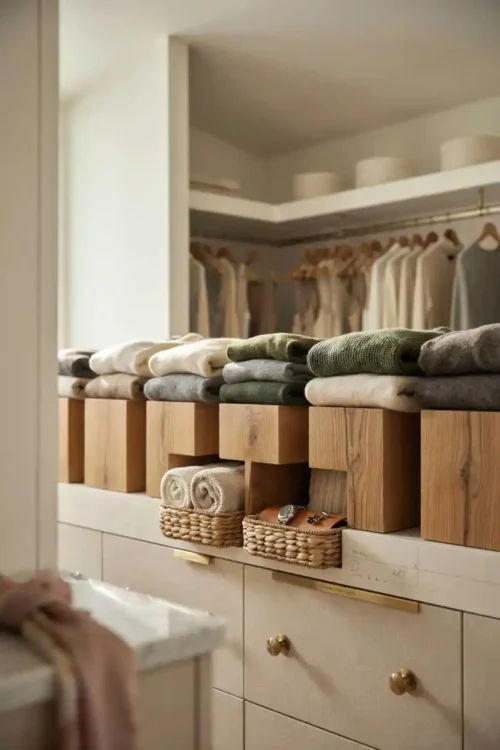
Shelves don’t use vertical space efficiently because items stack directly on wood with wasted space above them. Build simple riser blocks from scrap wood that elevate items, creating hidden storage underneath while improving shelf visibility.
Risers cost almost nothing and let you see every stacked item. This doubles shelf capacity by using vertical space above stacked items. You’re not adding new shelves—you’re using existing shelves smarter.
The most overlooked optimization in closet organization is using the space above folded items. Risers capture that invisible real estate.
Vertical Tension Rod Shelving for Angled Spaces
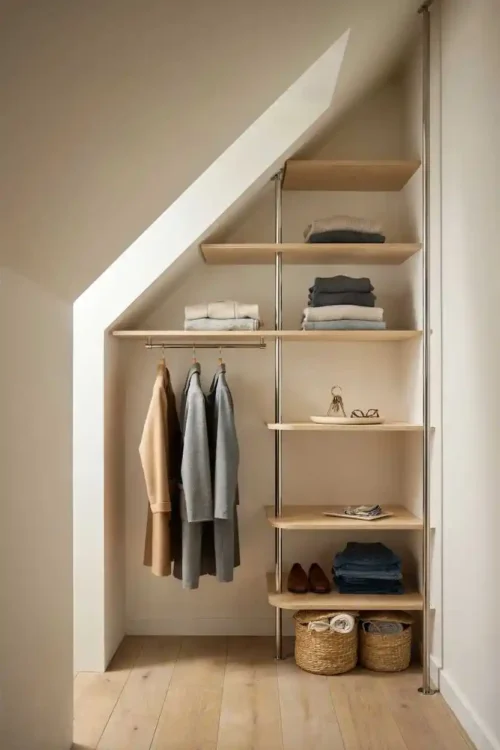
Closets with angled ceilings or odd-shaped walls waste corner space because standard shelving won’t fit. Install tension rods vertically across gaps, then place a shelf across the rods to create storage in spaces that commercial systems completely miss.
This works brilliantly in closets with sloped ceilings, dormer walls, or architectural quirks. You’re not fighting the space—you’re building storage that embraces it. The project costs under thirty dollars and solves the impossible-corner problem.
The best organizing solution is often the one that stops resisting your actual space and works with it instead.
Wooden Dowel Rod Extension for Double-Deep Hanging
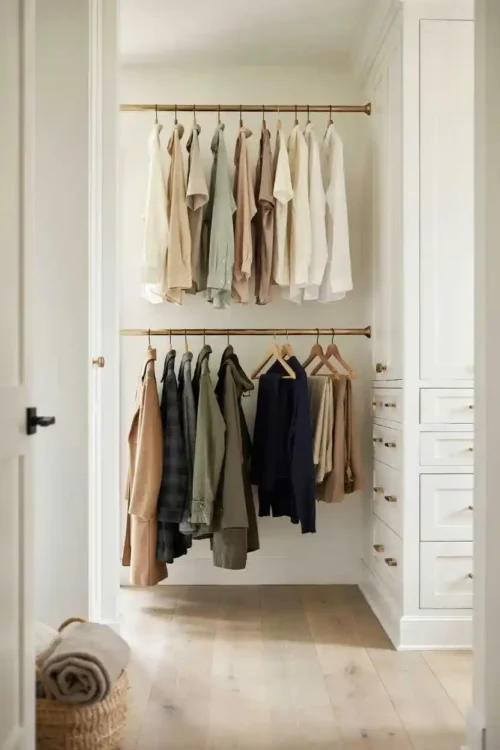
One closet rod doesn’t stretch far enough when you have a lot of hanging items. Add a second rod at a different height using wooden dowels and simple brackets to double hanging capacity. Installation takes an afternoon.
You control exactly where the rod sits and how much space it covers. This costs twenty to forty dollars versus one hundred for professional installation. The project is straightforward enough that most people can handle it themselves.
Double hanging transforms how much a closet can actually accommodate without adding square footage.
Fabric-Covered Cardboard Box Dividers for Budget Organizing
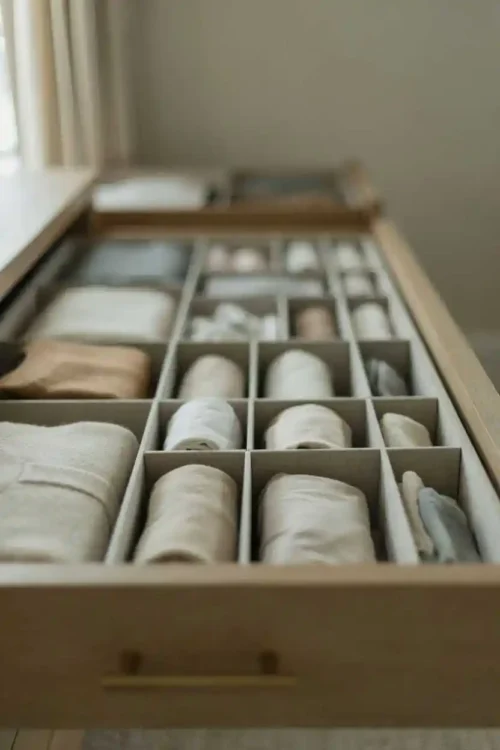
Drawer dividers cost too much and don’t fit your exact dimensions precisely. Cover sturdy cardboard boxes with fabric, cut them to drawer size, and insert them to create custom dividers that cost almost nothing. Fabric covering makes them look intentional instead of like organizing hacks.
This budget option works as well as expensive alternatives while fitting your exact dimensions. You can update the fabric or replace boxes seasonally without significant expense.
Sometimes the most effective solutions feel temporary because they are—and that’s actually helpful because organizing needs change.
Canvas Pocket Organizer Hanging From Rope
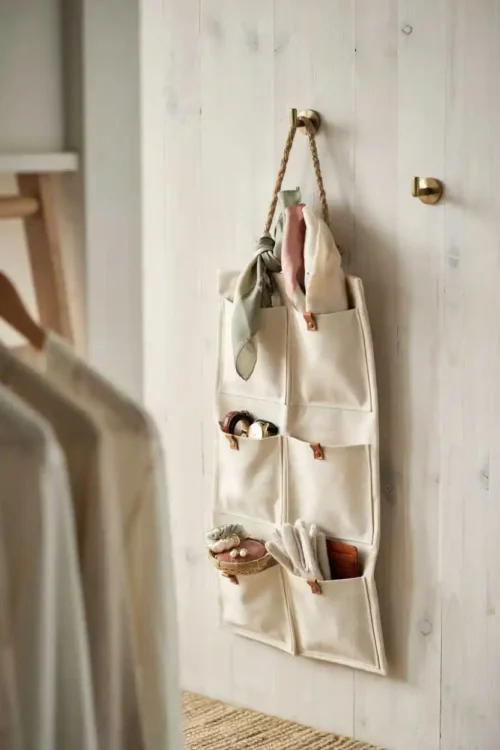
Wall space holds nothing while drawers overflow with small items needing homes. Hang canvas with sewn pockets from rope suspended across your closet wall to create vertical storage for small items and accessories. This costs under thirty dollars to build and uses dead wall space completely.
Canvas ages beautifully and the aesthetic integrates better than plastic in most closets. Every pocket serves a purpose and items hang visible instead of getting lost. The rope hardware adds visual interest that matches the functionality.
Wall-mounted storage that’s also beautiful is the sweet spot where practicality and design actually meet.
Custom Wooden Hangers With Integrated Hooks
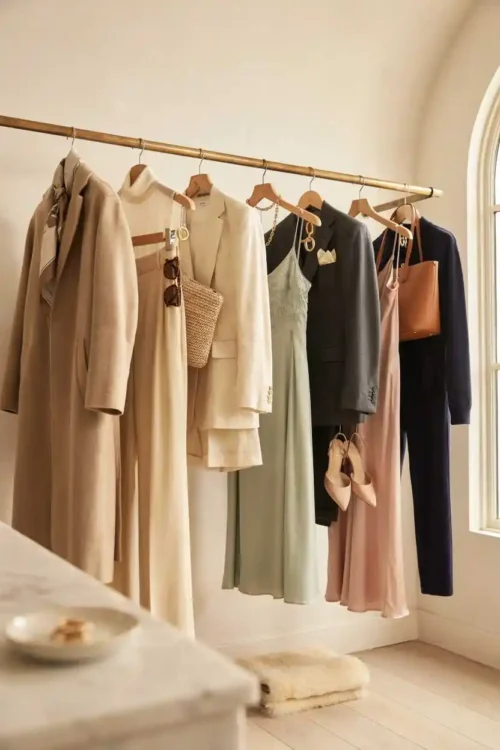
Clothes hang on generic hangers while accessories hang separately, creating visual clutter and routing problems. Build or customize wooden hangers with small hooks attached so complete outfits hang together. This costs under five dollars per hanger to build.
Each hanger tells a complete story instead of requiring you to assemble pieces from different closet sections. Coordinated outfits hang together. The morning routine simplifies because everything you need hangs in one place.
This kind of detail-oriented organizing transforms more than the closet—it transforms the actual experience of getting dressed.
Lumber and Bracket Combo Unit for Maximum Efficiency
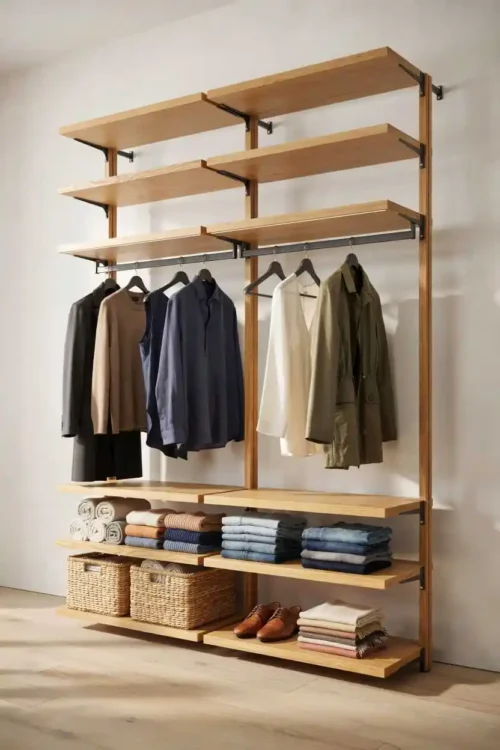
Limited shelf space means some items must hang while others need shelves, creating inefficiency and wasted real estate. Build a unit combining a hanging rod with shelves above or beside it using basic lumber and brackets to maximize one closet section completely.
This costs under one hundred dollars and creates storage that commercial systems charge five hundred for. You customize every dimension to fit your exact space instead of adapting your closet to commercial sizes. Skipping small-apartment-organizing-ideas means settling for less efficient systems.
Combo units solve the “I need both hanging and folding space but don’t have room for separate systems” problem that most closets face.
Final Thoughts on Building Closet Storage That Actually Works
Building your own closet storage means never settling for systems that almost work or spending money on items that don’t quite fit your space. Custom solutions cost less and adapt to your actual life instead of forcing your closet into commercial shapes designed for nobody in particular.
The satisfaction of building something that actually solves your problem beats shopping convenience every time. Your closet will function better because it’s built for your specific needs, your specific space, and your actual daily routine.
FAQ About DIY Closet Organization
Do I need special tools to build closet storage?
Most projects require basic tools like a drill, saw, and level that many people already own. If you don’t have them, hardware stores often loan tools free with purchase or you can borrow from friends. Simpler projects like tension rods, hanging organizers, and basket installation need almost no tools at all.
What materials work best for DIY closet shelves?
Plywood is budget-friendly and sturdy, reclaimed wood adds aesthetic appeal and character, and metal brackets provide clean support. The best choice depends on your closet style and how much weight you’re storing. Most successful projects mix materials based on what fits your actual space and budget rather than following one formula.
Can I build closet storage in a rental apartment?
Absolutely. Focus on removable systems like tension rods, freestanding shelves, wall organizers, and baskets that don’t require permanent installation. Avoid drilling into walls if possible, or use damage-free adhesive products designed for rentals. Most DIY projects work beautifully in rental spaces without violating lease terms or damaging walls.
Sarah Mitchell’s Take
I started building closet storage because commercial organizers never fit my weird closet angles, and honestly, it saved me hundreds while actually solving problems pre-made systems created. Once you build your first shelf, you realize how much better custom storage works compared to anything off a shelf, and there’s really no going back to that compromise.