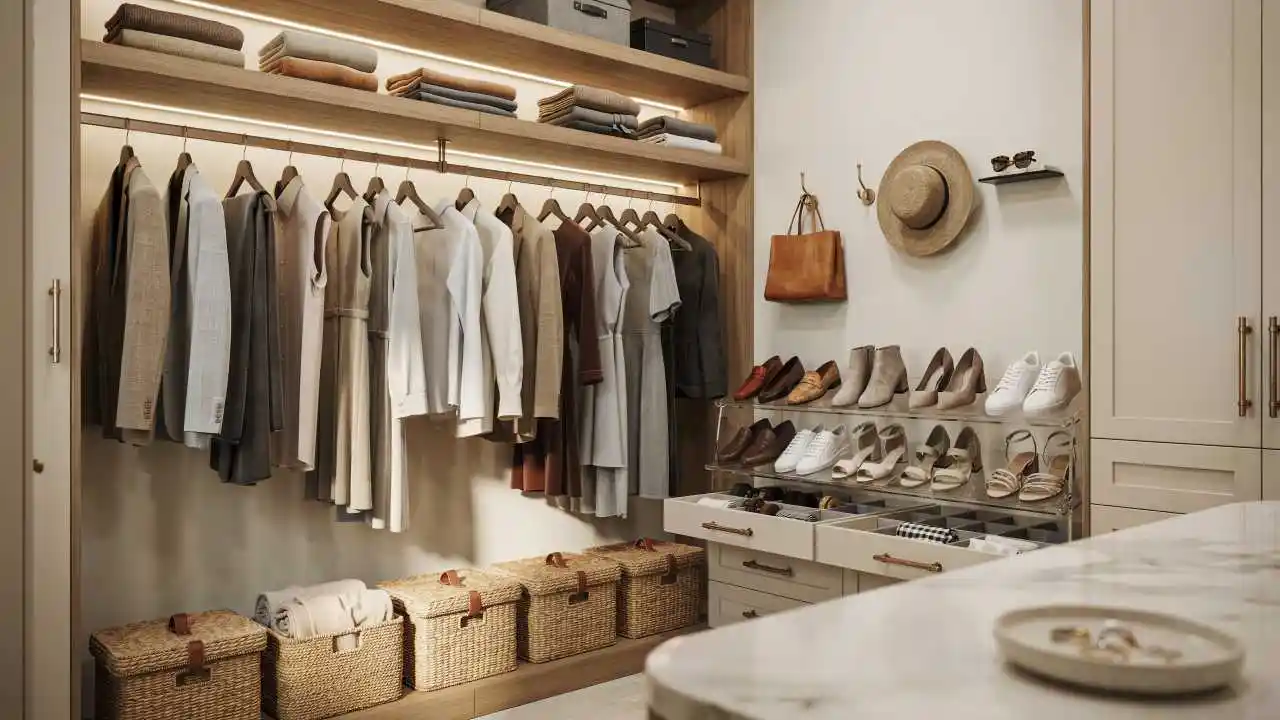
Your small closet is cramped because you organize by volume instead of by access. You shove items deep, stack things high, and end up with a space where half your clothes become invisible. The real problem isn’t the square footage, it’s that nothing sits where you actually reach for it.
Small closets work when every inch serves daily use, not when they become storage vaults for things you forgot you owned. Most people waste their best real estate on items they wear once a year while everyday pieces fight for space in front. These are the only practical small closet organization ideas you need to maximize space, reduce clutter, and keep everything organized.
Skipping small-space-storage-ideas means accepting a closet that fights you every morning instead of one that supports your actual routine.
The Horizontal Rod You Never Used Above Eye Level
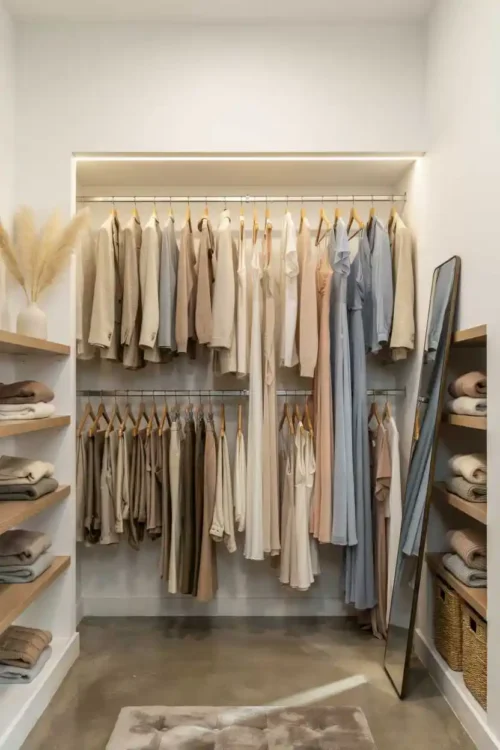
That space six inches above your head stays completely empty while your floor fills with overflow. Install a second rod at shoulder height to hang lightweight pieces—cardigans, linen blazers, summer dresses that don’t wrinkle easily. Suddenly your rod capacity doubles without adding furniture.
Things that don’t need floor-level access finally have a home. You see everything at a glance. The upper rod becomes prime real estate for pieces you reach for regularly but never realized deserved hanging space.
Small closets expand vertically when you stop treating the top third as unusable.
Shallow Shelves Along One Wall Instead of Deep Ones
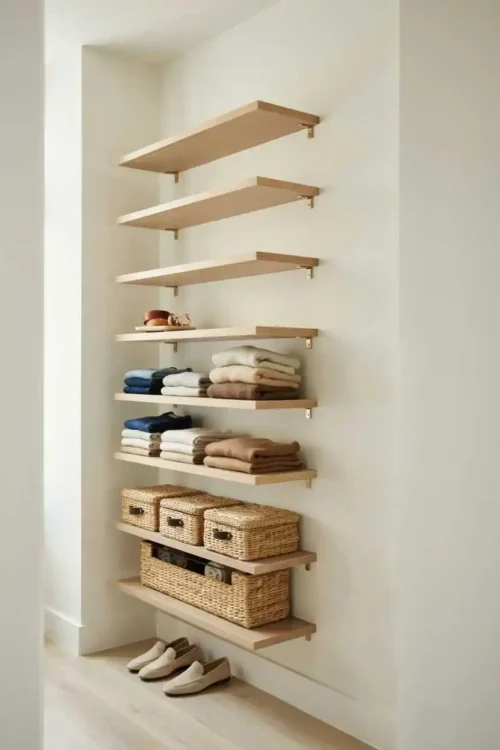
Standard shelves extend twelve to sixteen inches deep and create a wall of storage that blocks sight lines and makes movement difficult. Install shallow six-inch shelves along one wall instead—they hold folded items, boxes, and accessories without making your closet feel like a cave.
You can still move through the space without brushing against shelves or feeling enclosed. Everything sits close enough to grab easily. The shallow depth tricks the eye into feeling more spacious even though you’re storing the same amount.
Depth matters more than people realize when organizing small spaces.
Cascading Hangers for Lightweight Pieces
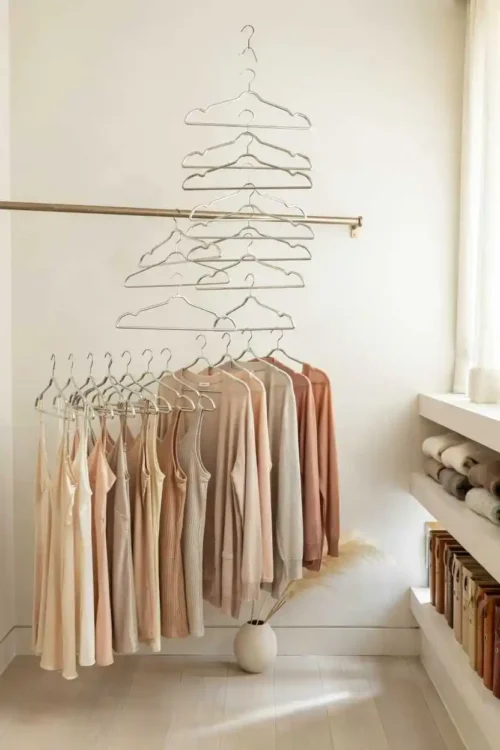
One hanger holds one item and wastes rod space when you have five lightweight tank tops that could stack vertically. Cascading hangers clip one below another and compress five pieces into the footprint of a single hanger.
Your rod stretches further. Similar lightweight items stay grouped. Morning outfit selection becomes faster because related pieces hang together instead of scattered across the entire rod.
This works especially well for camisoles, tank tops, and lightweight cardigans that don’t need individual hanging space.
Over-the-Rod Shelf for Off-Season Items
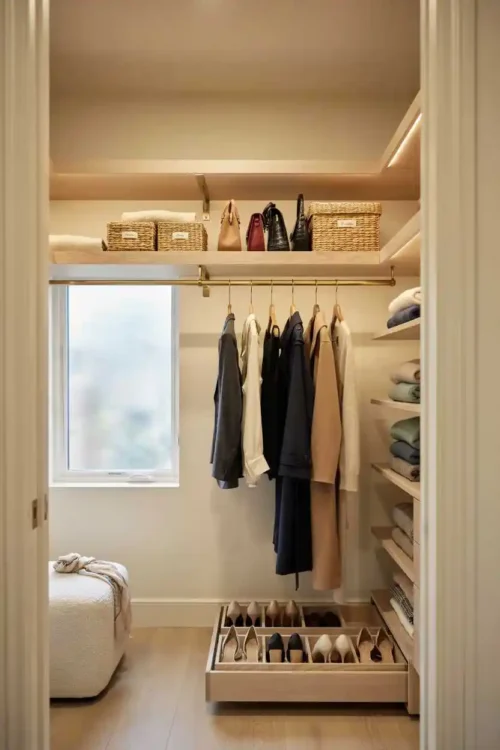
The space above your hanging clothes sits dark and inaccessible while you search for storage elsewhere. An over-the-rod shelf hangs from your existing rod without installation and creates usable storage above everything else.
Off-season handbags, rarely worn pieces, and items you access twice yearly live up there. Light still reaches hanging pieces below. The closet doesn’t feel cramped because nothing blocks sight lines or walkways.
Small closets hide enormous storage capacity when you use vertical space above existing systems.
Door-Mounted Shoe Organizer for Instant Floor Recovery
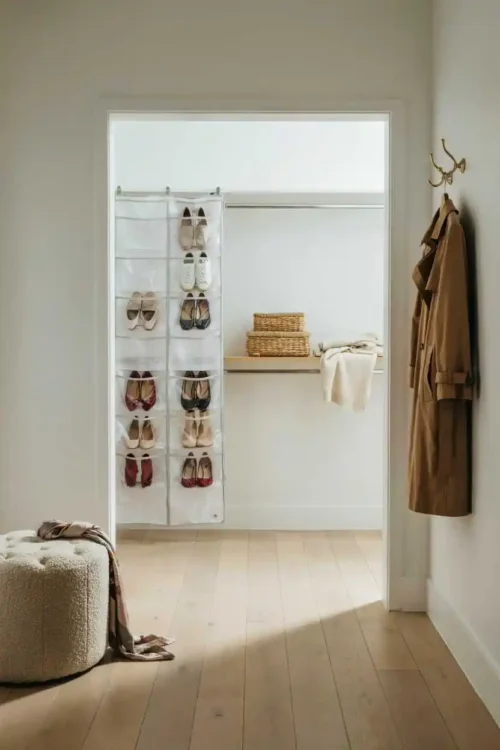
Shoes line your closet floor and steal walking space constantly. A slim shoe organizer with twenty-four pockets hangs on the door and holds every pair visible at eye level. The entire floor opens up.
You see what you own without bending. Nothing gets lost in the back. The visual difference of recovered floor space makes the closet feel twice as large even though nothing else changed.
Floor clutter creates the illusion of a smaller space more than actual square footage does.
Thin Velvet Hangers That Cut Rod Crowding in Half
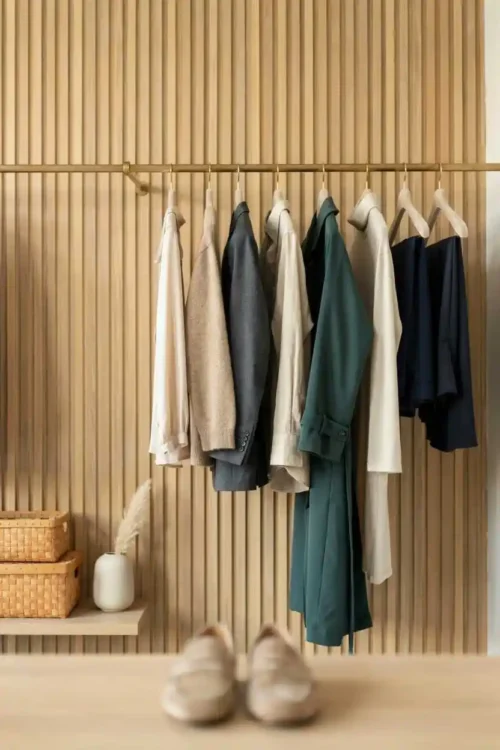
Plastic hangers sprawl three inches wide and force spacing on your rod. Switch to slim velvet hangers that compress to half an inch and grip fabric so nothing slides. Suddenly you fit twice as many items on the same rod length.
The hangers cost almost nothing but transform how much hangs without the closet looking packed. Everything feels organized instead of crammed because the hangers themselves create visual order.
The right hangers matter more to perceived organization than actual organization systems do.
Drawer Dividers from Scrap Wood for Stack Stability
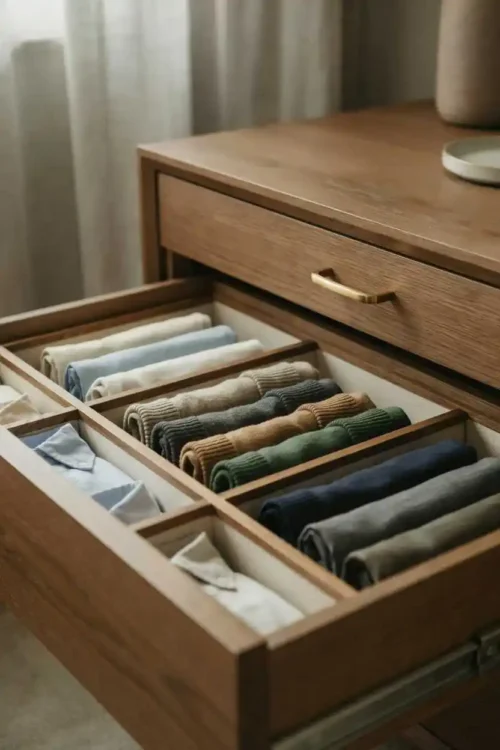
Folded items collapse the moment you reach for something in the middle. Build simple dividers from scrap wood and insert them into drawers to create compartments where each stack stands independently.
You pull one item without triggering domino collapse. Stacks stay visible and organized. The cost runs nothing. The impact feels fundamental to how long your system actually lasts.
Drawer chaos usually happens because stacks have nothing holding them upright. Dividers solve that completely.
Corner Shelves for Dead Space That Holds Nothing
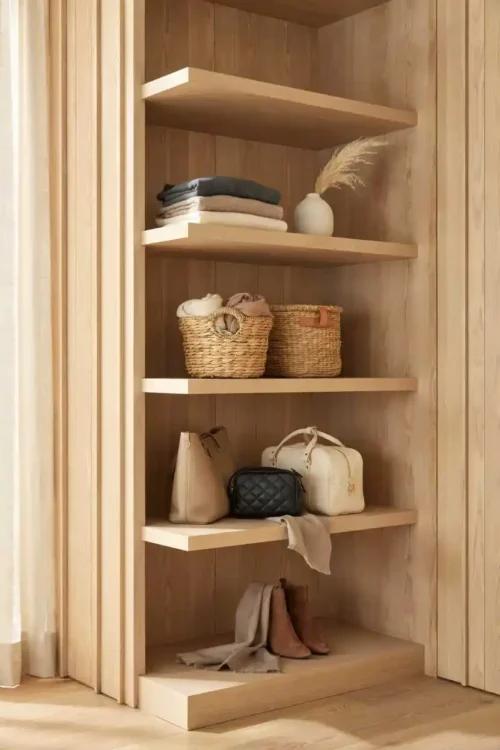
Every small closet has a corner doing absolutely nothing while floor space overflows. Install L-shaped shelves in corners and dead space becomes intentional storage.
Corner shelves cost less than straight shelves because they leverage existing walls. The awkward corner suddenly earns its purpose. Most people ignore corners because commercial systems can’t fit them—that’s exactly why custom shelves work so well there.
Small closets waste corners more than any other space.
Tiered Shelf Risers to Reveal Hidden Folded Items
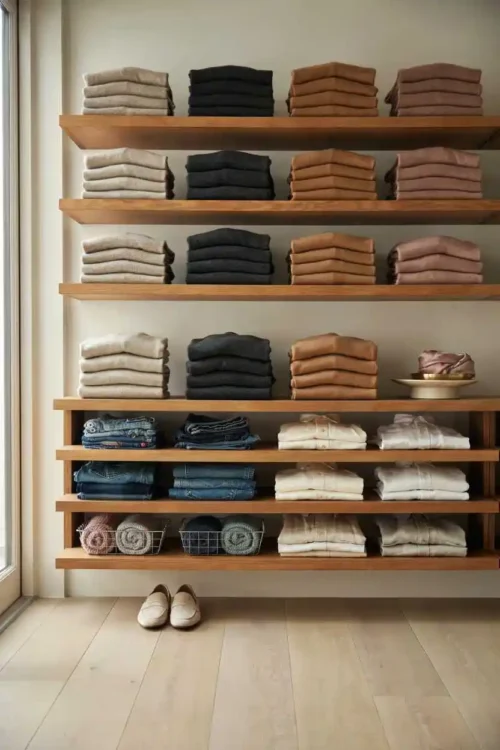
One deep shelf with folded items stacked flat hides everything in the back. Tiered risers stack pieces at different heights so you see every stack without moving anything.
The shelf depth gets used vertically instead of horizontally. Items become visible instead of disappearing under piles. You might actually need fewer shelves because you’re using existing ones smarter.
Visibility solves more organizing problems than adding storage does.
Clear Plastic Boxes for the Back of Upper Shelves
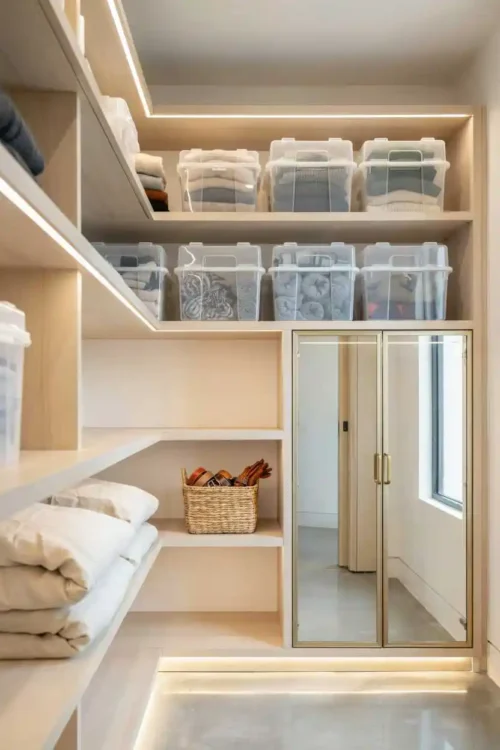
Opaque bins hide what’s inside and multiply as you accumulate mystery boxes. Clear plastic shows every item at a glance and stacks neatly on upper shelves where off-season clothes live.
You know exactly what’s stored without opening anything. Label the front and seasonal rotation becomes systematic. Off-season storage feels like filing instead of guessing.
Transparency prevents the “I don’t remember what’s in this” problem that derails most seasonal systems.
Tension Rods Across Narrow Gaps for Hanging Space
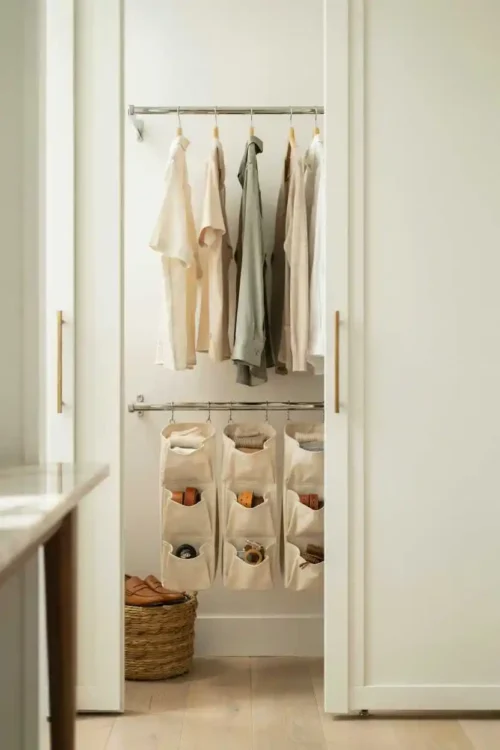
Narrow closet corners between walls sit empty while you search for hanging space. Install tension rods vertically across gaps and suddenly you have hanging room where commercial systems said impossible.
Add a lightweight hanging organizer and the corner becomes functional. This works brilliantly in closets with angled ceilings or architectural quirks that standard shelving ignores.
Most organizational failures happen because people ignore the weird spaces instead of using them.
Under-Shelf Baskets to Double Existing Shelf Capacity
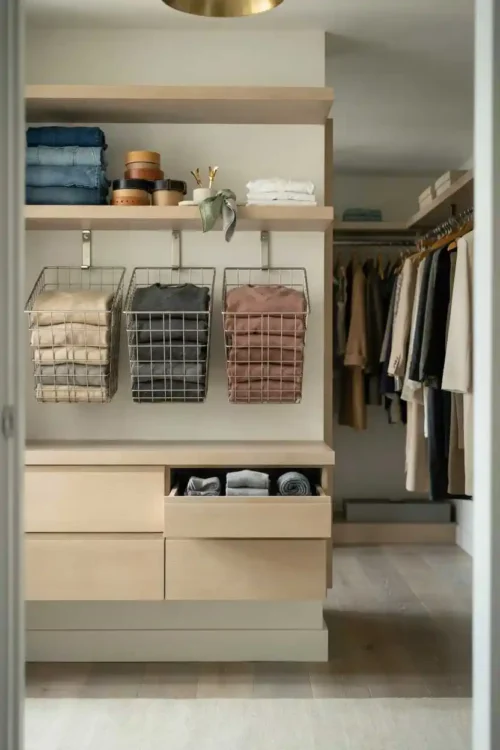
Existing shelves waste the space directly underneath. Shallow pull-out baskets slide under shelves and double capacity without adding furniture or eating floor space.
Baskets glide completely out for easy access. You can remove them to grab items above. This project costs almost nothing and transforms shelves from single-use to dual-function.
The space under shelves is probably the most overlooked real estate in closet organization.
Pegboard Wall for Accessories Without Rod Space
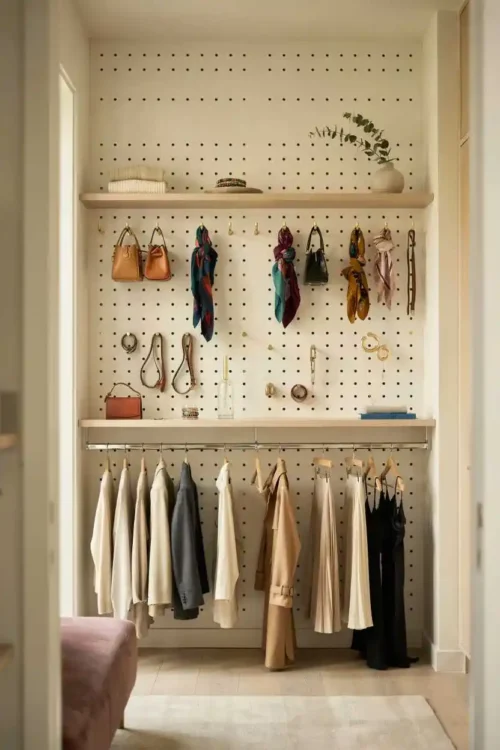
Belts tangle in drawers. Scarves hang loosely on hangers. Bags bunch in corners taking up rod space. Paint pegboard to match your closet, cut it to size, mount it on one wall, and add hooks for everything currently crowding your rod.
Your hanging rod suddenly has room for actual clothing. Rearrange hooks anytime needs shift. Pegboard costs under thirty dollars and transforms a blank wall into organized storage.
This one change often creates enough hanging space that the entire closet shifts into balance.
Wall Hooks for Small Items Taking Prime Rod Space
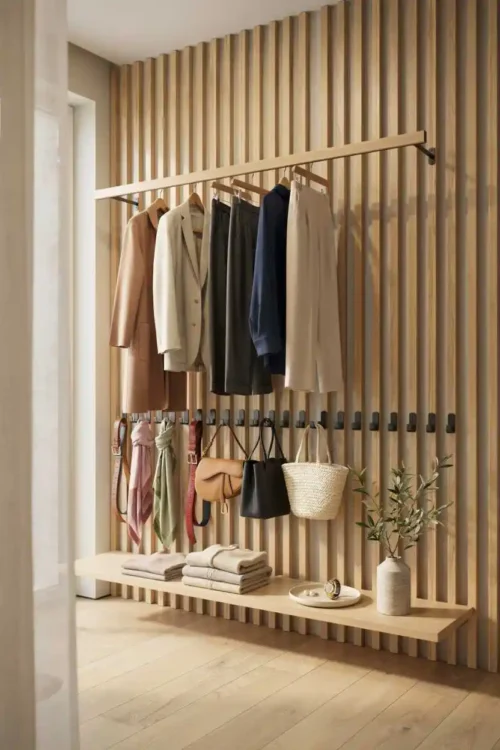
Scarves drape over clothes. Belts hang loosely on regular hangers. Bags sit in corners. Mount small hooks on wall space and every hook serves one purpose. Items hang visible and protected.
This project costs almost nothing and eliminates the accessories-eating-rod-space problem. You suddenly have actual hanging room for clothes instead of navigating around accessories.
Wall space is the most underutilized real estate in small closets.
Wooden Crate Shelving That Shows What You Store
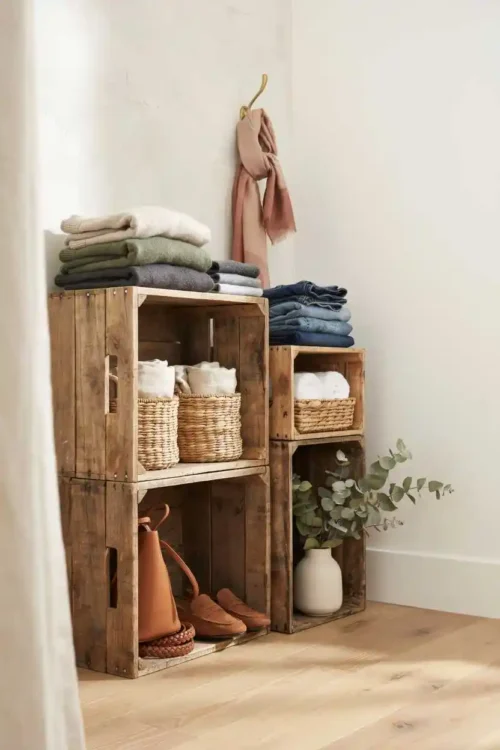
Plastic storage bins stack neatly but hide everything inside. You forget what you own. Wooden crates stacked and secured show exactly what’s stored while looking intentional.
Stack crates in patterns that fit your closet exactly. The natural wood aesthetic integrates better than plastic and actually improves with age. You see every folded stack instead of forgetting about items hidden in opaque bins.
Visibility changes how organized a closet actually feels more than any system itself does.
Clip-Style Pant Hangers for Compressed Pant Storage
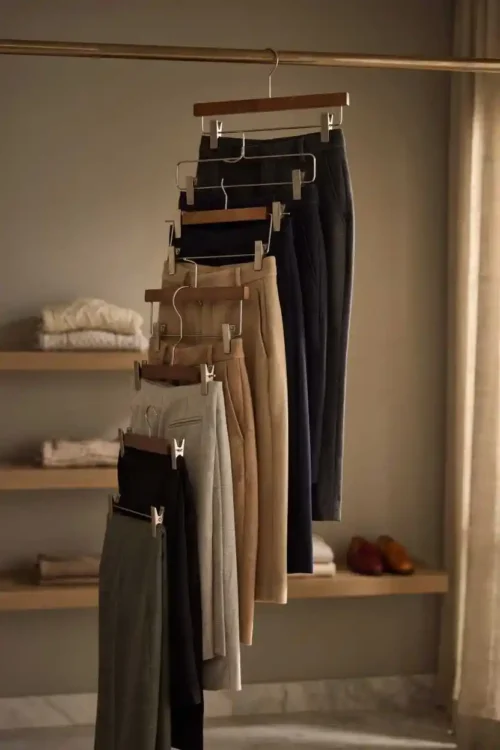
Individual pants hangers sprawl across your rod and force constant hunting. A clip-style pant hanger holds five to six pairs stacked vertically on a single hook. Your pant storage footprint shrinks in half while remaining completely accessible.
Flip through pairs like a magazine instead of moving hangers around. Pairs stay folded and wrinkle-free. One hanger type transforms how much space you actually need.
This single change often creates enough rod space that everything else suddenly fits.
Magnetic Strips for Metal Items That Disappear
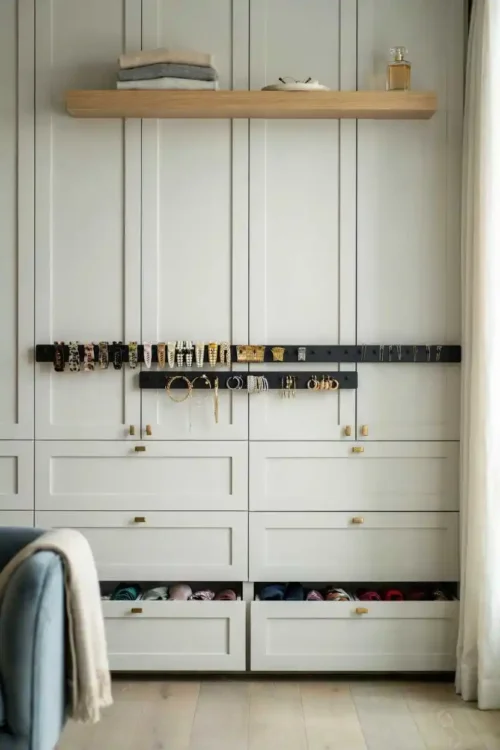
Bobby pins, hair clips, and metal jewelry scatter into drawers and vanish forever. Mount a magnetic strip on your closet wall to hold metal items visible and organized by category. Metal sticks. Nothing falls.
This costs under ten dollars and solves the small-item chaos problem that drawers always create. Items stay visible instead of getting lost in drawer backs.
Sometimes the best organizing solutions come from using things in completely unexpected ways.
Rolling Cart for Flexible Seasonal Storage
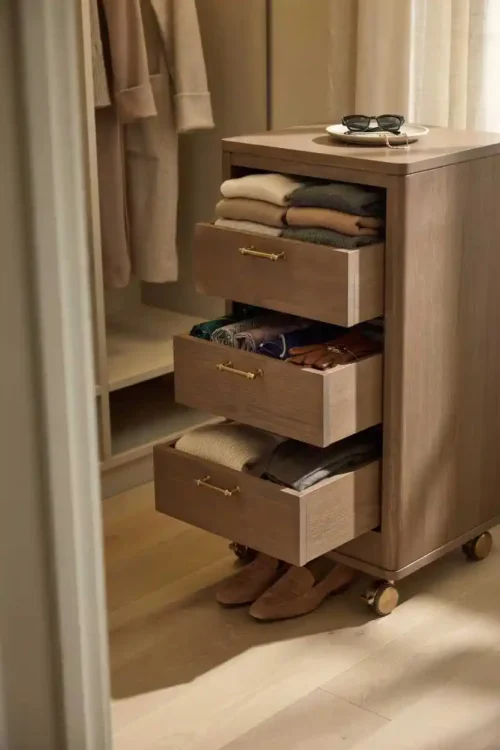
Seasonal items have nowhere to go when shelves fill up. A slim rolling cart slides into corner gaps and holds folded items without claiming permanent floor space.
It tucks away during off-seasons when you need that corner back. Mobility lets you adjust storage as your wardrobe shifts. Small closets need flexible systems instead of rigid structures that trap space.
Flexibility prevents the “I need to reorganize everything” situation that happens twice yearly.
Wooden Shelf Dividers for Stack Protection
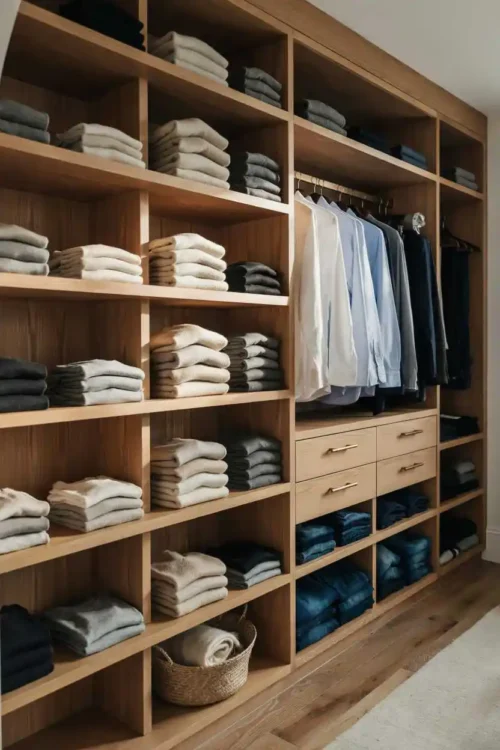
Folded stacks lean and topple when pressed together. Wooden dividers create compartments so each stack stands independently. Nothing cascades when you grab one item.
Your organized system actually stays organized instead of collapsing daily. Dividers prevent the stack-destruction cycle that breaks most systems within a week.
Dividers turn stacks from temporary piles into actual storage categories.
Rope and Dowel Organizer Hanging From Your Rod
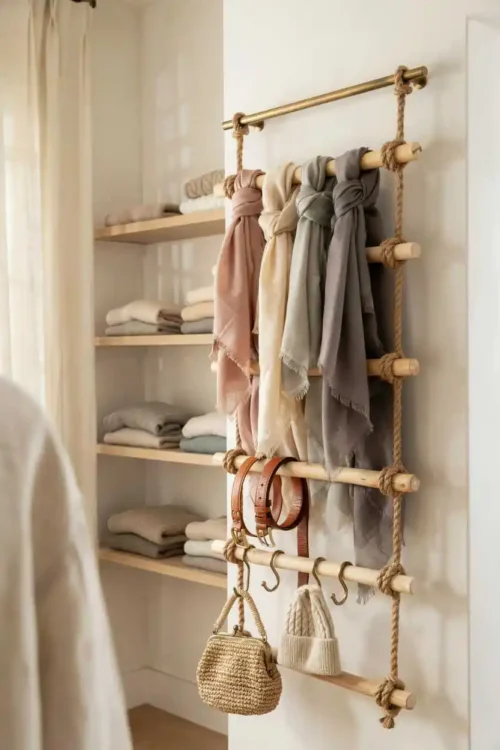
Small items hang loosely from hooks or disappear into drawers. Thread rope through wooden dowels, add clips, and hang from your existing rod to hold scarves, lightweight belts, and accessories.
The rope-and-wood aesthetic adds visual interest while being completely functional. Accessories finally get their own system instead of sharing rod space with actual clothing. Skipping cord-and-cable-organization-hacks means settling for tangle chaos.
This kind of custom solution works better than commercial organizers because it fits your exact needs.
Canvas Pocket Organizer on Your Wall
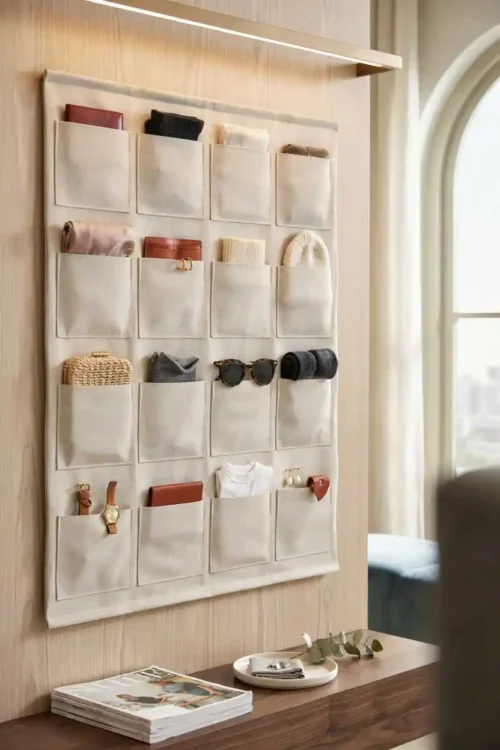
Wall space holds nothing while drawers overflow with small items. Hang canvas with sewn pockets from rope suspended across your closet wall to create vertical storage for accessories.
Canvas ages beautifully and integrates better aesthetically than plastic. Every pocket serves a purpose and items hang visible instead of disappearing. Wall-mounted storage that’s also beautiful is the sweet spot where practicality meets design.
This is how you use walls functionally instead of leaving them blank.
Wooden Hangers With Built-In Hooks for Outfit Coordination
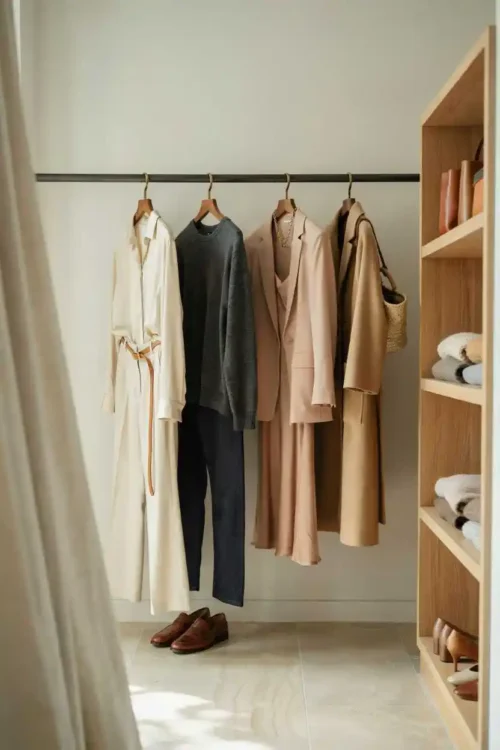
Clothes hang on generic hangers while accessories hang separately. Build or customize wooden hangers with small hooks attached so complete outfits hang together.
Each hanger tells a complete story instead of requiring you to assemble pieces from different closet sections. Coordinated outfits hang together. The morning routine simplifies because everything you need hangs in one place.
This kind of detail-oriented organizing transforms more than the closet—it transforms the actual experience of getting dressed.
Adjustable Shelf Brackets for Flexible Spacing
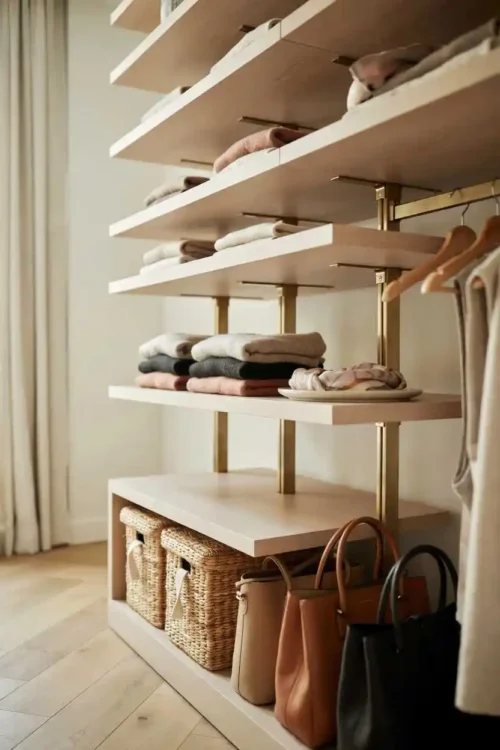
Fixed shelves waste vertical space and become obsolete when storage needs shift. Install adjustable metal brackets and cut shelves to your exact closet width. Now you raise or lower shelves as seasons change your storage needs.
Sweaters take more space in winter. Summer demands room for lighter fabrics. Your closet adapts instead of fighting you. This costs fifteen to thirty dollars per shelf instead of one hundred for fixed commercial systems.
A shelf system that grows with you changes everything about how long organizing actually lasts.
Final Thoughts on Small Closet Organization
Small closets work when you stop treating them as storage vaults and start treating them as daily-use spaces. Every inch should support what you actually reach for, not what you occasionally remember you own.
The best organizing system is the one that makes your morning routine faster and your closet feel calm instead of chaotic. Build around your actual life, not around storage ideas that sound good on paper.
FAQ About Small Closet Organization
What’s the fastest way to organize a small closet?
Start with the door and one wall. Add a shoe organizer to the door, install a second rod at shoulder height, and add shallow shelves along one side. These three changes create more usable space than everything else combined and take a weekend to implement.
How do I keep a small closet from feeling cramped and claustrophobic?
Use vertical storage instead of floor storage, keep items in matching containers, and hang everything that fits on a hanger. Recovered floor space makes the biggest visual difference. Clear sightlines matter more than actual square footage when it comes to how spacious a closet feels.
Should I fold or hang most of my clothes in a small closet?
Hang what you wear regularly and fold seasonal or rarely worn items. Hanging takes more space but keeps things visible for daily decisions. Folding saves space but makes items harder to find. Reserve folding for off-season storage where visibility matters less.
Sarah Mitchell’s Take
I spent years fighting my tiny closet with commercial systems before I realized the problem wasn’t the space—it was that I was organizing for storage instead of for living. Once I built shelves that fit my actual dimensions and hung rods at heights where I actually reach, the whole thing finally worked the way closets should.