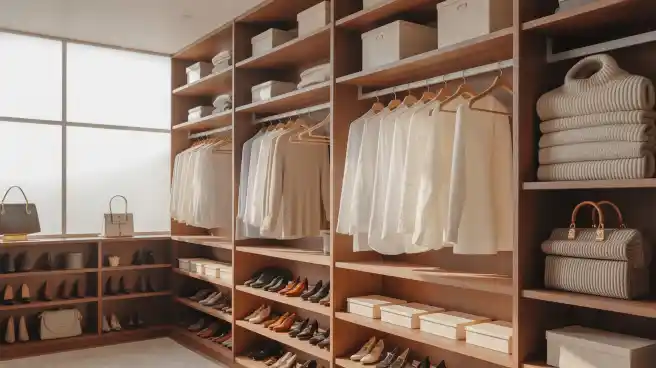
Your master closet is a disaster and you know it. Clothes pile on the floor, shoes multiply overnight, and that one shelf holds everything you’ve given up on sorting. Sound familiar?
I reorganized my own closet three times before anything actually stuck. The problem isn’t willpower, it’s systems that don’t match how you actually live.
These 19 master closet organization ideas are grounded in real-life chaos, not staged Pinterest perfection. Some cost nothing, some need a small investment, and all of them beat shoving things in and hoping for the best.
Double Your Hanging Space Without Renovating
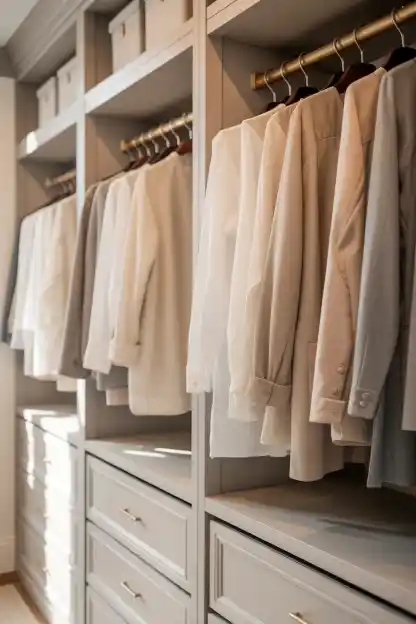
Most closets have one hanging rod. One. That single rod does nothing for folded items, short clothes, or blazers. Adding a second rod underneath transforms dead air into usable real estate. I added a simple chrome extender rod under my existing rod and doubled my blouse storage overnight.
Here’s where most people get stuck. They buy a rod that’s too long and it sags in the middle. Measure the gap below your longest hanging clothes. Then buy a rod that fits that zone specifically.
The visual result is dramatic. Two tidy rows of clothes instead of one chaotic jumble feels completely different. This is one of those closet organization hacks that costs under $15 and changes everything you see when you open the door.
Sort by Category Before You Touch a Single Bin
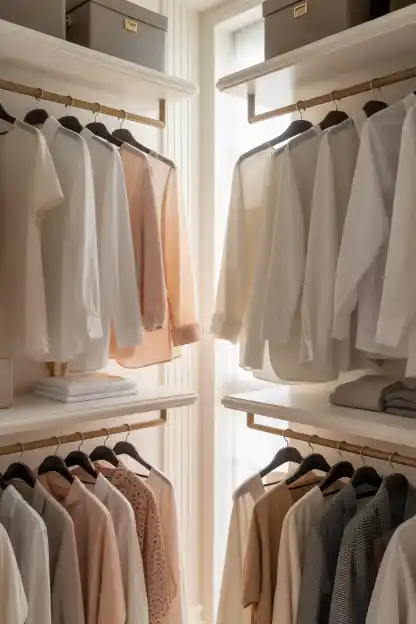
Buying bins before sorting is how I wasted $60 on containers that solved nothing. You have to know what you own first. Pull everything out and group by category: tops, bottoms, shoes, bags, accessories.
You will find duplicates. Twelve black tank tops. Three pairs of nearly identical jeans. This is the moment to be honest with yourself about what you actually wear. Start decluttering your closet before organizing so you’re not just rearranging the problem.
The before-and-after here is striking. A closet stuffed with 80 items feels lighter and cleaner with 50 items that are properly categorized. Fewer things in the right places always beats more things in the wrong ones.
Use Matching Velvet Hangers on Every Single Rod
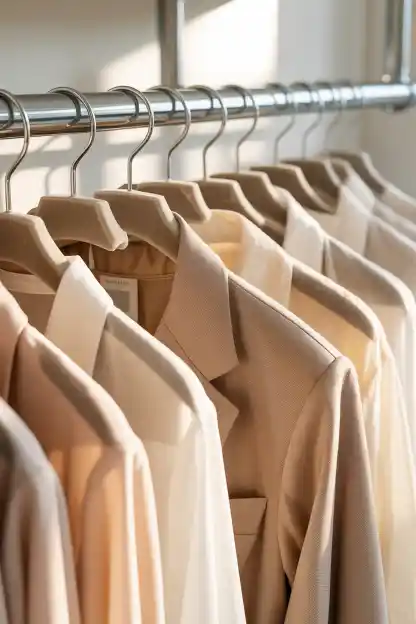
Here’s the part nobody mentions about closet aesthetics. Mismatched hangers create visual noise that makes even organized closets look messy. Plastic, wire, chunky wooden, and flimsy white all hanging together creates chaos at eye level.
Switching to slim velvet hangers is my single most recommended change. They save space, prevent shoulder bumps on delicate tops, and make the whole rod look intentional. The visual shift from mixed hangers to uniform velvet ones is genuinely shocking.
The practical bonus is real. Clothes stop sliding. You can fit roughly 50% more on the same rod. This is the lowest-effort, highest-impact swap in any master closet makeover.
Build Zones That Match Your Morning Routine
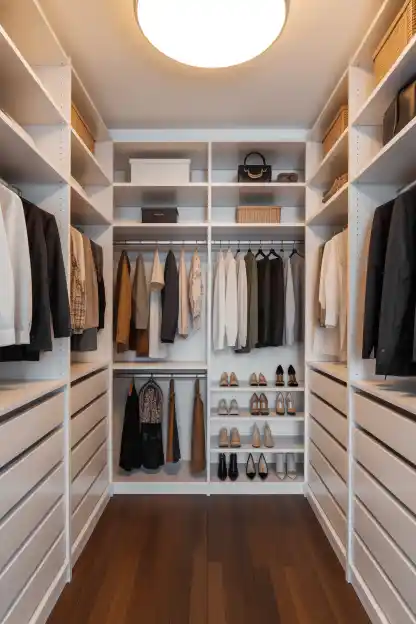
Your closet should work like a workflow. Everyday items live at eye level and within easy reach. Seasonal items go up high. Rarely worn pieces live at the back or sides. This zoning system saves real minutes every single morning.
Think about what you grab first. For me, it was shoes, then a top, then bottoms, then accessories. I arranged my closet in that exact grab order from left to right. Confession: I thought this was unnecessary until I tried it and shaved five minutes off my morning routine.
Good zoning pairs naturally with walk-in closet organization ideas if you have the square footage. Even in a reach-in closet, a basic left-to-right or top-to-bottom zone system works.
Add a Shelf Divider for Folded Stacks That Actually Stay Put
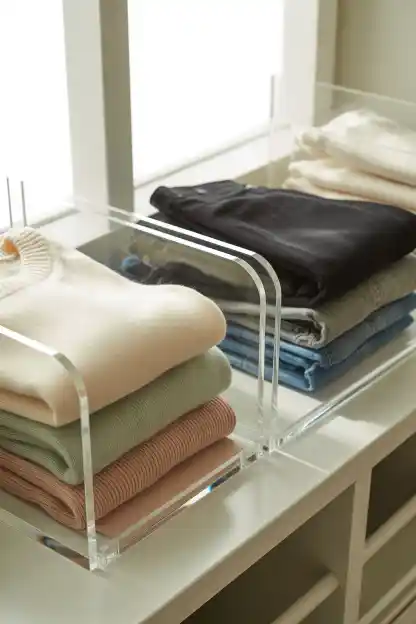
Folded sweaters fall sideways. Always. Every shelf eventually becomes a leaning tower that collapses when you pull one item from the middle. Shelf dividers fix this completely.
Clear acrylic dividers clip onto the shelf edge and create individual compartments for stacks. You can assign one section per category: sweaters, jeans, workout gear. The stacks stay vertical and neat because they have walls on each side.
The visual effect is clean and boutique-like. Open shelving without dividers looks like a thrift shop. Open shelving with them looks intentional and styled. This is one of those tiny additions that changes the entire tone of a space.
Hang a Mirror Inside the Door for Double Duty Space
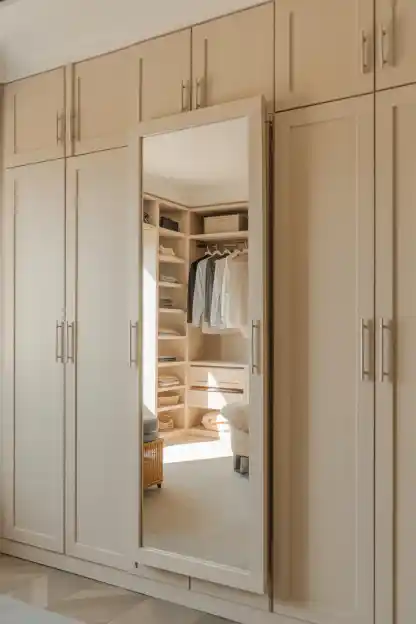
A full-length mirror takes up floor space you probably don’t have. Mounting one inside your closet door solves two problems at once. You get a functional mirror and you free up bedroom floor space entirely.
Over-the-door mirrors with mounting hooks require no drilling. Command strips handle lighter mirrors on hollow doors without damage. I used this solution in a rental and it held for three years without a single wall repair needed.
The practical bonus is the light. When your closet door is open, that mirror reflects natural light back into the space. A small closet feels visibly larger and brighter with a mirrored door. It costs under $40 and requires maybe 20 minutes to install.
Give Every Bag Its Own Hook or Cubby
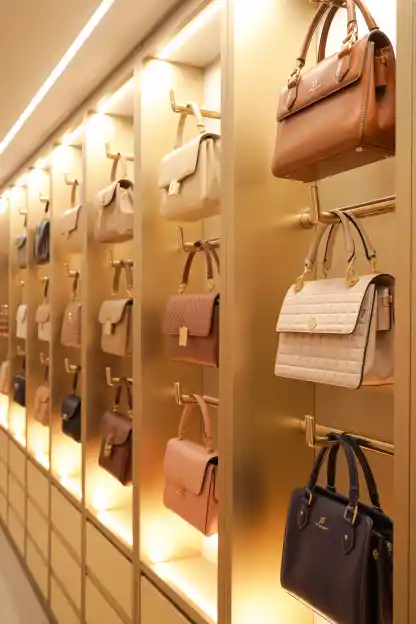
Bags piled on a shelf get crushed, scratched, and forgotten. A clutch at the bottom of a pile never gets used. Bags need vertical space or individual hooks to stay both accessible and in good shape.
Over-the-door hooks work well for everyday bags. Individual cubbies from an IKEA KALLAX unit are perfect for structured handbags. Clear shelf bins with low sides work for clutches and evening bags you use less often. For a deeper dive into this, check out these handbag storage ideas that go beyond the basic shelf pile.
Now here’s the part nobody mentions. Storing bags properly actually extends their life. A leather bag left squished under three others develops creases that don’t come out. Giving each bag its own space is both organization and maintenance.
Install a Shoe Shelf or Cubbies at the Floor Level
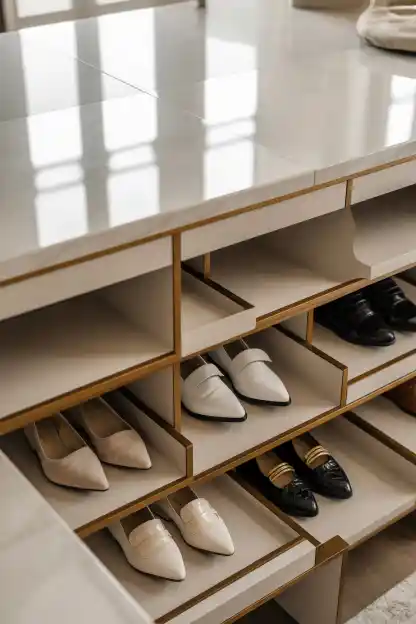
Shoes on the floor are the fastest way to make a clean closet look messy. They scatter, they get kicked, they collect dust. A dedicated shoe shelf at floor level changes the whole bottom zone of your closet.
A simple floating shelf at ankle height creates one organized row for everyday shoes. A tiered rack doubles your floor capacity without adding height. For larger collections, a modular cubby system lets you expand as needed. You’ll find more solutions in these shoe storage ideas for small spaces if your shoe situation has gotten out of hand.
The realistic observation here: you won’t use a system that requires too many steps. Clear-front shoe boxes look beautiful but if you don’t label them, you’ll tear through five boxes looking for one shoe. Keep frequently worn shoes visible and easy to grab.
Use the Top Shelf for Seasonal and Rarely Used Items
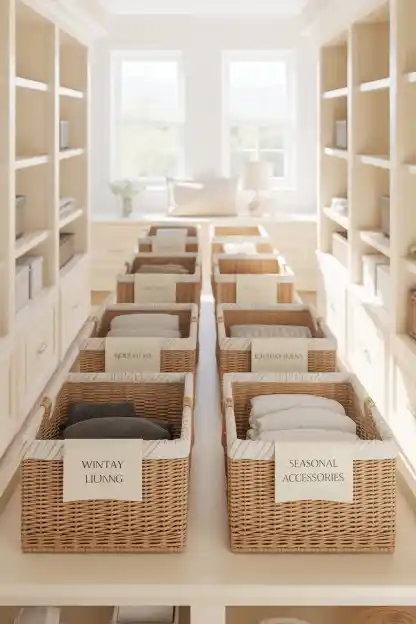
Top shelves are awkward to reach. That’s actually useful. The items you don’t need often belong there. Winter coats, holiday bags, extra bedding, and off-season accessories are prime top-shelf material.
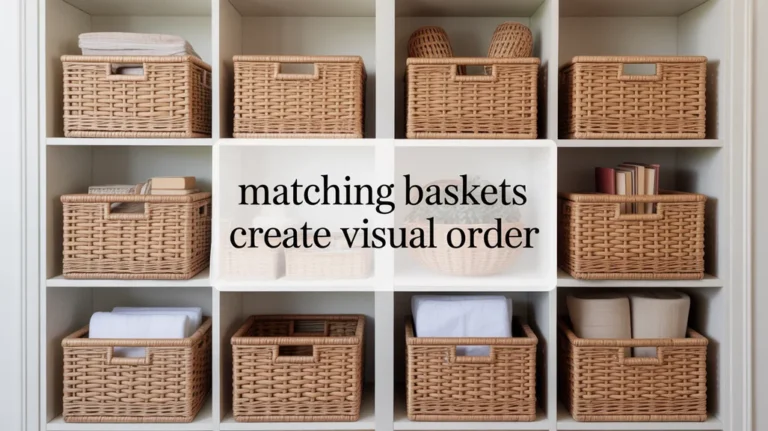
Use matching bins or baskets up there so it looks intentional rather than storage-overflow. Label each bin from the front with a simple tag. mDesign fabric storage baskets work well here because they’re lightweight, have handles, and look clean from below.
Here’s the curiosity gap moment. Most people stuff their top shelf randomly and forget what’s there. A labeled system means you never buy a duplicate item because you forgot you owned the original. I once bought a second set of travel toiletry bags because I forgot I already had them on my top shelf.
Create a Dedicated Accessory Wall or Zone
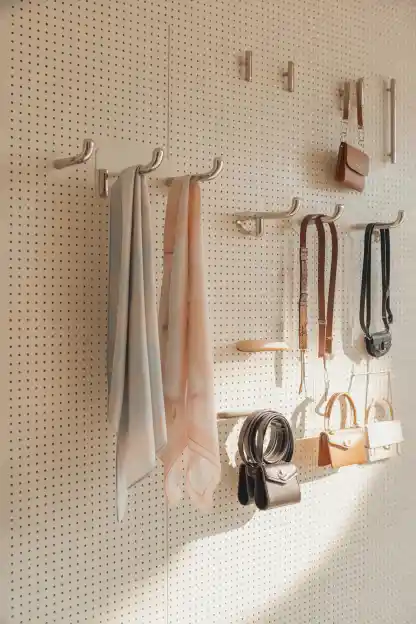
Accessories need a spot. When they don’t have one, they end up in a bowl, a pile on the dresser, or tangled in a drawer. A small section of your closet wall devoted to accessories solves this without taking much space.
A pegboard panel mounted at eye level holds hooks, small baskets, and clips for belts, scarves, and bags. It looks organized without requiring drawers. Painted white, a pegboard blends into any closet aesthetic. For more specific solutions, these jewelry organization ideas are worth reading before you buy a single organizer.
The practical truth: you wear accessories more when you can see them. A scarf buried in a drawer gets ignored. The same scarf hanging visible on a hook gets used three times a week. Visibility is motivation.
Label Everything, Even If It Feels Obvious
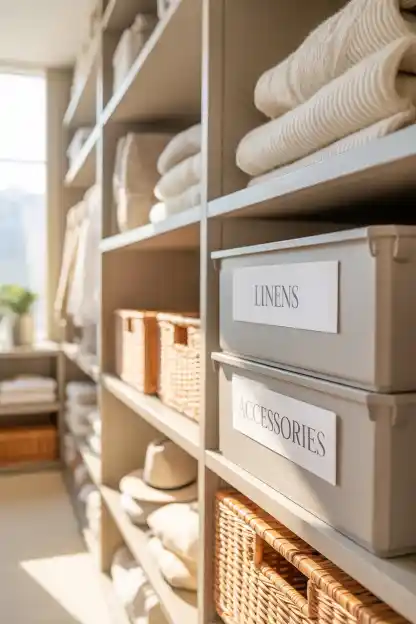
Labels feel unnecessary until you live with them. Then you realize they’re what keeps a system running after the initial organization high wears off. Labels set the rule for where things live.
A label maker is worth the $20 investment. Clear adhesive labels on bins, baskets, and shelf edges tell everyone including you where things return after use. The system sustains itself because the expectation is visible.
This matters especially if you share a closet. Two people with different organization instincts need clear labels to maintain any system. Without them, things drift back to wherever they first land.
Use Drawer Dividers Inside Built-In Drawers
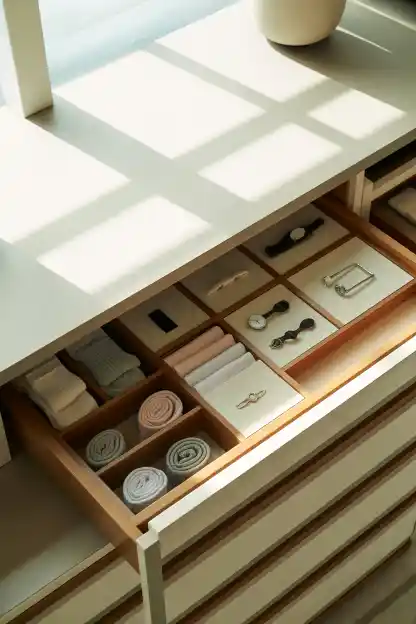
Closet drawers without dividers become junk drawers by week two. Socks, underwear, gym clothes, and accessories mingle into one chaotic pile. Drawer dividers segment the space and keep categories separated.
OXO container-style dividers and iDesign adjustable drawer bins are both good options. Adjustable ones are worth the slight extra cost because closet drawers come in non-standard sizes. Rigid fixed dividers often don’t fit properly and create gaps that defeat the purpose.
The visual impact inside a drawer matters more than people expect. Opening a drawer to find neat rows instead of a pile is a small moment of calm every single morning. That adds up.
Try a Valet Rod for Tomorrow’s Outfit
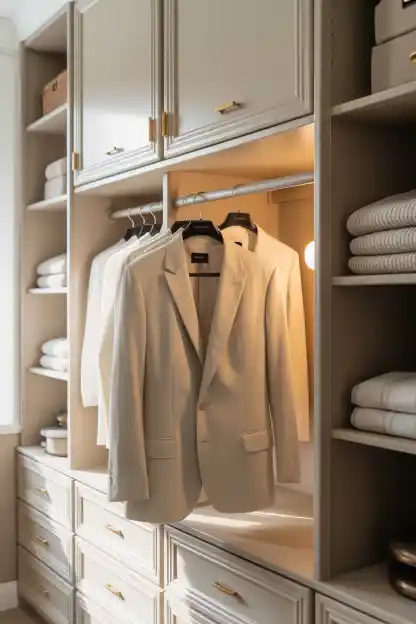
A valet rod is a small pull-out rod that hides in the closet wall and extends outward. You hang tomorrow’s outfit on it the night before. It stays visible, ready, and separated from everything else.
This single habit eliminates the frantic morning dig through the closet. When your outfit is already assembled and hanging, mornings get quieter. The rod costs under $30 and installs in about 15 minutes with basic tools.
Here’s the honest confession. I resisted this idea for years because it felt too Type A. Then I tried it during a particularly chaotic work week and I have never gone back. Simple systems are the ones that stick.
Store Folded Jeans Vertically Instead of Stacked
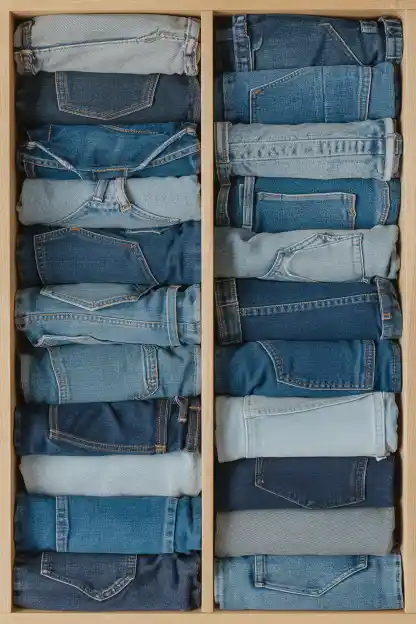
Vertical folding for jeans changed how I use drawer space. Stacking jeans means the bottom pair never gets used. Folded vertically in a row, you can see every pair at once and pull any one without disturbing the rest.
This method comes from the KonMari approach but you don’t need to commit to the full method to use it. Fold each pair into thirds lengthwise, then fold down into a compact rectangle. Stand them upright in a drawer or bin.
The practical payoff is instant. A drawer that held five stacked pairs of jeans can hold seven or eight vertical ones. Every pair is visible, accessible, and used equally. You stop defaulting to the same two pairs on top.
Add Under-Shelf Baskets to Gain Instant Storage
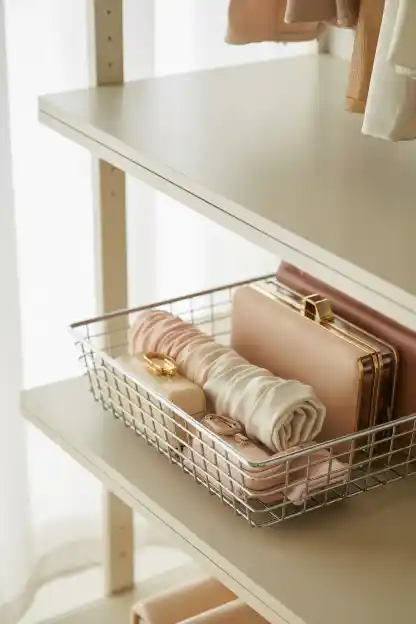
Under-shelf baskets clip onto existing shelves and hang below them. They create a new storage zone from dead air without drilling anything. This is one of the fastest closet upgrades possible.
These baskets work well for small items: clutches, scarves, belts folded into rolls, or workout accessories. They hold enough weight for lightweight everyday items. Heavier items cause them to tilt over time, so keep the contents light.
The before scenario: a shelf with mostly empty space below it. The after: that same shelf with a hanging basket holding six additional items. One $10 accessory doubled the utility of an existing shelf. That math works every time.
Use a Clear Hanging Organizer for Accessories and Small Items
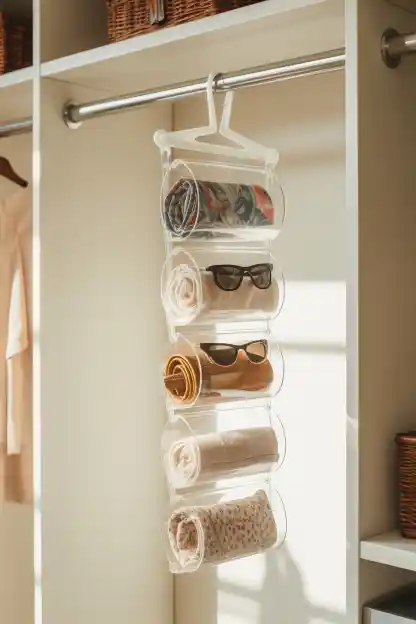
A hanging fabric organizer with clear pockets is one of the most underused closet tools. Hang it from a rod, a hook, or over the door and use it for the small items that never have a home.
Sunglasses, rolled belts, small clutches, folded scarves, and charging cables all work here. Clear pockets mean you see everything at a glance without digging. It takes up about six inches of rod space and holds dozens of items.
This is also a smart solution if you’re exploring DIY closet organization without buying a full custom system. A $20 hanging organizer solves the small-item problem that most expensive systems still don’t address.
Color Code Your Hanging Clothes
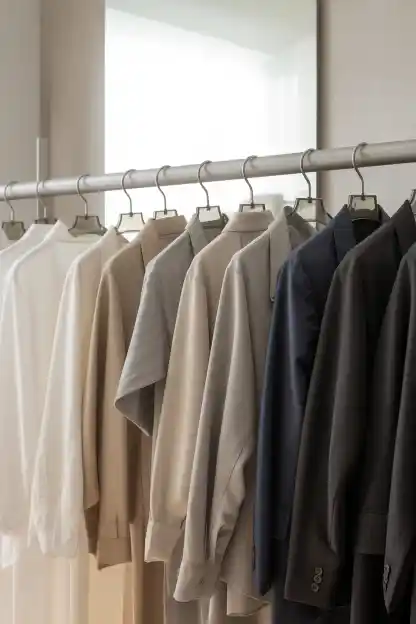
Color coding is one of those ideas that sounds fussy until you try it. Organizing clothes from light to dark within each category makes finding a specific piece genuinely faster. You stop scanning the whole rod and go straight to the right color zone.
The visual effect is also calming. A closet with color-organized clothes looks curated and intentional. It reads as a boutique display rather than a random collection. Guests who see your closet actually comment on it.
The contrarian point: color coding only works if you maintain it. Every item must return to its correct zone after laundry. If you’re not the type to do that consistently, a category-only system without color is more realistic and still effective.
Dedicate a Basket to Donation Items Ongoing
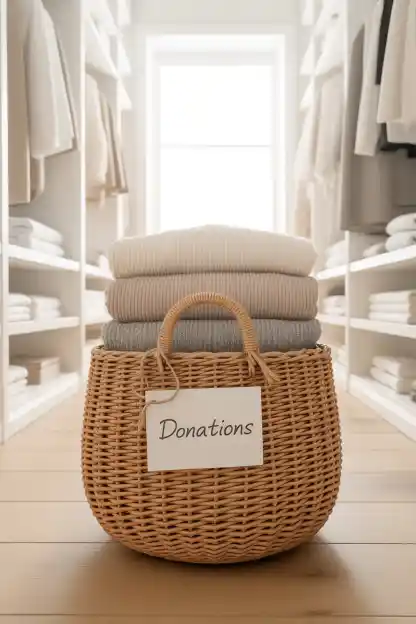
Most people save decluttering for a once-a-year purge. A better system keeps one dedicated basket in the closet at all times. When something doesn’t fit, doesn’t get worn, or breaks, it goes directly into the basket.
When the basket fills up, it leaves the house. This keeps closets from gradually filling back up between big organization sessions. The basket acts as a release valve that prevents accumulation before it starts.
This habit alone keeps your closet from reverting. Organization sessions are exhausting and people avoid them. A constant donation basket means you never need a massive session because small amounts leave regularly.
Reassess and Edit Your Closet Every Season
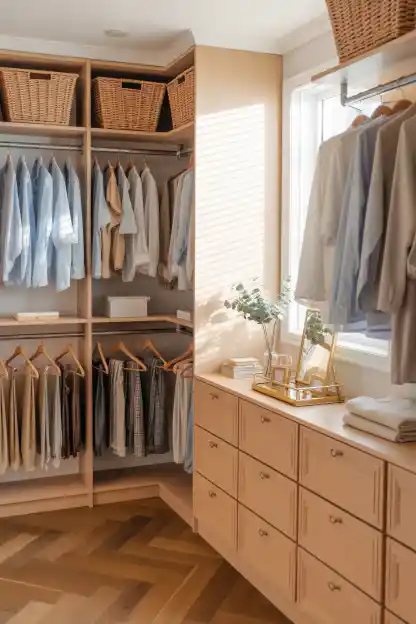
A closet organized in January for winter clothes won’t serve you in July. Seasonal reassessment takes about 30 minutes and prevents the slow drift back to chaos. You rotate items, refresh zones, and remove what’s no longer working.
Schedule it the same way you’d schedule any task. Pick one weekend per season and spend half an hour. Move summer clothes forward in spring. Push heavy knits to the back or top shelf in March. Bring boots out in October.
The realistic truth: closets drift. That’s not failure. It’s just how life works with changing weather, changing jobs, and changing bodies. A seasonal reset means your space always reflects your current life instead of the life you had six months ago.
Final Thoughts on Master Closet Organization
A stylish master closet isn’t about perfection. It’s about a system that works for how you actually live. Start with one or two ideas from this list and let the momentum build from there.
You don’t need a custom built-in or a renovation budget. Velvet hangers, shelf dividers, and a consistent donation basket will take you further than any expensive remodel. The smallest changes often create the biggest daily difference.
Come back to this list when your closet starts sliding. Pick the next idea and implement it. Organization is a practice, not a one-time project.
FAQ About Master Closet Organization
What is the most important first step in organizing a master closet?
Sort and declutter before buying any storage products. Knowing exactly what you own lets you choose storage solutions that actually fit your items and habits.
How do I keep a master closet organized long term?
Use a permanent donation basket, return items to their designated zones after laundry, and do a 30-minute seasonal reset four times a year. Systems stay functional when they’re maintained in small regular doses.
Can I organize a master closet on a tight budget?
Yes. Velvet hangers, under-shelf baskets, and shelf dividers cost under $30 total and create significant visual and functional improvement. Start with what you have before spending anything.
Sarah Mitchell’s Take
I have reorganized my own closet more times than I care to admit, and the systems that lasted were always the simple ones. The beautiful complex setups I built got abandoned within a month. Boring and functional beats beautiful and complicated every single time.
—