
Introduction
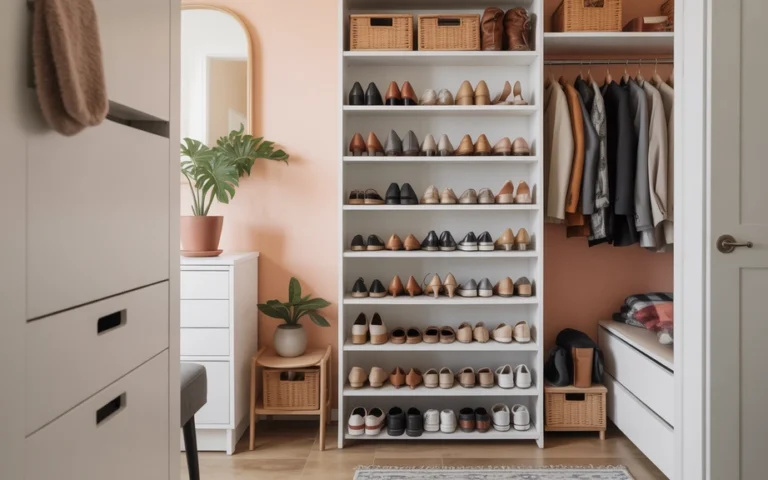
In small homes, the mudroom is rarely a separate room. It’s a narrow strip by the door, a wall beside the kitchen, or the end of a hallway that absorbs everything the moment you walk in. Without a proper structure, shoes stack unevenly, coats overlap, and bags slide to the floor. Effective mudroom storage ideas for small homes rely on segmentation and vertical layering. When storage is clearly divided into upper, mid, and lower zones — and each zone has a defined function — clutter stops spreading into adjacent rooms. If you’re refining the area right inside your front door, 23 Entryway Organization Ideas That Instantly Reduce Clutter offers practical ways to structure high-traffic drop zones.
1. Full-Height Custom Locker Wall with Internal Segmentation
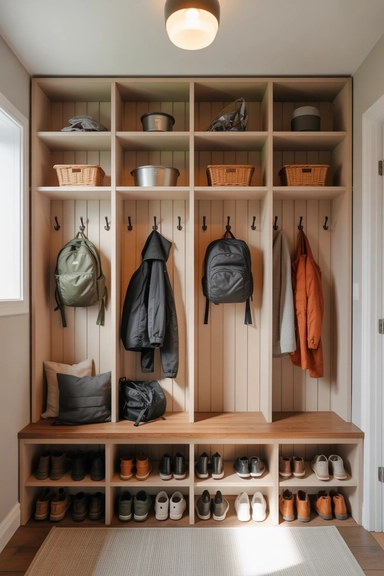
A true locker wall is one of the most effective mudroom storage ideas for small homes because it creates clearly defined vertical zones for every household member. Instead of simple hooks on a board, the system divides the wall into individual columns. Each column should include three levels: an upper shelf for seasonal accessories, a central hanging rail or heavy-duty hooks for coats, and a lower drawer or enclosed cubby for shoes.
The difference between organized and chaotic lies inside the compartments. Install interior partitions within the lower section to prevent footwear from collapsing into a heap. Add a slim internal basket for gloves or small items. Keep the total depth restrained to protect walkway clearance. When each vertical unit is self-contained, daily traffic becomes predictable and manageable.
2. Bench with Full-Extension Drawer System Instead of Open Cubbies
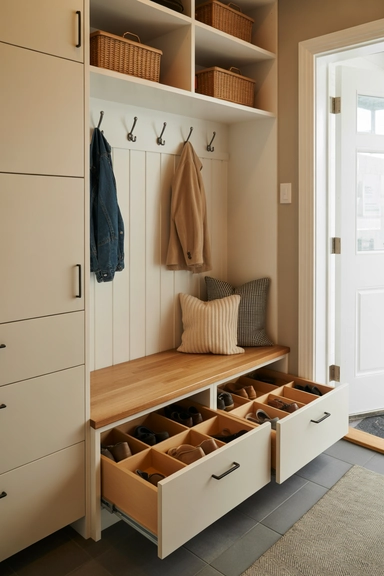
Open cubbies often look organized on installation day but quickly devolve into visual clutter. One of the more practical mudroom storage ideas for small homes is replacing them with deep, full-extension drawers beneath a solid mudroom bench. Full-extension hardware ensures complete visibility of stored items, preventing forgotten shoes at the back.
Inside each drawer, use adjustable dividers or removable bins to separate athletic shoes, everyday footwear, and seasonal boots. Moisture-resistant liners protect the base from damp items. The closed front panels maintain visual calm, which is critical in small homes where the mudroom is visible from living areas.
3. Vertical Utility Tower Integrated into Mudroom Layout
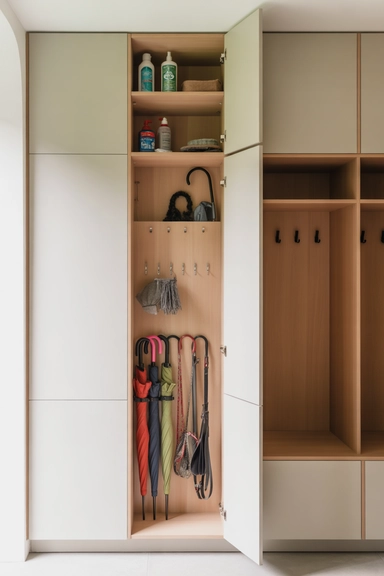
In compact homes, the mudroom often doubles as a utility station. Integrate a tall, narrow cabinet — no deeper than necessary — with adjustable shelves and interior hooks for cleaning supplies, umbrellas, pet leashes, or sports gear.
The internal layout must prioritize vertical efficiency. Use narrow shelf spacing for smaller items and reserve one tall compartment for long tools. Keep the exterior flush with adjacent storage to prevent visual fragmentation. By consolidating utility functions into one defined vertical tower, you prevent overflow into kitchen or hallway cabinets.
4. Layered Upper Cabinet System Above Hook Rail
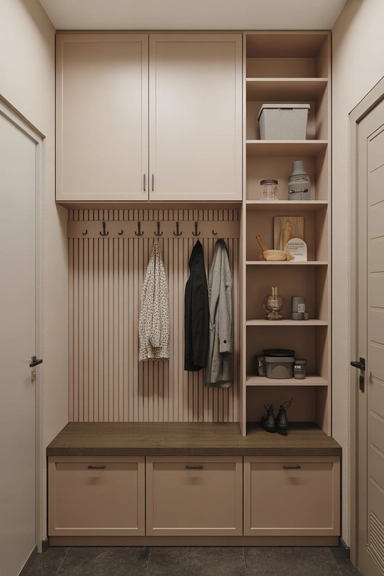
Many small mudrooms underutilize wall height. Installing shallow upper cabinets above the hook rail adds a second storage tier without increasing footprint. These compartments should store lightweight, less frequently accessed items such as seasonal hats or spare bags.
Maintain a consistent door style to avoid a piecemeal appearance. Internally, divide shelves vertically so items remain upright and accessible. The layered configuration — upper closed cabinets, mid-level hooks, and lower drawers — creates clear hierarchy and prevents daily-use items from mixing with long-term storage.
5. Floating Bench with Structured Shoe Grid Platform
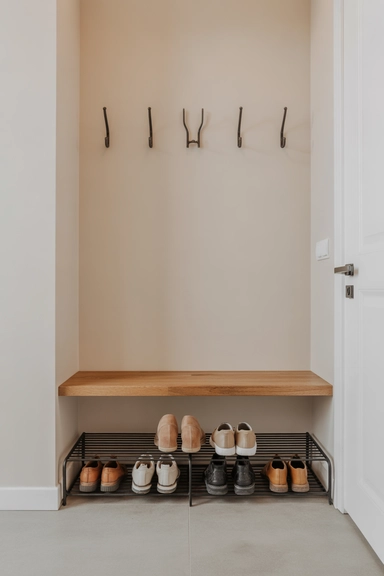
A floating bench preserves floor visibility, which is essential in tight spaces. Among practical mudroom storage ideas for small homes, pairing it with a structured shoe grid platform beneath keeps footwear organized without crowding the entry. Use evenly spaced dividers rather than open space so each slot defines a single pair location, eliminating stacking.
Mount the bench securely into studs and ensure the grid base aligns precisely with its width. Avoid overextending depth beyond the bench footprint. The structured grid enforces discipline — once each slot is filled, excess footwear must be stored elsewhere, preventing gradual buildup.
6. Sliding Door Mudroom Cabinet System to Conceal Visual Clutter
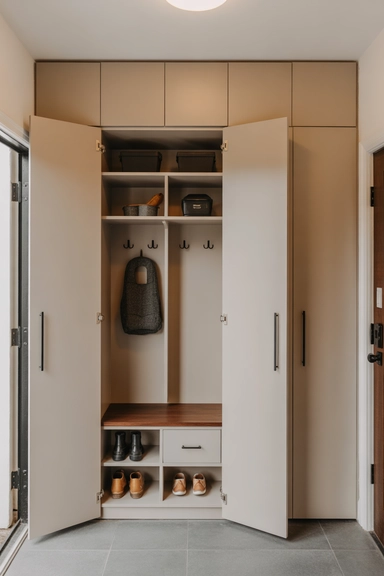
In small homes where the mudroom is visible from the kitchen or living area, sliding doors can instantly transform open storage into concealed architecture. Instead of exposed hooks and shelves, install a shallow built-in cabinet wall with interior hanging sections, adjustable shelving, and lower drawers. Cover the entire system with full-height sliding panels.
Sliding doors are essential in tight layouts because they eliminate swing clearance. Inside, divide the lower sections into vertical compartments for shoes to prevent stacking collapse. Keep upper shelving narrow to avoid wasted depth. When closed, the wall reads as clean millwork, maintaining visual calm while hiding daily-use clutter behind structured compartments.
7. Corner-Optimized Mudroom Bench with Angled Storage
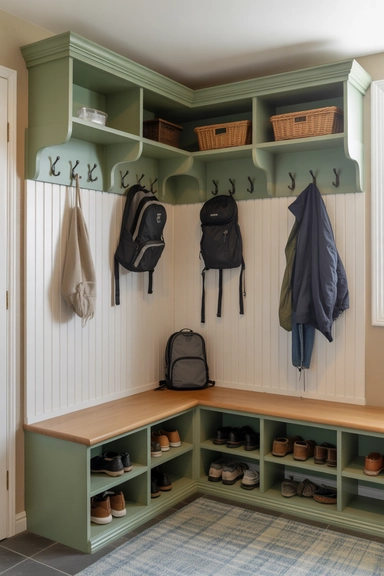
Corners often become dead zones in small mudroom layouts. Instead of leaving them unused, design an L-shaped bench that wraps the corner and integrates angled lower storage compartments. The angled configuration allows shoes to slide in naturally without pushing into the walkway.
Install full-extension drawers along one leg of the bench and structured cubbies along the other. Maintain consistent seat height and depth to preserve comfort and proportion. By absorbing corner space into a cohesive seating and storage unit, you increase capacity without extending further into the room.
8. Multi-Tier Hanging System with Dedicated Height Zoning
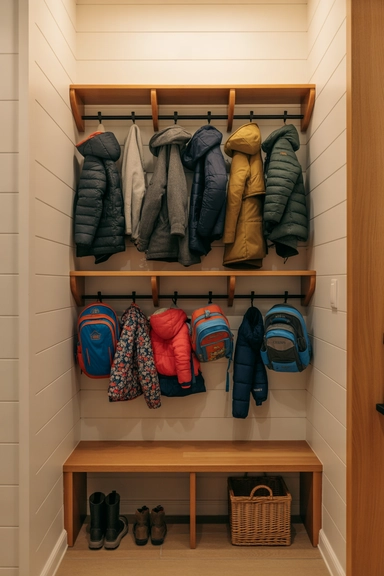
A single row of hooks cannot handle the volume of coats in a small household. Install a two-tier or even three-tier hanging system, carefully zoned by height. The top tier handles long adult coats, the middle tier accommodates shorter jackets, and the lowest tier supports children’s items or bags.
Spacing must be deliberate to prevent coat overlap. Pair the lower hanging row with a shallow bench directly beneath to maintain vertical alignment. This tiered approach distributes bulk upward rather than outward, keeping floor space clear and reducing visual congestion.
9. Integrated Shoe Drawers with Vertical Dividers and Ventilation
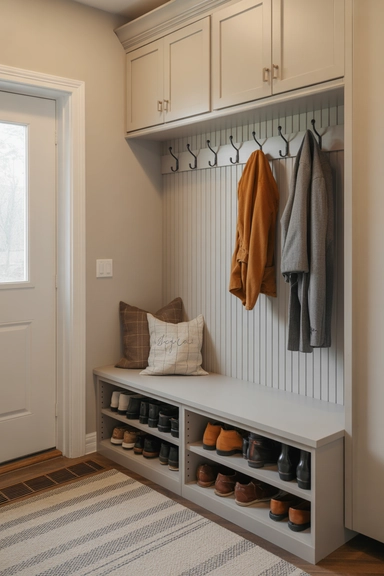
Footwear is often the primary source of mudroom chaos. Instead of open racks, install pull-out shoe drawers equipped with vertical dividers and ventilation slots. Vertical separation ensures each pair remains upright and accessible without stacking.
Ventilation prevents odor buildup, especially in small enclosed zones. Choose durable drawer slides rated for heavier weight to handle boots. By enclosing shoes within structured drawers, you eliminate scattered piles while maintaining hygiene and order in high-traffic areas.
10. Ceiling-Height Storage Cabinets with Defined Access Zones
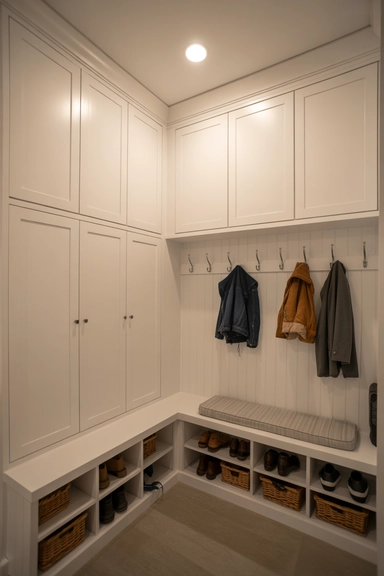
When square footage is limited, upward expansion becomes essential. Install ceiling-height cabinets that extend fully to the top of the wall. Divide these cabinets into two functional zones: daily-access lower shelves and long-term upper compartments.
Keep daily-access shelves at reachable height and reserve the highest section for seasonal storage. Use internal partitions to prevent items from blending into one cavity. A continuous ceiling-height run visually elongates the wall while dramatically increasing storage volume without widening the mudroom footprint.
11. Built-In Mudroom Niche with Framed Back Panel and Closed Base
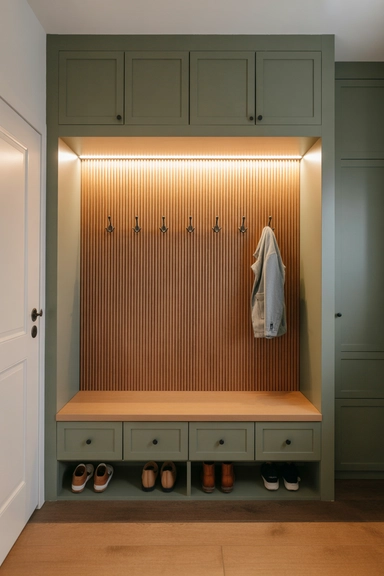
When space is limited, carving out a defined mudroom niche creates psychological structure even if the footprint is small. Frame a recessed section of wall with a durable back panel — wood slats or moisture-resistant board — and mount heavy-duty hooks in evenly spaced alignment. Beneath, install a fully closed base with deep drawers instead of open cubbies.
The closed base prevents visual clutter from spilling into adjacent rooms. Internally divide drawers for shoes, pet gear, or sports accessories. Keep the niche width proportionate so coats hang without overlapping excessively. By clearly framing the mudroom zone, you contain daily chaos within architectural boundaries rather than letting it drift outward.
12. Pull-Out Mudroom Tower Hidden Behind Pantry-Style Door
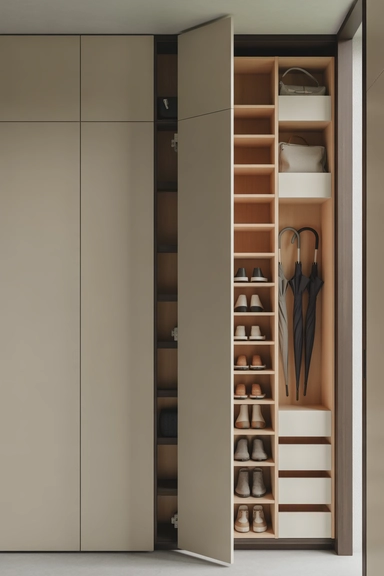
In ultra-compact homes, a full mudroom wall may not be possible. One of the more compact mudroom storage ideas for small homes is installing a tall pull-out storage tower concealed behind a full-height door panel. When closed, it resembles a pantry cabinet. When extended, it reveals vertical compartments for shoes, bags, umbrellas, and small baskets.
The internal design must prioritize segmentation. Use adjustable shelves and vertical dividers so items remain upright. Install heavy-duty glides to support repeated use. Because the entire system retracts flush into the wall line, walkway clearance remains uncompromised while still delivering significant storage density.
13. Bench with Lift-Up Cushion and Interior Modular Bins
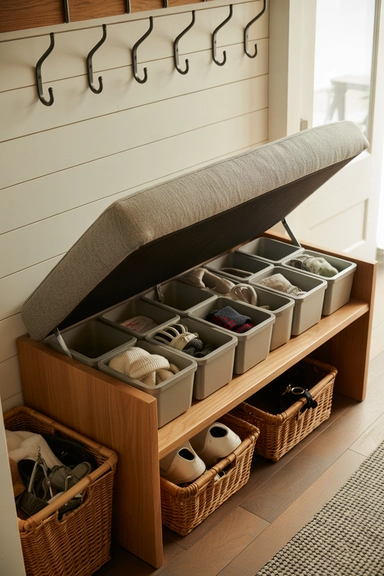
A lift-up bench can be effective, but only when the interior is structured. Without internal organization, it becomes a single deep cavity where items disappear. Install modular bins inside the bench cavity, each designated for a specific category — winter accessories, pet leashes, backup footwear.
Ensure the lid includes soft-close hinges for durability. Keep the bench depth aligned with the wall to avoid protrusion. By assigning internal containers instead of relying on one hollow compartment, the system remains functional over time rather than deteriorating into clutter.
14. Wall-to-Wall Hook Rail with Integrated Upper Shelf and Lighting
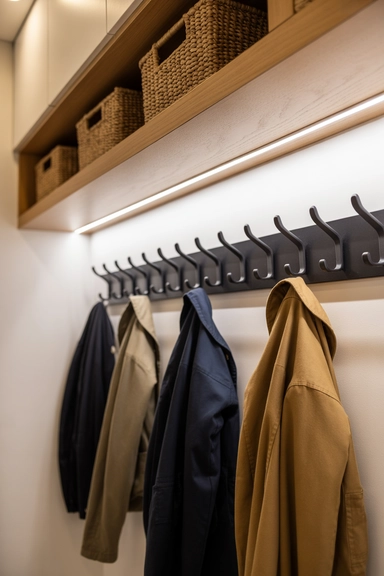
A continuous hook rail running wall-to-wall distributes hanging load evenly and prevents clustering at one point. Above it, mount a slim integrated shelf for structured baskets. Adding subtle under-shelf lighting enhances visibility and reinforces the drop zone visually.
Spacing hooks precisely prevents coat overlap, especially in small homes where garment bulk accumulates quickly. Use durable hardware anchored into studs to withstand weight. The integrated lighting not only improves usability but also defines the mudroom boundary clearly within open layouts.
15. Mudroom Partition Wall with Dual-Sided Storage
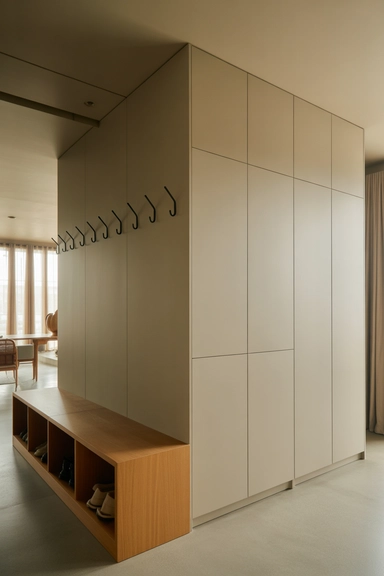
In open-plan small homes, creating a half-height partition can define a mudroom area without fully enclosing it. On the entry-facing side, install hooks and a structured bench. On the interior-facing side, incorporate closed cabinets or shallow shelving for additional concealed storage.
Keep the partition depth controlled and aligned with existing architectural lines. Internally divide storage compartments to prevent item migration between sides. This dual-sided configuration maximizes functionality while visually separating the entry zone from living areas without sacrificing openness.
16. Stacked Mudroom Cubes with Individual Drawer Inserts
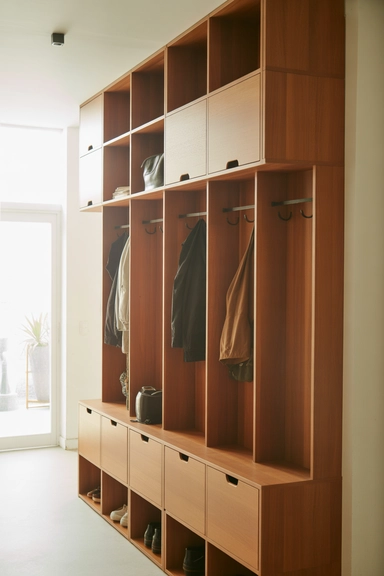
Instead of one continuous bench, stack modular mudroom cubes vertically to create individualized compartments. The lower cube functions as a shoe drawer with full-extension slides, the middle cube includes a hanging hook zone, and the upper cube acts as a closed cabinet for seasonal gear. This vertical stacking prevents horizontal sprawl.
Each cube should include internal dividers so items remain separated rather than piled. Align cube widths precisely to avoid visual fragmentation. By building upward in contained modules, you gain layered storage capacity while preserving tight walkway dimensions in small homes.
17. Narrow Mudroom Wall with Sliding Hook Panels
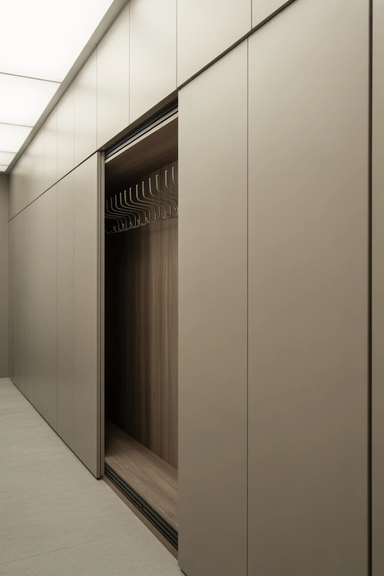
Install sliding panels mounted on a shallow track system along the mudroom wall. As one of the more space-efficient mudroom storage ideas for small homes, this system hides staggered hook zones or slim shelving behind each panel. When closed, the wall appears clean and uninterrupted. When slid aside, it reveals hanging space.
This approach is particularly effective in tight corridors where exposed hooks would visually crowd the space. Keep panel depth minimal and hardware concealed. Internal organization is critical to prevent overcrowding behind the panels. The sliding action allows controlled access while maintaining architectural simplicity.
18. Mudroom Storage Grid with Assigned Daily and Weekly Zones
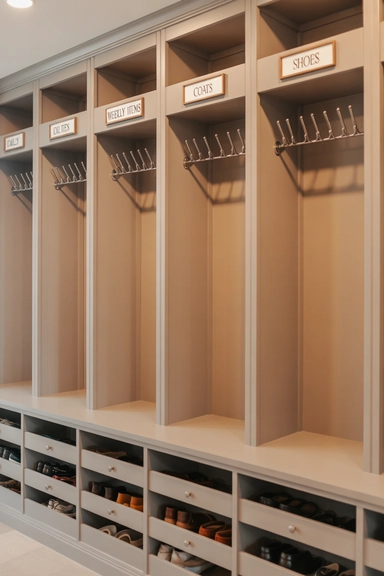
Divide the mudroom into clearly defined daily-use and weekly-use zones. The daily zone includes accessible hooks, a structured shoe drawer, and a small tray for immediate drop items. The weekly zone, positioned higher or behind doors, stores less frequently used gear.
This zoning prevents long-term items from mixing with everyday clutter. Install visual cues such as labeled sections or subtle dividers to reinforce boundaries. By intentionally separating usage frequency, the mudroom stays disciplined rather than becoming a dumping ground.
19. Built-In Mudroom with Integrated Pet Station
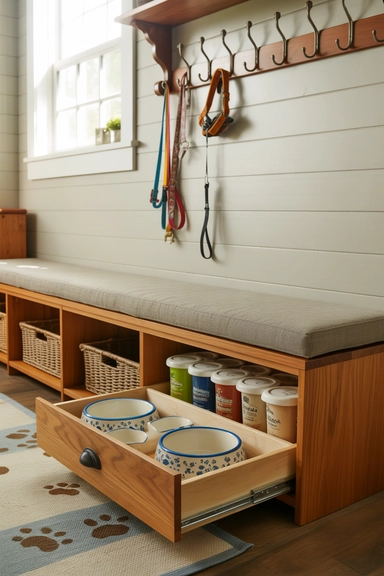
Small homes with pets often struggle with leash, bowl, and food storage overflow. Integrate a pet station into the mudroom bench base with a pull-out drawer for food storage and a recessed nook for bowls. Above, add dedicated hooks for leashes.
Keep the pet zone physically separated from footwear compartments to maintain hygiene. Use moisture-resistant liners for durability. By incorporating pet needs directly into mudroom storage design, you prevent accessories from spreading into kitchens or hallways.
20. Compact Mudroom Closet with Tiered Hanging Rods
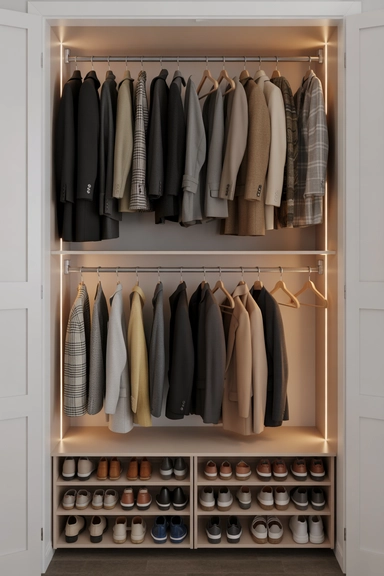
When space allows for a shallow closet enclosure, install tiered hanging rods inside to double vertical coat capacity. The upper rod handles longer garments, while a lower rod accommodates shorter jackets or children’s items. Beneath, integrate structured shoe drawers rather than loose floor racks.
Sliding closet doors preserve clearance in tight areas. Interior segmentation prevents coat overlap and maintains airflow. This configuration compresses traditional mudroom elements into a closet footprint without sacrificing organization.
21. Ceiling-Suspended Storage Shelf for Seasonal Overflow
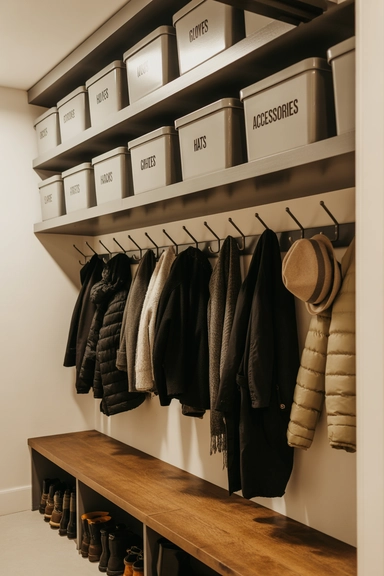
Install a reinforced ceiling-suspended shelf directly above the mudroom zone for rarely accessed seasonal items. This frees wall and floor space for daily-use storage while still maintaining capacity.
Keep the shelf shallow and aligned with existing cabinetry for visual cohesion. Store items in uniform bins to prevent imbalance. By elevating long-term storage upward, the mudroom remains focused on everyday function.
22. Integrated Mudroom Cabinet with Hidden Charging Drawer
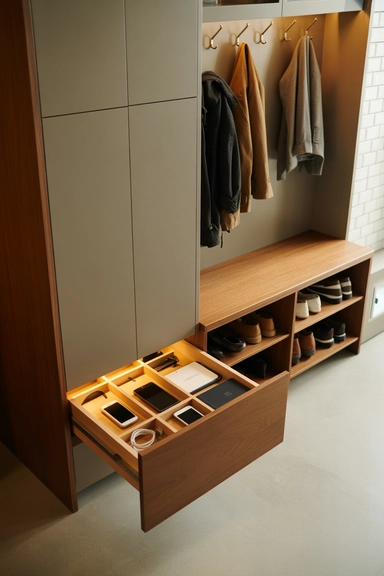
Modern mudrooms must accommodate electronics. Install a concealed charging drawer within the bench or adjacent cabinet. Include internal outlets and cable management channels to prevent visible cords.
Separate electronics from footwear compartments to avoid dust exposure. Keep the drawer shallow and ventilated. By incorporating charging infrastructure directly into mudroom furniture, you eliminate countertop clutter elsewhere in the home.
23. Full-Wall Mudroom Storage with Uniform Flat Panels
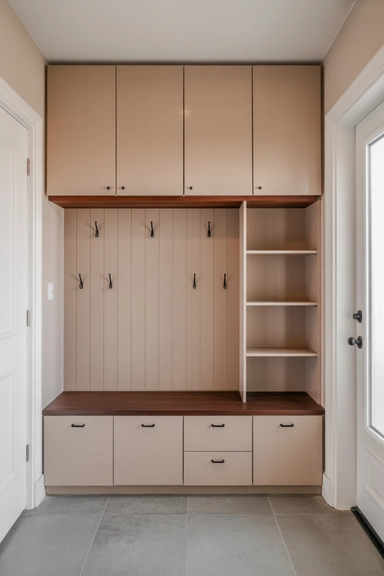
For maximum impact in small homes, one of the most effective mudroom storage ideas for small homes is converting the entire wall into a unified flat-panel storage system. Behind uniform cabinet fronts, incorporate a mix of hanging rods, drawers, shelves, and pull-out trays. From the exterior, the wall reads as clean architectural millwork.
Internal segmentation is non-negotiable — every section must have a defined function. Keep depth controlled and proportions balanced to maintain walkway flow. When the mudroom becomes one cohesive storage wall, clutter is absorbed efficiently without visually shrinking the space.
Conclusion
Mudroom storage ideas for small homes succeed when structure replaces improvisation. Layer storage vertically, divide compartments internally, and separate daily-use items from long-term overflow. Prioritize flush cabinetry, sliding mechanisms, and disciplined zoning to protect circulation. When every coat, shoe, and accessory has a defined position, even the smallest mudroom can operate with clarity, efficiency, and visual calm.