
Introduction
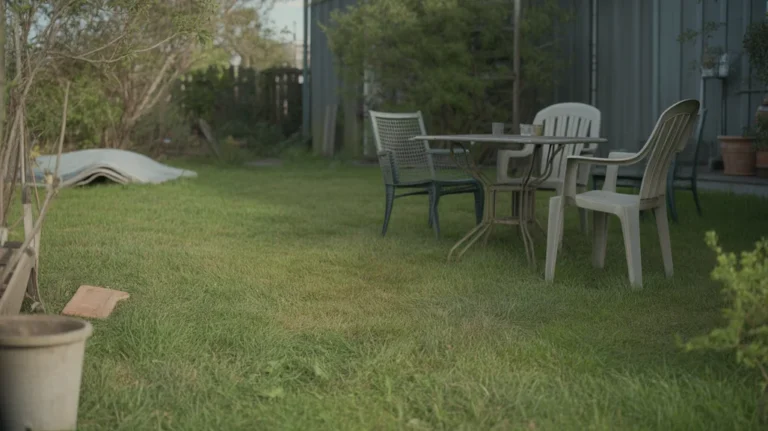
The first backyard I ever tried to “design” ended up with a plastic table shoved against a fence, a patch of dead grass in the middle, and absolutely nowhere comfortable to sit. I had no plan. I just bought things. That is how most people approach backyard layout ideas, and it costs them money, time, and the outdoor space they actually wanted. If you have not read Small Balcony Storage Ideas yet, you are probably already making the mistake that costs most people an entire season. The yard looked worse after I “finished” than before I started.
Draw Your Zones Before You Buy Anything
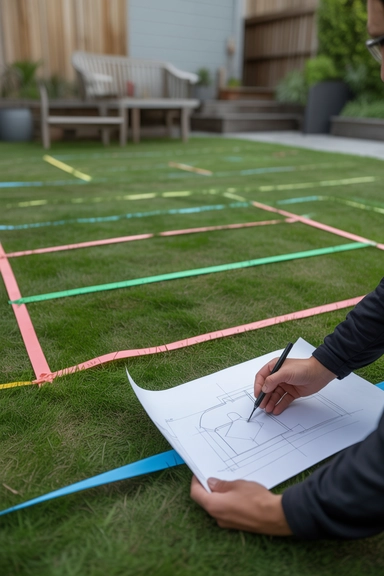
Stop. Before a single dollar leaves your wallet, sketch your yard on paper.
Zone mapping changes everything. You divide the space into what you actually do outside: eating, playing, growing, relaxing. Most yards have room for two or three zones, not one giant open space that nobody uses. I used painters tape on my actual grass once to test where a seating area would land. Felt ridiculous. Worked completely.
Dead space is the enemy of a functional backyard. When you zone first, you see exactly where wasted square footage is hiding, and you stop trying to fill the whole yard with furniture it does not need.
The 60-30-10 Rule for Outdoor Layouts
Here is the ratio that landscape designers use and almost nobody talks about outside professional circles.
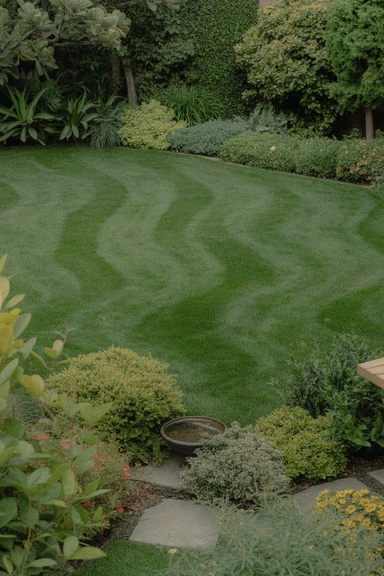
Sixty percent of your yard should be lawn or open ground. Thirty percent goes to planting beds, paths, or defined surfaces. Ten percent is accent features: a container, a focal point, a water element. This ratio keeps compact outdoor spaces from feeling cluttered and gives larger yards a sense of intention instead of randomness.
I ignored this for three years. My yard had roughly 50 percent hard surface, 40 percent planting beds crammed with whatever was on sale, and a fire pit dropped in the corner that made no visual sense. The ratio matters. Trust it more than your instincts when you are standing in the middle of a bare yard feeling overwhelmed.
Why Most Seating Areas Fail
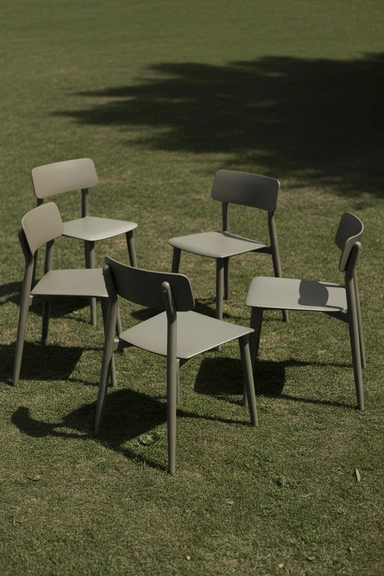
They are too small. Every time.
People size their outdoor seating area the way they would size a rug inside, and then wonder why it looks like patio furniture dumped in a field. A seating area needs at least 10 by 10 feet to function. That gives you four chairs, a small table, and enough clearance to pull a chair out without stepping onto grass. Go smaller than that and the space feels temporary, not intentional.
The other failure is placing the seating in the wrong spot. Full afternoon sun on a west-facing deck means nobody sits there from 2pm onward. Pay attention to sun exposure before you commit.
Paths Do More Work Than You Think
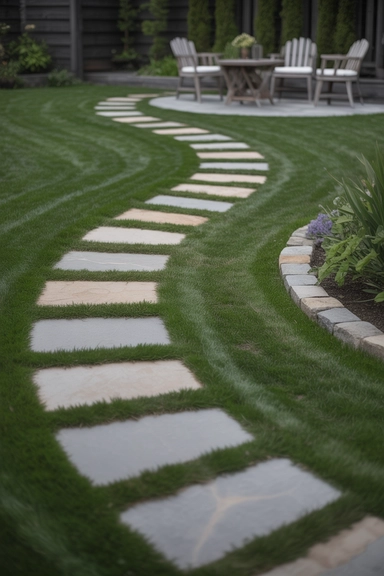
A path is not just a way to get from one place to another. It tells the eye where to go, and it keeps foot traffic off your planting beds.
Straight paths make a space feel formal and larger. Curved paths slow the eye down and make a tight backyard layout feel more expansive than it actually is. I have a narrow side yard that I turned into a path edged with low ground cover, and it transformed that dead zone into something people actually comment on. One change. That was it.
Most people get this wrong because they never went through Outdoor Storage Ideas for Small Patios and the results show immediately when a path ends at a cluttered corner with nowhere to put anything.
Vertical Space Is the Most Wasted Resource in Any Yard
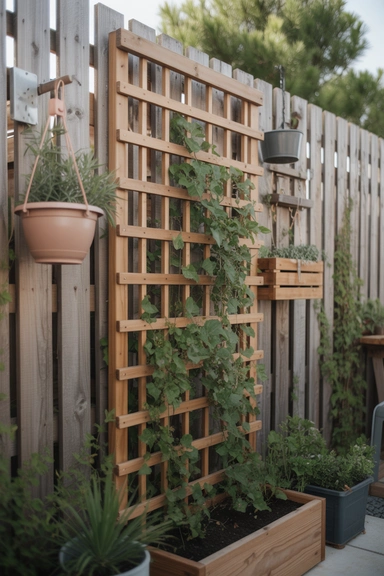
Look up. Not out.
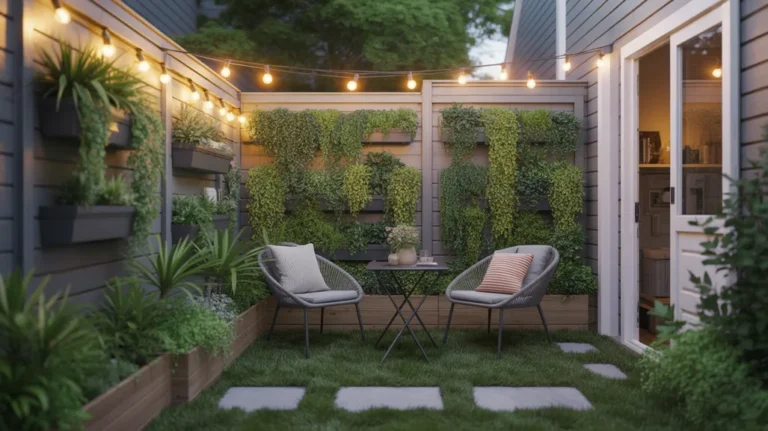
Small yard design stalls out because people only think horizontally. A trellis against a fence doubles your planting space without using a single extra square foot of ground. A wall-mounted shelf holds containers. A pergola overhead defines a seating area without a single wall. Vertical stacking works outdoors exactly the way it works inside cramped rooms.
I added a simple cedar trellis to my back fence three seasons ago. Planted climbing roses at the base, stapled some landscape fabric behind it to block the neighbor’s recycling bins from view. Problem solved on three fronts at once.
How Lighting Changes the Shape of a Yard at Night
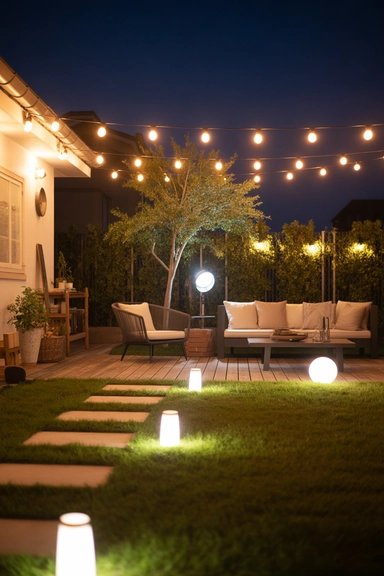
Your yard is a completely different space after dark, and most people never design for that.
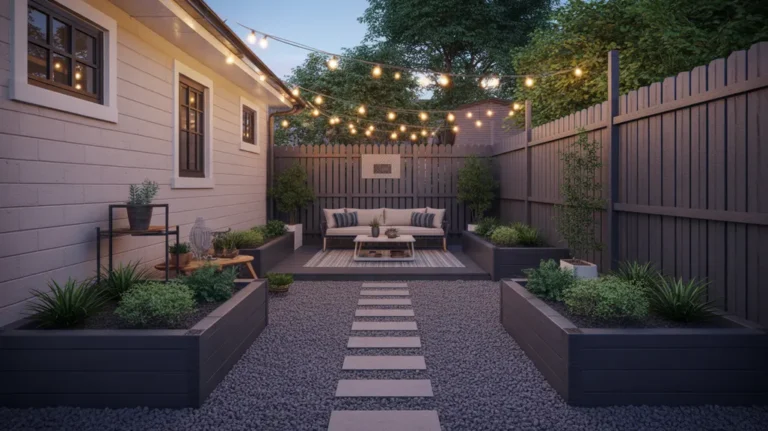
String lights hung between two posts create a ceiling. That ceiling defines a room. Ground level solar lights along a path extend the visual boundary of the yard outward. A single spotlight aimed at one mature tree or focal plant makes a tight backyard layout feel like it has real depth. None of this requires an electrician.
I tried solar string lights first. That was a mistake. They were dim by 9pm and dead by mid-autumn. Plug-in LED string lights on a timer are the answer. Warm white, not cool white. The color temperature matters more than people expect.
The Problem With Planting Beds Along Every Fence Line
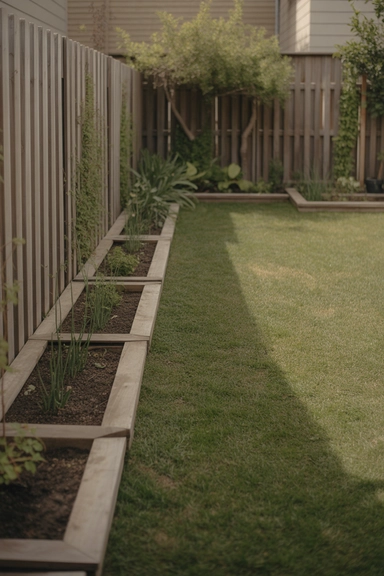
Everybody does this. Narrow strip along the back fence, narrow strip along the side fence, nothing in between.
It looks unfinished. The beds are too shallow to grow anything substantial, the fence still dominates the view, and the center of the yard becomes a dead zone with no visual anchor. Pull those beds away from the fence by at least 18 inches. Let air circulate behind plants so fungal disease does not take hold in the shaded gap between foliage and wood. That gap also traps debris you cannot easily clear.
Deeper beds, planted in layers from low edging plants to mid-height shrubs to tall grasses or small trees, create actual depth perception. The yard looks bigger because the eye has somewhere to travel.
Lawn Alternatives Worth Considering in Limited Outdoor Space
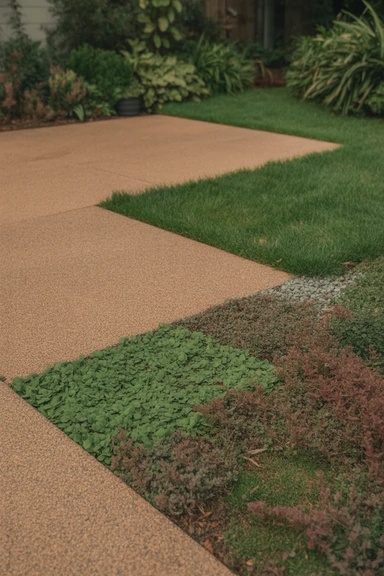
Grass is expensive to maintain and often the wrong surface for a shaded or heavily trafficked area.
Decomposed granite compacts to a firm, walkable surface that drains well and suppresses weeds when laid over landscape fabric at 3 inches deep. Clover lawn tolerates drought stress, fixes its own nitrogen, and stays green longer than traditional turf in dry summers. Ground cover plants like creeping thyme handle foot traffic, require no mowing, and feed pollinators through the growing season.
I still have not found the perfect lawn alternative for the shaded strip under my oak tree. I have tried three things. Two failed. Right now there is bark mulch there and I am genuinely undecided about what comes next. Some problems take longer than one season.
Dividing a Large Yard Into Rooms
Skipping Backyard Landscaping Ideas is exactly how people end up redoing this twice when they realize their layout has no structure holding it together.
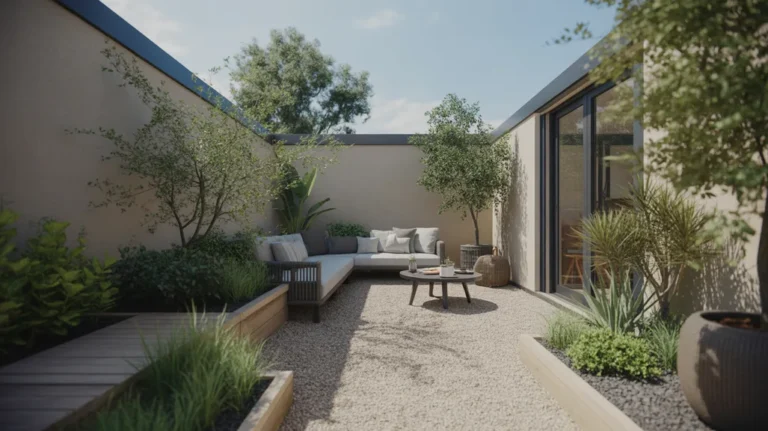
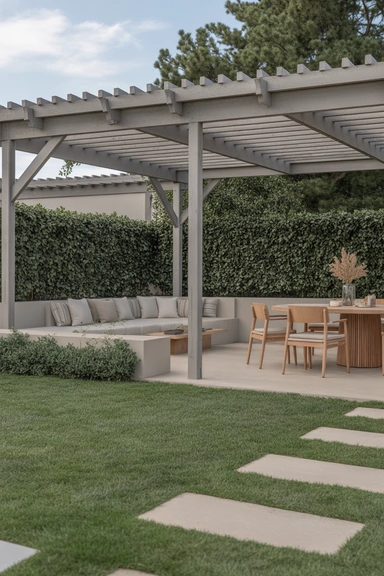
A large yard with no division feels empty regardless of how much furniture or plantings you add. The fix is borrowed from interior design: create rooms. A low hedge, a change in surface material, a pergola, or even a row of tall containers draws a boundary the eye registers as a separate space.
One area for eating. One for a fire pit or lounging. One for growing. Clear separation, even if the walls are just ornamental grasses or a line of raised planters, makes the whole yard feel designed rather than scattered. Each area gains a clear purpose and the whole layout finally holds together.
Fire Pit Placement Rules Nobody Tells You
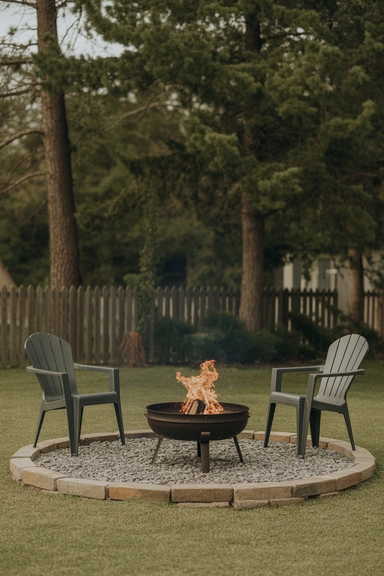
Ten feet from any structure. Minimum. That includes fences, sheds, and overhanging tree canopy.
Most people place fire pits where they fit on the plan, not where they are actually safe. Local codes in many areas require a minimum 10-foot clearance. Overhanging branches catch before the fence does. Check the canopy above, not just what is at eye level.
A gravel or stone base under and around a fire pit protects the ground from heat damage and creates a visual zone that signals this is the fire area. I laid a circle of flagstone pavers 12 feet in diameter around mine. That diameter gives comfortable seating without crowding the fire and keeps grass from scorching during a dry summer.
Choosing Surface Materials for Outdoor Living Areas
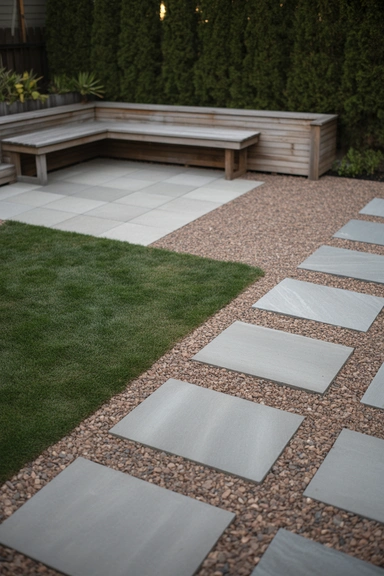
The surface under your feet determines how the whole space feels, and most people choose based on price alone without thinking through drainage or longevity.
Concrete pavers work well for permanent seating areas because they stay level over time and drain adequately when set with small gaps. Decomposed granite suits paths and casual zones where you want a natural look without the upkeep of grass. Flagstone costs more per square foot but creates the kind of surface that looks better with age rather than worse, particularly in dining areas where chairs scrape across it daily. Composite decking raises a platform off the ground and works best attached to the house where you want a true indoor-outdoor transition rather than a freestanding patio feel.
Gravel around a fire pit is the one surface choice I will not second-guess. It handles heat, drains after rain, and costs almost nothing to refresh every couple of seasons. The key is edging it properly so it does not migrate into the lawn over time.
Container Gardens as Layout Tools
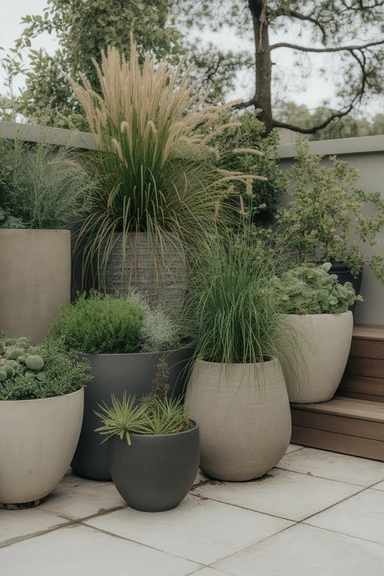
Containers are not just for plants. They are moveable architecture.
A row of large containers planted with ornamental grasses or tall herbs creates a privacy screen without a permit. A cluster of three containers in different heights gives a corner a focal point where there was nothing before. The mistake most people make is going too small. A 10-inch pot looks lost on a patio. You need at least a 16-inch diameter for anything with visual weight, and for structural plants like grasses or small shrubs, 20 inches or larger.
Scale is the thing that separates a composed outdoor space from a collection of random pots sitting around with no clear relationship to each other.
What to Do With an Awkward Corner
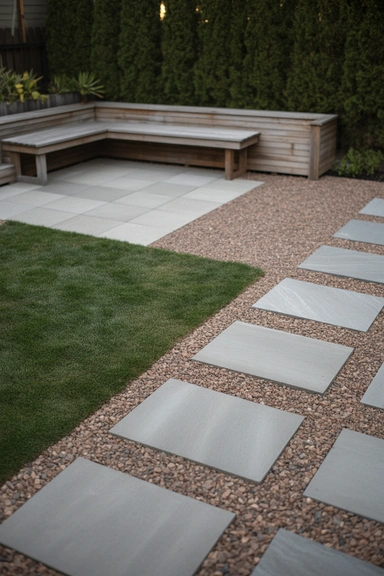
Corners collect junk because nobody decides what they are for before the junk arrives.
The fix is to give the corner a defined purpose before it becomes a graveyard for garden tools and broken furniture. A corner bench built from cedar boards costs about $80 in materials and takes a weekend. It seats three people, stores cushions in a hinged base, and anchors the corner so the rest of the yard makes sense relative to it. Everything I got wrong in year one is covered in Backyard Design Ideas and I wish I had found it before I started spending money on pieces that had nowhere logical to go.
A corner planted with a small specimen tree at center, surrounded by low groundcover, becomes a focal point instead of dead space. The tree does not need to be large. Even a 6-foot ornamental tree at planting size fills a corner visually within one growing season.
Raised Beds and How They Define a Yard
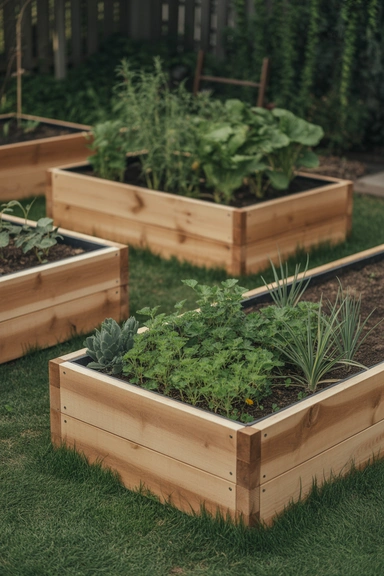
A raised bed is not just a growing space. It is a piece of outdoor furniture.
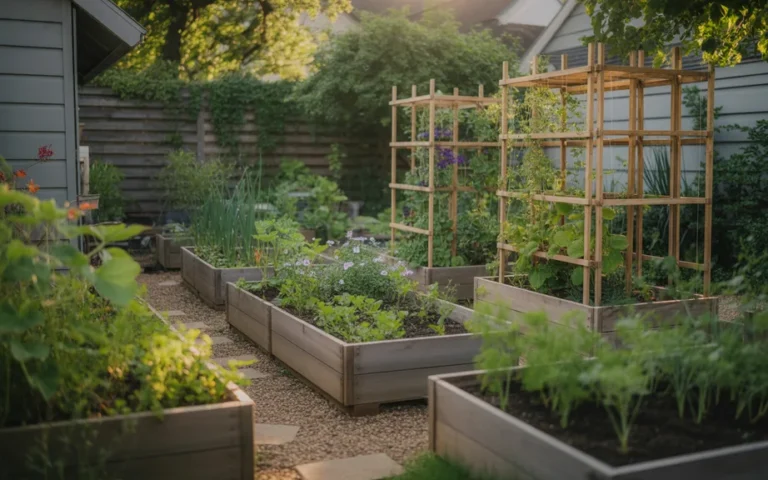
Cedar raised beds from a brand like Greenes Fence sit naturally in a backyard layout because the warm wood tones connect to natural materials already present in most yards. They create a clear visual boundary between growing space and open ground, and they bring soil amendment up off compacted native soil where root development would otherwise struggle. Aeration and drainage in a well-built raised bed outperform in-ground beds on most residential lots where topsoil has been compressed by construction equipment over the years.
Place raised beds where they get at least 6 hours of direct sun daily. That rules out most fence-line spots in yards with mature trees. Front-of-yard or center placement feels counterintuitive but often performs better for actual growing.
Maintenance Zones Matter as Much as Design Zones
Design for the version of yourself that will maintain this in August, not the version standing here in April feeling motivated.
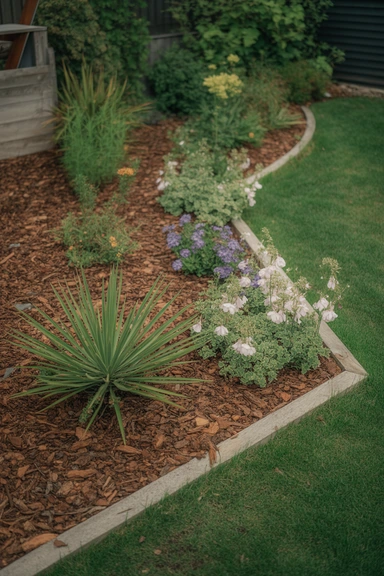
High-maintenance plantings require regular deadheading, staking, and feeding through the full growing season. Low-maintenance zones with native species, mulch, and perennials that return without intervention are what most people actually want but rarely plan for from the start. Companion planting helps suppress weeds naturally between established plants. Mulch laid at 3 inches deep keeps soil moisture stable during drought stress and cuts watering time considerably.
Be honest about how much time you will spend maintaining versus enjoying. Most people overestimate their maintenance commitment by about 60 percent. Design for the realistic version of your life, not the aspirational one.
Final Thoughts on Backyard Layout Ideas
Three things from this article deserve to stay with you. Zone before you buy anything. Size every element one step larger than your instinct tells you. Design for how the space will actually be used in real life, not how it looks in a perfectly styled photo.
The path system and vertical structures are the two investments that changed my own yard most dramatically, and they were not the most expensive changes I made. Sun exposure and maintenance honesty are the two planning steps that save the most money long-term.
If you take one action this week, sketch your zones on paper before touching your yard again. That single step eliminates the most expensive backyard layout mistakes most people make repeatedly across multiple seasons.
FAQ About Backyard Layout Ideas
How do I plan backyard layout ideas for a narrow yard?
Work with linear zones rather than trying to create width you do not have. Run a path straight down the center or along one edge, place a seating area at one end as a destination, and use vertical structures like trellises and tall containers along the long sides to draw the eye up instead of across. Narrow outdoor spaces feel larger when you give them a clear beginning and end point rather than leaving them as one undivided strip.
What should I prioritize first in a new backyard?
Start with surface and structure before planting. Decide where paths go, where the seating area lands, and where any permanent features like a fire pit or raised bed will sit. Plants can be added and moved. A poorly placed paved surface cannot. Getting the hard elements right in the first season prevents the costly rework that comes from planting around a layout that never actually functioned the way you imagined.
Can I create distinct outdoor rooms in a small yard?
Yes, and the scale of the dividers should match the scale of the space. In a compact yard, a single row of containers, a low edging hedge, or a change in ground surface from gravel to grass creates enough visual separation to register as a room boundary. You do not need tall hedges or solid walls. The eye reads a subtle boundary as clearly as a physical one when the materials are consistent and the intention behind the placement is clear.
Sarah Mitchell’s Take
The thing nobody says about backyard layout is that it is genuinely hard to see your own space clearly when you have been staring at it for years. I recommend taking a photo from an upstairs window, or standing on a step ladder in the center of the yard. That overhead view reveals dead zones and awkward proportions your eye glosses over at ground level. That single photograph has saved me from at least three expensive decisions I was completely convinced were good ideas until I saw them from above.