
Introduction
Thirty-two square feet. That was my first backyard. Not a typo. Thirty-two square feet of cracked concrete behind a terraced rental with a fence so close I could touch it from the back door. Everyone told me to just put a pot plant out there and call it a day. I did not listen. Three seasons later that tiny space had a seating area, herbs, string lights, and a vertical garden that stopped every single person who walked through the gate. Small does not mean nothing. It just means you have to think harder.
Stop Treating Small as a Problem to Apologize For
Most small backyard advice starts with managing expectations. Lower them. Accept less. Work around the limitations.
That is the wrong starting point entirely.
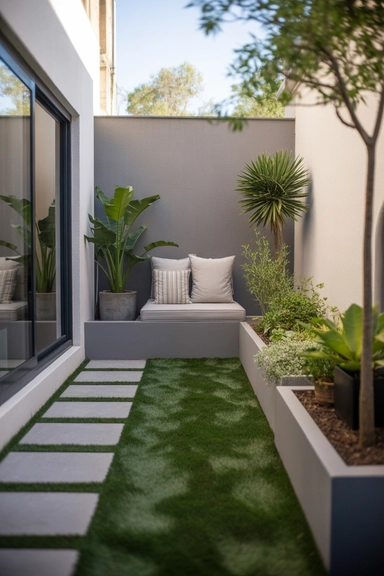
Small backyards force better design decisions than large ones. Every element earns its place or it comes out. There is no room to hide bad choices behind square footage. The constraint is the advantage if you treat it that way from the beginning.
Measure Everything Before Buying Anything
Seriously. Get a tape measure out before a single purchase.
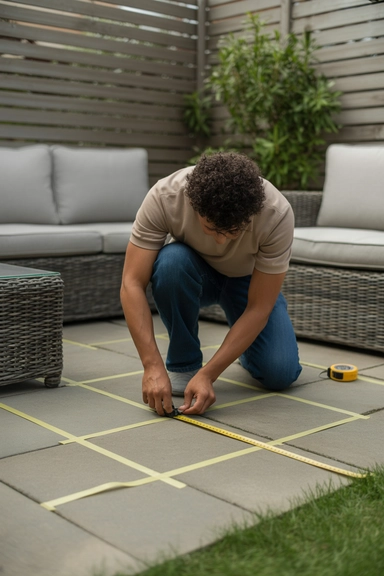
Most small backyard mistakes happen at the hardware store or online when something looks right in a photo and wrong in the actual space. A bistro table that seats two comfortably takes up less floor space than you think. A standard three-seat outdoor sofa takes up far more. Write the dimensions on your phone. Check them against every piece of furniture before buying.
Lay the furniture footprint out on the ground with masking tape first. Walk around it. Sit in imaginary chairs. Check you can open the back door without hitting the table edge. Five minutes of tape on the ground prevents an expensive return delivery.
Use Every Vertical Surface You Have
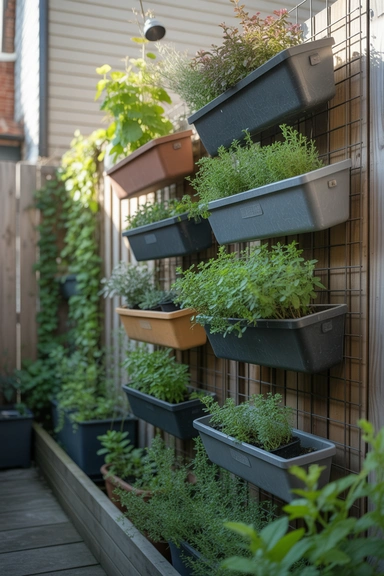
Floor space is limited. Wall space is not.
Mount wall planters on every fence panel that gets decent light. Install a simple trellis against the house wall and train climbing plants across it. Hang a pegboard on the shed wall for tools, small pots, and garden accessories. Stack shelving units against a fence for container plants at multiple heights.
Vertical growing triples the planting capacity of a small backyard without using a single extra square foot of ground. I added three tiers of wall planters to a six-foot fence panel and grew more herbs that season than I had ever grown in a full ground-level bed. The fence was doing nothing before that. Wasted space sitting right in front of me for two years.
Choose Furniture That Does More Than One Thing
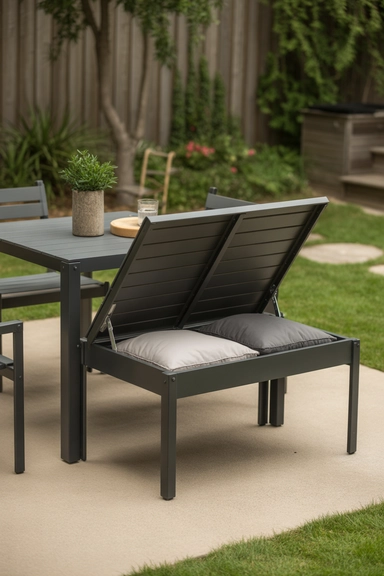
A bench with built-in storage underneath. A coffee table with a lift top that stores cushions inside. A daybed that converts to extra seating when guests arrive. A planter box built into the end of a deck bench so the seating and the garden share the same footprint.
Multi-function furniture is not a compromise in a small backyard. It is the whole strategy.
Single-purpose furniture wastes space that small backyards cannot afford to waste. Every piece should do at least two things or it needs a very good reason to be there. Skipping this thinking early is exactly what backyard design ideas warns about before you spend money on furniture that looks right but functions wrong in a tight space.
Define Zones Even in a Tiny Space
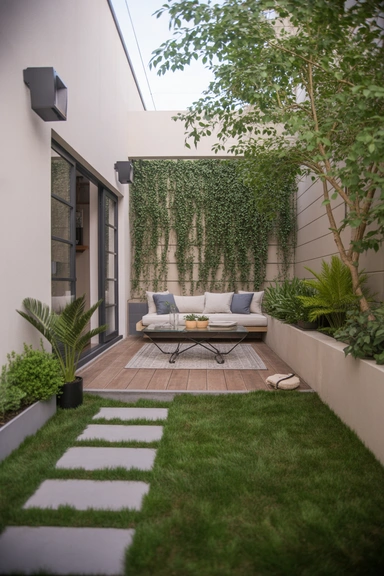
A small backyard with no defined zones feels like one cramped area. The same space with two or three defined zones feels like a complete outdoor home.
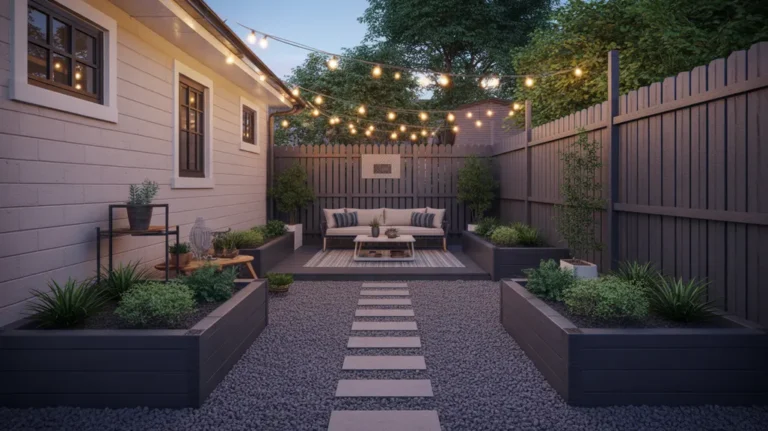
A dining zone does not need to be large. Two chairs and a small table on a slightly different surface material reads as a zone. A seating zone defined by an outdoor rug and three sides of low planting reads as a room. A growing zone marked by a row of raised planters along one fence reads as purposeful rather than accidental.
The zones do not need walls or hard separation. A change in surface texture, a shift in planting height, or even just a consistent lighting treatment makes one area feel distinct from another. That distinction makes the whole space feel larger than its actual square footage.
Go Up With Raised Planters and Tiered Beds
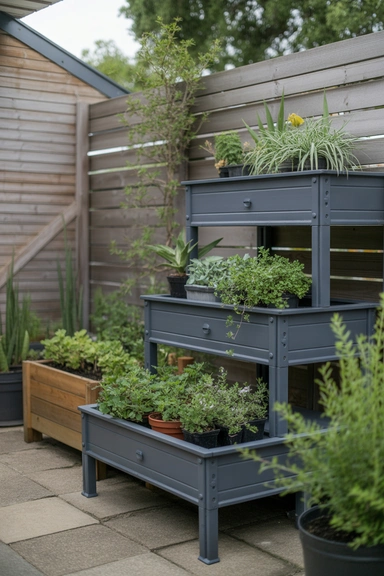
Ground-level planting in a small backyard competes with every other use of the floor space.
Raise everything you can. Tall raised planters at fence height add planting volume without using meaningful floor area. Tiered planter stands hold four or five pots in the footprint of one. Window boxes mounted on fence rails bring planting to eye level and free the ground beneath completely.
Raise the planters high enough that you can sit beneath them without feeling crowded. A planter mounted at one hundred fifty centimetres sits above seated eye level and adds greenery overhead without closing the space down. Below that height planters compete with the seating area visually and make the space feel busier than it is.
Use Light Colors on Walls and Fences
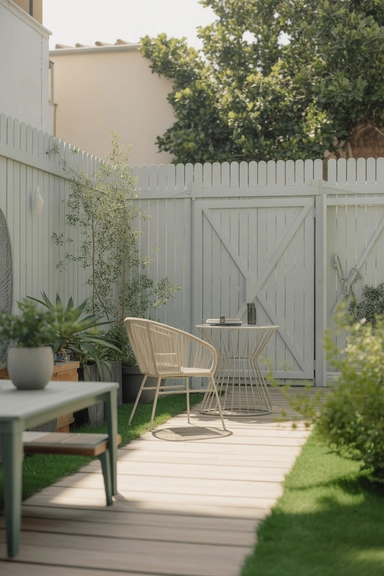
Dark fences close a small space down. Light ones push the boundary back.
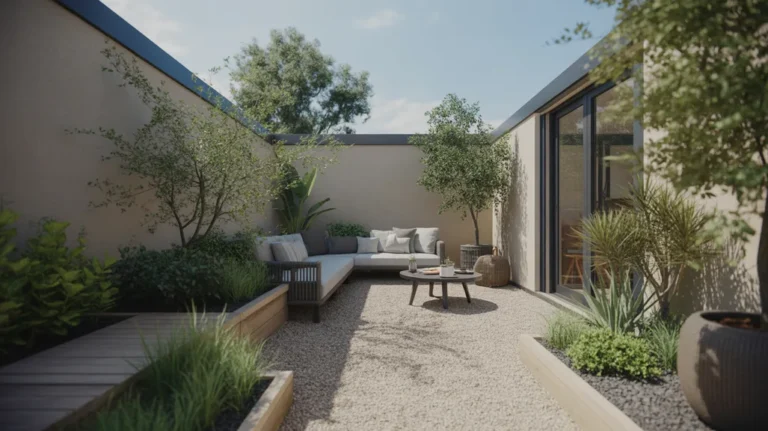
Paint the fence and any visible house walls in a pale warm white, soft grey, or warm sand tone. Light surfaces reflect more daylight into the space and make the boundary feel further away than it actually is. The effect is not subtle. A freshly painted pale fence transforms the perceived size of a small backyard more than almost any other single change you can make.
Keep the fence color consistent on all sides. Mixed fence colors in a small space create visual noise that chops the area into smaller sections. One consistent pale tone wraps the space in a single surface and the eye reads the whole boundary as one continuous backdrop rather than a series of separate walls closing in.
Add a Mirror to Create Depth
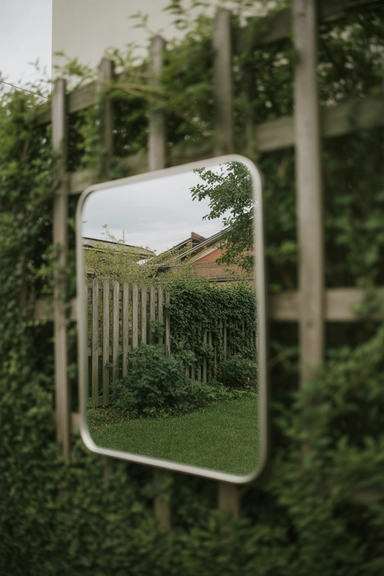
Outdoor mirrors are one of those ideas that sounds gimmicky until you try it.
A large weatherproof mirror mounted on the darkest fence panel doubles the perceived depth of the space immediately. Position it to reflect the most attractive part of the garden rather than the back door or the neighbour’s shed. Angle it slightly so it does not create a direct reflection of anyone sitting in the seating area, which gets unsettling fast.
Use a mirror with a simple dark metal frame that sits against the fence without demanding attention. The frame should disappear. The reflection should be what you notice. Most people who visit the backyard take a minute to realise the depth is not real. That reaction is the whole point.
Keep the Paving Pattern Simple
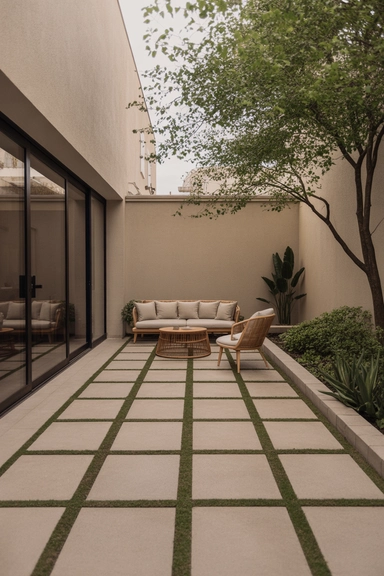
Busy paving patterns make small spaces feel smaller. Diagonal laying, complex herringbone, multiple material combinations all chop the floor plane into visual fragments that shrink the space optically.
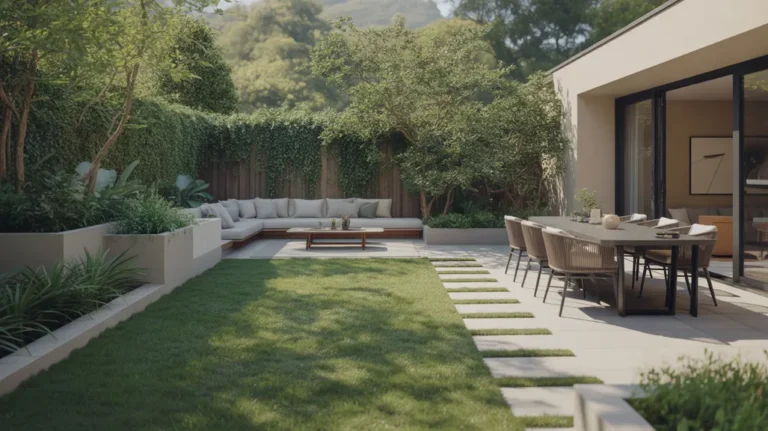
Large format pavers in a single color laid in a simple grid or running bond pattern do the opposite. The eye reads the floor as one continuous surface and the space feels larger than it measures. Stick to one paver size, one color, and one laying pattern across the entire floor area.
If you are starting from scratch with the surface and have not gone through backyard landscaping ideas first, you are probably about to make a paving decision that costs twice as much to fix as it did to install.
Hang String Lights to Draw the Eye Upward
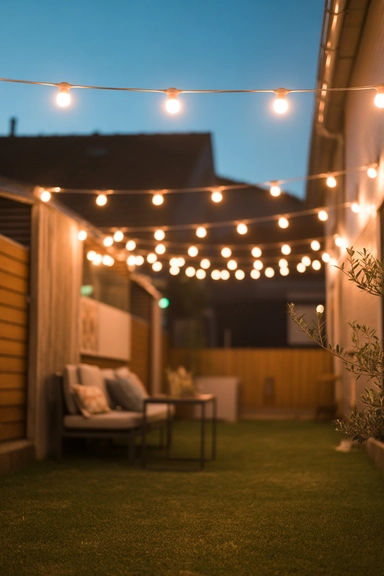
String lights do something specific in a small backyard that no other lighting achieves. They draw the eye up and out, away from the boundaries of the space, and toward the open sky above.
Hang them at eight to ten feet in a grid or zigzag pattern across the full width of the backyard. The overhead plane of light creates a ceiling effect that defines the space as a room while simultaneously opening it upward. The boundary fences recede into the background after dark and the space feels much larger than daylight reveals.
Warm white at 2700 Kelvin. Not cool white. Not multicolour. Warm white creates the evening atmosphere that makes small outdoor spaces feel intentional and cosy rather than cramped and lit up.
Build a Narrow Water Feature Along One Fence
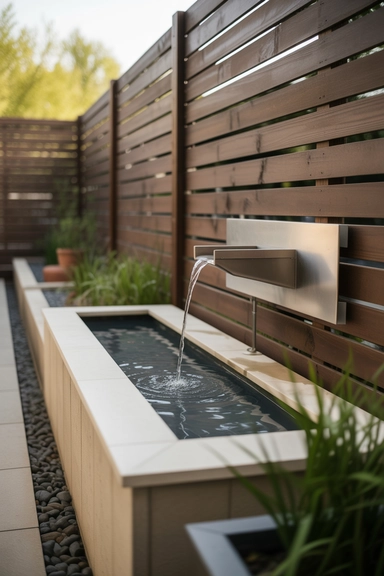
A water feature in a small backyard sounds like a space problem. A narrow one is actually a space solution.
A slim wall-mounted water blade or a narrow channel fountain runs along a fence base in a footprint of around thirty centimetres wide. The sound of moving water fills a small enclosed space more effectively than it fills a large open one. The acoustic effect is disproportionate to the physical size of the feature.
Moving water also masks neighbour noise and street noise in a way that transforms how relaxing the space feels to sit in. I added a simple wall spout to a small courtyard rental years ago. That single addition changed the whole experience of being in the space more than any planting or furniture decision I made before or after it.
Use One Strong Focal Point and Nothing Else Competing With It
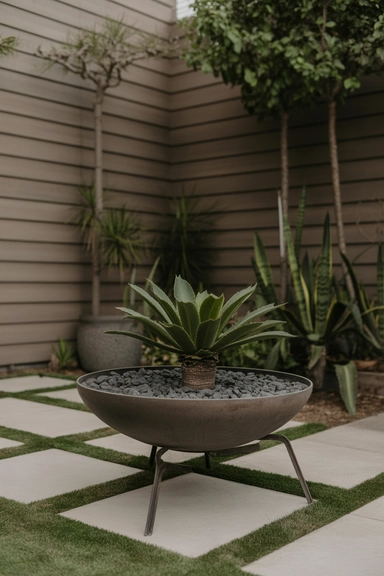
Small backyards get destroyed by too many focal points competing for attention.
One specimen plant in a large statement planter. One fire bowl on the patio. One piece of outdoor art on the feature fence. Pick one. Everything else in the space supports it rather than competing with it. Multiple focal points in a small backyard create visual chaos that makes the space feel cluttered even when it is not.
The focal point should be the first thing you see when you step outside and the thing your eye returns to from every seating position. Place it deliberately. Move it around before committing to a permanent position. The right placement is obvious once you find it.
Plant for Fragrance as Well as Appearance
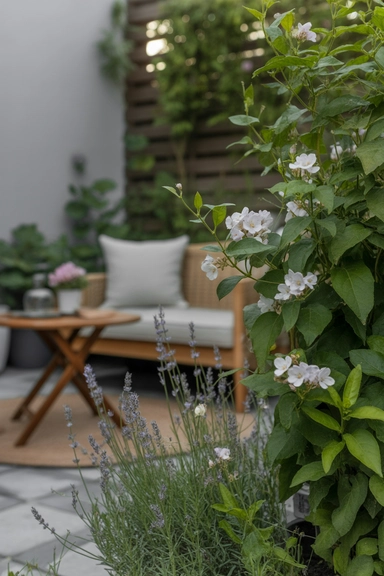
In a small backyard fragrance amplifies the experience of the space in a way that larger gardens never quite achieve.
Jasmine on a trellis, lavender along a path edge, gardenia in a sheltered corner, sweet alyssum spilling from a wall planter. These plants fill a small enclosed space with scent that changes the whole sensory experience of being outside. A backyard that smells good feels like a destination rather than just an outdoor room.
Plant fragrant species on the side of the space where the prevailing breeze enters. Fragrance carried toward the seating area on a gentle breeze is a completely different experience from fragrance you have to walk up to the plant to smell. Wind direction matters for this. Check it over a few days before deciding where fragrant plants go.
Add a Simple Shade Sail to Define the Space Overhead
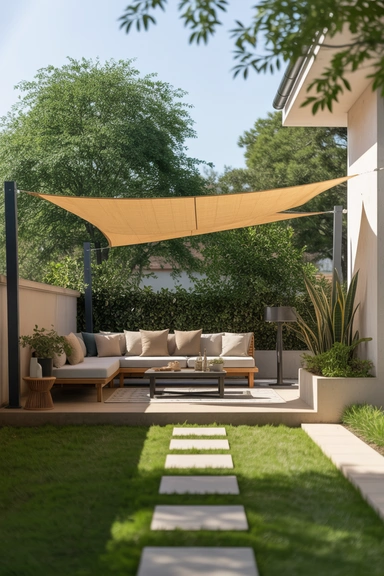
A shade sail stretched across a small backyard does three things at once. It provides shade. It defines the space as a room with a ceiling. It gives the eye somewhere to land overhead rather than just open sky or a neighbour’s upper floor window.
Mount attachment points on the house wall, the fence posts, or freestanding steel posts set in concrete footings. A single triangular shade sail covering the main seating area costs between forty and one hundred twenty dollars depending on size and material quality. HDPE shade cloth breathes, drains rain, and does not turn the space into a sauna underneath it the way solid waterproof material does.
Overlap two smaller shade sails rather than using one large one if the attachment points are awkward. Two overlapping triangles cover the same area more flexibly and create a more interesting overhead pattern than a single large rectangle.
Embrace the Small and Design for Intimacy
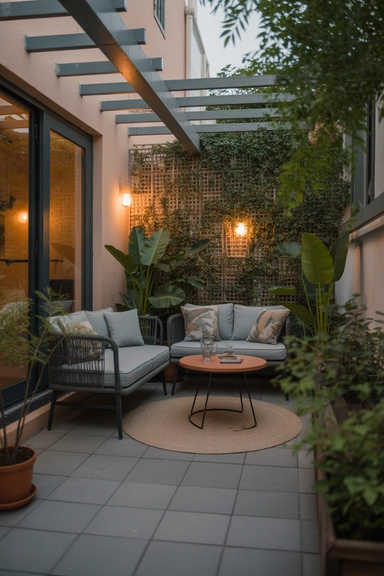
Here is the thing most small backyard guides never say.
Small outdoor spaces done well feel more intimate, more personal, and more genuinely relaxing than large backyards with scattered furniture and too much empty lawn between things. The enclosure is a feature. The proximity of planting to seating is a feature. The fact that everything is within reach without getting up is a feature.
Design for how the space actually feels to sit in rather than how it looks in a wide angle photograph. A small backyard that wraps around you with greenery, scent, warm light, and the sound of moving water is a better place to spend an evening than a large open lawn with a furniture suite at one end and nothing between you and the fence. Size stopped being the measure of a good outdoor space the day I sat in that thirty-two square foot courtyard with a coffee and did not want to go back inside.
Final Thoughts on Small Backyard Ideas
Small backyard ideas work best when they stop fighting the size and start using it. Vertical space, multi-function furniture, defined zones, light surfaces, and one strong focal point. Those five decisions transform a small backyard faster than any amount of spending on plants and accessories.
The temptation in a small space is to fill every gap. Resist it. Negative space in a small backyard gives the eye somewhere to rest and makes the planted and furnished areas read more clearly. Overcrowding a small space is the fastest way to make it feel smaller than it is.
Two seasons. Give any small backyard two full growing seasons before judging it. Plants fill in, materials settle, and the way you use the space changes as you learn what it actually needs.
FAQ About Small Backyard Ideas
How do I make a small backyard feel bigger without major construction? Paint the fences a pale warm tone, add a large outdoor mirror on the darkest panel, lay large format pavers in a single simple pattern, and hang string lights overhead. All four changes are reversible, relatively inexpensive, and produce an immediate optical effect that makes the space feel significantly larger. No construction required for any of them.
What furniture works best for small backyard ideas on a budget? Folding bistro chairs and a small folding table store flat against the fence when not in use and free the entire floor when you need it. A storage bench along one fence edge provides seating, stores cushions and tools underneath, and takes up less space than a freestanding sofa and separate storage box. Buy secondhand and paint it to match the fence color for a cohesive look at minimal cost.
Can small backyard ideas work in a rental property? Almost everything in this article works in a rental. Wall planters mount with removable hooks. Shade sails attach to tension straps around fence posts without permanent fixings. String lights run from removable cup hooks. Outdoor rugs, container plants, folding furniture, and freestanding water features all move with you when the lease ends. Renters actually have an advantage in small backyards because portable solutions force smarter design decisions than permanent ones.
Sarah Mitchell’s Take
I have designed backyards of every size over the years and the small ones taught me everything the large ones could not. You cannot hide laziness in a small space. Every decision shows. Every plant placement matters. Every material choice reads clearly against everything around it. The discipline that a small backyard forces on you makes you a better designer for every space after it. If you are starting with small, you are starting in exactly the right place.