
Introduction
My neighbor spent $8,000 on a backyard renovation last spring. I spent $340 over three weekends and people at my summer barbecue kept asking who did my landscaping. Cheap backyard ideas get dismissed as compromise solutions, but the yards that look expensive almost never are. The difference is almost always decision-making, not budget. If you have not read Backyard Layout Ideas yet, you are probably already making the mistake that costs most people an entire season. I learned that the hard way before I figured out what actually moves the needle.
Paint the Fence First
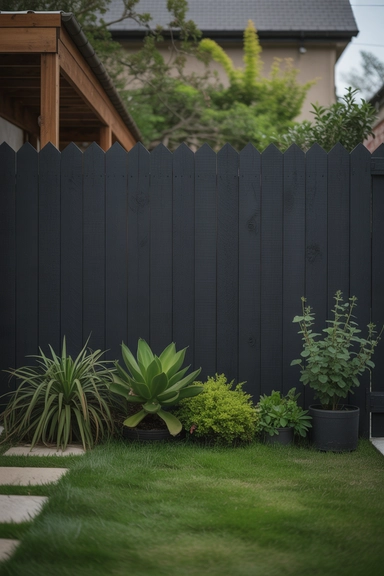
Nothing transforms a backyard faster than this. Nothing.
The fence is the largest surface in most yards and almost every homeowner ignores it as a design element. A dark exterior paint color, charcoal, deep navy, or slate green, makes every plant in front of it look intentional and gives the whole yard a finished quality that furniture and flowers alone never achieve. One gallon of exterior fence paint covers roughly 400 square feet and costs about $35. That math makes it the highest return investment in this entire article.
I painted my back fence charcoal on a Saturday afternoon expecting to feel indifferent about it. By Sunday morning every section of the yard I had been unhappy with suddenly looked better. The fence was the problem the whole time.
Lay a Gravel Path Between Your Zones
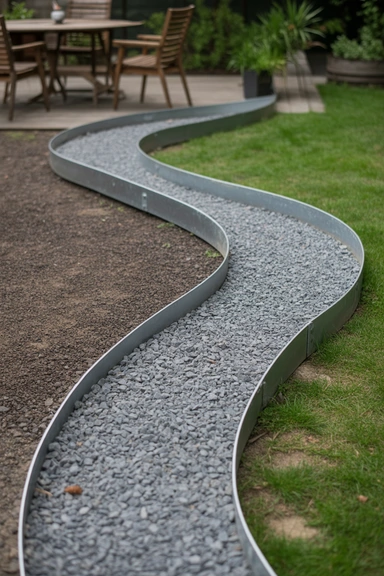
A path does not just connect two points. It tells the eye the yard was designed by someone who thought about it.
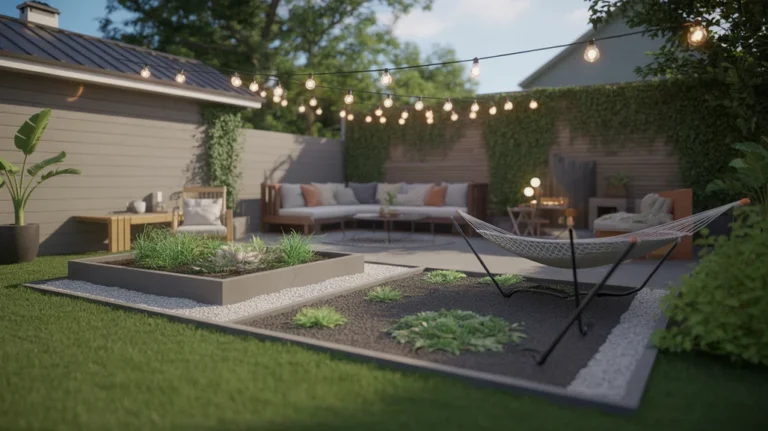
Pea gravel or decomposed granite laid 3 inches deep over landscape fabric costs about $1 to $3 per square foot and installs in a single afternoon without any professional help. Steel landscape edging keeps the gravel contained and gives the path a clean defined edge that reads as intentional rather than improvised. Curved paths make compact outdoor spaces feel larger. Straight paths make formal yards feel more structured.
The edging matters as much as the gravel itself. Loose gravel migrating into a lawn looks messy within one season. Properly edged gravel paths look sharp five years later with almost no maintenance beyond occasional topping up.
Use Dark Mulch in All Planting Beds
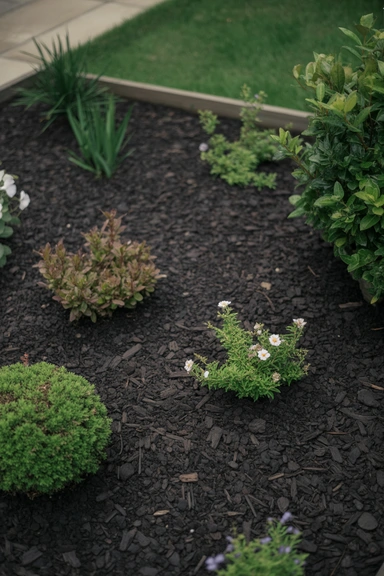
This is the detail that separates a well-maintained yard from one that looks like it is trying.
Fresh dark brown or black shredded bark mulch laid at 3 inches deep makes every plant in a bed look deliberately placed rather than randomly growing. It suppresses weeds, retains soil moisture during drought stress periods, and costs about $30 per cubic yard in bulk. A freshly mulched bed signals care and attention in a way that even expensive plantings without mulch never communicate.
Most people mulch once and consider it done. Topping up mulch every spring before it fades to gray costs almost nothing and keeps the beds looking sharp through the full growing season.
String Lights Are the Fastest Mood Upgrade
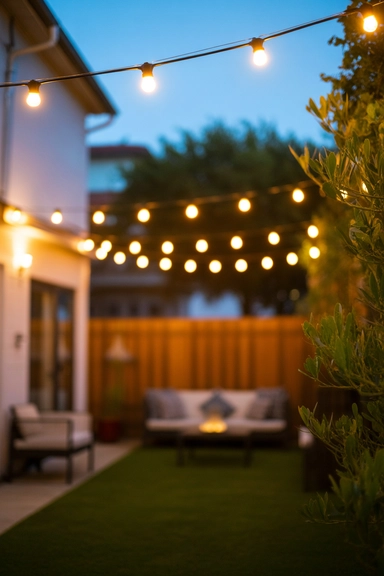
Stop underestimating what a strand of warm white lights does to an outdoor space after dark.
Hung in a catenary curve between two posts or in a grid pattern overhead, string lights create a ceiling that defines an outdoor room without any walls or structure. The warm color temperature, 2700K is the number to look for, makes skin tones look good and gives the space an atmosphere that cool white or daylight bulbs completely destroy. Plug-in LED string lights on a timer cost about $25 for a 48-foot strand and run for a fraction of a cent per hour.
I spent two summers using solar string lights before accepting they simply do not work well enough. Plug-in is the only answer worth the effort of putting up the posts.
Build a Simple Cedar Raised Bed
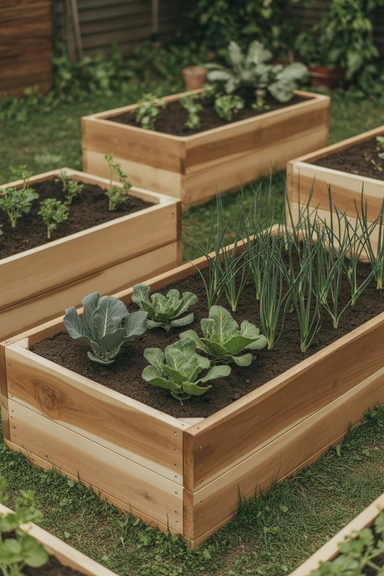
A raised bed makes a backyard look like someone lives there intentionally.
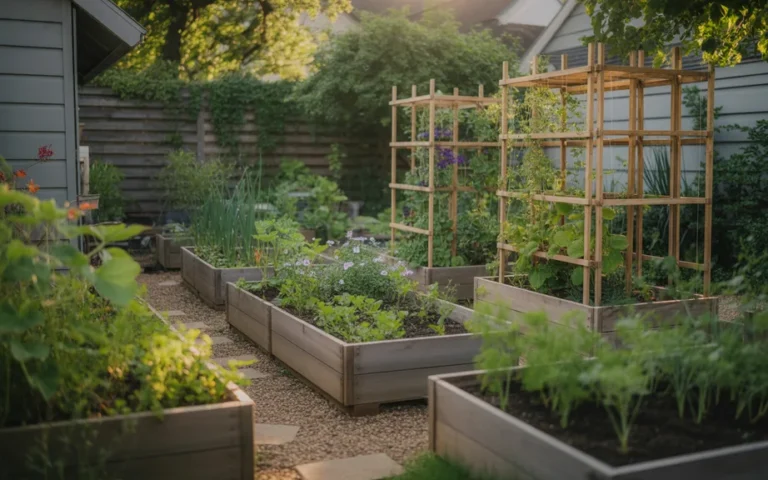
Cedar boards from a home improvement store cut to a 4-by-8-foot rectangle and screwed together at the corners cost about $60 in materials and take two hours to build without any special tools. Fill it with a mix of topsoil and compost at roughly a 60-40 ratio and you have a planting bed with better drainage and aeration than most native residential soils ever provide. Plant it with a combination of edible and ornamental plants and it becomes a feature rather than just a growing space.
Most people get this wrong because they never went through Backyard Garden Ideas and the results show immediately when the bed looks like an afterthought instead of an anchor for the whole yard.
Add a Single Statement Container
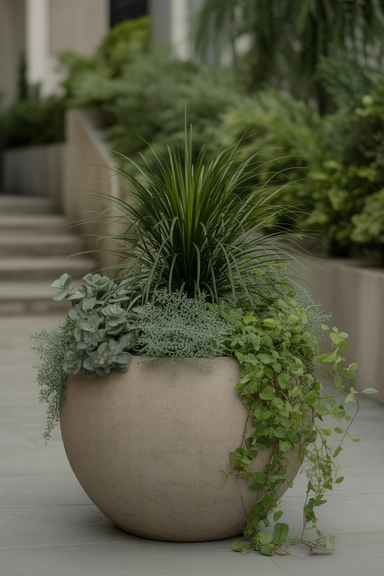
One large container planted well does more visual work than six small containers planted poorly.
A container needs to be at least 20 inches in diameter to have genuine visual weight on a patio or in a yard. Plant it with a thriller, a tall dramatic plant at center, a filler, a mounding plant around it, and a spiller, a trailing plant that hangs over the edge. That three-layer formula works every time and makes a single container look like it was styled by someone who knew what they were doing. Galvanized stock tanks, large terracotta pots, and wooden half barrels all achieve this effect at a fraction of what a designer container costs.
The plant combination matters more than the container itself. A beautiful pot with one sad geranium still looks like a sad geranium.
Repurpose What You Already Own
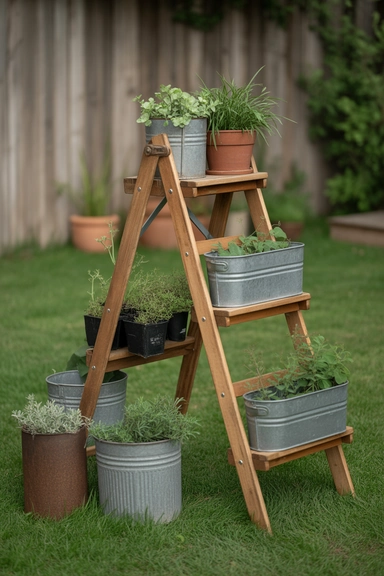
A vintage wheelbarrow, an old wooden ladder, a stack of unused crates. These are planters waiting to happen.
Unconventional containers give a backyard personality that matching sets from a garden center never achieve. The key is grouping them by material or color so the collection reads as curated rather than random. Three galvanized metal containers together look collected. One galvanized container next to one terracotta next to one plastic pot looks like leftovers from three different shopping trips.
I have an old wooden stepladder in my yard with small pots of herbs sitting on each step. It cost nothing. People photograph it every time they visit. That is the entire point of this approach.
Create an Outdoor Rug Zone
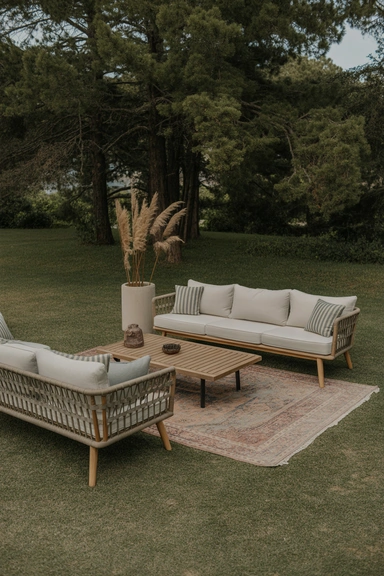
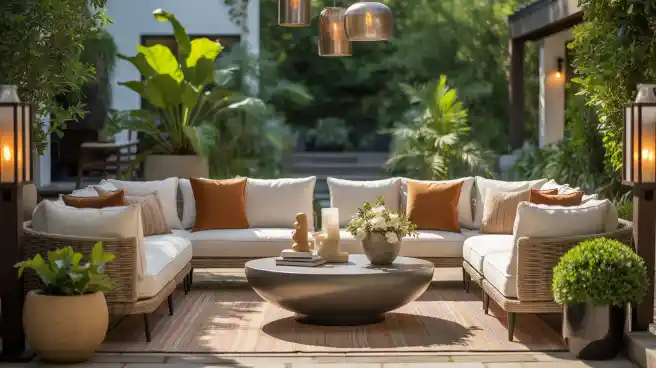
An outdoor rug placed under a seating arrangement instantly creates a room where there was just a patio.
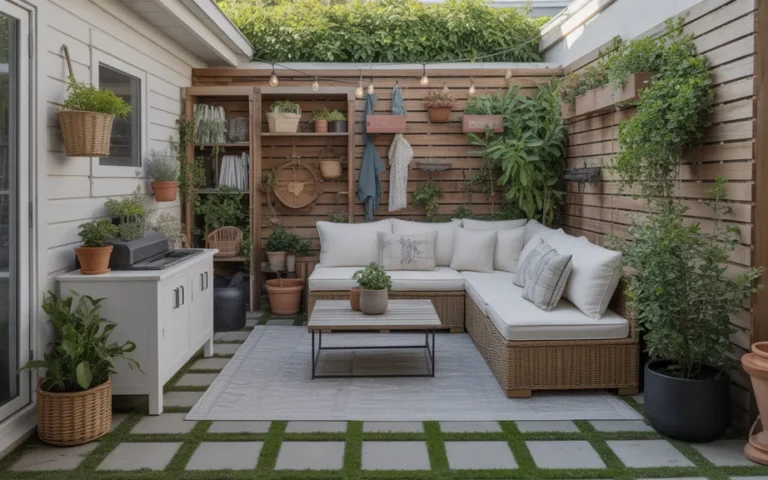
Polypropylene outdoor rugs resist rain, UV fading, and mildew for three to four seasons and cost between $40 and $80 for a size that works under a four-person seating arrangement. The sizing rule is the same as indoors: all furniture legs should sit on the rug rather than half on and half off. A rug that is too small makes furniture look abandoned in open space rather than arranged in a room.
Color choice matters more outside than people expect. Warm terracotta, deep teal, and natural stripe patterns read well against the green and neutral tones most yards already contain.
Plant a Row of Ornamental Grasses
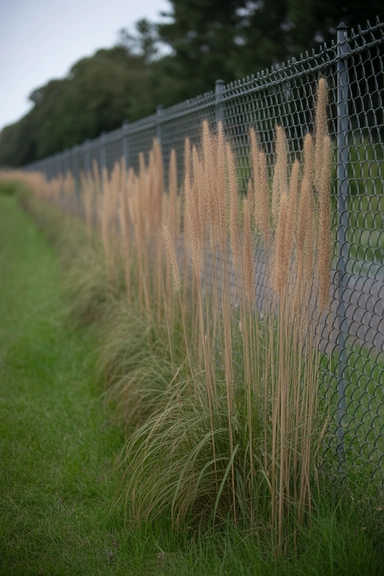
Ornamental grasses are the most underused budget planting in residential yards and the results look anything but cheap.
Karl Foerster feather reed grass grows 4 to 5 feet tall, stays upright through winter, and costs about $12 per plant at most garden centers. A row of five planted 18 inches apart along a fence line creates a soft layered backdrop that moves in the breeze and changes character through every season. Native grasses support pollinators through their flowering period and require almost no care beyond cutting back to 4 inches in late winter before new growth begins.
Skipping Backyard Landscaping Ideas is exactly how people end up planting grasses in the wrong spot and redoing the whole fence line the following spring when they realize the drainage or sun exposure was wrong.
Use Boulders and Rocks as Free Focal Points
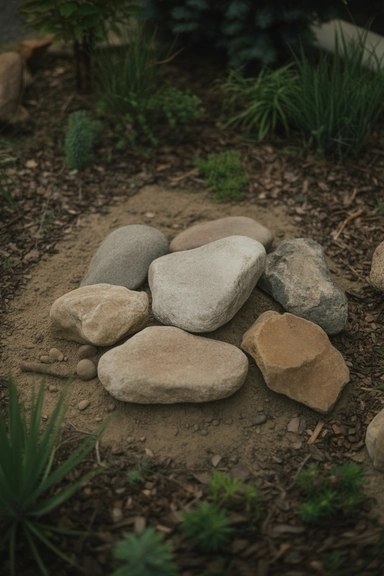
Landscape rock is genuinely free if you know where to look.
Construction sites, road crews, and neighbors clearing land regularly give away fieldstone and boulders to anyone willing to load and haul them. A single large boulder placed at the end of a planting bed or at a path junction creates a focal point that looks like it belongs in the landscape rather than something purchased and placed. Group three rocks of different sizes together rather than placing one alone, the odd number reads as natural arrangement rather than decoration.
I pulled four fieldstone rocks from a neighbor’s driveway excavation three years ago. They anchor the corners of my two main planting beds and I have never once wished I had spent money on something else for those spots.
Install a Trellis and Plant a Climber
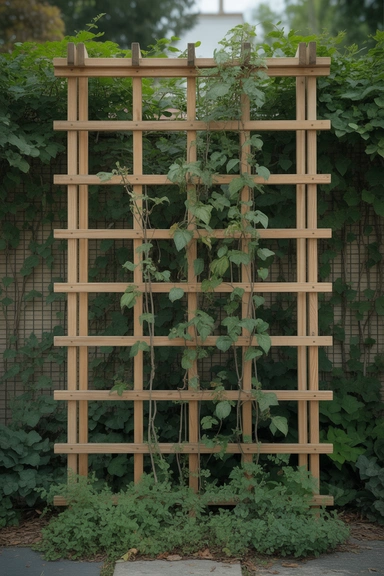
A bare fence is a missed opportunity. A trellis with a climber is a vertical garden that costs almost nothing to establish.
Cedar or pressure treated wood lattice panels run $30 to $45 for a 4-by-8-foot section at most home improvement stores. Mount one in a simple frame between two fence posts and plant a climbing rose, jasmine, or native honeysuckle at the base. Within one full growing season the panel fills with foliage and the fence behind it disappears. The visual effect reads as a planted wall, which is one of the most expensive-looking things you can do to a backyard without actually spending serious money.
Companion planting low herbs or ground cover at the base of the climber fills the gap between the trellis and the ground so the whole section reads as a finished planted zone rather than a panel stuck to a fence.
Add a Birdbath or Small Water Feature
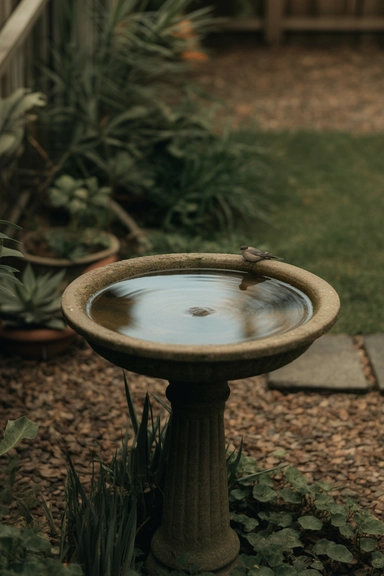
Water in a yard does something no other element replicates on either the visual or the atmospheric level.
A simple pedestal birdbath costs between $25 and $50 and immediately becomes a focal point that draws the eye across the yard. A recirculating wall fountain with a self-contained reservoir costs about $80 to $120, mounts to a fence with four screws, and produces enough sound to mask neighborhood noise at 15 feet. Neither requires professional installation or plumbing work of any kind.
Everything I got wrong about placing focal points in a yard is covered in Backyard Design Ideas and I wish I had found it before I spent two seasons moving the same birdbath around looking for the spot where it finally made sense.
Edge Every Lawn and Bed Line
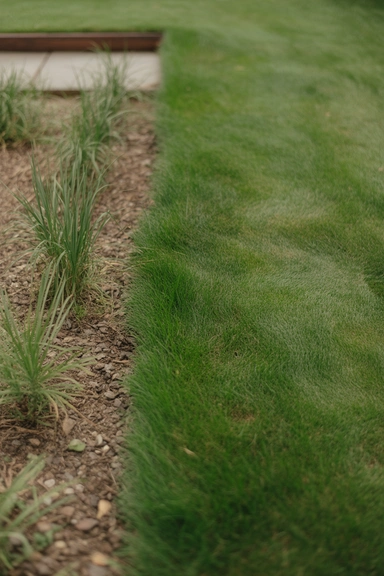
Clean edges make a yard look maintained regardless of what else is or is not happening in the space.
A half-moon edging tool or a flat spade run along every lawn-to-bed transition twice per season costs nothing beyond an hour of physical work. The visual difference between a lawn with crisp edges and one with soft overgrown margins is significant enough that neighbors notice it without knowing exactly what changed. It is the yard equivalent of ironing a shirt. The garment is the same. The impression is completely different.
Steel landscape edging installed once along permanent bed edges eliminates the need to re-cut those lines every season and costs about $1.50 per linear foot installed yourself over an afternoon.
Build a Pallet Wood Feature Wall
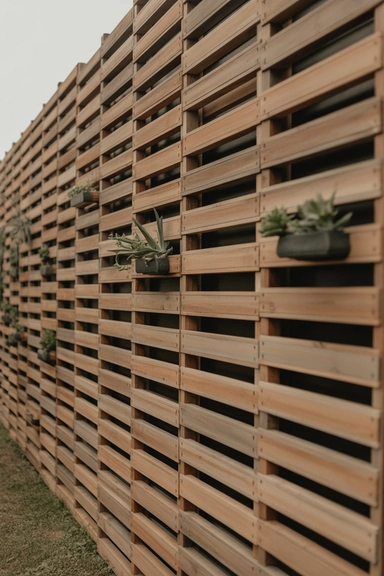
Free pallets turn a blank fence into a design feature over one weekend.
Heat-treated pallets marked HT are safe for outdoor use and available free from garden centers, hardware stores, and furniture retailers who receive regular deliveries. Mounted horizontally on a fence with screws they create a layered wood texture wall that looks deliberate and costs nothing beyond an afternoon of work. Paint them all the same color for a polished result or leave them raw for a more rustic feel.
I built a pallet wall along my shed exterior three summers ago and planted small succulent cuttings in the gaps between the slats. The succulents rooted within a season and the whole wall became a vertical garden that stops visitors mid-step every single time.
Define Your Seating Area With a Purpose-Built Frame
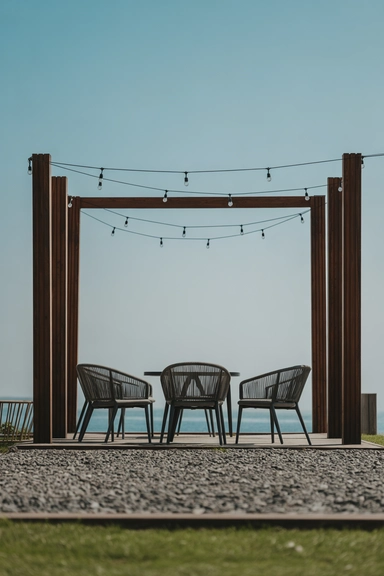
A seating area with no definition around it looks like furniture stored outside. A seating area with a frame looks like a room.
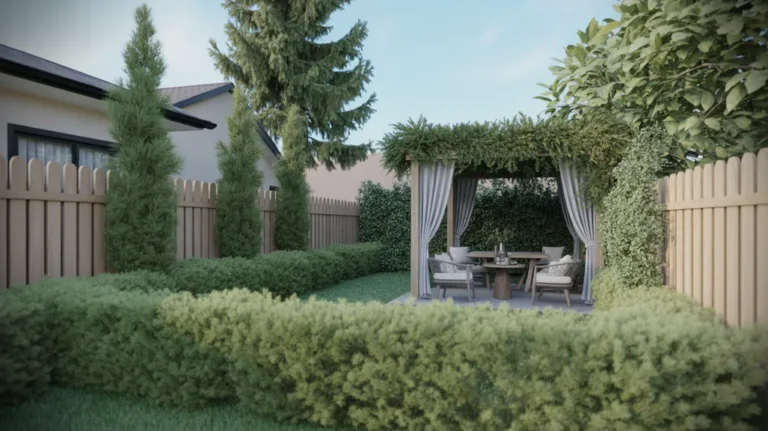
Two wooden posts set in concrete with a simple horizontal beam across the top cost about $80 in materials and create enough overhead structure to hang string lights from, mount a shade sail to, or train a climbing vine along. That single structural element defines the space below it as a destination rather than a parking spot for chairs. Add a gravel or paver surface underneath and the transformation from yard to outdoor living room is complete.
The posts do not need to support a full pergola to do their job. Height and the suggestion of overhead structure are enough for the eye to read the space as defined and intentional.
Final Thoughts on Cheap Backyard Ideas
Three principles run through every idea in this article. Define your zones clearly before adding anything. Use dark contrasting backgrounds, fences, mulch, and edging to make everything in front of them look intentional. And invest your effort in the details that the eye processes first: edges, surfaces, and lighting.
The most expensive-looking backyards I have seen in person were not expensive. They were decided. Every element had a clear place and a clear purpose and nothing was sitting around waiting to find its spot.
Pick the three ideas from this list that match what your yard needs most right now. Do those three things completely before adding anything else.
FAQ About Cheap Backyard Ideas
How do I make a backyard look expensive without spending much money?
Focus on the elements the eye processes before it registers specific features: clean edges, dark mulch in all beds, a freshly painted fence, and defined zones with clear surfaces. These background details make everything else in the yard look more intentional without requiring any new purchases. Most yards look cheaper than they are because the maintenance layer has been neglected, not because the design is wrong.
What is the single highest impact cheap backyard upgrade?
Painting the fence produces the most dramatic visual change for the least money in almost every yard where the fence is visible from the main outdoor living area. It costs about $35 per gallon, takes one afternoon, and changes how every other element in the yard reads against it. If your yard has no fence, fresh dark mulch in all planting beds achieves a similar effect on the ground plane.
Can cheap outdoor furniture still look good in a backyard?
Yes, with two conditions. Choose one consistent material or color across all pieces rather than mixing styles from different purchases. And use an outdoor rug to anchor the arrangement so the furniture reads as a grouped room rather than individual pieces sitting on a patio. Inexpensive furniture in a well-defined space with consistent styling outperforms expensive furniture scattered without intention every single time.
Sarah Mitchell’s Take
The cheap backyard upgrade I resisted longest was also the one that changed my yard most dramatically. Edging. I thought it was the kind of detail only obsessive gardeners cared about. One afternoon with a half-moon edger along every bed line and suddenly the whole yard looked like someone with standards lived there. Nothing else changed. The plants were the same. The furniture was the same. Clean edges did what three seasons of planting had not managed to do on their own.