
Introduction
Three summers ago I planted a row of arborvitae along my back fence and stood back feeling like I had solved everything. My neighbor was still fully visible through the gaps because I had bought 3-foot trees expecting them to fill in within one season. That is the most common mistake people make with backyard privacy ideas, and it costs a full growing season plus the money spent on plants that were never the right choice for the space. If you have not read Small Backyard Ideas yet, you are probably already making the mistake that costs most people an entire season. The gaps were embarrassing for two full years.
Start With a Privacy Audit Before Planting Anything
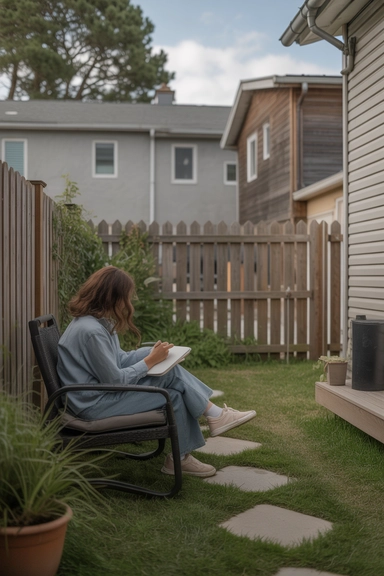
Sit in your yard at the times you actually use it. Morning coffee, afternoon reading, evening dinner outside.
The sightlines that bother you at 7am are completely different from the ones that bother you at 6pm. A neighbor’s second-floor window that overlooks your seating area needs a tall vertical solution. A street-level view through a side gate needs something low and dense at ground level. Treating both problems the same way wastes money and produces results that fix neither.
I spent an entire Saturday just sitting in different spots in my yard with a coffee, noting exactly where I felt exposed. That exercise saved me from buying the wrong plants for the wrong spots, which I had already done once before and was not doing again.
Solid Fencing Versus Living Screens
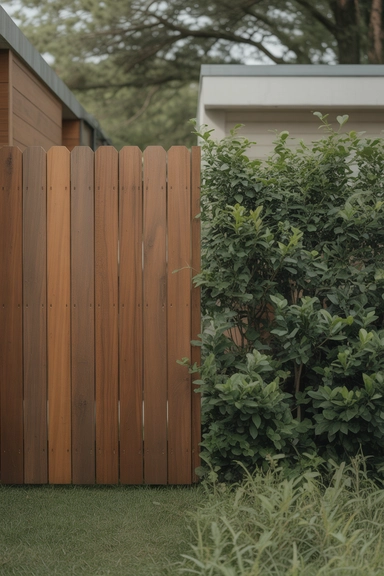
Here is the debate that splits every backyard privacy conversation straight down the middle.
Solid fencing gives you immediate results. A 6-foot cedar board fence blocks the view on day one, handles wind better than most people expect, and requires almost no ongoing care beyond a coat of stain every few years. Living screens take two to three growing seasons to fill in properly, need watering and soil amendment, and can develop fungal disease in tight shaded spots. I have both in my yard and I will tell you directly: for immediate privacy, fencing wins every time.
That said, a living screen of fast-growing bamboo or dense evergreen shrubs softens a yard in a way that wood panels never will. The sound dampening alone makes a difference in a noisy neighborhood.
Pergolas and Overhead Structure for Vertical Privacy
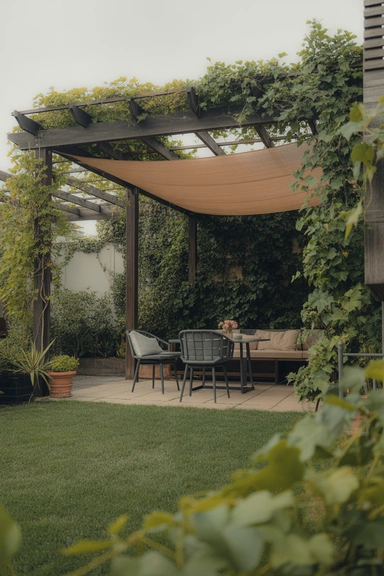
Most people only think about side privacy and completely forget the view from above.
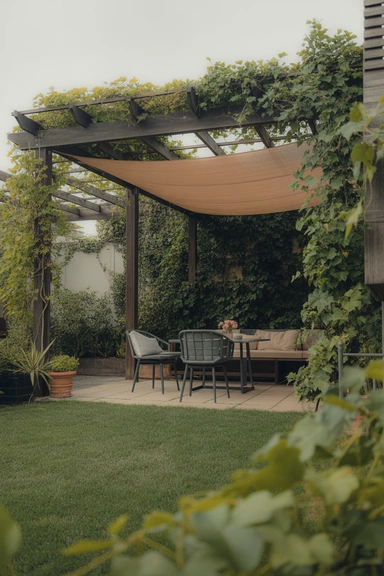
A second-floor neighbor, an elevated deck next door, or even an apartment building overlooking your yard makes outdoor relaxation uncomfortable regardless of how tall your fence is. A pergola with a shade sail or climbing vines overhead solves that problem while adding a defined outdoor room at the same time. Wisteria covers a pergola densely enough within two seasons to block most overhead sightlines completely.
Before spending a single dollar on plants or panels, Backyard Patio Ideas is the one resource that will stop you from building a structure in the wrong spot and losing both the money and the season.
Bamboo as a Privacy Screen
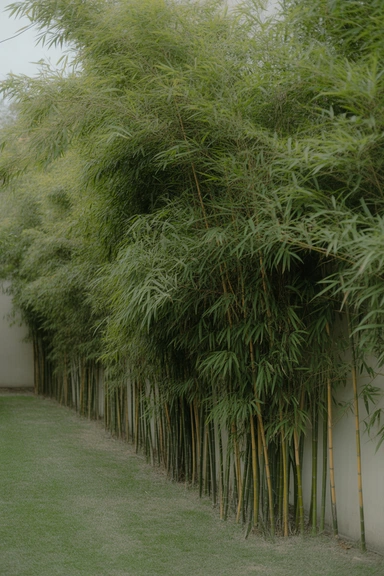
Fast. Dense. And genuinely one of the most misunderstood plants in any backyard privacy conversation.
Running bamboo spreads aggressively through rhizomes underground and will invade a neighbor’s yard within two seasons if you plant it without a root barrier. Clumping bamboo stays contained, grows 2 to 3 feet per year in good conditions, and reaches 15 feet at maturity in most temperate climates. The difference between those two types determines whether your privacy solution becomes a neighborhood problem. Always confirm which type you are buying before it goes in the ground.
I made the running bamboo mistake in a rental property years ago. The landlord was not happy. The neighbor was less happy. Plant clumping varieties only and install a 24-inch deep HDPE root barrier at the planting edge regardless.
Lattice Panels as a Budget Solution
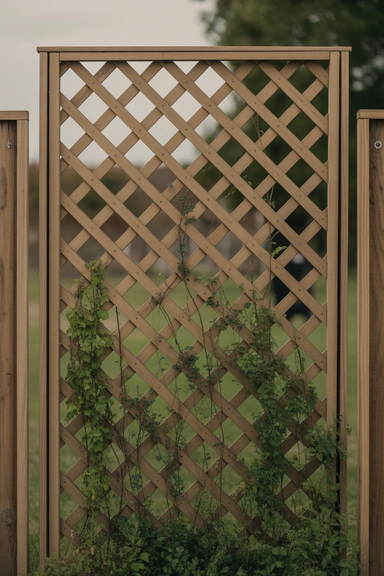
Lattice is underestimated. Every time I suggest it, people picture the flimsy white plastic kind stapled to a deck skirt.
That is not what I mean. Cedar or pressure-treated wood lattice panels mounted in a sturdy frame and topped with a climbing plant create a privacy screen that looks intentional and costs a fraction of solid fencing. A 4-by-8-foot cedar lattice panel runs about $30 to $45 at most home improvement stores. Frame it properly with 4×4 posts set in concrete and it holds for years without warping.
Climbing roses, jasmine, or a native honeysuckle planted at the base fills a lattice panel with dense foliage within one full growing season. The visual result looks like a planted wall, not a trellis from a hardware store.
Strategic Tree Placement for Long-Term Privacy
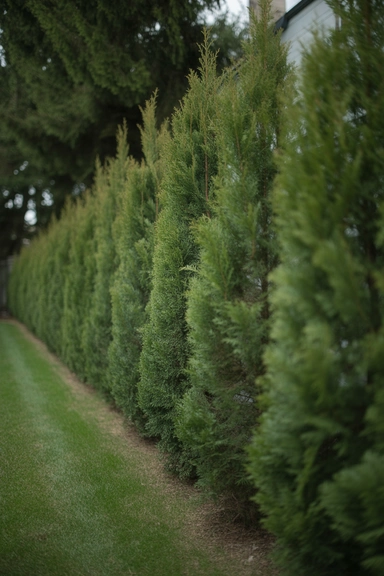
A tree planted in the wrong spot solves nothing and creates new problems in ten years.
Evergreen trees like Emerald Green arborvitae, Green Giant thuja, or Leyland cypress provide year-round screening because they do not lose foliage in winter. Deciduous trees give you dense summer cover and bare branches in January, which is exactly when you want privacy least if you live somewhere cold. Planting for long-term backyard privacy means choosing evergreen columnar varieties that grow tall without spreading wide.
Spacing matters more than most planting guides admit. Emerald Green arborvitae planted 3 feet apart creates a solid screen within four years. Planted 5 feet apart and you are waiting six or seven years for the gaps to close. Pay for the tighter spacing upfront or accept the wait.
Container Privacy Screens for Renters
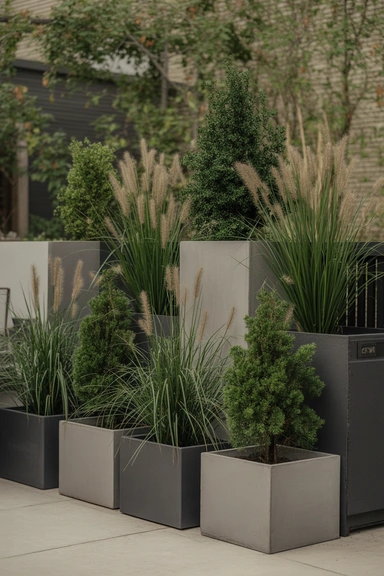
You cannot dig. You cannot install posts. That does not mean you are out of options.
Large containers planted with tall ornamental grasses, bamboo clumps, or columnar evergreens create moveable privacy screens that go with you when you leave. A container needs to be at least 20 inches in diameter and 18 inches deep to support a plant with any real height. Anything smaller and the root system cannot sustain the growth you need for actual screening.
Arrange containers in a staggered line rather than a straight row. A straight row of containers looks like a barrier. A staggered arrangement looks like a planted garden, which reads as intentional design rather than a makeshift solution.
Outdoor Curtains as Instant Privacy
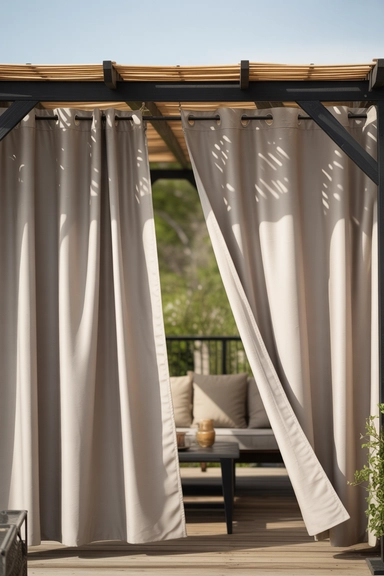
This is the fastest solution in this entire article and most people never consider it.
Outdoor curtains hung from a pergola or between two posts on a tension rod give you privacy on demand. Pull them closed when you want seclusion, tie them back when you want the open feel. Marine-grade outdoor fabric handles rain and UV without fading for three to four seasons. IKEA makes outdoor curtain panels that work well for this purpose at a price that makes the experiment low-risk.
Everything I got wrong in year one of my backyard renovation is covered in Backyard Landscaping Ideas and I wish I had found it before I started buying things without a coherent plan.
Gabion Walls as a Modern Privacy Feature
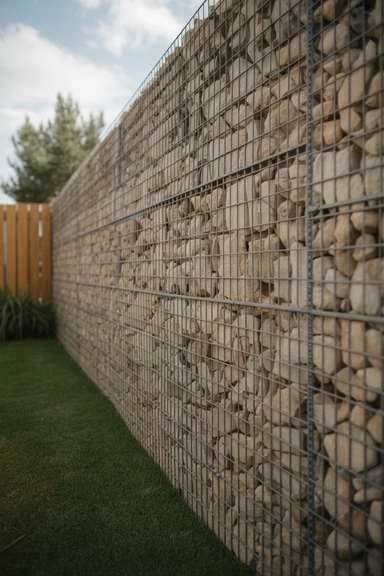
Not everyone knows what a gabion wall is. It is a wire cage filled with stone, stacked to whatever height you need.
Gabion walls handle wind better than solid wood fencing because air moves through the stone fill rather than pushing against a flat surface. They require no painting, no staining, and no replacement after a storm. A 6-foot gabion wall filled with local fieldstone creates a privacy structure that looks like it belongs in the landscape rather than something bolted onto it.
The upfront labor is real. Filling wire cages with stone by hand takes longer than most weekend warriors expect. Budget a full weekend for a 10-foot run at 6 feet tall. The result lasts decades without maintenance beyond occasional stone settling adjustment.
Using Grade Changes for Natural Screening
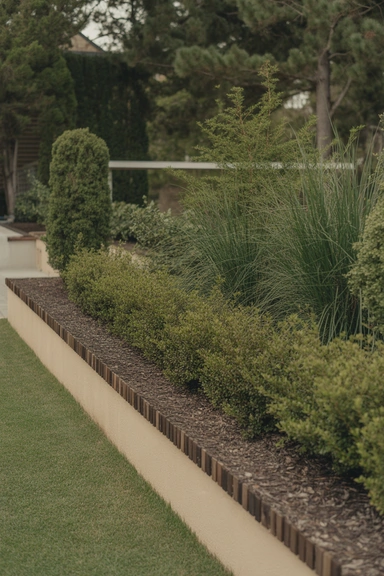
If your yard is flat, you have one privacy option. If you build grade change into it, you suddenly have three.
A raised planting bed at 24 inches gives any plants growing in it a 2-foot head start on height. That means a 4-foot shrub in a raised bed screens at the same level as a 6-foot shrub in flat ground. Berms, which are mounded soil formations, create natural elevation change that blocks sightlines from street level without any structure at all. A berm planted with dense native shrubs reads as a landscape feature, not a privacy barrier.
This is the approach I use along my front property line where fence height is restricted by local ordinance. The berm gets me the screening I need without violating any codes.
Hedge Plants That Actually Work
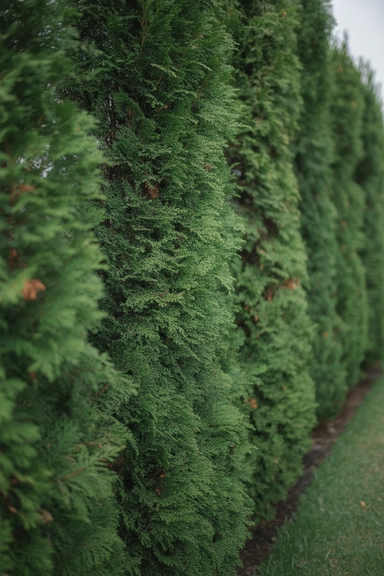
Not all hedging plants are equal and the wrong choice costs you years.
Boxwood looks refined but grows slowly, averaging 6 inches per year, and has faced serious disease pressure from boxwood blight in many regions over the past decade. Privet grows fast, up to 3 feet per year in good conditions, but loses leaves in a hard winter in zones 4 and 5. Holly stays evergreen, handles pruning well, and the dense branching structure blocks sightlines even in winter when foliage is less full. Skip laurel is the one I recommend most often for a fast, dense, low-maintenance hedge in zones 5 through 9.
Plant hedges in a staggered double row rather than a single line if space allows. That arrangement fills in faster and creates better density at the base where single-row hedges often go thin after a few years.
Shade Sails for Overhead and Diagonal Privacy
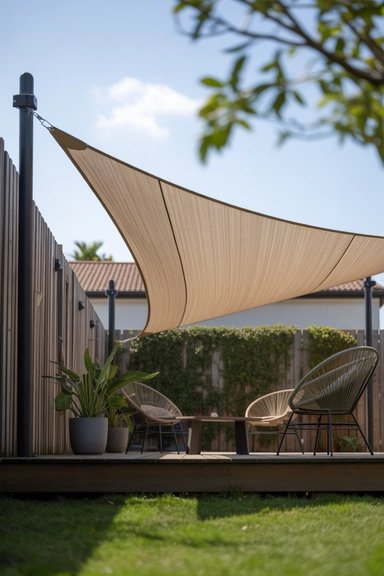
A shade sail is not just a sun blocker. Angled correctly, it blocks a sightline from an elevated neighbor or second-floor window.
Mount one corner high on a post and the opposite corner low on a fence or wall. That diagonal angle creates a visual barrier on the overhead plane that a pergola roof handles less elegantly. UV-stabilized shade sail fabric handles weather well and comes in neutral colors that read as intentional design rather than an afterthought.
Skipping Backyard Design Ideas is exactly how people end up installing a shade sail that blocks the wrong sightline and redoing the whole thing the following season.
Sound Privacy Matters as Much as Visual Privacy
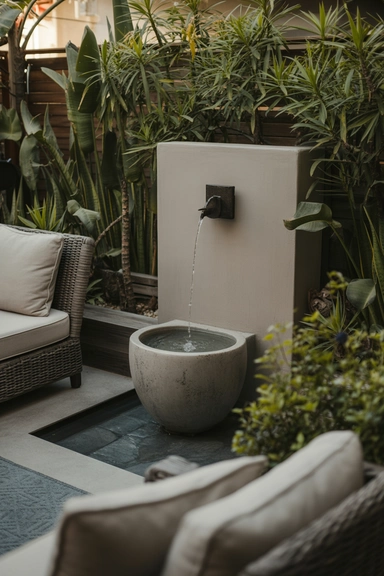
A yard that feels private visually but lets in every conversation from next door does not feel peaceful.
Water features accomplish more than people expect on the sound side. A wall-mounted fountain running at moderate pressure produces enough white noise to mask a neighboring conversation at 10 to 15 feet. Dense plantings absorb sound better than hard fences, which actually reflect noise rather than absorbing it. A combination of a solid fence close to the noise source with a planted buffer between the fence and your seating area handles both visual and acoustic privacy simultaneously.
I added a small recirculating fountain to my patio two seasons ago primarily for sound. It cost $85 and changed the feel of the space more than anything else I did that year.
Mixing Materials for a Layered Privacy Screen
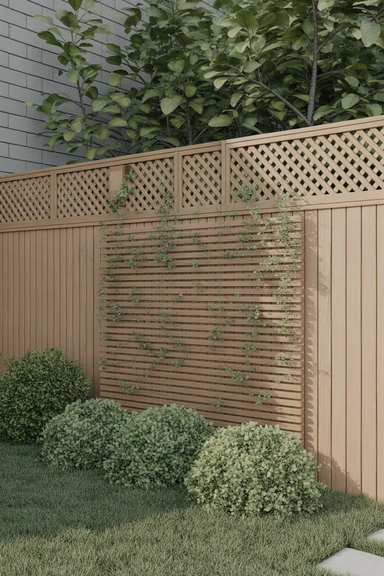
Single-solution privacy screens look flat. Layered solutions look designed.
Combine a solid lower panel at fence height with a lattice extension above it, then plant a climbing vine on the lattice and a mid-height shrub in front of the panel. That three-layer approach creates depth, handles multiple sightline heights, and looks like a landscape feature rather than a barrier. The solid base blocks views from seated neighbors. The lattice and vine handle standing sightlines. The shrub in front softens the hard edge of the fence and adds seasonal interest.
This is the approach I used along my west property line and it is the section of my yard I get the most comments on from people who visit.
Night Privacy and Lighting Strategy
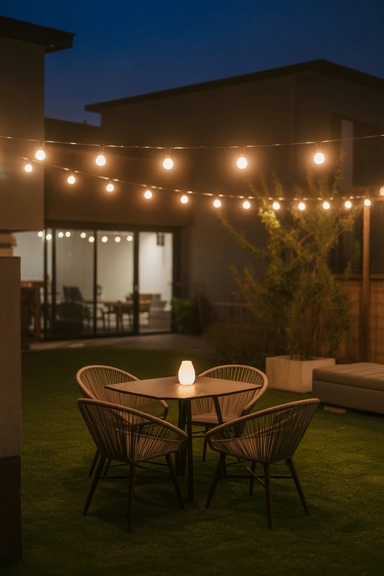
Darkness makes you visible inside a lit space to anyone standing in an unlit area outside it.
If your patio lights are bright and your neighbor’s yard is dark, you are the one on display after sunset regardless of how much daytime privacy your fence provides. Downward-facing lights aimed at tabletops and surfaces rather than outward-facing lights that broadcast your location solve this without making the space feel dim. Warm-toned LED string lights hung at canopy height create ambiance without turning your seating area into a spotlight.
Think of nighttime lighting in a private outdoor space the same way you think about window treatments indoors. The goal is to see clearly inside your own space without making yourself visible to the outside.
Final Thoughts on Backyard Privacy Ideas
Three things matter more than anything else covered here. Match your solution to the specific sightline problem rather than defaulting to one approach for the whole yard. Layer materials and plants for results that look designed rather than defensive. And plan for the mature size of whatever you plant because a privacy screen that works in year one needs to still work in year five without overwhelming the space.
The fastest results come from combining structural elements like fencing or panels with living plants in front of them. The most lasting results come from evergreen trees and dense hedge varieties chosen for your specific climate zone.
Pick the sightline that bothers you most and solve that one first. Everything else follows more easily once the priority problem is handled.
FAQ About Backyard Privacy Ideas
What is the fastest growing plant for backyard privacy?
Green Giant thuja is one of the fastest performers for a living screen, adding 3 to 5 feet per year in good growing conditions with adequate water and full sun exposure. It reaches 30 to 40 feet at maturity but stays narrow enough for most residential lots. For a quicker result in a container or small space, clumping bamboo varieties add 2 to 3 feet per season and stay contained without a root barrier.
How do I get privacy in a backyard without a fence?
Layered plantings, container screens, pergolas with climbing vines, and raised berms all create effective privacy without any fencing structure. The key is addressing the specific height and angle of the sightline you want to block rather than creating a general visual barrier at one height. Overhead structures handle elevated sightlines that ground-level solutions miss entirely.
Can outdoor curtains hold up in rain and wind?
Marine-grade outdoor fabric and solution-dyed acrylic fabrics handle rain and moderate wind without damage. The hardware matters more than the fabric. Stainless steel or powder-coated aluminum curtain rods and rings resist rust and hold the panels securely in wind. Bring curtains inside during heavy storms and they last three to four full seasons before UV degradation starts to show in the color.
Sarah Mitchell’s Take
The backyard privacy problem I see most often is people solving for how the yard looks from inside the house rather than how it feels when you are sitting in it. Those are two completely different sightlines. Walk outside, sit down in the spot where you actually want to relax, and look around from that position. What bothers you from that chair is what you fix first. Everything else is secondary.