Introduction
Craft closet organization ideas work best when they prioritize visibility over volume. Many craft closets feel chaotic not because they are small, but because supplies are layered, buried, or stored in ways that hide what is already owned. When materials are out of sight, they are often forgotten, repurchased, or left on nearby surfaces during projects. Effective craft closet organization focuses on clear sightlines, logical grouping, and easy return paths. When supplies are visible and predictable, projects move faster and cleanup becomes simpler, following the same principles used in 20 Creative Craft Storage Ideas to Organize Your Supplies.
1. Clear Bins for Categorized Craft Supplies
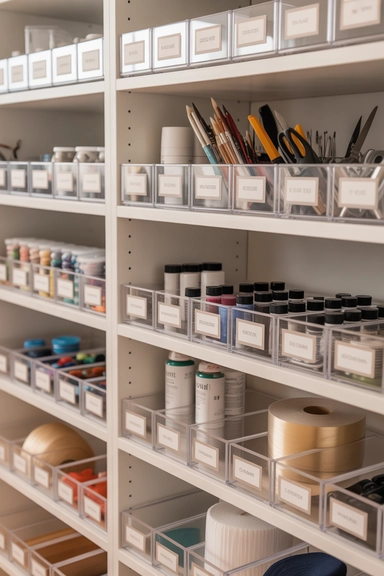
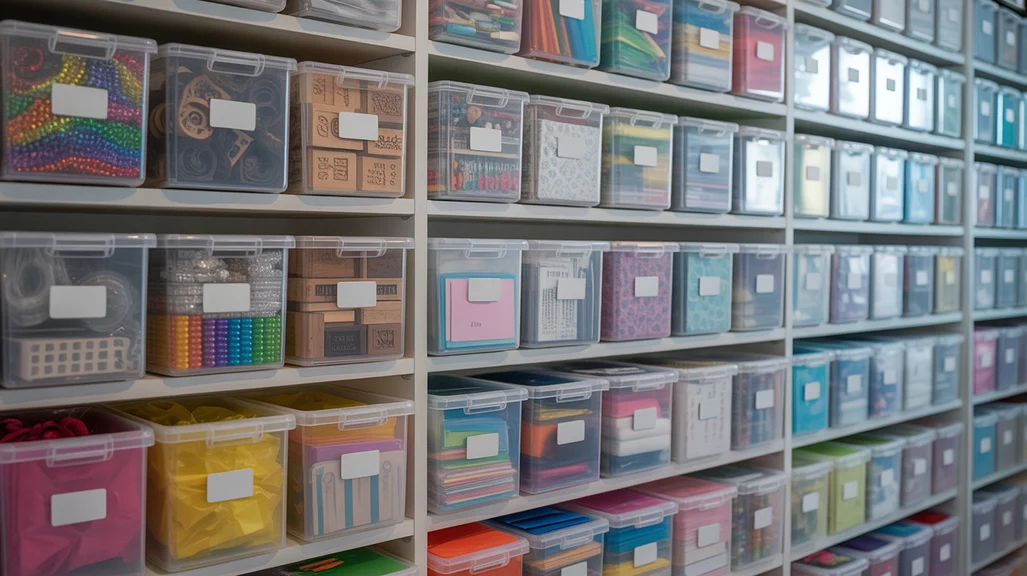
Clear bins are one of the most reliable ways to keep craft supplies visible inside a closet. Transparency allows materials to be identified instantly without opening lids or pulling containers out of place. This is especially helpful for small items like beads, stamps, or paper packs that often get mixed together when stored loosely. When supplies are easy to see, it becomes easier to maintain order during active crafting sessions.
To stay effective, bins should be grouped by category rather than size alone. Overstuffed bins reduce visibility and defeat the purpose. Leaving a small amount of empty space allows contents to shift without hiding labels or materials. Clear bins support long-term organization by making clutter obvious before it spreads.
2. Vertical Shelf Storage for Paper and Cardstock
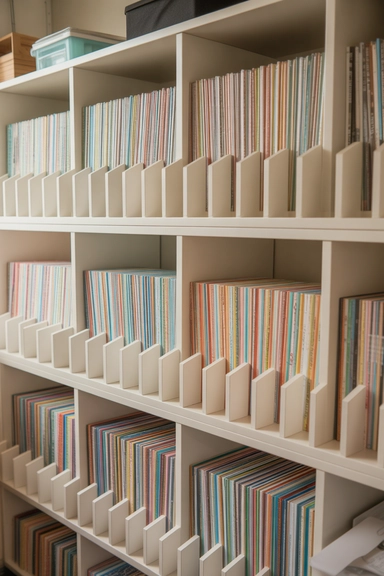
Paper and cardstock are among the most difficult craft supplies to store visibly because they bend, slide, and stack quickly. Vertical shelf storage solves this by allowing paper to stand upright, similar to file storage. This keeps colors, patterns, and sizes visible at a glance while preventing bending or edge damage.
This system works best when shelves are divided into narrow sections that prevent leaning. Grouping paper by type or project keeps selection fast and controlled. When paper is stored vertically and visibly, it is far less likely to end up piled on tables or stuffed into random drawers.
3. Wall-Mounted Storage Inside the Closet
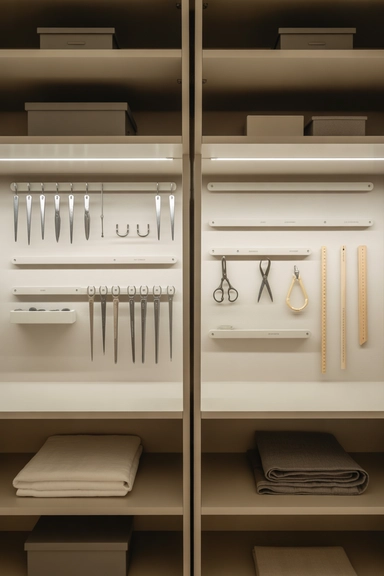
Using the interior walls of a craft closet adds visibility without consuming shelf space. Hooks, rails, or shallow wall organizers can hold tools, rulers, scissors, or frequently used supplies. This keeps essential items within reach while freeing shelves for bulkier materials.
Wall-mounted storage should be placed at eye level to maximize usefulness. Overloading walls creates visual clutter and makes items harder to return. When wall space is used intentionally, it becomes a functional extension of the closet that supports daily crafting rather than becoming another hidden storage zone.
4. Open Shelving with Shallow Depth
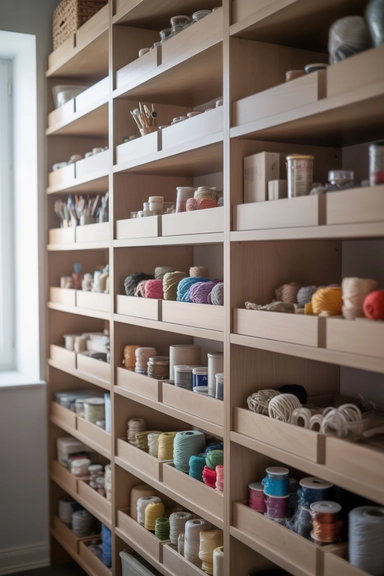
Open shelving works best in craft closets when shelves are shallow enough to keep everything visible. Deep shelves encourage double stacking, which hides supplies in the back and leads to forgotten materials. Shallow shelves force intentional placement and make it easier to see when space is running out.
This approach also improves maintenance. When supplies are visible and easy to reach, they are more likely to be returned properly after use. Open shelving creates natural limits that discourage overcrowding and help keep the closet orderly without constant reorganization.
5. Drawer Systems for Small Craft Tools
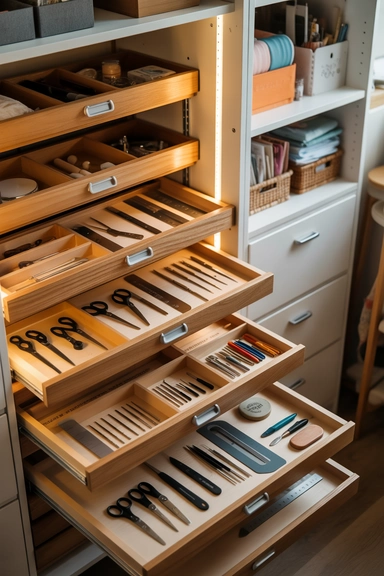
Small craft tools can quickly disappear when stored in open containers. Drawer systems provide controlled visibility by keeping items separated but still accessible. Shallow drawers allow tools to be laid flat, making it easy to see everything without digging.
Drawers should be divided by function rather than over-labeled. Too many compartments create confusion instead of clarity. When drawers are organized logically, they reduce surface clutter and prevent small tools from migrating across the closet during active projects.
6. Door-Mounted Organizers for Frequently Used Supplies
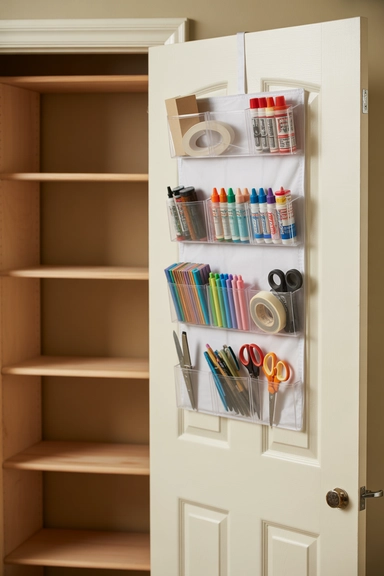
Door-mounted organizers are an efficient way to increase visibility without taking up shelf space inside a craft closet. The inside of the door can hold pockets or narrow racks for items used often, such as adhesives, markers, or small tools. Keeping these supplies at eye level prevents them from being buried behind larger bins and reduces the habit of leaving items out after use.
To remain effective, door storage should be curated carefully. Overloading pockets causes sagging and visual clutter. When only high-rotation supplies are stored here, the door becomes a functional access point rather than a dumping zone, keeping the rest of the closet orderly.
7. Labeled Containers for Quick Identification
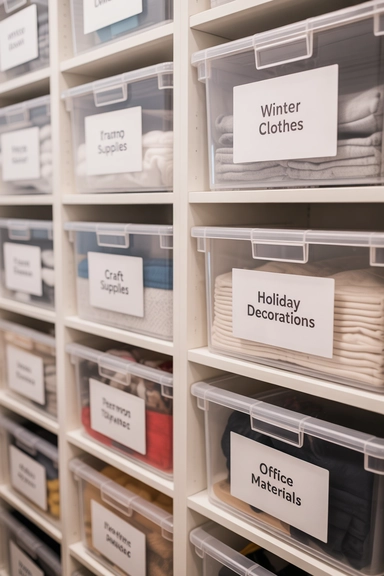
Labeling is essential in a craft closet where supplies may look similar at a glance. Clear, consistent labels help identify contents instantly, reducing unnecessary handling and disruption. When containers are labeled accurately, supplies are more likely to be returned to the correct place, especially in shared craft spaces.
Labels should support visibility, not replace it. Simple text labels placed where they can be read easily work best. Overly decorative or overly detailed labeling systems often fail because they require too much upkeep. When labels reinforce an already logical layout, organization stays intact longer.
8. Shelf Zoning by Craft Type
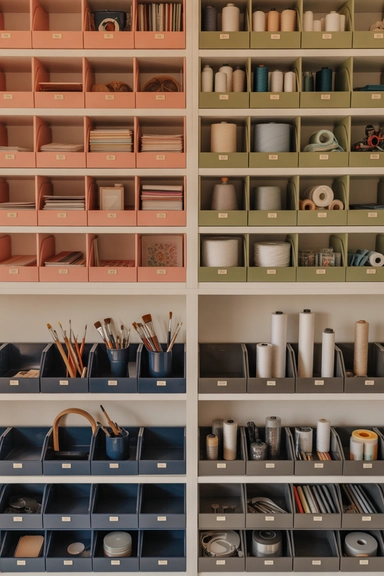
Dividing shelves by craft type improves visibility and prevents materials from migrating into unrelated areas. Grouping supplies for paper crafts, sewing, painting, or Cricut projects keeps everything needed for a task within one visible zone. This reduces setup time and limits the spread of materials across the closet and surrounding space.
This method reflects the same task-based logic used in 21 Creative Organization Ideas for Your School Office, where grouping by function simplifies daily use. When shelf zones align with how projects are actually done, the closet remains easier to maintain even during busy crafting periods.
9. Tiered Storage for Small Containers
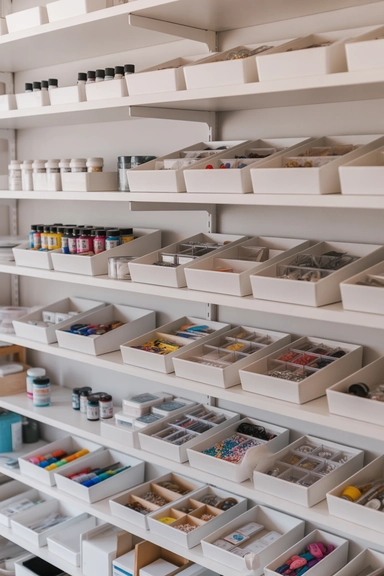
Tiered storage allows multiple rows of small containers to remain visible without stacking. This is especially useful for items like paints, inks, beads, or embellishments that are easy to lose when placed behind one another. Elevation ensures that nothing is hidden, reducing overbuying and clutter.
Tiered systems should be sized to match container height. When tiers are too tall or too shallow, items tip or slide. Properly fitted tiered storage supports clear sightlines and keeps small supplies accessible without overwhelming shelves.
10. Clear Project Bins for Active Work
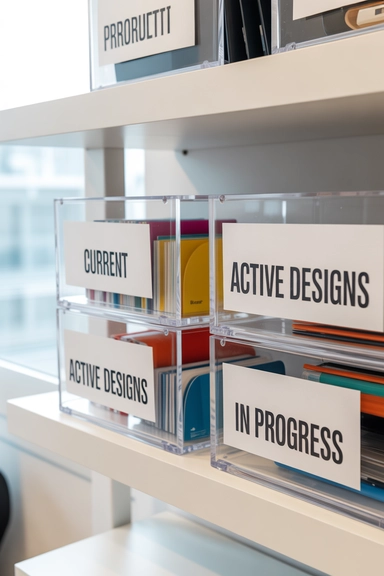
Project bins keep in-progress work visible without allowing it to spread across the entire closet. Using clear bins allows you to see what is inside without opening them, which helps prevent forgotten or abandoned projects. This containment keeps active materials separate from general supplies.
Bins should be temporary by design. Limiting how many project bins are allowed encourages completion and cleanup. When active projects have defined, visible storage, the rest of the craft closet stays organized and functional.
11. Adjustable Shelving for Changing Supply Needs
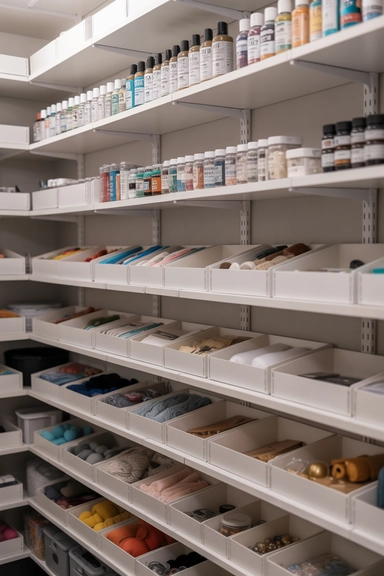
Adjustable shelving is essential in a craft closet because supplies evolve over time. New tools, materials, and project types often require different storage heights and spacing. Fixed shelves force supplies into awkward stacks that reduce visibility. Adjustable shelves allow the closet to adapt, keeping materials upright, visible, and easy to reach rather than compressed or hidden.
This flexibility also prevents long-term clutter. When shelves can be repositioned, supplies are less likely to spill into unrelated areas. Adjustability supports intentional editing, making it easier to reorganize without replacing furniture. A craft closet that can change stays organized longer because it works with creative growth instead of resisting it.
12. Open Containers for Frequently Reached Items
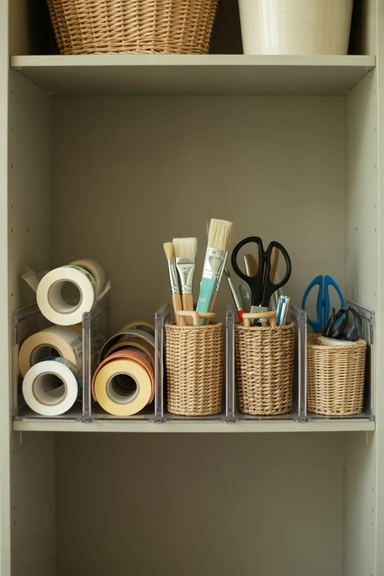
Open containers work well for supplies that are used repeatedly during most projects. Items such as scissors, tape, brushes, or small tools benefit from being visible and immediately accessible. Open storage reduces friction, which lowers the chance that supplies will be left out on nearby surfaces instead of returned to the closet.
To avoid visual clutter, open containers must be curated carefully. Only high-use items should be stored this way. When containers become overfilled, visibility is lost and disorder returns. Used intentionally, open containers act as quick-access zones that support workflow while keeping the rest of the closet orderly.
13. Vertical Hanging Storage for Long or Awkward Items
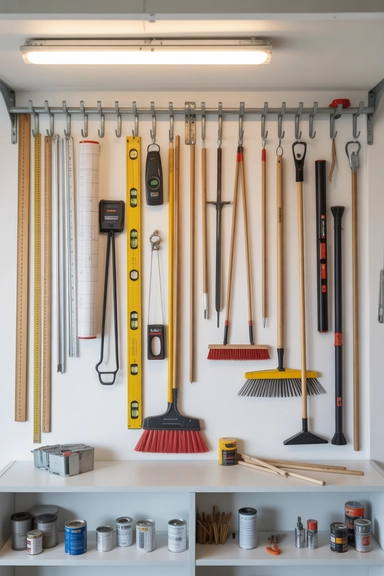
Some craft supplies, such as rolls, rulers, fabric pieces, or cutting tools, do not store well on shelves. Vertical hanging storage keeps these items visible without bending or stacking. Hanging systems prevent awkward items from being shoved into corners where they are forgotten or damaged.
This method works best when items are grouped by size or use. Spacing is important to prevent tangling or crowding. When long or irregular supplies are stored vertically, shelves are freed up for smaller items, and the entire closet becomes easier to navigate and maintain.
14. Shallow Bins to Prevent Back Layering
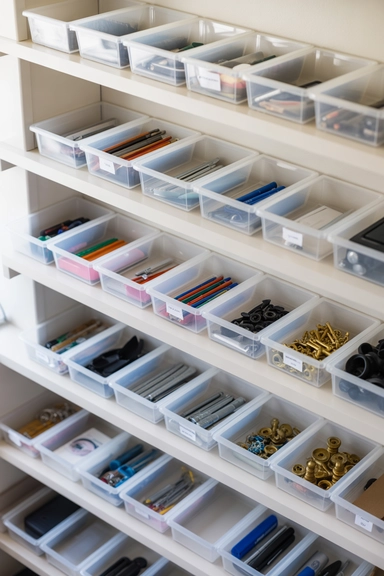
Deep bins often hide supplies at the bottom, creating visual clutter even when everything is technically contained. Shallow bins prevent this by limiting how much can be layered inside. When supplies are stored in shallow containers, everything remains visible, reducing forgotten items and duplicate purchases.
Shallow bins also encourage editing. When space fills up, it becomes obvious that something must be removed or reorganized. This natural boundary keeps the closet from becoming overloaded. By preventing back layering, shallow bins maintain visibility and support long-term order.
15. Grouping Supplies by Material Instead of Size
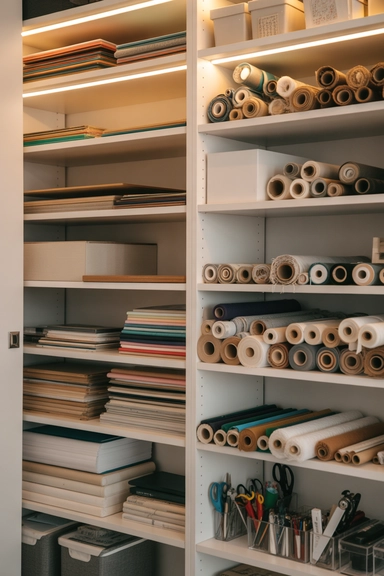
Grouping craft supplies by material rather than container size improves visibility and usability. Storing paper with paper, fabric with fabric, and tools with tools makes it easier to locate what is needed without scanning multiple shelves. This reduces unnecessary handling and keeps supplies from spreading across the closet during projects.
Material-based grouping also supports better storage decisions. Similar items often require similar conditions, such as flat storage or vertical support. When supplies are grouped intentionally, the closet feels logical and predictable, which helps maintain organization even during busy creative periods.
16. Clear Drawers for Flat and Small Supplies
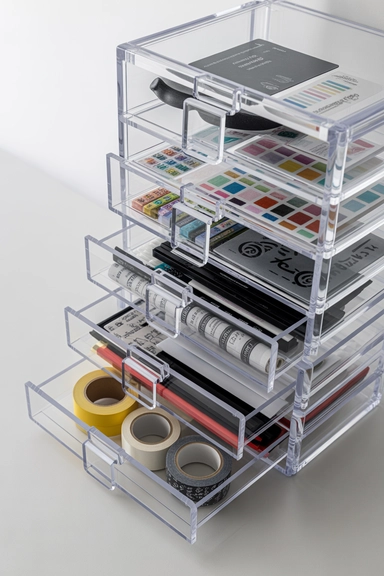
Clear drawers are especially useful for flat or small craft supplies that tend to disappear in deeper containers. Items like stickers, stencils, fabric swatches, and specialty papers stay visible when stored in shallow, transparent drawers. This prevents unnecessary digging and reduces the chance of supplies being bent or forgotten under heavier materials.
Drawer height matters here. Shallow drawers discourage stacking and keep items spread in a single layer. When contents can be seen instantly, decision-making becomes faster and cleanup more consistent. Clear drawers support visibility while still providing containment, which is ideal for maintaining long-term craft closet order.
17. Pull-Out Shelves for Deeper Closet Spaces
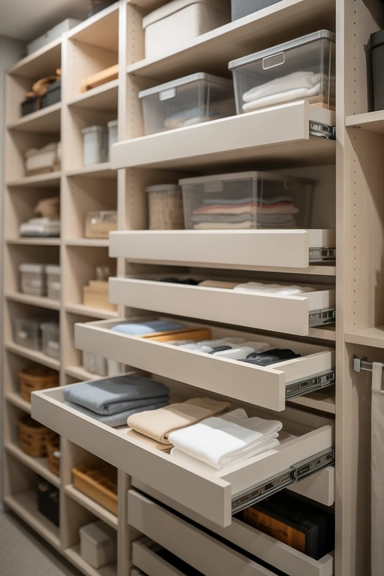
Deep closets often hide supplies toward the back, even when everything is technically organized. Pull-out shelves solve this by bringing materials forward into full view. Supplies stored on sliding shelves are easier to access and return, reducing the tendency to leave items out after use.
This system works particularly well for heavier bins or bulk materials. When shelves glide smoothly, visibility and accessibility improve without requiring additional sorting. Pull-out shelves turn difficult depth into usable space, preventing clutter from building simply because items are hard to reach.
18. Color-Based Organization for Visual Clarity

Organizing supplies by color can significantly improve visibility, especially for items like paper, vinyl, yarn, or fabric. Color-based systems allow quick scanning and reduce the time spent searching through bins. This approach also highlights duplicates and excess, making it easier to edit supplies over time.
To avoid chaos, color organization should be applied within clear categories rather than across the entire closet. When color is layered onto an already logical structure, it enhances clarity instead of overwhelming it. Used selectively, color grouping keeps supplies visible and visually engaging.
19. Storage Limits That Prevent Overcrowding
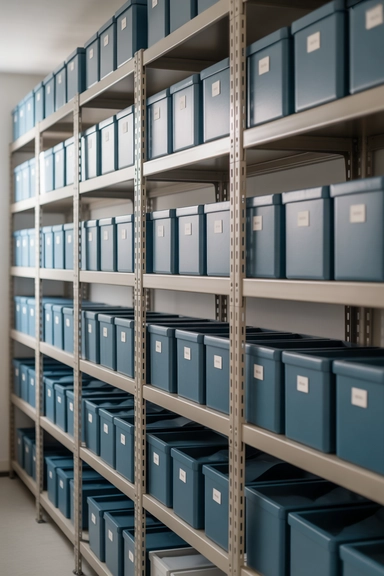
One of the most effective visibility strategies is limiting how much can be stored in one area. Overcrowding hides supplies and makes maintenance difficult. Setting clear limits—such as one bin per category or a fixed shelf space—prevents clutter from expanding unnoticed.
These limits act as built-in checkpoints. When space is full, it signals the need to finish projects, donate extras, or reorganize. Storage limits keep the craft closet functional by ensuring that visibility is preserved rather than sacrificed for quantity.
20. Open Zones for High-Rotation Materials
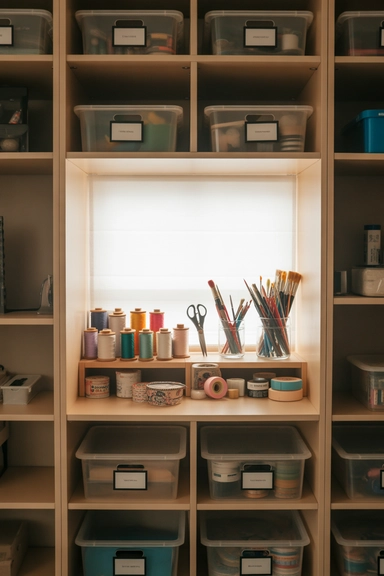
High-rotation materials benefit from open zones where they can be seen and accessed without opening containers. Items like frequently used adhesives, cutting tools, or current project materials stay visible in these zones, reducing friction during crafting sessions.
Open zones should be small and intentional. Too much open storage leads to visual clutter. When limited to essentials, open zones support workflow while protecting the rest of the closet from becoming messy. This balance keeps supplies accessible without overwhelming the space.
21. Systems That Support Quick Visual Scanning
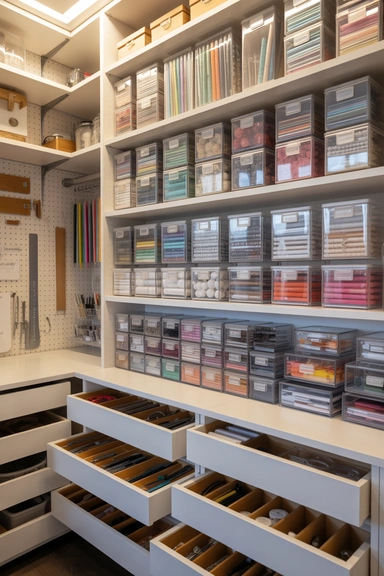
The most effective craft closets allow quick visual scanning of supplies. When everything has a predictable location and remains visible, it becomes easier to assess what is available before starting a project. This prevents overbuying and reduces unnecessary mess during setup.
Visual scanning depends on consistency. Supplies should return to the same place every time. When systems are simple and visibility-driven, organization becomes intuitive. A craft closet designed for visual clarity stays functional even during busy creative periods.
Conclusion
Craft closet organization works best when visibility guides every storage decision. Supplies become cluttered when they are hidden, layered, or difficult to return after use. By using clear containers, shallow storage, and intentional zoning, materials remain visible and easier to manage. Systems that prioritize sightlines and access reduce setup time, support creative flow, and make cleanup simpler. When visibility is maintained, a craft closet stops feeling overwhelming and becomes a reliable, functional part of the creative process.