
Introduction
Lid storage hacks become essential when cabinets turn into noisy, unstable piles of mismatched covers that never seem to pair correctly with their containers or cookware. Lids are awkward by nature—flat, round, slippery, and rarely uniform—which makes them one of the fastest sources of cabinet chaos. When lids are stacked or tossed into deep spaces without structure, they slide, tip, and disappear behind larger items. Effective lid storage focuses on separation, visibility, and upright positioning rather than stacking. When lids are stored intentionally, cabinets become quieter, safer, and far easier to use, following the same principles found in 23 Brilliant Kitchen Drawer Organizing Ideas You Need to Try.
1. Vertical Lid Storage Using Adjustable Dividers
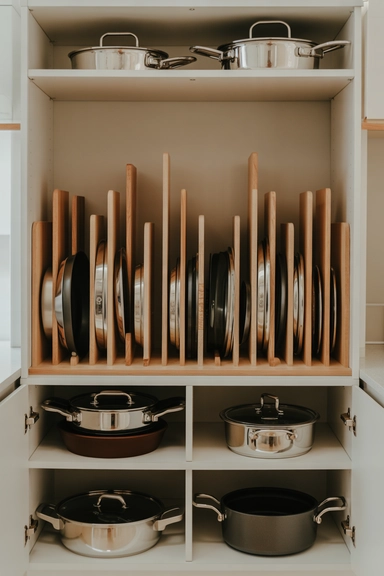
Storing lids vertically immediately reduces cabinet chaos by preventing sliding stacks. Adjustable dividers create individual lanes that allow each lid to stand upright, making it easy to grab one without disturbing others. This approach works especially well for pot and pan lids of varying sizes, which rarely stack evenly. Vertical storage also improves visibility, eliminating the need to lift and shuffle lids just to find the right one.
Dividers should be spaced loosely enough to avoid pressure, especially for glass lids. When lids are squeezed too tightly, they become harder to remove and more likely to clatter. Adjustable systems work best because spacing can be fine-tuned as lid collections change over time, maintaining order without constant reorganization.
2. Door-Mounted Racks for Lightweight Lids
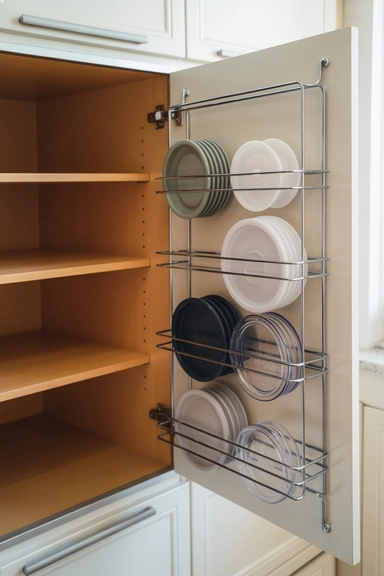
Door-mounted racks turn unused cabinet doors into functional lid storage zones. Lightweight lids, especially those for containers or smaller cookware, can be stored vertically on the inside of doors, keeping them visible and off shelves. This immediately frees up cabinet space and prevents lids from becoming buried under heavier items.
The key to success with door racks is restraint. Only lids that are light and frequently used should be placed here to avoid stressing hinges or causing doors to sag. When used selectively, door-mounted storage creates easy access points that stop lids from migrating back into cabinet piles.
3. Drawer Storage with Upright Organizers
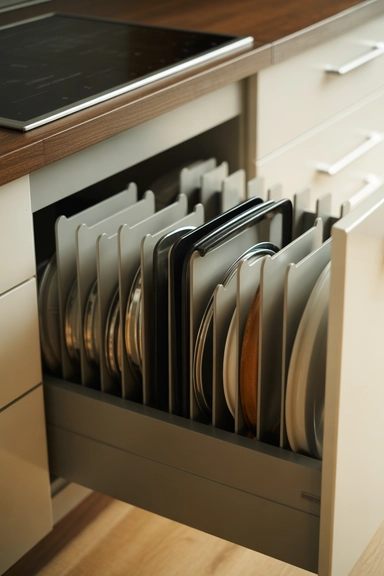
Deep drawers often become dumping grounds for loose lids unless they are structured properly. Upright organizers inside drawers allow lids to stand vertically, similar to file storage. This keeps each lid visible and prevents them from sliding into one another when drawers are opened or closed.
Drawer-based lid storage works best when organizers are sized to fit drawer depth precisely. Too much empty space leads to shifting, while tight spacing causes friction. When drawers are organized intentionally, lids stay contained, quiet, and easy to match with their containers.
4. Pull-Out Cabinet Organizers for Mixed Lid Sizes
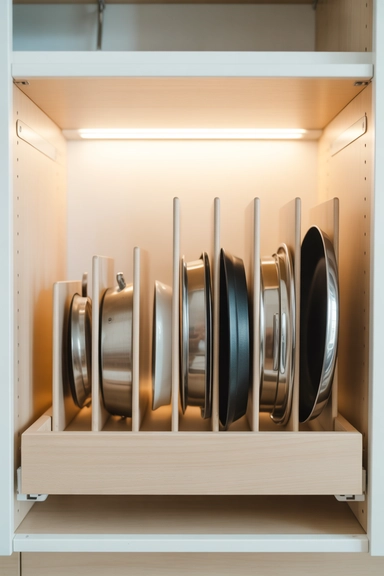
Pull-out cabinet organizers are ideal for storing mixed lid sizes because they bring everything into view at once. Instead of reaching into deep cabinets, pull-out systems allow lids to move forward smoothly, reducing the risk of tipping or clattering. This is particularly useful for households with multiple cookware brands and lid shapes.
Organizers should include vertical separators to keep lids upright during movement. Without this structure, pull-out shelves simply relocate the mess. When properly configured, pull-out lid storage turns hard-to-reach cabinet space into one of the most functional areas in the kitchen.
5. Shelf-End Storage for Quick Lid Access
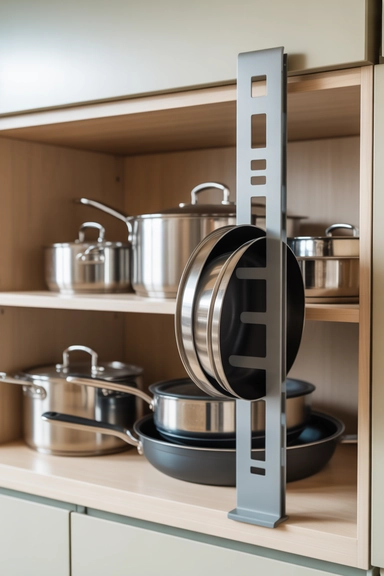
Using the ends of shelves for lid storage helps keep lids accessible without interrupting main storage zones. Shelf-end racks or narrow dividers allow lids to stand upright at the front or side of cabinets, where they can be grabbed quickly during cooking. This placement reduces rummaging and keeps lids from slipping behind pots or containers.
This method works best for frequently used lids that need fast access. Limiting shelf-end storage to a manageable number prevents overcrowding. When lids have a visible, consistent location, they stop contributing to cabinet chaos and become easier to return after use.
6. Wall-Mounted Lid Holders Near Cooking Zones
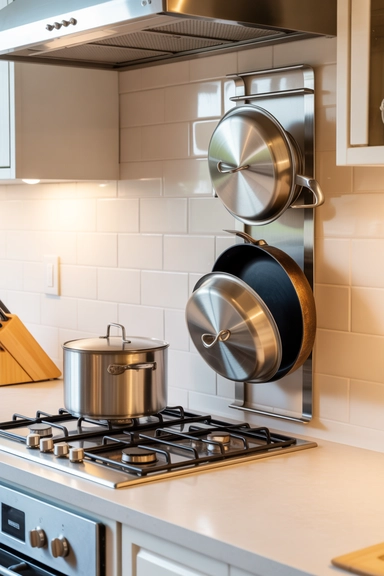
Wall-mounted lid holders work well when lids are used frequently during cooking and need to be accessed quickly. Mounting holders on a nearby wall or backsplash keeps lids upright, visible, and off cabinet shelves. This reduces cabinet congestion and eliminates the noise and instability caused by stacked lids. Keeping lids close to the stove also improves workflow, especially during multi-pot cooking.
These holders should be installed thoughtfully to avoid visual clutter. Limiting the number of lids stored on the wall prevents overcrowding and keeps the space functional rather than decorative. When wall storage is used intentionally, it removes pressure from cabinets and supports smoother, more efficient cooking routines.
7. Drawer Peg Systems for Container Lids
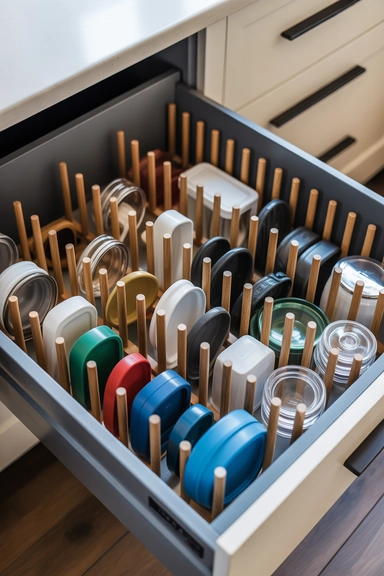
Drawer peg systems provide flexible, custom-fit storage for container lids of varying sizes. Pegs can be repositioned to create snug boundaries that hold lids upright and prevent them from sliding during drawer movement. This is especially effective for plastic or silicone lids that tend to shift when loosely stored.
The strength of peg systems lies in adaptability. As lid collections change, pegs can be rearranged without replacing the entire organizer. This approach reflects the same depth-focused logic used in 25 Deep Kitchen Cabinet Organization Ideas That Actually Work, where structure and visibility prevent clutter from reforming. Proper spacing ensures lids remain easy to remove and return.
8. File Rack Storage for Flat Lids
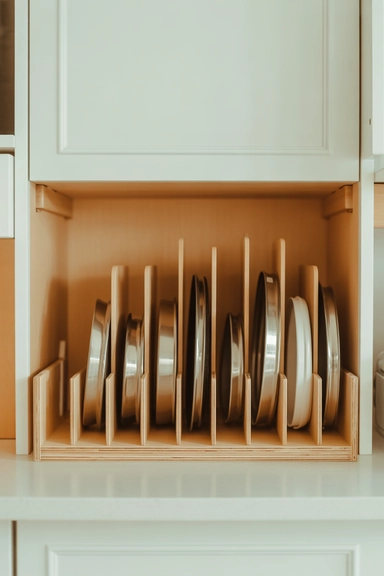
File racks are an underrated solution for storing flat lids, particularly those from bakeware, glass containers, or uniform cookware sets. Positioned vertically on a shelf or inside a cabinet, file racks separate lids into individual slots that keep them visible and upright. This prevents the leaning and sliding that often cause stacks to collapse.
File racks should be sturdy enough to support weight without bending. Spacing should allow lids to slide in and out smoothly without friction. When used correctly, this method creates quiet, orderly storage that keeps lids accessible while eliminating the need for stacking entirely.
9. Under-Shelf Storage to Use Wasted Space
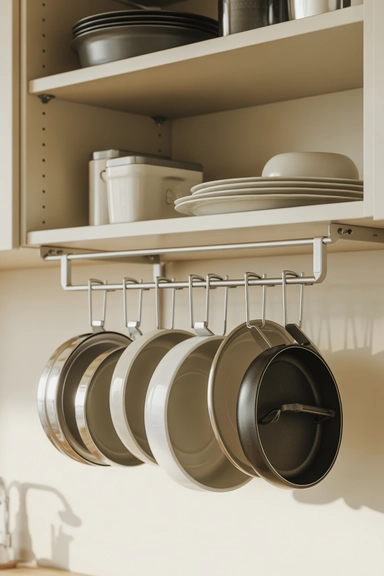
Under-shelf storage takes advantage of vertical space that often goes unused inside cabinets. Hanging racks or clips beneath shelves can hold lightweight lids without interfering with items stored above. This redistributes storage rather than compressing everything into one area, reducing clutter and improving balance.
This approach works best for container lids rather than heavy glass lids. Weight limits should always be respected to avoid sagging shelves. When under-shelf storage is applied selectively, it expands capacity without creating new chaos, helping cabinets stay organized even as lid collections grow.
10. Grouping Lids by Size and Function
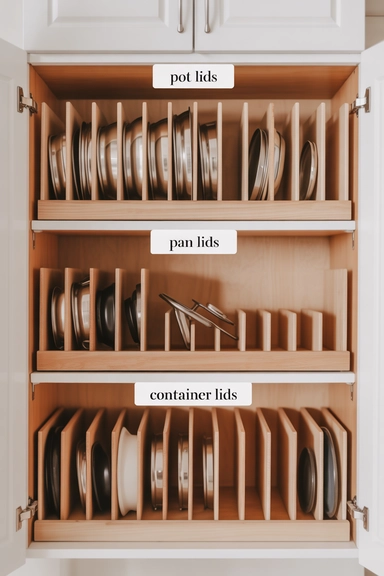
Grouping lids by size and function is one of the simplest ways to reduce cabinet chaos. When lids are stored randomly, finding the right match becomes frustrating and disruptive. Organizing lids into clear groups—such as pot lids, pan lids, and container lids—keeps storage predictable and easy to maintain.
Each group should have its own defined space to prevent overlap. Mixing categories often leads to sliding and unstable stacks. When lids are grouped intentionally, cabinets remain calmer and everyday cooking becomes more efficient, as the right lid is always easy to locate.
11. Cabinet Drawer Inserts Designed for Lids
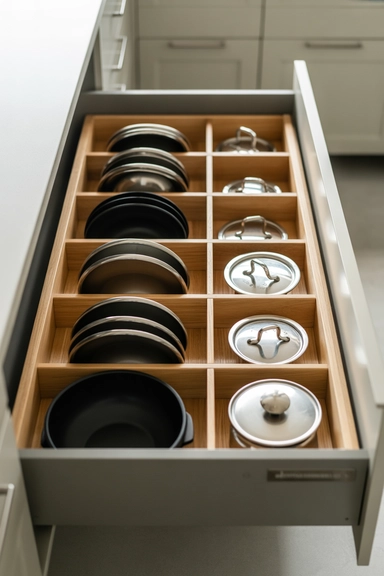
Drawer inserts specifically designed for lids help prevent shifting and noise inside deep drawers. These inserts create upright channels that keep lids separated and stable, even when drawers are opened quickly. This is especially helpful for glass lids, which are prone to sliding and clattering when stored loosely. By keeping lids vertical, inserts protect edges and make it easier to grab exactly what is needed.
The key is choosing inserts that allow some flexibility rather than rigid spacing. Lid sizes often vary slightly, and overly tight channels make removal frustrating. When inserts support rather than constrain, drawers stay organized and lids return to their place naturally after use.
12. Standing Lid Storage Behind Pots and Pans
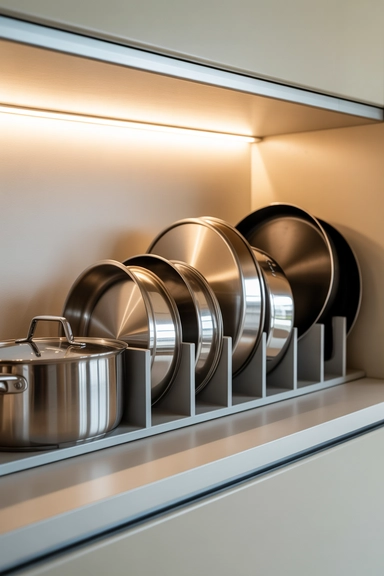
Placing lids upright behind pots and pans on the same shelf creates a functional pairing system. This method keeps lids close to the cookware they belong to, reducing the need to search through separate storage zones. When lids stand vertically behind pots, they remain visible and easy to slide out without lifting heavy stacks.
This setup works best when shelves are not overcrowded. Too many pots compress lids and cause tipping. Leaving breathing room allows lids to stand securely and reduces noise. When cookware and lids are stored together intentionally, cabinet chaos decreases and cooking flow improves.
13. Narrow Cabinet Sections Dedicated to Lids
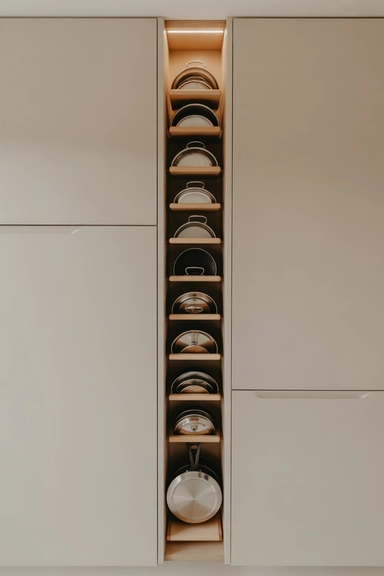
Narrow cabinet sections are often underused or treated as overflow zones, but they are ideal for lid storage. These slim spaces naturally limit stacking and encourage vertical placement. Installing simple dividers or racks in narrow cabinets allows lids to stand upright without competing with larger cookware.
Because space is limited, this approach forces editing and prevents overcrowding. Only lids that fit comfortably should be stored here. When narrow cabinets are assigned a clear purpose, they stop becoming clutter magnets and instead provide one of the most stable storage solutions for lids.
14. Countertop Lid Stands for Daily Use
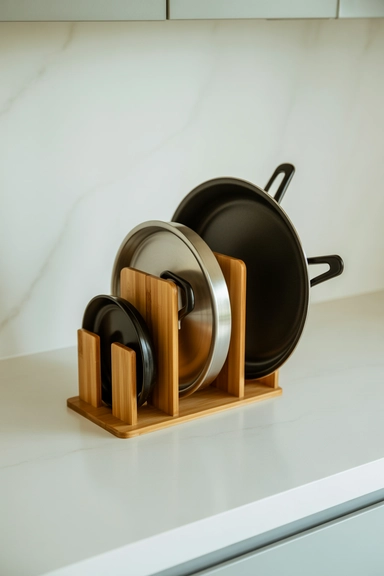
Countertop lid stands are practical for lids used multiple times a day, especially in busy kitchens. Keeping a small number of lids upright on the counter prevents constant cabinet opening and closing during cooking. This reduces disruption and keeps frequently used lids from being set down randomly on nearby surfaces.
To avoid adding visual clutter, countertop storage should be minimal and intentional. Only daily-use lids belong here. When used sparingly, lid stands improve workflow without sacrificing counter space, helping keep the rest of the kitchen organized.
15. Using Tension Rods to Create Lid Slots
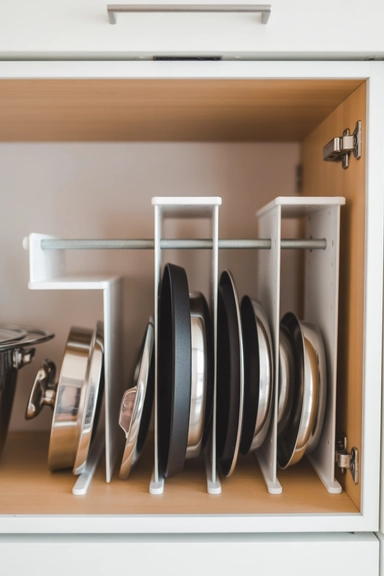
Tension rods offer a simple way to create custom lid slots inside cabinets without permanent installation. By placing rods vertically or horizontally, lids can be held upright and separated into individual sections. This prevents sliding and allows lids to be removed without disturbing others.
Tension rods work best in cabinets with consistent dimensions. Spacing should be tested to ensure lids remain secure without pressure. When installed thoughtfully, tension rods provide flexible, low-cost organization that adapts easily as lid collections change.
16. Using Deep Drawers with Vertical Dividers
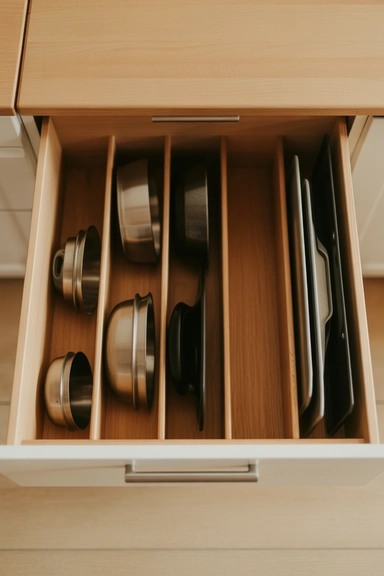
Deep drawers can work for lid storage when vertical dividers are added to control movement. Dividers allow lids to stand upright rather than stacking flat, which prevents sliding and reduces noise when drawers are opened. This setup is especially useful for mixed lid sizes that do not nest well together.
Spacing should allow lids to move smoothly without tipping. Overly tight dividers create friction, while wide gaps allow shifting. When deep drawers are structured intentionally, they become one of the quietest and most efficient places to store lids, keeping them accessible without contributing to cabinet chaos.
17. Storing Lids by Material Type
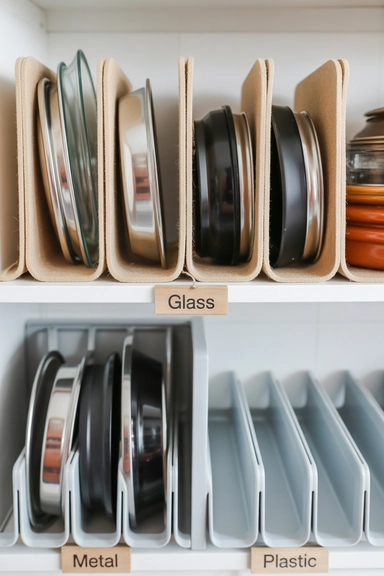
Organizing lids by material—such as glass, metal, or plastic—helps prevent damage and instability. Glass lids benefit from more spacing and upright support, while plastic lids can tolerate lighter pressure. Separating materials reduces accidental chipping and makes it easier to choose appropriate storage methods for each group.
This approach also improves predictability. When lids are grouped by material, storage becomes intuitive and easier to maintain. Instead of mixing incompatible items, each category receives the support it needs, resulting in calmer cabinets and longer-lasting cookware.
18. Using Open Racks for Quick Visibility
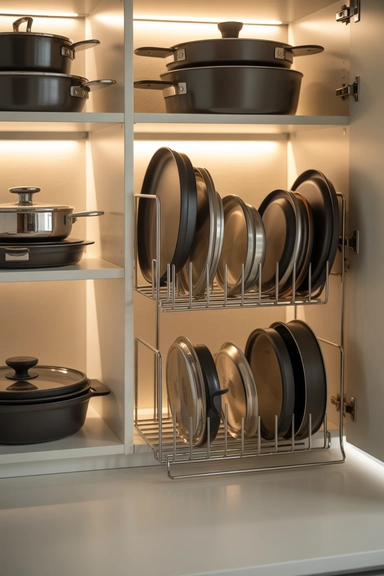
Open racks provide instant visibility and are ideal for frequently used lids. When lids are visible at a glance, there is no need to dig through stacks or open multiple cabinets. This reduces frustration and encourages lids to be returned to their proper place after use.
Open racks should be placed where they do not interfere with other items. Limiting capacity is essential to avoid overcrowding. When used thoughtfully, open racks strike a balance between accessibility and order, helping stop cabinet chaos before it starts.
19. Limiting the Number of Stored Lids
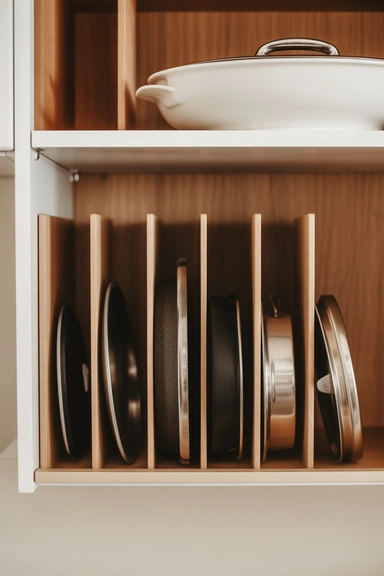
One of the most effective lid storage hacks is simply limiting how many lids are kept. Duplicate or unmatched lids often contribute more to clutter than to convenience. Removing lids that no longer pair with cookware reduces storage pressure and makes organization easier.
Establishing clear limits prevents cabinets from becoming overfilled. When storage space is respected, lids remain upright and accessible. This restraint-based approach supports long-term order by ensuring that organization systems are not overwhelmed over time.
20. Storage Systems That Support Easy Resetting
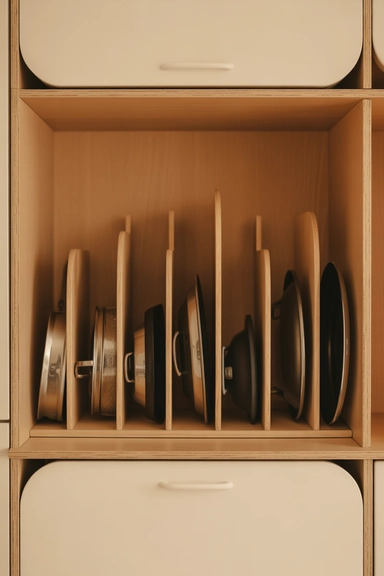
The best lid storage systems are easy to reset after cooking. Complex setups often fail during busy routines, leading to lids being shoved into the nearest open space. Simple, upright storage that allows lids to be returned quickly prevents disorder from accumulating.
Ease of resetting matters more than perfection. When restoring order takes minimal effort, it happens naturally. Storage systems designed around real cooking habits keep lids accessible, cabinets quieter, and chaos under control without constant reorganization.
Conclusion
Lid storage becomes manageable when cabinets are designed for separation, visibility, and upright support. Chaos forms when lids are stacked, compressed, or stored without clear boundaries. By using vertical storage, limiting quantity, and matching storage methods to lid type and usage, cabinets become calmer and easier to maintain. Thoughtful systems reduce noise, protect lids from damage, and streamline everyday cooking. When lid storage aligns with how kitchens are actually used, organization stops feeling like a chore and becomes part of a functional, stress-free space.