
Introduction
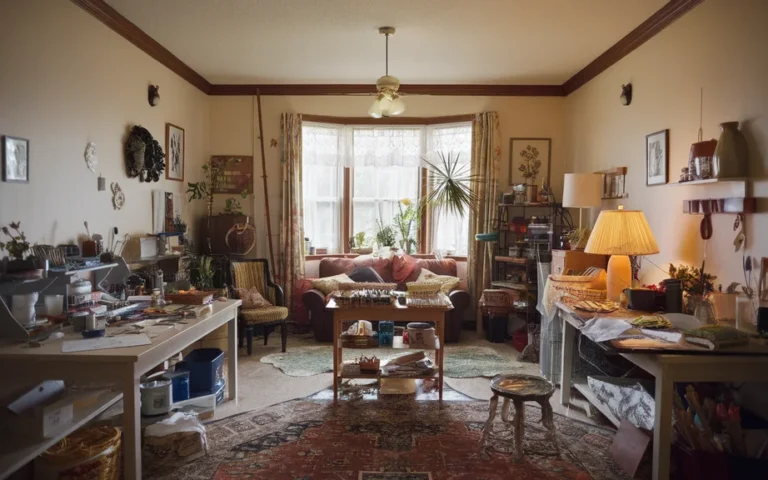
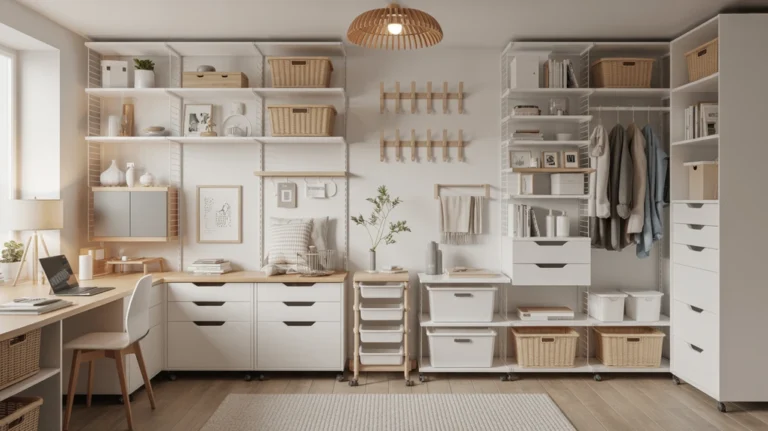
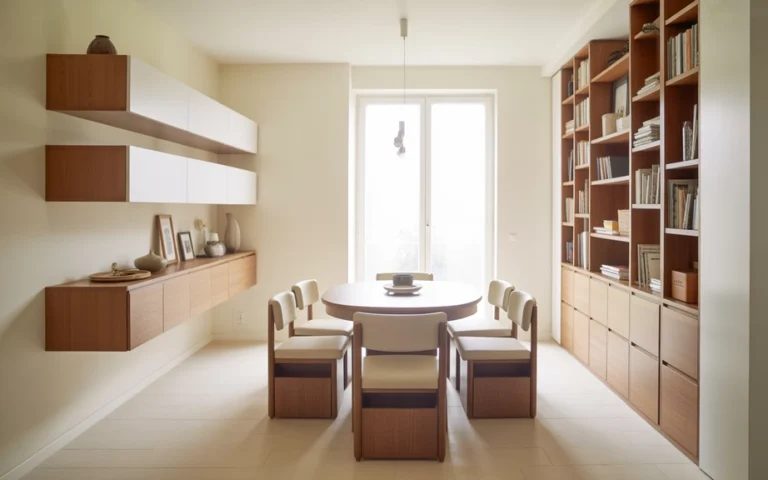
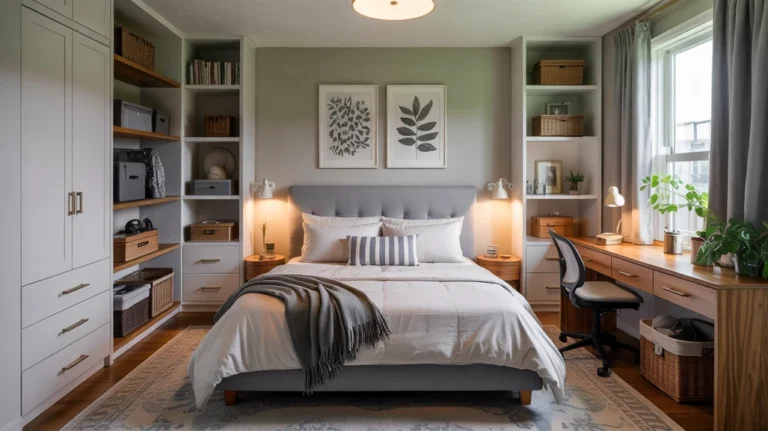
Small homes only stay functional when storage is intentional, layered, and easy to maintain. The most effective ikea storage ideas for small spaces focus on vertical capacity, hidden compartments, and furniture that works harder than its footprint. Without defined systems, items drift onto floors, counters, and corners until the layout feels compressed and visually noisy. Well-placed modular units, stackable bins, and wall-mounted solutions prevent that buildup by giving every category a consistent home that supports daily routines. If you’re refining the rest of your layout as well, explore 22 Vertical Storage Ideas That Reclaim Floor Space and Clear Visual Clutter to strengthen the same structure across other rooms before layering additional pieces.
1. KALLAX Cube Units With Baskets for Flexible Storage
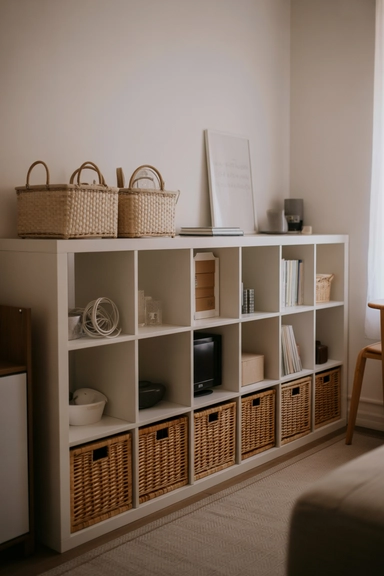
Cube shelving works in small rooms because it adapts to changing storage needs without requiring a layout overhaul. A KALLAX unit paired with uniform baskets keeps small items from staying visible while maintaining easy access. When each cube holds a defined category, items stop migrating across surfaces and the room feels controlled instead of crowded. Among the most reliable ikea storage ideas for small spaces, cube systems balance openness and concealment so storage feels intentional rather than improvised.
Position the unit along the longest wall to create a stable visual anchor. Use baskets for mixed items like cables, accessories, or seasonal pieces so nothing spills outward. Consistency in basket color helps the shelving read as one cohesive structure, which reduces visual clutter and keeps the space calm even when storage volume increases.
2. Wall-Mounted BESTÅ Units That Lift Storage Off the Floor
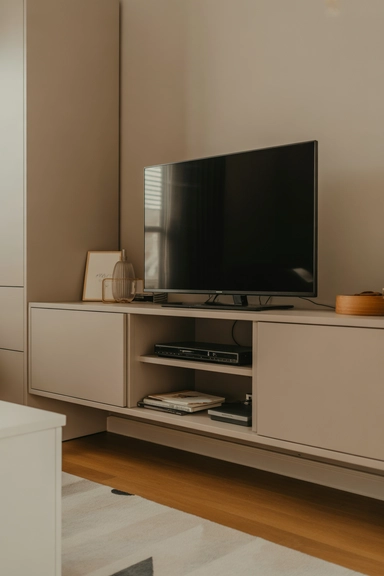
Wall-mounted BESTÅ cabinets create storage without consuming floor area, which immediately improves circulation in tight rooms. Lifting the console allows the floor to remain visible, making the entire layout feel lighter and more spacious. Closed cabinet fronts conceal electronics, paperwork, or miscellaneous items that would otherwise sit on open shelves.
Internal dividers keep categories separated so the cabinet interior remains manageable long-term. This approach supports ikea storage ideas for small spaces by combining hidden storage with visual simplicity. When the floor beneath stays clear, cleaning becomes easier and the room retains an open feel instead of looking compressed by bulky furniture.
3. Under-Bed Storage Boxes That Capture Hidden Capacity
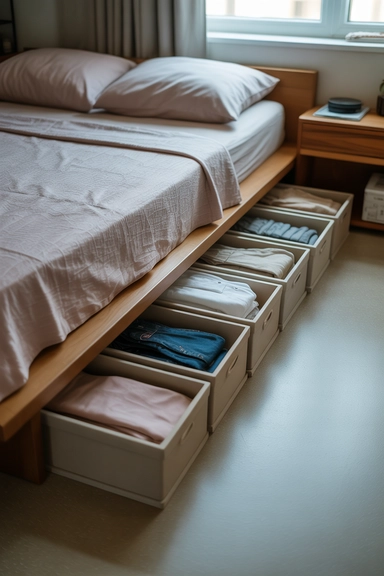
The area beneath a bed often becomes wasted space or a dumping ground for random items. Structured under-bed storage boxes transform that hidden zone into a controlled storage layer. Use low-profile bins that slide easily so seasonal clothing, spare linens, or rarely used items stay accessible without crowding closets or wardrobes.
Assign each bin a specific category to prevent items from mixing together. Predictable placement supports long-term order because everything returns to the same location after use. In compact layouts, these ikea storage ideas for small spaces reduce pressure on visible storage areas and keep surfaces clear for daily living.
4. Over-Door Organizers for Vertical Expansion
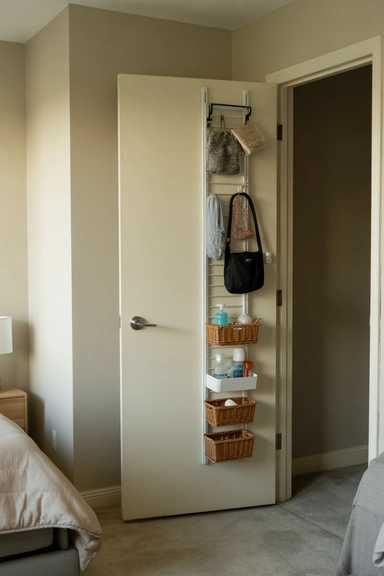
Doors offer valuable vertical space that often goes unused. Over-door organizers add storage for accessories, cleaning supplies, or small household items without requiring additional furniture. This approach is particularly effective in bathrooms, bedrooms, or entryways where wall space is limited.
Choose slim organizers that sit flush against the door so movement remains unobstructed. When items are grouped by function and returned after use, this system prevents small objects from spreading across counters and tables. Vertical expansion like this keeps storage layered rather than concentrated in one crowded zone.
5. Slim Rolling Carts for Narrow Gaps
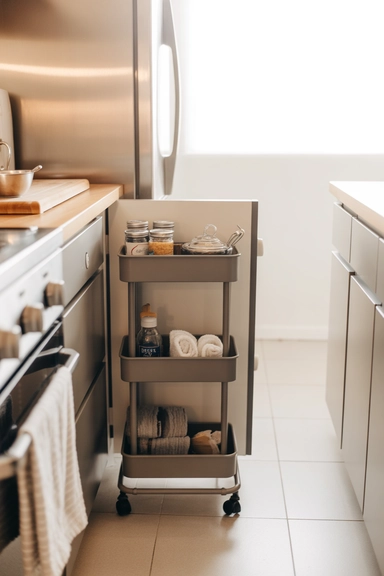
Rolling carts fit into narrow spaces between furniture or beside appliances, turning otherwise unusable gaps into functional storage. These carts work well in kitchens, bathrooms, or work areas where supplies need to stay accessible but out of sight. Multiple tiers allow categories to remain separated so items don’t pile together.
When the cart is not in use, it slides back into its designated space, keeping pathways clear. This mobility makes it one of the most adaptable ikea storage ideas for small spaces, especially in layouts that require flexibility. A defined place for the cart ensures it supports the room instead of becoming another object competing for space.
6. PAX Wardrobe Systems That Replace Multiple Storage Pieces
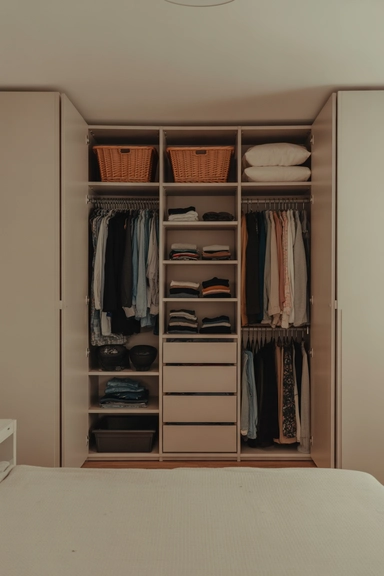
A well-planned wardrobe eliminates the need for scattered dressers, bins, and clothing racks that consume valuable floor area. The PAX system allows vertical configuration so clothing, shoes, and accessories remain contained within one structured zone. Adjustable shelves and rails create clear categories that prevent items from drifting into other areas of the room. Among the most effective ikea storage ideas for small spaces, a single wardrobe system reduces visual noise while increasing total capacity.
Internal organizers keep drawers from turning into mixed piles. Assigning each shelf a fixed category ensures daily items return to the same location after use. When clothing storage remains centralized and predictable, surrounding surfaces stay clear and the room feels more stable over time. This structure prevents overflow into chairs, corners, or under-bed areas that often become secondary dumping zones.
7. IVAR Shelving With Closed Bins for Deep Storage
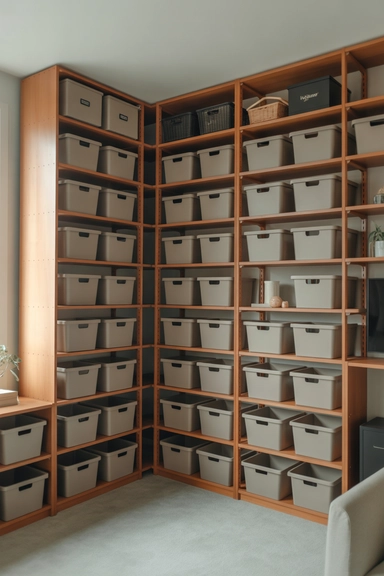
IVAR shelving provides depth and strength for storing heavier or bulkier items without overwhelming a small room. Pairing the shelves with closed bins or boxes keeps contents hidden so the unit reads as one organized block instead of multiple visual distractions. This approach works well in multipurpose rooms where storage must coexist with living or sleeping areas.
Use lower shelves for heavier items and upper shelves for lighter categories so the structure stays balanced. Keeping similar bins aligned across shelves creates visual consistency that reduces clutter perception. When used strategically, these ikea storage ideas for small spaces allow larger storage capacity without sacrificing the room’s sense of order or openness.
8. Floating EKET Cabinets That Build Vertical Storage
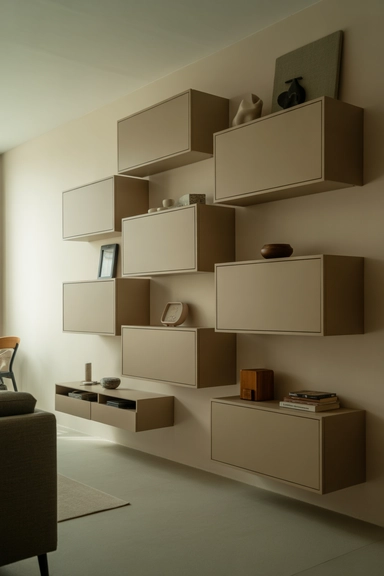
Floating cabinets create layered storage while keeping the floor visible, which is critical in compact layouts. EKET units can be arranged in vertical stacks or horizontal lines depending on the wall space available. Closed fronts hide mixed items while maintaining a clean surface that doesn’t compete with surrounding furniture.
Spacing the cabinets evenly creates a calm visual rhythm across the wall. Internally, use dividers or small boxes so categories remain separated and easy to maintain. This structure keeps storage contained within defined zones rather than spreading across tables or shelves, helping the entire room remain visually controlled.
9. TROFAST Units for Modular Hidden Storage
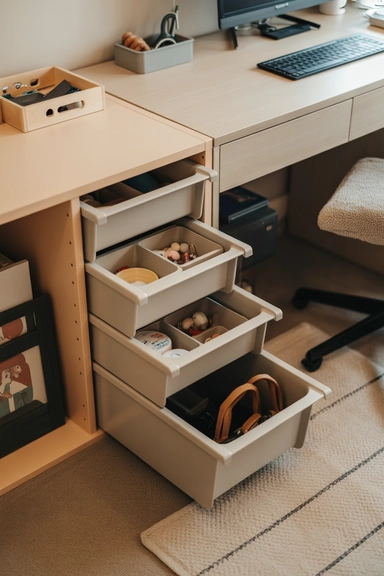
TROFAST systems work well in small homes because the bins slide out completely, making access simple without exposing clutter. Each bin can hold a single category, which prevents items from mixing together and becoming difficult to manage. The modular structure also allows the unit to fit under desks, along walls, or inside closets.
Uniform bins create a cohesive look that reduces visual fragmentation. Labeling each bin reinforces consistent placement so items return to the same spot after use. Within ikea storage ideas for small spaces, modular systems like TROFAST help maintain order because they combine flexibility with clear structure that supports daily routines.
10. Narrow Shoe Cabinets That Use Wall Depth Efficiently
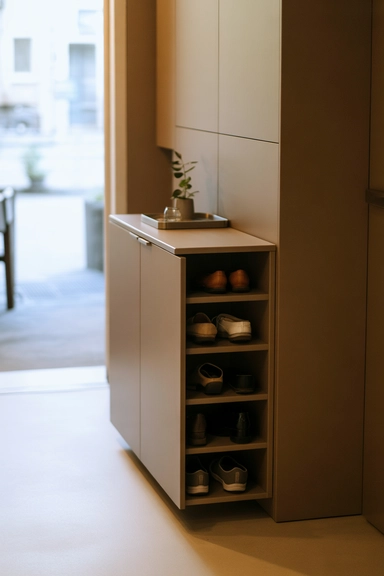
Slim shoe cabinets make use of wall depth without projecting far into the room. This keeps walkways open while still providing substantial storage for footwear or small accessories. Closed fronts hide visual clutter and maintain a clean vertical line along entryways or bedrooms.
Mounting the cabinet slightly above the floor can make the wall feel lighter and easier to clean around. Inside, keep pairs grouped so retrieval remains quick and consistent. By storing frequently used items in a contained vertical unit, these ikea storage ideas for small spaces prevent entry zones from becoming crowded with loose shoes or bags.
11. Over-Door Storage Systems That Capture Unused Surfaces
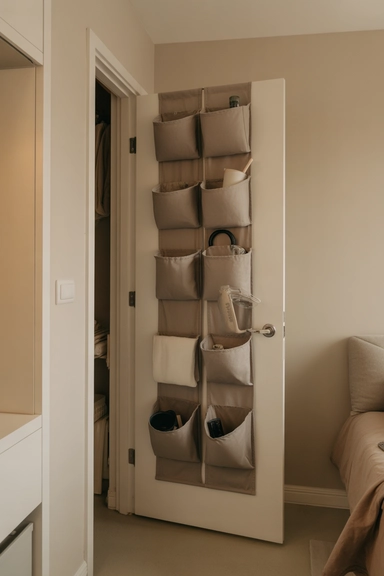
Doors often remain underused even though they provide full vertical storage potential. Over-door organizers create immediate capacity for accessories, cleaning supplies, or small daily items without adding furniture. This keeps floors open and prevents surfaces from becoming overflow zones. Within ikea storage ideas for small spaces, using door surfaces expands storage without compressing the layout.
Assign each pocket or hook a specific category so items don’t migrate into other areas. Lightweight baskets or fabric organizers maintain flexibility while keeping contents contained. When every door has a defined purpose, scattered items stop collecting on desks, counters, or beds. This structured approach ensures small objects remain accessible but visually controlled.
12. BESTÅ Units That Combine Media and Hidden Storage
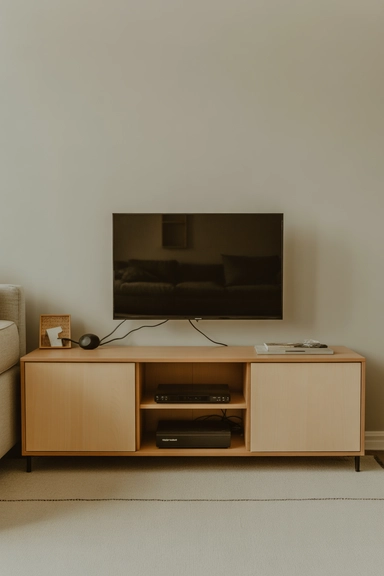
BESTÅ systems function as media units while concealing everyday clutter behind closed fronts. This allows electronics, cables, and accessories to remain accessible without spreading across visible surfaces. Using one consolidated unit reduces the need for multiple small storage pieces that can fragment a room visually. These ikea storage ideas for small spaces keep living areas streamlined and intentional.
Internal shelves and drawers create clear categories for devices and accessories. Cable organizers prevent wires from tangling and spilling into surrounding areas. When media storage remains contained within one structured zone, nearby tables and floors stay clear. This helps maintain visual calm even in multipurpose living rooms.
13. Rolling RÅSKOG Carts for Flexible Storage Zones
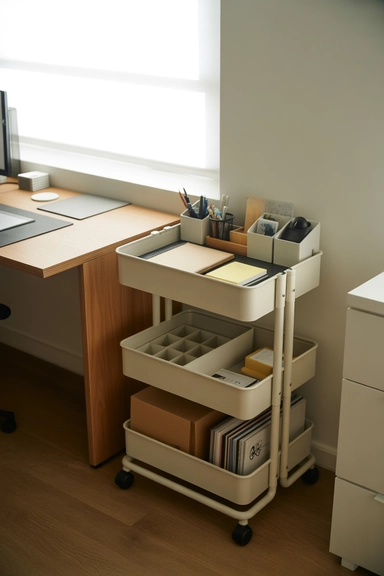
Mobile carts provide adaptable storage that can shift between rooms depending on daily needs. The RÅSKOG cart works well for office supplies, kitchen items, or toiletries while keeping everything grouped together. Wheels allow the cart to move out of sight when not in use, preventing surfaces from becoming permanent storage zones.
Keeping each tier assigned to a specific category ensures items return to the same level after use. This prevents the cart from turning into a mixed container over time. Among practical ikea storage ideas for small spaces, mobile storage helps maintain order because it supports routines without permanently occupying valuable floor space.
14. Under-Bed Frames With Built-In Drawers
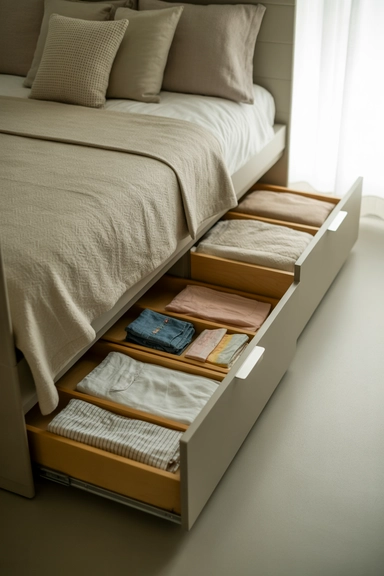
Beds with integrated drawers convert hidden floor space into functional storage without requiring extra furniture. This is especially effective in small bedrooms where dressers or cabinets may not fit comfortably. Using under-bed drawers for seasonal clothing or linens keeps visible areas uncluttered.
Divide each drawer by category so items remain organized and easy to retrieve. When under-bed storage stays structured, it prevents overflow into closets or chairs. These ikea storage ideas for small spaces allow larger storage capacity while preserving a calm, open layout above floor level.
15. Wall-Mounted Kitchen Rails for Daily Essentials
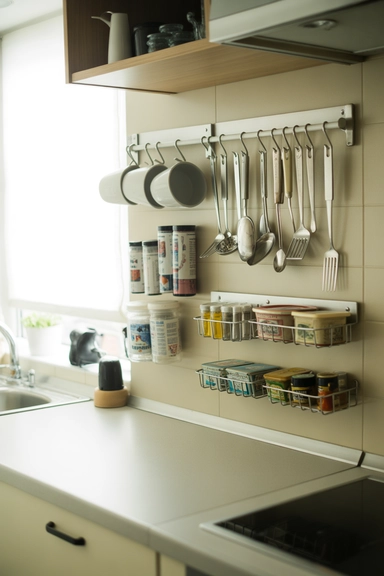
Wall rails create compact storage for utensils, containers, or frequently used tools without crowding counters. Mounting rails vertically or horizontally keeps items visible but contained within a defined zone. This prevents small tools from spreading across work surfaces where they create visual clutter.
Hooks, cups, and small baskets can be arranged based on frequency of use. Keeping daily items within reach reduces the chance of them being left out after use. Within ikea storage ideas for small spaces, rail systems maintain accessibility while protecting clear surfaces that support a cleaner, more functional layout.
16. Floor-to-Ceiling IVAR Systems That Turn One Wall Into Full Storage
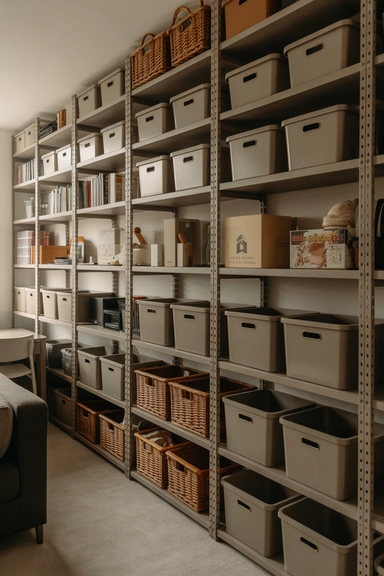
When a small space feels constantly full, the problem is rarely a lack of square footage — it is a lack of vertical structure. A floor-to-ceiling IVAR system converts one wall into a controlled storage zone so items stop drifting across the room. Instead of multiple small units scattered around, everything consolidates into one tall, organized surface. This is one of the most practical ikea storage ideas for small spaces because it increases capacity without increasing visual noise.
Start by assigning vertical zones. The lowest shelves should hold heavier daily-use items like folded clothing, bins, or baskets so they remain easy to access. Middle shelves can support books, office supplies, or containers used weekly. The highest shelves should store seasonal items or rarely used objects. This vertical zoning prevents constant rearranging and keeps frequently used items within reach.
Use identical baskets or closed bins on open shelves so the unit reads visually clean instead of chaotic. When containers match in color and size, the wall feels structured rather than crowded. Labeling each bin prevents items from migrating between shelves, which is essential for long-term organization. Once categories remain fixed, the system maintains itself instead of requiring frequent resets.
Avoid filling every shelf completely. Leaving small negative spaces between sections helps the unit feel intentional rather than overloaded. This keeps the wall visually calm even though it holds a large amount of storage. Over time, a single structured wall reduces clutter in every other zone because items have a predictable place to return.
17. PAX Wardrobes That Replace Multiple Small Storage Pieces
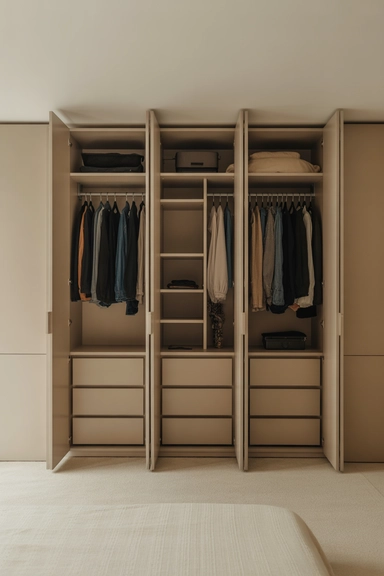
Small rooms often feel cluttered because storage is fragmented across dressers, racks, and boxes. A single PAX wardrobe consolidates clothing and accessories into one defined structure so surfaces and floors stay clear. Among high-impact ikea storage ideas for small spaces, a full wardrobe system reduces visual clutter by removing the need for scattered storage furniture.
Inside the wardrobe, divide sections based on clothing type and frequency of use. Use double hanging rods for shorter garments and single rods for longer items. Add drawers or pull-out trays for smaller accessories so they don’t spill onto nearby surfaces. This internal zoning prevents clothing from migrating into chairs, beds, or corners.
Shelf dividers maintain folded stacks so they don’t collapse into piles. Baskets or boxes on upper shelves keep seasonal items contained and out of the way. When every category has a defined section, getting dressed does not create new clutter each morning. The wardrobe absorbs daily use without breaking its structure.
Choose neutral doors or flat panels so the wardrobe blends into the wall instead of dominating it visually. This helps the room feel calm even though it holds significant storage. A single, well-organized wardrobe often replaces three or four smaller pieces, instantly freeing floor space and simplifying maintenance.
18. KALLAX Room Dividers That Store Without Blocking Light
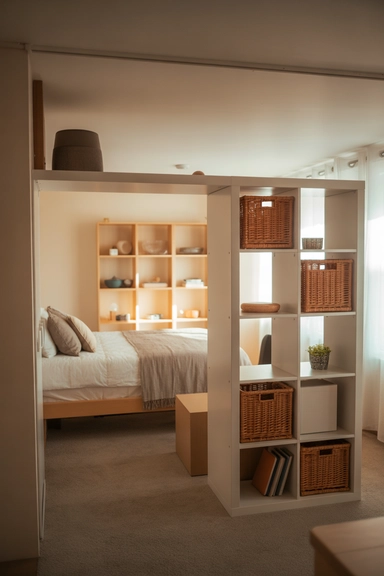
Open-plan rooms and studios benefit from storage that also defines zones. A KALLAX unit used as a divider separates sleeping, working, or living areas while storing items inside its cubes. This approach creates structure without adding solid walls that block light. It remains one of the most flexible ikea storage ideas for small spaces because it performs multiple functions at once.
Fill lower cubes with heavier items in baskets so the unit stays stable and visually grounded. Use upper cubes for lighter objects or decorative storage boxes. Matching bins across several cubes keeps the divider looking cohesive rather than busy. This prevents the divider from becoming visual clutter while still holding many items.
Leave a few cubes partially open or minimally filled so light can pass through. This maintains a sense of openness while still defining separate zones. When each cube has a category, items stop spreading across multiple areas of the room. The divider becomes a central storage hub instead of a decorative obstacle.
Place the unit where natural walking paths already exist so it feels integrated rather than intrusive. A well-positioned divider reduces clutter in every zone because it gives items a consistent home near where they are used.
19. EKET Modular Boxes for Controlled Wall Storage
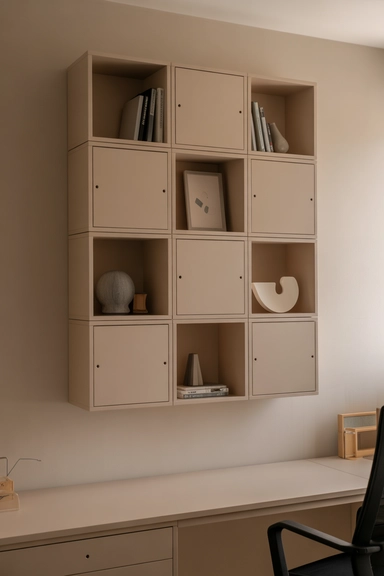
Modular wall boxes allow storage to expand gradually without overwhelming the room. EKET units mounted in clusters create structured wall storage that keeps items contained but accessible. This is one of the most adaptable ikea storage ideas for small spaces because modules can be added or rearranged as needs change.
Start with a symmetrical arrangement so the wall feels balanced. Place closed-door boxes at eye level to hide clutter and open boxes above or below for lighter items. This mix keeps the wall functional while preventing it from looking overloaded. Closed compartments are essential for items that would otherwise create visual noise.
Assign each module a single category. One box might hold paperwork, another electronics, and another personal items. When categories remain fixed, items return to the same location after use. This consistency prevents clutter from spreading across desks or tables.
Avoid placing modules too low unless they replace a side table or cabinet. Keeping them slightly elevated preserves floor space and maintains a lighter visual footprint. Over time, modular wall storage allows a room to adapt without requiring new furniture, making it easier to maintain order long-term.
20. Compact Shoe Cabinets That Eliminate Entryway Clutter
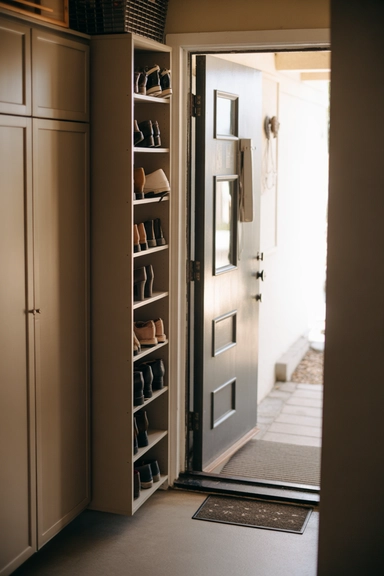
Shoes often create the first layer of visible clutter in small homes. Slim shoe cabinets placed near the entry capture footwear immediately so it doesn’t spread across floors. Among efficient ikea storage ideas for small spaces, vertical shoe cabinets maintain order without consuming valuable walking space.
Choose a narrow design that mounts to the wall or sits flush so pathways remain clear. Assign each compartment by user or shoe type to prevent mixing. When categories remain consistent, shoes return to the same slot instead of forming piles near the door.
Store only frequently used pairs inside the cabinet. Seasonal or rarely worn shoes should move to higher shelves or alternate storage zones. This prevents the cabinet from overflowing and ensures daily-use items remain easy to access.
Keeping the top surface mostly clear reinforces the habit of putting shoes away immediately. When entry clutter disappears quickly, the rest of the home feels calmer and easier to maintain. A controlled entry zone sets the tone for the entire space, making it easier to sustain organization throughout the day.
21. Wall-Mounted Desk Systems That Create a Workspace Without Consuming Floor Space
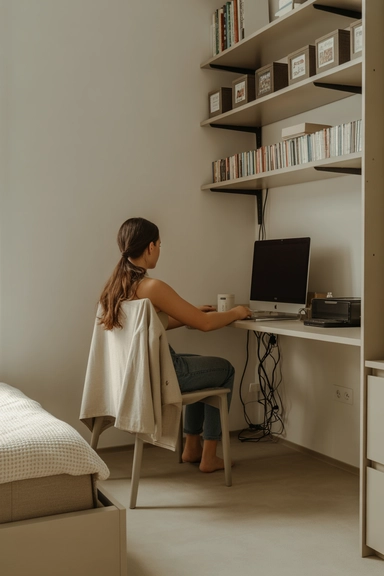
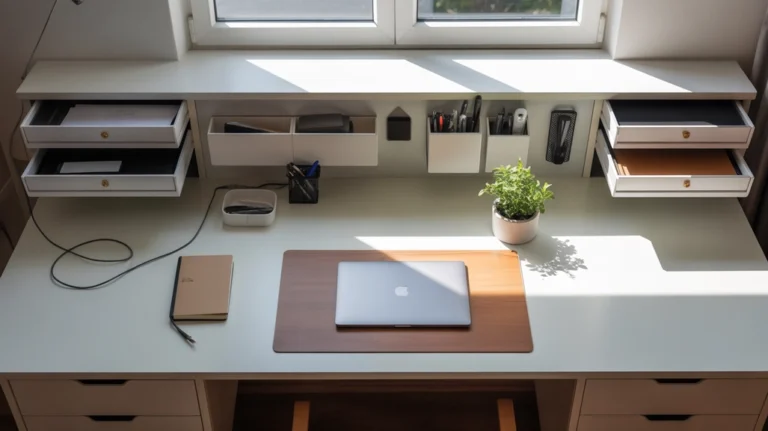
In small apartments, adding a traditional desk often compresses circulation and visually crowds the room. A wall-mounted desk system solves this by lifting the work surface off the floor while integrating shelving above it. This layered approach is one of the most strategic ikea storage ideas for small spaces because it combines workspace and storage into a single vertical footprint.
Start by mounting the desk at a height that allows comfortable seating while leaving clearance beneath. The open floor underneath keeps the room feeling lighter and allows a chair to tuck in completely when not in use. Above the desk, install shelves or cabinets that hold office supplies, books, or storage boxes. Keeping items vertical prevents them from spreading across surrounding surfaces.
Divide upper storage by function: one shelf for documents, one for tech accessories, one for daily-use items. Use closed boxes for visual control so the wall doesn’t feel busy. Cable management clips or concealed routing prevent wires from dangling and disrupting the clean look.
This setup works especially well in bedrooms or living rooms where space must perform multiple functions. When the work zone stays compact and structured, it does not visually take over the room. Once work ends for the day, everything returns to its assigned shelf, and the desk remains clear.
22. Over-Bed Storage Units That Expand Bedroom Capacity
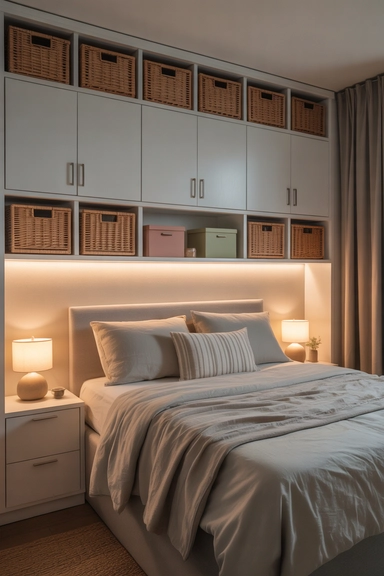
The wall space above a bed is often left empty, yet it can hold substantial storage without affecting floor area. Over-bed shelving or cabinets create a storage band that frames the bed and absorbs books, baskets, or decorative storage boxes. Within layered ikea storage ideas for small spaces, this technique strengthens vertical capacity while preserving walking space.
Install shelving high enough to avoid interference when sitting up. Use closed boxes or uniform baskets to prevent the area from feeling heavy. Keep frequently accessed items on lower shelves and seasonal or rarely used items higher.
Avoid overcrowding the unit. Leave some negative space so the bedroom maintains a calm appearance rather than feeling boxed in. When used thoughtfully, over-bed storage reduces reliance on nightstands or extra cabinets. This keeps the room streamlined while quietly increasing capacity.
23. Slim Pantry Towers for Kitchen Vertical Storage
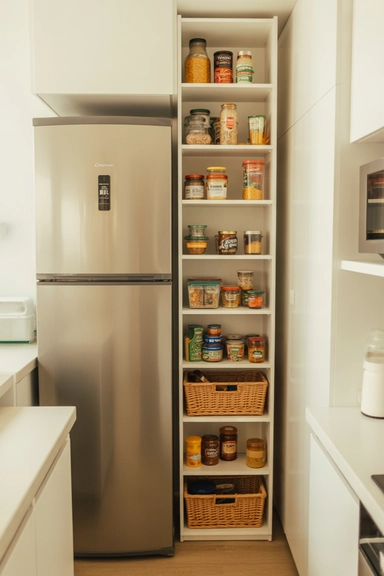
Small kitchens struggle when cabinets fill up and countertops become overflow zones. A slim pantry tower provides vertical storage without occupying significant floor space. This is one of the most functional ikea storage ideas for small spaces, especially in apartments with limited cabinet depth.
Place the tower against an unused wall or in a narrow gap beside appliances. Use adjustable shelves so containers fit precisely without wasted space. Group pantry items by type — grains together, canned goods together, snacks together — so retrieval is quick and consistent.
Add clear bins inside the shelves to prevent small packages from tipping over. Keeping like items contained maintains structure even as groceries rotate in and out. A vertical pantry reduces the need to stack items on countertops, protecting preparation space and visual calm.
24. Multi-Functional Storage Benches for Dual Use
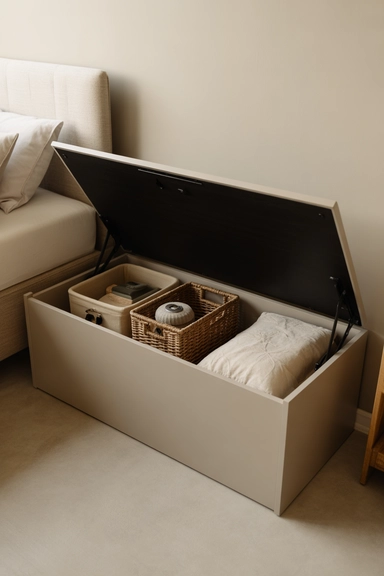
Furniture that stores internally eliminates the need for separate storage units. A storage bench in an entryway, bedroom, or living area provides seating while concealing items inside. Among adaptable ikea storage ideas for small spaces, dual-purpose pieces maximize function without expanding footprint.
Use the interior compartment for categories that belong near that zone — shoes in an entry bench, blankets in a living room bench, linens in a bedroom bench. Keeping storage location aligned with usage reduces clutter migration across rooms.
Divide the interior with baskets or boxes so items don’t mix. When categories remain separated, the bench stays organized rather than becoming a miscellaneous container. A functional top surface should remain mostly clear so the piece maintains its visual simplicity.
25. Pegboard Wall Systems for Adjustable Everyday Storage
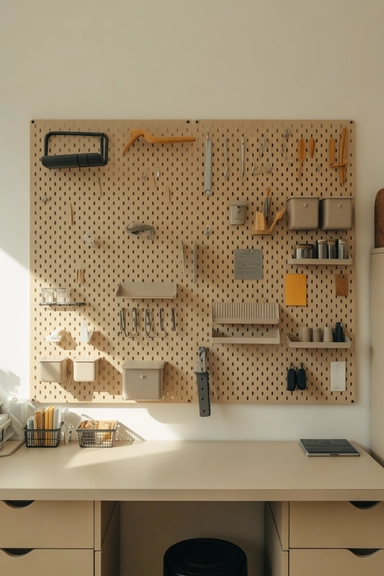
Pegboard systems allow storage to shift as needs evolve. Hooks, shelves, and containers can be rearranged without drilling new holes, which makes this one of the most adaptable ikea storage ideas for small spaces. Pegboards work especially well in kitchens, offices, and craft areas where tools or supplies change over time.
Arrange items based on frequency of use, placing daily tools at eye level and occasional items higher. Keep spacing consistent so the wall appears structured instead of chaotic. Avoid overcrowding; leave breathing room between clusters.
Small containers attached to the board can hold loose objects like cables or stationery, preventing them from spreading onto desks. When each hook or shelf has a defined purpose, items return automatically after use. This flexibility allows the system to evolve without creating clutter pressure elsewhere in the room.
Conclusion
The most effective ikea storage ideas for small spaces do not simply add more containers — they build structure into vertical walls, hidden compartments, and multi-functional furniture so items stop drifting across floors and surfaces. When storage is layered intentionally, categories remain fixed, and every zone supports daily movement rather than fighting it. Consolidating scattered pieces into integrated systems reduces visual noise and protects walking space, making even compact layouts feel calm and efficient. By prioritizing vertical expansion, concealed storage, and defined placement, small rooms gain capacity without losing openness — and that balance is what allows organization to last long-term rather than collapsing under daily use.