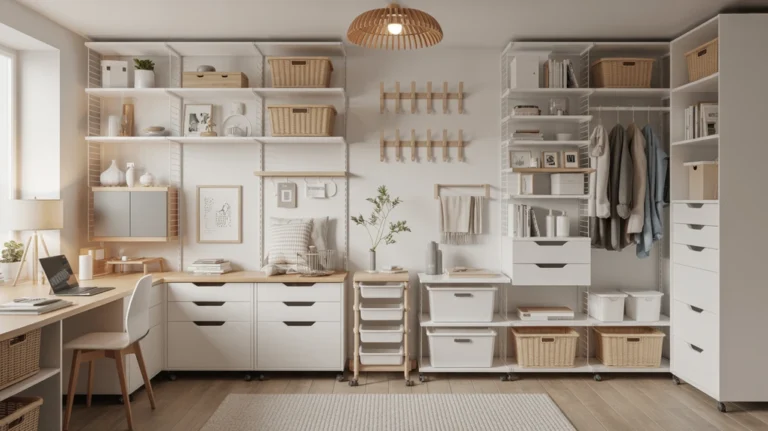

Introduction
Cricut organization ideas become essential once tools, materials, and machines begin competing for the same limited work surfaces. Cricut supplies are varied in size and frequency of use, which makes clutter easy to accumulate when storage is not intentional. Rolls of vinyl, cutting mats, tools, and accessories quickly overwhelm desks and shelves if they lack defined homes. Effective organization focuses on access and flow rather than hiding everything away. When Cricut supplies are stored visibly and logically, projects move faster and cleanup becomes easier, using principles similar to those found in 20 Creative Craft Storage Ideas to Organize Your Supplies.
1. Vertical Storage for Vinyl Rolls

Vertical storage is one of the most effective ways to keep vinyl rolls accessible without consuming valuable table space. When vinyl is stored upright, rolls remain visible and easy to sort by color or material type. This prevents digging through stacked rolls, which often leads to creasing or partial unrolling. Vertical placement also protects vinyl edges from being crushed, which helps maintain clean cuts during projects.
This method works best when storage allows each roll to stand independently rather than leaning tightly together. Tubes, vertical cubbies, or slim containers provide enough support without forcing compression. When vinyl is easy to see and remove, it is far more likely to be returned to its proper place after use.
2. Wall-Mounted Tool Holders for Cricut Accessories
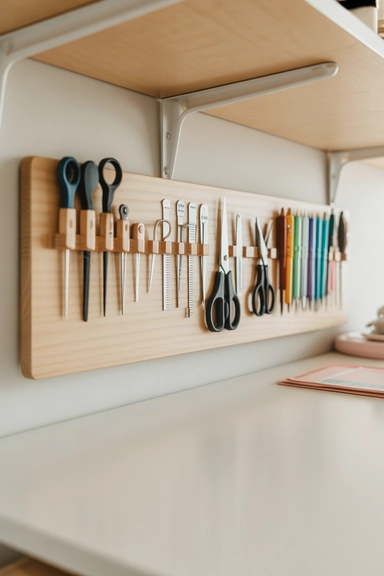
Wall-mounted tool holders help move frequently used Cricut tools off the workspace and into clear view. Items like weeding tools, scissors, scrapers, and pens benefit from vertical placement where they can be grabbed quickly without interrupting workflow. Keeping these tools on the wall reduces desk clutter and prevents tools from being buried under materials mid-project.
Spacing and grouping are key to making wall storage effective. Tools should be arranged by task rather than size, which supports intuitive access during crafting sessions. When tools are easy to return after use, surfaces remain clear and projects feel more manageable from start to finish.
3. Drawer Systems for Small Cricut Supplies
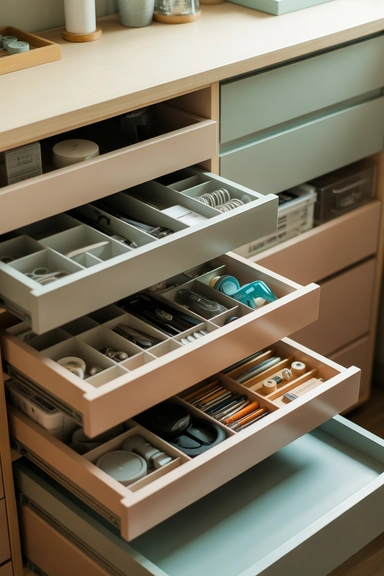
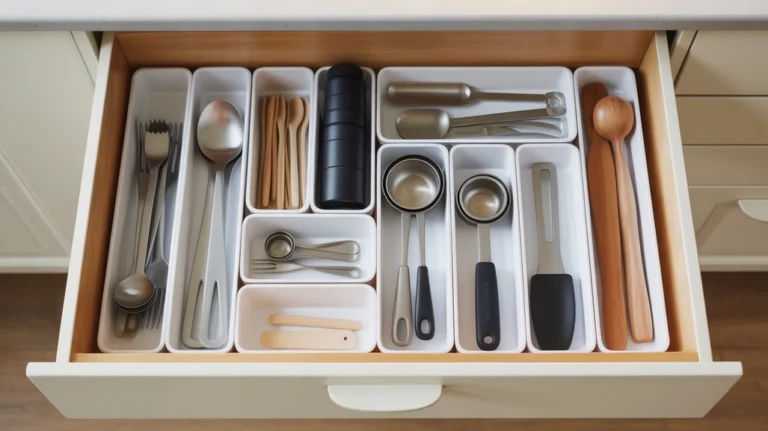
Small Cricut supplies such as blades, housings, adapters, and pens often become clutter magnets when stored loosely. Drawer systems provide controlled storage that keeps these items separated and visible without spreading across surfaces. Shallow drawers are particularly effective because they prevent stacking and make it easy to see everything at once.
To maintain order, drawers should be divided by function rather than category overload. Too many compartments encourage clutter instead of control. When small supplies have defined sections, drawers stay organized even with frequent use, and time spent searching for tools is significantly reduced.
4. Rolling Carts for Flexible Cricut Storage
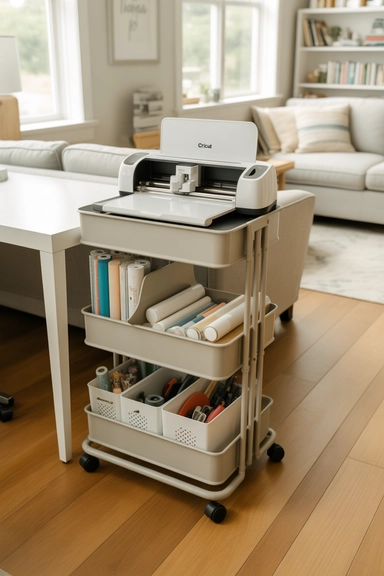
Rolling carts offer flexible storage that adapts to changing project needs. A Cricut machine, materials, and tools can be stored together and moved as needed, which is especially useful in shared or small spaces. This keeps supplies accessible without requiring permanent furniture placement or dedicated rooms.
The key to success with carts is intentional loading. Overfilling turns carts into clutter towers. Limiting each level to specific categories, such as tools, vinyl, or in-progress projects, keeps everything usable. When carts remain organized, they support workflow instead of disrupting it.
5. Shelf Storage for Cricut Machines and Mats
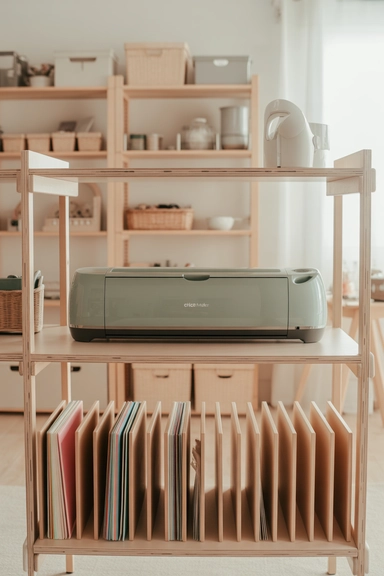
Shelf storage helps protect Cricut machines and cutting mats while keeping them within reach. Machines stored on dedicated shelves avoid constant lifting, reducing wear and making setup faster. Cutting mats benefit from flat or vertical shelf placement where they are less likely to warp or collect debris.
Spacing matters here as well. Shelves should allow machines to sit securely without crowding surrounding supplies. When equipment has stable, accessible storage, crafting becomes smoother and less physically demanding, encouraging consistent use rather than setup frustration.
6. Pegboard Systems for Cricut Tools and Materials
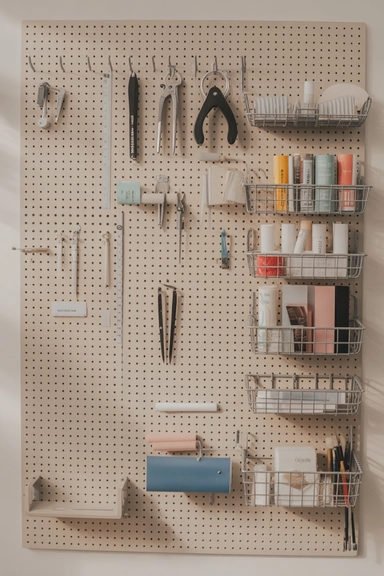
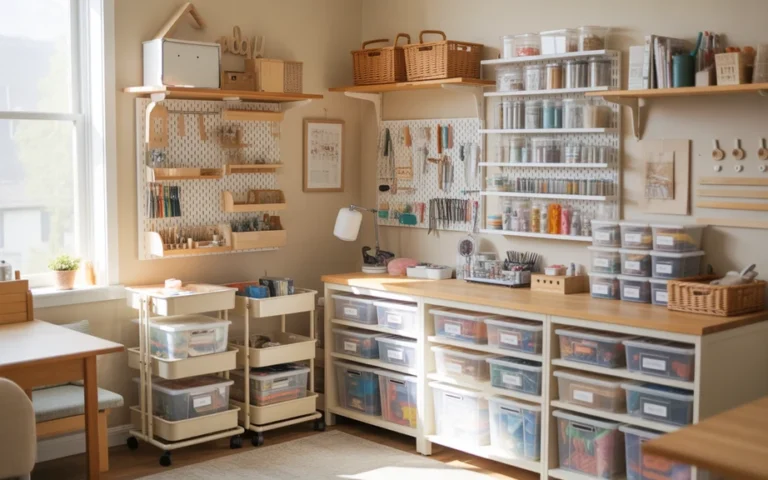
Pegboard systems work well for Cricut organization because they keep tools visible without consuming horizontal space. Hooks, small baskets, and shelves can be arranged to hold scissors, weeding tools, rulers, and frequently used accessories. This visibility reduces repeated searching and keeps tools from drifting back onto the worktable during long crafting sessions.
The most effective pegboard setups are intentionally spaced. Leaving breathing room between tools prevents visual clutter and makes it easier to return items after use. Grouping tools by task rather than size improves workflow. When pegboards are treated as functional systems instead of decorative displays, they significantly improve daily access and consistency.
7. Vertical File Storage for Vinyl Sheets
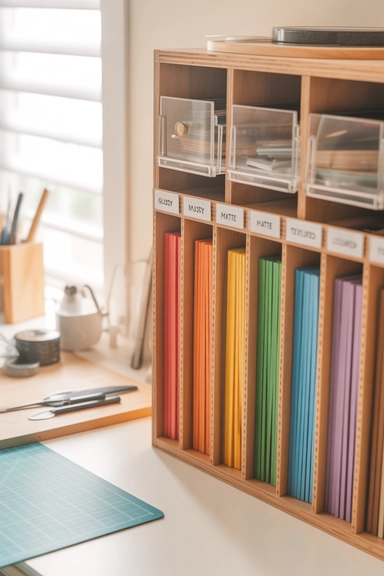
Vinyl sheets stored flat often become bent, scratched, or buried under other supplies. Vertical file-style storage keeps sheets upright and separated, making it easier to browse colors and materials quickly. This approach also protects edges, which helps maintain cut quality and reduces material waste.
File storage works best when sections are wide enough to avoid tight compression. Clear or labeled dividers improve identification without forcing excessive sorting. This system mirrors the logic behind 19 Creative Sewing Room Organizing Ideas to Maximize Space, where vertical organization preserves materials while keeping work surfaces clear and functional.
8. Dedicated Drawers for Cricut Blades and Pens
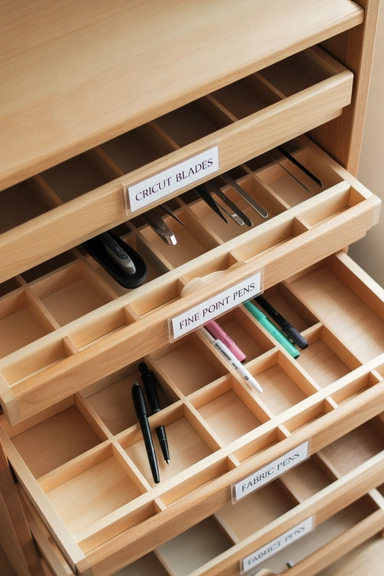
Cricut blades and pens require careful storage because of their small size and precision. Dedicated drawers prevent these items from being scattered across containers or left loose on tables. Shallow drawers with controlled sections allow each blade or pen to stay visible and protected, reducing damage and misplacement.
Organization here should remain simple. Over-compartmentalizing leads to confusion rather than clarity. Grouping items by type or frequency of use keeps drawers intuitive. When blades and pens have defined homes, they are easier to maintain and less likely to interrupt workflow during active projects.
9. Wall Shelving for Project Bins and Materials
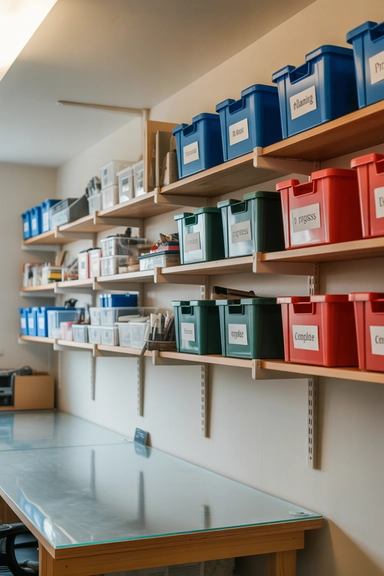
Wall shelving provides accessible storage for project bins, blanks, and frequently used materials without encroaching on work surfaces. Placing shelves at reachable heights keeps supplies visible while preventing them from spreading across tables or floors. This approach supports multitasking by allowing multiple projects to stay organized simultaneously.
Shelves should be shallow enough to avoid deep stacking. When bins are easy to pull down and return, cleanup becomes part of the process instead of a separate task. Well-planned wall shelving keeps supplies accessible while maintaining a clear, functional workspace.
10. Clear Containers for Small Craft Accessories
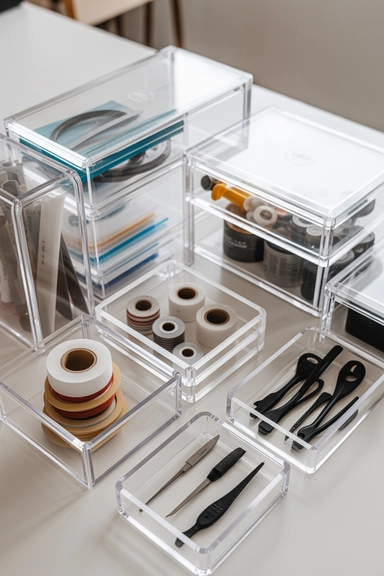
Clear containers are especially useful for Cricut accessories like transfer tape scraps, replacement parts, and specialty tools. Transparency allows quick identification, which reduces unnecessary handling and prevents duplicate purchases. Containers also keep small items from migrating across drawers and shelves during busy crafting sessions.
To stay effective, containers should be grouped by purpose rather than size alone. Labeling can help, but clarity should come primarily from visibility. When small accessories are stored in clear, controlled containers, they remain accessible without adding visual noise to the space.
11. Cabinet Storage for Heat Press and Larger Tools
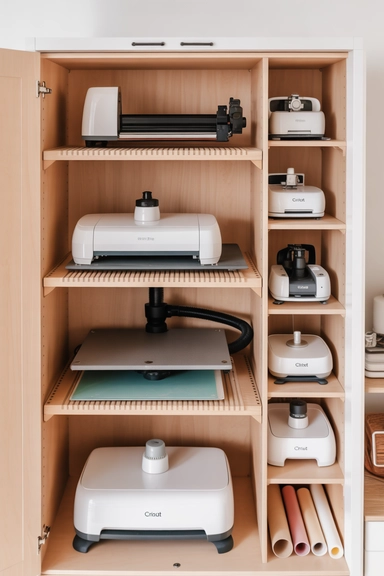
Larger Cricut tools such as heat presses, EasyPress machines, and cutting accessories require stable storage to prevent damage and clutter. Cabinet storage works well because it supports weight while keeping bulky items off work surfaces. Storing these tools behind cabinet doors also reduces visual noise, which helps craft spaces feel calmer and more focused.
Interior organization is essential for cabinets to remain useful. Shelves should be adjusted to fit tool dimensions without stacking. When larger tools have dedicated cabinet space, setup and teardown become faster, and worktables remain available for active projects rather than permanent equipment storage.
12. Labeling Systems for Quick Supply Identification
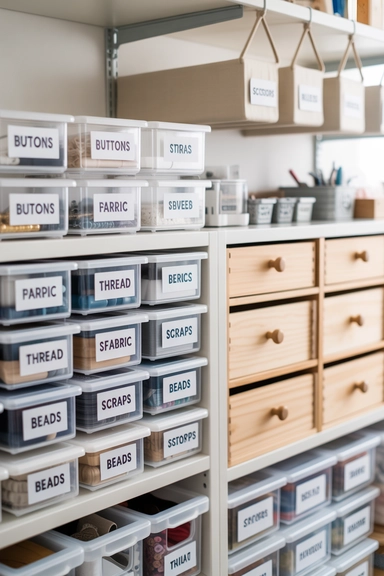
Labeling plays a critical role in keeping Cricut supplies accessible over time. With many similar-looking materials and tools, labels prevent confusion and reduce the time spent opening containers unnecessarily. Clear, consistent labeling helps supplies return to their proper place, especially in shared craft spaces.
Labels should be simple and readable at a glance. Overly detailed labeling systems often fail because they require too much upkeep. When labels reinforce an already logical storage system, they support long-term organization rather than becoming another layer of maintenance.
13. Desktop Organizers for Frequently Used Tools
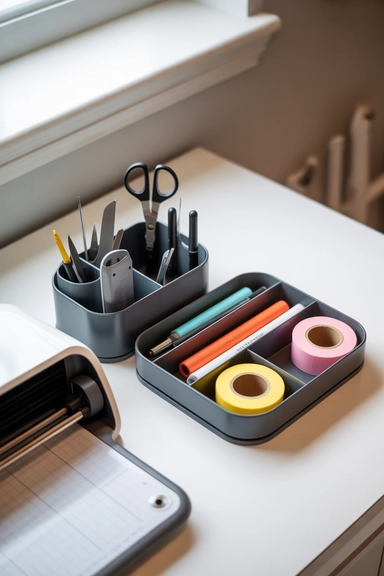
Desktop organizers help manage tools that are used repeatedly during Cricut projects. Items like weeding tools, scrapers, and pens benefit from staying within arm’s reach without spreading across the entire work surface. Compact organizers keep these tools contained while preserving space for cutting and assembly.
The key is restraint. Desktop storage should hold only essential items to avoid crowding. When organizers are intentionally limited, they reduce interruptions without becoming clutter themselves. This balance keeps workflows smooth and surfaces functional throughout longer crafting sessions.
14. Storage Zones for In-Progress Cricut Projects
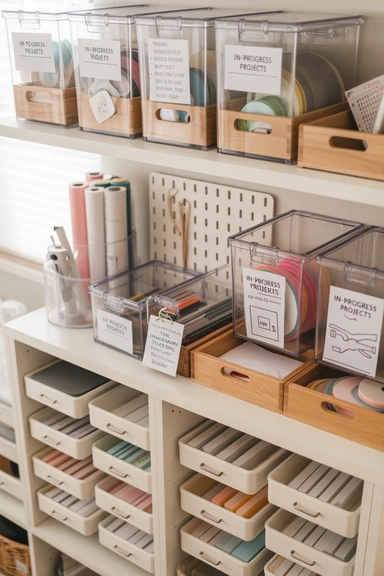
In-progress projects are a major source of clutter when they lack defined storage. Creating specific zones for unfinished Cricut work prevents materials from spreading across tables and floors. Bins, shelves, or trays designated for active projects keep everything together while maintaining access.
These zones should be temporary by design. Limiting capacity encourages projects to be completed or cleared regularly. When unfinished work has a controlled home, the rest of the craft space remains usable, and momentum is easier to maintain without visual overwhelm.
15. Vertical Wall Storage for Cricut Mats
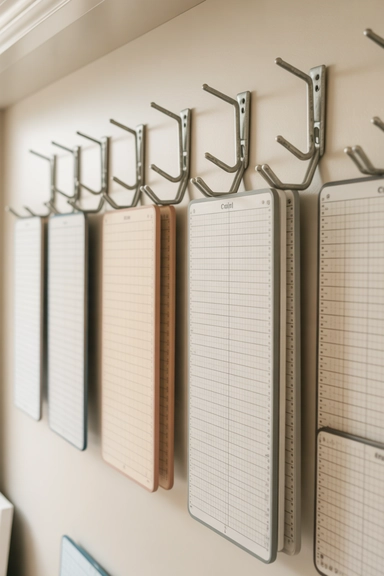
Cricut cutting mats require careful storage to prevent warping and debris buildup. Vertical wall storage keeps mats flat and separated while freeing up shelf and floor space. Hanging mats by their handles or slots allows air circulation and makes it easy to grab the correct mat quickly.
Spacing is important to avoid mats bending against each other. When mats are stored vertically with adequate support, they maintain their shape and adhesive quality longer. This method keeps essential tools accessible without sacrificing valuable work area.
16. Mobile Storage Units for Shared Craft Spaces
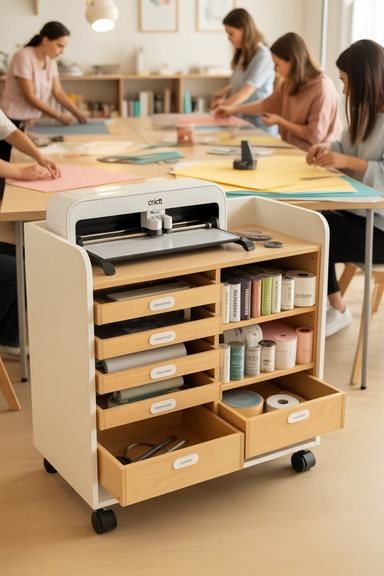
Mobile storage units are especially useful when Cricut supplies are used in shared or multi-purpose rooms. These units allow materials and tools to be stored together and moved in and out of active areas as needed. This flexibility prevents supplies from permanently occupying desks or dining tables, which are common sources of clutter in shared homes.
To remain effective, mobile units must be curated carefully. Overloading them reduces mobility and accessibility. Assigning clear categories to each shelf or drawer ensures that items return to their place after use. When mobile storage is treated as a controlled system rather than overflow space, it supports accessibility without disrupting other areas of the home.
17. Closed Storage for Visual Calm and Focus
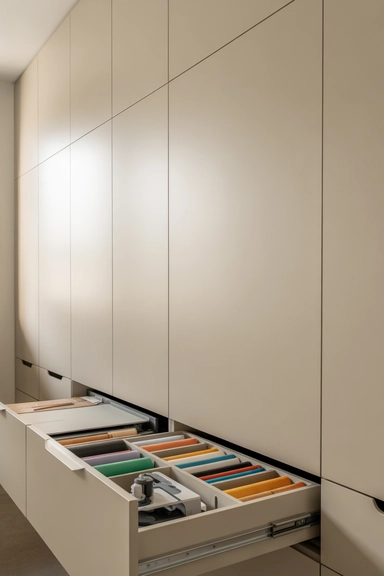
Closed storage helps reduce visual clutter in Cricut workspaces, especially when supplies are numerous or colorful. Cabinets, drawers, and boxes conceal materials that do not need constant access, allowing the workspace to feel calmer and more focused. This is particularly helpful during detailed projects that require concentration and uninterrupted workflow.
The effectiveness of closed storage depends on internal organization. Without structure, clutter simply moves behind doors. Shelves, bins, or trays inside closed storage keep supplies accessible when needed. When concealment is paired with thoughtful internal systems, closed storage supports both efficiency and a visually balanced craft environment.
18. Sorting Supplies by Project Type
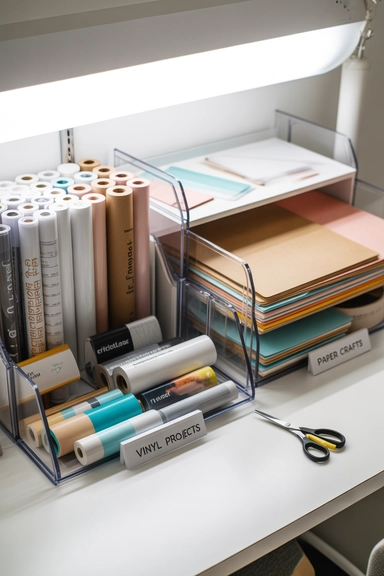
Sorting Cricut supplies by project type rather than by material alone can significantly improve accessibility. Grouping items used together—such as vinyl, transfer tape, and tools for decal projects—reduces setup time and limits unnecessary movement around the space. This approach supports faster transitions between tasks and keeps projects contained.
Project-based organization also prevents partial supplies from being scattered across multiple locations. When everything needed for a specific type of work lives together, cleanup becomes simpler and more intuitive. Over time, this method reduces clutter by reinforcing consistent storage habits tied directly to how supplies are used.
19. Storage Systems That Support Easy Resetting
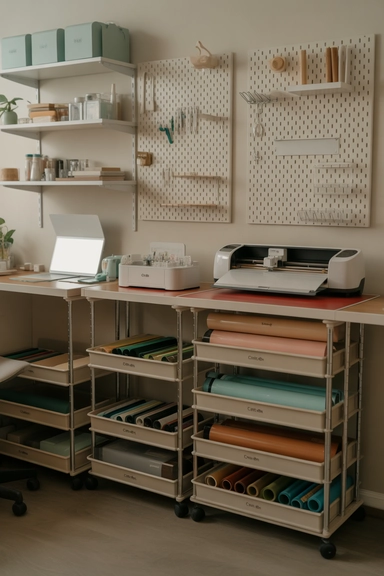
The most effective Cricut organization systems are those that are easy to reset after disruption. Crafting often involves spreading materials out, and complex systems tend to break down when cleanup feels overwhelming. Storage that allows supplies to be returned quickly and correctly helps maintain order even during busy periods.
Ease of resetting should guide every storage decision. Simple containers, clear zones, and flexible layouts support recovery without perfection. When restoring order takes only a few minutes, organization becomes sustainable. Systems that accommodate real crafting behavior keep supplies accessible without requiring constant effort.
Conclusion
Cricut organization works best when storage supports access, visibility, and realistic crafting habits. Supplies become cluttered when they lack defined homes or require too much effort to put away. By using vertical space, flexible storage, and task-based grouping, Cricut tools and materials stay accessible without overwhelming work surfaces. Thoughtful systems reduce setup time, protect supplies, and make cleanup part of the creative process. When organization aligns with how crafting actually happens, creative spaces remain functional, calm, and easy to maintain over time.