
Introduction
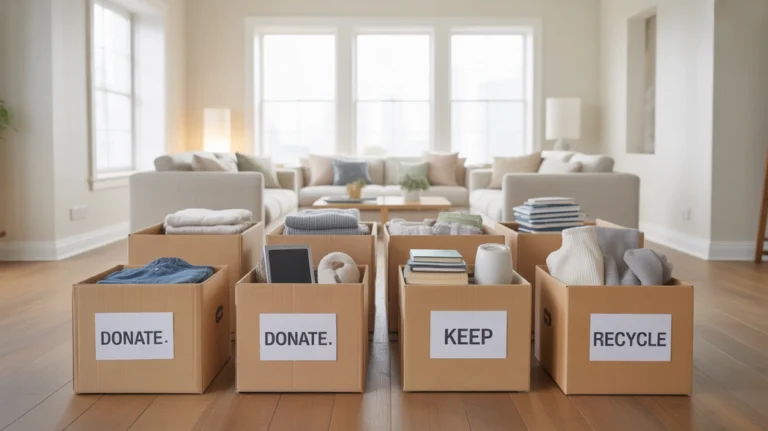
A tiny kitchen without upper cabinets can feel exposed, cluttered, and impossible to organize. But the absence of cabinetry isn’t the problem — the lack of structure is. The smartest tiny kitchen storage ideas without cabinets rely on vertical strategy, narrow gaps, mobile pieces, and layered organization instead of traditional built-ins. When every wall, corner, and appliance side is used intentionally, even a small apartment kitchen can feel calm and efficient. These solutions focus on renter-friendly setups, budget flexibility, and visual order that actually lasts. If you enjoyed our 25 Creative Small Kitchen Storage Ideas to Maximize Your Space, this next level is for you.
1. Floor-to-Ceiling Floating Shelves That Create a Visual Grid
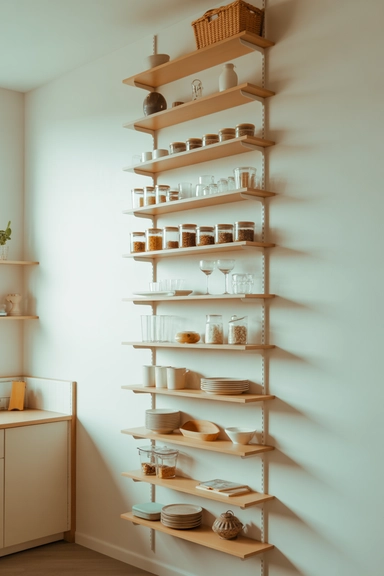
Instead of scattered shelves at random heights, run floating wall shelves in a clean vertical column from counter level upward. Consistent spacing creates a grid effect that visually replaces upper cabinets without feeling chaotic. Keep the depth shallow so the kitchen maintains breathing room, especially in a tiny apartment layout.
To prevent visual clutter, group items by category and color. Store dry goods in uniform glass containers, stack plates vertically, and limit decorative items to one per shelf. The goal is rhythm. When everything aligns cleanly, open shelving becomes architectural — not messy — and functions as structured tiny kitchen storage without cabinets.
2. Slim Pull-Out Storage Cart for Refrigerator Gaps
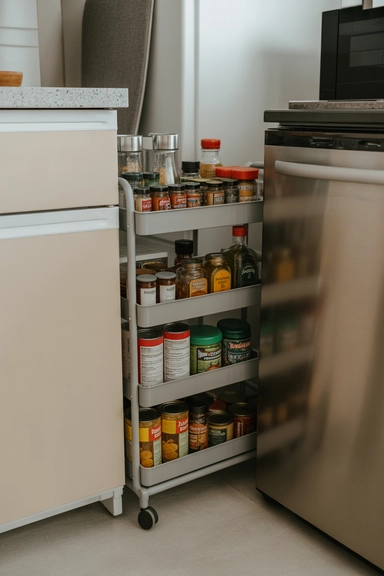
Most small kitchens have a narrow gap beside the fridge that collects dust instead of function. A slim rolling cart converts that unused strip into vertical pantry space. Look for pull-out designs with multiple tiers to hold spices, oils, canned goods, and tall bottles in organized rows.
Choose expandable models if the gap is irregular. White blends seamlessly in light kitchens, while black or gray adds contrast in modern interiors. This is especially powerful for renters because it requires no drilling. It’s one of the most practical tiny kitchen storage solutions that instantly multiplies storage without renovation.
3. Wall-Mounted Pegboard System for Modular Storage
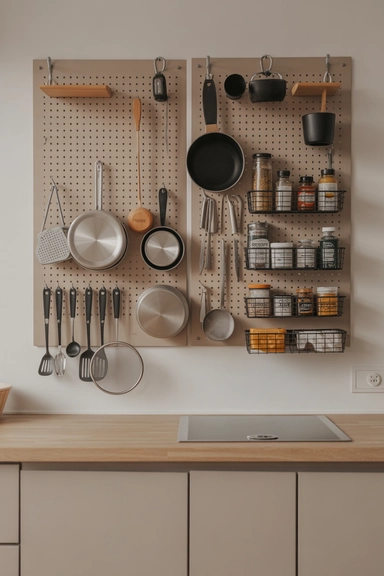
A pegboard wall creates a customizable storage system that evolves with your needs. Mount it above prep space and use hooks, baskets, and small ledges to hang utensils, measuring cups, lightweight pans, and even spice racks. Unlike fixed shelves, pegboards allow rearrangement as your cooking habits change.
Paint the pegboard the same color as your wall for a cohesive look, or contrast it intentionally for a design statement. Keep spacing balanced and avoid overcrowding. This system transforms blank wall space into organized vertical storage, making it one of the smartest tiny kitchen storage ideas without cabinets.
4. Magnetic Knife Strips and Fridge-Side Organizers
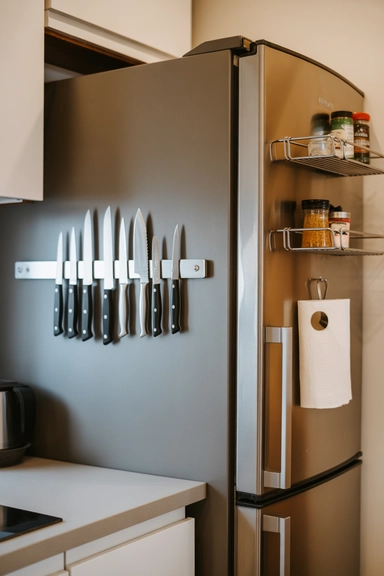
Bulky knife blocks waste valuable counter space. A magnetic knife strip mounted along the backsplash or side wall keeps blades accessible while freeing the entire prep surface. Align knives horizontally for a clean, professional appearance.
Extend the concept to the side of your refrigerator with magnetic spice racks or paper towel holders. That vertical metal surface is often ignored, yet it’s ideal for lightweight storage. When combined, these magnetic solutions create functional storage zones without adding visual weight to your tiny kitchen.
5. Floating Corner Shelves That Activate Dead Angles
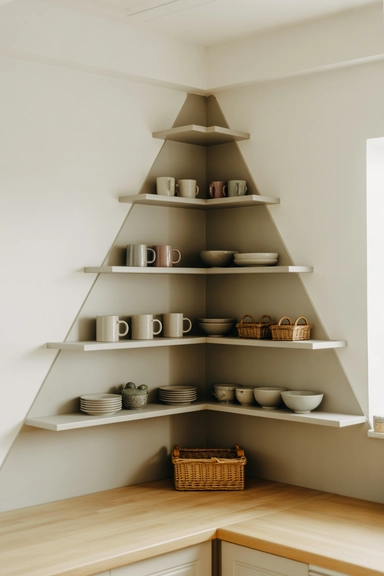
Kitchen corners often become visual voids. Installing triangular floating shelves transforms that awkward angle into purposeful storage. Keep shelves shallow and evenly spaced to maintain openness in a small kitchen.
Use corners for lighter items — stacked bowls, mugs, or small baskets containing snack packets. Avoid storing heavy cookware here to maintain visual balance. Properly styled corner shelving adds dimension while solving real storage pressure, making it one of the most efficient kitchen storage ideas for small spaces.
6. Over-the-Door Pantry System That Works Like a Cabinet
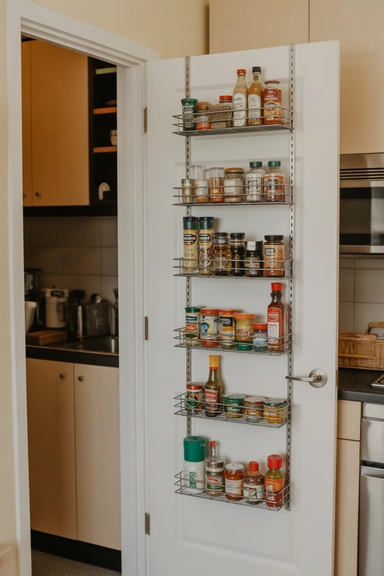
When cabinets are missing, the back of your kitchen door can function as a vertical pantry wall. Install an adjustable over-the-door organizer with tiered shelving to hold spices, condiments, packaged snacks, and even cleaning supplies. The key is depth control — choose slim racks so the door closes smoothly without crowding the room.
Organize by height and frequency of use. Everyday cooking items should sit at eye level, while backup supplies go higher or lower. This solution keeps countertops clear and consolidates scattered items into one structured zone. For renters, it’s one of the most effective tiny kitchen storage ideas without cabinets that requires zero permanent changes.
7. Rolling Kitchen Island for Mobile Storage and Prep
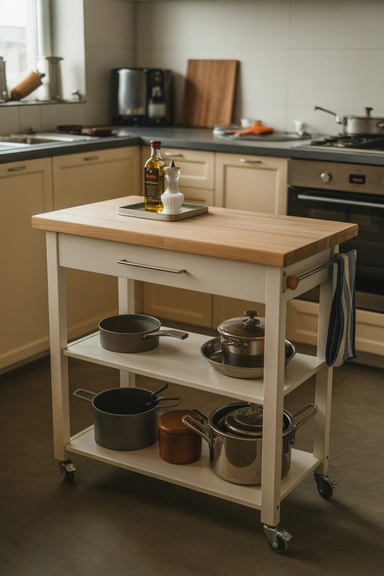
A compact rolling kitchen island instantly replaces lost cabinet storage while adding prep surface. Look for designs with open shelving below and a solid top that can handle cutting boards or small appliances. Wheels allow flexibility, especially in tight layouts where movement matters.
Store heavier cookware or food storage containers on the lower shelf to anchor the piece visually. Keep the top minimal — perhaps a tray for oils and salt. In a tiny apartment kitchen, mobility is power. This approach transforms a static layout into an adaptable, space-saving kitchen solution without built-in cabinetry.
8. Under-Shelf Baskets That Double Shelf Capacity
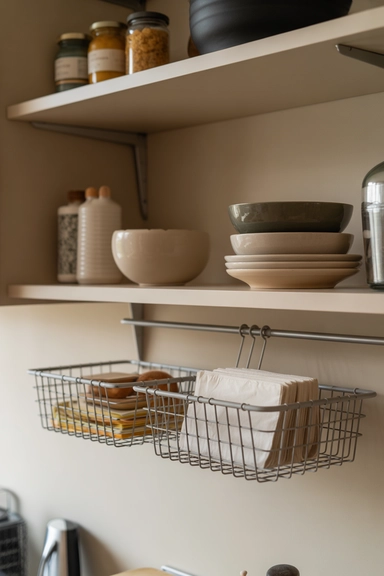
If you already use floating shelves, maximize them with under-shelf hanging baskets. These slim metal or wire inserts slide onto an existing shelf and create a second layer underneath for lightweight items like napkins, wraps, or small pantry goods.
The visual trick is keeping categories consistent. Don’t mix cleaning supplies with food items. Group similar objects so each shelf feels intentional rather than overloaded. This layered method increases storage density without increasing bulk, making it a quiet but powerful tiny kitchen storage hack for cabinet-free spaces.
9. Ceiling-Mounted Pot Rack for Vertical Drama
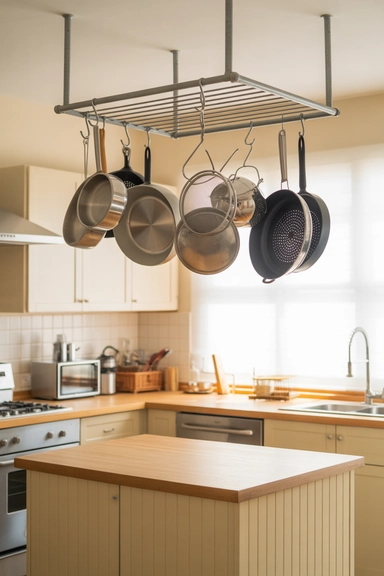
When wall space is limited, look upward. A ceiling-mounted pot rack frees drawers and shelves while adding architectural interest. Hang frequently used pans, colanders, and even lightweight utensils using S-hooks spaced evenly to prevent visual clutter.
Choose finishes that complement your kitchen style — matte black for modern interiors or brushed metal for industrial appeal. Keep the arrangement symmetrical so it feels styled rather than chaotic. In small kitchens without upper cabinets, ceiling storage transforms empty airspace into practical, design-forward organization.
10. Countertop Expandable Organizer for Controlled Layers
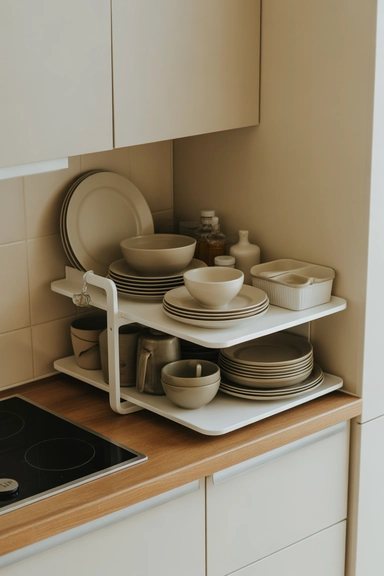
Instead of stacking dishes directly on the counter, use an expandable countertop organizer to create structured tiers. These adjustable systems allow plates, bowls, or mugs to sit in clean horizontal rows while preserving visual order.
Opt for neutral finishes like white, wood, or gray to avoid overwhelming the room. Keep the arrangement minimal — overcrowding defeats the purpose. This layered approach adds storage without requiring wall installation, making it ideal for renters who need flexible tiny kitchen storage solutions without cabinets.
11. Side-of-Fridge Vertical Pantry Strip
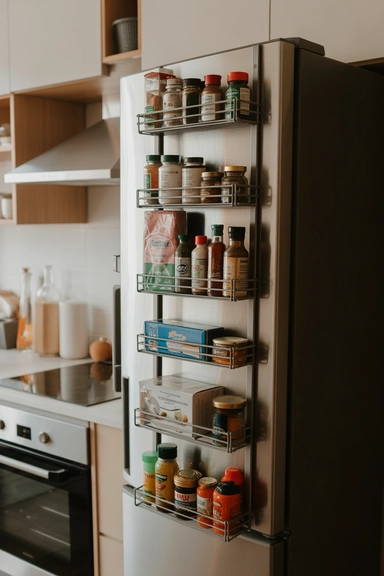
The side panel of a refrigerator is one of the most underutilized surfaces in a tiny apartment kitchen. Instead of leaving it blank, install slim magnetic racks or adhesive-mounted vertical organizers to hold spices, foil boxes, cutting boards, or paper towels. This creates a functional storage column without taking up floor or counter space.
Keep weight distribution balanced and avoid overcrowding. Group items by function — baking supplies together, everyday spices together — so retrieval feels effortless. Visually, maintain alignment so containers form clean vertical lines. This approach turns a forgotten appliance surface into structured tiny kitchen storage without cabinets.
12. Ladder Shelf That Replaces Upper Cabinets
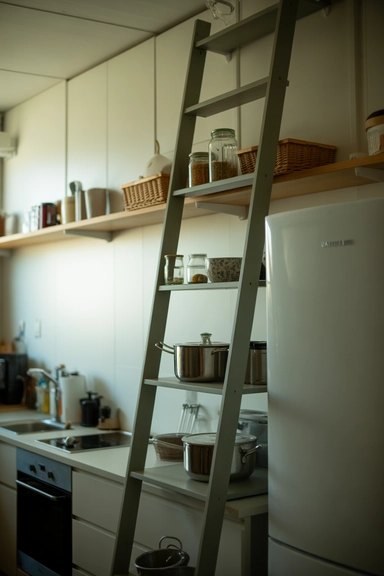
A narrow ladder shelf leaning against the wall can function like open cabinetry without permanent installation. The graduated depth naturally draws the eye upward while maintaining visual lightness in tight layouts. Use lower shelves for heavier cookware and upper tiers for glass jars, small appliances, or decorative baskets.
To prevent clutter, limit color variation and use matching containers for dry goods. Keep spacing breathable between items. In small kitchens where drilling isn’t ideal, a ladder shelf provides architectural presence and organized storage without committing to built-ins.
13. Under-Sink Vertical Bins With Stackable Layers
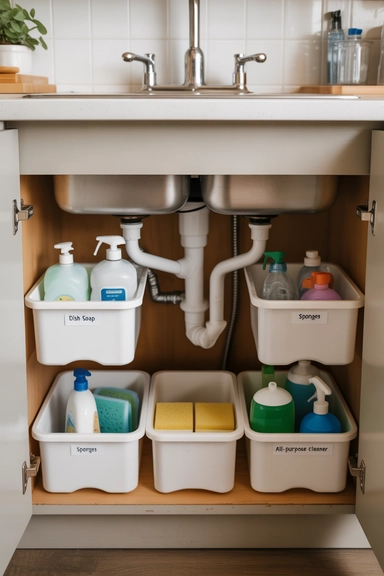
The space beneath the sink often becomes chaotic because of plumbing obstacles. Instead of random stacking, use narrow stackable bins or pull-out trays that fit around pipes. Create defined zones: cleaning supplies in one bin, dish tools in another, backups stored higher.
Clear or labeled containers maintain visibility and reduce rummaging. Avoid overfilling; negative space improves accessibility. Even without cabinets elsewhere, optimizing the under-sink zone ensures that essential supplies stay contained, supporting a broader tiny kitchen storage system built on logic rather than overflow.
14. Wall-Mounted Rail System With Hooks
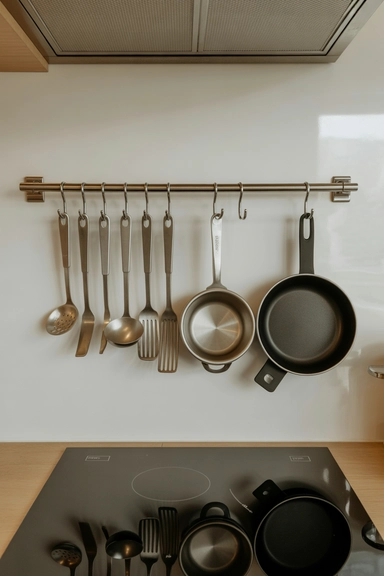
A wall-mounted rail system transforms a blank backsplash into dynamic storage. Install a slim metal rail and attach S-hooks for utensils, small pans, mugs, or mini baskets. The linear design keeps everything aligned horizontally, which feels calmer than scattered hooks.
Spacing is crucial. Leave breathing room between items to prevent visual congestion. Choose a finish that complements your kitchen’s palette — black for contrast, stainless steel for cohesion. This type of wall storage reduces drawer dependency and strengthens vertical organization in kitchens without upper cabinets.
15. Narrow Pantry Cabinet Substitute With Open Bookcase
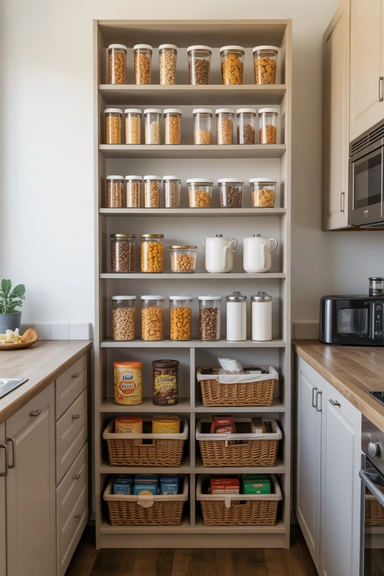
If floor space allows, a slim open bookcase can function as a pantry replacement. Choose a tall, narrow model with adjustable shelves so you can customize spacing for jars, cereal containers, and dry goods. Keep the footprint compact to preserve walking paths.
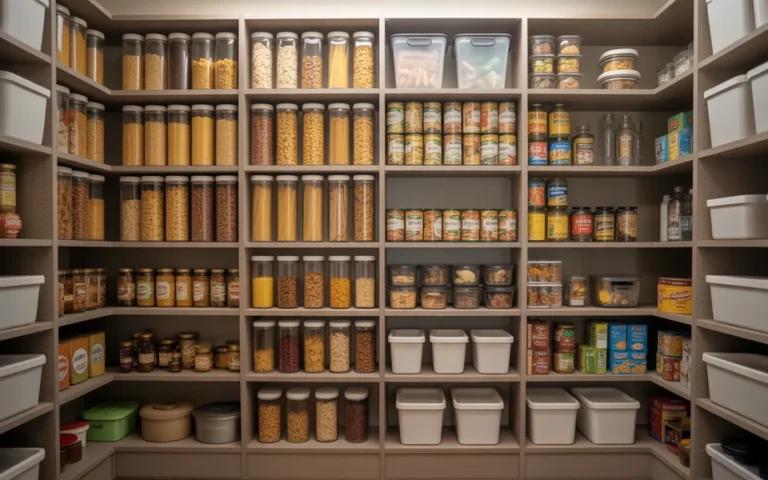
Maintain visual discipline by decanting pantry items into uniform glass or plastic containers. Use baskets to hide less attractive packaging. When styled intentionally, an open pantry shelf reads as decor rather than storage overflow, making it one of the most versatile tiny kitchen storage ideas without cabinets.
16. Window Ledge as a Functional Storage Shelf
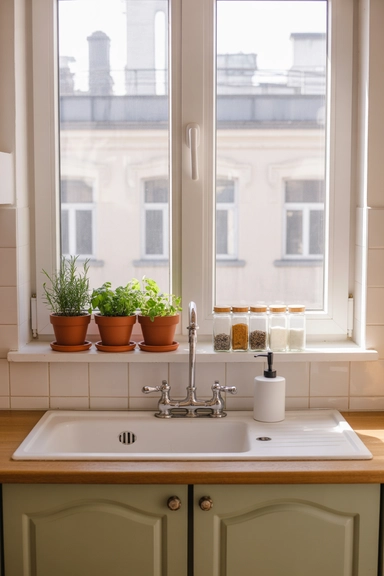
If your tiny kitchen has a window above the sink, that ledge can work harder than just holding a sponge. Extend it slightly with a slim wood board to create a narrow shelf for everyday items like dish soap, small herb pots, or frequently used spices. The natural light makes glass containers sparkle instead of look cluttered.
Keep the arrangement symmetrical to avoid visual chaos. Two matching jars on either side of a small plant creates balance. Avoid overcrowding, especially in a small apartment kitchen where sunlight already highlights everything. Treated intentionally, a window ledge becomes structured tiny kitchen storage without cabinets rather than a dumping zone.
17. Stackable Food Storage Containers for Vertical Efficiency
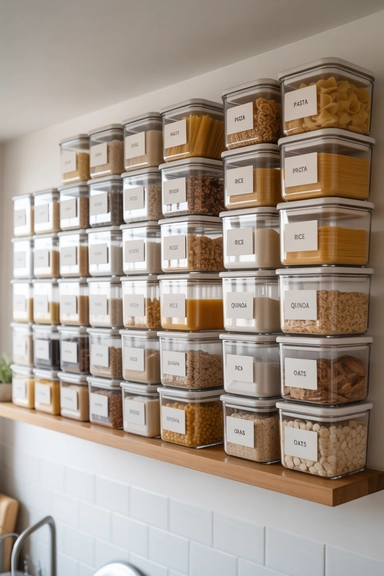
When cabinets are limited, inefficient packaging becomes your enemy. Replace mismatched boxes and bags with stackable food storage containers in uniform shapes. Square or rectangular containers maximize shelf surface compared to round ones, allowing tighter alignment on floating wall shelves or open bookcases.
Label clearly and group by category — grains together, baking supplies together, snacks together. The visual consistency reduces mental clutter and increases usable capacity. This small shift dramatically improves tiny kitchen storage solutions because it optimizes what you already have instead of adding more furniture.
18. Fold-Down Wall Table With Hidden Storage
A fold-down wall-mounted table creates dual-purpose functionality in tight kitchens. When closed, it occupies almost no space. When opened, it becomes a prep surface or dining spot. Some designs include shallow shelves or compartments inside the folded panel for storing placemats, utensils, or small pantry items.
Install it along a blank wall where circulation isn’t blocked. Keep stored items lightweight and organized so closing remains easy. In kitchens without cabinets, multifunctional furniture like this reduces pressure on counters while supporting flexible, space-saving kitchen layouts.
19. Hanging Baskets From Ceiling or Wall Brackets
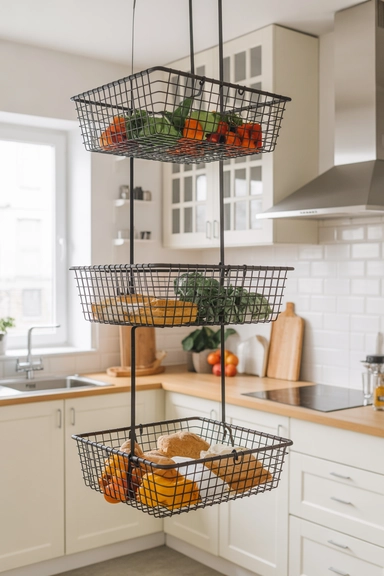
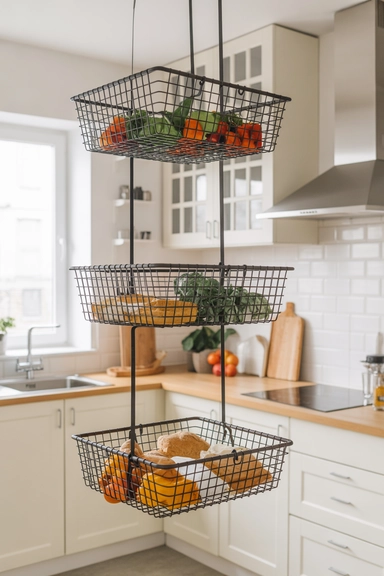
Hanging wire baskets add vertical storage without enclosing space. Suspend them from wall brackets or ceiling hooks to hold produce, bread, or lightweight pantry goods. Keep basket sizes consistent and hang them in a clean vertical line for visual order.
Avoid mixing unrelated items. Produce in one basket, packaged goods in another. Choose finishes that match your hardware so the look feels cohesive rather than improvised. In tiny kitchens, suspended storage keeps countertops clear while introducing layered depth without cabinetry.
20. Compact Trash and Recycling Pull-Out Alternative
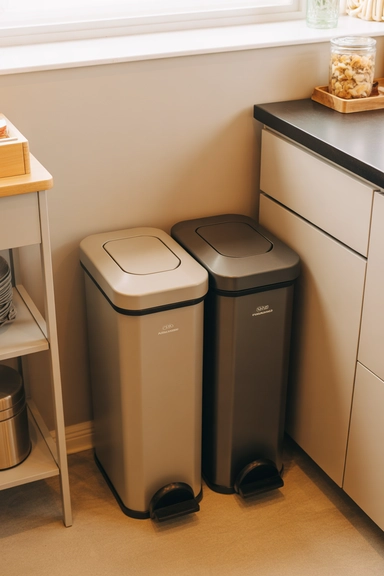
Without base cabinets, trash placement becomes awkward. Use a slim, lidded trash can designed for tight gaps or integrate a two-tier narrow bin beside a rolling cart. The goal is containment without blocking walkways.
Position it near prep space but flush against a wall to preserve flow. Choose neutral tones so it blends into the background visually. In small kitchens without cabinets, even waste management must follow layout logic. A compact solution maintains cleanliness and supports overall organization.
21. Over-the-Stove Shelf to Capture Vertical Heat Space
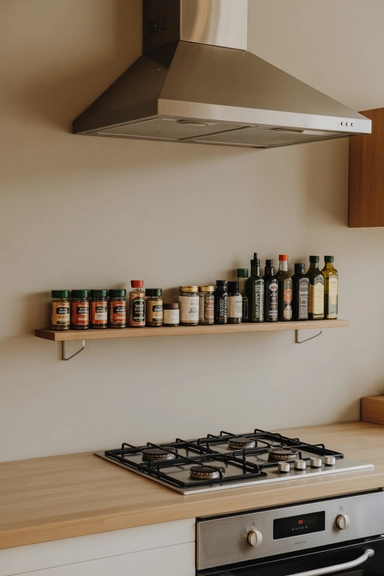
The wall space above a stove is often empty, yet it can support a shallow heat-safe shelf for lightweight storage. Install a slim floating shelf high enough to avoid steam interference, and use it for spice jars, oil bottles, or frequently used seasonings arranged in clean rows.
Stick to glass or heat-resistant containers and keep spacing intentional so the shelf feels curated instead of crowded. In a tiny apartment kitchen, this creates a defined cooking zone without adding bulky cabinetry. It’s one of the most overlooked tiny kitchen storage ideas without cabinets because it uses airspace that typically goes unused.
22. Decorative Crates as Modular Pantry Blocks
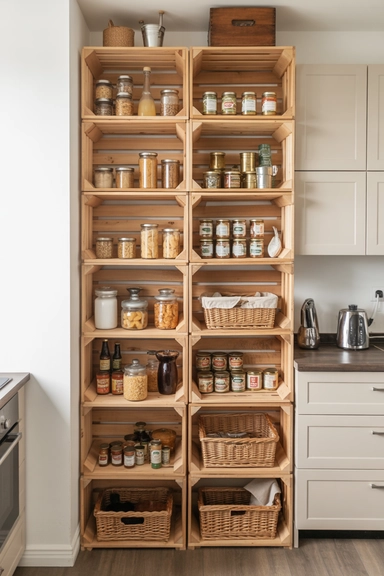
Wooden or metal crates can function as modular pantry units when stacked vertically against a wall. Secure them together for stability and vary orientation for visual interest while maintaining alignment. Use lower crates for heavier items like canned goods and upper ones for lighter pantry supplies.
Keep interiors organized with bins or uniform containers to prevent visual chaos. Neutral finishes such as natural wood, white, or black help the system blend into the kitchen aesthetic. In small kitchens without cabinets, modular crates provide adaptable storage that grows with your needs.
Conclusion
A kitchen without cabinets isn’t a limitation — it’s a design challenge that rewards smart structure. When you think vertically, activate gaps, and choose mobile or modular pieces, even the smallest apartment layout can feel organized and intentional. The key is visual discipline: consistent containers, balanced spacing, and clearly defined zones. Apply even a few of these ideas, and your tiny kitchen storage without cabinets will feel controlled, functional, and surprisingly spacious.