
Introduction
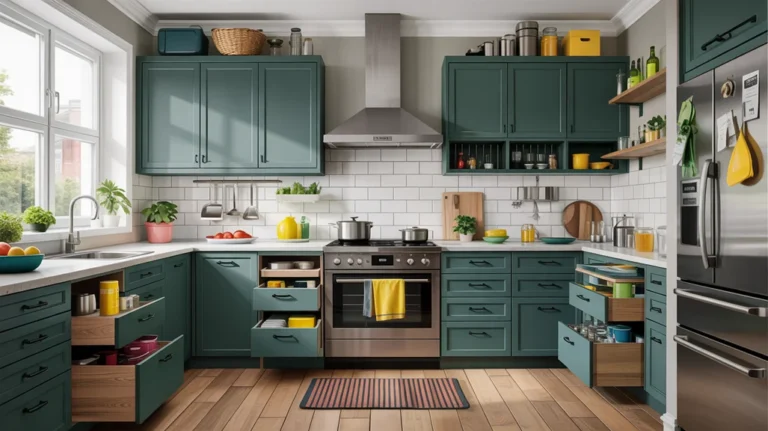
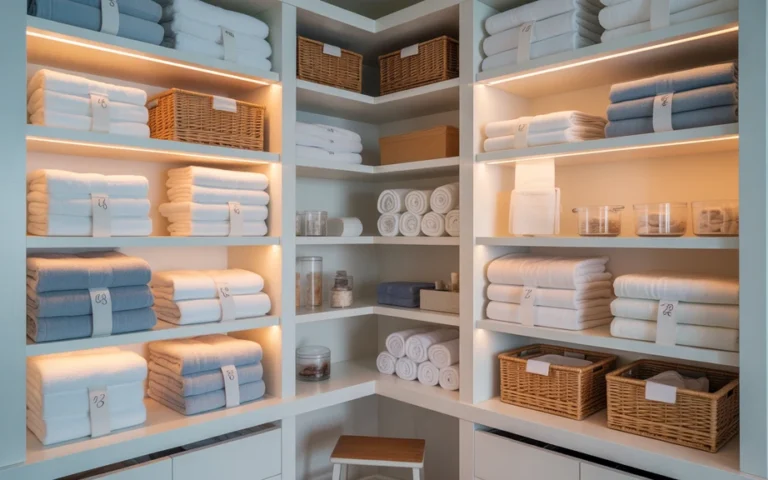
Cluttered shelves aren’t a space problem, they’re a structure problem. The most effective pantry shelf organization ideas focus on visibility, easy access, vertical layering, and intentional category zones instead of piling on extra bins. When jars align properly, cans stay visible, and dry goods are decanted into uniform containers, shelves instantly feel wider and easier to maintain. The goal isn’t to store more — it’s to store smarter. If you’ve already explored 21 Small Kitchen Pantry Ideas That Save Space, this guide refines organization at the shelf level for lasting control.
1. Tiered Shelf Risers That Eliminate Hidden Rows
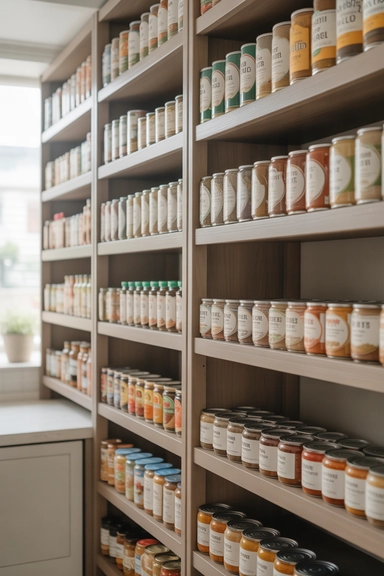
Flat pantry shelves create a simple but costly problem: the moment one item is placed in front of another, the back row disappears. Tiered shelf risers solve this by lifting rear items slightly higher than those in front, creating a stadium-style layout where every label stays visible. This single adjustment transforms deep shelves from clutter traps into fully readable inventory zones. Among practical pantry shelf organization ideas, visibility is the first rule—if you can see it instantly, you’re far less likely to overbuy or forget what you already own.
To make risers work long-term, avoid overcrowding them. Leave small gaps between cans or jars so removal doesn’t disturb the entire row. Keep heavier items on the base level for stability and lighter containers on upper tiers. Align labels forward to maintain clean visual rhythm. When structured correctly, risers increase usable depth without expanding shelf size, making them one of the most efficient upgrades for compact pantry spaces.
2. Uniform Airtight Containers That Create Clean Lines
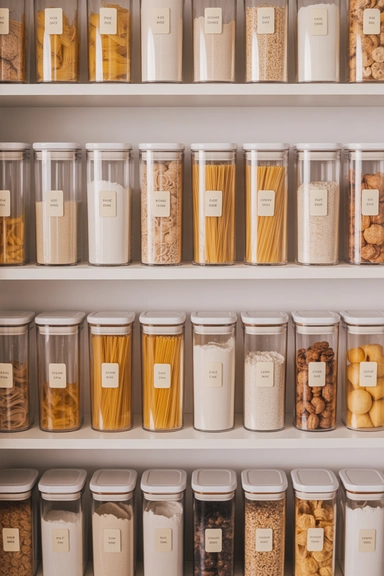
Mismatched boxes, half-open bags, and uneven packaging are the fastest way to waste shelf space. Replacing them with uniform airtight containers immediately tightens alignment and removes awkward air gaps. Rectangular containers sit flush against one another, maximizing surface area while creating smooth horizontal lines across the shelf. Among the most reliable pantry shelf organization ideas, container uniformity builds visual calm while increasing true storage density.
Choose clear containers so contents remain visible without lifting lids. Group similar heights together to maintain consistent spacing between shelves. Keep frequently used staples at eye level and bulk refills lower for stability. When shapes repeat and labels align, the shelf feels intentional instead of improvised. This structure doesn’t just look better — it reduces food waste and simplifies daily access.
3. Adjustable Shelf Heights That Remove Dead Air
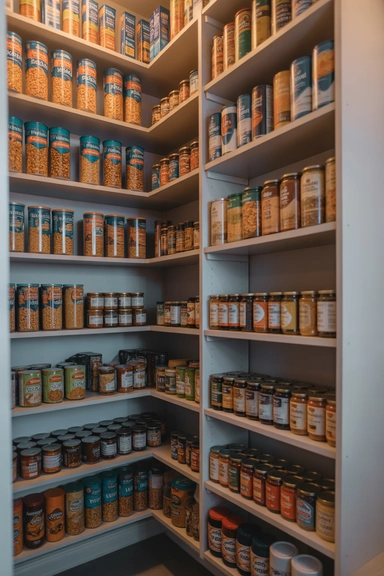
Fixed shelves often leave two or three wasted inches above shorter containers. That unused vertical air compounds across the entire pantry, quietly reducing capacity. Adjusting shelf heights to match container dimensions reclaims that lost space without adding a single new product. Precise spacing ensures each level works at full potential rather than functioning at partial capacity.
Measure your tallest items first before repositioning shelves. Place cereal boxes or tall pasta containers where clearance is highest, and compress spacing around shorter jars and cans. Effective pantry shelf organization ideas depend on proportion. When vertical gaps disappear, shelves hold more while appearing less crowded. Precision, not expansion, is what truly maximizes storage.
4. Clear Category Zoning That Prevents Drift
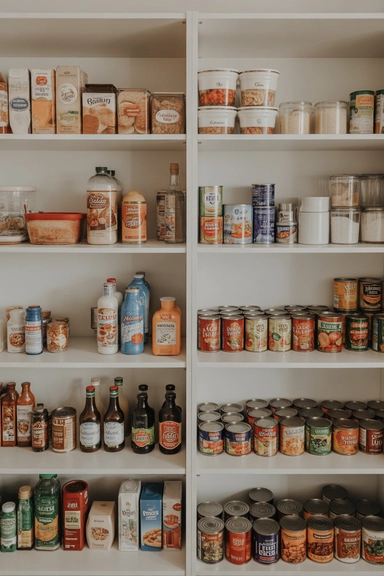
Without defined zones, pantry shelves slowly blend categories together. Snacks migrate toward baking supplies, canned goods mix with breakfast items, and visual chaos returns. Clear category zoning prevents this drift by assigning each shelf — or even half shelf — a single purpose. Structure replaces randomness.
Group items by function rather than packaging size. Keep breakfast staples together, baking ingredients together, canned vegetables together. Maintain physical boundaries between categories to reinforce the system visually. Strong pantry shelf organization ideas rely on separation to maintain order. When every product belongs to a defined zone, shelves stay stable instead of sliding back into clutter.
5. Vertical Dividers That Control Horizontal Spread
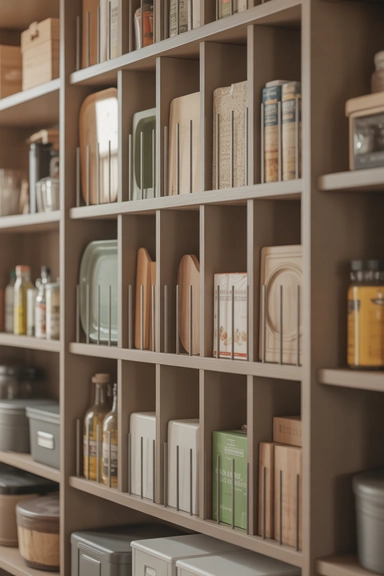
Flat stacks of trays, cutting boards, or boxed goods consume horizontal shelf depth quickly. Installing vertical dividers transforms that horizontal spread into upright storage. Items stand independently rather than collapsing into unstable piles. This reduces friction during retrieval and preserves alignment.
Place dividers evenly and ensure they are securely anchored to prevent shifting. Store similar-height items together to maintain balance and visual symmetry. Among efficient pantry shelf organization ideas, vertical control reduces stacking pressure and frees entire shelf sections for food storage. Upright organization increases accessibility while protecting shelf structure long-term.
6. Clear Front Bins That Contain Small Packets
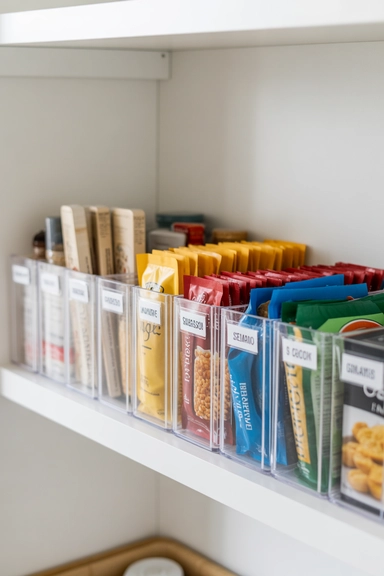
Small packets — seasoning envelopes, gravy mixes, snack pouches — are the fastest way to destroy shelf order. They slide, collapse, and scatter the moment space tightens. Clear front-facing bins solve this by containing loose items within defined boundaries while keeping contents visible. Instead of spreading across an entire shelf, small items stay grouped in a single, controlled zone.
Choose bins with straight sides so they sit flush beside one another without wasted gaps. Label each bin clearly and limit it to one category only. Strong pantry shelf organization ideas rely on containment, not compression. When small items are corralled properly, shelves regain clean lines and predictable structure.
7. Lazy Susan Turntables for Short Shelf Depth
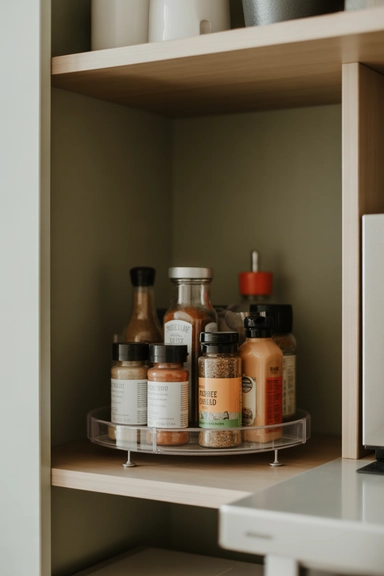
Shallow pantry shelves often waste corner or side space because jars get pushed backward and forgotten. A compact lazy susan turntable eliminates this by allowing items to rotate forward instantly. Instead of reaching around other containers, you spin and retrieve. That rotational access keeps every jar visible without rearranging the entire shelf.
Use turntables for condiments, baking extracts, or smaller spice jars rather than tall cereal boxes. Keep weight balanced for smooth movement. Within high-functioning pantry shelf organization ideas, rotational systems improve both accessibility and maintenance. When shelves move with you, they stop working against you.
8. Shelf Liners That Stabilize and Protect
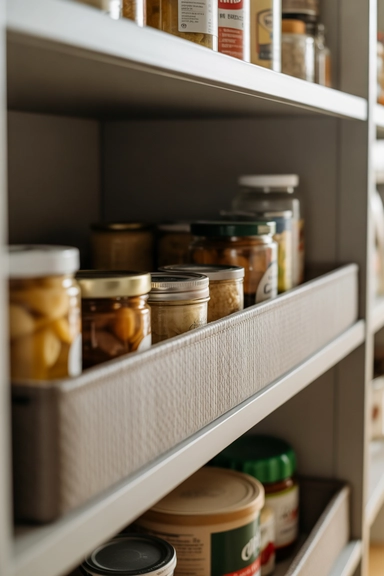
Sliding jars and shifting cans slowly break shelf order. Adding non-slip shelf liners stabilizes items and protects surfaces from spills or scratches. While subtle, this upgrade reinforces the entire system by reducing friction and preventing items from drifting out of alignment over time.
Choose neutral liners that blend visually and trim them precisely to shelf dimensions for a clean finish. Stability is often overlooked in pantry shelf organization ideas, yet it directly impacts long-term maintenance. When items stay where you place them, shelves remain structured instead of constantly needing correction.
9. Eye-Level Priority Placement for Daily Items
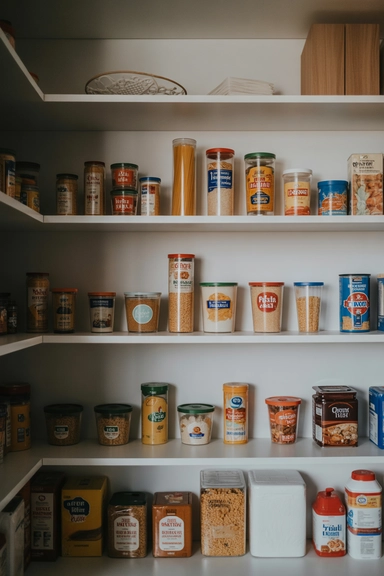
Not all shelf space holds equal value. Eye-level shelves are prime real estate and should house the most frequently used staples. Placing daily items within immediate reach reduces unnecessary movement and prevents overhandling of less-used products stored above or below.
Keep heavy bulk goods lower for safety and lighter backup items higher up. Thoughtful placement is central to practical pantry shelf organization ideas. When daily-use products live at eye level, shelves feel intuitive and efficient rather than crowded and inconvenient.
10. Backstock Separation That Prevents Overcrowding
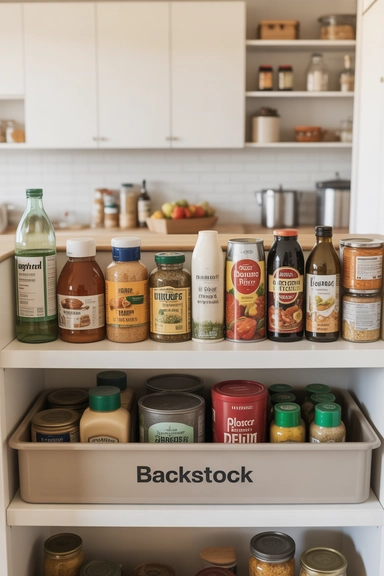
Mixing unopened backup items with daily-use goods quickly overwhelms shelves. Creating a dedicated backstock zone prevents this overflow. Assign a specific lower shelf or container for duplicates and unopened packages so your main shelves remain clean and readable.
Rotate items forward as they’re opened to maintain freshness and inventory clarity. Among disciplined pantry shelf organization ideas, separation is critical. When daily goods and reserves have distinct zones, shelves maintain breathing room instead of collapsing under excess volume.
11. Uniform Label Placement That Reinforces Order
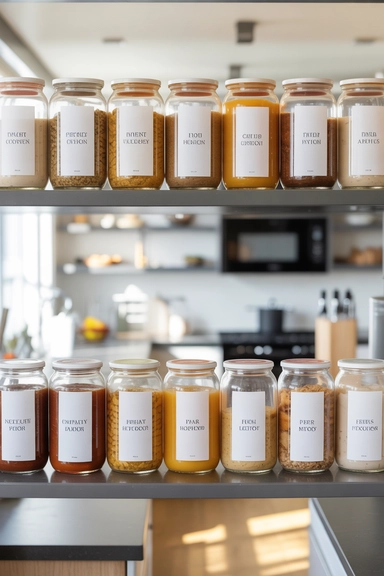
Even well-arranged shelves lose structure when labels are inconsistent or missing. Uniform label placement restores visual rhythm and prevents confusion. Position labels in the same location on every container — centered and aligned — so your eye scans shelves quickly without hesitation. This small adjustment builds a sense of control that holds the system together.
Use clear, simple fonts and avoid decorative excess. Labels should clarify, not compete for attention. Among dependable pantry shelf organization ideas, consistent labeling reduces decision fatigue and strengthens category boundaries. When every container is clearly identified and visually aligned, shelves feel intentional rather than temporary.
12. Clear Decanting for Bulky Packaging
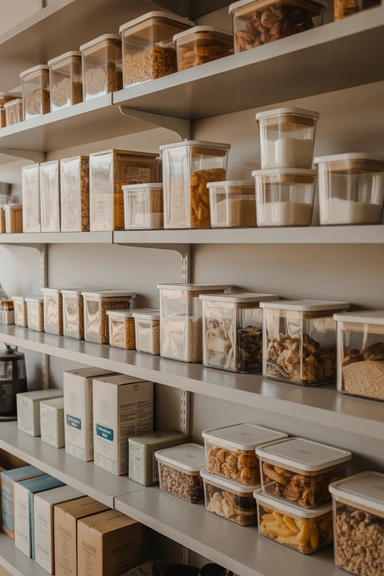
Large branded packaging consumes irregular space and disrupts alignment. Decanting dry goods into clear, structured containers eliminates uneven shapes and compresses wasted air. Instead of oversized cereal boxes leaning forward, grains and snacks fit into stackable forms that maximize shelf surface.
Choose airtight containers to preserve freshness and maintain uniformity. Arrange similar heights together to create clean horizontal lines. Strategic decanting is central to effective pantry shelf organization ideas because it increases density while preserving clarity. Structured containment replaces chaotic packaging and stabilizes the shelf visually.
13. Depth Zoning That Prevents Double Stacking
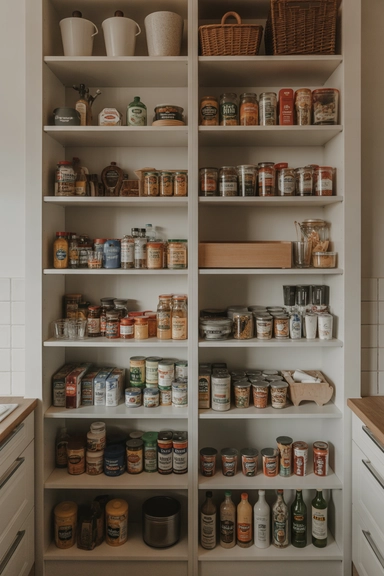
Deep pantry shelves encourage double stacking, which instantly hides half your inventory. Instead of stacking front to back, divide shelf depth into defined zones. Place frequently used items toward the front and limit the back row to backup goods only.
Avoid layering tall items in front of shorter ones. Maintain visible sightlines from left to right. High-function pantry shelf organization ideas depend on transparency. When depth is controlled rather than overloaded, every product remains accessible and shelves stop turning into hidden storage traps.
14. Basket Alignment for Clean Visual Rhythm
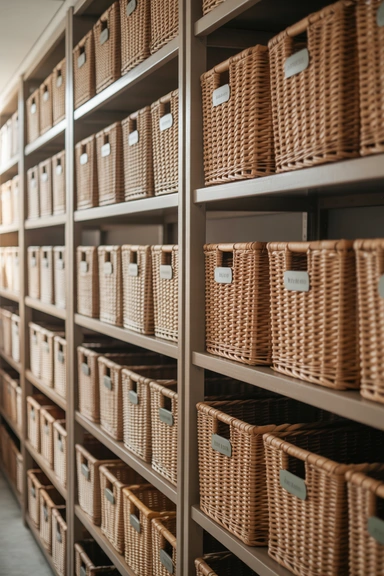
Randomly sized baskets create uneven spacing and visual imbalance. Choose baskets in matching dimensions so they sit flush across the shelf without awkward gaps. Alignment is what transforms containment into structure.
Place baskets in straight rows and keep heights consistent across levels. Use subtle labels to define categories without adding clutter. Reliable pantry shelf organization ideas focus on repetition. When shapes and spacing repeat across shelves, the pantry feels wider and calmer, even if the footprint hasn’t changed.
15. Slim Shelf Risers for Short Jars

Short jars often waste vertical space when placed alone on tall shelves. Slim risers create a second level without compressing taller items. By lifting smaller containers upward, you prevent unused air gaps and increase overall capacity.
Position risers where jar heights allow smooth clearance. Avoid overloading the upper tier to maintain stability. Among compact pantry shelf organization ideas, micro-layering maximizes small spaces efficiently. Structured vertical stacking increases density while preserving order and accessibility.
16. Vertical Can Dispensers That Create Forward Flow
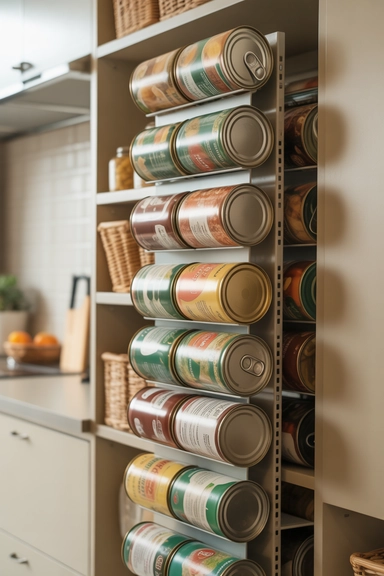
Loose cans stacked flat consume depth quickly and force you to move items around to find what you need. A vertical can dispenser solves this by creating a gravity-fed forward flow system. As one can is removed from the front, the next rolls forward automatically, keeping labels visible and rows tight.
Place dispensers along deeper shelves where standard stacking would normally hide items. Keep similar categories together to maintain clarity. Among high-efficiency pantry shelf organization ideas, forward-flow systems reduce wasted motion and prevent expired cans from lingering at the back of the shelf.
17. Clear Shelf Boundaries With Dividing Bars

Long pantry shelves often become unstable because items gradually spread sideways. Installing slim dividing bars or tension dividers creates subtle boundaries that prevent horizontal drift. These barriers keep categories from blending while preserving open visibility.
Space dividers evenly and align them vertically across multiple shelves for consistency. Store similar-height containers within each section to maintain balance. Reliable pantry shelf organization ideas depend on invisible structure — when boundaries exist, items stay in place without constant rearranging.
18. Staggered Height Grouping for Visual Balance
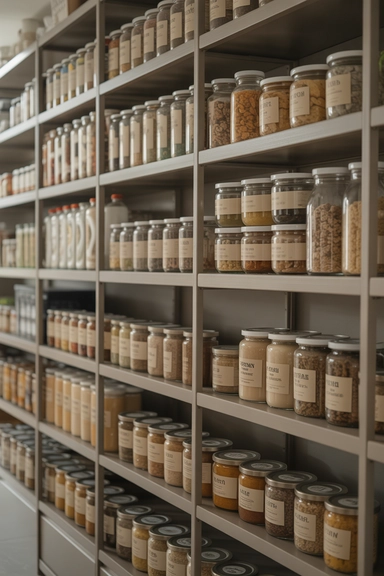
Random height variation makes shelves feel cluttered even when organized. Instead of mixing tall and short containers arbitrarily, group items by height to create clean visual blocks. Tall containers together, medium containers together, and short jars layered with risers.
This staggered grouping maintains smooth horizontal sightlines across the shelf. It also improves space efficiency by reducing wasted air pockets. Thoughtful pantry shelf organization ideas prioritize visual rhythm as much as storage volume. When height alignment is intentional, shelves appear wider and more controlled.
19. Dedicated Baking Shelf With Controlled Density
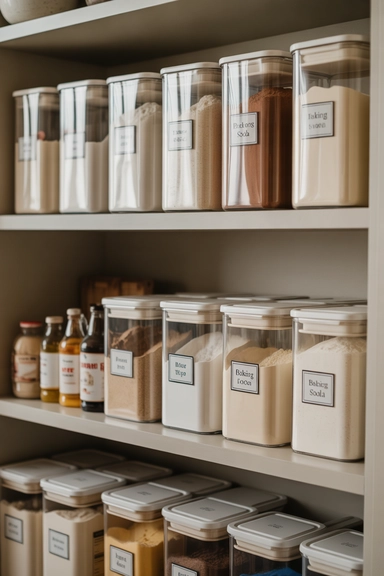
Baking ingredients tend to scatter across multiple shelves, creating confusion and duplicate purchases. Consolidating flour, sugar, cocoa, and baking powders onto a single dedicated shelf creates a focused working zone. Keep frequently used ingredients at the front and backups behind in clear containers.
Use matching containers to maintain alignment and prevent uneven packaging from disrupting the layout. Focused zoning is central to effective pantry shelf organization ideas. When one shelf serves one purpose, retrieval becomes faster and long-term maintenance becomes easier.
20. Minimalist Display Shelf for Everyday Staples
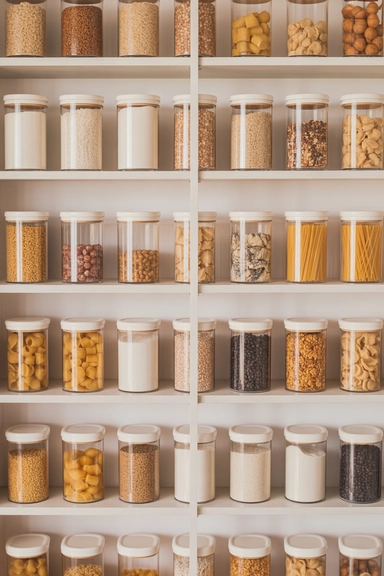
Not every pantry shelf needs maximum density. Creating one minimalist display shelf for everyday staples like rice, pasta, or lentils can stabilize the entire system. Keep containers uniform and spaced evenly to prevent visual overload.
Avoid mixing categories or overfilling this zone. The goal is clarity, not compression. Strong pantry shelf organization ideas balance density with breathing space. When one shelf remains intentionally clean, it anchors the pantry visually and prevents overcrowding from spreading.
21. Lower Shelf Bulk Zone for Heavy Items
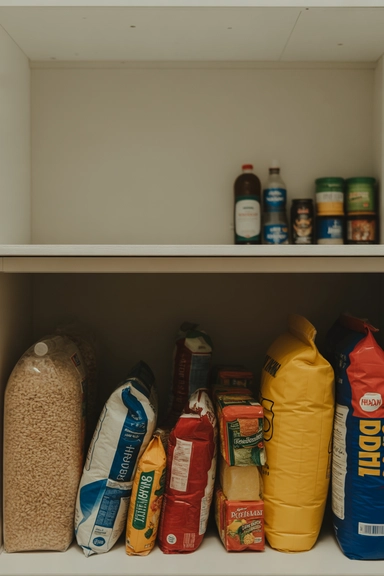
Heavy bulk goods stored high create instability and strain. Assigning the lowest pantry shelf as a bulk zone keeps weight grounded and preserves upper shelf alignment. Large rice bags, beverage packs, and extra canned goods belong here.
Use sturdy containers or bins to prevent shifting and maintain containment. Structured weight placement is an often-ignored element of smart pantry shelf organization ideas. When heavy items are anchored below, upper shelves remain cleaner, lighter, and easier to maintain daily.
22. Routine Shelf Reset System for Long-Term Control
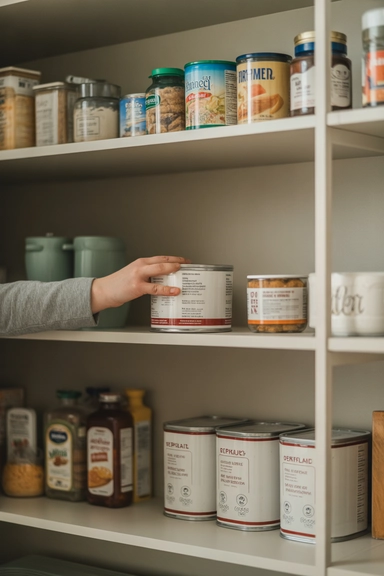
Even the best systems fail without maintenance. Establishing a simple monthly shelf reset keeps alignment intact. Remove items briefly, wipe surfaces, realign containers, and check expiration dates. This routine prevents gradual drift back into clutter.
Keep resets short and focused — structure should make maintenance easy, not overwhelming. Sustainable pantry shelf organization ideas rely on reinforcement. When shelves are reviewed regularly, organization remains stable instead of collapsing slowly over time.
Conclusion
Well-structured shelves eliminate hidden items, wasted gaps, and unstable stacks before clutter starts. The strongest pantry shelf organization ideas combine container uniformity, height precision, and clear zoning so every inch serves a purpose. When visibility improves, maintenance becomes effortless. Apply even a few of these shelf-focused upgrades, and your pantry will stay organized longer — not because you added space, but because you built structure that actually works.