
Introduction
Kitchen organization without pantry space can feel frustrating, especially in a small apartment kitchen where cabinets already carry the entire workload. When there’s no dedicated pantry, every shelf, drawer, and corner has to function smarter. The good news is that a kitchen with no pantry can still feel structured, intentional, and easy to maintain. With the right zoning strategy and practical kitchen storage solutions, you can build pantry alternatives that look clean and work daily. If you’re renting, you’ll also love these ideas in 23 Rental Kitchen Organization Ideas For Real Homes.
1. Create Cabinet Zones That Function Like a Built-In Pantry
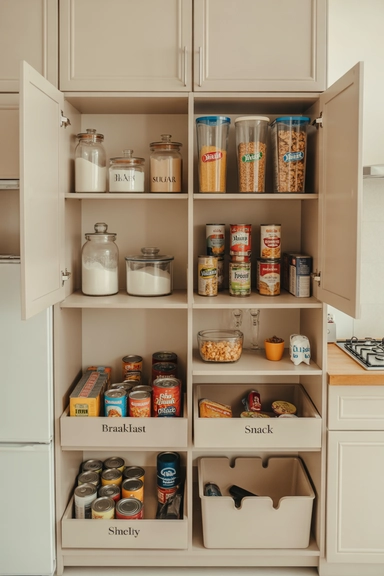
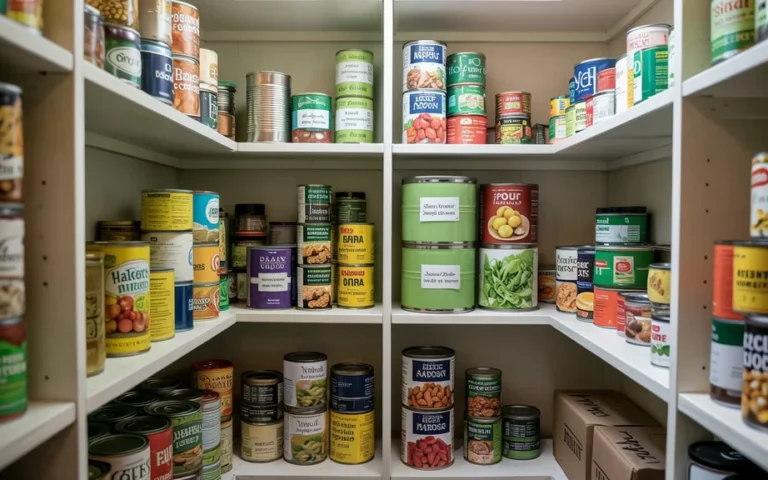
When you’re dealing with kitchen organization without pantry space, upper cabinets need to operate like structured storage systems, not random catch-alls. Start by assigning each cabinet a defined purpose: breakfast items in one, baking essentials in another, dry goods in a third. This zoning approach transforms standard kitchen cabinets storage into something that mimics pantry organization cabinets without requiring extra square footage. In a small apartment kitchen, clarity matters more than quantity.
To strengthen this system, use shelf risers and clear kitchen organizers so vertical space doesn’t go unused. Decant staples like rice, flour, and pasta into uniform containers to reduce visual clutter and improve visibility. Label shelves, not just jars, so everything returns to its correct zone. This structure creates consistency, which is essential for small kitchen organization no pantry layouts that need discipline to stay functional.
2. Install Door-Mounted Storage to Capture Hidden Space
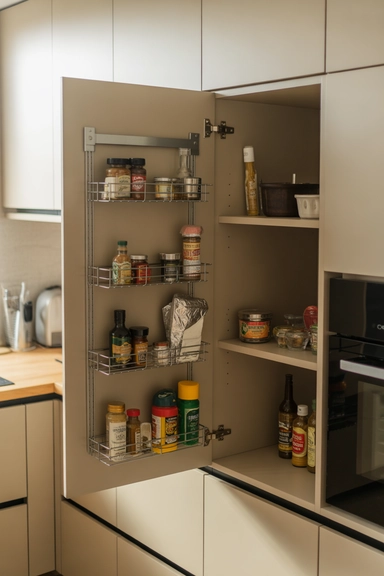
Cabinet doors offer overlooked storage potential in a kitchen without pantry storage. Adding slim racks or wire organizers to the inside of doors instantly expands capacity without crowding shelves. This works especially well for spices, seasoning packets, foil, wraps, or small condiments that usually disappear in deeper cabinets. In a galley kitchen storage layout, this keeps essentials accessible without eating into limited shelf depth.
The key is to choose low-profile organizers that allow the cabinet to close easily. Keep items lightweight and category-specific to avoid overloading hinges. This simple adjustment creates practical kitchen storage solutions that feel intentional rather than improvised. When space is tight, capturing vertical door space helps your kitchen organization without pantry setup function like it was designed that way from the beginning.
3. Use a Slim Rolling Cart as a Flexible Pantry Alternative
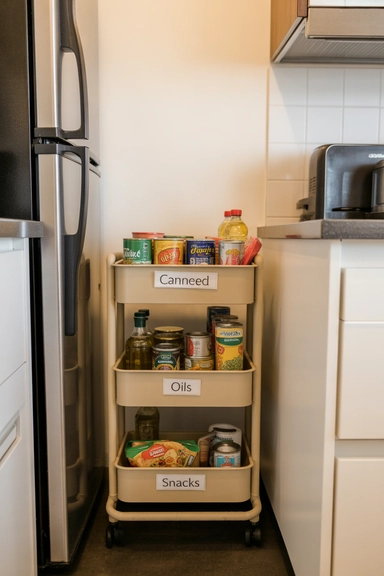
A narrow rolling cart can become one of the strongest pantry alternatives in a small kitchen no pantry setup. Slide it between appliances, at the end of counters, or along unused wall space in an apartment kitchen. Assign each tier a category—canned goods, snacks, oils, or baking supplies—so it mirrors the structure of a traditional pantry while remaining mobile and adaptable.
Because it moves, it adjusts to your workflow. Pull it closer when cooking and tuck it away when not in use. This flexibility is essential in kitchen organization without pantry layouts where permanent built-ins aren’t possible. The cart becomes a dynamic extension of your cabinets, especially when paired with labeled bins that maintain order even in tight storage without pantry conditions.
4. Transform a Nearby Utility Closet Into Overflow Storage
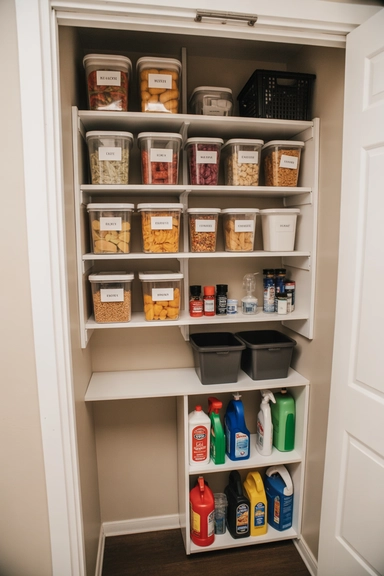
If your home includes a utility closet near the kitchen, consider extending your kitchen organization without pantry strategy beyond the kitchen walls. Installing simple shelving inside a utility closet creates a controlled overflow area for bulk items, paper goods, or backup dry foods. This approach works particularly well in small apartment kitchens where cabinet space feels permanently full.
Separate cleaning supplies from food storage using stackable bins or closed containers to maintain hygiene and clarity. Think of this as an auxiliary pantry alternative rather than random overflow. By structuring this closet with categories and labels, you build a reliable extension of your kitchen storage ideas without pantry limitations, allowing your main kitchen to stay visually lighter and easier to maintain.
5. Dedicate a Deep Drawer to Dry Goods Storage
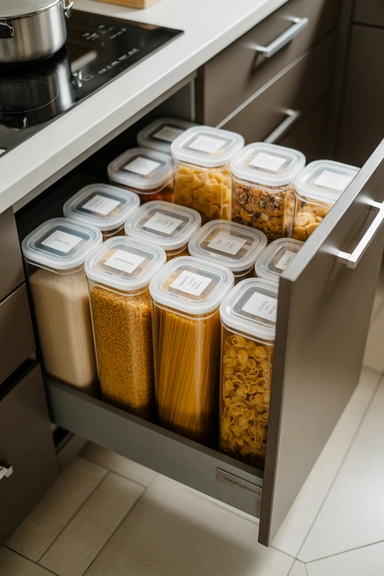
When cabinet space feels overloaded, shifting dry goods into a deep drawer can completely change your kitchen organization without pantry strategy. Install drawer dividers or use modular bins to separate pasta, rice, grains, and snacks vertically instead of stacking them horizontally on shelves. In a small apartment kitchen, drawers often provide easier visibility than deep cabinets where items disappear behind each other.
Clear containers work especially well here because they allow you to identify quantities instantly. Arrange items upright so labels face upward when the drawer opens. This setup mimics organized pantry drawer organization while staying compact. For kitchens with no pantry, using drawer depth strategically prevents overcrowding cabinets and creates a structured system that feels deliberate rather than improvised.
6. Add Open Shelving to Replace Pantry Walls
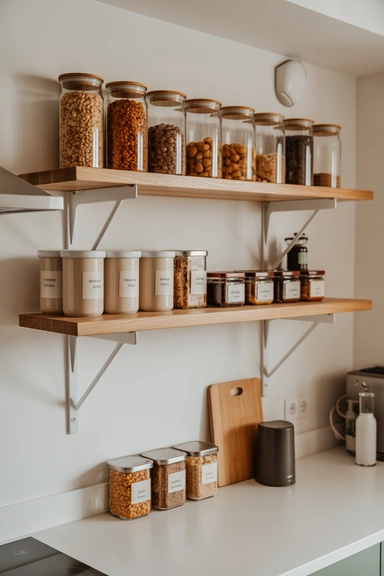
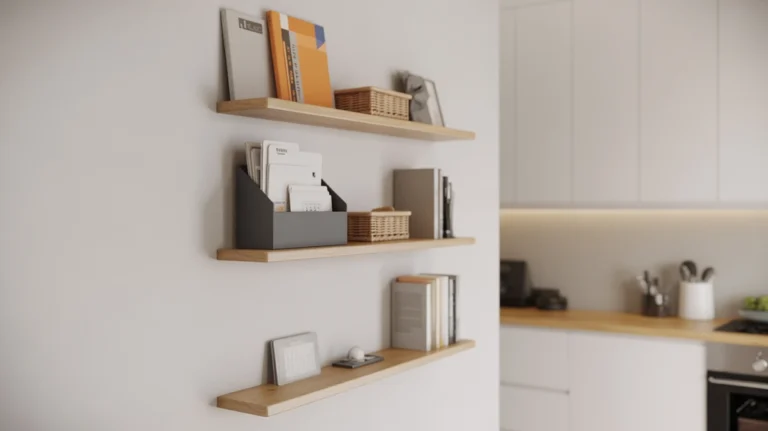
If your kitchen with no pantry lacks vertical storage, installing a simple open shelf can act as a visible pantry alternative. Even one floating shelf above a countertop or near a doorway can hold glass jars, baskets, or labeled canisters. In a galley kitchen storage layout, vertical wall space often remains underused.
Keep the shelf curated and symmetrical to avoid visual clutter. Use matching containers and limit it to frequently used dry goods or breakfast items. Open shelving works best when it feels styled, not stuffed. When executed intentionally, this becomes one of the most aesthetic yet practical kitchen storage solutions for small kitchen organization no pantry setups.
7. Use Stackable Clear Bins Inside Lower Cabinets
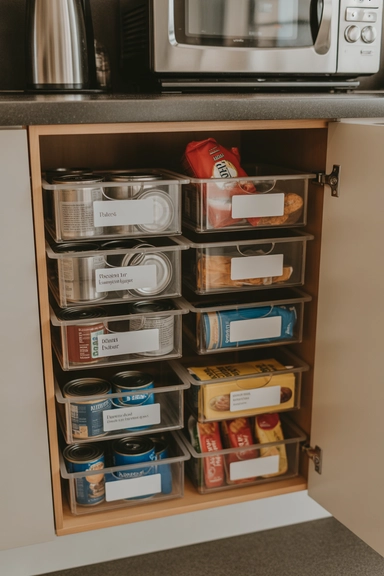
Lower cabinets in small apartment kitchens often become chaotic because items stack unpredictably. Introducing stackable clear bins creates vertical layers within a single shelf, essentially doubling usable storage. This approach transforms basic kitchen cabinets storage into a structured system that mimics pantry organization cabinets.
Group similar products together—canned goods in one bin, snacks in another, baking mixes in a third. Clear bins allow visibility without removing everything to find what you need. In kitchen organization without pantry conditions, this level of compartmentalization prevents clutter from rebuilding and ensures that lower cabinets remain accessible rather than frustrating.
8. Repurpose an Old Hutch as a Standalone Pantry
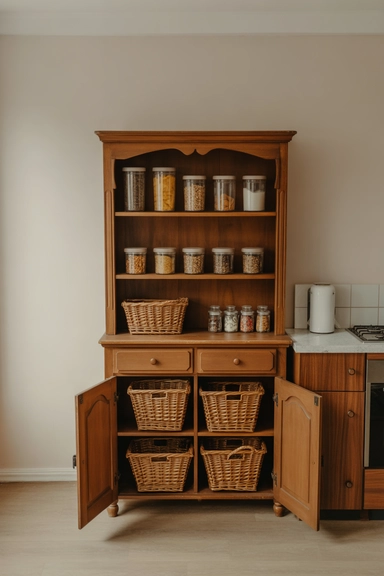
If you have floor space available, a freestanding hutch or cabinet can become a dedicated pantry replacement. An old hutch placed against an empty wall creates enclosed storage that feels built-in without renovation. For renters, this offers one of the most realistic pantry alternatives in a kitchen without pantry layout.
Inside the hutch, install adjustable shelving and add labeled baskets to maintain order. Keep bulkier items lower and lighter containers above for balance. This strategy works especially well in apartment kitchen designs where architectural pantry space simply doesn’t exist. It transforms unused wall area into purposeful, structured storage.
9. Install Under-Sink Pull-Out Bins for Food Overflow
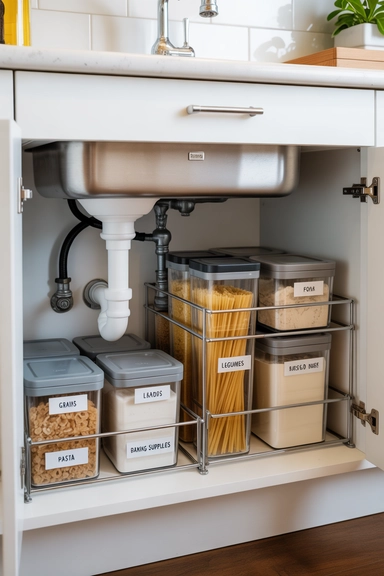
The area under your sink doesn’t have to remain limited to cleaning supplies. By installing pull-out bins on one side, you can store sealed dry goods or backup items safely away from moisture. This works best when paired with airtight containers to protect contents.
For more ways to maximize this often overlooked area, explore 21 Under Sink Kitchen Storage Ideas That Actually Work. In kitchen organization without pantry setups, under-sink optimization becomes part of a larger storage without pantry strategy. It allows you to redistribute items so upper cabinets stay less congested and easier to manage.
10. Use Vertical Dividers for Baking Sheets and Trays
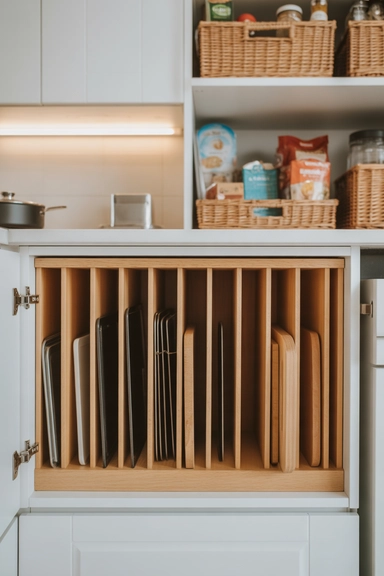
Flat items like baking sheets, cutting boards, and trays often consume horizontal shelf space that could store dry goods instead. Installing vertical dividers inside a cabinet allows these items to stand upright, freeing shelves for food storage. This shift is crucial in small kitchen organization no pantry layouts where every shelf counts.
By relocating flat cookware vertically, you reclaim usable storage area for pantry alternatives like baskets or bins. This small structural change reduces stacking frustration and improves accessibility. In practical kitchen storage solutions, freeing horizontal real estate often matters more than adding new furniture.
11. Build a Countertop Pantry Station With Controlled Visual Weight
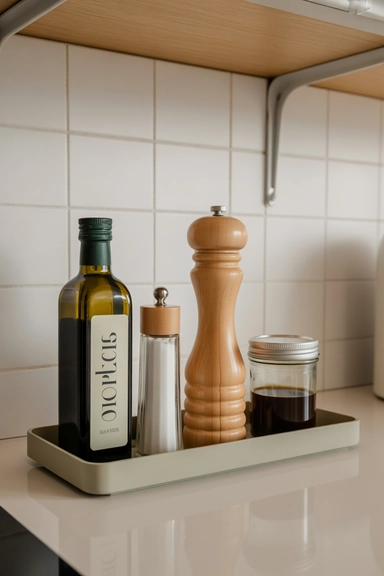
In a small apartment kitchen, the counter often becomes accidental storage. Instead of fighting that reality, design a defined pantry station. Use a low-profile tray or shallow basket to contain frequently used dry goods like cooking oils, salt, pepper, and coffee supplies. This transforms loose items into a controlled cluster rather than scattered clutter.
The key is limiting quantity. Only daily-use items should live here. Everything else returns to cabinets. When you frame the counter intentionally, it becomes part of your kitchen organization without pantry strategy instead of visual chaos. Done properly, this creates function without sacrificing the clean lines that small kitchen organization no pantry layouts desperately need.
12. Dedicate One Cabinet Shelf to Bulk Refills Only
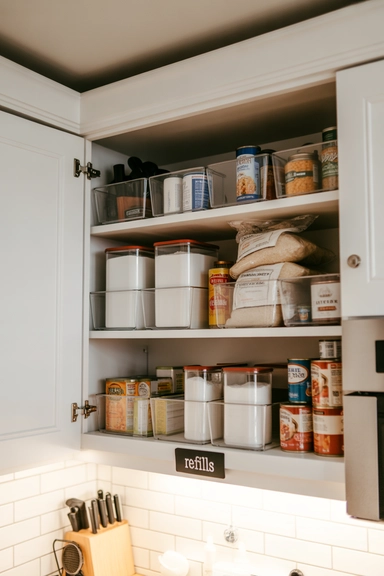
Bulk purchases save money, but in a kitchen with no pantry they quickly overwhelm available space. Instead of mixing bulk items with daily-use goods, designate one specific cabinet shelf as your refill zone. Store backup rice, flour, cereal, or canned goods separately from active containers.
This separation prevents overcrowding and makes inventory easier to track. When the active container empties, you refill from the bulk shelf. Structuring it this way turns standard kitchen cabinets storage into a layered system rather than a pile of duplicates. In kitchen organization without pantry setups, separation of use and storage keeps cabinets from feeling overloaded.
13. Use Matching Containers to Visually Expand Cabinet Space
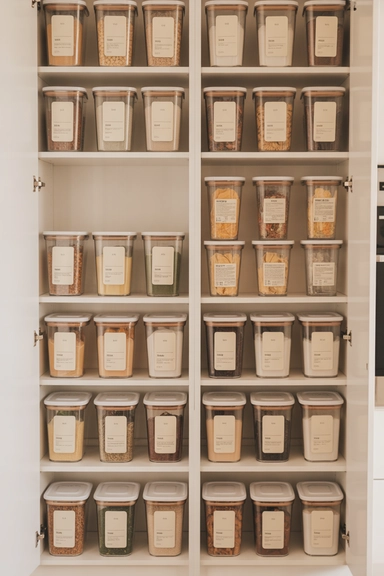
Visual clutter makes small kitchen organization no pantry layouts feel tighter than they actually are. Switching mismatched packaging to uniform containers instantly reduces visual noise. When labels align and container heights match, shelves look calmer and more spacious.
Choose stackable, square containers to maximize footprint efficiency. Round jars waste valuable shelf corners. Clear kitchen organizers also allow you to monitor stock without opening everything. In practical kitchen storage solutions, aesthetics matter because they influence maintenance. When cabinets look intentional, you’re more likely to keep them organized long term.
14. Create a Breakfast Drawer to Reduce Cabinet Pressure
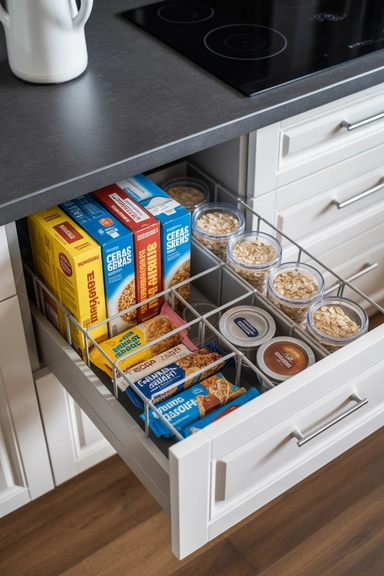
Breakfast items often dominate cabinet space—cereal, oats, granola bars, spreads. Consolidate them into a single dedicated drawer using dividers or bins. Stand cereal boxes upright and remove excess packaging where possible to reduce bulk.
This consolidation reduces cabinet congestion and creates a morning-ready zone that simplifies routines. In a kitchen organization without pantry system, grouping by daily habit rather than food type can dramatically improve flow. A breakfast drawer keeps quick-grab items contained and prevents them from spreading across multiple shelves.
15. Mount a Slim Wall Rack for Spices and Small Jars
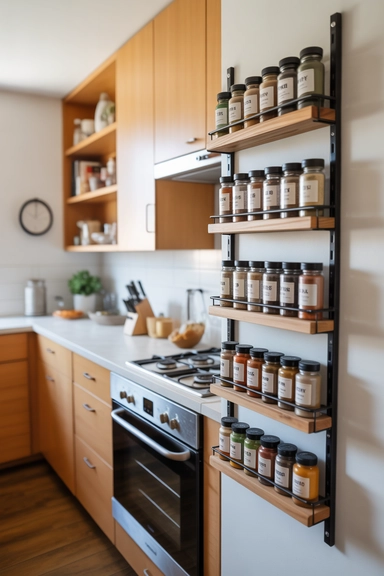
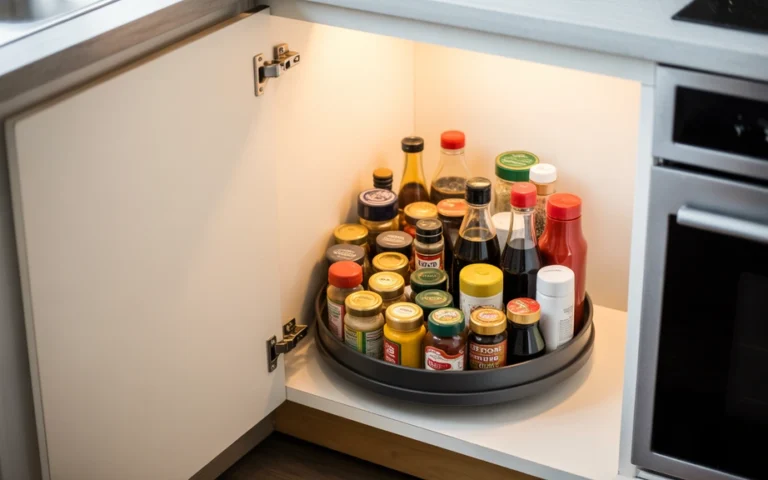
Spices consume surprising cabinet depth. Installing a slim wall-mounted rack frees internal shelf space for larger pantry alternatives. In galley kitchen storage layouts especially, wall width often exists even when depth doesn’t.
Keep the rack narrow and limited to frequently used seasonings. Overcrowding defeats the purpose. By relocating small jars vertically, you free valuable cabinet volume for dry goods or clear bins. In kitchen organization without pantry conditions, vertical wall usage becomes one of the strongest tools for reclaiming capacity.
16. Introduce Tiered Shelf Risers to Double Visibility
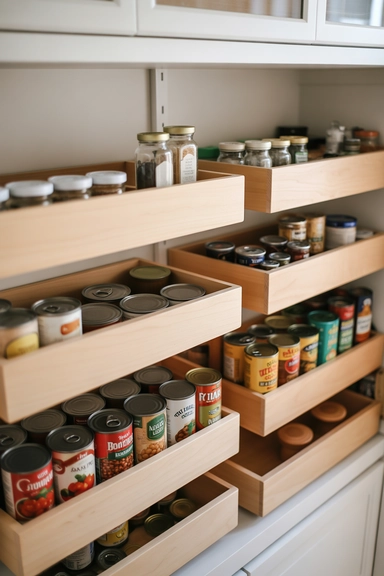
Deep cabinets hide items behind each other, creating forgotten food and wasted purchases. Tiered shelf risers elevate items in the back so everything remains visible at once. This small structural change dramatically improves kitchen organization without pantry efficiency.
Use risers for canned goods, spice jars, or small containers. By layering vertically within the same shelf footprint, you increase capacity without adding furniture. This is especially powerful in small apartment kitchens where adding new storage isn’t an option. Visibility reduces duplication and helps cabinets function like intentional pantry organization cabinets rather than dark storage caves.
17. Use Labeled Baskets to Simulate Pantry Categories
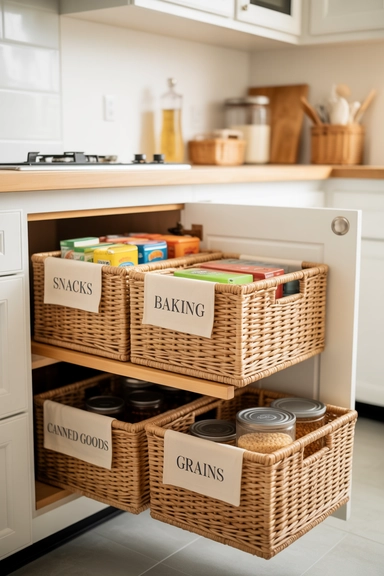
When you don’t have a dedicated pantry, you need to manufacture category clarity inside existing cabinets. Labeled baskets create contained zones that replicate pantry shelving within standard kitchen cabinets storage. Assign each basket a purpose—snacks, baking mixes, canned vegetables, grains—so items move as a group instead of scattering across shelves.
This approach works especially well in deep lower cabinets where visibility is limited. Instead of reaching blindly, you pull out a full category at once. In kitchen organization without pantry layouts, group mobility matters. Baskets reduce friction, maintain boundaries, and allow small kitchen organization no pantry systems to feel structured rather than improvised.
18. Convert the Top of Cabinets Into Controlled Bulk Storage
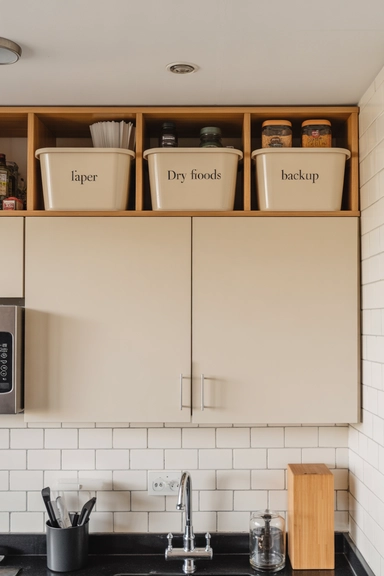
The space above upper cabinets often becomes dust-collecting decoration. In a small apartment kitchen, that unused vertical zone can serve as bulk food overflow. Store backup paper goods, sealed dry goods, or infrequently used appliances in uniform bins placed neatly above cabinets.
The key is containment and visual control. Use matching bins with lids so the space looks intentional instead of cluttered. Label them clearly to avoid forgetting what’s stored overhead. In kitchen organization without pantry setups, using upper vertical airspace extends storage capacity without altering layout or sacrificing functional cabinet access.
19. Reorganize by Cooking Zones Instead of Food Type
Traditional pantry organization groups food by type, but in a kitchen with no pantry, organizing by cooking zone often works better. Keep oils, spices, and utensils near the stove. Store baking ingredients near prep space. Position snack storage closer to the fridge or dining area.
This workflow-based system reduces unnecessary movement and spreads food storage evenly across cabinets. In practical kitchen storage solutions, layout logic often matters more than strict category rules. Kitchen organization without pantry becomes more intuitive when items live where they’re used rather than where tradition says they belong.
20. Install Pull-Out Cabinet Organizers for Deep Spaces
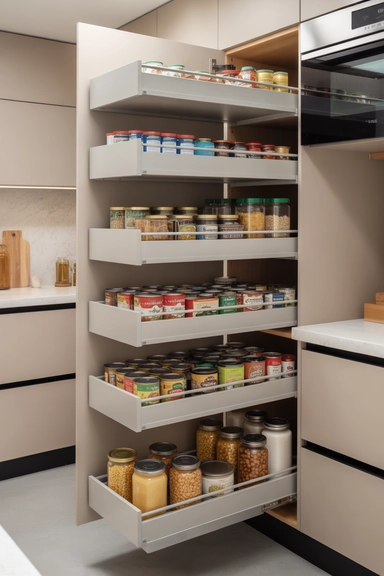
Deep base cabinets waste space because items in the back become unreachable. Installing pull-out organizers transforms hidden depth into fully accessible storage. This upgrade makes kitchen cabinet organization without a pantry significantly more efficient without increasing footprint.
Pull-outs allow you to layer canned goods, grains, or sealed packages without stacking blindly. Everything slides forward for visibility. In small kitchen organization no pantry environments, accessibility equals sustainability. When storage is easy to reach, you maintain order longer and prevent cabinets from turning into overcrowded catch-alls.
21. Reduce Inventory to Match Your Cabinet Capacity
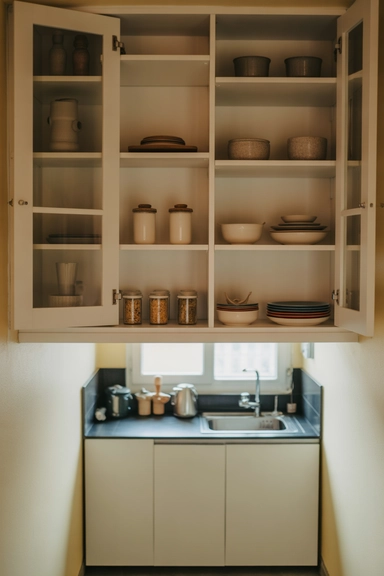
The most powerful pantry alternative is controlled purchasing. In kitchen organization without pantry layouts, buying according to available cabinet space prevents constant overflow. Audit what you realistically use in a two-week cycle and scale your inventory to match.
Keeping fewer duplicates reduces stacking, improves visibility, and lightens visual pressure inside cabinets. This doesn’t mean eliminating preparedness—it means aligning storage habits with spatial limits. In small apartment kitchens especially, discipline is part of the system. When inventory matches cabinet capacity, storage without pantry becomes manageable instead of overwhelming.
Conclusion
Kitchen organization without pantry space isn’t about squeezing more into already tight cabinets—it’s about structuring what you keep so every shelf works with intention. By zoning cabinets, capturing vertical space, improving visibility, and controlling inventory, even a small apartment kitchen can function smoothly. A kitchen with no pantry simply demands smarter systems. When each area has purpose and limits, your space feels calmer, lighter, and easier to maintain every day.