
Introduction
A small pantry can feel chaotic fast — not because you have too much, but because the layout isn’t working according to your plan. The best small kitchen pantry ideas focus on vertical layering, shelf spacing, and clean category zoning instead of simply adding more bins to your tight space. When dry goods, canned items, and snacks are stored with intention, even a tight apartment kitchen can feel structured and calm. From pull-out racks to open shelving systems, smart pantry shelf organization ideas make every inch accountable. If you’ve already explored 25 Small Kitchen Storage Solutions That Make Every Inch Work Better, this next layer refines your pantry strategy even further.
1. Full-Height Slim Pantry Cabinet That Uses Vertical Power
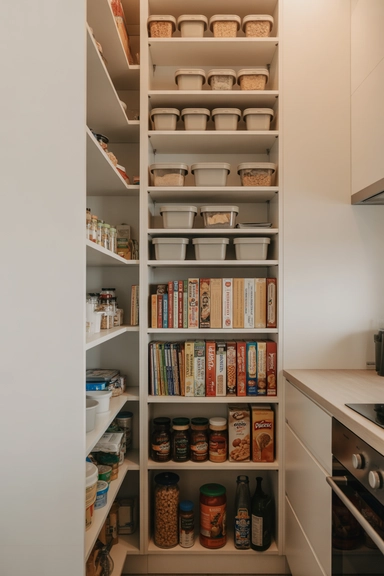
In small kitchens, unused vertical air is wasted opportunity. A tall, narrow pantry cabinet positioned against an unused wall or beside a refrigerator becomes a structured storage column that consolidates scattered items. Adjustable shelving is critical here. Fixed shelves often create empty vertical gaps above cereal boxes or wasted inches beneath shorter jars. Custom spacing ensures every level works at full capacity without compressing items unnecessarily.
The visual success of this design depends on uniform containment. Transfer dry goods into rectangular airtight containers that align tightly side by side. Place heavier bulk items like flour and rice on lower tiers for stability and lighter snack containers above eye level. Among the most efficient small kitchen pantry ideas, a vertical column format maximizes storage without expanding floor footprint, creating order through upward layering rather than outward spread.
2. Pull-Out Pantry Rack Between Appliances
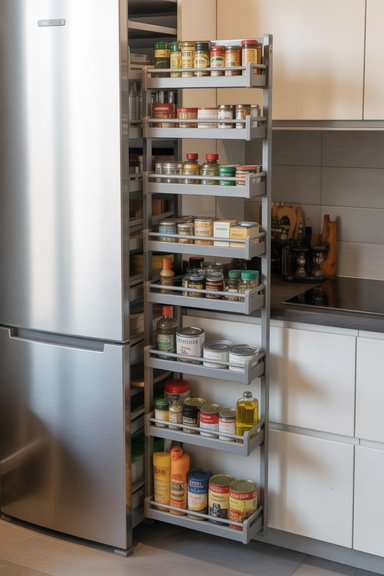
The narrow strip beside your refrigerator or stove often becomes a dust trap instead of functional storage. Installing a slim pull-out pantry rack transforms that overlooked gap into a high-efficiency vertical unit. These racks feature tiered shelves that slide outward fully, allowing you to see and access every spice jar, oil bottle, and canned item without digging.
Deep shelves create waste because items hide behind one another. Pull-out systems eliminate that problem by forcing full visibility. Organize shelves by weight and frequency — heavier oils and canned goods lower, spices and condiments higher. For apartment kitchens where expansion isn’t possible, this is one of the smartest small kitchen pantry ideas because it multiplies storage capacity inside an existing footprint without structural renovation.
3. Open Pantry Shelves With Container Uniformity
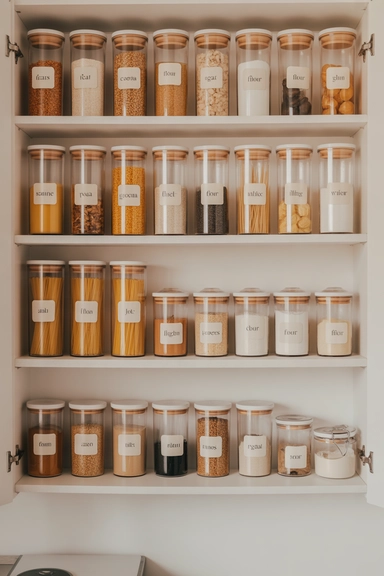
Open shelving only works in small kitchens when structure leads the layout. Without visual control, mixed packaging creates immediate clutter. The solution is container uniformity. Decant grains, pasta, flour, and snacks into matching clear containers with clean labels. When shapes repeat and heights align, shelves feel curated instead of crowded.
Shelf depth should remain shallow enough to prevent double stacking. Avoid pushing items behind one another. Create horizontal visual lines by grouping similar heights together and leaving subtle breathing space between categories. These small kitchen pantry ideas rely on repetition and alignment to create calm. When your eye can scan a shelf instantly without interruption, you reduce both visual stress and food waste simultaneously.
4. Over-the-Door Tiered Pantry Expansion
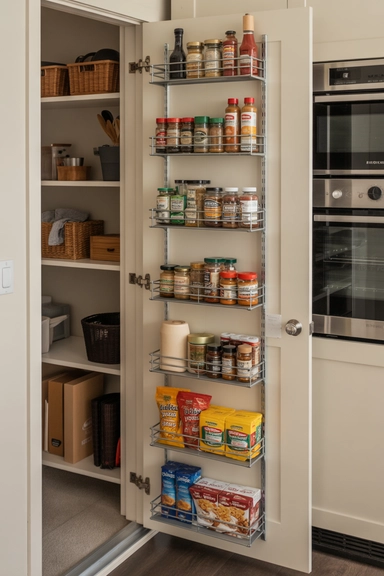
The back of a pantry or kitchen door is prime vertical real estate. Installing a slim, adjustable tiered rack instantly doubles usable storage without increasing footprint. These racks are ideal for spices, sauces, baking extracts, and snack packets that often get buried behind bulkier pantry items.
Balance weight carefully to prevent door strain and keep heavier bottles on lower tiers. Arrange items by daily use — frequently used products at eye level, seasonal or backup items higher up. In compact kitchens, activating overlooked surfaces is essential. Among practical small kitchen pantry ideas, over-the-door systems create high-density organization while preserving valuable shelf depth for larger goods.
5. Corner Pantry Shelving With Rotational Access
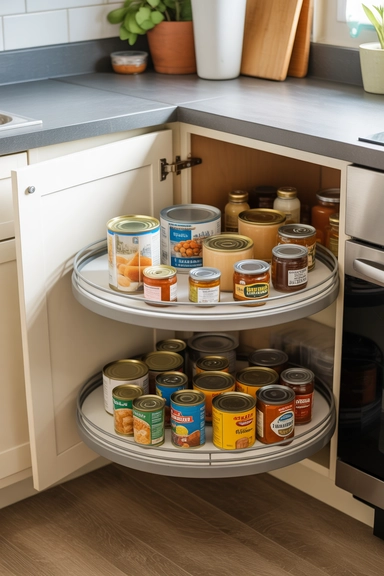
Deep pantry corners often become unusable because fixed shelves push items into shadowed space. A tiered corner shelf system or rotating lazy susan insert solves this by bringing products forward instead of forcing you to reach blindly. Rotational access keeps every jar, can, and bottle visible, which reduces forgotten inventory and prevents duplicate purchases. In small kitchens, accessibility is just as important as capacity. If you cannot see it, you will not use it efficiently.
To maximize this system, assign corners to smaller, uniform items like canned goods, spice jars, or baking extracts rather than bulky cereal boxes. Keep weight balanced so rotation remains smooth and stable. Arrange items by category in consistent order so your eye recognizes patterns instantly. Among the most practical small kitchen pantry ideas, rotational shelving transforms awkward angles into fully functional, high-efficiency storage zones.
6. Narrow Open Bookcase as a Pantry Substitute
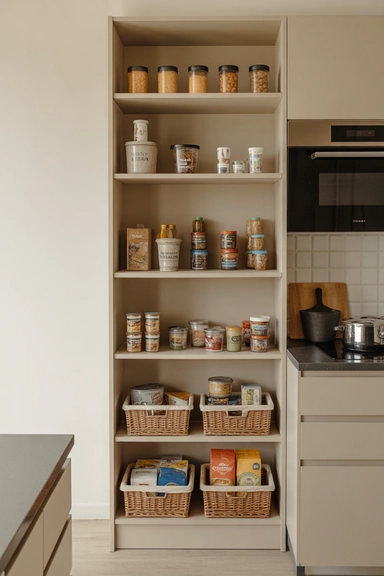
When a built-in pantry doesn’t exist, a slim open bookcase can function as a structured alternative. Choose a tall, narrow frame that fits against an unused wall without blocking traffic flow. Adjustable shelves allow flexibility for taller containers, cereal boxes, and bulk items. The key is depth control — shallow shelving prevents double stacking and keeps every item visible.
To maintain visual calm, decant dry goods into matching containers and use baskets to conceal unattractive packaging. Organize vertically by category so breakfast, baking, and snacks each have a defined zone. These small kitchen pantry ideas work best when repetition and alignment create rhythm. An open bookcase pantry should feel intentional, not improvised.
7. Under-Shelf Baskets That Double Storage Layers
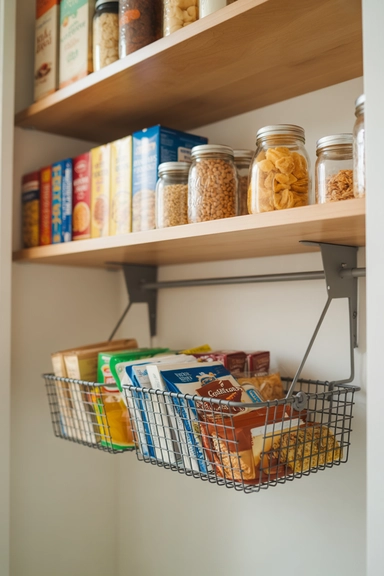
Traditional shelves often waste the vertical space beneath them. Slide-on under-shelf baskets create a second tier without increasing cabinet height. These slim metal or wire inserts are ideal for wraps, snack packets, napkins, or lightweight pantry goods that would otherwise float loosely on a shelf.
Layering works only when categories remain controlled. Avoid mixing food types randomly within the same basket. Keep similar items grouped so retrieval remains intuitive. Among effective small kitchen pantry ideas, layered shelving increases storage density without visual heaviness. It allows you to maximize vertical clearance between shelves while keeping everything within clear sightlines.
8. Pull-Out Drawer Inserts for Deep Pantry Cabinets
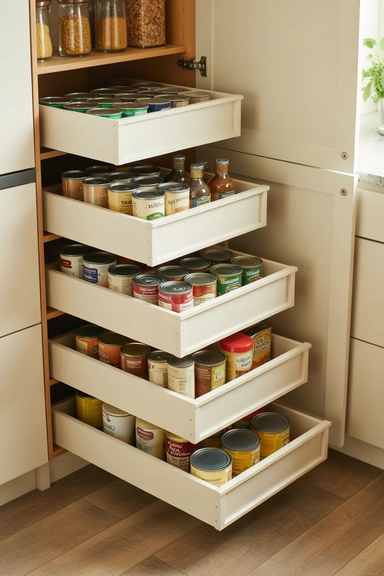
Deep pantry cabinets create frustration when items get buried behind larger containers. Installing pull-out drawer inserts converts that depth into accessible layers. Instead of stacking vertically and blocking visibility, each tier slides forward independently, exposing everything at once.
Place heavier bulk goods on lower pull-outs and lighter items higher up. Use dividers within drawers to prevent shifting and maintain order. This system supports both visibility and stability, two critical elements in compact kitchens. The most efficient small kitchen pantry ideas reduce reaching, bending, and rearranging, replacing chaos with controlled, layered access.
9. Clear Labeling System That Eliminates Guesswork
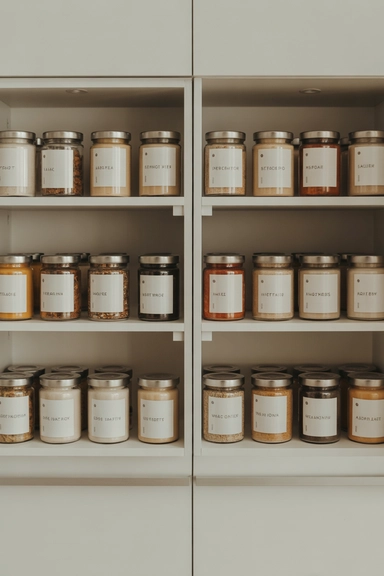
Even well-designed shelves fail without identification. A clear labeling system ensures every container returns to its designated zone. Use simple, legible labels aligned consistently across jars and bins to maintain visual harmony. Avoid decorative excess — clarity is the priority.
Labeling supports inventory awareness, preventing duplicate purchases and expired goods. It also reinforces category boundaries, which is essential for long-term organization. Within structured small kitchen pantry ideas, labeling is not aesthetic — it’s functional discipline. When every item has a name and a place, the pantry remains stable instead of slowly drifting back into clutter.
10. Stackable Airtight Containers That Eliminate Wasted Gaps
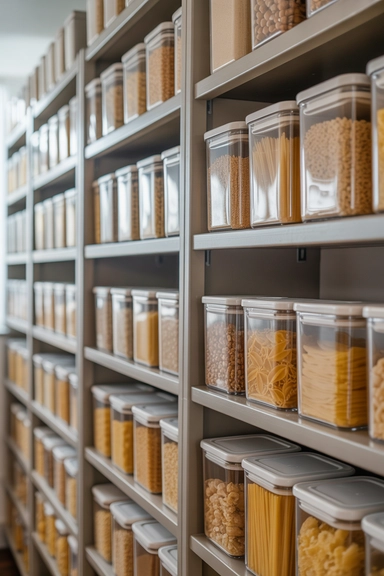
Mismatched packaging is one of the biggest reasons small pantries feel overcrowded. Boxes leave unused air above them, bags collapse awkwardly, and round jars waste corner space. Replacing inconsistent packaging with stackable airtight containers creates tight vertical alignment. Rectangular shapes sit flush against one another, eliminating the small gaps that slowly steal capacity across an entire shelf.
Choose clear containers so contents remain visible without opening lids. Align heights intentionally—tall containers on lower shelves, shorter ones grouped together above. This stacking method creates clean horizontal lines that visually expand the space. Among practical small kitchen pantry ideas, uniform containment transforms cluttered shelves into dense, efficient storage grids.
11. Tiered Shelf Risers for Canned Goods Visibility
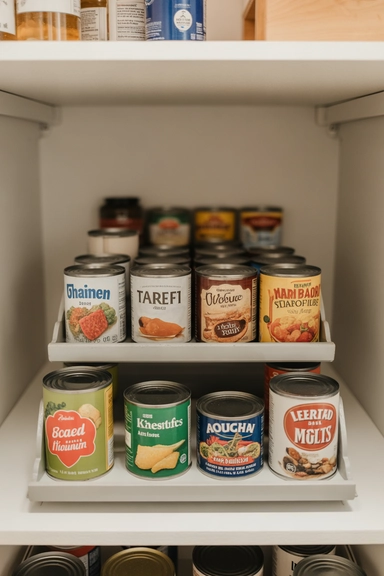
Cans stacked directly behind one another create hidden inventory and wasted purchases. A tiered shelf riser solves this by elevating back rows slightly higher than the front. This stadium-style arrangement keeps labels visible and prevents duplicate buying. Visibility is the foundation of efficient pantry management.
Place heavier cans on lower shelves for stability and lighter goods higher up. Avoid overcrowding the riser—leave breathing space so items can be removed easily. Within well-structured small kitchen pantry ideas, tiered risers increase accessibility without expanding footprint. They turn flat shelves into layered systems that maximize both clarity and capacity.
12. Vertical Divider Slots for Baking Sheets and Trays

Flat baking sheets, cutting boards, and trays stacked horizontally waste depth and create unstable piles. Installing vertical dividers inside a pantry cabinet converts that horizontal chaos into upright storage. Each item slides into its own narrow slot, making retrieval effortless and eliminating the need to lift heavy stacks.
Keep dividers evenly spaced and anchored securely to prevent shifting. Store similar heights together for balance and visual order. Effective small kitchen pantry ideas focus on reducing friction—if something is easy to grab, it stays organized. Vertical tray storage frees entire shelves for food items while maintaining structural clarity.
13. Basket Zoning for Snack and Packet Control
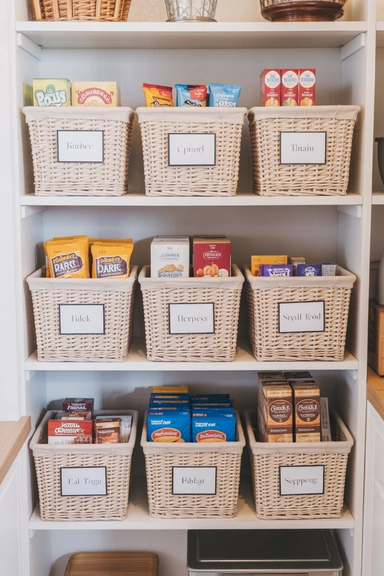
Loose snack packets, seasoning envelopes, and small pouches quickly create visual noise. Using structured baskets establishes clear category boundaries. Assign each basket a single function—children’s snacks, baking additives, breakfast bars—so items don’t drift between zones.
Choose neutral baskets that match in size and shape to maintain uniformity. Label the front subtly to reinforce structure. In compact kitchens, defined zoning is critical. Among the most stabilizing small kitchen pantry ideas, basket grouping prevents small items from scattering while preserving a clean, controlled appearance.
14. Wall-Mounted Pantry Shelves for Tight Kitchens
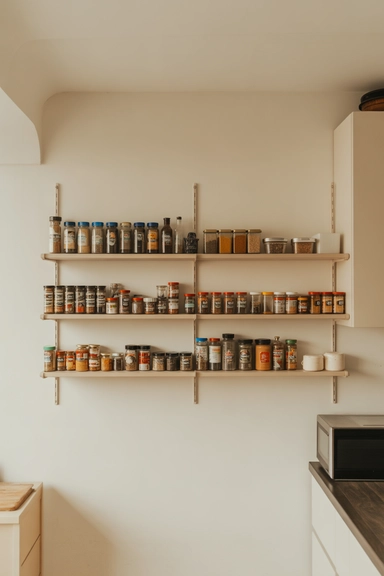
When cabinet depth is limited, mounting shallow shelves on an empty kitchen wall expands storage vertically. Keep shelf depth minimal to avoid encroaching on walkway space. This design works especially well for spices, jars, and dry goods that benefit from full visibility.
Maintain alignment by grouping containers in clean rows and limiting color variation. Avoid decorative overload—functional repetition is what creates calm. These wall-based small kitchen pantry ideas shift storage upward rather than outward, reclaiming blank surfaces and transforming unused wall space into efficient vertical pantry structure.
15. Pull-Out Wire Baskets for Deep Lower Pantry Zones
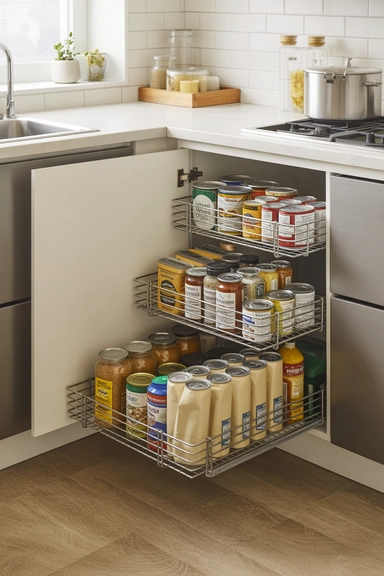
Lower pantry shelves often become chaotic because items get pushed backward and forgotten. Installing pull-out wire baskets converts deep base shelves into sliding access layers. Instead of kneeling and rearranging containers, the entire basket glides forward, exposing every jar and packet at once. This reduces wasted food and prevents duplicate purchases caused by hidden inventory.
Choose sturdy baskets that support heavier bulk goods like flour, rice, or canned items. Keep lighter goods in upper tiers to maintain stability. Within structured small kitchen pantry ideas, accessibility determines long-term success. When lower shelves move toward you instead of forcing you downward, the entire pantry functions more efficiently.
16. Slim Rolling Pantry Cart for Flexible Storage
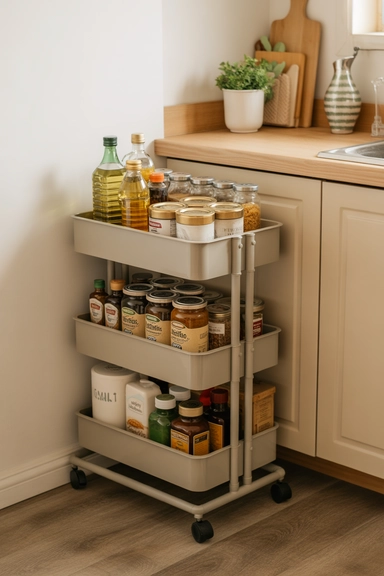
In extremely tight kitchens, flexibility matters as much as capacity. A slim rolling pantry cart can tuck beside a refrigerator, cabinet, or unused wall and move when needed. Unlike fixed shelving, this solution adapts to layout changes and cleaning routines without requiring installation.
Use the lower levels for heavier bottles and dry goods, keeping weight centered for balance. Arrange items in vertical rows to maintain visual clarity. Among adaptable small kitchen pantry ideas, rolling carts provide expandable storage without permanent commitment. They are especially useful in rental kitchens where modifications are limited but organization still demands structure.
17. Clear Inventory Zone for Bulk Backup Storage
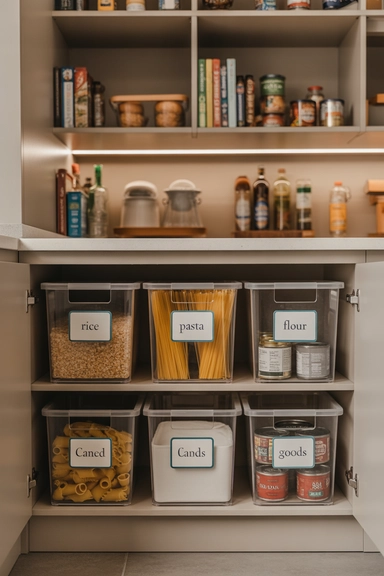
Small pantries fail when bulk purchases overwhelm everyday shelves. Creating a dedicated backup zone prevents overflow into primary storage areas. Assign one lower shelf or container strictly for duplicates and unopened goods. This keeps daily-use shelves uncluttered and easy to scan.
Label the backup area clearly so items rotate forward once opened. Avoid mixing daily and reserve products. Effective small kitchen pantry ideas rely on controlled flow—new items enter one zone before transitioning to active shelves. That simple boundary prevents accumulation and maintains long-term visual order.
18. Adjustable Shelf Heights to Eliminate Dead Air
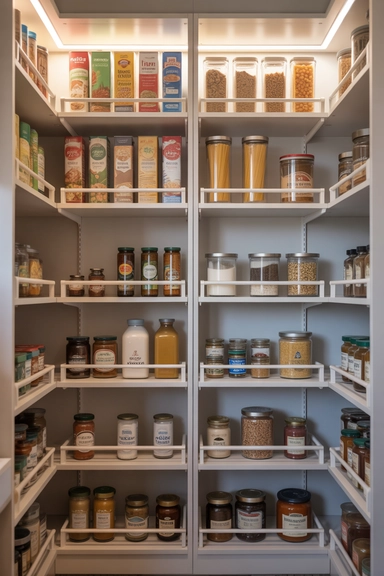
Fixed shelves often leave awkward vertical gaps above shorter containers. Adjustable shelving eliminates this dead air by allowing you to customize spacing based on product height. Reducing even two unused inches per shelf compounds into significant reclaimed space across the entire pantry.
Measure container heights before adjusting shelf levels to avoid compression. Place taller cereal boxes or pasta containers where vertical clearance is highest. Within practical small kitchen pantry ideas, precision spacing is a quiet but powerful optimization. When shelves align exactly with stored items, capacity increases without adding anything new.
19. Drawer-Style Pantry With Horizontal Layering
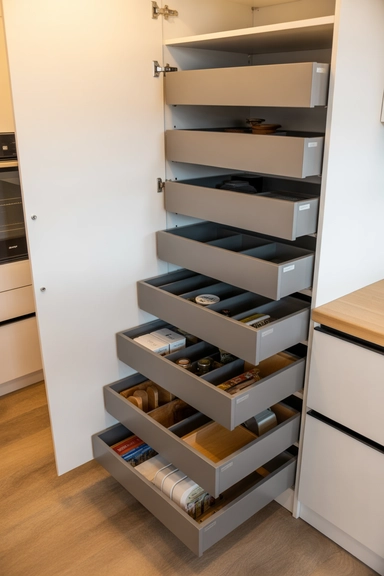
Replacing fixed pantry shelves with drawer-style pull-outs creates horizontal layering instead of vertical stacking. Each drawer acts as its own shallow shelf, preventing tall items from blocking those behind. This format reduces bending and reaching while keeping visibility consistent across levels.
Use internal dividers to separate categories and prevent shifting. Keep heavier items in lower drawers for stability. Among modern small kitchen pantry ideas, drawer systems provide ergonomic efficiency and visual clarity. They convert depth into accessibility, making compact kitchens easier to maintain daily.
20. Glass Jar Display System for Daily Essentials
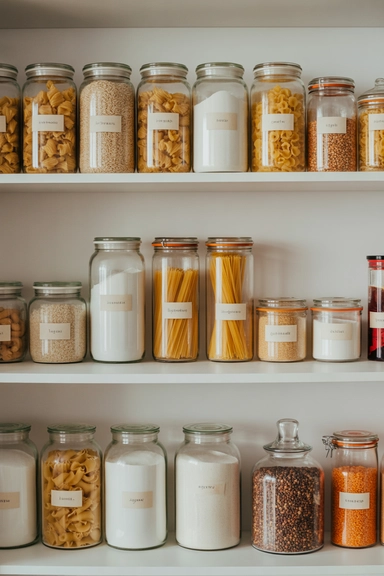
Displaying frequently used dry goods in uniform glass jars turns pantry storage into a functional design feature. Clear jars allow instant visibility while reducing bulky packaging. Arrange them in symmetrical rows to create rhythm and prevent visual noise.
Limit this system to everyday staples like rice, pasta, sugar, or lentils. Overloading shelves defeats the purpose. Structured repetition is what creates calm. These visually disciplined small kitchen pantry ideas prove that open storage works when alignment, labeling, and spacing remain controlled.
21. Dedicated Snack Drawer to Prevent Shelf Overflow
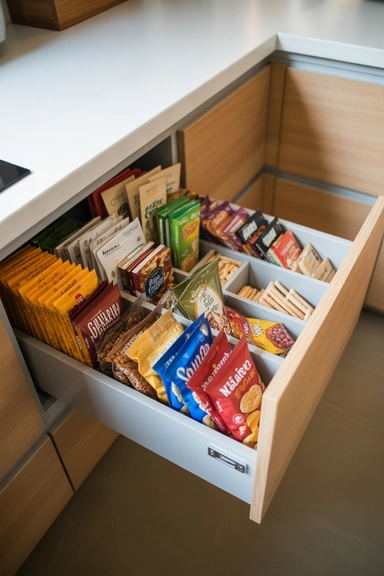
Snack packaging multiplies quickly and disrupts structured shelving. Creating a single dedicated snack drawer or basket zone prevents small packets from spreading across multiple shelves. Keep items upright using dividers so visibility remains consistent.
Assign clear boundaries for different snack types—breakfast bars, chips, baking treats—so categories don’t merge. When children or family members can access one contained zone, the rest of the pantry remains stable. The most sustainable small kitchen pantry ideas anticipate daily habits and build containment around them.
Conclusion
A small pantry doesn’t require expansion—it requires intention. When shelves are layered precisely, containers align consistently, and categories remain defined, even tight kitchens function smoothly. The power of well-executed small kitchen pantry ideas lies in visibility, accessibility, and disciplined spacing. Apply even a handful of these structural upgrades, and your pantry shifts from overcrowded to controlled—without adding a single extra square foot.