Your desk faces the wall while your partner’s back is turned toward you, and somehow you’re both still asking “where’s the charger?” every morning. One video call echoes through the entire room while the other person tries to concentrate. This isn’t a space problem — it’s a setup problem.
Most shared offices fail because people treat them like one big workspace split in half. What actually works is two independent zones with their own storage, their own visual boundaries, and their own acoustic space. Skipping cord and cable organization hacks is exactly how both desks end up buried under tangled charging cables.
Two people can work in the same room without constant friction. It just requires designing the space like two separate offices that happen to share four walls.
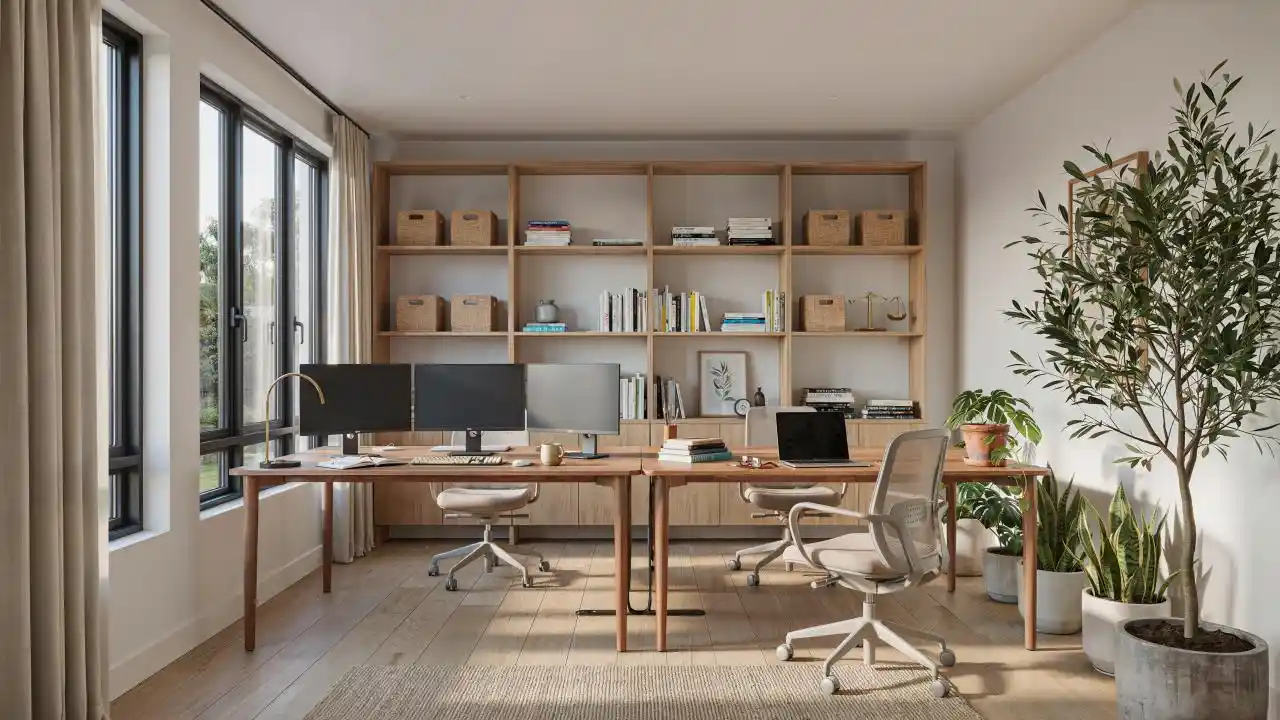
Back-to-Back Desks With a Divider Between
Two desks facing opposite walls creates natural acoustic separation before you add anything else. Your partner’s keyboard sounds are behind you instead of across from you, which changes everything about focus.
A tall shelving unit or fabric divider running down the middle holds both people’s supplies without blocking light. The divider becomes storage rather than just a wall, so you’re not wasting floor space.
This setup works because each person owns their corner completely. One person’s clutter doesn’t visually invade the other person’s sight line.
Desks on Adjacent Walls With Angled Chairs
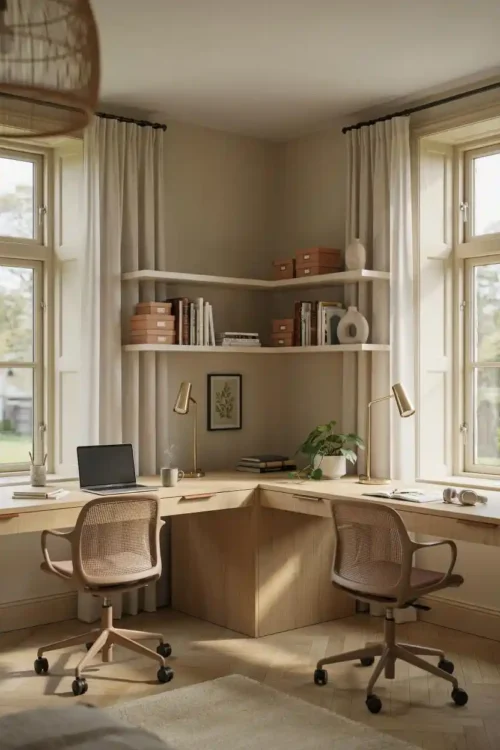
Position one desk along the north wall and one along the east wall, creating an L-shape that lets you sit back-to-back diagonally. You’re close enough to talk without turning around fully, but far enough apart that your work surfaces don’t touch.
Each person gets their own natural light source if your office has two windows. The angled layout also means fewer accidental elbow collisions when reaching for supplies.
This arrangement works especially well in smaller rooms where you can’t fit two separate corners.
Separate Floating Desks With No Shared Edge
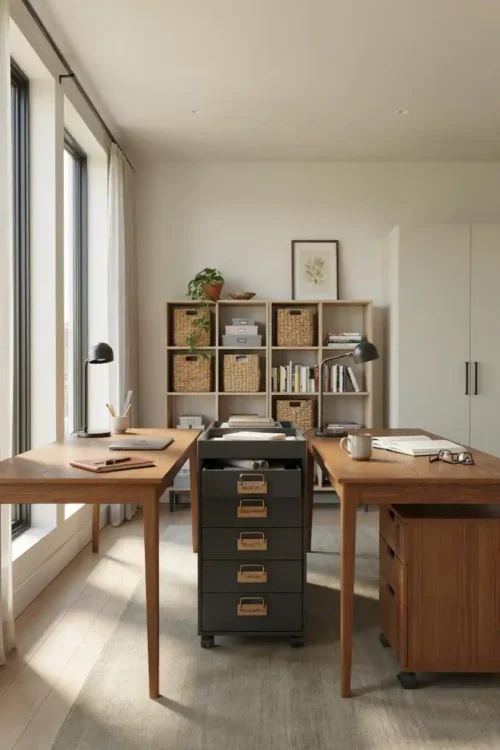
Instead of desks touching or facing each other, float each one independently in the room with at least two feet of space between them. One person’s papers never spill onto the other person’s workspace, and the visual separation feels immediate.
Floating desks also let you angle them differently based on natural light and window placement. You’re not forced into symmetrical positioning just to make the room look balanced.
The downside is this setup needs more square footage, so it works better in larger home offices.
Two Compact Desks Stacked Vertically
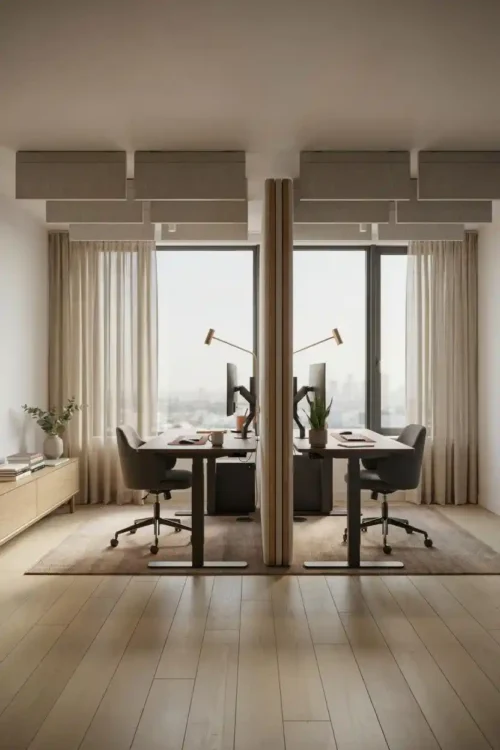
If floor space is genuinely tight, use wall-mounted desks at different heights—one at standard desk height, one at standing height or slightly higher. Both desks occupy the same wall without competing for depth.
A tall shelving unit separates the two work zones visually and functionally. The person at the lower desk doesn’t look up into someone else’s monitor.
This is genuinely one of the few solutions that works in very small rooms without making both people feel squeezed.
Desk Alcoves Created With Shelving on Both Sides
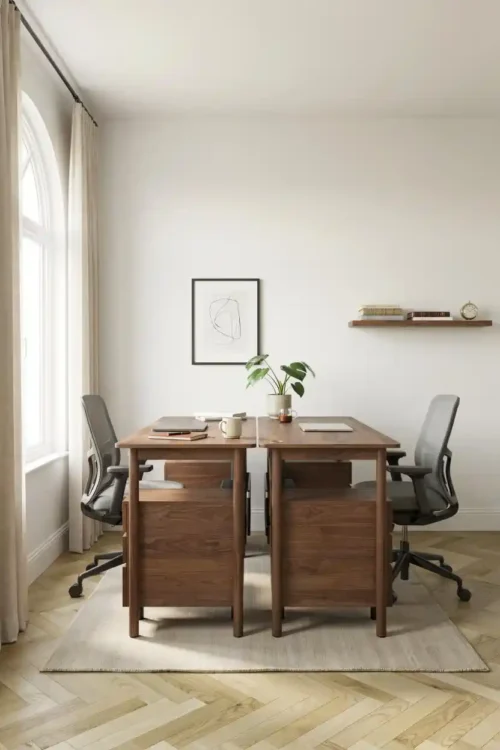
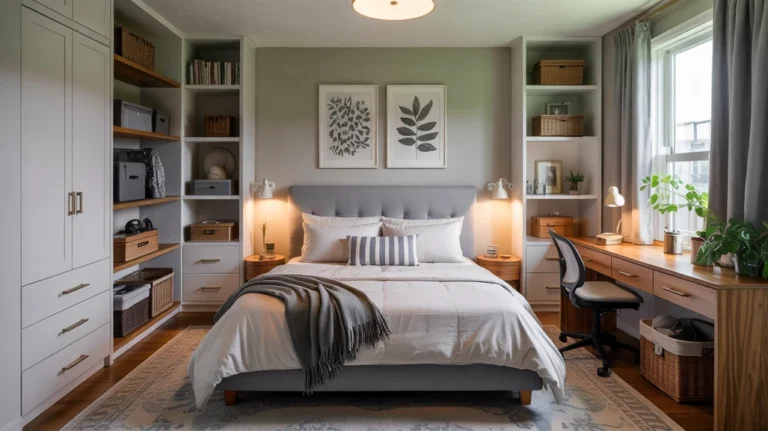
Carve out two separate alcoves using tall shelving units on the left and right sides of each desk. The shelves create walls without blocking the entire office from light or air.
Each alcove holds one person’s supplies, books, and personal items, so everything stays within arm’s reach. The shelves also muffle sound between the two zones.
This approach makes a small room feel like it has two distinct spaces without physical walls.
L-Shaped Desk Split Into Two Independent Sections
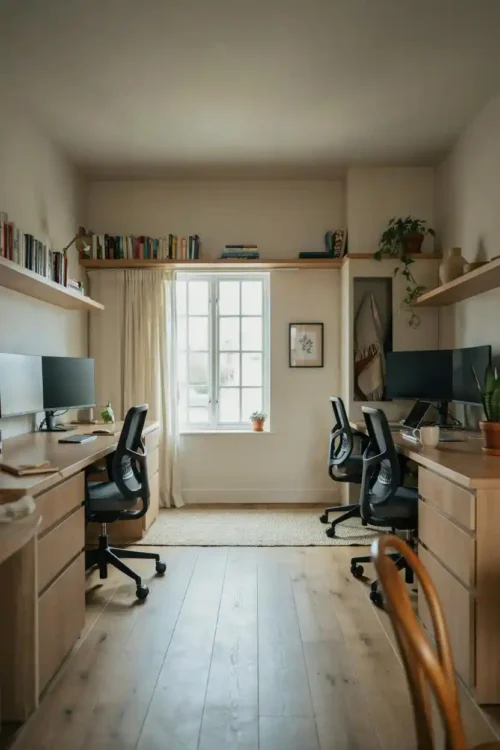
One long L-shaped desk doesn’t work for two people—it creates one shared space with conflict points. Instead, use two separate L-shaped desks in opposite corners, so each person gets their own elbow room and storage.
Each L-shape provides a main work surface plus a side surface for your monitor, reference materials, or supplies. The corner arrangement creates acoustic pockets that help contain noise.
This setup maximizes usable surface without making either person feel cramped.
Facing Desks With a Sound-Dampening Panel
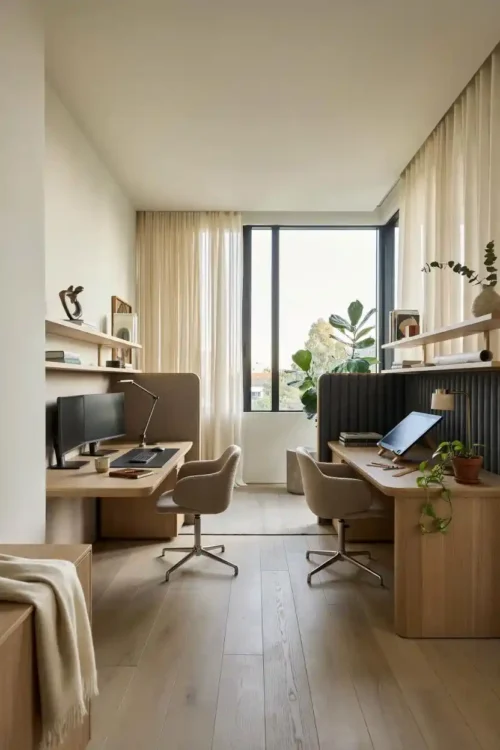
Some partnerships actually want to see each other while working. Two desks facing across from each other with a narrow sound panel running down the center lets you make eye contact without audio interference.
The panel can be fabric-wrapped, acoustic foam, or even a tall plant barrier. It muffles video call noise while staying visually light.
This only works if both people genuinely want to see each other during the workday. Otherwise it creates distraction instead of connection.
One Standing Desk, One Sitting Desk at Different Heights
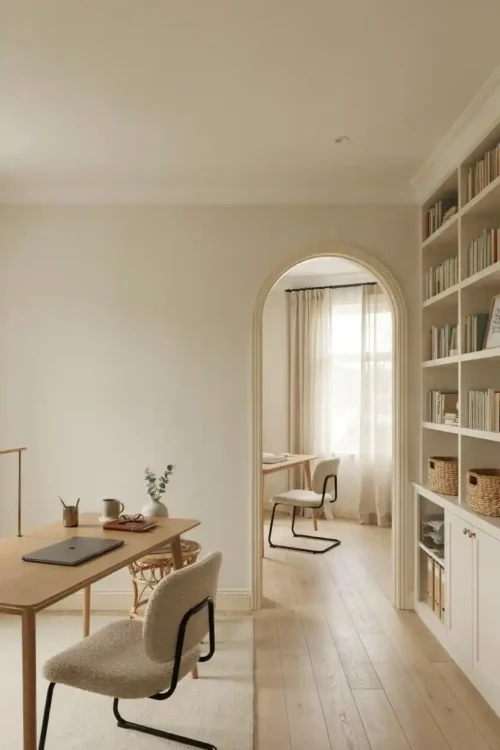
Combine a sitting desk at standard height with a standing desk nearby, positioned so one person sits while the other stands. The height difference creates visual separation—you’re literally on different levels.
The standing desk person gets movement breaks while the sitting person maintains focus. Neither desk blocks the other’s view or natural light.
This works particularly well if one person takes frequent calls and benefits from standing energy.
Twin Corner Desks With Perpendicular Seating
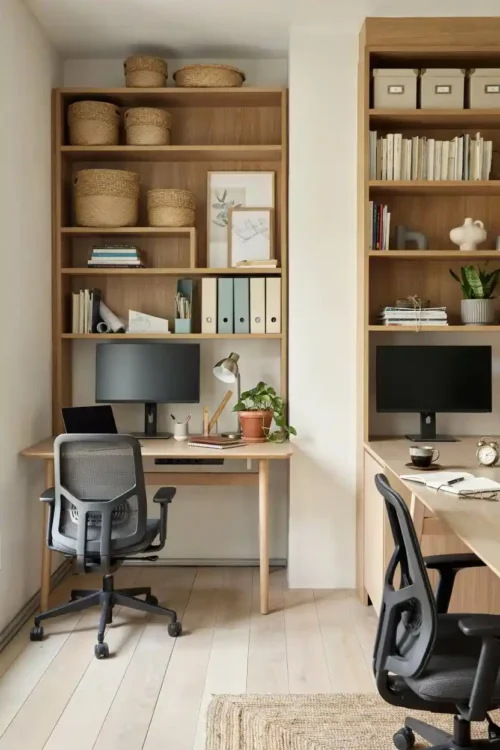
Place one desk in the room’s corner, then position a second desk perpendicular to it along the adjacent wall. Both desks get a corner position with built-in acoustic advantages.
Each corner naturally collects supplies and creates an independent work zone. The perpendicular arrangement also maximizes the room’s square footage.
This is one of the most space-efficient layouts for two people, especially in rectangular rooms.
Desks Separated by a Rolling Room Divider
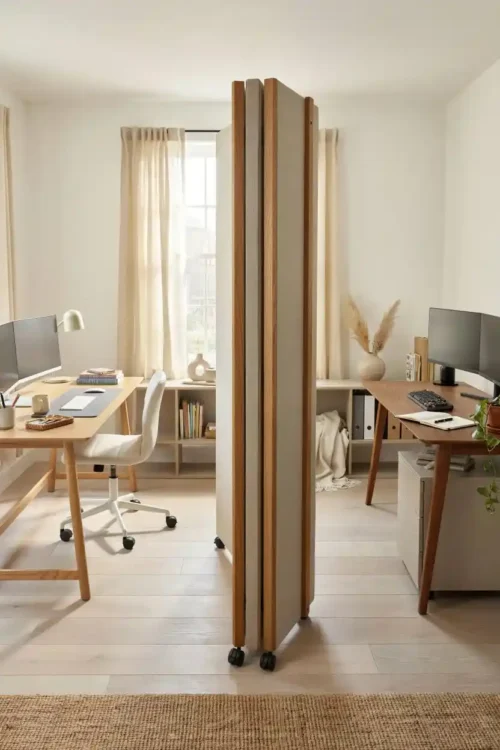
Use a wheeled folding divider or rolling curtain rod to separate the space when needed and open it up for collaboration. The divider isn’t permanent, so the office doesn’t feel compartmentalized when you both need to work together.
A rolling divider also lets you adjust spacing based on what each person is working on that day. On quiet focus days, it stays closed. On collaborative days, it rolls to the side.
This flexibility matters for couples or partners whose workflow changes daily.
Shelving-Backed Desks That Face Opposite Walls
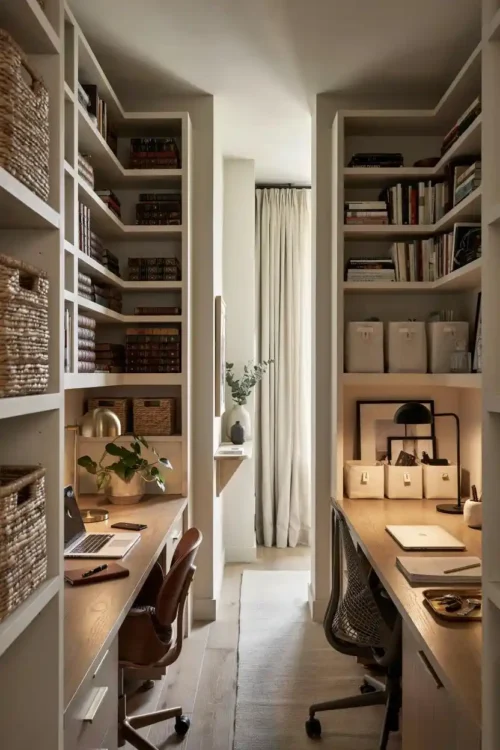
Position both desks so they face walls, then place tall shelving units behind each desk chair. The shelving creates a buffer between the two work zones while holding supplies within arm’s reach.
This arrangement works because behind-the-desk storage is typically wasted space anyway. You’re using it functionally instead of leaving it empty. Proper desk organization ideas for small spaces means every inch counts when two people share the room.
Each person’s desk becomes a contained unit with storage integrated directly into the layout.
Desks in Separate Rooms With a Connecting Door
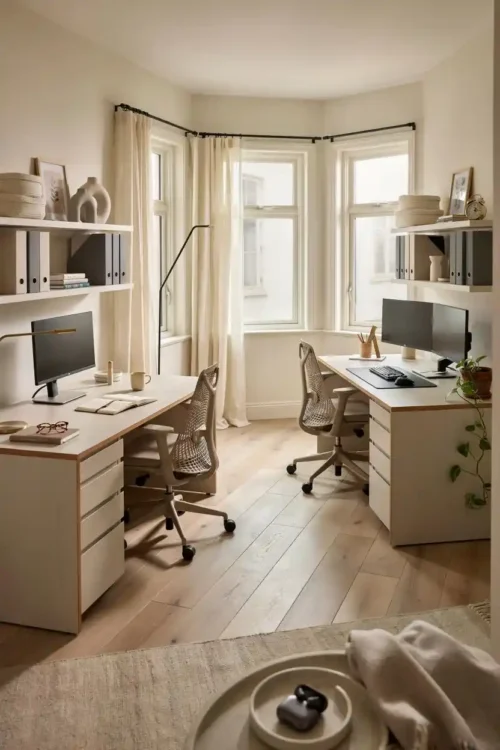
If your home office space connects to a bedroom, guest room, or hallway through a doorway, position one desk in each room and close the door when focus is critical. Two separate rooms eliminate every audio and visual distraction.
You still share the broader home office zone for collaboration, printing, and filing. But individual work happens with complete separation.
This is the most expensive solution but delivers the best focus and acoustic isolation.
Desk Pods With Built-In Privacy Walls
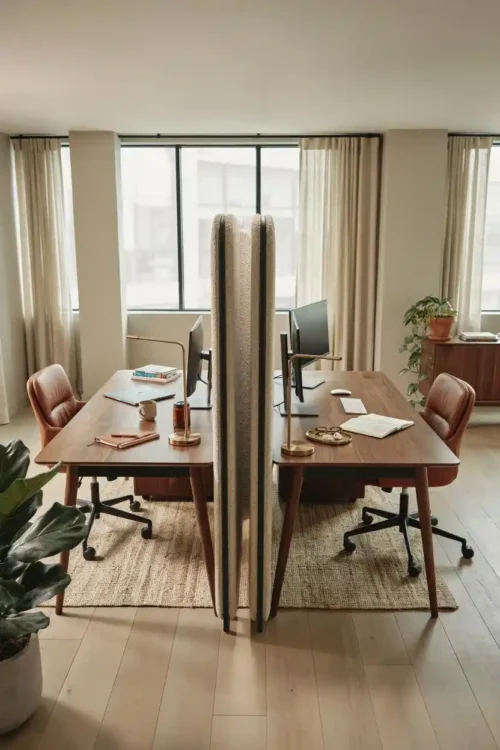
Modern desk pods or office pods come with partial walls on three sides, creating immediate privacy without full enclosure. Position two pods in the same room facing different directions.
The pods contain sound, organize supplies, and create psychological separation. They feel less institutional than cubicles but deliver similar acoustic benefits.
This works in larger home offices where you can accommodate two substantial furniture pieces.
Monitors Positioned to Prevent Sightline Distraction
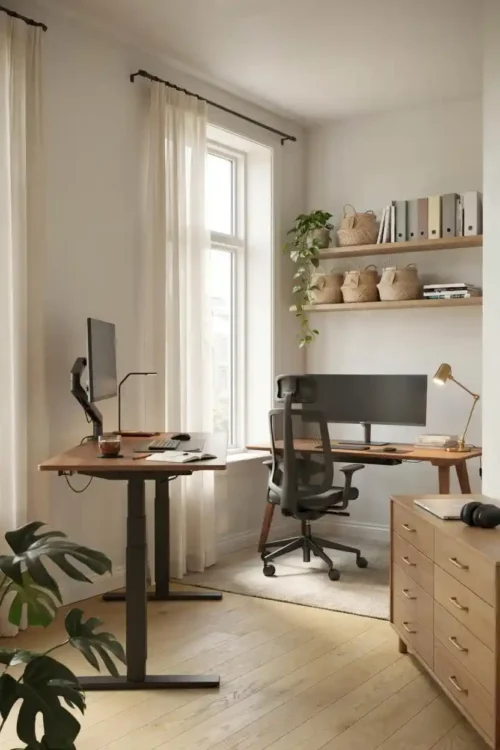
Instead of facing your partner across the desk, position monitors so each person looks at their screen without seeing the other person’s screen or face. Angle desks so your peripheral vision shows the wall, not your partner’s workspace.
This simple positioning change dramatically reduces distraction. You’re aware someone else is working, but you’re not watching them work.
This is one of the cheapest adjustments and often solves focus problems better than physical dividers.
Under-Desk Foot Space Divided by a Low Partition
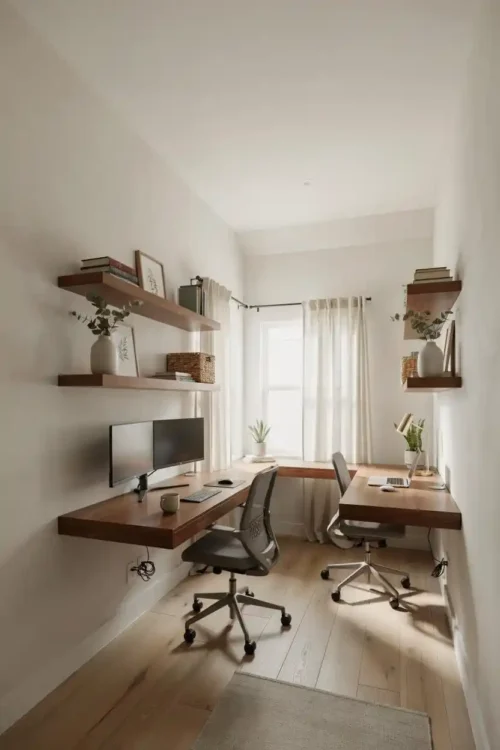
When two desks sit side by side or back to back, a low partition between the feet creates psychological separation without blocking conversation or collaboration. The partition sits just below desk height, so you don’t see it while working.
This solution works because our brains register separation at foot level, even if we can’t consciously see it. The division works at a subconscious level.
It’s particularly useful for partners with different leg-crossing habits or who need separate foot space.
Desks With Individual Acoustic Enclosures
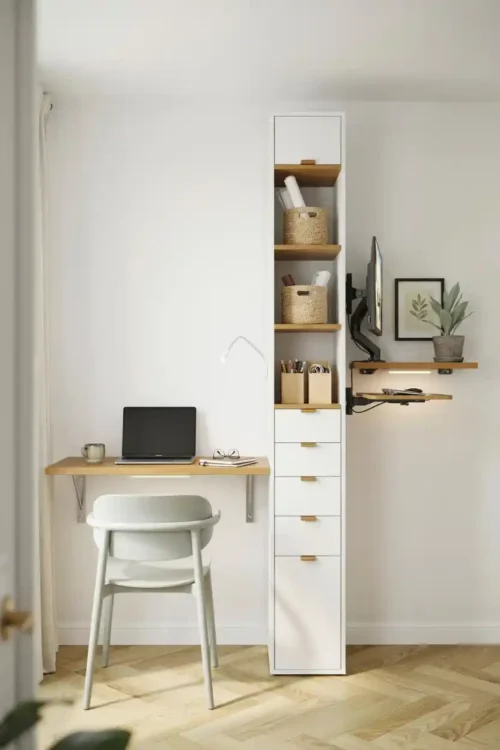
Commercial acoustic panels or desk-mounted sound shields sit on top of or around individual desks, containing noise at the source. One person’s video call stays in their acoustic box instead of filling the whole room.
These panels come in various sizes and colors, from minimalist to statement-making. They’re mobile, so you can adjust coverage based on the day’s tasks.
This is one of the best solutions if noise is the main problem but you want to maintain visual openness.
Mobile Storage Units Between Desks
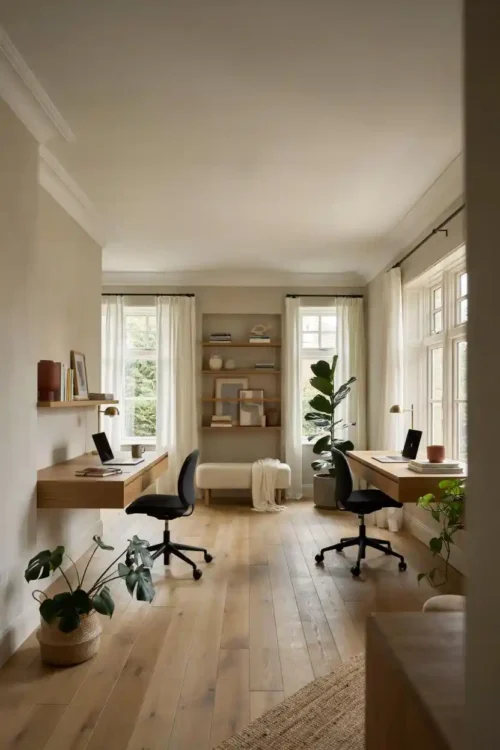
Use rolling file cabinets, rolling shelving, or rolling storage towers positioned between the two desk zones. The mobile units serve as dividers, storage, and flexible walls that adjust based on your needs.
Rolling storage can move when you need collaborative space or stay in place when you both need focus. It’s the most adaptable solution for changing work patterns.
Each person can keep their supplies on the side of the cart closest to them, so everything feels independently organized.
Noise-Reducing Desk Mats and Sound-Dampening Accessories
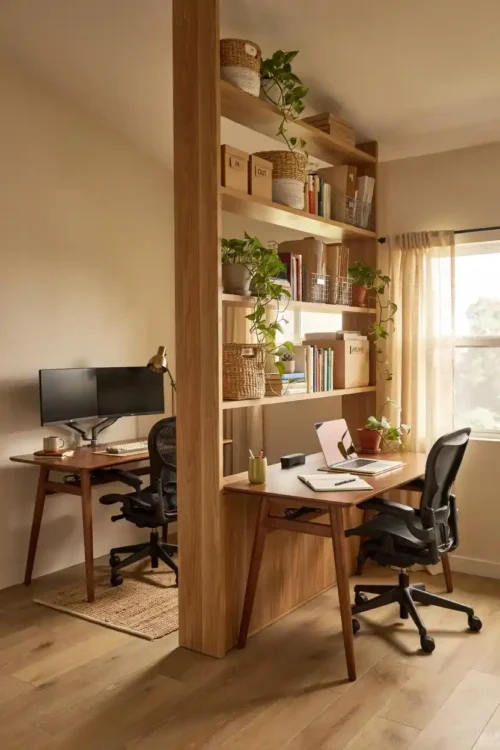
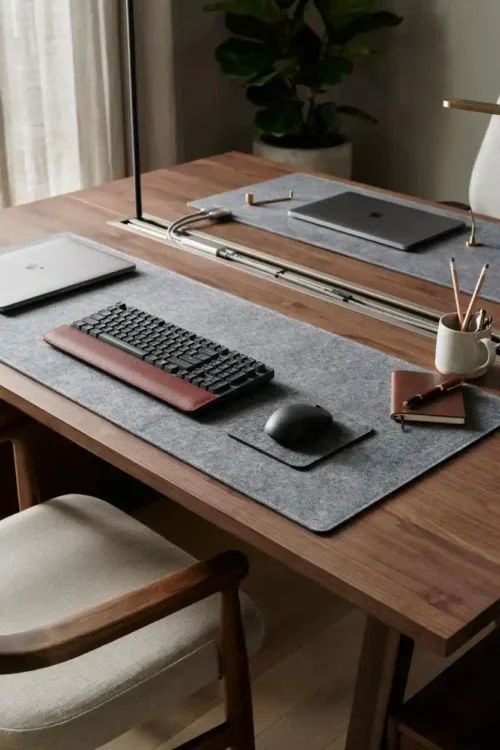
Before investing in big furniture solutions, add dense under-desk rugs, keyboard dampening pads, and mouse pads that absorb sound instead of amplifying it. These small changes dramatically reduce keyboard noise and mouse clicks.
Pair the dampening materials with cable management that keeps cords organized and silent. Loose cables rattle and bang every time someone shifts in their chair.
This approach costs under a hundred dollars but solves a huge percentage of shared-office friction.
Final Thoughts on Shared Home Office Spaces
The office that works isn’t the one that looks balanced or symmetrical. It’s the one where both people can sit down, close the door, and forget someone else is working in the same room. That takes planning, but it’s entirely possible with the right layout and acoustic thoughtfulness.
Most two-person offices fail because people prioritize how the room looks over how it functions. A divider that’s ugly but actually reduces noise beats beautiful exposed sightlines every single time.
FAQ About Home Office Setup for Two People
Can two people share one large desk instead of using two separate desks?
Not successfully, unless you genuinely enjoy constant negotiation about space and supplies. One shared desk creates conflict points every time someone needs to access something. Two separate desks, even small ones, eliminate this friction entirely.
What’s the best way to handle different noise levels—one person on calls all day, one person needing silence?
Position the person on calls in the corner position or against a wall, so their voice projects away from the other person’s desk. Add acoustic panels around their desk area specifically. If possible, the call-heavy person should face a wall while the quiet-work person faces an open area. This leverages the room’s natural acoustics to separate sound.
Do we need soundproofing if we share a home office?
Probably not full soundproofing, but acoustic dampening helps significantly. Strategic placement of rugs, curtains, and soft furnishings absorbs sound better than bare walls. Most two-person offices succeed with layout adjustments plus basic acoustic materials rather than expensive soundproofing.
Sarah Mitchell’s Take
I watched two people turn a perfectly good home office into a war zone because they ignored sightline and noise. Within a month they both had headphones on, facing opposite walls, which meant they could’ve just stayed in separate rooms. The actual fix was positioning—desks angled so neither person watched the other work, plus a low shelving divider. Sometimes the solution isn’t more storage. It’s less visibility and better sound management.