
Introduction
Small kitchens rarely feel limiting because of square footage alone. The real challenge lies in storage that fails to match daily routines, causing counters to fill, cabinets to overflow, and movement to feel constrained. Effective small kitchen storage solutions focus on visibility, access, and logical placement rather than adding more furniture or expensive renovations. When every inch is assigned purposefully, even the tightest kitchen can feel efficient, calm, and easy to maintain. This article explores practical, design-led storage strategies that help compact kitchens function better, reduce clutter naturally, and support real everyday cooking habits.
If you’re looking for broader space-saving inspiration, these 27 Small Apartment Organizing Ideas for Smart Storage pair naturally with the solutions below.
1. Small Kitchen Storage Solutions That Begin With Zone Planning
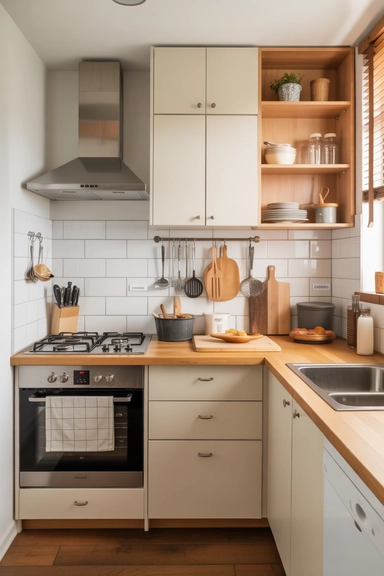
Every efficient kitchen starts with clear zoning. In small spaces, placing items close to where they are used prevents unnecessary movement and counter buildup. Cooking tools near the stove, cutting boards near prep areas, and dishes near the sink create natural flow. Without zones, even good storage becomes chaotic because items return to random locations.
Zone planning also helps determine which areas deserve prime accessibility. Frequently used items should live at eye or waist level, while occasional items can move higher or lower. When storage reflects behavior, clutter stops forming at its source. Zone-first thinking ensures every inch serves a purpose instead of becoming accidental overflow space.
2. Vertical Storage That Uses Full Wall Height
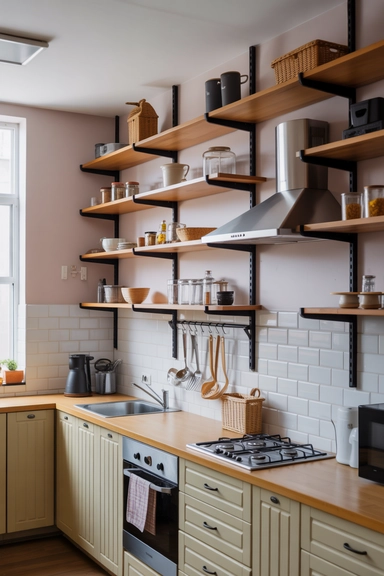
Walls are often underused in small kitchens, yet they provide valuable storage potential. Installing tall shelving, wall rails, or narrow cabinets allows items to move upward instead of spreading across limited floor space. Vertical storage keeps essentials accessible while freeing counters for actual cooking.
The key is restraint. Overloading wall storage can create visual noise, so grouping similar items and maintaining spacing is essential. When vertical zones are planned thoughtfully, the kitchen feels taller, lighter, and better organized. Using height effectively turns previously wasted space into practical storage without expanding the kitchen footprint.
3. Pull-Out Cabinet Systems That Prevent Deep Storage Loss
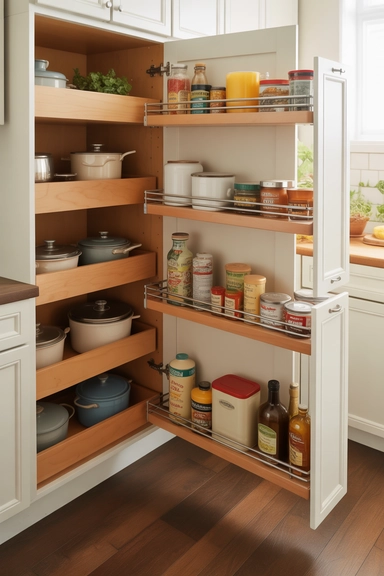
Deep cabinets hide clutter because items disappear into unreachable back corners. Pull-out shelves or baskets solve this by bringing contents forward in one smooth motion. Everything stays visible and reachable, eliminating forgotten products and duplicate buying.
This type of access-driven storage reduces daily disorder. When retrieving an item does not require unpacking a cabinet, things return to place naturally. Pull-out systems transform difficult cabinet depths into reliable storage zones, making every inch usable rather than wasted.
4. Drawer Organization That Stops Counter Spread
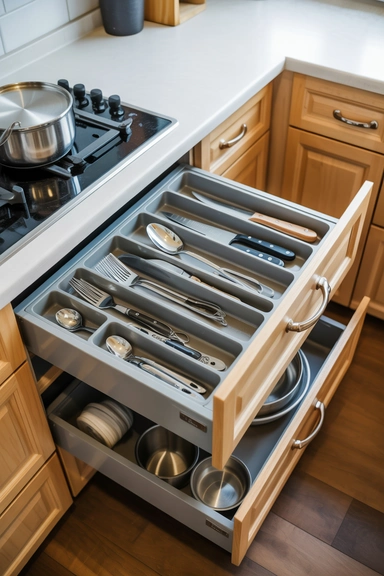
Counters often fill up when drawers fail to support real usage. Divided drawer systems create fixed homes for utensils, tools, and small cookware, preventing jumbling and overflow. When drawers function smoothly, items stay inside them instead of drifting onto worktops.
Good drawer organization also speeds up cooking routines. Finding tools quickly reduces the habit of leaving them out after use. In small kitchens, well-structured drawers act as clutter barriers, keeping visual surfaces clean while maximizing hidden storage capacity.
5. Open Shelving Used With Intent
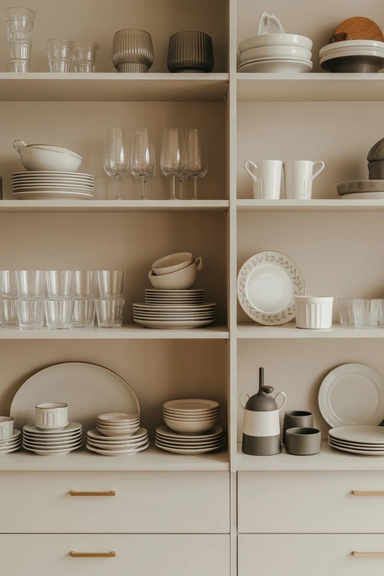
Open shelving can either relieve or worsen small kitchen clutter depending on how it is managed. When shelves display only daily-use items with controlled spacing, they reduce cabinet pressure and keep essentials within reach. The result feels light and accessible rather than cramped.
The key is selective visibility. Shelves should not become catch-all zones. Grouping items by type, limiting color variation, and leaving negative space prevents visual overload. Intentional open shelving turns limited wall space into functional storage while maintaining a calm kitchen atmosphere.
6. Corner Storage That Turns Dead Space Into Function
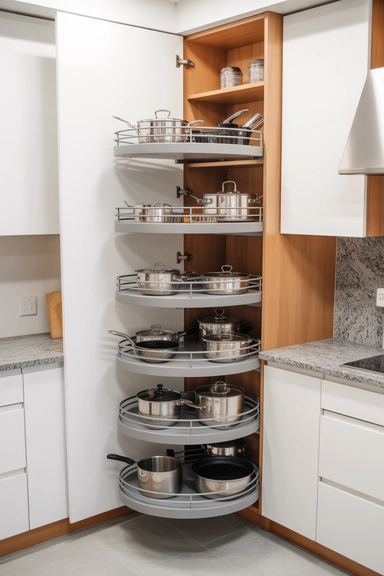
Corner areas often become the least efficient parts of small kitchens. Standard shelving leaves deep, awkward gaps where items get lost and forgotten. Corner pull-out units, rotating trays, or angled shelving bring these hidden zones into full use, allowing cookware and pantry items to stay accessible rather than buried.
When corner storage works properly, it reduces overflow elsewhere. Pots no longer stack in random cabinets, and pantry goods stop migrating to countertops. Treating corners as valuable real estate rather than leftover space ensures every inch contributes to organization instead of becoming a clutter trap.
7. Under-Sink Storage That Works Around Plumbing
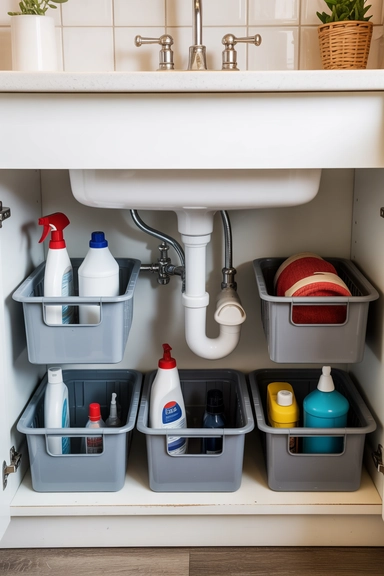
The space under the sink is frequently wasted because pipes interrupt usable storage. Instead of treating this area as a dumping ground, structured bins, slim drawers, or U-shaped shelving can organize cleaning supplies and spare kitchen items efficiently.
When under-sink storage is planned around plumbing rather than against it, items stay upright, visible, and easy to reach. This prevents leaking bottles, tangled sponges, and chaotic piles. A well-organized sink cabinet absorbs clutter that would otherwise spill into other kitchen zones.
8. Over-Cabinet Storage for Rarely Used Items
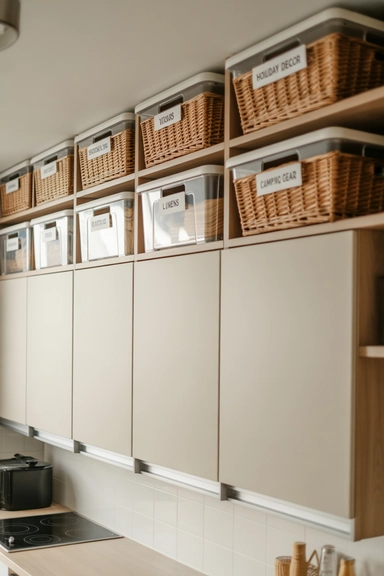
The top of kitchen cabinets often sits empty while lower cabinets overflow. Using this upper space for baskets or bins allows rarely used appliances, bulk goods, or seasonal items to move out of prime storage zones.
This strategy keeps everyday cabinets lighter and more functional. When seldom-used items are stored higher, they stay out of daily circulation without disappearing completely. Over-cabinet storage extends capacity without adding furniture, making it an efficient solution for tight kitchen layouts.
9. Appliance Garages That Keep Counters Clear
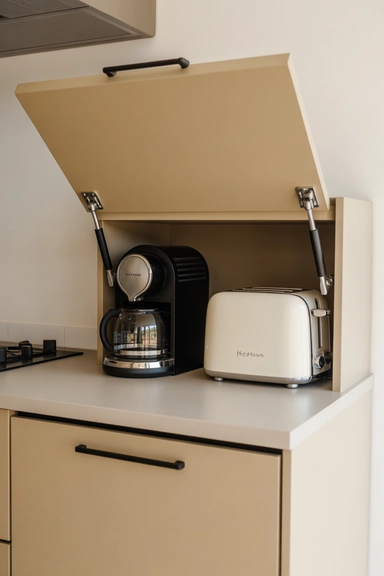
Small kitchens lose valuable prep space when appliances permanently occupy countertops. Appliance garages or lift-door cabinets allow mixers, toasters, and coffee machines to stay plugged in but hidden when not in use.
This reduces visual clutter while preserving convenience. When appliances are easy to access and easy to put away, counters remain clear for cooking instead of becoming storage surfaces. Concealed appliance zones are one of the most impactful small kitchen storage solutions for maintaining daily order.
10. Slim Rolling Pantries for Narrow Gaps
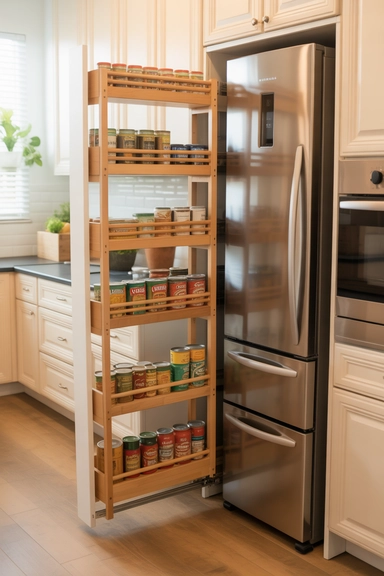
Narrow gaps between refrigerators and walls or cabinets often remain unused. Slim rolling pantry units slide into these spaces and provide vertical storage for canned goods, spices, or snacks without altering existing cabinetry.
These pull-out units create significant storage from overlooked inches. They also keep items visible and categorized, preventing pantry overflow elsewhere. A slim rolling pantry adds capacity exactly where small kitchens need it most, without permanent renovation.
If you’re also optimizing cabinet interiors, these 25 Deep Kitchen Cabinet Organization Ideas That Actually Work pair naturally with the storage solutions above.
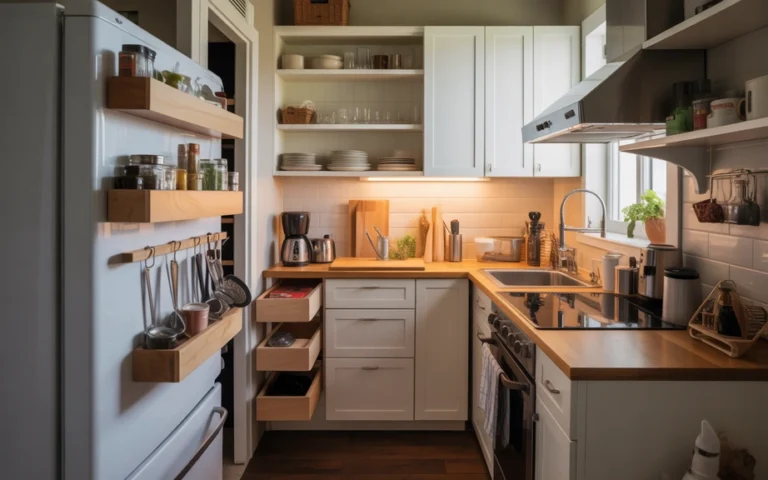
11. Hanging Rail Systems That Free Drawer Space
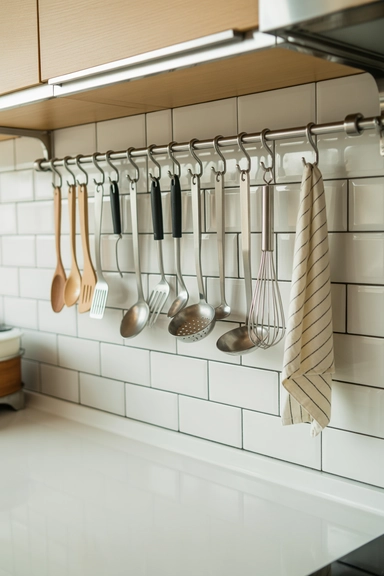
Hanging rail systems allow frequently used tools to live in plain sight without occupying drawers. Utensils, ladles, measuring cups, and towels can hang neatly along a wall or backsplash, keeping prep areas efficient and clutter-free. This approach works especially well in small kitchens where drawer capacity is limited.
By lifting tools into vertical zones, drawers stay reserved for items that truly need enclosed storage. The result is smoother cooking flow and faster cleanup. When hanging systems are kept minimal and intentional, they provide function without adding visual noise.
12. Stackable Container Systems for Pantry Efficiency
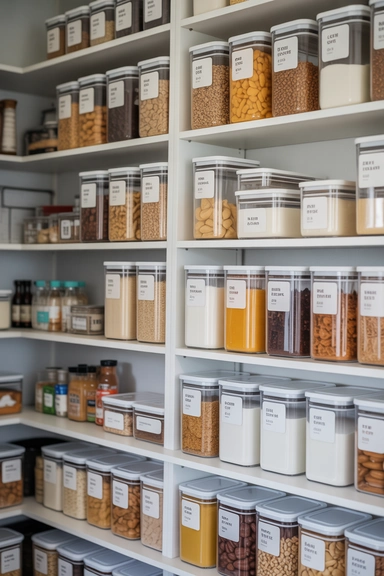
Uniform, stackable containers turn inconsistent pantry goods into a predictable storage system. Instead of half-open bags and mismatched boxes, containers create clean lines and stable stacks that use shelf height effectively.
This approach prevents overflow and forgotten items at the back of shelves. Visibility improves, inventory becomes easier to manage, and pantry zones stay intact longer. Stackable systems are one of the most reliable small kitchen storage solutions for maintaining long-term order.
13. Fold-Down Tables for Dual-Purpose Storage
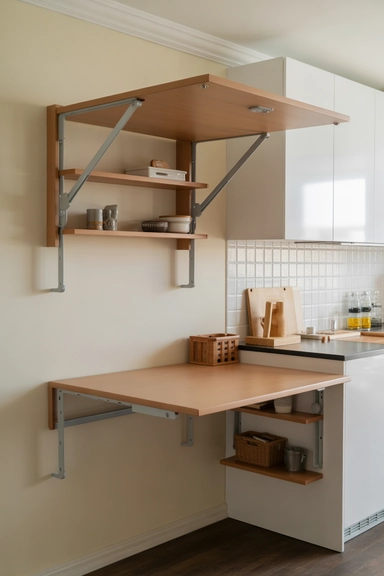
In compact kitchens, surfaces must often serve multiple purposes. Fold-down tables or wall-mounted drop-leaf counters provide prep space when needed and disappear when not in use. Some designs include shallow shelves or compartments beneath, adding discreet storage.
This solution keeps kitchens flexible. When surfaces fold away, movement improves and clutter has fewer places to gather. Dual-purpose furniture ensures every inch contributes to function without permanently occupying floor area.
14. Magnetic Storage for Metal Tools and Jars
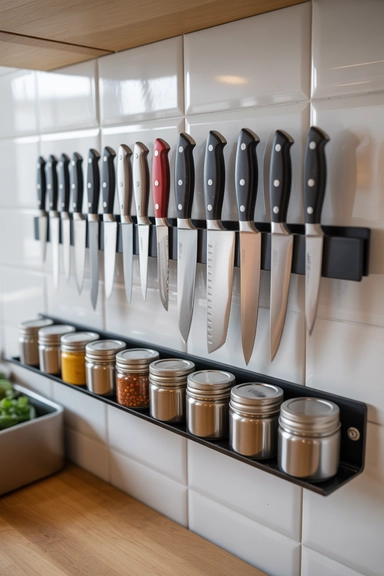
Magnetic strips or panels provide sleek vertical storage for knives, spice jars, or metal tools. This keeps essential items accessible while freeing drawer and counter space. Magnetic storage also improves safety by preventing loose blades in drawers.
By relocating small metal items to wall zones, storage density increases without visual crowding. When arranged neatly, magnetic systems feel organized and intentional. This simple vertical solution maximizes space while supporting daily kitchen habits.
15. Ceiling-Mounted Storage for Cookware
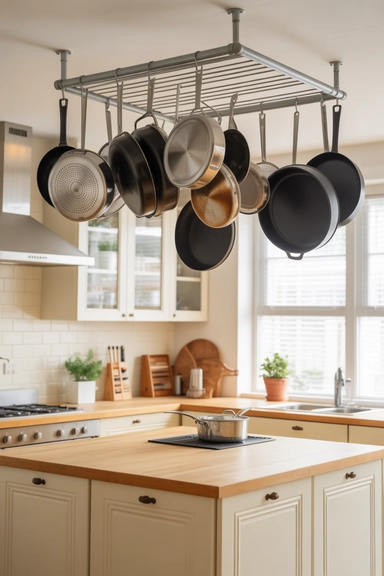
Ceiling-mounted racks allow pots and pans to hang overhead rather than fill lower cabinets. This works especially well in kitchens with limited base storage but sufficient ceiling height. Cookware stays accessible while freeing cabinet space for pantry goods or dishes.
When arranged evenly, hanging cookware adds functional character without chaos. It also reduces stacking damage and retrieval frustration. Overhead storage transforms unused airspace into working storage, completing a fully optimized small kitchen layout.
16. Door-Back Storage That Adds Hidden Capacity
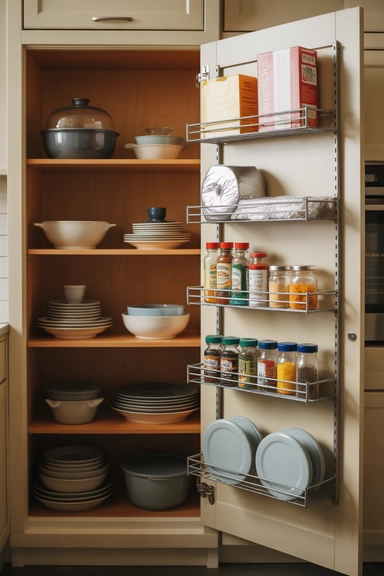
Cabinet and pantry doors offer valuable storage potential that often goes unused. Adding slim racks, hooks, or narrow organizers to door backs creates space for wraps, lids, spices, or cleaning tools without affecting interior shelves. This approach introduces new storage zones without increasing cabinet depth or reducing movement space.
Door-back storage also keeps frequently used items within easy reach, reducing the tendency to place them on counters. When used selectively, it absorbs clutter quietly and efficiently. This small kitchen storage solution maximizes space that already exists, helping every inch contribute to organization rather than being overlooked.
17. Adjustable Shelving That Evolves With Your Needs
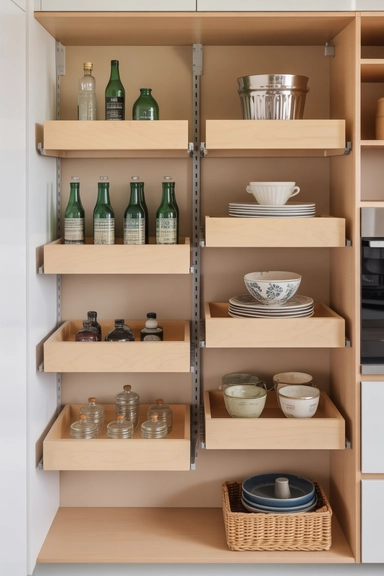
Fixed shelving limits how storage adapts over time. Adjustable shelf systems allow heights to change as cookware, pantry items, or appliances change. This prevents wasted gaps that lead to awkward stacking and inefficient use of cabinet space.
When shelves move with your needs, items remain properly contained instead of migrating to counters or overflow zones. Adjustable shelving supports long-term organization by keeping storage aligned with real inventory. Flexibility is essential in compact kitchens, where a single poorly sized shelf can disrupt the entire storage balance.
18. Nested Cookware Storage That Prevents Cabinet Chaos
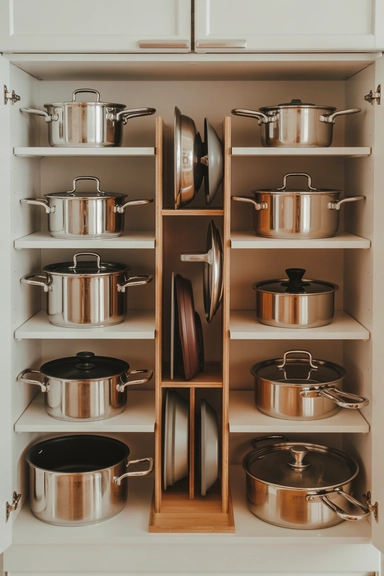
Pots, pans, and lids often create some of the worst cabinet clutter when stacked without structure. Using nesting systems, lid racks, or pan separators keeps cookware organized and prevents noisy, unstable piles that collapse during retrieval.
When cookware has defined positions, access becomes smoother and cabinets stay intact after daily use. This also protects surfaces from scratches and reduces frustration during cooking. Nested storage solutions ensure heavy kitchen items occupy minimal space while remaining easy to handle in tight kitchen layouts.
19. Dedicated Zones for Food Prep Tools
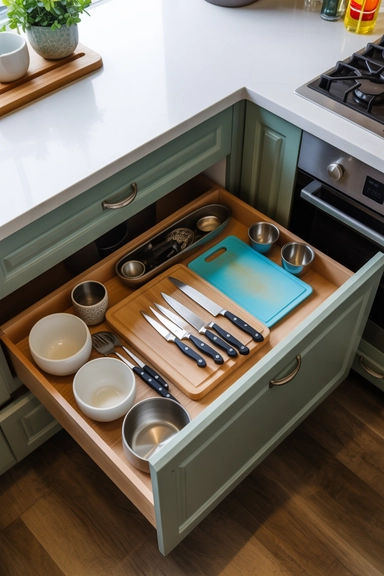
Small kitchens benefit greatly from grouping prep tools into a single dedicated zone. Cutting boards, knives, mixing bowls, and prep containers stored together reduce movement and prevent tools from scattering across cabinets and counters.
When prep tools live near the main work surface, cooking becomes faster and cleanup easier. This focused organization prevents drawers from becoming catch-alls and keeps related items from drifting into unrelated storage areas. Zoning prep storage ensures workflow remains smooth even when space is limited.
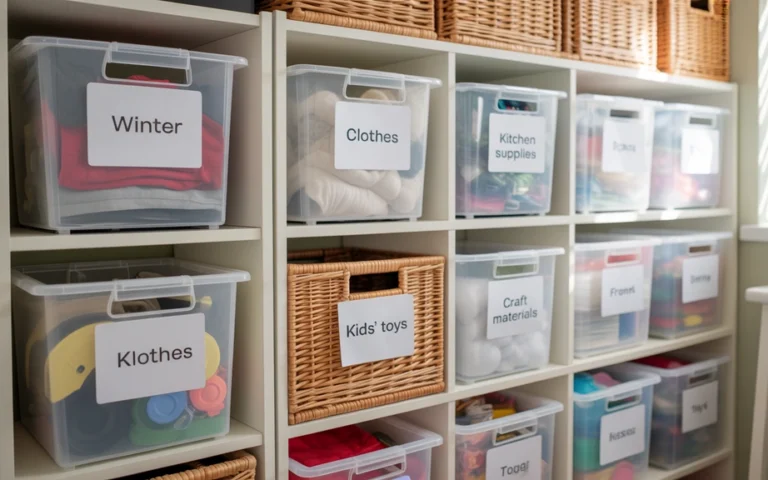
20. Clear Storage for Quick Visual Access
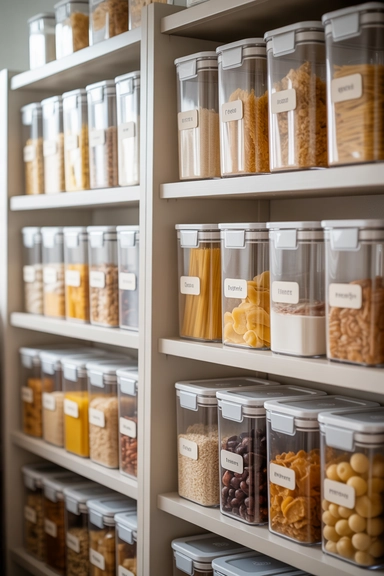
Opaque storage hides clutter until it becomes a problem. Clear containers and bins allow instant visibility of pantry goods, utensils, or fridge items, preventing forgotten duplicates and expired products buried out of sight.
Visual access reduces overbuying and keeps storage zones honest. When contents are always visible, returning items to the right place becomes natural. Clear storage is a simple but powerful small kitchen storage solution that maintains order without requiring constant reorganization.
21. Drawer-in-Drawer Systems for Layered Storage
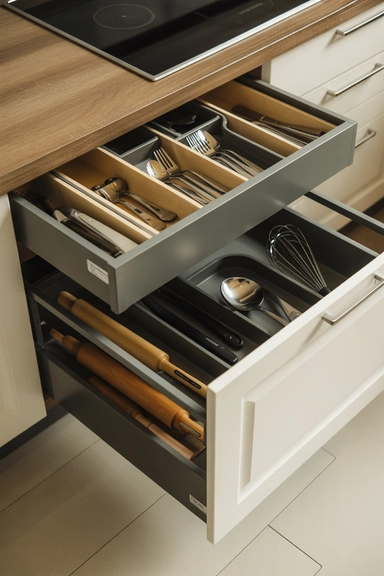
Standard drawers often waste vertical space by storing everything in a single layer. Drawer-in-drawer inserts or shallow tray layers add a second level inside existing drawers, creating dedicated zones for cutlery, prep tools, or small gadgets. This layered approach keeps frequently used items visible on top while secondary tools stay neatly contained below.
By adding vertical efficiency inside drawers, cabinets no longer compensate for overflow. Items stop spreading into countertop piles or random containers. Layered drawer storage allows small kitchens to gain capacity without changing cabinetry, making every drawer work harder and more intelligently.
22. Fridge Door Organization That Reduces Food Clutter
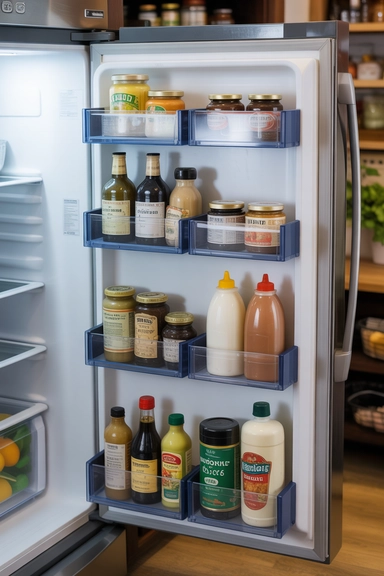
Refrigerator doors often become chaotic zones for bottles, jars, and condiments. Adding slim bins or adjustable door organizers keeps categories separated and prevents items from tipping or overcrowding. When door storage is structured, shelves inside the fridge remain clearer and easier to manage.
Organized fridge doors also reduce food waste. Items stay visible, accessible, and returned to consistent locations. This small kitchen storage solution extends beyond aesthetics — it improves daily cooking efficiency and prevents the slow buildup of forgotten products in cold storage.
23. Over-Shelf Baskets for Instant Extra Space
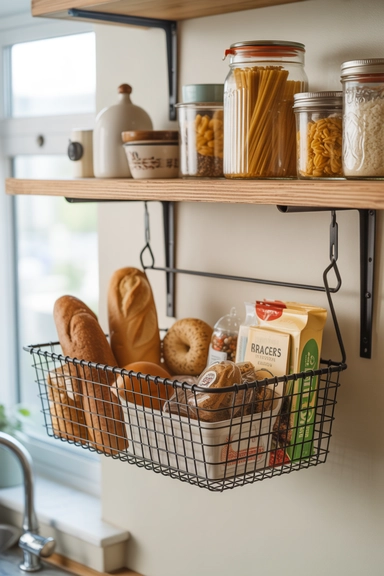
Installing baskets that hang from existing shelves creates new storage without tools or renovations. These over-shelf baskets are ideal for bread, wraps, snacks, or lightweight pantry items that usually consume valuable shelf surface.
Because they use space that previously sat empty, they increase capacity without visual clutter. Items remain visible and easy to reach, preventing the habit of stacking goods in unstable piles. Over-shelf storage is a simple but highly effective way to stretch limited cabinet space.
24. Foldable Wall Hooks for Flexible Storage
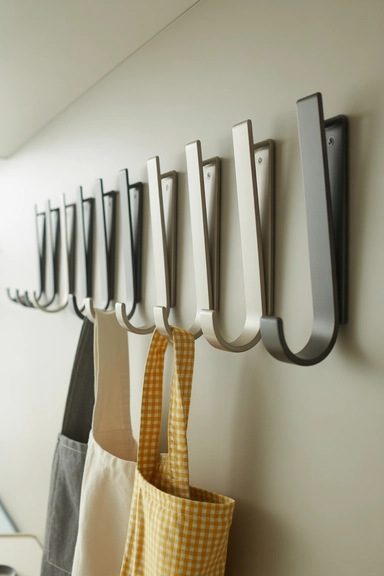
Foldable hooks mounted on kitchen walls or cabinet sides provide temporary hanging space for towels, aprons, or lightweight tools. When not in use, they fold flat, maintaining a clean visual line. This flexibility makes them ideal for kitchens where permanent protruding storage would feel intrusive.
These hooks support daily routines without adding bulk. They keep frequently used items off counters while allowing the kitchen to return to a streamlined appearance afterward. Flexible wall hooks are a subtle storage solution that respects both function and visual calm.
25. Consistent Storage Rules That Keep Systems Working
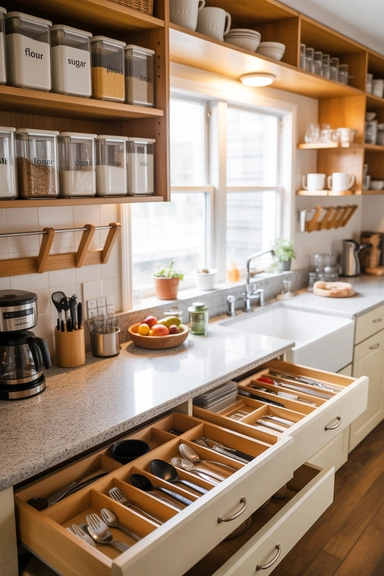
The most successful small kitchen storage solutions rely on simple rules that stay consistent. Assigning fixed zones, maintaining container types, and returning items to the same locations prevents gradual disorder. Without consistent logic, even the best storage products fail over time.
When systems are easy to understand, everyone in the household follows them naturally. Consistency reduces decision fatigue, keeps clutter from reappearing, and allows the kitchen to remain organized without constant effort. Simple rules are often the most powerful storage solution of all.
Conclusion
Small kitchen storage solutions work best when they support real behavior rather than idealized layouts. By using vertical space, layered storage, flexible fixtures, and consistent organization rules, compact kitchens can feel open, efficient, and calm. The goal is not to store more, but to store smarter. When every inch has a clear purpose and systems stay easy to maintain, clutter stops returning and small kitchens begin to function with surprising ease.