
Kitchen islands collect everything—prep tools, mail, snacks, appliances—because they sit at the center of daily movement. Without defined storage, surfaces fill fast and workflow slows down. The goal isn’t to empty the island but to make every side function with intention. Smart drawer zones, open shelving, and under-overhang storage keep essentials close without turning the island into clutter. These kitchen island storage ideas focus on layout, reach, and spacing so small and large kitchens stay usable. For more surface-clearing strategies, see 22 Kitchen Counter Storage Ideas That Keep Surfaces Clear.
1. Drawer Zones That Separate Prep From Serving
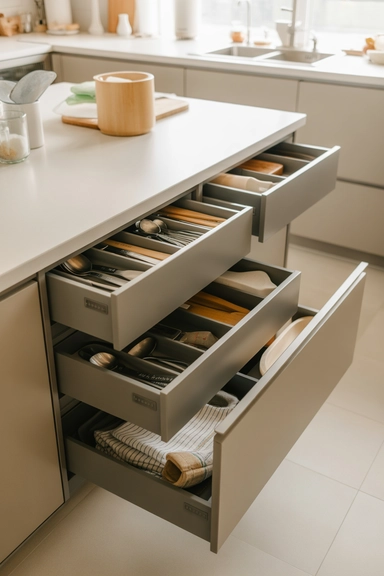
Drawers inside the island work best when each has a defined purpose instead of mixed storage. Keep prep tools like peelers and measuring spoons in the top drawer closest to the prep zone. Reserve deeper drawers for mixing bowls or wraps. This prevents daily-use tools from spreading across the island surface. When drawers align with how you cook, the island stays functional and the counter above stays clear.
Spacing items inside drawers matters. Use dividers so tools don’t shift and pile together. One drawer for prep, one for serving tools, one for linens. When everything returns to a specific drawer after use, the island stops becoming a drop zone. This structure supports organized kitchen islands and keeps workflow consistent even during busy cooking sessions.
2. Open Shelving for Baskets and Quick Access
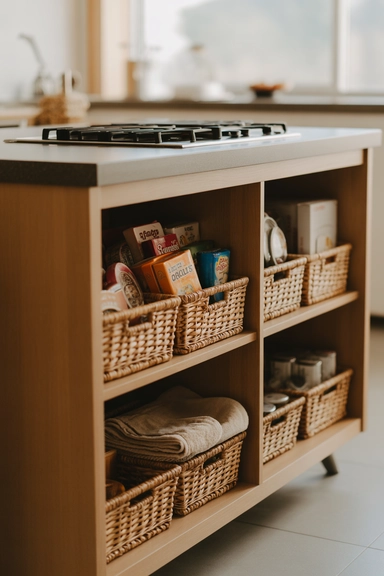
Open shelves along one side of the island create accessible storage without adding bulk. Use baskets for snacks, towels, or produce so items stay grouped. Keeping shelves minimal prevents visual clutter. Choose containers in similar tones so the island still looks cohesive. This works especially well in small kitchen island storage ideas where closed cabinets feel heavy.
Leave space between baskets so shelves don’t look overloaded. One or two per shelf is enough. Position frequently used items at eye level and backups lower. When open shelving is controlled, it adds storage without making the island feel crowded. A balanced shelf layout keeps everything reachable while preserving a clean visual line.
3. Storage Under the Seating Overhang
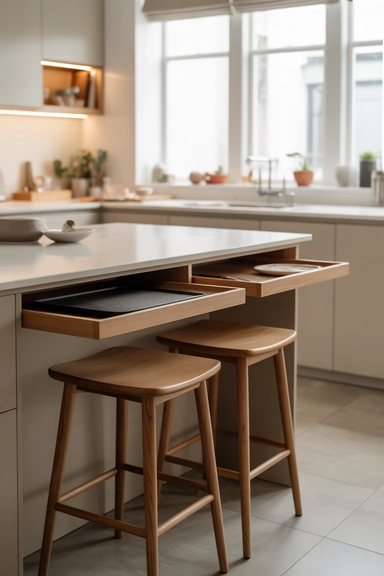
The overhang beneath island seating is often unused. Shallow shelves or narrow drawers installed under this space can hold placemats, trays, or cookbooks. Keep storage flush so it doesn’t interfere with legroom. This approach adds hidden storage while maintaining comfortable seating. It works especially well in kitchen island storage ideas with seating.
Limit items stored here to flat or lightweight pieces. Overfilling makes access difficult and disrupts the seating area. When the overhang holds only what’s needed for dining or serving, the rest of the island stays clear. This simple addition makes use of space that usually goes wasted.
4. Rolling Island Carts for Flexible Storage
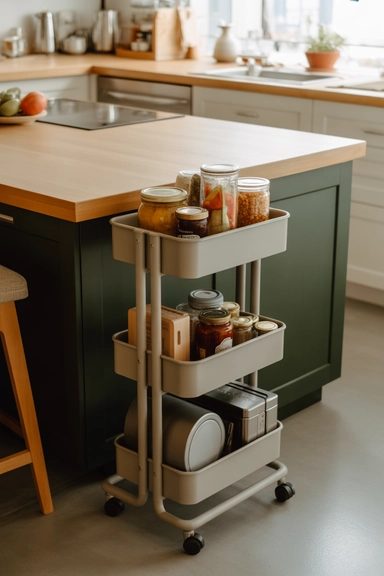
A rolling cart positioned beside or under one side of the island adds movable storage. Use it for produce, small appliances, or pantry overflow. When not needed, it tucks away neatly. This flexibility helps maintain clear island surfaces while still providing extra storage. Rolling carts work well in small kitchen island storage ideas for tight layouts.
Organize the cart by level. Top for daily items, lower shelves for backups. Avoid mixing categories so it stays functional. Because it moves, it adapts to different tasks throughout the day. A controlled cart setup supports workflow without turning the island into a permanent storage zone.
You May Also Like
If you’re organizing a kitchen island, these storage guides help extend organization across counters, cabinets, and small kitchen layouts so everything works together:
- 22 Kitchen Counter Storage Ideas That Keep Surfaces Clear
- 25 Creative Small Kitchen Storage Ideas to Maximize Your Space
- 25 Kitchen Cabinet Storage Ideas That Maximize Every Shelf
5. Deep Cabinet Storage for Bulky Cookware
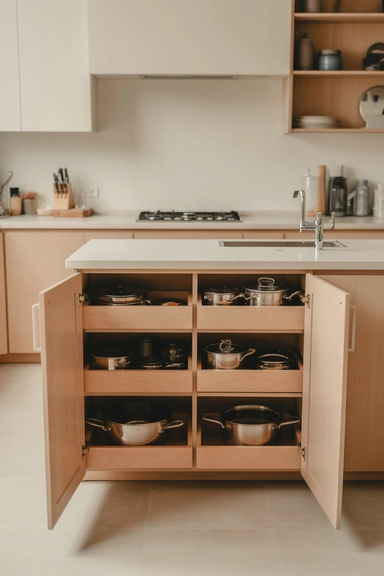
Deep cabinets inside the island can hold pots, mixing bowls, or appliances that don’t need to stay on the counter. Position heavier cookware on lower shelves so it’s easy to lift without strain. Keeping these items inside the island instead of on nearby counters helps maintain a clear prep surface. This approach works well in larger islands where cabinet depth allows for stacked storage without crowding.
Use pull-out shelves or simple bins to prevent items from disappearing into the back. Group similar cookware together so retrieval stays quick. When bulky tools live inside the island, nearby counters remain open for actual cooking. This creates a cleaner workflow and keeps visual clutter from building around the main prep zone.
6. End-of-Island Shelves for Everyday Items
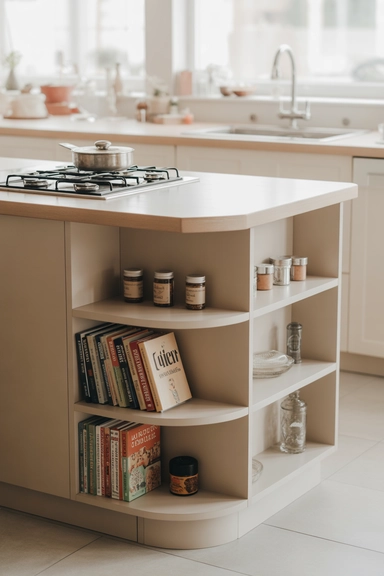
The short end of an island often becomes unused space. Adding open shelves here creates a compact storage zone for cookbooks, jars, or small baskets. Because it sits at the edge, it doesn’t interfere with prep or seating. This layout keeps items accessible without spreading them across the main island surface. It also adds storage in kitchens where wall space is limited.
Keep the shelf depth shallow so it doesn’t protrude into walking paths. Limit it to one category, like cookbooks or serving bowls. Mixing too many items makes the edge look cluttered. When the end of the island holds only a few essentials, it supports storage without disrupting the clean look of the workspace.
7. Built-In Trash and Recycling Drawers
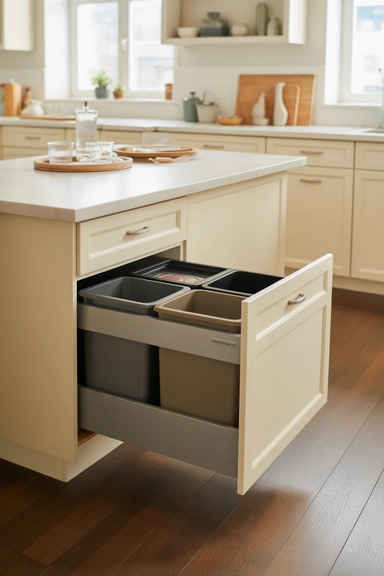
Trash bins stored inside the island keep waste out of sight and off the counter. A pull-out drawer near the prep area makes disposal quick and keeps movement efficient. This prevents wrappers or scraps from piling up on the surface during cooking. Hidden waste storage supports a cleaner kitchen overall.
Separate compartments for recycling and trash keep the system organized. Line bins with removable containers so cleaning stays simple. When waste has a defined place, counters remain clear and easier to wipe down. This practical storage addition improves both hygiene and workflow in everyday cooking.
8. Wine Storage Integrated Into the Island
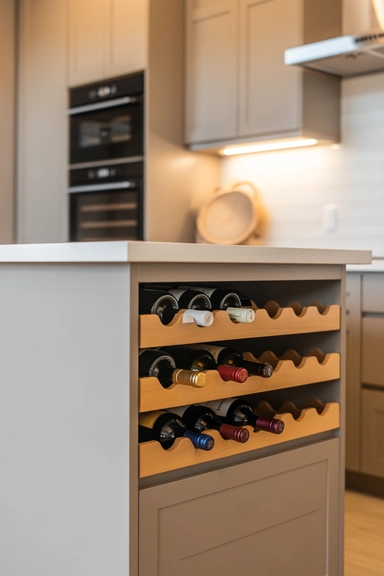
A small wine rack built into one side of the island adds storage without taking up cabinet space. Horizontal racks keep bottles secure while still visible. Positioning them on the outer side of the island prevents interference with prep zones. This creates a dedicated beverage storage area that doesn’t clutter the main surface.
Limit the rack to a modest number of bottles to avoid visual heaviness. In smaller kitchens, a compact wine section can replace bulky racks elsewhere. Keeping beverages inside the island frees nearby counters for cooking tasks. This layout keeps the island functional while still offering specialized storage.
9. Pantry Overflow Storage Inside the Island
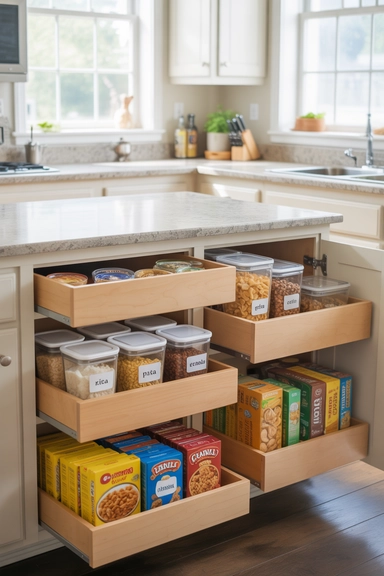
In kitchens with limited cabinets, the island can hold dry goods or packaged snacks. Use bins or labeled containers to group items by category. Keeping pantry overflow inside the island prevents food packages from covering nearby counters. This setup supports organized kitchen islands in busy households.
Position frequently used items in upper drawers and less-used items below. Avoid overfilling so access stays easy. When the island absorbs pantry overflow, the main cabinets and counters remain less crowded. This balance helps maintain a cleaner kitchen layout without sacrificing storage.
10. Slim Vertical Dividers for Baking Sheets
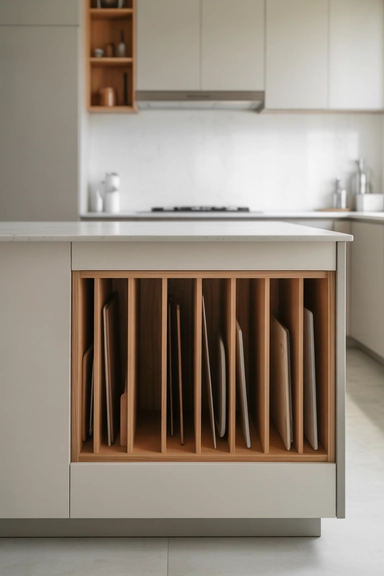
Vertical dividers inside a cabinet section of the island keep baking sheets and trays upright. This prevents them from stacking and becoming difficult to reach. Position the dividers near the oven side of the island for convenience. Keeping trays stored vertically frees up cabinet and counter space elsewhere.
Leave a little space between each divider so items slide in and out easily. Avoid overfilling the section. When trays have a designated slot, they stop leaning against walls or cluttering drawers. This simple storage feature improves organization without taking up additional room.
11. Open Basket Storage for Towels and Linens
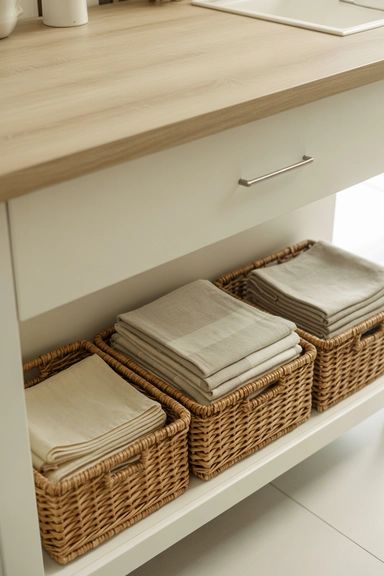
Baskets on lower island shelves can hold dish towels, napkins, or table linens. This keeps fabric items accessible without using drawer space. Neutral baskets help the island look cohesive while still functioning as storage. Position them on the side of the island that faces away from the main prep area.
Limit each basket to one category. Overfilling leads to clutter. When linens stay grouped in baskets, they’re easy to grab during meals and just as easy to return afterward. This simple setup keeps everyday textiles organized without spreading them across the kitchen.
12. Narrow Pull-Out Storage for Oils and Bottles
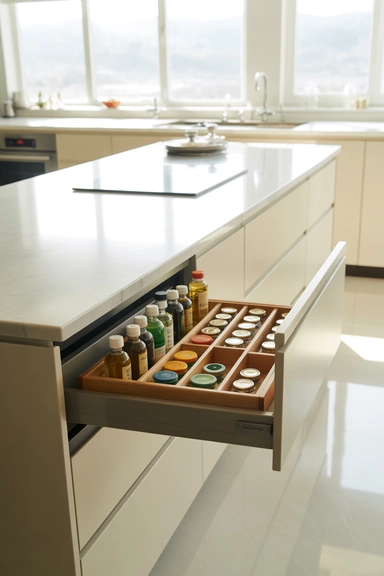
A slim pull-out cabinet built into the island can hold cooking oils, sauces, or tall bottles that usually crowd the counter. Position it near the prep side so items stay within reach while cooking. This keeps frequently used bottles accessible but off the surface. Narrow pull-outs make use of tight interior spaces that often go unused.
Keep bottles grouped by type so retrieval stays quick. Avoid overfilling, which makes the pull-out harder to use. When oils and condiments live inside the island, nearby surfaces remain open for chopping and prep. This layout improves workflow and keeps visual clutter from building around the main cooking zone.
13. Multi-Drawer Storage for Utensils and Tools
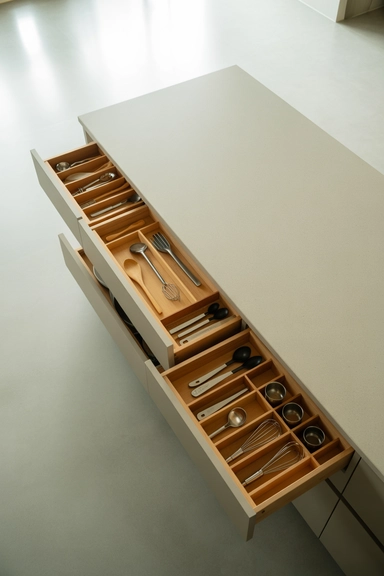
Multiple shallow drawers inside the island can separate utensils, measuring tools, and small gadgets. Assign each drawer a purpose so items don’t mix together. This prevents tools from spreading across the island surface during meal prep. Drawer organization helps maintain a clear and usable workspace.
Use simple dividers to keep tools from shifting. Place the most-used drawer closest to the main prep area. When everything returns to its assigned drawer, the island stays tidy even during busy cooking sessions. Structured drawers support daily routines and keep the kitchen feeling organized.
14. Open Shelves for Decorative but Functional Storage
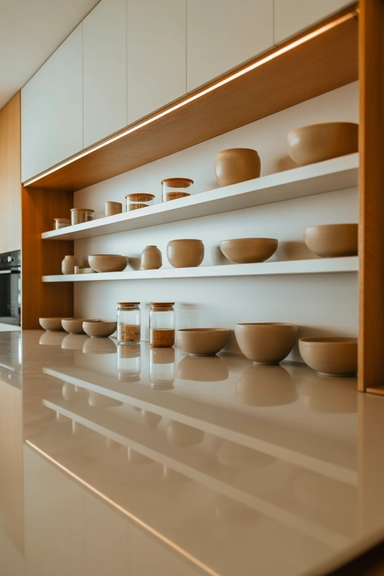
Open shelves can hold jars, bowls, or containers that are used daily but still look clean on display. Position them on the side of the island that faces outward rather than toward the main prep area. This keeps the working side clear while still providing storage. Balanced spacing helps the shelves look intentional.
Limit display to a few coordinated items. Too many objects create visual clutter. When shelves stay minimal, they add storage without making the island feel heavy. Functional display storage keeps essentials accessible while maintaining a clean kitchen layout.
More Small-Kitchen Storage Ideas
Island storage works best when the rest of the kitchen stays structured too. These related ideas help keep nearby zones clear and functional long term:
- 22 Vertical Storage Ideas That Reclaim Floor Space and Clear Visual Clutter
- 23 Small Kitchen Storage Solutions That Make Every Inch Work Better
- 21 Smart Space-Saving Kitchen Hacks That Reduce Daily Clutter
15. Hidden Charging Drawer for Devices
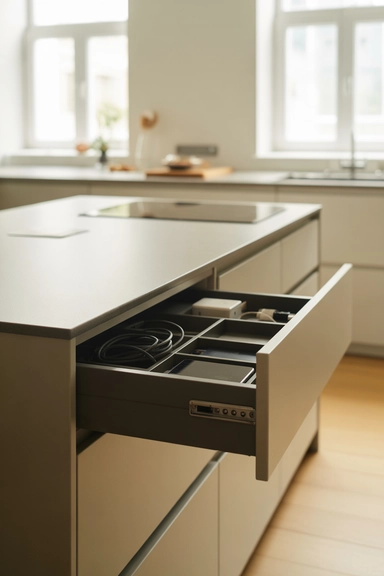
A concealed charging drawer inside the island keeps phones or tablets from sitting on the counter. Install outlets inside the drawer so devices can charge while out of sight. This prevents cords and electronics from spreading across the island surface. It also keeps the prep area free from distractions.
Keep the drawer limited to electronics only. Mixing tools and devices leads to clutter. When charging has a dedicated space, the island remains focused on cooking and serving tasks. This feature supports a cleaner and more functional kitchen environment.
16. Seating Storage With Built-In Compartments
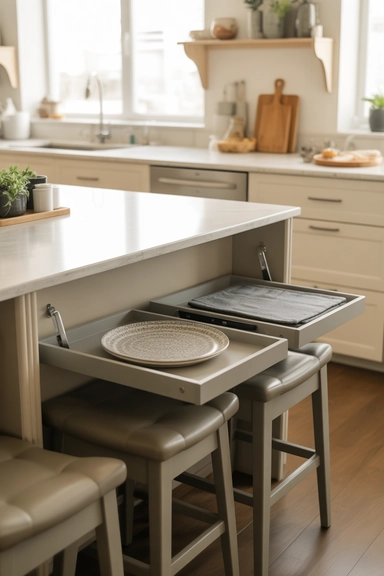
If the island includes bench seating or deep stools, the base beneath can hold storage compartments. Use this space for placemats, serving trays, or seasonal items. Keeping these items under seating keeps them accessible without using cabinet space. It also prevents them from stacking on the counter.
Ensure storage doesn’t interfere with legroom. Keep compartments shallow and organized. When seating areas include hidden storage, the island supports both dining and organization. This makes the most of available space without crowding the main prep zone.
17. Corner Island Storage for Awkward Layouts
Corner sections inside an island often become difficult to access. Adding rotating trays or pull-out baskets makes this space usable. Store less-used items here so they don’t crowd main drawers. This keeps the rest of the island organized and easier to maintain.
Avoid packing the corner too tightly. Leave room for items to move. When corner storage works efficiently, the island gains extra capacity without feeling cluttered. A functional corner setup supports better organization throughout the entire kitchen.
18. Shelf Space for Cookbooks and Planning Tools
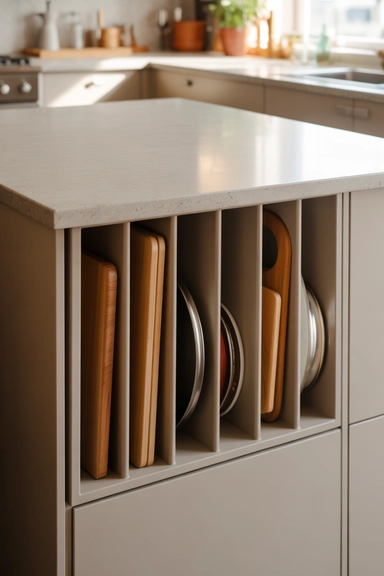
A dedicated shelf for cookbooks or planners can keep reference materials off the counter. Position it at the end of the island or on the side facing outward. This keeps books accessible without interfering with prep. A narrow shelf is enough to hold a small collection.
Limit the number of books to avoid visual clutter. Rotate them as needed. When reference materials have a set place, they stop piling up on nearby surfaces. This keeps the island clear while still supporting meal planning and daily routines.
19. Vertical Tray Storage for Cutting Boards and Lids
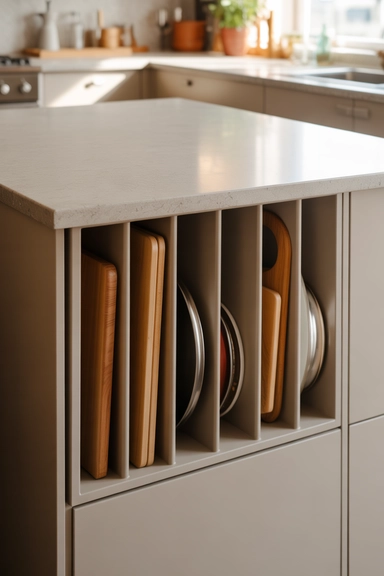
A vertical divider section inside the island can hold cutting boards, pan lids, and serving trays upright instead of stacked. This prevents them from piling in cabinets or leaning against backsplash areas. Position the divider near the prep side of the island so boards are easy to grab and return. Vertical storage keeps items visible and accessible without covering nearby counters.
Leave space between dividers so boards slide in easily. Avoid cramming too many into one slot. When trays and boards have a fixed location, they stop migrating to the counter after washing. This improves workflow and keeps surfaces clear. Structured vertical storage makes even small islands work harder without adding visual clutter.
20. Basket Storage for Snacks and Daily Items
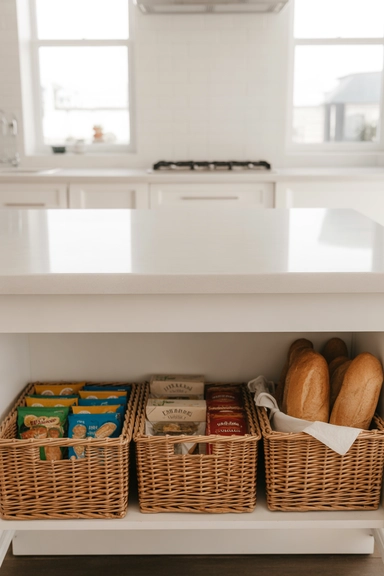
Lower island shelves fitted with baskets can hold packaged snacks, bread, or quick-grab items that often land on the counter. Use baskets with defined categories so everything has a place. This keeps everyday items accessible without spreading across the island surface. Neutral baskets maintain a cohesive look and prevent the island from feeling cluttered.
Keep baskets partially filled rather than packed tightly. This makes it easier to see contents and return items after use. Position snack baskets on the side of the island facing away from the prep zone so they don’t interfere with cooking. Contained basket storage helps maintain a clutter-free kitchen while supporting daily routines.
21. Countertop Organizer Zone on One Side Only
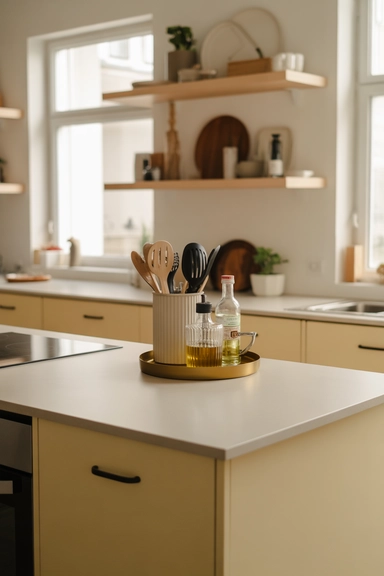
If items must stay on the island surface, keep them contained within one defined organizer zone. Use a shallow tray or compact organizer for oils, salt, or tools. Place it on one side rather than spreading items across the entire island. This keeps the rest of the surface clear for prep and serving. A controlled storage zone maintains order without removing essential items.
Limit what stays in the tray. Only daily-use items belong here. Leaving visible space inside the organizer prevents it from looking overcrowded. When everything returns to this zone after use, the island stays functional and easier to clean. Contained surface storage keeps the kitchen organized while preserving valuable workspace.
Conclusion
A well-planned island supports both storage and daily movement without turning into a clutter zone. When drawers, shelves, and hidden compartments each have a defined role, surfaces stay open and easier to use. The most effective kitchen island storage ideas focus on spacing, accessibility, and consistency. Keep frequently used items close but contained. Store the rest inside the island. When every side works with intention, the island becomes a functional center for cooking, serving, and gathering instead of a surface that constantly fills up.