
Introduction
Most clutter problems aren’t caused by owning too much. They come from storage that doesn’t match how a home actually functions day to day. The most effective dollar store storage ideas for home focus on creating boundaries for everyday items so they stop spreading across counters, drawers, and shelves. When small containers are used intentionally, even tight spaces start to feel predictable and easy to reset. This approach works especially well for real homes where budgets matter and storage needs to evolve over time. If you’re building a broader low-cost system across rooms, read 23 Low Budget Home Organizing Hacks for Real Everyday Homes to align your storage decisions before adding more containers.
1. Shelf-Within-Shelf Baskets That Multiply Cabinet Capacity
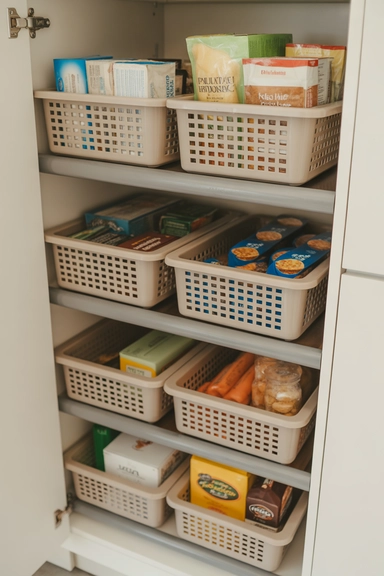
Cabinets often feel full not because they lack space but because items are stacked loosely and collapse into each other. A few shallow dollar store baskets placed side by side can create a second layer inside a single shelf. Instead of piling containers or food boxes vertically, each basket becomes a contained zone that can slide forward without disturbing everything behind it. This works particularly well in kitchens where packaged goods shift constantly and need flexible storage rather than rigid organizers.
Spacing matters more than the basket itself. Leave a small gap between baskets so they lift out easily and don’t snag on surrounding items. Assign each one a single category — snacks, baking supplies, cleaning cloths — so nothing spills across shelves again. Over time, this layered approach stabilizes cabinet interiors and reduces the need for expensive pull-out systems. In smaller homes, multiplying the usefulness of existing shelves often has more impact than adding new furniture.
2. Deep Utility Bins That Contain High-Turnover Items
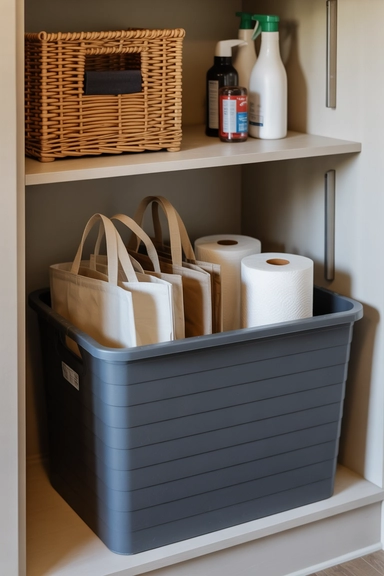
Certain household items never stay put: reusable bags, cleaning sprays, paper goods, and spare toiletries. Without a defined container, they drift across rooms and settle wherever there’s open surface space. Deep dollar store utility bins create a catch-zone that holds these high-turnover items together without forcing rigid organization. Instead of trying to keep everything perfectly arranged, the goal is containment that resets quickly after use.
Place these bins where items naturally accumulate — near entryways, laundry areas, or under sinks. Keeping them close to the point of use reduces the chance of items migrating elsewhere. Choose bins with slightly higher sides so contents don’t spill when carried between rooms. When the bin fills beyond capacity, that’s a signal to sort rather than add another container. This prevents storage from quietly expanding until clutter returns. Containment first, refinement later.
3. Drawer Baskets That Stop Horizontal Spread
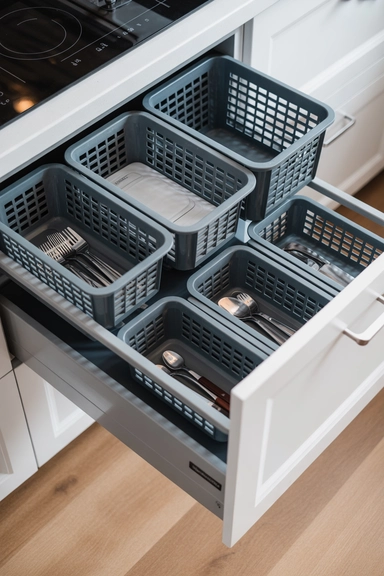
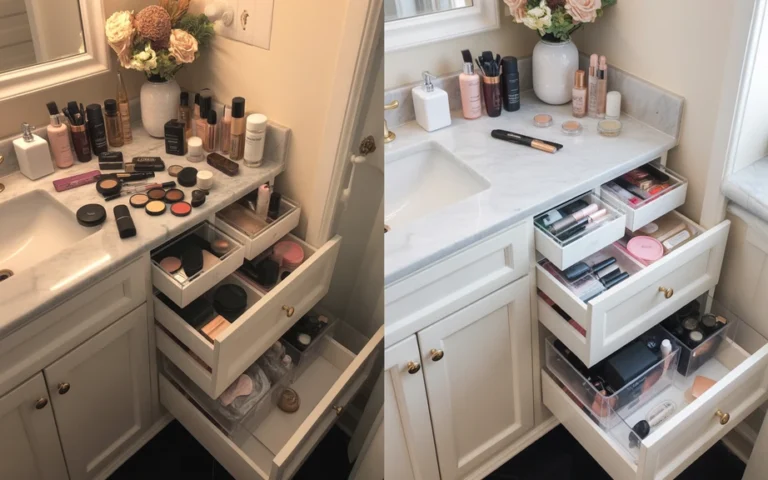
Wide drawers become chaotic because items spread horizontally instead of stacking vertically. A set of small rectangular baskets transforms one open drawer into several controlled sections. Each section holds a single category so items remain visible and don’t slide underneath one another. This approach works especially well in kitchen utensil drawers, bathroom vanity drawers, or desk storage where small tools and accessories mix easily.
Avoid filling every inch of the drawer. Leaving slight gaps between baskets makes it easier to lift one out without disturbing the others. That flexibility keeps the system functional rather than rigid. Over time, defined drawer sections reduce the need to reorganize completely because each item already has a predictable landing spot. In homes with limited storage, stabilizing one drawer can prevent overflow into surrounding surfaces and cabinets.
4. Vertical Cleaning Supply Caddies That Prevent Sink Clutter
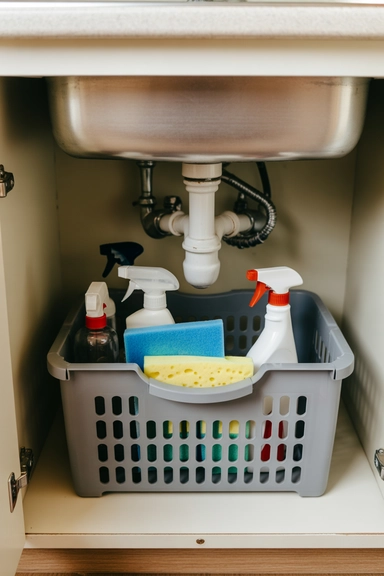
Under-sink cabinets often become the most chaotic storage zones in a home. Bottles tip over, sponges pile up, and small tools disappear behind pipes. A simple dollar store cleaning caddy consolidates daily-use supplies into one movable unit. Instead of scattering products across the cabinet floor, everything lives inside a single container that lifts out for use and returns intact.
Choose a caddy with a sturdy base and defined compartments so items stay upright while moving between rooms. Keep only frequently used products inside; bulk refills can live elsewhere. This separation prevents the caddy from becoming too heavy or cluttered. When cleaning supplies remain contained and portable, under-sink areas stay clear and easier to maintain. In smaller homes, mobility matters just as much as storage capacity.
5. Stackable Fridge Bins That Stop Food From Getting Lost
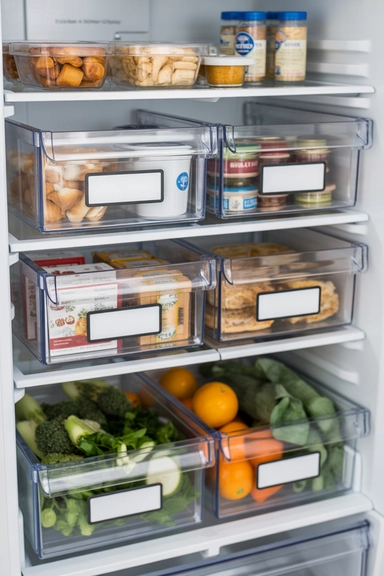
Refrigerators feel chaotic when containers stack unevenly and smaller items disappear behind taller bottles. A set of shallow dollar store fridge bins creates defined lanes so food stays visible and grouped by type. Instead of rearranging shelves every time groceries come in, each bin becomes a predictable zone: snacks in one, deli items in another, leftovers in a third. Visibility reduces waste because nothing hides in the back long enough to expire.
Spacing between bins matters more than quantity. Leave small gaps so bins slide forward easily without knocking into one another. Avoid filling them to the top; a little negative space keeps items easy to scan at a glance. Over time, the refrigerator becomes less about cramming and more about maintaining flow. When food categories return to the same bins after each grocery trip, the fridge resets itself without a full reorganization every week.
6. Entryway Drop Baskets That Catch Daily Carry Items
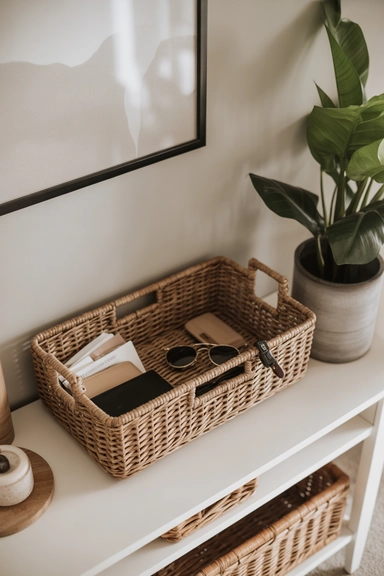
Keys, wallets, sunglasses, and mail tend to scatter across entry surfaces because there’s no single landing zone. A small dollar store basket placed near the door creates a contained drop area for everything that comes in and out daily. Instead of setting items down randomly, they land in one predictable place that’s easy to check before leaving. This works especially well in small homes where entryways blend into living spaces.
Keep the basket shallow enough that items remain visible rather than buried. If multiple people share the space, consider one basket per person to prevent mixing. The goal isn’t perfect sorting; it’s reliable containment. Over time, the habit of placing items into a defined basket prevents surfaces from accumulating small clutter that slowly spreads across the room. A single drop zone often stabilizes the entire entry area.
7. Pantry Can Bins That Create Visible Rows
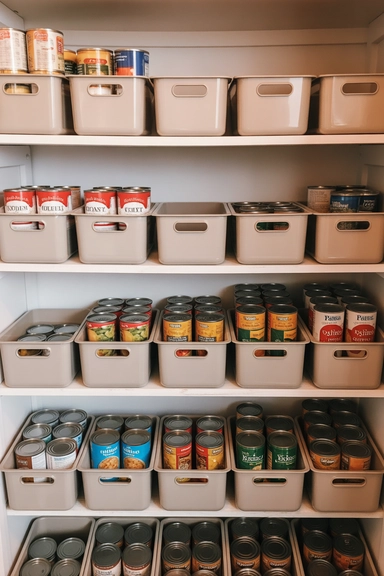
Canned goods stack easily but quickly become disorganized when labels face different directions or rows collapse. Dollar store bins sized to hold several cans in a row keep items aligned and easy to access. Instead of digging through stacked cans, you pull one forward while the rest remain in place. This approach works especially well in narrow pantry shelves where depth makes items hard to see.
Choose bins that match shelf depth so no space gets wasted behind them. Keep similar categories together — vegetables in one, soups in another — to reduce searching. When the bin empties, it signals what needs restocking without scanning the entire pantry. Consistent rows create visual order and prevent cans from spreading across multiple shelves. Over time, even a small pantry feels structured because each category has a stable footprint.
8. Closet Shelf Baskets That Control Soft Items
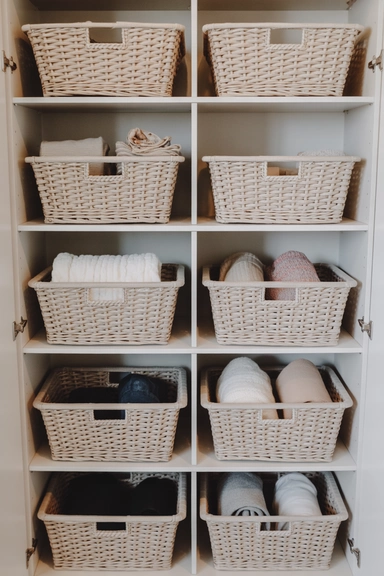
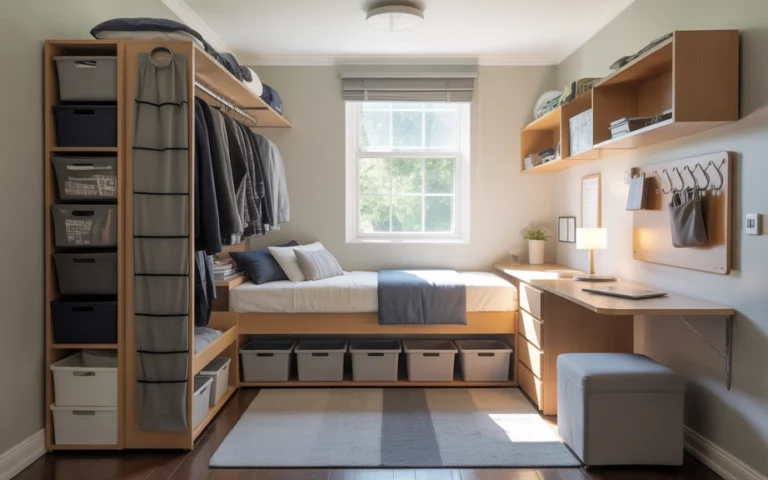
Closet shelves often hold folded linens, scarves, or seasonal accessories that slowly lose their shape and spill outward. Medium-sized dollar store baskets keep these soft items contained so stacks don’t collapse into each other. Instead of refolding constantly, you place items into a defined basket that holds its shape. This method works well for closets that lack built-in drawer space.
Keep baskets consistent across shelves to maintain visual balance. Assign each one a single category — scarves, gym clothes, extra linens — so nothing migrates. Leaving slight gaps between baskets prevents overcrowding and keeps retrieval simple. Over time, contained shelves stay neater with less effort. In smaller closets, this controlled approach prevents soft items from spreading across multiple shelves and consuming valuable space.
9. Rolling Cart Bins for Mobile Storage
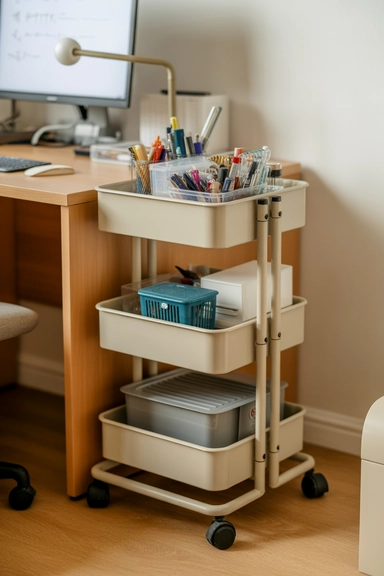
Some household items move between rooms regularly: craft supplies, cleaning tools, or office materials. Instead of scattering them across multiple surfaces, placing dollar store bins on a rolling cart keeps everything together and portable. Each bin holds a category so the cart remains organized even as it moves. This works especially well in small homes where rooms serve multiple functions.
Keep the top tier for items used most frequently and lower tiers for backup supplies. Avoid overfilling bins so the cart remains easy to maneuver. When finished, the entire cart slides into a corner or closet, keeping surfaces clear. Mobile storage prevents items from establishing permanent clutter zones in multiple rooms. One contained cart often replaces several small piles across the house.
10. Toy Rotation Bins That Reduce Visual Overload
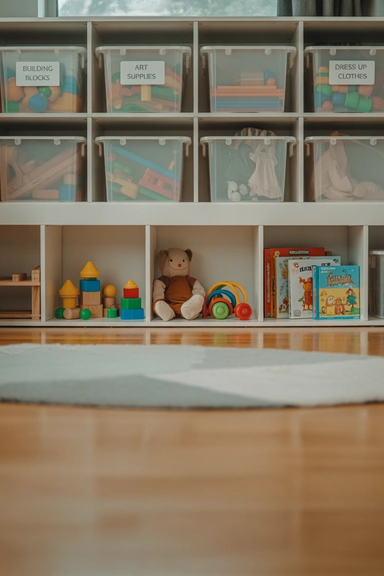
Children’s toys multiply quickly, and open storage can make a room feel cluttered even when everything has a place. Rotating toys through a set of dollar store bins keeps only a portion accessible at a time. Instead of displaying every toy, store extras in labeled bins and switch them out periodically. This reduces visual noise and keeps play areas manageable.
Place rotation bins on higher shelves or in a closet so they stay out of daily reach. When swapping toys, return unused ones to the bin before introducing new items. This cycle maintains order without constant sorting. Over time, toy rotation helps prevent accumulation because only the most-used items stay in circulation. In shared living spaces, reducing visible volume keeps rooms calmer without removing access entirely.
11. Under-Sink Tray Systems That Keep Bottles Upright
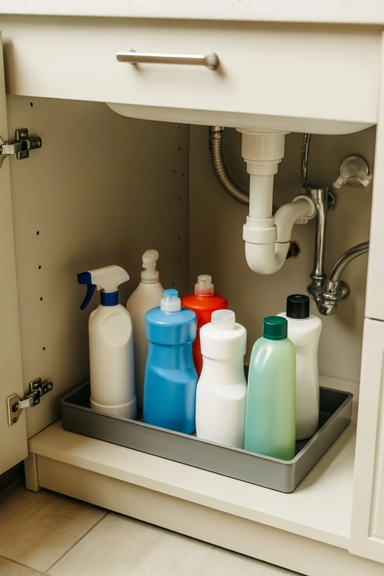
Under-sink cabinets become chaotic because the space is wide but shallow, and bottles tip or slide every time something is moved. Placing a flat tray from the dollar store inside the cabinet creates a stable base that holds cleaning bottles in one contained zone. Instead of arranging items directly on the cabinet floor, everything sits inside a boundary that can be lifted out in one motion when needed. This small shift prevents leaks from spreading and keeps the area easier to wipe down.
Group bottles by function so daily-use items sit toward the front while backups stay behind them. Avoid stacking bottles too tightly; a little spacing makes retrieval faster and prevents knocking others over. Over time, the tray becomes the natural return point after each use. When cleaning supplies stay upright and grouped, under-sink areas remain predictable instead of becoming clutter pockets that require full resets every few weeks.
12. Mail Sorting Bins That Stop Paper Piles
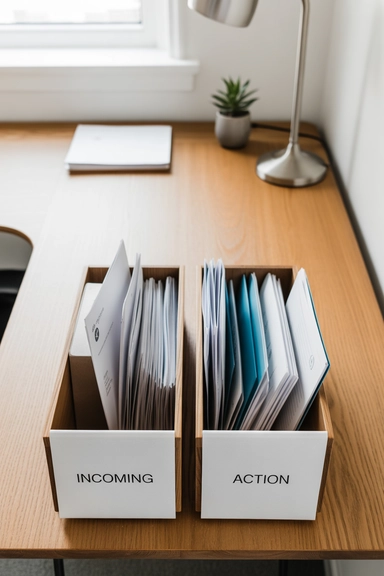
Mail and paperwork accumulate quickly because there’s rarely a defined place to process them. A pair of narrow dollar store bins placed near the entry or desk creates a simple sorting station: one for incoming mail, one for items that need action. Instead of letting paper spread across counters, everything moves through a contained system that prevents buildup. Even in small homes, this reduces visual clutter because paper stacks no longer migrate across surfaces.
Keep the bins visible enough to encourage daily use but not so large that they invite overfilling. Once a week, clear the “action” bin and recycle what’s no longer needed. This regular rhythm keeps the system working without requiring a complex filing setup. Over time, paper clutter decreases because it has fewer opportunities to spread beyond its designated zone.
13. Laundry Supply Baskets That Simplify Utility Areas
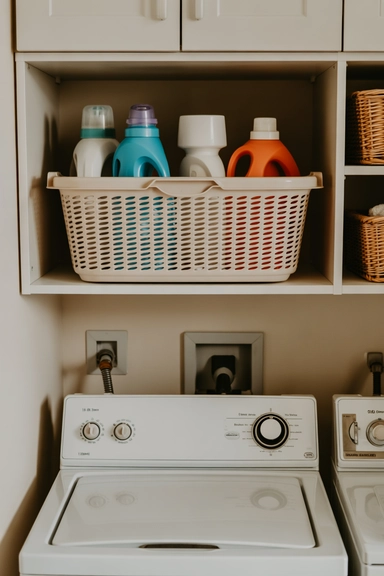
Laundry spaces often become catch-alls for detergent bottles, dryer sheets, stain removers, and loose tools. A sturdy dollar store basket placed on a shelf or machine top keeps these supplies together. Instead of lining bottles across surfaces, everything sits inside one movable container that lifts easily when the area needs cleaning. This keeps the space visually simpler and easier to maintain between loads.
Choose a basket large enough for essentials but not so large that extras accumulate. Store backup products on a separate shelf to avoid overcrowding. When supplies stay contained, laundry areas feel more controlled and functional. Even in tight utility spaces, grouping items into a single basket prevents clutter from spreading across nearby counters or floors.
14. Bedside Storage Bins That Replace Surface Piles
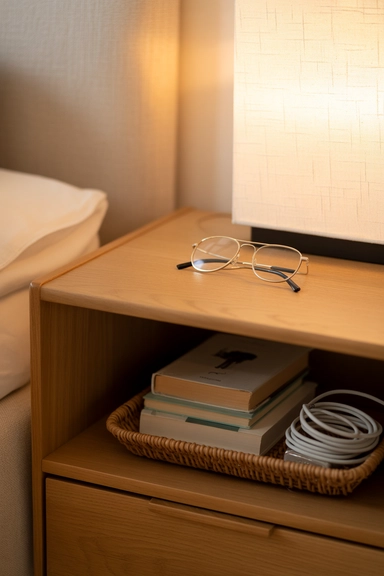
Nightstands tend to collect books, chargers, glasses, and small personal items that slowly crowd the surface. A shallow dollar store bin inside the nightstand drawer or on a lower shelf gathers these items into one contained zone. Instead of stacking objects loosely, everything sits within a boundary that keeps the top surface clear. This helps bedrooms feel calmer and easier to reset each morning.
Keep only nightly essentials inside the bin and move less-used items elsewhere. When the bin fills beyond capacity, it signals that something should be removed rather than adding another container. This limit keeps bedside storage intentional instead of expanding indefinitely. Over time, containing small items prevents them from drifting onto floors or dressers and keeps the sleeping area visually lighter.
15. Craft Supply Containers That Prevent Spread Across Rooms
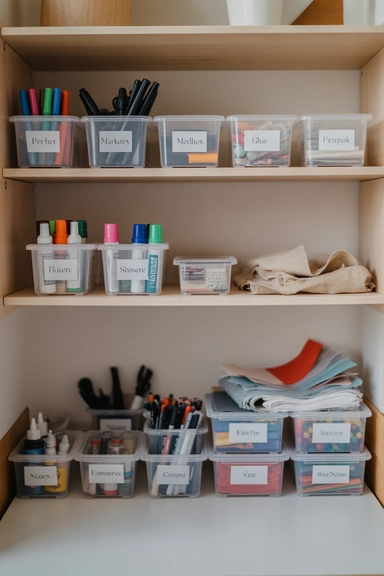
Craft materials often migrate because projects move between tables, couches, and desks. Dollar store containers create a defined home base for these supplies so they don’t scatter across the house. Each container can hold one category — markers, glue, fabric scraps — making it easy to grab what you need and return everything afterward.
Store containers on a single shelf or inside a cabinet so they remain consolidated. Avoid mixing unrelated supplies just to fill space; clear categories keep the system usable long term. When craft materials stay grouped, cleanup becomes quicker and surfaces remain available for other activities. In homes where rooms serve multiple purposes, contained craft storage prevents creative projects from overtaking shared spaces.
16. Freezer Bins That Keep Food Visible and Usable
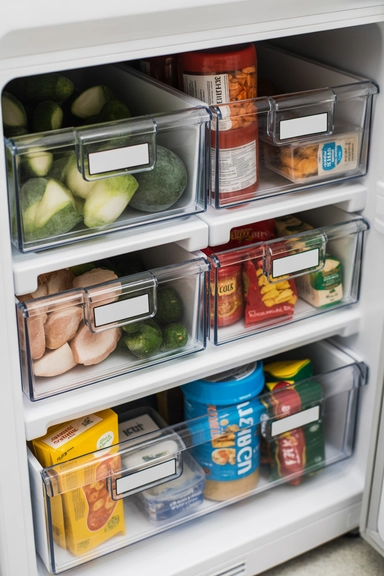
Freezers tend to become crowded because items stack unevenly and disappear beneath newer groceries. A set of narrow dollar store bins creates rows that keep frozen foods grouped by type. Instead of digging through layers of packaging, you pull forward a single bin and see everything inside at once. This reduces wasted food and prevents overbuying because what you already have stays visible.
Place frequently used items toward the front and longer-term storage toward the back. Avoid overfilling bins so packages remain easy to sort through. When groceries come home, return items to the same bin rather than stacking them loosely. Over time, this simple structure keeps the freezer predictable and easier to manage, especially in smaller kitchens where storage space is limited.
17. Car Trunk Storage Bins That Prevent Everyday Mess
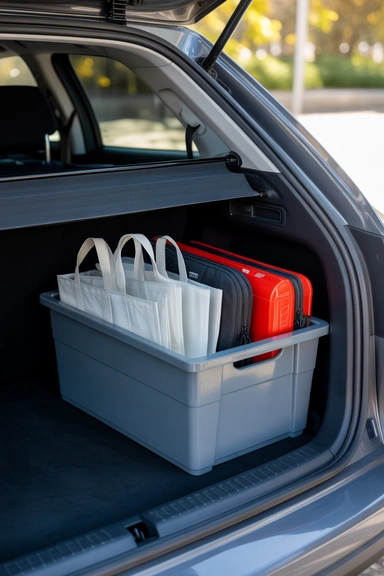
Car trunks often collect reusable bags, tools, sports gear, and loose items that shift during driving. A durable dollar store storage bin keeps these essentials contained so they don’t roll around or get buried under groceries. When everything lives inside one container, the trunk stays usable instead of becoming a clutter zone.
Choose a bin that fits snugly against one side of the trunk so it doesn’t slide. Keep only daily-use items inside and remove seasonal gear when it’s no longer needed. This prevents the bin from becoming overloaded. Over time, contained trunk storage makes errands easier because essentials are always in the same place and easy to reach.
18. Office Supply Baskets That Keep Desks Clear
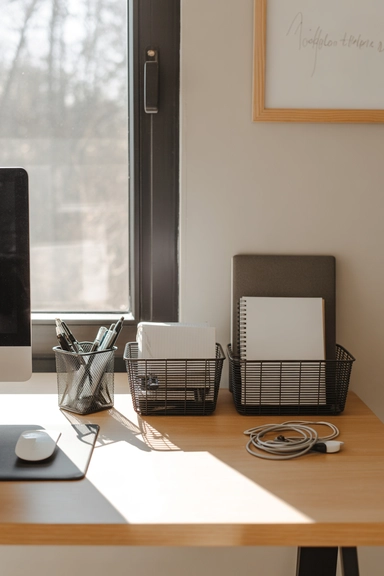
Desks become crowded when small office supplies spread across the surface. A few compact dollar store baskets keep pens, notepads, and charging cables grouped together instead of scattered. Each basket can hold one category, making it easier to maintain a clear workspace. This works well for home offices or shared work areas where visual clutter affects focus.
Place baskets within reach but not directly in the center of the desk to preserve open workspace. When supplies return to the same container after use, the desk resets quickly without a full cleanup. Over time, defined storage keeps the work area functional and prevents small items from migrating into drawers or onto nearby surfaces.
19. Bathroom Cabinet Bins That Separate Daily and Backup Items
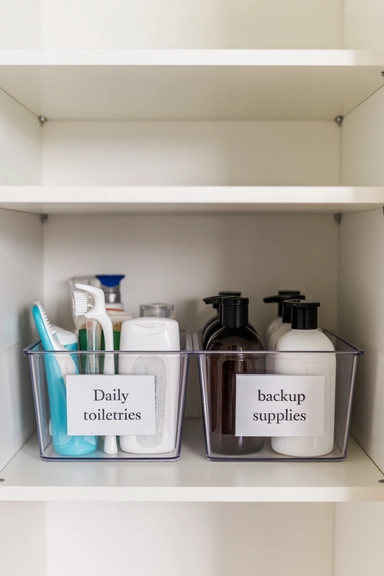
Bathroom cabinets often become overcrowded because daily-use products mix with backups and rarely used items. Using a few dollar store bins to separate these categories keeps the cabinet manageable. One bin can hold everyday toiletries, while another stores extra supplies. This prevents overstocking the main area and keeps frequently used items easy to access.
Place daily-use bins toward the front and backup bins toward the back. When the front bin empties, refill it from the backup instead of adding new purchases. This system maintains order without constant rearranging. Over time, separating categories keeps cabinets from becoming cluttered and helps maintain a predictable routine.
20. Open Shelf Baskets That Reduce Visual Clutter
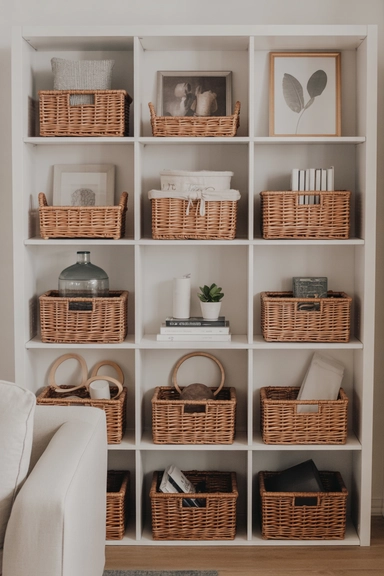
Open shelving looks appealing but quickly becomes messy when items are stored loosely. Dollar store baskets create boundaries that keep shelves visually calm while still allowing easy access. Instead of stacking objects directly on the shelf, each basket holds a category and prevents items from spreading outward.
Choose baskets that match in size or color so the shelf feels intentional rather than crowded. Keep heavier items on lower shelves and lighter ones above for balance. When baskets remain consistent across the shelf, the space looks organized even as contents change. Over time, contained open shelves stay easier to maintain and don’t require constant styling to look tidy.
21. Seasonal Storage Bins That Prevent Overflow
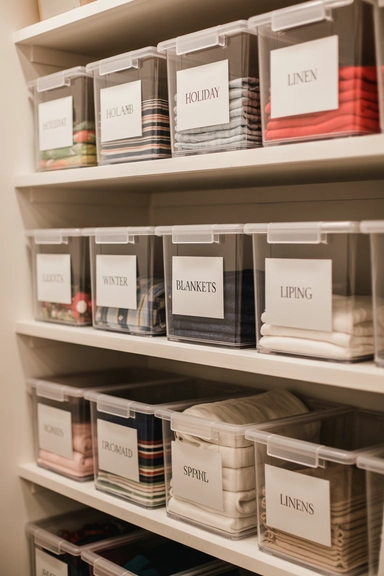
Seasonal items like decorations, extra linens, or weather-specific gear can quickly overwhelm everyday storage areas. Assigning them to labeled dollar store bins keeps them contained until needed. Instead of mixing seasonal items with daily supplies, they live in one defined zone that can be moved or stored out of the way.
Store these bins on higher shelves or in less-used areas so they don’t interfere with daily routines. When the season changes, swap the bins rather than adding more storage. This keeps total storage volume stable and prevents overflow. Over time, seasonal containment helps maintain order across the home without expanding clutter into everyday spaces.
22. Multi-Room Catch-All Baskets That Keep Clutter From Spreading
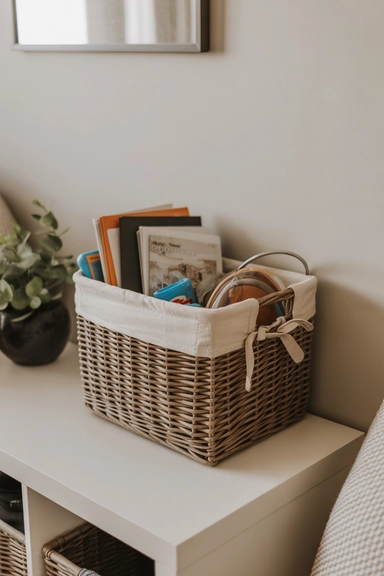
Some items don’t belong to one specific room and tend to migrate throughout the house. A designated catch-all basket placed in a central area keeps these items contained until they can be returned to their proper location. Instead of leaving objects on random surfaces, everything collects in one place that’s easy to sort at the end of the day.
Keep the basket small enough to encourage regular clearing. Once it fills, return items to their homes rather than adding another container. This daily reset prevents clutter from spreading across rooms. Over time, a simple catch-all basket helps maintain order because stray items have fewer opportunities to accumulate throughout the house.
Conclusion
The most effective dollar store storage ideas for home don’t rely on buying more containers—they rely on using a few simple ones with intention. When each bin, basket, or tray holds a clear category and stays near the point of use, clutter has fewer places to gather. Over time, consistent placement and small daily resets keep rooms manageable without constant reorganization. Budget storage works best when it supports routine rather than fighting it.