
Introduction
Kitchen cabinets often appear full long before they are truly used efficiently. The issue is rarely cabinet size, but storage structure that fails to support how items are accessed, returned, and grouped. Smart kitchen cabinet storage ideas focus on improving visibility, vertical use, and logical placement rather than adding more cabinetry. When shelves are planned intentionally, daily cooking becomes smoother, counters stay clearer, and cabinets stop becoming clutter traps. This article explores practical, design-led storage strategies that help every shelf work harder, keep supplies easy to find, and maintain long-term order in busy kitchens.
If you’re also improving full-kitchen organization, these 25 Deep Kitchen Cabinet Organization Ideas That Actually Work connect naturally with the cabinet strategies below.
1. Kitchen Cabinet Storage Ideas That Start With Category Grouping
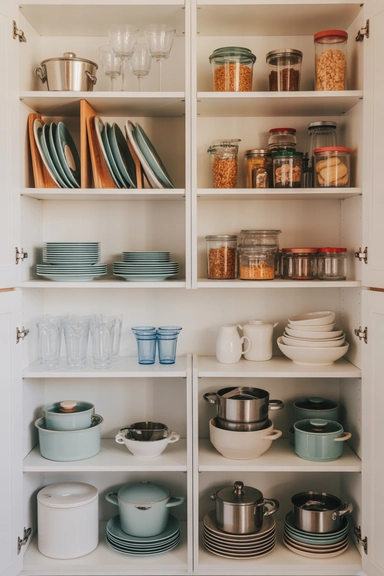
Cabinet chaos usually begins when unrelated items share the same shelf. Plates mixed with pantry goods or cookware stacked beside cleaning supplies creates confusion and slows retrieval. Grouping items by function establishes immediate clarity. Dishware, dry goods, cookware, and food storage containers each deserve dedicated zones.
Once grouping is defined, shelves become easier to maintain because items always return to their category. This reduces stacking, prevents random overflow, and makes inventory visible at a glance. Category grouping is the foundation that allows every other cabinet storage solution to function effectively.
2. Vertical Dividers for Flat and Tall Items
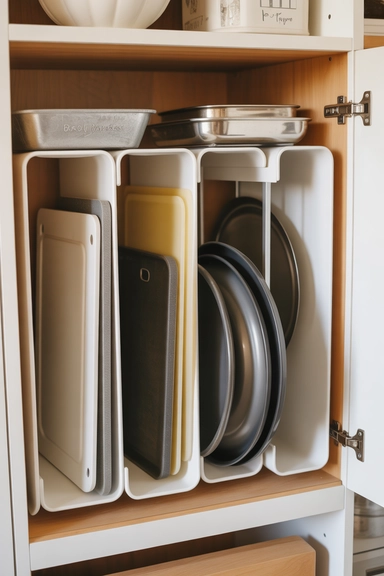
Flat kitchen items such as baking sheets, cutting boards, trays, and pan lids often waste shelf space when stacked horizontally. Vertical dividers turn these into upright, separated sections that prevent unstable piles and difficult retrieval.
This approach also improves visibility. Instead of pulling out stacks to reach one item, everything stays accessible from the front. Vertical dividers maximize shelf depth, protect cookware from scratches, and eliminate one of the most common sources of cabinet disorder.
3. Adjustable Shelving That Eliminates Wasted Space
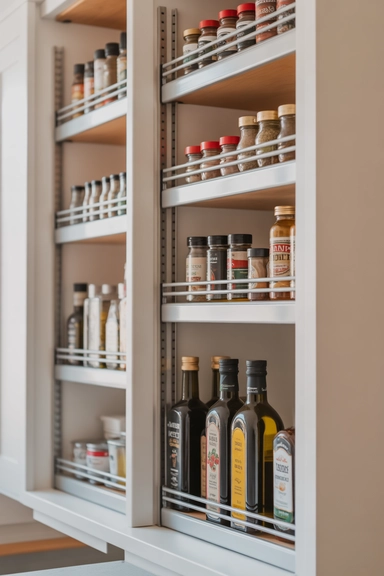
Fixed shelves force items to fit awkwardly, leaving unused air gaps or encouraging sideways stacking. Adjustable shelving allows heights to shift as storage needs change. Tall bottles, short jars, and stackable containers can each sit on properly sized levels.
When shelves adapt to contents, every inch becomes usable. This prevents overflow into neighboring cabinets and stops items from migrating to countertops. Adjustable shelving keeps cabinets efficient long term, even as kitchen inventory evolves.
4. Pull-Out Shelves That Improve Deep Cabinet Access
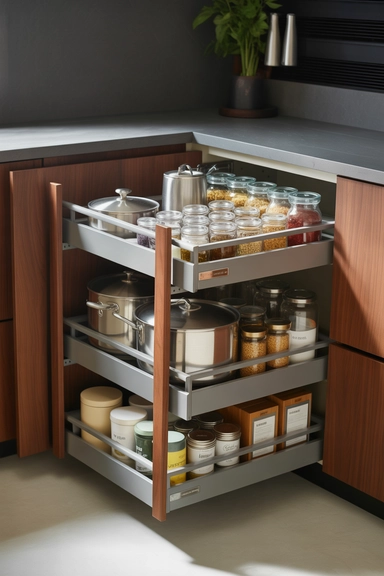
Deep cabinets hide clutter at the back where items become forgotten. Pull-out shelves solve this by sliding forward, bringing everything into full view. Pots, pantry containers, and small appliances become reachable without unloading front items.
Easy access encourages proper item return after use. When retrieval feels effortless, supplies are less likely to be left out. Pull-out systems convert difficult cabinet depths into productive storage that stays organized naturally.
5. Clear Containers That Keep Pantry Goods Visible
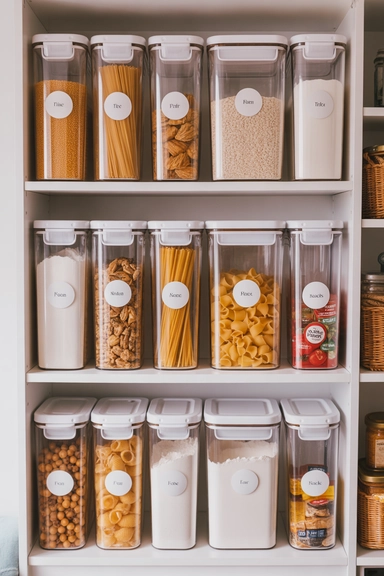
Inconsistent packaging creates visual noise and unstable stacks. Clear containers introduce uniformity while keeping contents visible. Dry goods, snacks, baking ingredients, and grains remain easy to identify and monitor.
This reduces duplicate buying and prevents half-used packages from hiding behind others. Clear containers also stack cleanly, improving vertical shelf use. Visibility is one of the simplest ways to maintain cabinet order without constant reorganization.
6. Door-Back Cabinet Storage That Adds Hidden Capacity
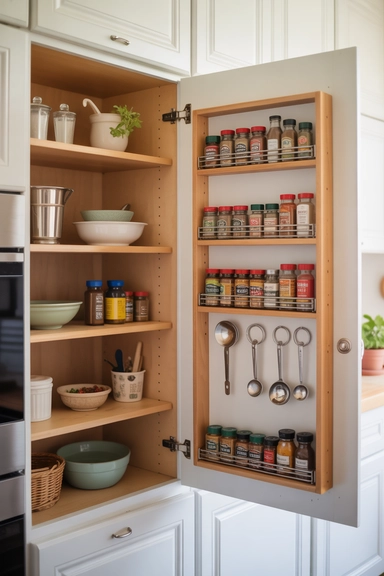
Cabinet doors offer valuable storage space that is often ignored. Slim racks, adhesive hooks, or narrow mounted shelves on door backs can hold wraps, spice jars, measuring spoons, or cleaning cloths. This adds new storage without reducing interior shelf space.
Door-back storage keeps frequently used items within easy reach while preventing front-of-shelf overcrowding. When small items move to the door, shelves gain breathing room. This subtle shift makes cabinets feel larger without any renovation or structural change.
7. Tiered Shelf Inserts That Double Shelf Levels
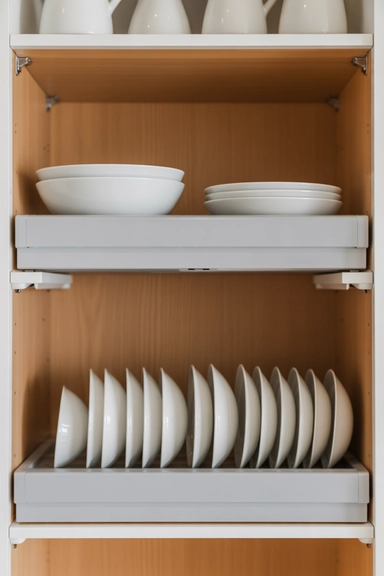
Many cabinets waste vertical airspace above plates, bowls, or jars. Tiered shelf inserts create a second level, allowing more items to occupy the same footprint. This prevents stacking that leads to unstable piles.
Tiered shelving also improves visibility. Items on lower levels are no longer hidden behind taller objects. When everything is easy to see, cabinets stay orderly because retrieval and return become effortless parts of daily routines.
8. Pull-Out Baskets for Pantry-Style Cabinets
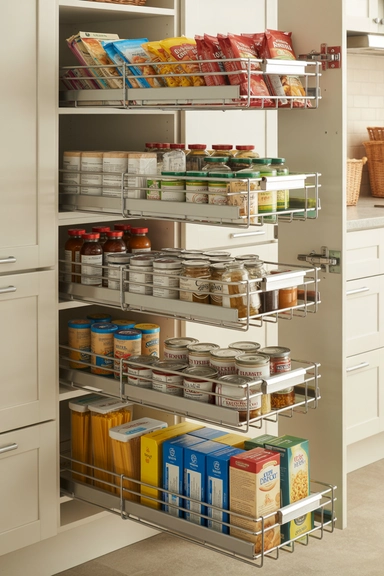
Tall pantry cabinets often become cluttered because items hide behind one another. Pull-out wire baskets create drawer-like access, making every product visible from front to back.
This system prevents forgotten ingredients and expired goods. It also encourages category grouping because each basket can hold a single type of item. Pull-out baskets transform tall cabinets into structured, easily maintained storage zones.
9. Stackable Cookware Storage That Prevents Scratches
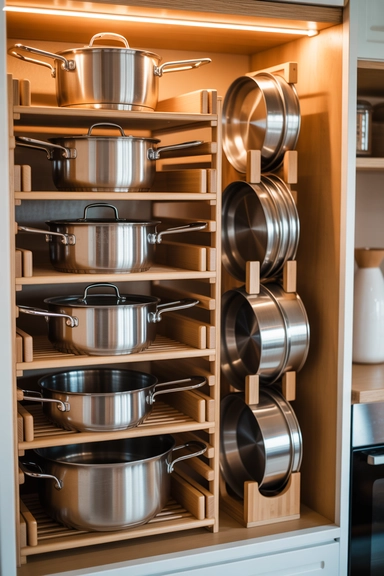
Pots, pans, and lids often become messy when stacked without structure. Stackable cookware organizers create stable layers with defined separation, preventing scratches and noisy shifting.
This keeps heavy items contained and accessible. When cookware is easy to lift and return, it stops migrating onto countertops or stove tops. Stackable systems protect equipment while keeping cabinet interiors neat.
10. Dedicated Container Lids Storage Zones
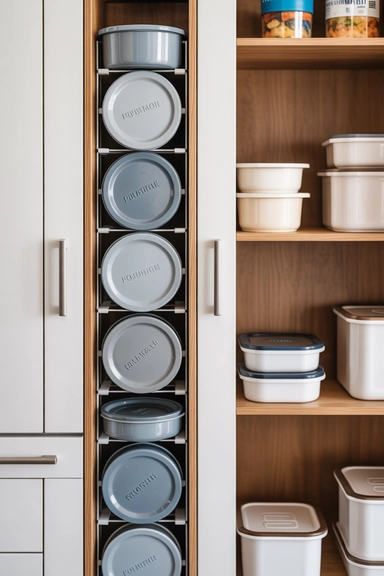
Food container lids are a common cabinet frustration. Without separation, they scatter and mix, making matching containers time-consuming. A dedicated vertical lid organizer or narrow divider system keeps lids upright and sorted.
This prevents messy piles and eliminates repeated searching. When lids have a fixed home, containers return to cabinets complete instead of spreading across drawers or counters.
If you’re also improving whole-kitchen storage efficiency, these 21 Creative Kitchen Cabinet Organization Ideas naturally extend the cabinet solutions above.
11. Under-Shelf Hooks for Mug and Tool Storage
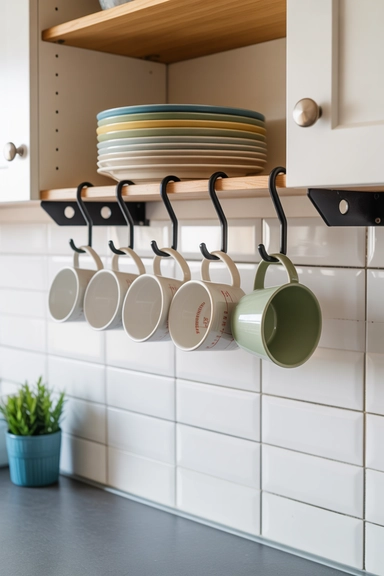
The underside of cabinet shelves is rarely used, yet it offers valuable space for lightweight items. Under-shelf hooks allow mugs, measuring cups, or small tools to hang neatly beneath existing shelves. This frees shelf surfaces for plates and pantry goods without adding new structures. It also keeps frequently used items visible and reachable without opening multiple cabinets.
By moving lightweight items off shelves, cabinet interiors feel less crowded and easier to navigate. Hanging storage also prevents stacking that often leads to chips, scratches, or unstable piles. Under-shelf hooks are a simple addition that quietly expands usable space while keeping cabinet layouts balanced and functional.
12. Lazy Susan Turntables for Corner Cabinet Access
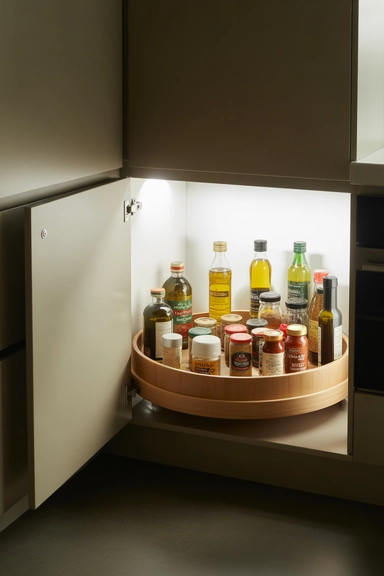
Corner cabinets often become difficult storage zones where items disappear into the back. Lazy Susan turntables solve this by allowing shelves to rotate, bringing every item into view with a simple spin. Oils, condiments, jars, and small containers become reachable without unloading front rows.
This improves visibility and reduces duplicate purchases. When items are easy to access, they are more likely to be returned to their proper place. Turntables transform deep corner cabinets into highly functional storage zones instead of forgotten clutter pockets.
13. Clear Labeling That Maintains Shelf Discipline
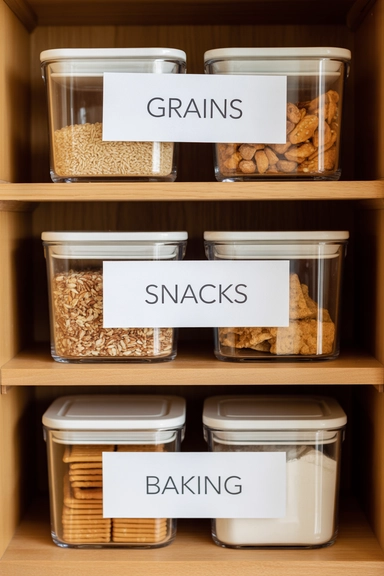
Even well-designed cabinet systems break down when users are unsure where items belong. Clear labeling on shelves, bins, or container fronts removes guesswork and ensures consistent placement. Labels act as silent instructions that keep organization stable over time.
This is especially effective in shared kitchens. When everyone follows the same visual guidance, items stop drifting into random cabinets. Labeling protects the system you build, preventing slow regression back into cluttered, mixed storage.
14. Narrow Slide-Out Spice Racks Inside Cabinets
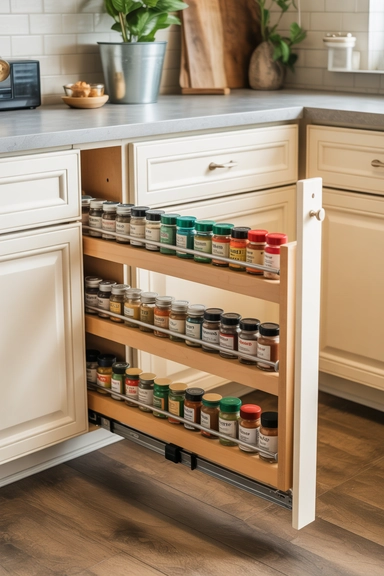
Spices consume cabinet space quickly when stored in scattered jars. Narrow slide-out spice racks use vertical cabinet edges or slim gaps to create dedicated spice zones. Every jar becomes visible, upright, and easy to reach.
This prevents spices from occupying valuable shelf depth meant for larger items. It also keeps cooking faster because ingredients are instantly accessible. Slide-out racks convert overlooked cabinet slivers into high-function storage.
15. Consistent Container Shapes for Stack Efficiency
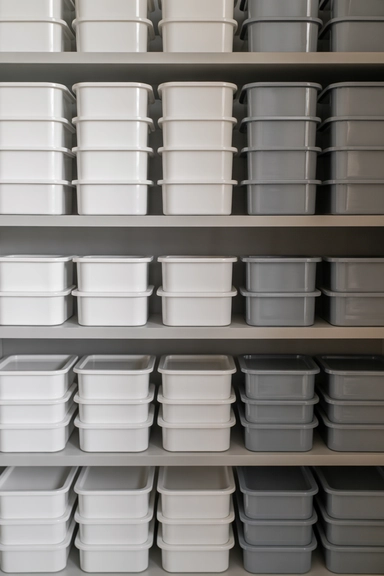
Mixed container shapes create wasted shelf gaps and unstable stacking. Using consistent container sizes and shapes allows vertical stacking that remains secure and visually calm. This works especially well for pantry items, snacks, and baking supplies.
Uniform containers maximize shelf capacity while making cabinets easier to scan. When stacks align cleanly, shelves feel less cluttered even when fully stocked. Consistency in container choice is a subtle but powerful cabinet storage strategy.
16. Pull-Out Trash and Recycling Cabinet Systems
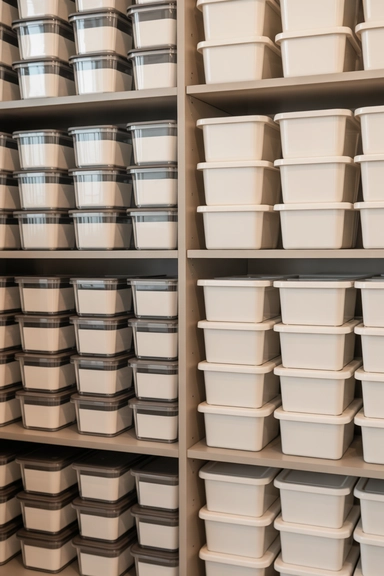
Waste storage often disrupts cabinet efficiency because bins occupy floor space or sit loosely inside cupboards. Pull-out trash and recycling systems solve this by integrating bins into a sliding cabinet frame. This keeps waste concealed, maintains clear walking space, and prevents visual clutter from exposed containers. When bins glide out smoothly, disposal becomes a natural part of cooking rather than a separate action that interrupts workflow.
A structured waste cabinet also improves hygiene and organization. Bags fit correctly, spills are contained, and sorting recycling becomes easier. When waste handling is built into cabinetry, the kitchen feels cleaner and more intentional. This single upgrade prevents floor-level clutter and ensures lower cabinets contribute to function rather than becoming chaotic storage zones.
17. Slide-Out Appliance Shelves for Heavy Equipment
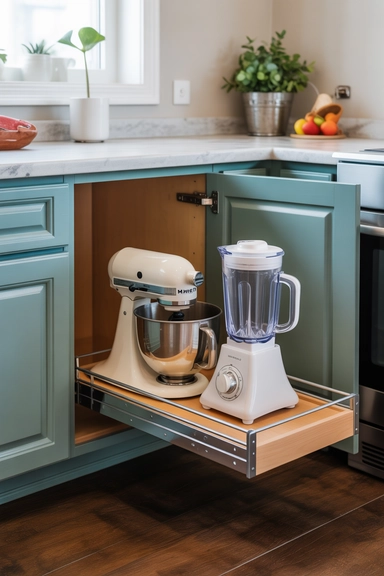
Small appliances often remain on countertops because lifting them in and out of cabinets is inconvenient. Slide-out appliance shelves eliminate this problem by allowing mixers, blenders, or air fryers to roll forward smoothly when needed. This preserves counter space while keeping appliances accessible without strain or awkward lifting.
When appliances return to hidden storage effortlessly, counters remain clear and visually calm. Cabinets also avoid becoming overstuffed with stacked heavy items. Slide-out shelves extend the life of both cabinetry and appliances by reducing impact and friction. This solution turns bulky equipment into organized, retrievable assets rather than permanent countertop clutter.
18. Interior Cabinet Lighting for Full Visibility
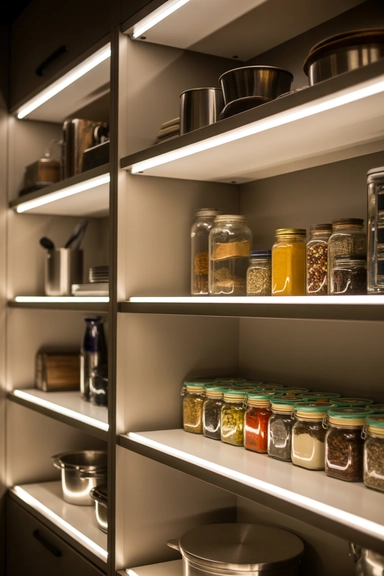
Poor cabinet visibility leads to forgotten items, duplicate purchases, and cluttered shelves. Interior lighting strips or motion-activated puck lights illuminate cabinet contents, making every item visible even in deep or corner spaces. When shelves are properly lit, organization becomes easier to maintain because nothing disappears into shadowed areas.
Improved visibility changes user behavior. People return items to correct spots because they can clearly see where space exists. It also speeds up cooking and restocking routines. Cabinet lighting is not decorative; it is a functional upgrade that directly prevents disorder by keeping storage transparent and easy to manage.
19. Shallow Drawer Inserts for Precision Tool Storage
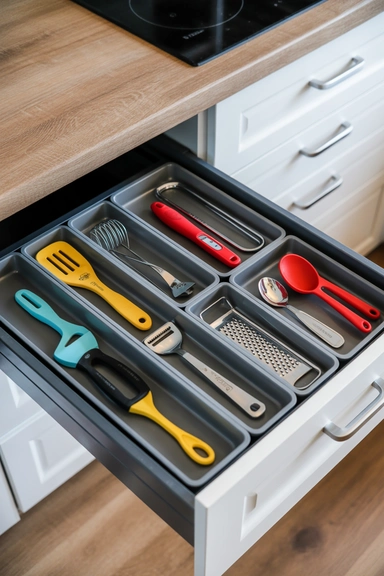
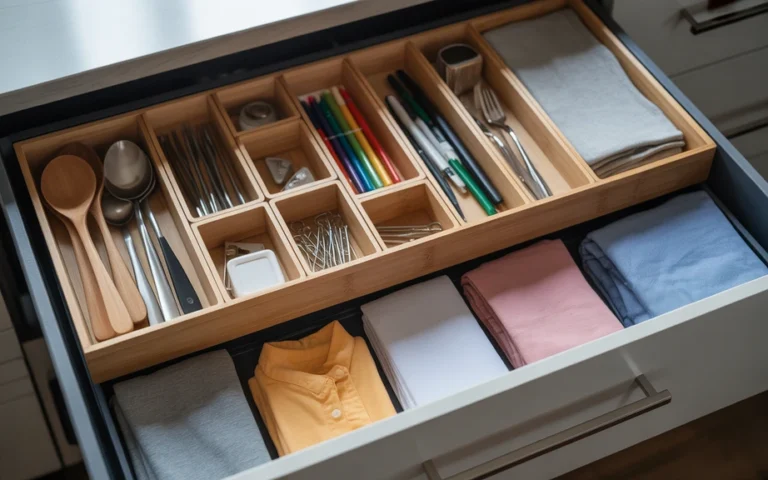
Small kitchen tools create persistent drawer chaos when stored loosely in deep spaces. Shallow drawer inserts organize peelers, measuring spoons, graters, thermometers, and specialty utensils into single-layer layouts. Every tool remains visible, reachable, and separated, preventing overlap and tangling.
This structure accelerates meal preparation and cleanup because tools no longer require searching. It also stops minor items from migrating into unrelated cabinets or counters. Precision inserts ensure drawers contribute to overall cabinet efficiency instead of becoming catch-all clutter zones that undo larger organization efforts.
20. Over-Shelf Hanging Baskets for Extra Capacity
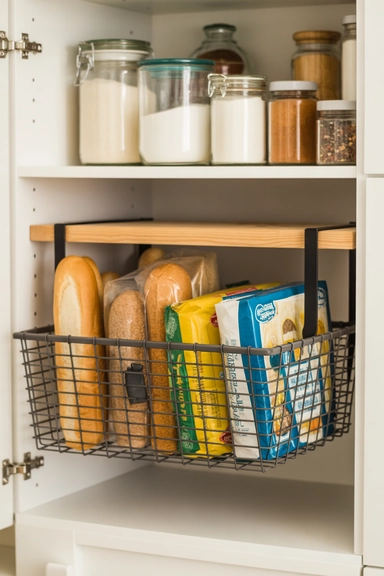
Many cabinet shelves waste vertical airspace above stored items. Over-shelf hanging baskets attach beneath existing shelves to hold wraps, napkins, bread, or lightweight pantry goods. This instantly increases storage capacity without permanent installation or cabinet modification.
These baskets prevent shelf overcrowding by moving soft or bulky items into secondary layers. They also keep frequently used products easy to grab while maintaining tidy stacks on primary shelves. Over-shelf baskets stretch cabinet space intelligently, allowing every shelf to work at full potential instead of leaving unused vertical gaps.
21. Cabinet Zoning for Daily, Weekly, and Occasional Use
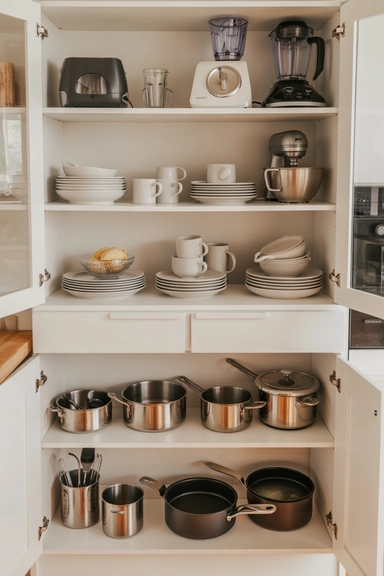
Cabinet space works best when organized by how often items are used. Daily essentials such as plates, glasses, and primary cookware should occupy front and mid-level shelves where access is effortless. Weekly-use items like specialty pans or bulk pantry containers belong slightly higher or deeper, while occasional-use equipment can move to upper or lower zones. This hierarchy ensures prime cabinet space is reserved for what truly supports everyday routines.
When zoning reflects real behavior, cabinets stop becoming overcrowded. Items return naturally to their intended areas because retrieval feels intuitive. This reduces counter overflow, prevents constant reshuffling, and keeps shelves orderly even during busy cooking days. Functional zoning transforms cabinets from storage boxes into working systems that support kitchen flow.
22. Anti-Slip Shelf Liners for Stable Storage
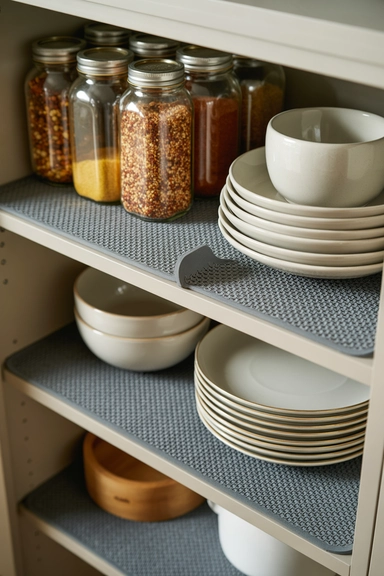
Cabinet organization slowly breaks down when items slide during opening and closing. Anti-slip shelf liners solve this subtle but persistent problem by keeping dishes, jars, and containers firmly in place. Stacks remain aligned, reducing noise, shifting, and accidental tipping that leads to gradual clutter.
Stable shelves also protect fragile items from chips and cracks. When everything stays where it was placed, cabinets maintain their original structure longer without frequent realignment. Shelf liners may seem minor, but they quietly preserve the integrity of every other storage system inside the cabinet.
23. Built-In Plate and Bowl Racks
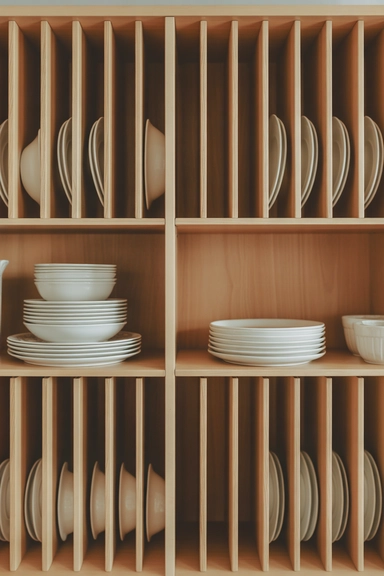
Stacking plates and bowls in tall piles wastes vertical shelf potential and creates unstable retrieval. Built-in racks separate dishware vertically, allowing more items to occupy the same shelf footprint without weight pressure or shifting. Each plate or bowl slides out independently, improving accessibility and protecting edges from damage.
This system also enhances airflow, allowing dishes to dry properly if stored directly after washing. With defined dish positions, cabinets remain visually tidy and easy to maintain. Built-in racks turn dish storage into a structured zone rather than a repetitive stacking task.
24. Narrow Side-Cabinet Pull Outs
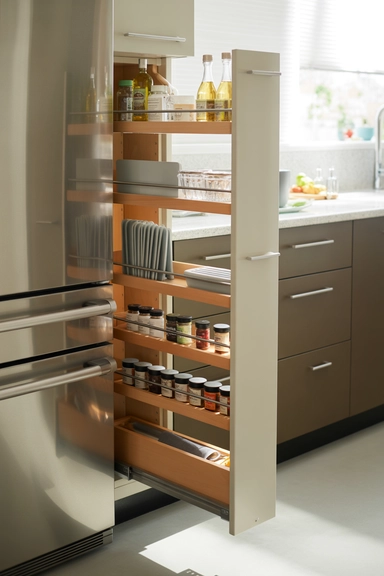
Slim cabinet gaps beside ovens, refrigerators, or sink units are often lost space. Narrow pull-out cabinets transform these slim voids into high-function storage for oils, spices, baking trays, or cleaning bottles. Despite their small width, they add significant capacity because they utilize full vertical height.
Side pull-outs also improve kitchen efficiency by placing frequently used items near relevant work zones. They prevent deep cabinets from becoming overstuffed and ensure no cabinet space is wasted. These narrow units are proof that even the smallest cabinet inches can contribute meaningfully to organization.
25. Simple Maintenance Rules That Keep Cabinets Working
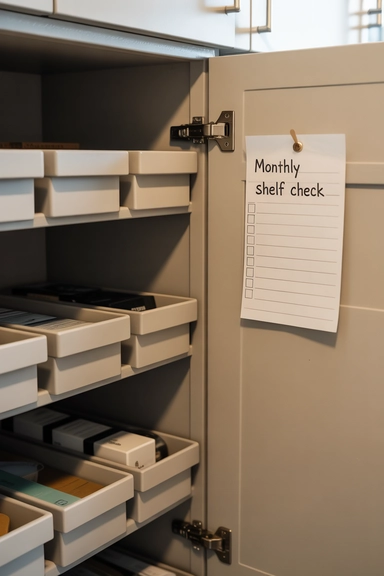
Even the best cabinet systems fail without basic maintenance habits. Simple rules such as returning items immediately after use, keeping categories intact, and doing a quick monthly shelf review prevent slow decline into disorder. These habits take minutes but protect hours of initial organization effort.
Consistency is the true secret to long-term cabinet success. When maintenance feels light and automatic, systems remain stable without full reorganizations. Well-maintained cabinets support daily kitchen routines quietly and reliably, making organization feel permanent rather than temporary.
Conclusion
Kitchen cabinet storage ideas succeed when they focus on structure, visibility, and usability instead of adding more furniture. By applying zoning logic, pull-out access, vertical dividers, stable shelving, and simple maintenance habits, every cabinet shelf can perform at its highest potential. The result is not just more space, but smoother daily cooking, clearer counters, and cabinets that remain organized long after the initial setup. Smart cabinet systems do not demand constant effort — they quietly support a functional, clutter-free kitchen every day.