
Introduction
Small kitchens rarely struggle with cabinet space alone. They struggle with appliance buildup. Blenders, air fryers, mixers, and coffee tools slowly take over counters until prep space disappears. The solution isn’t removing appliances. It’s storing them in ways that keep them accessible but visually contained. These kitchen storage ideas for small spaces focus on hidden zones, vertical storage, and structured layouts so small appliances stop competing with daily prep areas. When each appliance has a defined place, counters stay usable and the kitchen feels calmer. For additional space-saving layouts, explore 25 Creative Small Kitchen Storage Ideas to Maximize Your Space.
1. Appliance Garage Cabinets That Visually Reset the Counter
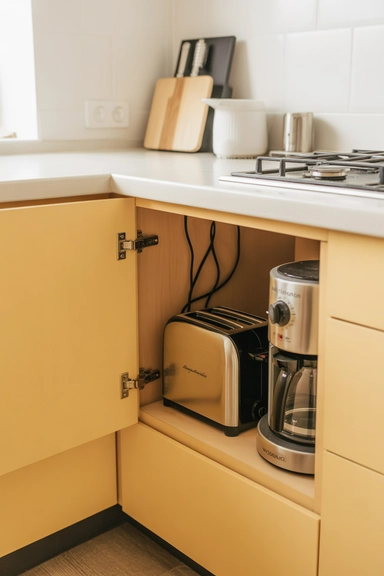
Appliance garages instantly calm a small kitchen because they remove visual noise without removing convenience. A lift-up or sliding cabinet placed along the backsplash can hold the toaster, coffee maker, or blender while still keeping them ready to use. Instead of moving appliances in and out of deep cabinets, they stay plugged in but out of sight. This approach works especially well in narrow kitchens where every inch of counter matters and visual clutter builds quickly.
To keep the garage functional, limit it to appliances used daily. Overfilling the space with occasional tools defeats the purpose and makes it harder to access what you need. Leave breathing room around each machine so cords don’t tangle and surfaces remain easy to wipe down. When appliances return to the same cabinet after use, counters stay clear longer and the kitchen feels more organized overall.
2. Pull-Out Appliance Shelves That Reduce Heavy Lifting
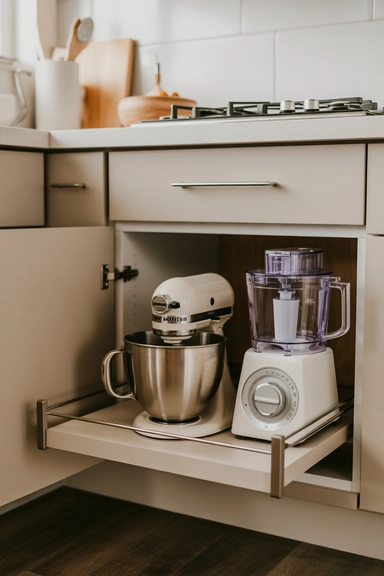
Heavy appliances often stay on counters simply because lifting them in and out of cabinets feels inconvenient. A pull-out shelf inside a base cabinet solves this problem by allowing the appliance to slide forward for use and tuck away afterward. Stand mixers, air fryers, and food processors can live in one contained area without occupying valuable prep space. This type of storage supports efficient workflow while keeping surfaces open.
Each pull-out should have a single purpose. One appliance per shelf prevents stacking and keeps cords from tangling. Install the shelf at a comfortable height so machines are easy to use without bending. When heavy tools have a dedicated sliding home, they’re far less likely to sit out permanently. Over time, this keeps the kitchen looking calmer and more intentional.
3. Vertical Appliance Pantry Storage That Uses Height Instead of Width
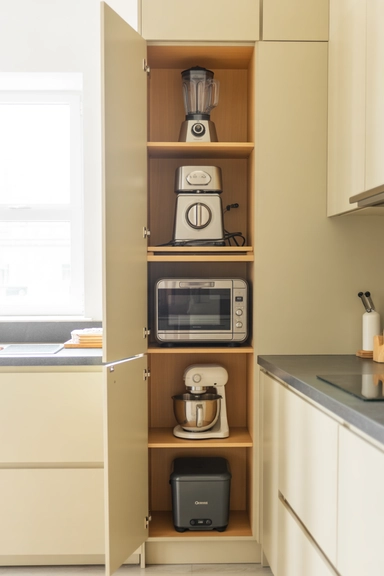
A tall pantry cabinet can hold multiple appliances stacked vertically, freeing up both counter and base cabinet space. Lighter machines can sit on upper shelves while heavier ones stay at waist height for easy access. This layout works particularly well in apartment kitchens where horizontal storage is limited. Vertical zones keep appliances visible but contained, preventing them from spreading across multiple surfaces.
Group appliances by function to keep the system intuitive. Baking tools on one shelf, blending tools on another. Avoid stacking machines directly on top of each other because that slows down access and encourages leaving items out. When appliances live in a single vertical pantry, the rest of the kitchen becomes easier to maintain and counters stay open for actual cooking.
4. Wall-Mounted Shelving for Lightweight Daily Appliances
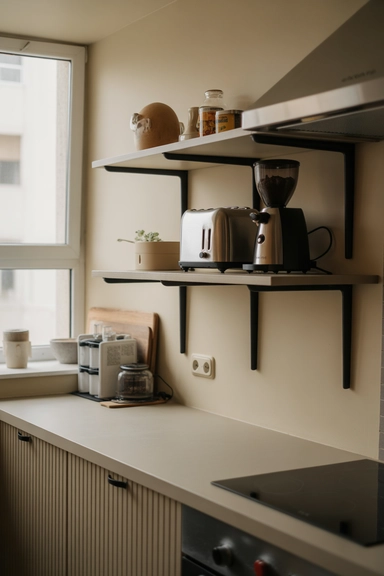
Wall shelves can hold smaller appliances like toasters or coffee grinders while keeping counters open for prep. Installing shelves just above the backsplash creates a reachable storage zone without taking up floor space. This approach works especially well in small kitchens without enough cabinets. Moving lightweight machines upward reduces surface clutter and helps maintain a cleaner layout.
Limit the shelf to one or two appliances so it doesn’t look overloaded. Leave visible gaps around each item to maintain a sense of space. When shelves are used thoughtfully, they support both storage and display without turning into clutter zones. A balanced wall shelf setup keeps essentials accessible while preserving the counter for cooking tasks.
5. Appliance Drawers for Compact Kitchen Tools
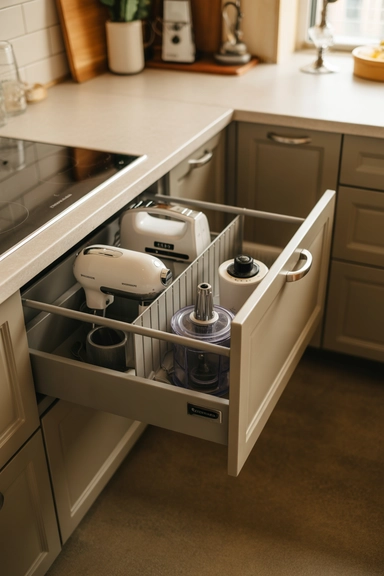
Deep drawers inside base cabinets can store smaller appliances like hand mixers, mini choppers, or immersion blenders. Drawer inserts help keep cords and attachments organized so everything stays in place. This keeps compact appliances within reach while preventing them from taking over counter space. Drawer storage works especially well in kitchens where upper cabinets are limited.
Assign each drawer a category and stick to it. Mixing unrelated tools leads to clutter returning quickly. Leave a little extra space so appliances slide in and out easily. When small machines have a dedicated drawer, they’re less likely to sit out between uses. This keeps surfaces cleaner and the kitchen easier to maintain.
You May Also Like
If small appliances are taking over your counters, these guides help organize the rest of the kitchen so storage works together instead of competing for space:
- 22 Kitchen Counter Storage Ideas That Keep Surfaces Clear
- 23 Kitchen Storage Hacks That Make Every Inch Work Harder
- 25 Creative Small Kitchen Storage Ideas to Maximize Your Space
6. Rolling Appliance Carts That Shift With Your Workflow
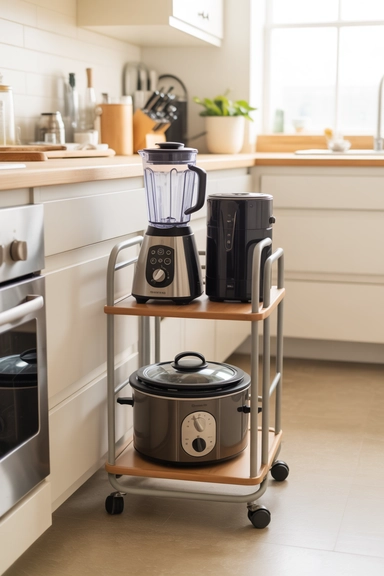
A slim rolling cart can absorb appliance overflow without permanently occupying counter space. Position it beside the refrigerator or at the end of a cabinet run so it stays close but not in the way. Coffee makers, slow cookers, or blenders can live on the cart and roll forward when needed. This setup keeps bulky machines off the counter while still allowing quick access during busy cooking routines.
Keep the cart organized by level so it doesn’t become a clutter zone. Daily-use appliances on the top, occasional ones below. Avoid stacking multiple machines on one shelf because that slows down retrieval and encourages leaving items out. A controlled rolling cart gives small kitchens flexible storage without sacrificing movement or prep space.
7. Under-Cabinet Lift Shelves for Frequent Use Machines
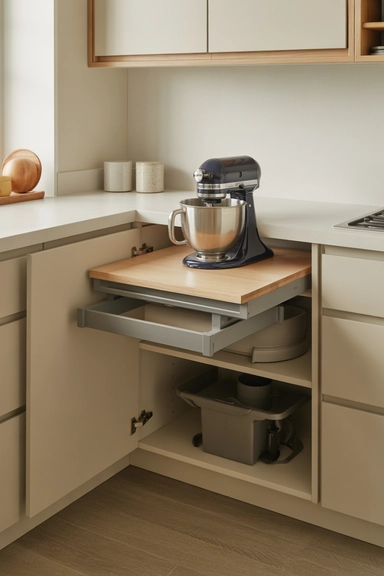
Appliance lift shelves inside lower cabinets allow heavier tools to rise to counter height without being permanently visible. Stand mixers or large processors can lift up smoothly for use and lower back inside the cabinet afterward. This keeps counters clear while still making daily tools convenient. In small kitchens, lift shelves prevent bulky appliances from dominating limited workspace.
Keep attachments stored nearby so everything returns to the same spot after use. Avoid packing the cabinet too tightly, or the lift becomes difficult to operate. When appliances move easily in and out of hidden storage, they’re less likely to stay out. Over time, this maintains a cleaner, calmer counter layout and improves kitchen efficiency.
8. Corner Cabinet Storage for Rarely Used Appliances
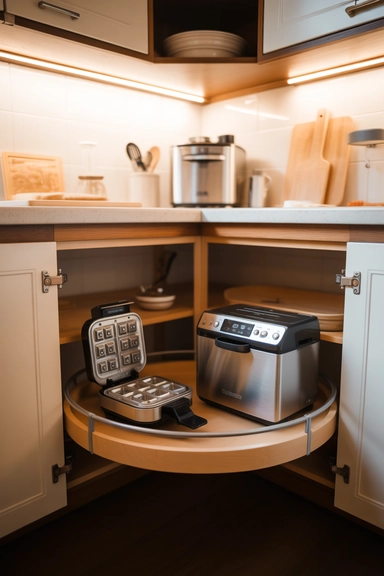
Corner cabinets often become wasted space, but they can store appliances that aren’t used daily. Adding rotating trays or pull-out shelves makes the area accessible. Bread makers, waffle irons, or seasonal appliances can stay here without crowding counters. Using corner storage effectively keeps bulk out of sight while still within reach.
Leave enough room for items to rotate freely so retrieval stays simple. Avoid stacking too many appliances in one corner because that leads to disorganization. When rarely used machines live in this contained zone, the rest of the kitchen feels more open. Smart corner storage helps small kitchens maintain order without needing extra cabinets.
9. Island Storage Zones for Appliance Containment
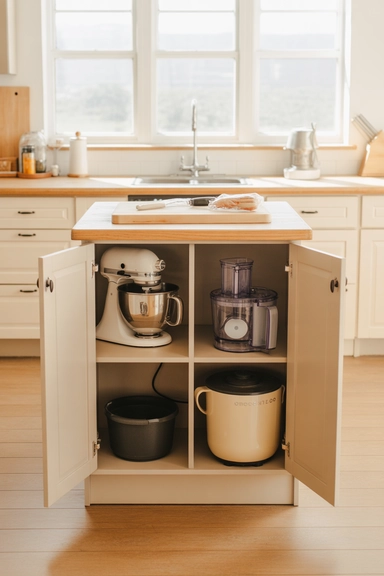
If the kitchen has a small island, it can hold appliances inside drawers or cabinets rather than on top. Coffee tools, mixers, or food processors can live inside the island while the surface stays clear for prep. This keeps bulky machines close to where they’re used without turning the island into clutter. Islands often provide hidden storage that base cabinets alone can’t.
Assign each island drawer or cabinet a specific appliance so storage stays consistent. Avoid mixing unrelated items. When appliances return to the same island zone after use, the kitchen stays more organized. This layout keeps workflow efficient while maintaining open counter space in tight kitchens.
10. Appliance Tower Cabinets That Stack Storage Vertically
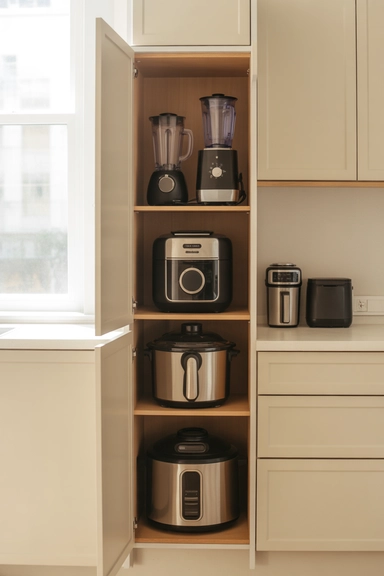
A narrow appliance tower cabinet uses height to store multiple machines in one footprint. Each shelf holds one appliance, preventing stacking and keeping access easy. This setup works well in compact kitchens where horizontal space is limited. Tower storage keeps everything in one place instead of scattered across counters and cabinets.
Position heavier appliances at waist height and lighter ones above. Leave space between shelves so cords and attachments stay manageable. When appliances are stored vertically in a single cabinet, the rest of the kitchen feels less crowded. Tower storage helps small kitchens stay functional without expanding their footprint.
11. Deep Drawer Appliance Storage That Replaces Upper Cabinets
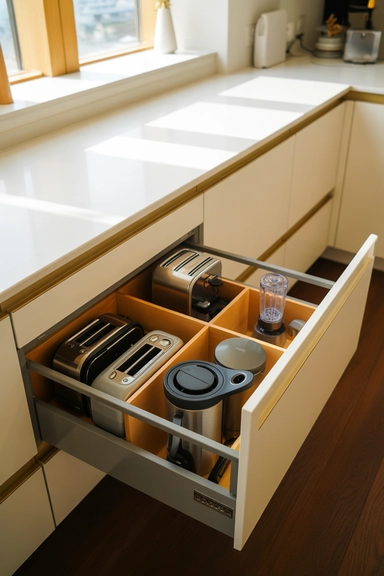
Deep base drawers can take over the role of upper cabinets when storing compact appliances. Instead of stacking machines in tall cupboards, wide drawers allow each appliance to sit flat with room for cords and attachments. Hand mixers, food processors, and compact air fryers become easier to access when they slide out at waist level. This setup keeps counters clear because appliances no longer need to remain visible for convenience. It also improves kitchen workflow since tools can be reached quickly without lifting from overhead cabinets.
The key is internal organization. Drawer inserts or adjustable dividers prevent appliances from shifting and crowding each other. Assign each drawer a category so storage remains predictable. One drawer for blending tools, one for baking tools, one for daily-use appliances. When drawers are structured this way, appliances return to their designated place after use. Over time, this reduces counter buildup and keeps the kitchen feeling intentional rather than cluttered.
12. Narrow Pantry Shelves for Compact Appliance Rows
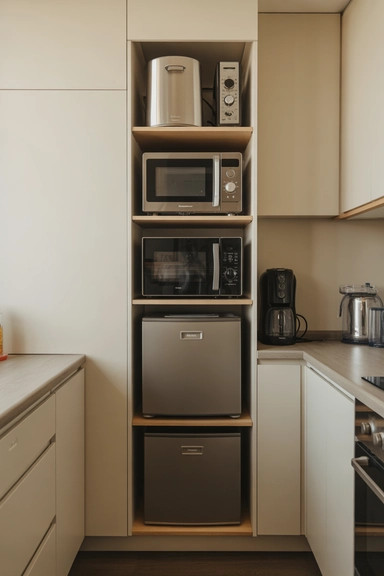
A narrow pantry cabinet can hold appliances in a single vertical column instead of spreading them across multiple surfaces. This works especially well in small kitchens where cabinet width is limited but height is available. Placing each appliance on its own shelf keeps them visible and easy to retrieve without stacking. Coffee machines, blenders, and slow cookers can sit in a tidy row rather than occupying counter corners. This arrangement makes the kitchen feel more open because bulky tools stay contained in one vertical zone.
Spacing matters in narrow storage. Leave a few inches between each appliance so cords and attachments don’t tangle. Avoid filling the pantry completely; some breathing room keeps it functional. When appliances live in a single column, it becomes easier to maintain order. Counters stay clearer because every machine has a predictable place to return after use.
13. Countertop Zones That Limit Visible Appliances
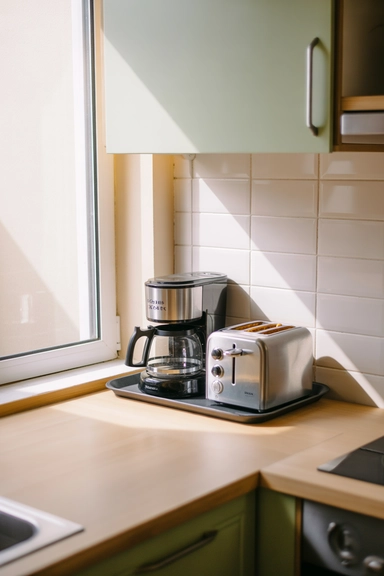
Even in small kitchens, a few appliances may need to stay on the counter. The solution is creating a defined appliance zone instead of scattering machines across the surface. A tray or designated corner can hold the coffee maker and toaster while the rest of the counter remains open. This controlled layout keeps daily tools accessible without allowing them to spread visually across the entire workspace. Defining one appliance zone makes the kitchen feel more structured and easier to maintain.
Keep only essential machines in this area. Everything else should live in cabinets or drawers. Leaving space between appliances prevents the zone from feeling crowded. When tools always return to this single location, the counter stays organized and easier to clean. Over time, a contained appliance zone maintains a calmer visual layout and prevents clutter from building gradually.
14. Hidden Cabinet Doors That Conceal Appliance Stations
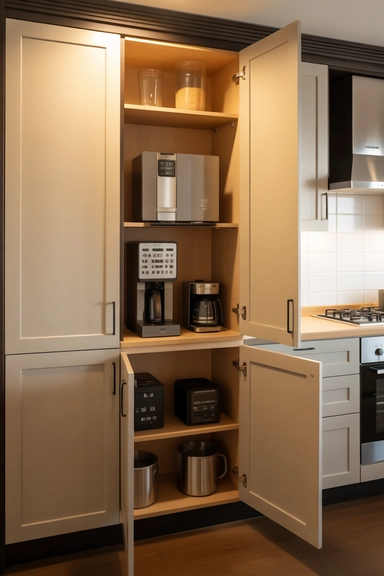
A section of cabinetry can be designed to hide a full appliance station behind doors. Coffee makers, kettles, and small prep tools can live inside a single cabinet while remaining plugged in and ready. When the doors close, the kitchen instantly looks cleaner. This approach is especially effective in small kitchens where visible clutter makes the room feel tighter. Hidden stations allow daily appliances to stay accessible without dominating the visual space.
Inside the cabinet, keep the layout minimal. Leave room around each appliance so it’s easy to use and clean. Avoid stacking machines on top of each other. When everything inside the cabinet has a dedicated position, the station remains functional rather than chaotic. Closing the doors at the end of the day resets the entire kitchen visually and keeps counters clear.
15. Shelf Towers That Group Appliances by Function
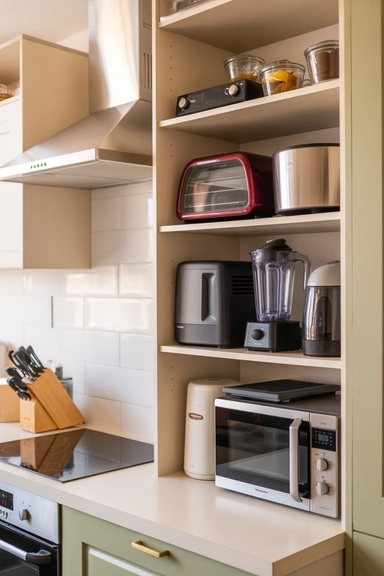
A freestanding shelf tower can hold appliances grouped by use rather than size. One shelf for baking tools, one for blending tools, one for breakfast appliances. This method keeps related items together and prevents them from spreading across the kitchen. Placing the tower near the prep area keeps appliances accessible without placing them on the counter. It also creates a visual boundary that keeps clutter contained.
Keep shelves evenly spaced so appliances fit comfortably. Avoid stacking multiple machines on one shelf. When appliances are grouped by function, it becomes easier to retrieve and return them quickly. This structured approach prevents random buildup on the counter and helps small kitchens stay organized over time.
16. Pull-Out Appliance Cabinets Near the Prep Zone
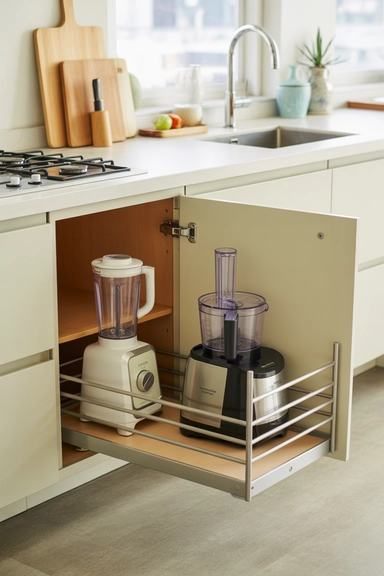
A pull-out cabinet positioned close to the main prep area keeps everyday appliances within reach without leaving them visible. Blenders, food processors, or electric kettles can slide forward when needed and tuck away afterward. This type of storage works especially well in small kitchens where leaving appliances out permanently reduces usable counter space. Keeping machines inside a pull-out cabinet maintains accessibility while preserving a cleaner visual layout.
To keep the cabinet functional, avoid stacking multiple appliances on one shelf. Give each machine its own space so it can be used and returned quickly. Leave extra clearance for cords and attachments so nothing gets tangled. When appliances have a dedicated pull-out location, they stop migrating to the counter after each use. Over time, this creates a more efficient workflow and helps maintain a clutter-free kitchen.
17. Appliance Baskets for Pantry or Cabinet Organization
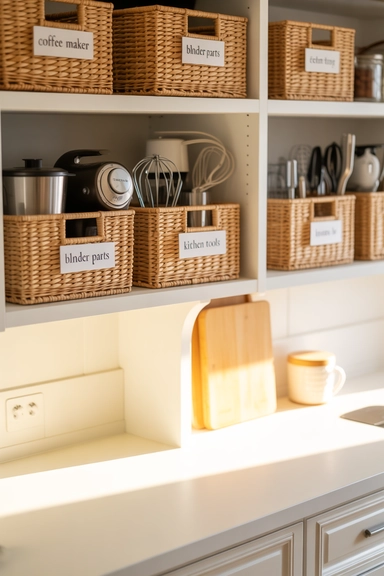
Large baskets inside a pantry or cabinet can hold smaller appliances and their accessories together. Hand mixers, immersion blenders, and compact food processors often come with multiple attachments that create clutter when stored loosely. Grouping them inside labeled baskets keeps everything contained and easier to retrieve. This approach prevents small appliances from being scattered across multiple cabinets or counters.
Choose sturdy baskets that can support weight without bending. Assign one basket per appliance category to maintain order. Avoid overfilling, which makes items difficult to access. When appliances and their attachments stay together, they’re more likely to be returned to the same place after use. This keeps cabinets organized and prevents tools from lingering on the counter between cooking sessions.
18. Under-Shelf Storage for Compact Appliances
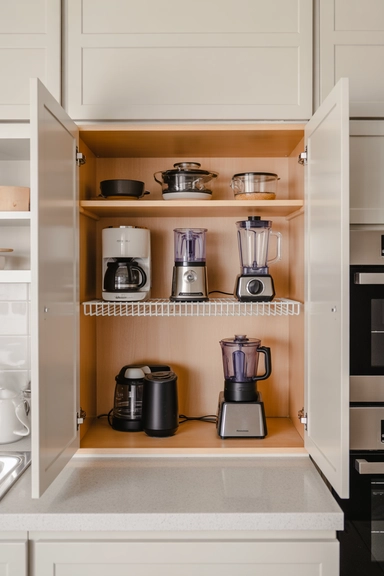
Installing an extra shelf inside an existing cabinet can create a second level for compact appliances. Coffee grinders, small blenders, or handheld tools can sit on the upper level while larger items remain below. This prevents stacking appliances directly on top of each other, which often leads to clutter and frustration. Using vertical cabinet space more efficiently keeps counters clearer.
Spacing is important here. Leave enough height for each appliance so they can be removed easily. Avoid cramming too many tools into one cabinet. When compact appliances have their own shelf space, they remain accessible but out of sight. This small adjustment can significantly reduce counter clutter in tight kitchens.
19. Appliance Storage Inside a Narrow Side Cabinet
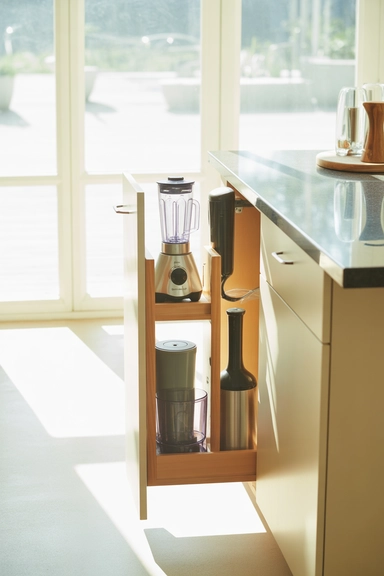
A slim side cabinet near the end of a counter run can hold appliances that don’t fit elsewhere. This narrow storage area works well for taller tools like blenders or stick mixers. Because it sits slightly away from the main prep zone, it keeps bulky items accessible without crowding the workspace. Using narrow cabinets efficiently helps small kitchens store more without expanding outward.
Keep items arranged vertically so each appliance remains easy to reach. Avoid stacking heavy tools on top of each other. When narrow cabinets are used strategically, they add storage without affecting movement through the kitchen. This allows appliances to stay hidden while remaining convenient to access when needed.
20. Appliance Storage Under Open Shelving
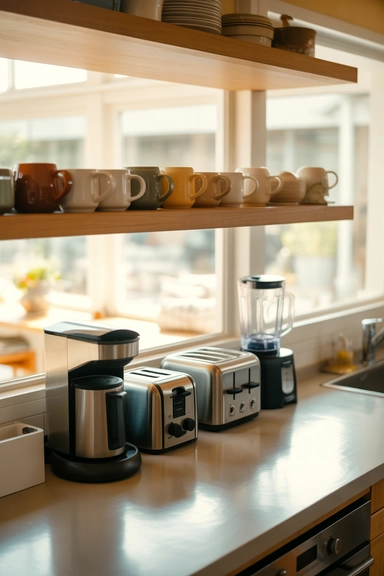
If the kitchen has open shelving above the counter, the space directly beneath can hold appliances in a controlled layout. Position the coffee maker or toaster under the shelf so the vertical line keeps everything contained in one zone. This creates a defined appliance area rather than allowing machines to spread across the entire counter.
Limit the number of appliances in this space to prevent visual overload. Leave empty space around each machine so the area doesn’t feel crowded. When appliances stay grouped under one shelf, the rest of the counter remains open. This layout maintains accessibility while keeping the kitchen visually calmer and more organized.
More Small-Space Kitchen Organization Ideas
Once appliances are hidden and contained, these related ideas help keep cabinets, counters, and pantry zones from filling up again:
- 22 Kitchen Food Container Organization Ideas That Keep Cabinets Tidy
- 23 Brilliant Kitchen Drawer Organizing Ideas You Need to Try
- 22 Open Kitchen Shelving Organization That Reduces Visual Clutter
- 21 Smart Space Saving Kitchen Hacks That Reduce Daily Clutter
21. Appliance Cabinets With Interior Outlets
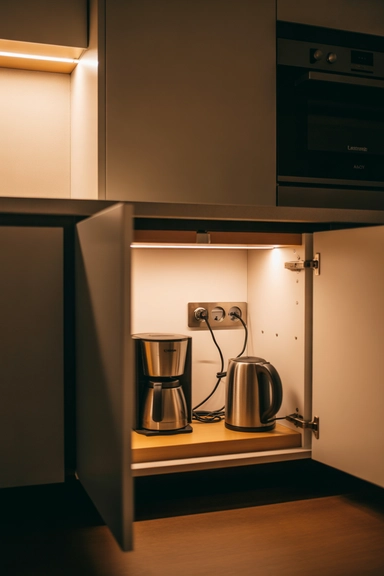
Cabinets fitted with interior outlets allow appliances to stay plugged in while hidden behind doors. Coffee machines, kettles, or blenders can be used inside the cabinet and then closed away afterward. This keeps cords and machines off the counter while maintaining convenience. It also prevents the need to move appliances frequently.
Keep the interior layout simple so each appliance has enough room to operate. Avoid filling the cabinet with rarely used tools. When appliances remain plugged in and ready inside a dedicated cabinet, they’re less likely to be left out after use. This helps small kitchens maintain clear counters and a more streamlined look.
22. Drawer Inserts for Appliance Attachments
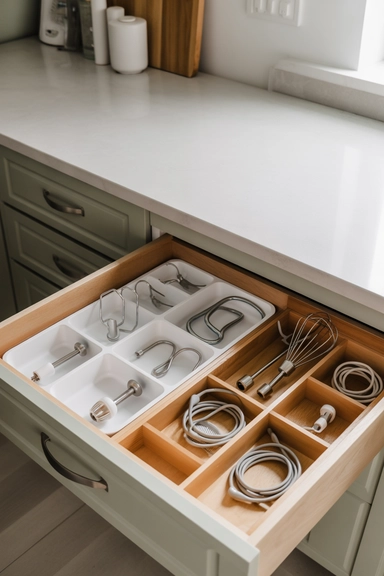
Attachments often create more clutter than the appliances themselves. Dedicated drawer inserts can store blender blades, mixer attachments, and cords neatly. Keeping accessories organized prevents them from spreading across drawers and counters. It also makes it easier to locate everything needed for a specific appliance.
Assign each insert to one appliance category. Avoid mixing different attachments together. When accessories stay organized, the main appliance can be stored separately without confusion. This keeps the kitchen more functional and prevents small parts from being misplaced. Over time, organized drawers reduce clutter and make appliances easier to manage.
23. Minimal Appliance Display With Rotating Storage
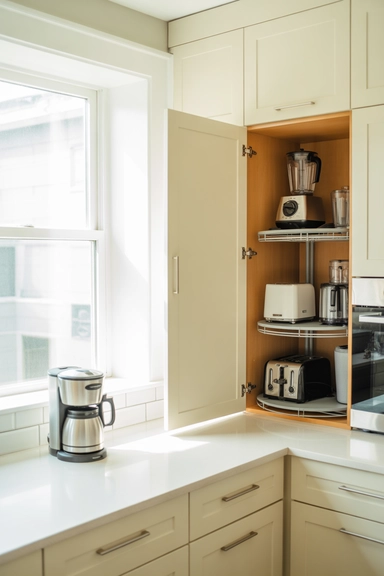
In very small kitchens, only one or two appliances may need to stay on the counter. Choosing which ones remain visible and rotating others into storage keeps the space manageable. A coffee maker and toaster might stay out, while the blender and mixer rotate into cabinets when not in use. This controlled display prevents overcrowding.
Keep the visible appliances grouped in one defined zone so they don’t spread across the surface. Leave space between them to maintain a clean look. Rotating appliances based on frequency of use keeps the kitchen functional without overwhelming the counter. This strategy ensures small kitchens remain efficient and visually calm.
Conclusion
Small kitchens feel cluttered when appliances take over every surface. Creating defined storage zones inside cabinets, drawers, and vertical spaces keeps machines accessible without leaving them out. When each appliance has a consistent place to return after use, counters stay clearer and cooking becomes easier. The most effective appliance storage ideas for small kitchens focus on containment, accessibility, and smart use of height. With the right layout, even compact kitchens can stay organized, functional, and visually calm without sacrificing the tools used every day.