Introduction
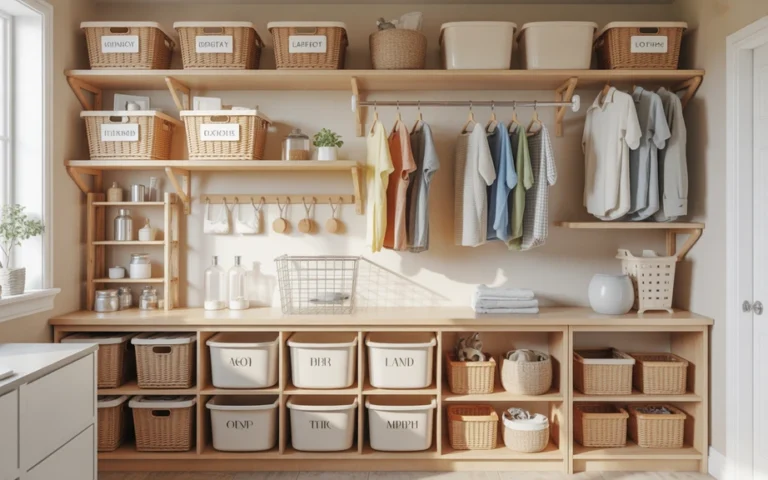
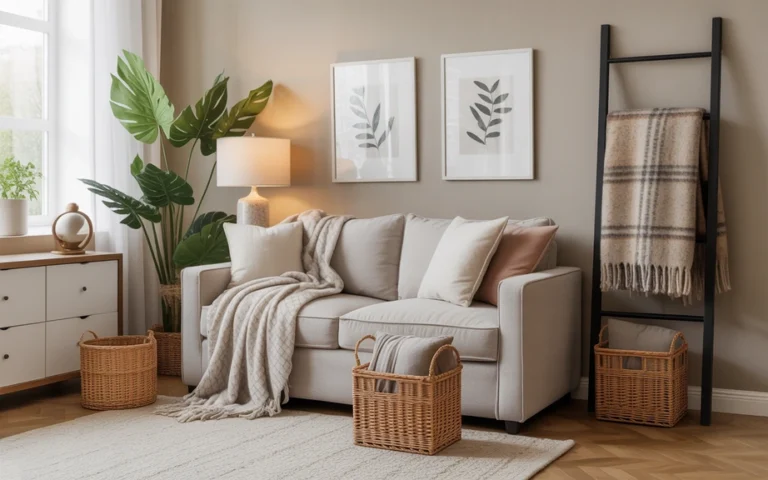
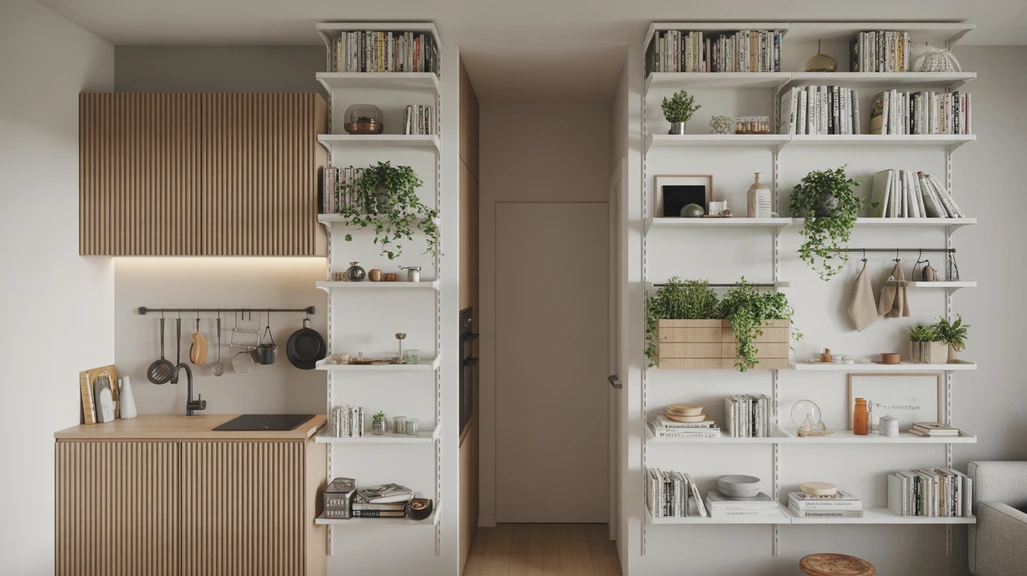
Tight rental spaces demand organization decisions that work harder than decoration alone. When storage is poorly planned, even well-furnished rentals feel crowded, unsettled, and difficult to maintain. The real limitation is rarely square footage; it is visual spillover and inefficient use of existing surfaces. Practical organization hacks for tight rental spaces focus on controlling sightlines, circulation paths, and storage density without permanent changes. When storage supports how a room is actually used rather than how it is styled, the space feels calmer and more intentional. These ideas prioritize flexibility, restraint, and long-term usability over quick fixes.
For spaces that rely on flexible, low-commitment systems, many of these principles also connect closely with small apartment organizing ideas for smart storage, where adaptability and visual restraint matter just as much.
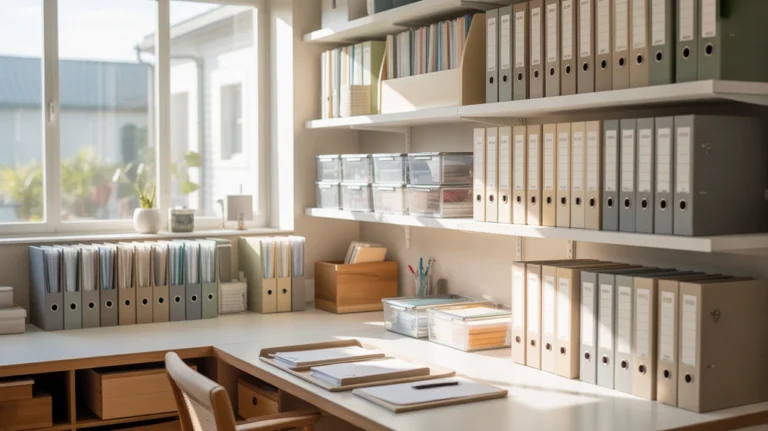
1. Use Vertical Zones Before Expanding Floor Storage
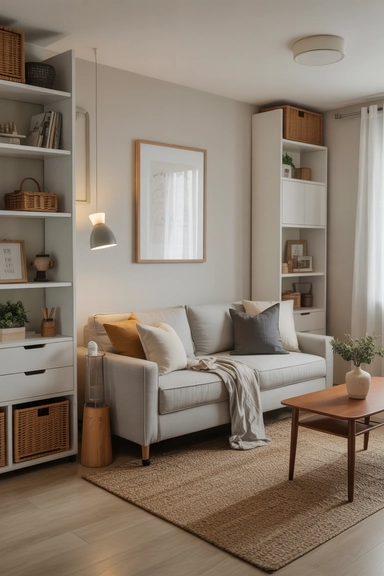
Vertical zones offer one of the most effective ways to organize tight rentals without sacrificing usable space. When storage moves upward, it preserves open floor area and prevents furniture from competing on the same visual plane. Tall shelving, wall-mounted rails, or narrow vertical cabinets pull attention away from crowded floors, helping rooms feel taller and more balanced rather than compressed.
The success of vertical storage depends on visual discipline. Items need to be grouped intentionally and aligned to avoid scattered sightlines. Consistent shelf depths, repeated materials, and restrained spacing prevent vertical areas from becoming visually heavy. When the vertical plane feels ordered, it reduces clutter pressure instead of introducing another layer of distraction.
2. Tiny Rental Organization Hacks That Use Door Surfaces
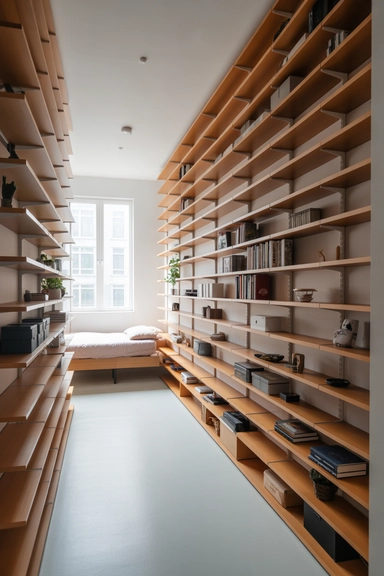
Door surfaces are frequently overlooked, yet they provide storage without affecting circulation or layout. Over-the-door organizers, slim hanging systems, and concealed hooks convert unused planes into functional storage zones. This approach works especially well for cleaning supplies, accessories, pantry overflow, or entryway items that benefit from immediate access.
Door-based storage must remain visually controlled to work long-term. Overloading doors creates movement friction and draws unnecessary attention. Limiting storage to lightweight, visually consistent items allows the door to remain part of the room rather than reading as a utility wall. When door storage stays quiet from a distance, it feels intentional rather than temporary.
3. Build Storage Into Furniture Rather Than Around It
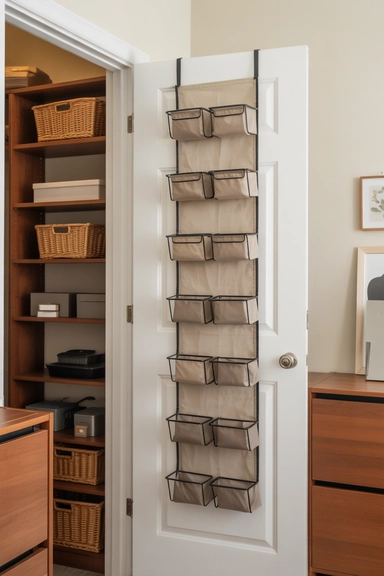
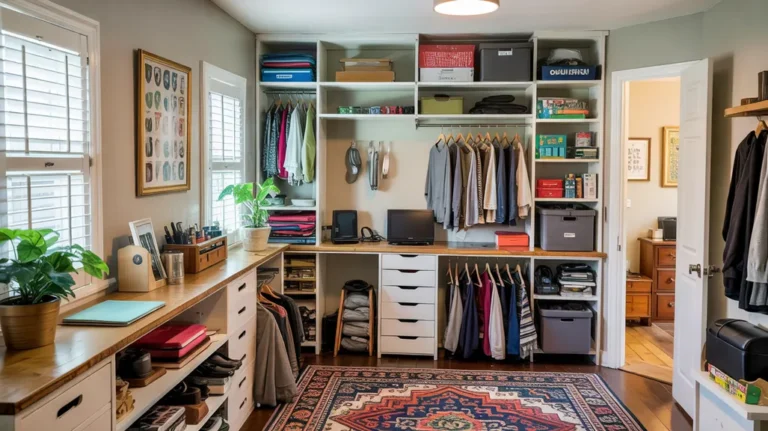
In tight rental spaces, furniture should never serve a single function. Storage-integrated furniture reduces the need for additional units that crowd the room. Beds with concealed drawers, benches with internal compartments, and ottomans that open internally compress function without compressing the space visually.
The most effective pieces hide their utility. Clean silhouettes and concealed openings prevent storage from becoming the focal point. When storage disappears into furniture, the room maintains visual continuity and feels deliberate. This strategy is particularly valuable in rentals where permanent cabinetry is not an option and flexibility matters.
4. Define Clear Storage Zones to Stop Clutter Spread
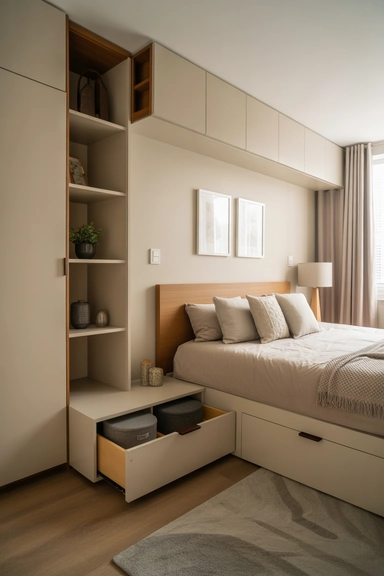
Clutter often feels unmanageable in rentals because storage lacks boundaries. When items drift across rooms, the entire space feels restless. Defining clear storage zones limits where categories of items can exist, preventing gradual spillover into living areas where they do not belong.
Physical cues reinforce these zones. Trays, bins, shelving units, or consistent container styles create visual edges that keep items contained. Once zones are established, daily decisions become simpler. Organization shifts from constant correction to a system that supports routine and visual calm.
5. Use Modular Systems That Adapt Over Time
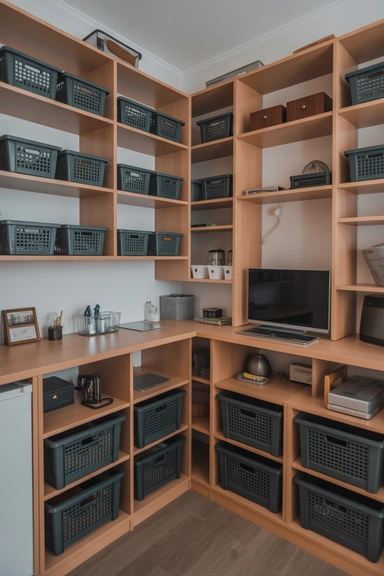
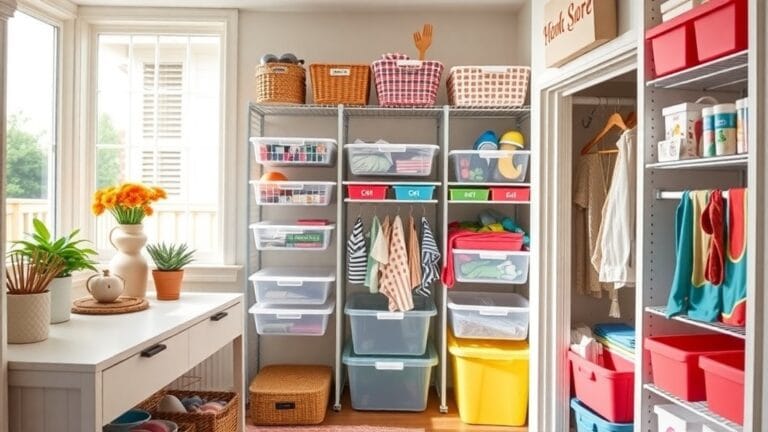
Rental spaces change frequently, and fixed storage solutions rarely keep up. Modular systems allow organization to evolve without forcing a redesign. Stackable bins, adjustable shelving, and mobile units adapt to new layouts, routines, or storage needs without breaking visual order.
The strength of modular systems lies in repetition. When components share dimensions, finishes, or colors, they read as a cohesive system even when rearranged. This consistency keeps tight rental spaces grounded while allowing flexibility. Organization becomes durable rather than temporary.
6. Anchor Storage to Daily Movement Paths
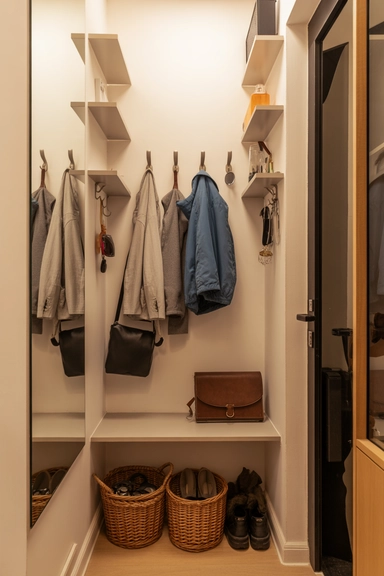
Storage works best when it aligns with how people actually move through a rental. Items placed along natural walking paths reduce friction and prevent clutter from collecting in random spots. When frequently used objects live where hands already reach, surfaces stay clearer elsewhere. This approach is especially effective in tight entryways, narrow kitchens, and compact living rooms where misplaced items quickly overwhelm limited space.
The mistake many renters make is storing items based on available gaps rather than behavior. When storage ignores movement patterns, objects drift toward more convenient locations and create visual noise. Anchoring storage to daily habits contains clutter at its source. The room feels calmer not because it holds less, but because items stop migrating across zones.
This approach mirrors how bedroom organization ideas that reduce visual clutter prioritize habit-based placement over category-based storage, keeping frequently used items from drifting into visible surfaces.
7. Use Under-Furniture Space Without Lowering Visual Weight
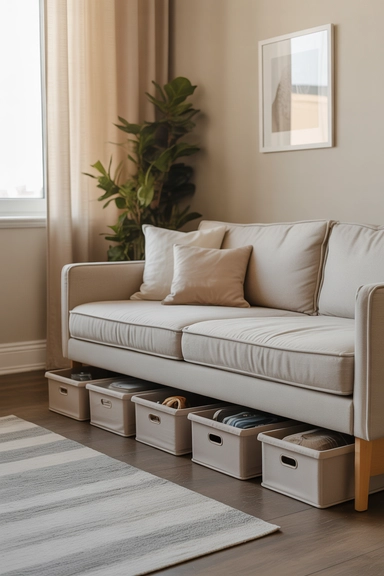
Under-furniture space is one of the most underused areas in tight rentals, yet it must be handled carefully. Low-profile bins or drawers beneath sofas, beds, and consoles can absorb overflow without adding bulk. When storage stays visually recessed, it preserves the sense of openness that small rooms rely on to feel livable.
Problems arise when under-furniture storage becomes too tall or visually busy. Exposed bins with contrasting colors or uneven spacing pull attention downward and make rooms feel heavier. Keeping storage shallow, uniform, and partially concealed allows it to function without asserting itself. The room retains visual lift while quietly gaining capacity.
8. Limit Open Storage to One Visual Plane
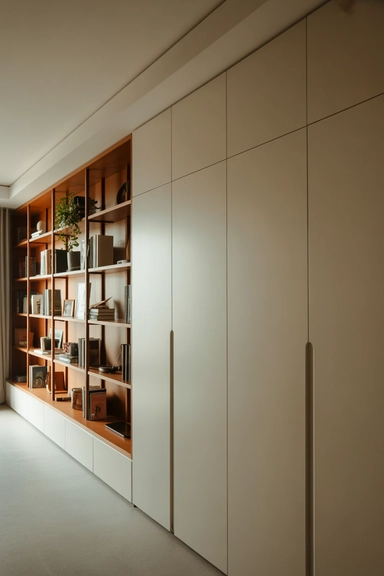
Open storage can either clarify a space or completely destabilize it. In tight rentals, open shelves should be limited to a single visual plane rather than scattered across walls. Concentrating open storage in one area creates a controlled focal zone while allowing the rest of the room to remain visually quiet.
When open storage appears in multiple locations, the eye has no place to rest. Items begin to compete for attention, making the room feel busy regardless of how organized it is. Restricting openness to one zone contains visual complexity. Everything else can remain closed, neutral, or minimal, restoring balance to the space.
9. Use Negative Space as an Organizational Tool
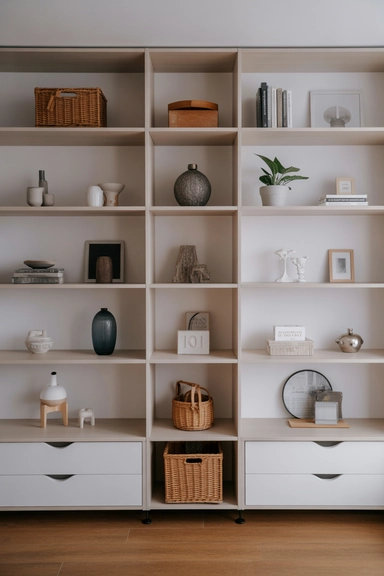
Negative space is often treated as wasted space, but in tight rentals it is a structural element. Allowing certain surfaces, shelves, or corners to remain empty prevents visual overload and gives stored items room to breathe. This restraint makes the entire space feel more deliberate and easier to maintain.
The goal is not minimalism, but spacing. When storage fills every available inch, the room loses hierarchy. Leaving intentional gaps creates rhythm and makes organization legible at a glance. Negative space signals where storage stops, which helps prevent clutter from expanding unchecked into living areas.
10. Consolidate Small Items Into Fewer Containers
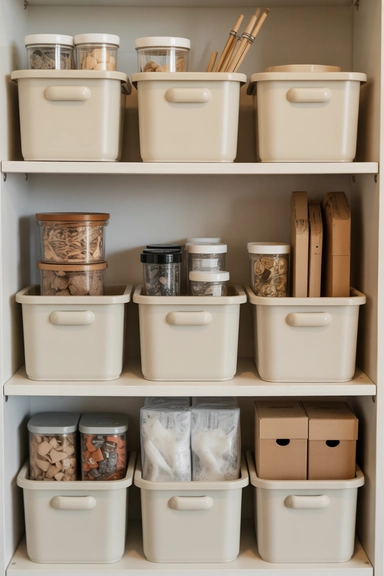
Small items are often the biggest source of disorder in rentals. When they spread across multiple containers or surfaces, they multiply visually even if the volume is minimal. Consolidating similar items into fewer, well-sized containers reduces visual fragmentation and simplifies maintenance.
This strategy works best when containers are scaled to the space rather than oversized. Compact, repeatable containers maintain proportion and prevent storage from overpowering the room. Fewer containers also mean fewer decisions. Organization becomes easier to sustain because the system itself limits excess and visual drift.
11. Keep Wall Storage Narrow to Protect Circulation
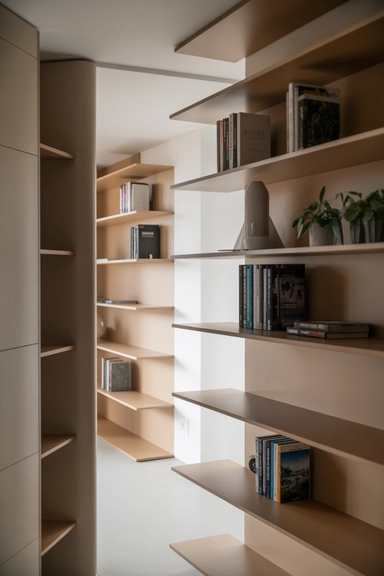
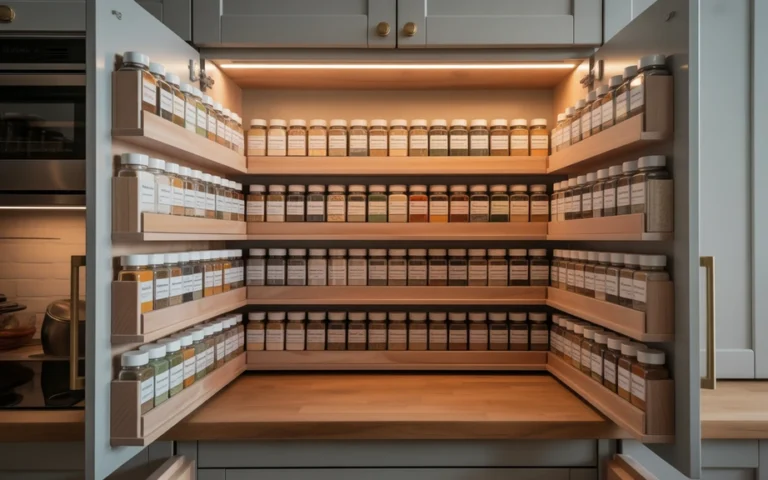
Wall-mounted storage is effective in tight rentals only when it respects circulation depth. Shelves, cabinets, and hooks that extend too far into the room compress walkways and create visual pressure. Narrow wall storage preserves movement paths while still adding functional capacity. When storage hugs the wall closely, the room retains its original proportions and feels easier to navigate.
The visual advantage of narrow storage is subtle but powerful. Shallow shelves reduce shadowing and prevent walls from feeling bulky. Items remain accessible without projecting into shared space. In rentals where every inch of clearance matters, keeping wall storage slim protects both flow and visual calm.
12. Group Storage by Frequency, Not by Category
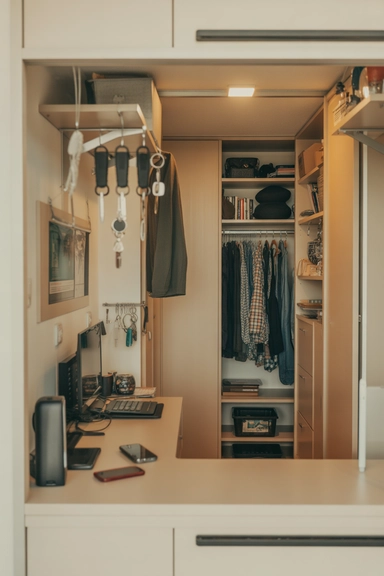
Most organization systems fail because they prioritize category over use. In tight rental spaces, storage should reflect how often items are accessed rather than what they are. Frequently used objects deserve prime locations, while rarely used items can live deeper within storage zones.
When storage ignores frequency, everyday items end up on visible surfaces out of convenience. Grouping by frequency reduces this behavior. High-use items stay contained and easy to reach, preventing surfaces from becoming default storage. The space feels orderly because objects remain where they belong throughout the day.
13. Use Corners as Functional Anchors Instead of Dead Zones
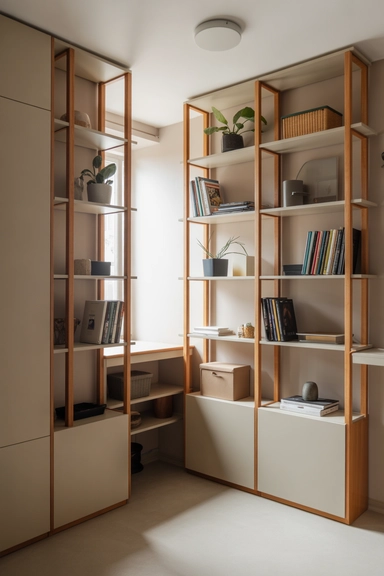
Corners are often left empty or poorly used in small rentals, even though they can anchor storage without disrupting layout. Corner shelving, vertical units, or angled furniture pieces convert awkward space into functional zones that absorb clutter from the rest of the room.
The key is scale and alignment. Corner storage should follow vertical lines and avoid sprawling outward. When corners are used deliberately, they stabilize the room visually. Storage gains a clear endpoint instead of bleeding across walls, which helps the entire layout feel more resolved and intentional.
14. Keep Storage Materials Consistent Across Rooms
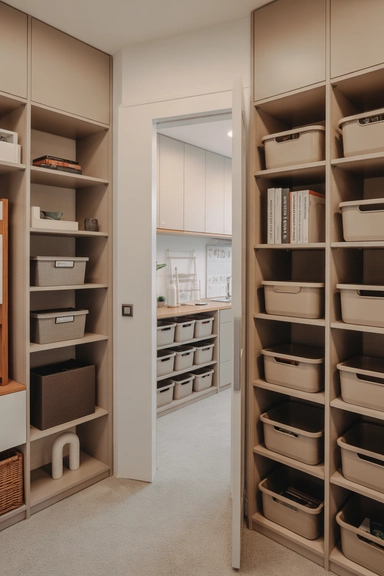
In tight rentals, visual continuity matters more than variety. Mixing too many storage materials, colors, or finishes creates visual fragmentation that makes the space feel smaller. Consistent materials allow storage to recede, even when present in multiple rooms.
Repeating the same finishes across shelves, bins, and containers helps the eye move smoothly through the space. Storage becomes part of the background rather than a series of interruptions. This consistency is especially important in open-plan rentals where storage in one area is visible from another.
15. Treat Temporary Storage as Permanent in Appearance
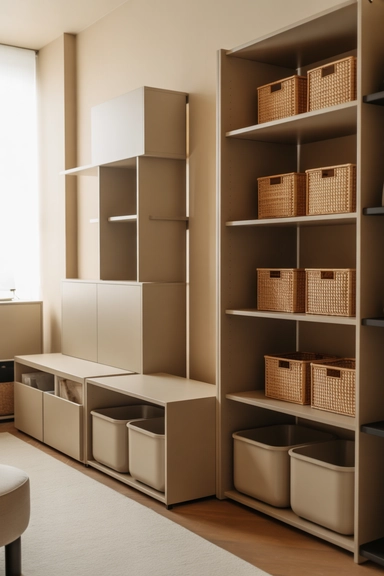
Temporary solutions often look temporary, which undermines visual calm. In rentals, storage may be removable, but it should never appear provisional. Choosing well-finished bins, structured baskets, and stable shelving prevents storage from feeling makeshift.
When temporary storage looks permanent, it earns visual trust. Items stay contained because the system feels intentional rather than stopgap. This mindset shift reduces clutter over time, as people are less likely to abandon systems that feel integrated into the space.
16. Use Visual Weight to Balance Storage Placement
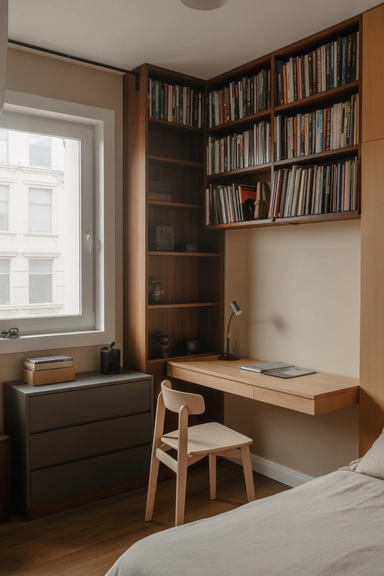
Storage does not only occupy space; it carries visual weight. In tight rentals, placing heavy-looking storage all on one side of a room creates imbalance and makes the space feel lopsided. Distributing storage visually across the room maintains equilibrium, even when total storage volume remains the same.
Visual weight is influenced by color, material, and mass. Darker finishes and dense forms feel heavier than light, open structures. Offsetting heavier storage with lighter elements prevents one area from dominating. This balance keeps small rooms from feeling compressed or unstable.
17. Keep Horizontal Surfaces Intentionally Sparse
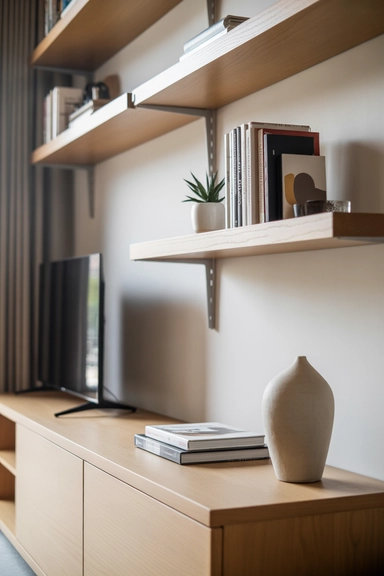
Horizontal surfaces attract clutter faster than any other area in a rental. When surfaces are left undefined, they become default drop zones for items with no clear home. Keeping surfaces intentionally sparse limits this behavior and preserves visual clarity throughout the space.
The solution is not removing surfaces, but assigning them purpose. A console that holds only keys and mail stays controlled. A shelf meant for display remains readable when objects are limited. When surfaces are curated rather than open-ended, they stop collecting overflow and maintain order longer.
18. Use Height Variation to Break Storage Monotony
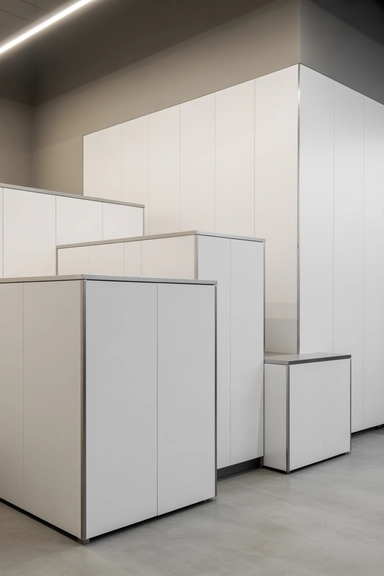
Uniform storage heights can make tight rentals feel rigid and boxed in. Introducing height variation within a controlled range prevents storage from reading as a continuous wall. Mixing taller and shorter elements creates rhythm and allows the eye to move through the space more comfortably.
Height variation works best when intentional rather than random. Aligning tops or bottoms creates structure while allowing variation in between. This approach adds visual interest without chaos. Storage feels integrated into the room’s architecture rather than stacked on top of it.
19. Limit Multi-Room Storage Systems to One Style
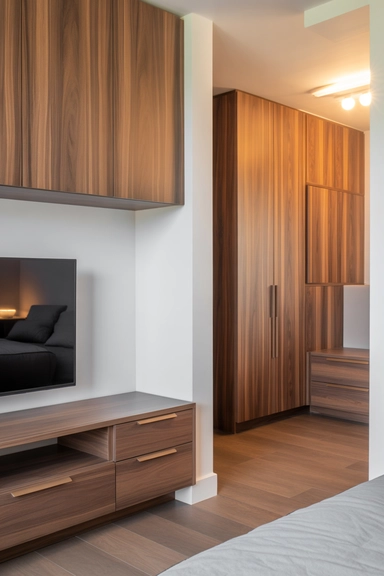
Using different storage styles in every room creates fragmentation, especially in small rentals where multiple spaces are visible at once. Limiting multi-room storage systems to one dominant style keeps the home visually cohesive and easier to read.
This does not require identical pieces, but shared characteristics. Similar finishes, proportions, or construction styles create continuity. When storage feels connected across rooms, the rental reads as one environment rather than a collection of separate problem areas.
20. Let Empty Space Signal Completion
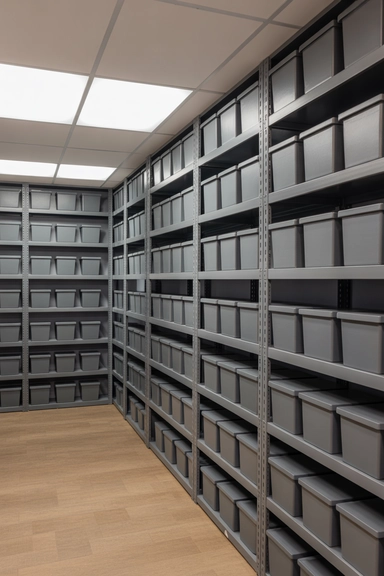
A common mistake in tight rentals is filling every available inch once organization improves. This removes visual stopping points and makes the space feel crowded again. Allowing some storage areas to remain partially empty signals completion rather than shortage.
Empty space acts as a buffer against future clutter. It gives the room flexibility and prevents organization systems from collapsing under minor changes. When storage includes breathing room, the space stays stable longer and feels intentionally resolved rather than constantly in progress.
Conclusion
Effective organization in tight rental spaces is not about squeezing in more storage, but about managing how space is perceived and used. When storage aligns with movement, visual balance, and restraint, small rentals feel calmer and easier to live in. These practical organization hacks succeed because they prioritize clarity over quantity. As systems become integrated rather than layered, the space gains stability, flexibility, and a sense of permanence that supports everyday life without visual fatigue.