
Introduction
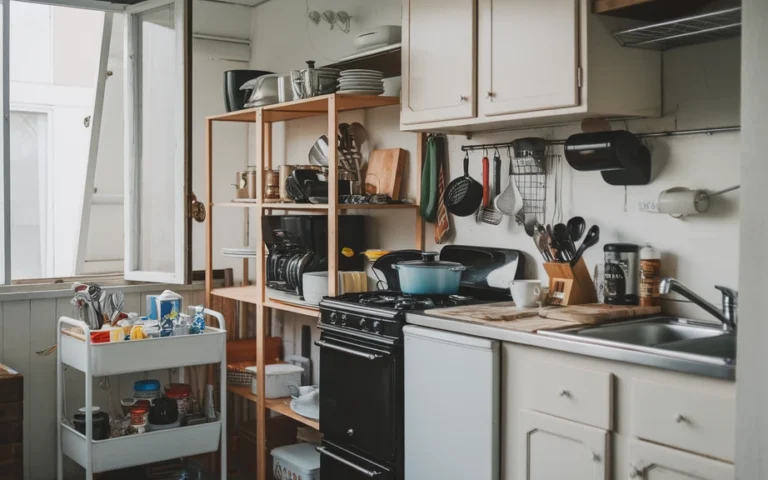
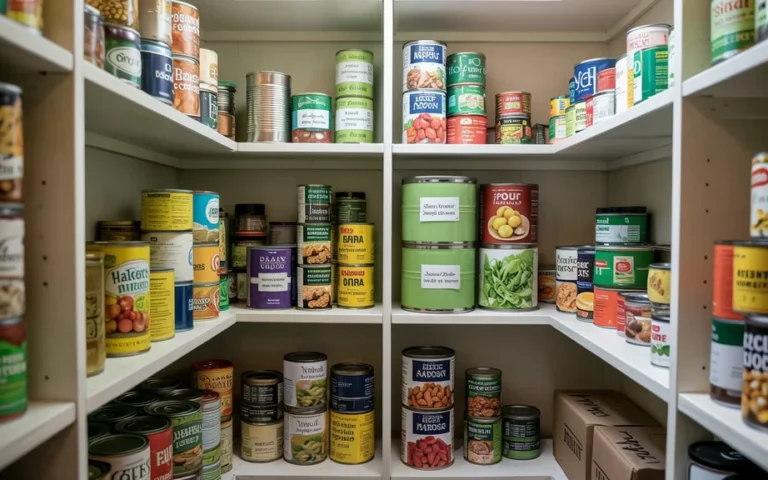
Kitchen clutter rarely comes from a lack of cabinets. It comes from storage that does not respond to real daily behavior. When tools are hard to reach, items pile on counters. When shelves hide inventory, duplicates appear. Effective kitchen storage hacks solve these friction points by improving access, visibility, and return flow. The goal is not decorative organization, but functional systems that quietly increase usable space without renovations. This article explores practical, high-impact storage hacks that force every inch of your kitchen to perform a clear job, reduce wasted movement, and keep order stable under daily use.
If you’re also optimizing cabinet interiors, these 25 Deep Kitchen Cabinet Organization Ideas That Actually Work connect naturally with the hacks below.
1. Kitchen Storage Hacks That Begin With Shelf Function Mapping
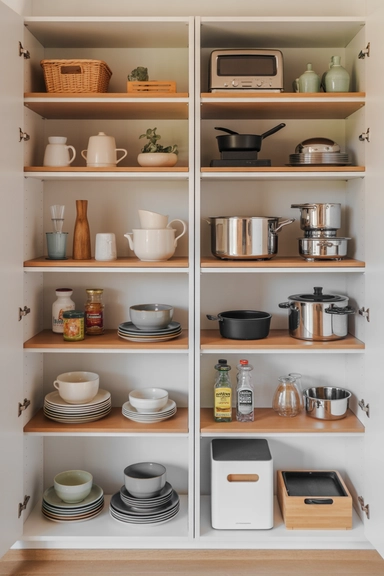
Most cabinets fail because shelves are assigned randomly. Shelf function mapping fixes this by giving each shelf a single defined purpose based on reach range and task proximity. Eye-level shelves handle daily dishes, mid-level shelves store cooking tools, and high shelves keep seasonal items. This prevents high-value shelves from being wasted on rarely used equipment.
When shelf roles are fixed, item return becomes automatic. Users no longer guess where things go. This reduces counter buildup and prevents gradual drift into chaos. Functional shelf mapping is a zero-cost hack that immediately increases effective storage capacity.
2. Tension Rod Dividers for Instant Vertical Separation
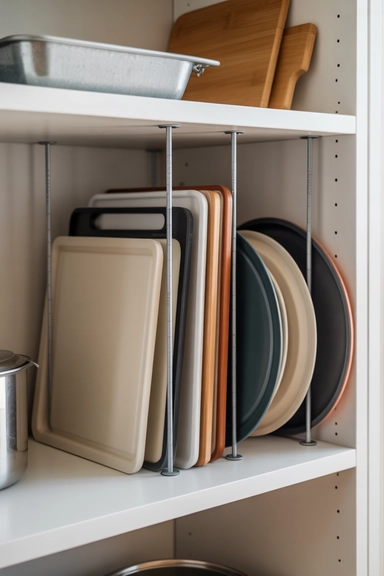
Flat items like trays, boards, and lids consume deep shelves when stacked. Installing simple tension rods inside cabinets creates vertical slots that separate these items without permanent hardware. Each piece stands upright, easy to remove, and impossible to bury behind others.
This hack converts depth into accessible storage. It also prevents friction damage caused by stacked metal or glass. Because the rods are adjustable, the system evolves with changing kitchen inventory without reinstallation.
3. Dollar-Store Bins for Category Containment
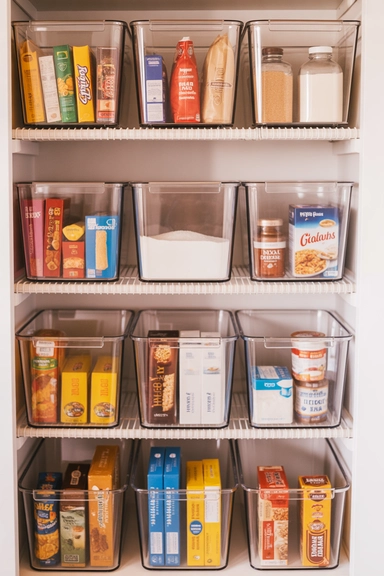
Uncontained packaging is one of the biggest sources of cabinet disorder. Low-cost plastic bins create instant containment zones for snacks, baking goods, or breakfast items. Instead of items spreading across shelves, they move as a group unit.
This simplifies restocking and cleaning. When one bin empties, you know what to replace. Category bins also stop visual noise from mixed packaging. The hack is not the bin itself — it is the behavioral shift toward grouped movement.
4. Adhesive Hooks Inside Cabinet Doors
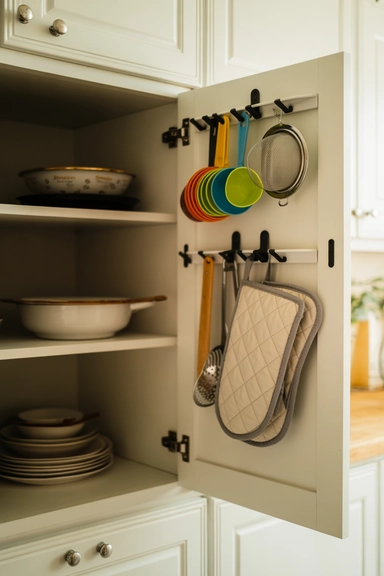
Cabinet door interiors are underused surfaces. Adhesive hooks mounted inside doors hold measuring cups, oven mitts, or small strainers. This relocates lightweight tools away from shelf space without drilling or damage.
By moving hanging tools to doors, shelves gain room for bulkier items. It also improves tool access at the exact moment of use. Door-mounted storage is a friction-removal hack: fewer steps to retrieve means fewer tools left on counters.
5. Magazine Holders for Boxed Wraps and Boards
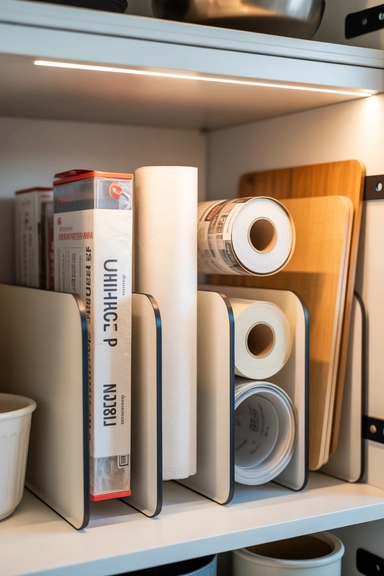
Foil, parchment, plastic wrap, and cutting boards create chaotic horizontal stacks. Repurposing magazine holders turns them into vertical dispensers. Each box or board slides in and out cleanly without collapsing the stack.
This hack protects packaging from tearing and prevents boards from falling. It also keeps narrow packaging from stealing full shelf width. Verticalizing awkward shapes is one of the most powerful space-recovery tactics in kitchen cabinets.
6. Over-the-Shelf Hanging Baskets for Vertical Gain
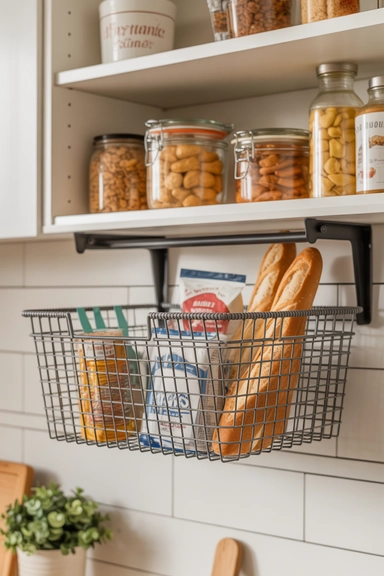
Most cabinet shelves waste vertical airspace above stored items. Over-the-shelf hanging baskets convert this unused zone into functional storage for lightweight goods such as wraps, napkins, bread, or snack bags. This immediately increases usable capacity without tools, drilling, or cabinet modification.
Unlike stacking, hanging baskets keep soft or crushable items separated and easy to reach. They also prevent frequently used products from being buried behind jars or cookware. This hack turns empty air into working storage and reduces shelf crowding without changing cabinet structure.
7. Lazy Susan Turntables for Deep Cabinet Control
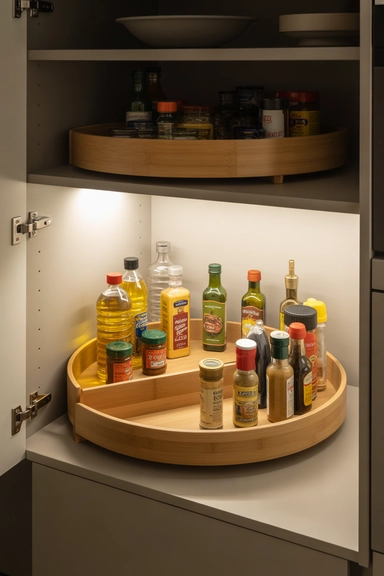
Deep cabinets encourage hidden clutter because items pushed to the back disappear from awareness. Lazy Susan turntables solve this by allowing full rotation of stored goods. Oils, sauces, jars, and condiments remain accessible with a single spin rather than cabinet excavation.
This hack changes inventory behavior. When items are always visible, overbuying decreases and expired products stop accumulating unnoticed. Turntables also prevent front-row congestion because nothing needs to be stacked in layers. Deep cabinets become transparent storage zones rather than blind spots.
8. Under-Shelf Mug Hooks for Shelf Surface Recovery
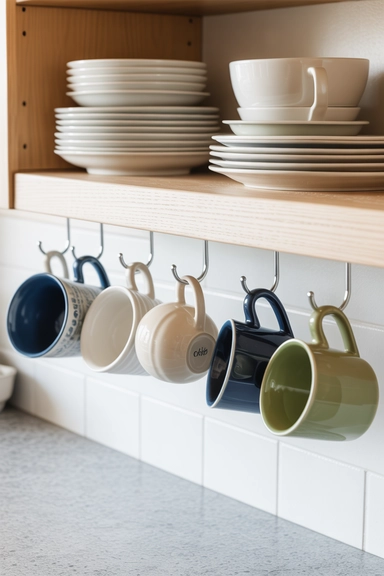
Mugs and cups consume large shelf footprints when stacked or lined up. Installing under-shelf hooks suspends them from the shelf above, releasing flat shelf space for plates, bowls, or pantry containers. This reclaims capacity without reducing accessibility.
Hanging mugs also dry better and avoid chipping caused by stacking. Because cups return to hooks naturally after use, shelves stay clear without user effort. This hack optimizes shelf surface area while improving item longevity.
9. Pegboard Panels Inside Cabinets
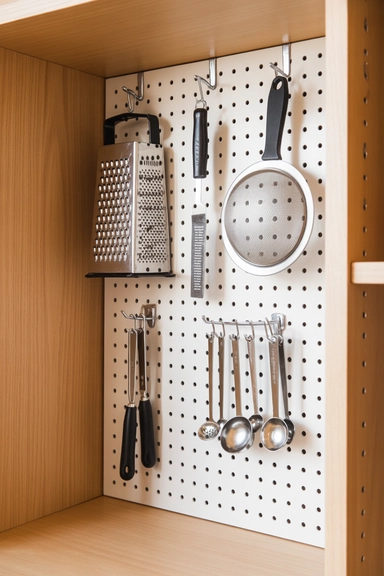
Cabinet interiors are not limited to shelves. Pegboard panels mounted to cabinet walls create customizable tool storage for strainers, graters, measuring tools, or small pans. Hooks can be repositioned as needs change, keeping storage adaptable.
This system prevents drawers from becoming overloaded with irregular-shaped tools. It also keeps frequently used items visible and reachable without counter placement. Pegboard interiors turn static cabinet walls into flexible storage assets.
10. Shelf Risers for Two-Level Dish Storage
Stacking dishes wastes vertical capacity and creates unstable piles. Shelf risers insert a second level, allowing cups or bowls to sit above plates without direct stacking. This doubles shelf function while improving visibility.
Risers also protect fragile dishware by eliminating weight pressure. When dishes slide out independently, retrieval becomes smoother and cabinets stay organized longer. This hack converts single-level shelves into structured storage layers.
If you’re also improving full cabinet systems alongside these hacks, these 21 Creative Kitchen Cabinet Organization Ideas fit naturally with the strategies above.
11. Binder Clips for Cable and Bag Control
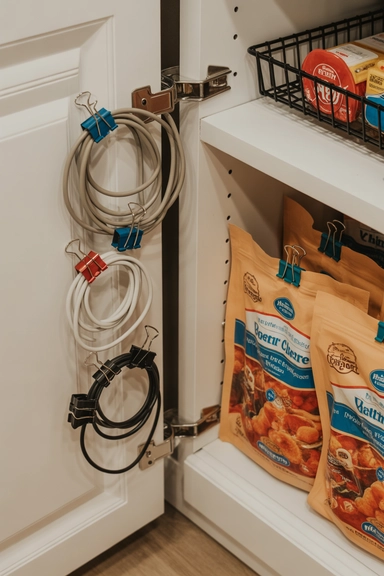
Kitchen drawers and cabinets often become tangled with appliance cords, charger wires, and loose food bags. Using binder clips creates controlled anchor points. Cords loop through clipped handles so they no longer spread across drawers. Food bags clipped shut stay upright instead of collapsing into cluttered piles.
This hack prevents two common failures: cord knots and half-open packaging spills. When cables and bags hold defined positions, drawers close smoothly and shelves remain stable. Binder clips replace chaotic loose storage with fixed micro-zones that cost nothing and remove recurring daily frustration.
12. Chalk or Dry-Erase Labels for Adaptive Storage
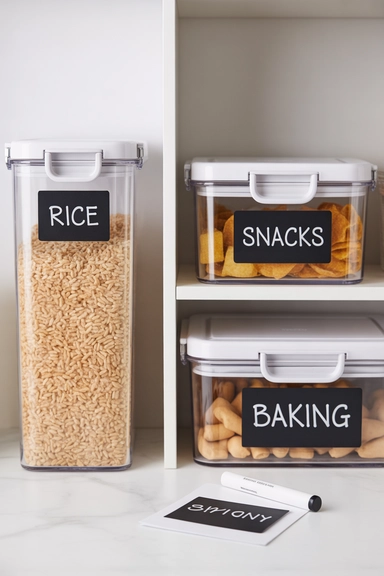
Permanent labels fail when pantry contents change. Chalk or dry-erase labels solve this by allowing quick category updates without replacing containers. Jars, bins, and shelves stay accurately labeled even as ingredients rotate.
This flexibility keeps storage honest. Mislabeling causes misplaced items, which slowly breaks organization systems. Rewritable labels ensure containers always match contents, preventing confusion and accidental duplication. Adaptive labeling is a maintenance hack that protects long-term cabinet accuracy.
13. Towel Bars Inside Cabinets for Spray Bottles
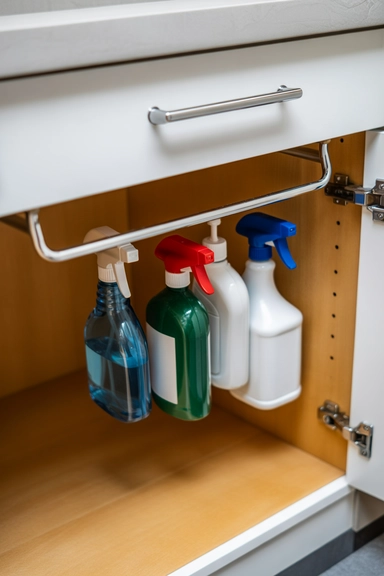
Spray bottles and tall cleaners waste shelf height and tip over easily. Installing a simple towel bar inside a cabinet allows bottles to hang by their triggers. This keeps them upright, separated, and off the cabinet floor.
Hanging bottles also prevents leaks from pooling under containers. Because each bottle has a dedicated hanging position, restocking and retrieval become consistent. This hack converts unstable lower-cabinet chaos into controlled vertical storage.
14. Plastic File Holders for Lid and Board Storage
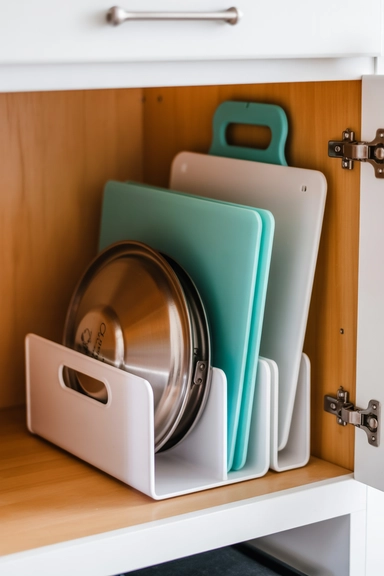
Pot lids and cutting boards cause cabinet collapse when stacked. Plastic file holders transform them into vertical files, keeping each piece separated and visible. The holders fit easily inside standard cabinets without modification.
This prevents lids from sliding and crashing when one is removed. It also protects cutting boards from warping caused by horizontal pressure. Vertical filing turns problematic flat items into predictable, retrievable storage.
15. Stackable Wire Baskets for Bulk Goods
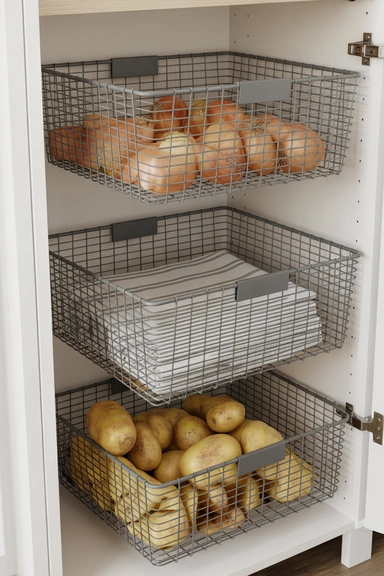
Bulk items such as onions, potatoes, snack bags, or extra dish towels need airflow and separation. Stackable wire baskets provide tiered containment while allowing visibility and circulation. Unlike solid bins, they prevent moisture buildup and hidden spoilage.
Because baskets stack upward, they consume less shelf footprint while increasing total capacity. Items remain grouped without compressing each other. This hack improves pantry hygiene and keeps bulk storage from invading other cabinet zones.
16. Foldable Storage Bins for Seasonal Kitchen Items
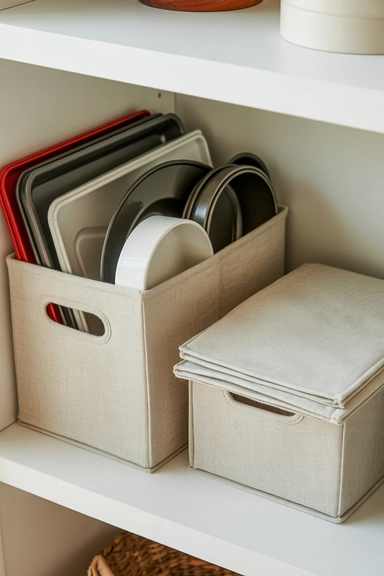
Seasonal kitchen tools like holiday bakeware or large serving platters should not occupy permanent prime shelf space. Foldable bins allow these items to stay contained during use seasons and collapse flat when stored away.
This prevents permanent containers from occupying shelves when not needed. Foldable storage supports changing kitchen rhythms without reorganizing the entire cabinet system. It is a space-timing hack that matches storage footprint to real usage cycles.
17. Command Strip Hooks for Renter-Friendly Storage
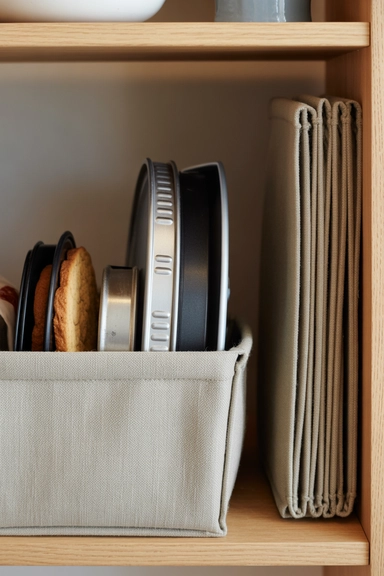
Permanent drilling is not always possible, especially in rental kitchens. Command strip hooks allow lightweight storage on cabinet walls and doors for mitts, towels, measuring spoons, or small strainers. They hold securely but remove cleanly.
This hack adds storage points without damaging surfaces. It also encourages proper item return because hooks stay at convenient reach points. Temporary hooks turn unused vertical surfaces into functional storage without long-term commitment.
18. Over-the-Door Pocket Organizers for Hidden Micro-Storage
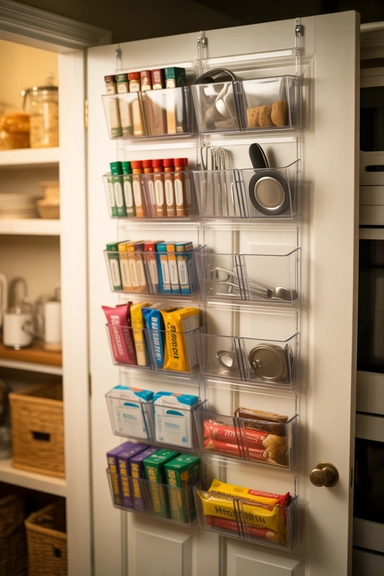
The back of cabinet and pantry doors often remains unused despite being prime vertical territory. Over-the-door pocket organizers transform this surface into structured storage for spice packets, small snack bars, baking tools, or cleaning accessories. Each pocket creates a fixed position for small items that typically disappear into drawers or shelf corners.
This hack prevents micro-items from scattering across cabinets. Because contents stay visible, forgotten duplicates stop accumulating. Pocket organizers also reduce drawer congestion by relocating tiny items into dedicated vertical zones. This turns overlooked door space into a high-efficiency storage layer.
19. Slide-Out Cutting Boards with Built-In Slots
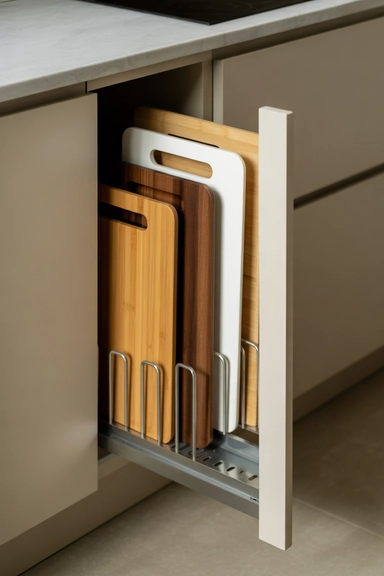
Cutting boards consume awkward horizontal shelf space and tend to slide into stacks that fall apart. Slide-out cutting board racks install into narrow cabinet sections, storing boards vertically in individual slots. Boards remain upright, separated, and easy to pull.
This prevents warping caused by flat stacking and keeps prep tools near food-work zones. When boards return to a fixed slot after washing, they no longer lean against walls or sit on counters. This hack stabilizes one of the most disorder-prone kitchen items.
20. Magnetic Spice Jars on Refrigerator Sides
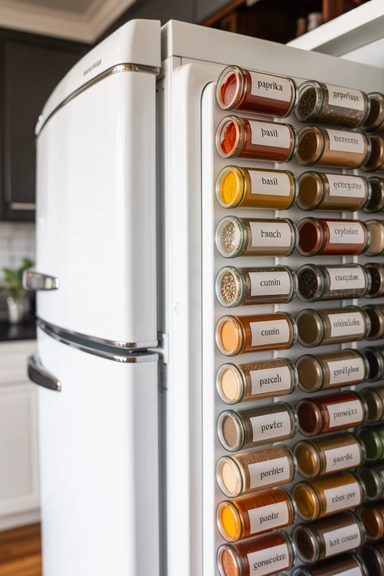
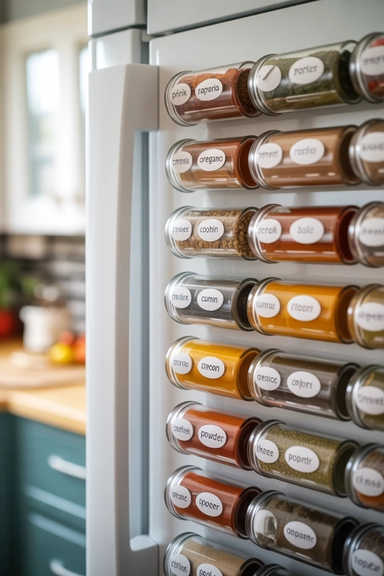
Refrigerator side panels are rarely used for storage. Magnetic spice jars attach directly to these surfaces, creating a vertical spice station without occupying cabinets or counters. Each jar stays visible and instantly reachable during cooking.
This hack relocates frequently used seasonings into unused appliance real estate. It also frees cabinet shelf space for bulk pantry items. Because jars stay sealed and upright, spills and clutter are avoided. Refrigerator-mounted spice storage converts dead exterior surfaces into productive zones.
21. Pull-Out Tray Dividers for Baking Stations
Baking sheets, cooling racks, and muffin trays often dominate cabinet shelves with unstable stacks. Pull-out tray dividers create narrow vertical channels that hold each tray separately. Items slide in and out smoothly without shifting others.
This hack establishes a dedicated baking station inside a single cabinet. Trays remain visible, organized by size, and accessible without removing piles. It prevents noisy metal stacking and keeps bakeware from creeping into unrelated cabinet spaces.
22. Under-Cabinet Rail Systems for Daily Tools
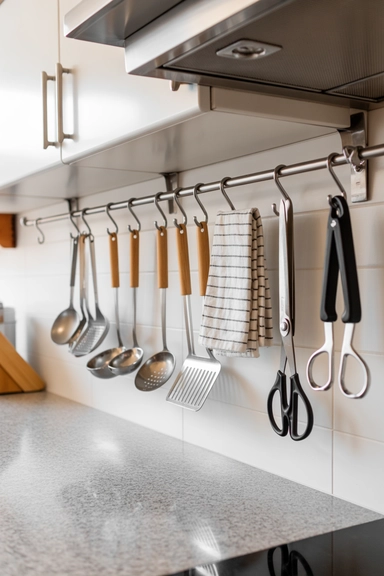
Under-cabinet rail systems provide hanging points for ladles, tongs, scissors, and towels. This moves daily tools off countertops and out of drawers, placing them exactly where they are used most.
The rail creates a controlled exposure zone. Tools remain reachable during cooking but return to a fixed position afterward. This reduces counter spread and prevents utensil drawers from overfilling. It is a workflow-based hack that reassigns space to match real kitchen behavior.
23. Weekly Cabinet Reset Habit That Locks Systems in Place
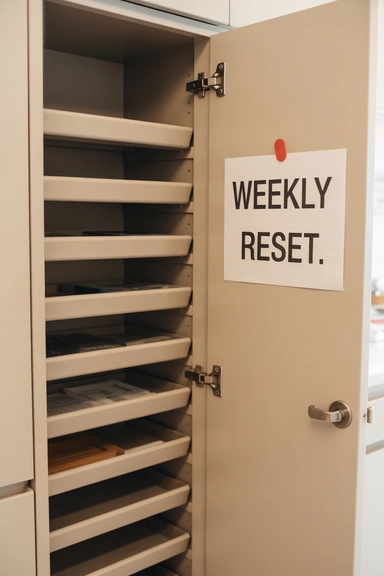
Even the most effective storage hacks weaken without behavioral reinforcement. A short weekly cabinet reset — returning misplaced items, checking food levels, wiping shelves — keeps systems aligned. Because structure already exists, this takes only minutes.
This habit prevents slow disorder accumulation that leads to full reorganizations. Instead of reacting to chaos, maintenance becomes routine. A reset habit turns kitchen storage from a temporary improvement into a permanent operating system.
Conclusion
Kitchen storage hacks succeed when they remove friction rather than add complexity. Vertical capture, mobile access, adaptive containment, and behavioral maintenance transform wasted gaps into productive zones. The objective is not to add more storage products, but to make existing space perform with clarity and purpose. When each hack supports real movement and real habits, every inch of the kitchen works harder, clutter loses its foothold, and order becomes self-sustaining.