Your office walls feel like they’re closing in by 3 PM. The desk eats up half the floor space. One chair somehow blocks the closet, the doorway, and the window all at once. You’ve tried painting, decluttering, even buying smaller furniture, but the room still feels cramped instead of clear.
Most small office design ideas fail because people decorate before they design. They add curtains, art, and accessories to a layout that was already broken. The result looks busy without feeling planned.
This article covers 21 small office interior design ideas that make tight rooms feel bigger without renovating, starting with the storage setup that should come before any decorating decision.
The Light Wall Color That Bounces Daylight
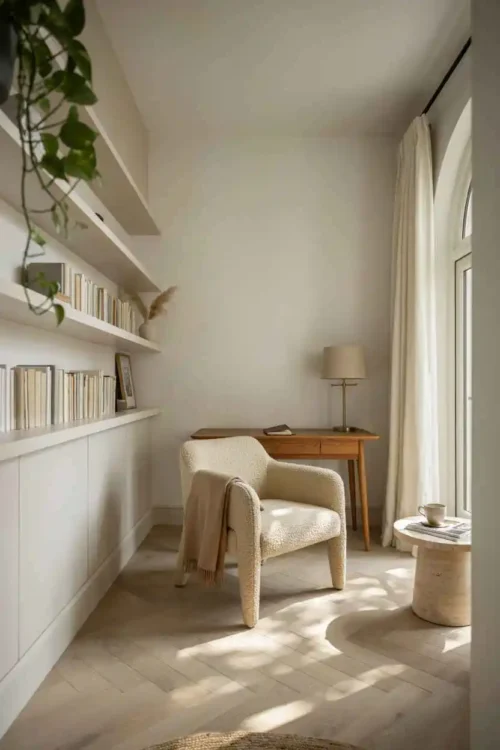
Pale walls reflect natural light instead of absorbing it. The room reads as larger because the boundaries blur visually. Soft whites, warm beiges, and pale grays work harder than any decorative element.
A small room with dark walls always feels smaller than it actually is. Light colors push the walls back optically, even when nothing physically changes. The effect compounds when ceilings stay white—the eye reads more vertical space.
The trade-off: light walls show every scuff, fingerprint, and chair mark. Plan for touch-ups twice a year, or commit to wipeable paint finishes.
The Single Statement Wall Behind the Desk
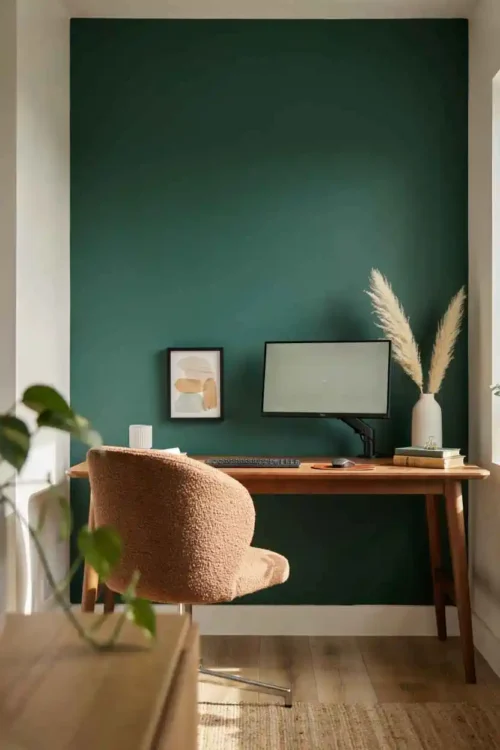
One wall gets a bold treatment—deep paint, textured wallpaper, or a wood panel—while the other three stay neutral. This adds personality without overwhelming the room. The statement sits behind you, becoming your video call background.
A focal wall draws the eye to one specific area instead of bouncing around the room chaotically. Your workspace gains visual depth. The contrast creates intentionality that all-neutral rooms lack.
Pick the wall behind the desk, not the one you face. Staring at a bold color for eight hours fatigues your eyes faster than you’d expect.
The Mirror That Doubles the Window
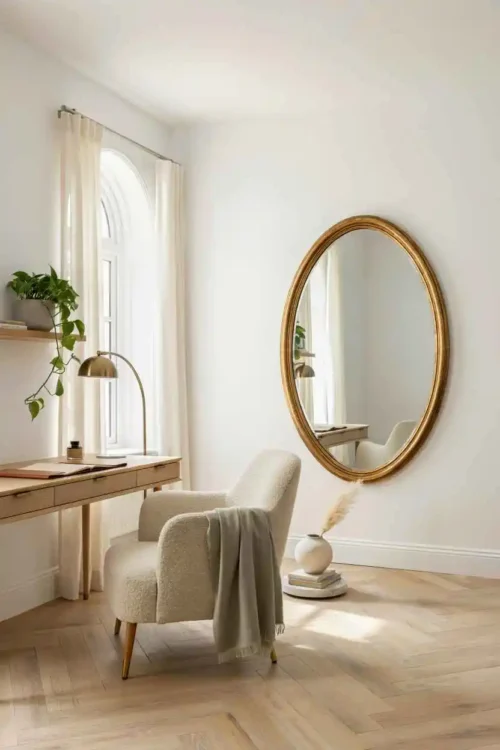
A mirror hangs opposite the window, reflecting daylight back into the room. The space appears to have two light sources instead of one. Walls visually retreat as the mirror creates the illusion of additional depth.
Mirrors solve the small-office light problem instantly. A 30-inch mirror across from a single window can double perceived brightness. The reflection also brings movement into static spaces—clouds, trees, sky.
Avoid mirrors that face your monitor directly. The glare destroys focus, and you’ll catch your own movement in your peripheral vision constantly.
The Low-Profile Furniture Strategy
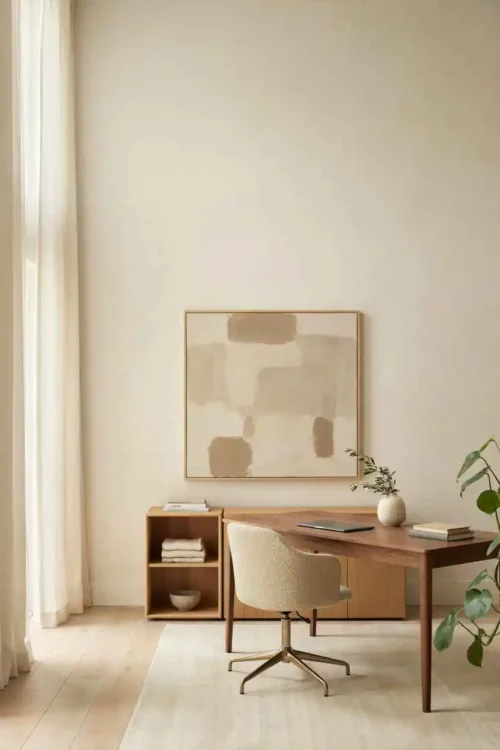
Furniture sits low to the ground—shorter desks, lower chairs, compact shelving. The ceiling reads as higher because the eye travels further upward. Vertical breathing room makes small spaces feel less compressed.
Low furniture works because it preserves the vertical space that ceilings provide. A standard office chair makes a small room feel cramped. A lower-profile chair achieves the same function while opening the room visually.
The downside: lower furniture sometimes compromises ergonomics. Test seating height before committing—a beautiful low chair that wrecks your back isn’t worth the visual benefit.
The Vertical Stripe Wall Treatment
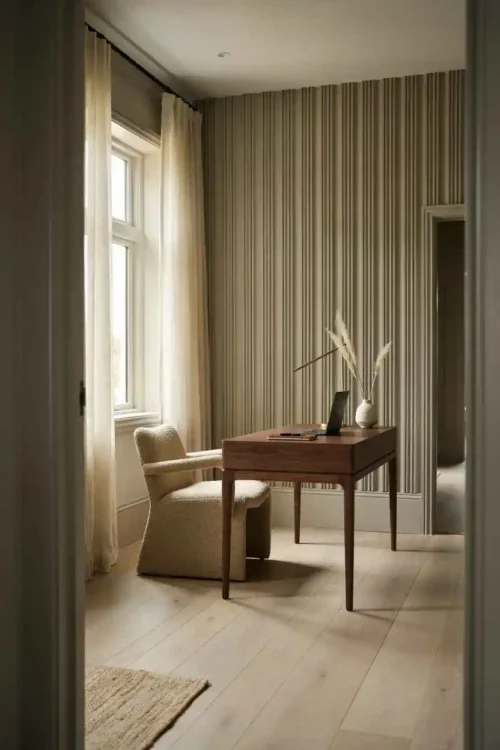
Vertical lines on one wall draw the eye upward, making ceilings feel taller. Subtle striped wallpaper, vertical wood paneling, or even painted vertical bands create this effect. The room gains perceived height instantly.
Vertical patterns trick the brain into reading more space than physically exists. The eye follows the lines up, scanning more vertical territory than horizontal. Low ceilings rise visually, and the room feels less boxy.
Keep stripes subtle in small rooms. Bold contrasting stripes create busy visual noise that defeats the open-space goal entirely.
The Floating Shelves Instead of Bookcases
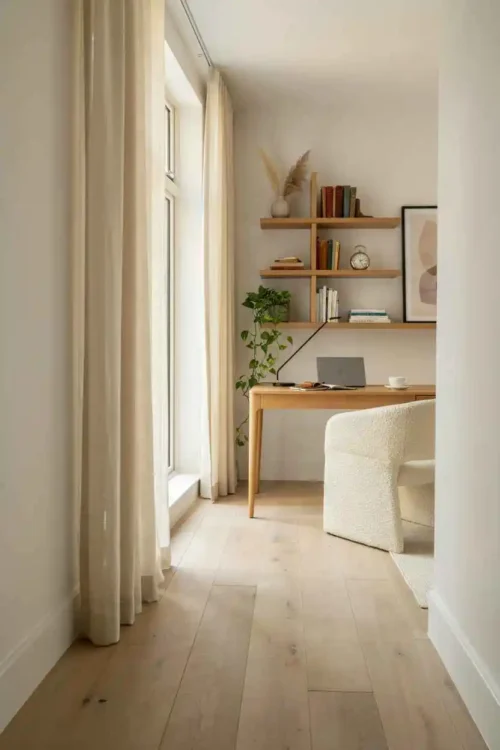
Wall-mounted shelves replace floor-standing bookcases. The floor stays visible underneath, preserving the open feeling. Storage exists without consuming visible square footage.
Floating shelves work because they eliminate the visual mass of standard furniture. A floor-standing bookcase reads as a block of solid weight. The same storage capacity in floating shelves reads as light and architectural.
Mount shelves into studs or use proper anchors. Sagging shelves become a constant visual irritation, and reloaded books eventually pull weak anchors out entirely.
The Glass or Acrylic Desk
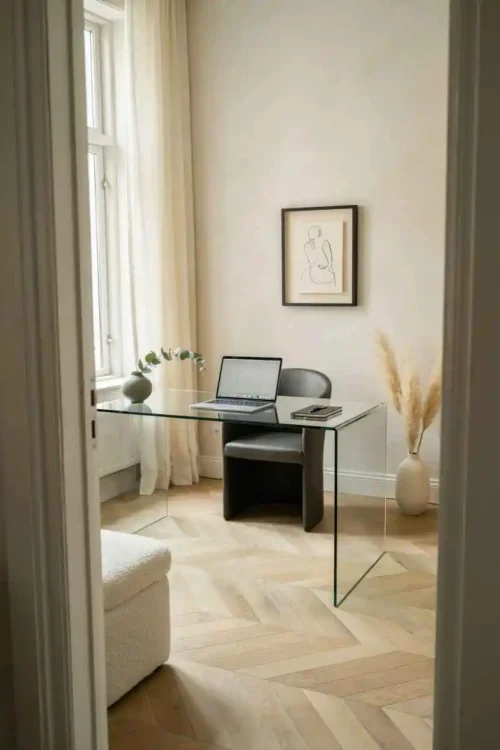
A clear desk reads as nearly invisible compared to wood or laminate. Visual square footage stays open because your eye sees through the furniture. The room feels larger without losing any actual workspace.
Transparent furniture solves the “too much stuff” problem visually. The desk exists functionally but disappears optically. Cables and items beneath become more visible, which forces better organization habits.
Glass desks show every fingerprint, dust speck, and water ring. Plan for daily wipe-downs, or skip this option if you hate constant cleaning.
The Single Large Art Piece Instead of Gallery Wall
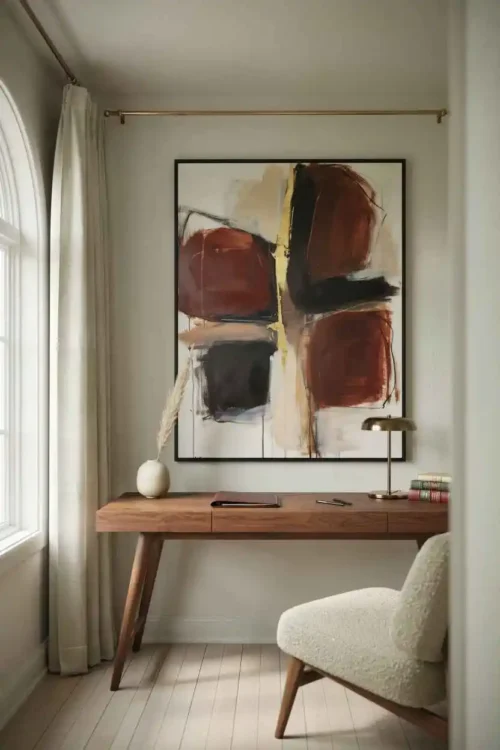
One oversized piece of art replaces multiple smaller frames. The wall reads as intentional rather than busy. Visual chaos disappears, even though wall coverage stays similar.
Large single pieces command attention without creating clutter. A gallery wall in a small room reads as visual noise. One bold piece anchors the space and gives the eye somewhere specific to land.
Match the art scale to your largest wall. A piece that’s too small floats awkwardly. A piece that’s too large overwhelms—aim for 60-75% of the available wall width.
The Hidden Storage in Everyday Furniture
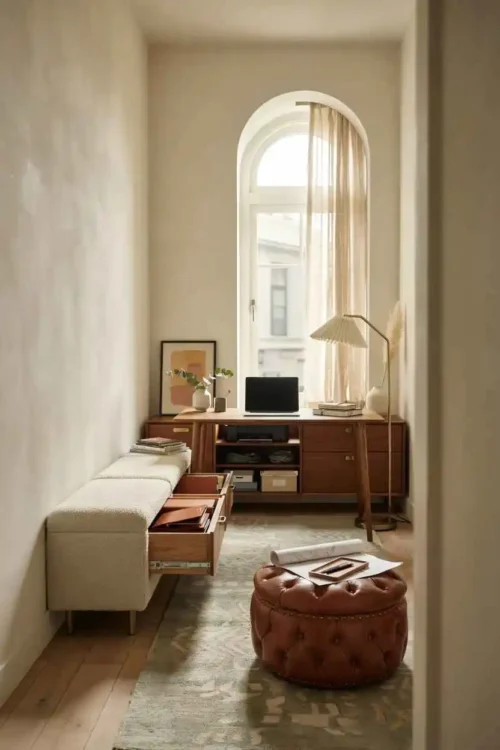
Ottomans, benches, and side tables conceal storage inside their structure. Items disappear from view without leaving the room. The visual landscape stays clean while function expands.
Multi-purpose furniture is non-negotiable in small rooms. A bench by the door holds shoes inside its frame. An ottoman near the desk stores files. Every piece earns its footprint through dual function.
Check storage capacity before buying. Some “storage ottomans” hold so little they’re essentially decorative, defeating the purpose entirely.
The Curtains Hung High and Wide
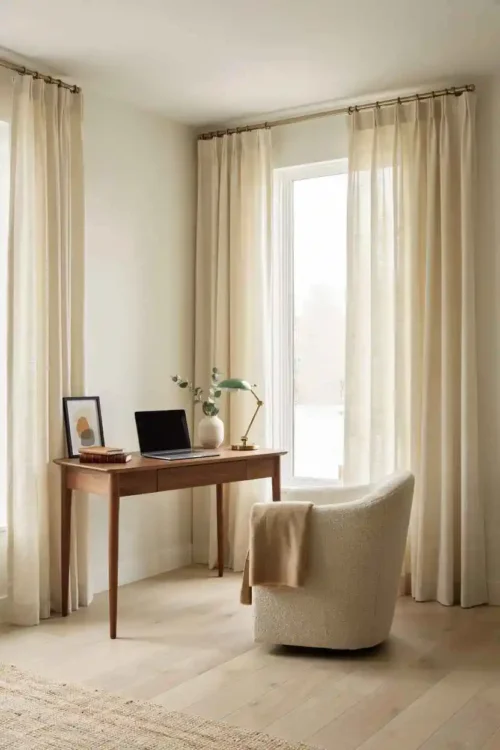
Curtain rods mount near the ceiling and extend past the window frame on both sides. Windows appear significantly larger. Ceilings read as taller because the eye follows the curtain length upward.
Standard curtain placement makes windows look smaller than they are. Mounting curtains high and wide reframes the entire wall. The window becomes the visual centerpiece instead of a small punctuation mark.
Skipping small-bedroom-organization-ideas is exactly how people end up with cluttered offices that no curtain trick can fix. The treatment only works in spaces that aren’t already overwhelmed by stuff.
The Monochromatic Color Scheme
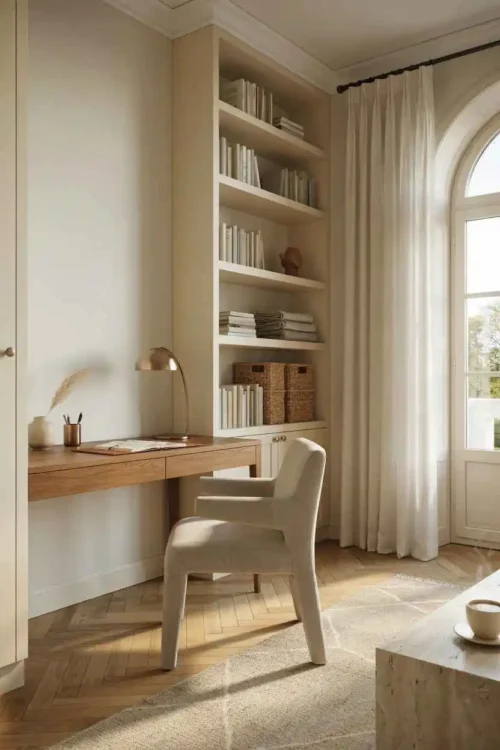
All design elements stay within one color family—different shades, tones, and textures of the same hue. The room reads as cohesive instead of chaotic. Visual borders blur because nothing jarringly contrasts.
Monochromatic schemes make small rooms feel intentional and calm. The eye doesn’t have to process competing colors. Furniture, walls, and accessories flow together visually, creating apparent space where actual square footage hasn’t changed.
Pure monochromatic can feel sterile. Add texture variation—linen, wood grain, woven baskets—to keep the space warm rather than clinical.
The Hidden Cable Management System
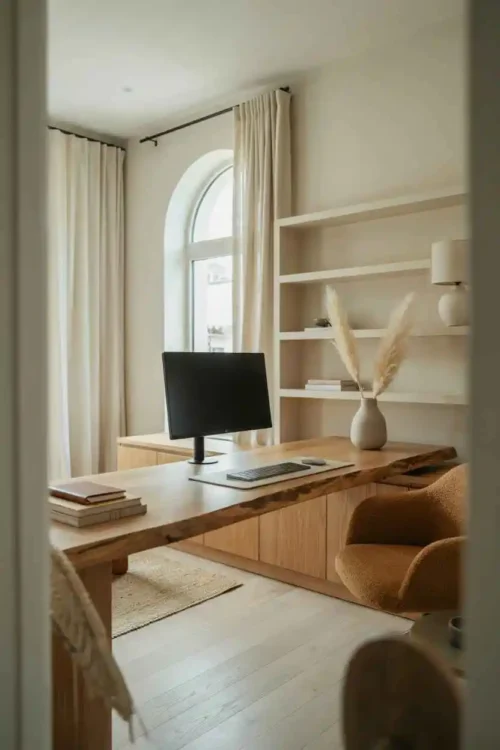
Every cord runs through channels, sleeves, or behind furniture. Nothing dangles, pools, or snakes across the floor. The room reads as designed rather than cobbled together.
Visible cables destroy the design of any small room. A beautiful desk loses 50% of its impact when cables tangle beneath it. Hidden management transforms how the entire space reads, even though nothing else changes.
Retrofit cable management with adhesive raceways and under-desk trays. You don’t need new furniture—just systematic concealment of every wire.
The Round Mirror or Round Furniture
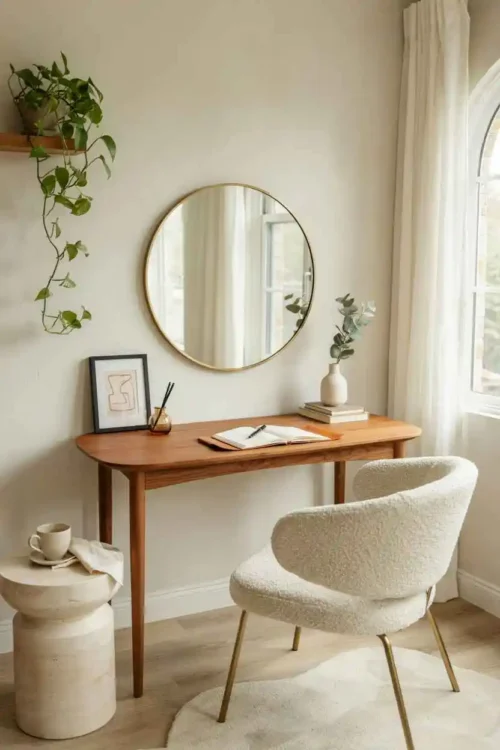
Curved shapes break up the boxy feeling of small rooms. Round mirrors, oval rugs, and curved chair backs soften hard architectural lines. The space feels less rigid and more organic.
Square rooms full of square furniture amplify the cramped feeling. Adding circular elements creates visual movement and breaks the grid. The eye relaxes when not everything aligns to right angles.
Don’t overdo the curves. One or two round elements work beautifully. Five becomes its own form of visual chaos.
The Single Statement Light Fixture
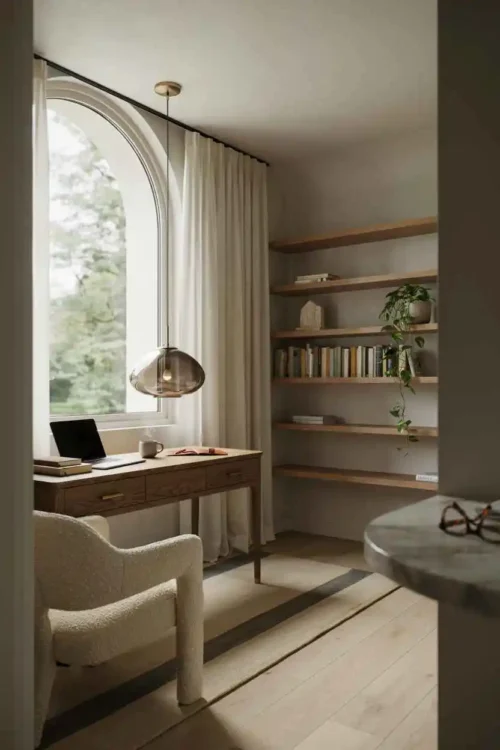
One bold light fixture replaces multiple small lamps and overhead lights. The fixture becomes architectural rather than purely functional. Visual clutter drops because lighting consolidates into one focal point.
A statement pendant or sculptural floor lamp anchors the room. It provides task lighting while serving as design. The combined function eliminates the need for multiple light sources crowding the space.
Sculptural lighting only works if it provides enough light. Beautiful fixtures with weak output force you to add lamps anyway, multiplying clutter.
The Built-In Look Using Standard Furniture
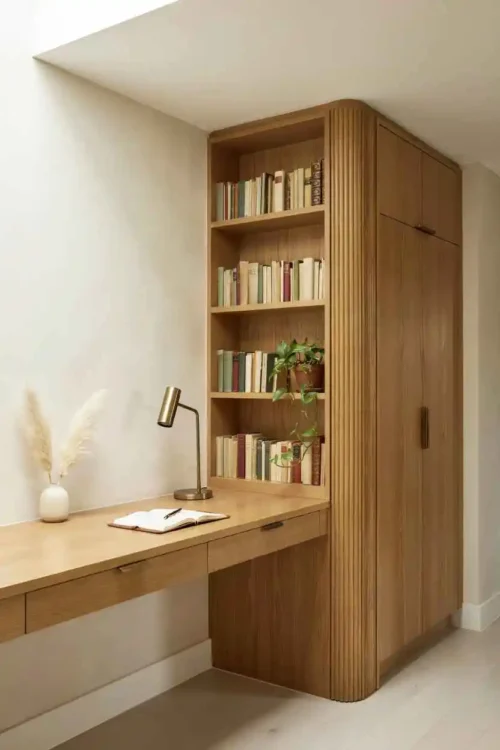
Pieces line up flush against walls with matching heights, creating the appearance of built-in furniture. The room reads as custom-designed rather than assembled. Visual flow improves dramatically.
Built-in looks work because they eliminate the gaps and uneven heights that make rooms feel pieced together. Matching dresser, desk, and shelf heights creates a clean horizontal line. The eye reads continuity instead of clutter.
This requires careful furniture selection. Pieces from different collections rarely align perfectly, so plan dimensions before buying.
The Sheer Window Treatment
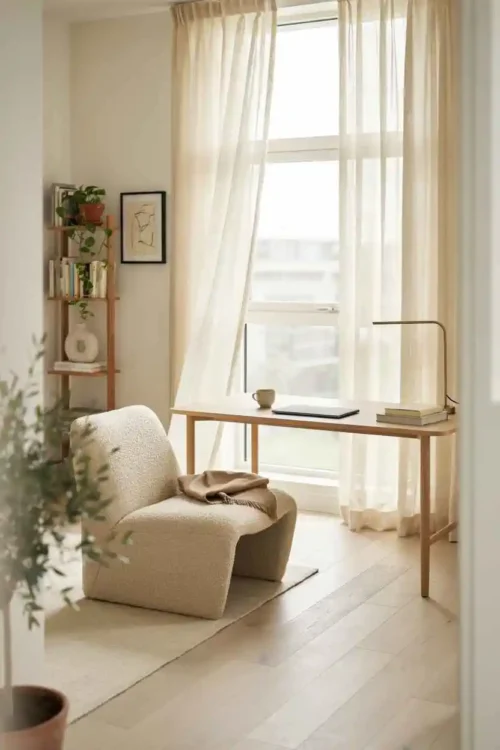
Sheer fabric or light-filtering shades replace heavy curtains and blinds. Natural light floods the room while privacy stays intact. The window remains a light source rather than a heat-trapping barrier.
Heavy window treatments steal natural light that small rooms desperately need. Sheers maintain function—privacy, glare reduction—without the visual weight. The wall around the window reads as lighter and more open.
Combine sheers with blackout layers if you need full darkness for video calls or sleep. Sheers alone don’t block enough light for projection screens.
The Open Lower Shelving Instead of Closed Cabinets
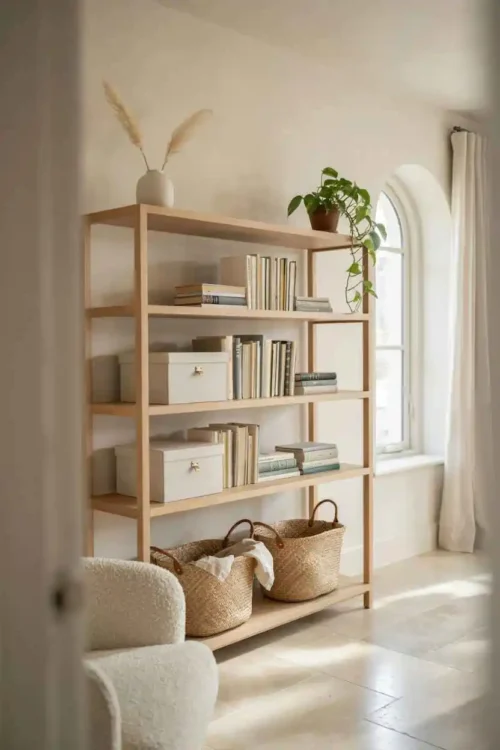
Lower furniture features open shelving instead of doors and closed drawers. Visual depth extends into the storage area. The room feels less walled-off because the eye travels through the storage.
Open lower storage prevents the “wall of boxes” effect that closed cabinets create. The eye sees space behind and through the furniture. The room expands visually even though storage capacity remains identical.
Open storage demands visual discipline. Random clutter inside becomes part of your room’s design whether you want it to or not.
The Rug That Defines the Workspace
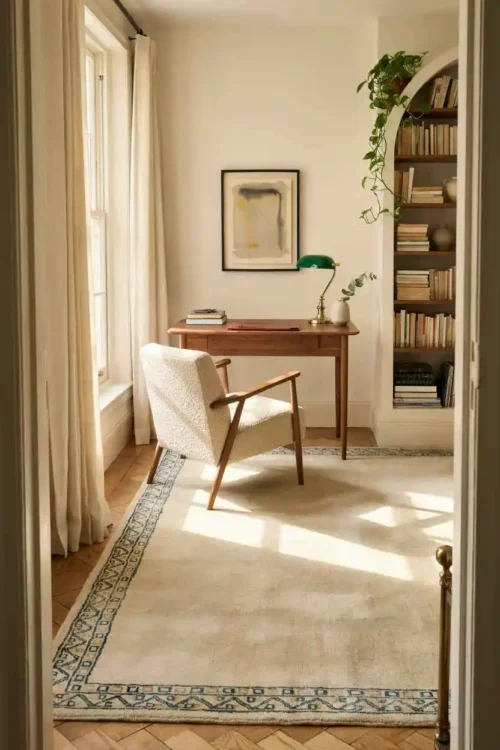
A small rug under the desk creates a visual zone for the workspace. The office area defines itself even in a multi-purpose room. The rest of the space reads as separate.
Rugs anchor zones in small or open-concept rooms. Without a rug, the desk floats awkwardly. With one, the workspace claims its territory while leaving the rest of the room visually separate.
Size matters more than pattern. The rug should extend at least 6 inches beyond the desk on all sides, or it looks undersized and makes everything else feel disproportionate.
The Greenery That Adds Life Without Bulk
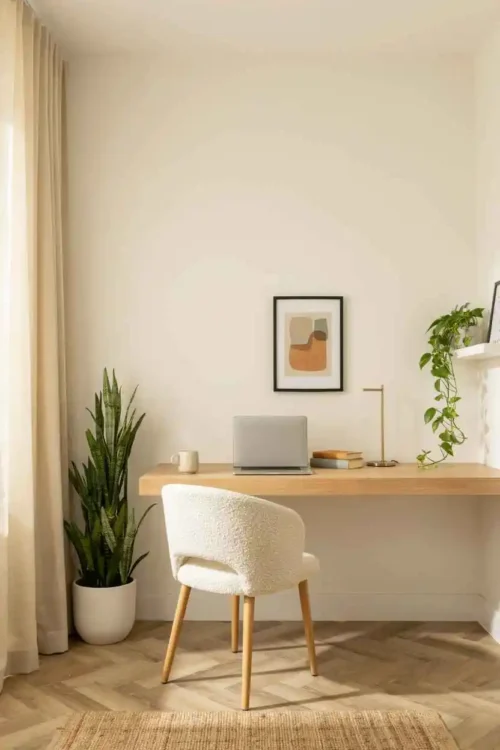
Small plants or a single statement plant add life without consuming floor space. The organic shapes contrast the geometric room. Air quality improves measurably during long work sessions.
Plants transform sterile offices into spaces that feel alive. A small pothos on a shelf or a single tall snake plant in the corner adds movement and color. The visual lift is disproportionate to the floor space consumed.
Pick plants that match your light conditions honestly. A struggling plant in poor light looks worse than no plant at all.
The Decluttered Surface Strategy
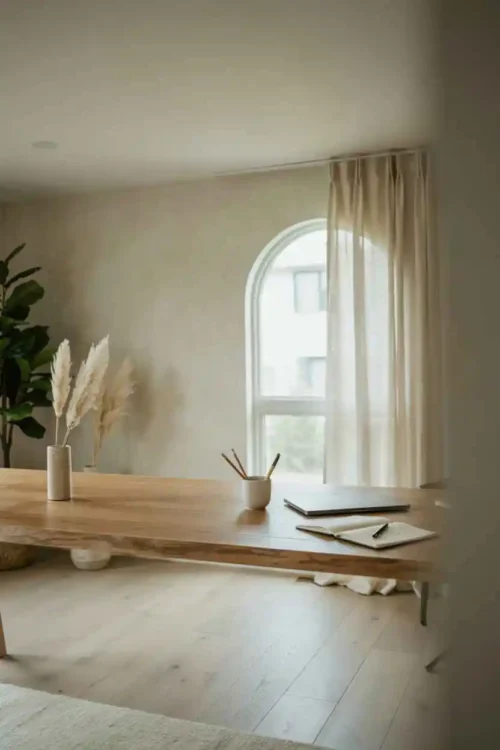
Every horizontal surface stays at least 70% empty. Nothing accumulates unless it earned its spot through daily use. The room reads as designed rather than lived-in chaotically.
Clear surfaces are the foundation of small-room design. The most beautiful furniture and decor lose their impact when buried under stuff. The 70% rule keeps visual breathing room without forcing extreme minimalism.
This isn’t a one-time fix. Surfaces fill again within days unless you build daily clearing habits.
The Cohesive Hardware and Fixture Finish
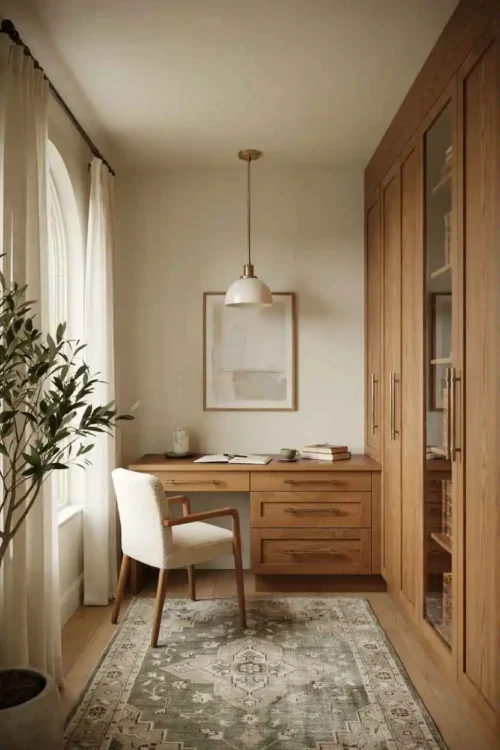
Drawer pulls, light fixtures, and visible hardware all match in finish—brass, black, brushed nickel, or chrome. Visual consistency reduces the busy feeling. Small details cohere instead of competing.
Mismatched hardware creates subtle visual noise that adds up across a small room. Five different metal finishes read as chaos even when each individual piece looks fine. Unifying the finish creates the polished look custom designers achieve.
Plan finish changes during natural replacement cycles. Replacing every fixture at once gets expensive—swap as items wear out or break.
Final Thoughts on Small Office Interior Design
Small-room design isn’t about cramming style into limited space. It’s about subtracting visual weight until the room can breathe. Every successful small office removes more than it adds.
The temptation in small rooms is to overcompensate with decoration. Resist it. The best small offices feel curated and calm because the designer made hard choices about what stayed and what left. Empty wall space isn’t a problem—it’s a feature.
FAQ About Small Office Interior Design
Does dark paint always make a small room feel smaller?
Not always. Dark walls in tiny rooms can actually work if executed deliberately—painting all four walls plus the ceiling the same dark shade creates a cocoon effect that reads as intentional rather than cramped. The mistake is painting only one or two walls dark while leaving others light, which highlights how small the room is.
Should I match the office design to the rest of my home or treat it separately?
Match the general palette but allow the office its own personality. A completely different design language in one room creates visual whiplash when you walk through the house. Use the same color family but introduce one element—a bold light fixture or unique art piece—that signals this space is for focused work.
How much should I spend on small office design before it stops making a difference?
Most visual impact comes from the first few decisions: paint color, one quality light fixture, cable management, and decluttering surfaces. Beyond about $500-800, you hit diminishing returns unless you’re renovating structurally. Big budgets often produce worse results because they tempt over-decoration.
Sarah Mitchell’s Take
I designed my first home office three times before realizing the problem wasn’t what I added but what I refused to remove. Once I committed to keeping only what actively served daily work, the 80-square-foot room felt twice its size. The discipline of subtraction matters more than the talent of decoration.