
Introduction
You clean your desk, it looks good… and then a few days later it’s messy again. Papers show up, cables get mixed in, and small stuff just starts sitting there.
It’s not really about space. It’s more about not having a simple place for things. When there’s no clear spot, everything just stays out.
A basic setup fixes most of it. Keep the surface for work, move extra stuff off the desk, and make it easy to put things back without thinking.
If your desk still ends up cluttered after trying this, it usually means your setup is missing a proper desk system. That’s where most people get stuck → desk organization idea
Create Vertical Storage to Free Desk Space
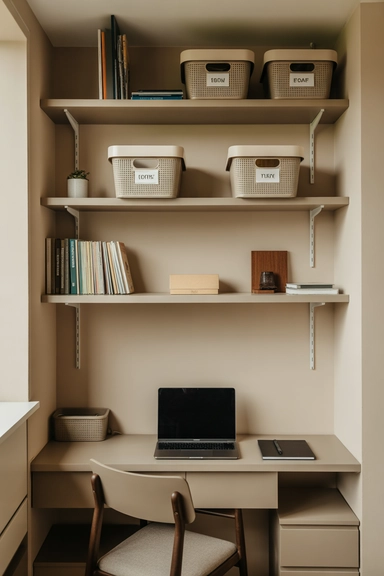
This usually happens slowly. You put one thing on the desk, then another… and after a few days there’s barely any space left.
The desk isn’t the problem. It’s just doing too much.
Try moving a few things off it. Not everything. Just the stuff you keep touching again and again.
A simple shelf or even a small pegboard helps. Once a bit of space opens up, it feels easier to work. Hard to explain, but you notice it.
Another thing people miss is how things spread. Even small items like chargers, notebooks, or random tools start taking over when they don’t have a place. Moving just a few of these off the desk changes how the whole space feels.
Keep the important stuff close. The rest can sit higher where it doesn’t get in your way.
You don’t need a perfect setup here. Just enough to stop things from piling up in front of you again.
That’s it. Clear desk, less mess coming back.
Use Drawer Units to Separate Office Supplies
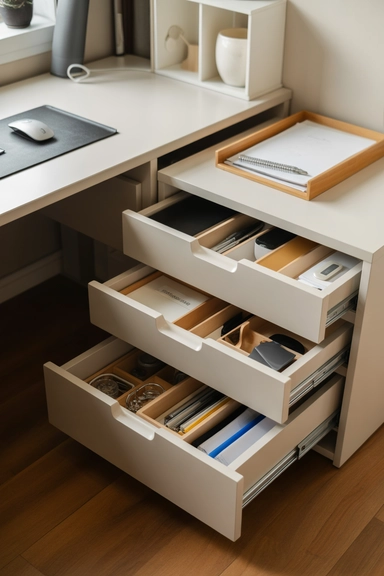
This is where most desks lose control. Not the big items, the small ones. Pens, cables, sticky notes… they don’t look like much, but they take over fast.
Leaving them on the desk feels fine for a day. Then you start shifting things around just to find space.
Drawers fix that, but only if you keep them simple. Don’t just dump everything inside. Give each type of item a rough spot so it’s easy to drop things back in without thinking.
Even basic dividers help. Nothing fancy. Just enough to stop everything from turning into one pile.
Place the drawer unit somewhere you can reach without getting up. If it’s easy to access, you’ll actually use it. If not, things go back on the desk.
One small habit that works: at the end of the day, toss everything back into its spot. Takes a minute, saves you from a messy desk the next morning.
Once the small stuff is handled, the whole workspace feels calmer. Less searching, less shifting things around, more actual work getting done.
If small items keep spreading even after using drawers, it usually means your overall setup needs a smarter system, not just more storage → small space storage ideas
Use Wall Shelves Without Making Them Messy
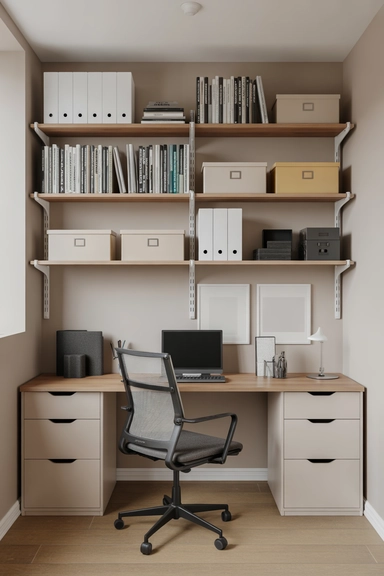
Wall shelves help a lot, but they can also go wrong fast. You add a few things, then keep adding… and suddenly it looks crowded again.
The idea is simple. Use shelves to get things off your desk, not to create another place for clutter.
Keep similar items together so you’re not searching every time. Books in one area, files in another, small stuff inside a box instead of scattered around.
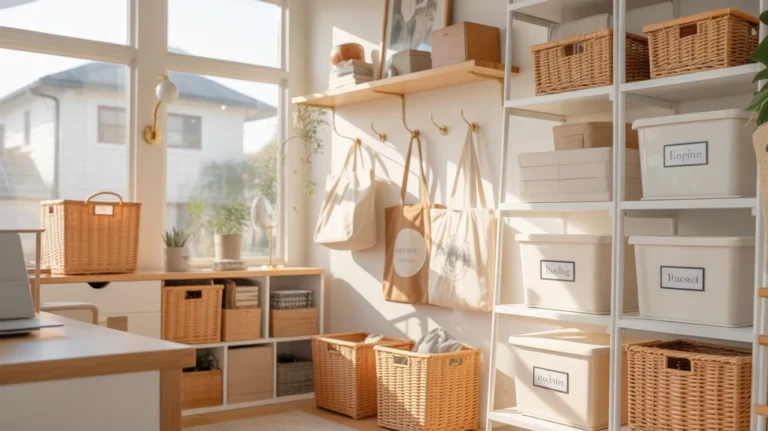
Matching boxes or baskets make a difference too. When everything looks a bit consistent, the whole setup feels calmer without trying too hard.
Try not to fill every inch. Leaving a little space actually helps more than packing everything in.
Once shelves are used this way, they stay useful instead of turning into another messy spot.
Use a Pegboard for Flexible Storage
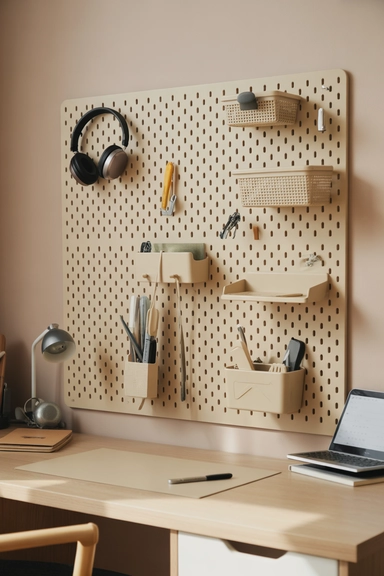
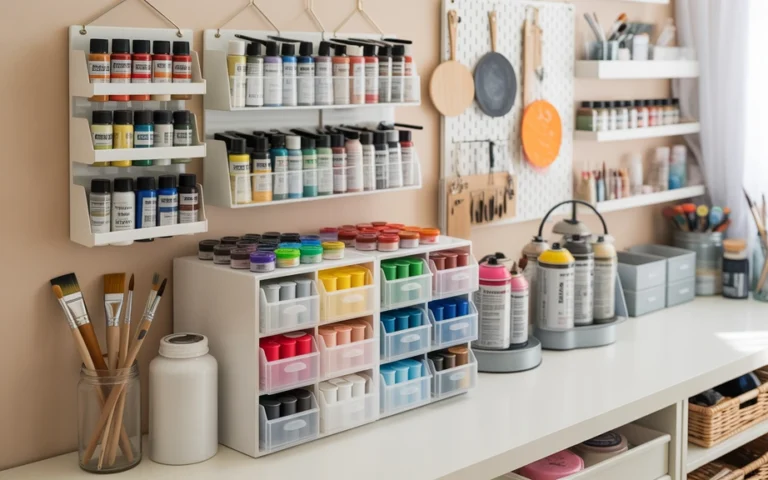
Pegboards are useful because you can change them anytime. Your setup changes, your work changes, and this adjusts with it.
You can hang headphones, tools, small containers… whatever you use often. It keeps things off the desk without hiding them.
But this is where people mess up. They keep adding more and more until the board looks packed.
Keep it light. Group similar things together so it doesn’t feel random every time you look at it.
Using the same type of hooks or containers helps too. It keeps things from looking messy even when there’s a lot on it.
The goal isn’t to fill the board. Just make it easier to grab what you need without digging through drawers.
Once it’s set up right, you don’t really think about it. You just use it..
Use Closed Cabinets to Hide the Mess
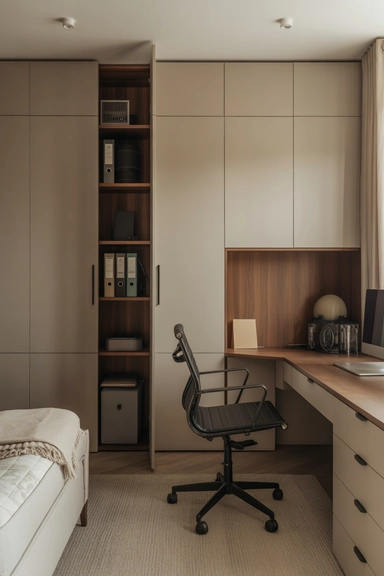
Some things just don’t look good sitting out all the time. Papers, extra supplies, random tech… they make the space feel busy even if everything is “organized.”
That’s where cabinets help. You put that stuff away, and the room instantly feels calmer.
But don’t just throw everything inside and shut the door. That turns into another problem later.
Give things a rough order inside. Papers together, backup supplies in one spot, cables somewhere separate. It doesn’t have to be perfect, just enough so you can find things without digging.
The outside stays clean, the inside stays usable. That balance is what keeps the whole workspace from feeling overwhelming.
Use Desktop Trays to Control Paper Flow
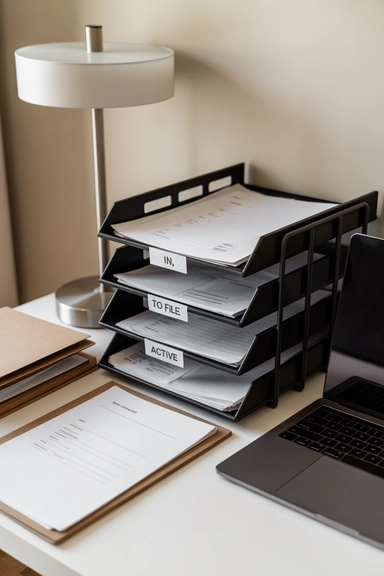
I used to let papers sit on my desk thinking I’ll deal with them later. Then suddenly there’s a pile and I don’t even know what’s important anymore.
What helped was keeping it really simple. I just used a couple of trays. One for stuff that just came in, one for things I’m working on, and one for things I need to file.
Nothing fancy. Just giving papers a place so they don’t sit everywhere.
If space is tight, stacking trays works better. Keeps everything in one spot instead of spreading across the desk.
I tried labeling too, but only simple labels. If it gets complicated, I know I won’t follow it.
Once I started doing this, papers stopped piling up randomly. I don’t have to clean the desk again and again. It just stays under control.
Incorporate Rolling Carts for Flexible Storage
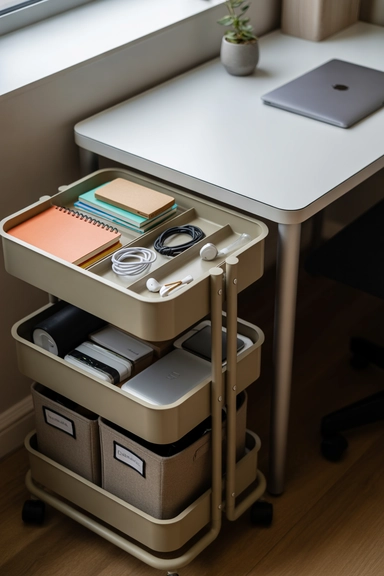
Rolling carts provide adaptable home office storage ideas that move with your workflow rather than staying fixed in one spot. They are ideal for storing frequently used supplies like notebooks, chargers, and crafting tools that need to remain accessible but not permanently on the desk.
When not in use, the cart can slide under a desk or beside a cabinet, keeping the workspace visually open while still functional.
Organize each tier by purpose so the cart remains efficient instead of becoming a catch-all. Use small containers or drawer inserts to keep items separated and easy to locate.
Pairing mobile storage carts, labeled bins, and a consistent reset routine ensures the cart supports productivity instead of adding clutter. Over time, flexible storage like this helps maintain a clean workspace while adapting to changing tasks and work habits.
Use Bookcases Without Making Them Look Busy
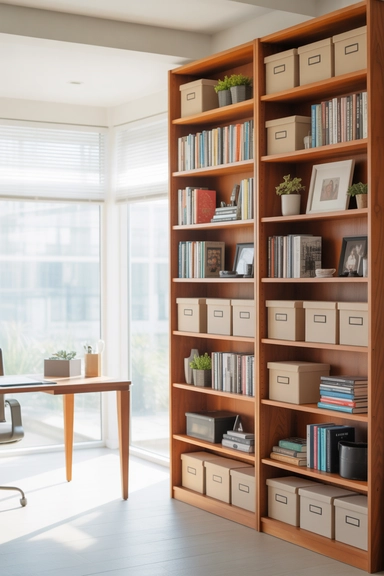
I used to treat a bookcase like a place to dump everything. Books, boxes, random stuff… it looked full but not useful.
What worked better was being a bit selective. I kept books I actually use in one area and used a few boxes for smaller items instead of leaving them out.
Mixing open and hidden storage helped a lot. Some things stay visible, the rest go inside baskets so it doesn’t feel messy.
I also stopped filling every shelf. Leaving a bit of space makes the whole setup look cleaner, even if nothing else changes.
It’s not about making it look perfect. Just keeping it usable so I’m not shifting things around every time I need something.
Create Drawer Systems That Separate Small Supplies
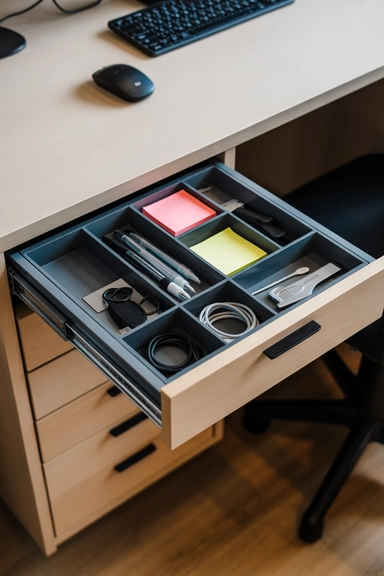
I’ve had drawers that looked organized for a day… then turned into a mess again. Everything just ends up in one pile and you keep digging through it.
What helped was giving things a rough spot inside the drawer. Pens in one area, cables somewhere else, small tools separate. Nothing too strict, just enough so things don’t mix.
I tried fancy organizers before, but honestly simple dividers work better. If it’s too complicated, I won’t keep up with it.
Now I just drop things back where they belong without thinking much. That’s what actually keeps it working.
Once drawers stay under control, the desk stays cleaner too. Less stuff spreading out, less time wasted looking for things.
Add Vertical Shelving Above the Desk
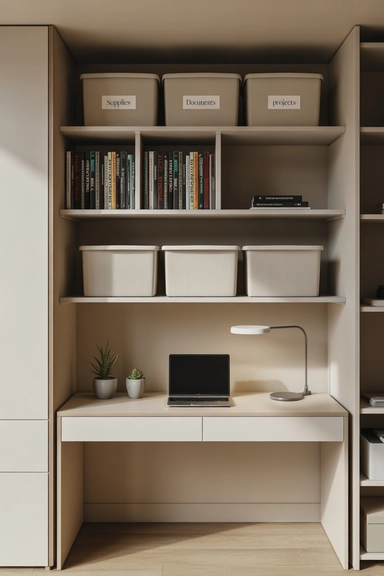
I added shelves above my desk thinking it would fix everything. At first it helped… then I started putting too much up there and it felt heavy again.
What worked better was keeping only useful stuff there. Books I actually open, a few boxes, nothing random.
If everything sits at eye level, it gets distracting. So I keep the things I use daily within reach and push the rest a bit higher.
Bins help here too. If small things stay loose, they spread fast. Putting them in one place keeps it under control.
Now the desk stays clear, and the shelves don’t feel like they’re taking over the space.
Use Clear Containers Without Overdoing It
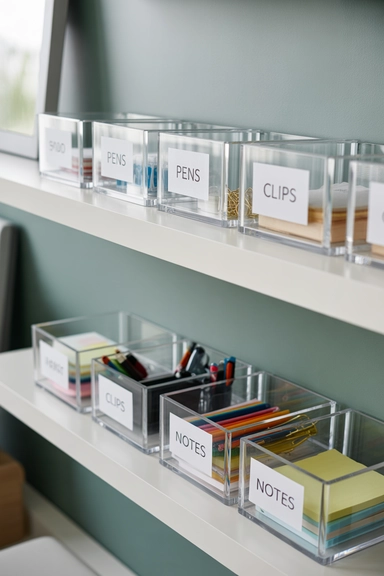
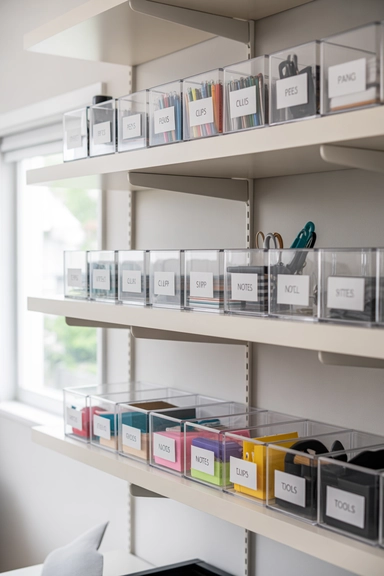
I switched to clear boxes for a few things and that was enough. I can see what’s inside, grab it, and put it back.
I keep them for small stuff that used to get lost. Pens, cables, bits and pieces. If it goes in a box, it stays there.
Too many boxes looks messy again, so I don’t add more unless I need them.
A couple stacked works fine when space is tight. No heavy labeling, just basic use.
It’s simple, but it stops me from digging around and making a mess.
Use Under-Desk Storage to Free Surface Space
I ignored the space under my desk for a long time. Then I added a small drawer unit and it cleared the surface right away.
I keep only a few things down there. Stuff I use often but don’t want on the desk all the time.
Big units don’t work for me. They get in the way of my legs. Slim drawers or a small cabinet fits better.
Inside, I keep it basic. Same idea as other drawers. Rough spots for each type so things don’t mix.
If it’s easy to reach, I use it. If not, things end up back on the desk. So I keep it simple and within reach.
It’s not a big change, but it keeps the top clear without extra effort.
Use File Storage So Papers Don’t Take Over
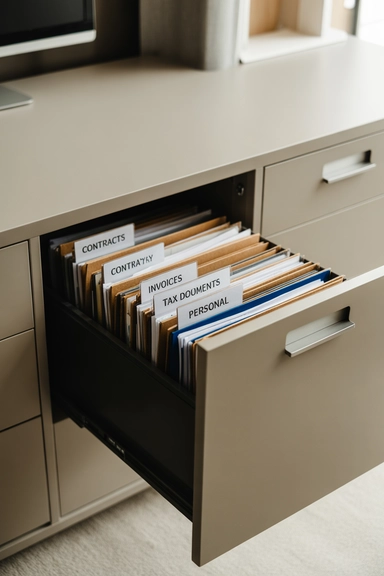
I used to keep important papers in small piles thinking I’d organize them later. That never really happened, and things just kept stacking up.
Getting a simple file setup fixed most of it. Nothing big, just a small cabinet where everything goes.
I keep it basic inside. Bills in one place, documents in another. If it has a spot, it doesn’t end up on the desk.
I don’t over-label everything. Just enough so I can find things without opening every section.
Once papers go straight into files instead of sitting out, they stop building up. The desk stays clear without extra effort.
Add Cube Storage for Flexible Organization
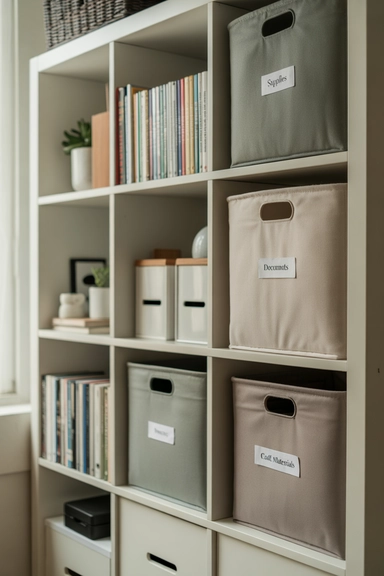
I tried cube storage thinking it would organize everything in one go. It helped, but only after I stopped treating every cube the same.
At first I was mixing random stuff in each section, and it just looked messy again. What worked better was giving each cube one purpose.
Books in one, small items inside a box in another. Once I kept it simple, it started making sense.
I don’t fill every cube either. Leaving one or two a bit empty actually makes the whole setup feel cleaner.
It’s flexible, which is why I like it. I can change things around without redoing everything.
Hide Cables So They Don’t Take Over
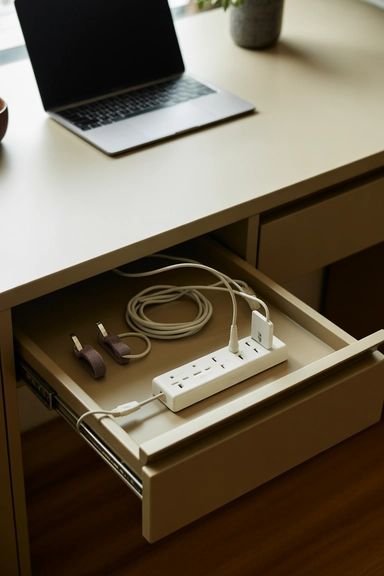
Cables were the thing that kept messing up my desk. Everything else looked fine, but wires made it feel cluttered again.
I stopped leaving chargers out and put a small box under the desk for them. Power strip goes in there, cables stay in one place.
I use a couple of clips so wires don’t tangle. Nothing fancy, just enough to keep them from spreading.
If more than one device is plugged in, I label the chargers lightly. Saves time later.
Once the wires are out of sight, the desk looks cleaner without doing anything else
Use Floating Cabinets for Modern Storage
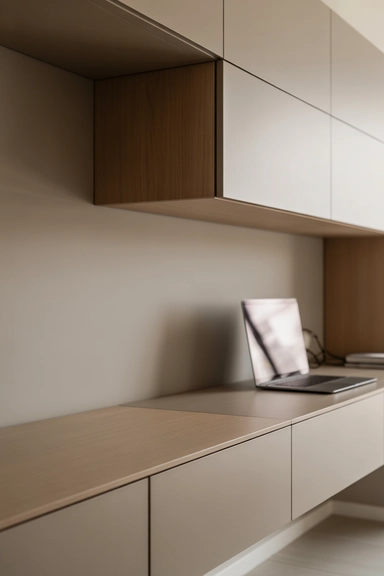
I didn’t think cabinets would help much until I tried floating ones. The space under them staying open actually makes a difference.
They hold the stuff I don’t need all the time, so it’s not sitting out in front of me.
Inside, I keep it simple. A few dividers, maybe a box or two. If I overfill it, it turns into the same mess again.
I keep the things I reach for most near the front so I’m not digging around.
It’s a small change, but the room feels less heavy when storage isn’t sitting directly on the floor.
Use Pegboard Walls for Adjustable Organization
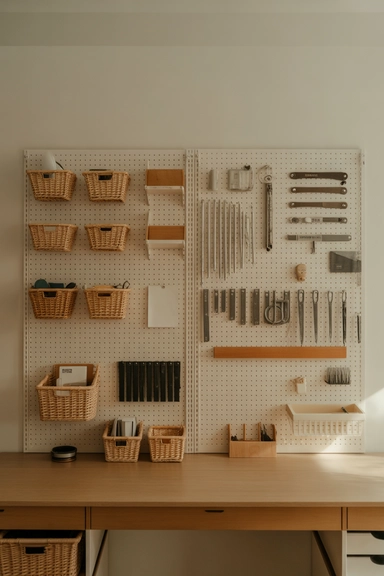
I’ve gone back and forth with pegboards a few times. They’re useful, but only when I don’t overload them.
I hang the things I keep reaching for. Headphones, a couple of tools, small stuff that usually sits on the desk.
The good part is I can move things around anytime. If my setup changes, I just shift a few hooks instead of redoing everything.
I keep similar things together so it doesn’t look random. If I start adding too much, it gets messy again, so I stop there.
It’s not about filling the board. Just making it easier to grab what I need without cluttering the desk.
Add Storage Towers for Vertical Efficiency
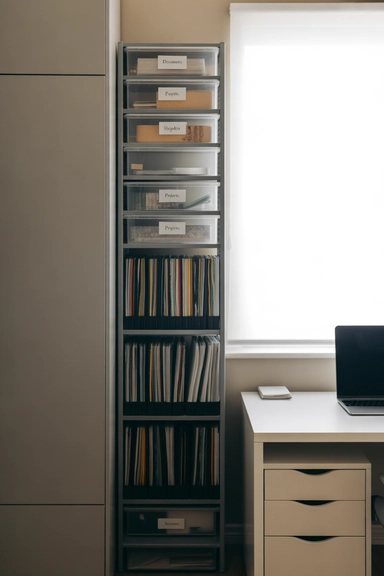
I added a tall unit next to my desk mostly out of frustration. Stuff was everywhere and I was tired of moving things around.
Now everything just goes there. Files on one shelf, random supplies on another. I don’t overthink it.
If I start filling every shelf, it gets messy again. So I leave some space and stop there.
Small stuff goes in a box. Otherwise it just disappears or ends up back on the desk.
It’s not perfect, but at least things don’t keep spreading all over the room anymore.
Keep the Desk Clear So It Stays Usable
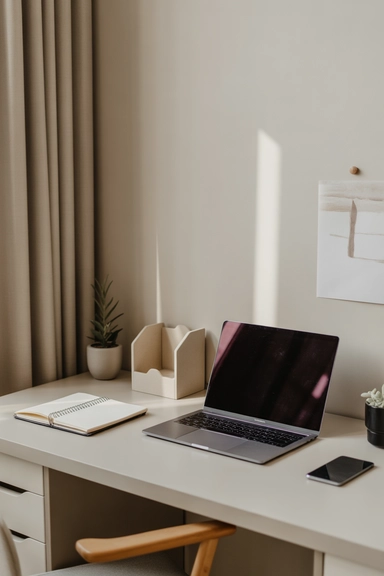
I noticed when my desk is full, I don’t feel like working. Even small things sitting around start getting in the way.
So I keep only what I actually use on it. Laptop, maybe a notebook, that’s it.
Everything else goes somewhere else. Drawers, shelves, whatever works. If it stays on the desk, it ends up piling up again.
I tried keeping more things “within reach” before, but that just made it messy faster.
Now I keep the surface almost empty. It feels better, and I don’t have to clean it again and again.
Use Label Systems for Long-Term Organization
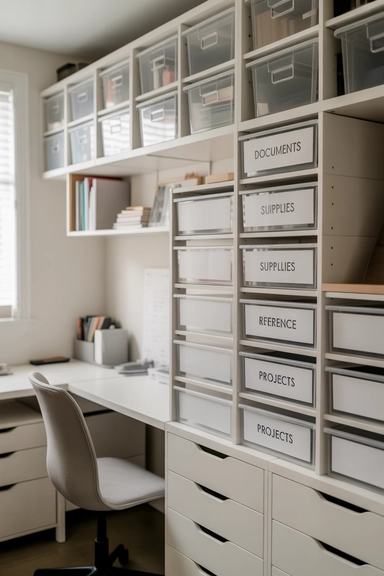
I didn’t like labeling at first. Felt unnecessary. But without it, things kept ending up in random places.
Now I just add simple labels where it makes sense. Nothing fancy. Just enough so I don’t have to think about where something goes.
It helps more than expected, especially if you’re sharing the space or using it for different things.
I don’t label everything though. Only the spots where things tend to get mixed up.
Once things have a clear place, they actually go back there. That’s what makes the difference.
Use Modular Storage That Adapts Over Time
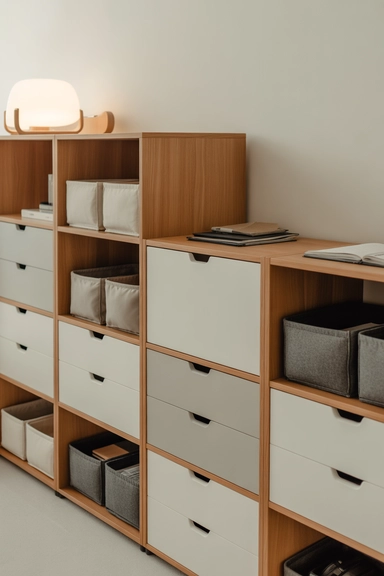
Flexible systems are key for lasting home office storage ideas, especially when work needs evolve. Modular shelving, drawers, and cabinets can be rearranged as storage requirements change.
This adaptability prevents the need for frequent furniture replacements and keeps the workspace functional. Modular units also allow you to expand storage gradually without overcrowding the room.
Choose neutral storage components that can be reconfigured easily. Assign each module a clear purpose so the system remains structured.
Combining home office storage ideas ikea style modular units with labeled bins ensures long-term organization. Over time, adaptable storage systems support productivity while maintaining a clean and efficient workspace.
Keep a Weekly Reset Routine
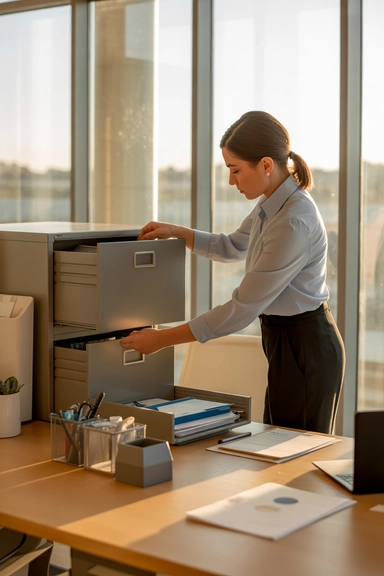
Even the best systems require maintenance, making routines essential home office storage ideas. A weekly reset ensures papers, supplies, and equipment return to their proper places before clutter builds up.
This short routine prevents small messes from becoming overwhelming and keeps storage systems functioning properly.
Set aside a consistent time each week to file documents, restock supplies, and clear the desk. Pairing routines with small home office storage ideas like drawer organizers and labeled bins ensures everything stays manageable.
Over time, regular resets reinforce organization habits and maintain a clear, productive workspace.
Combine Style With Functional Storage
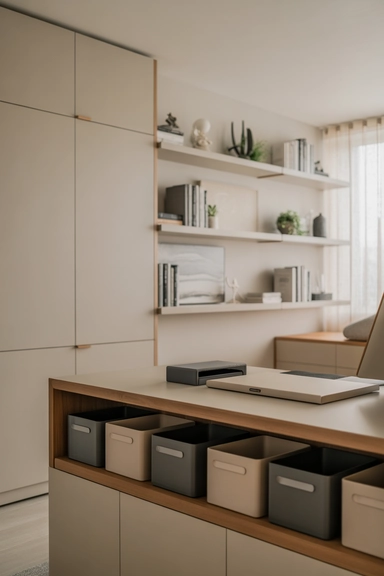
I used to focus only on storage, then the space started looking off. Or I’d make it look nice and it stopped being practical.
What worked was keeping both in check. Use simple bins, keep colors similar, and don’t mix too many styles.
I keep the useful stuff easy to reach and let the rest sit in cabinets or boxes. A couple of small details for looks is enough. Anything more and it starts getting in the way.
When it looks clean and still works day to day, it’s easier to keep it that way.
Conclusion
I tried a lot of different setups, but what actually worked was keeping things simple and consistent.
Once everything had a clear place, the mess stopped coming back as fast. I didn’t have to keep reorganizing all the time.
It’s not about adding more storage. It’s about using what you have in a way that makes sense day to day.
If the system is easy, you stick with it. That’s what keeps the workspace clear in the long run.
If your desk still keeps getting messy even after trying these, you’re probably missing a simple setup most people overlook → desk organization ideas