
A home does not feel overwhelmed because of too many papers. It feels overwhelmed when there is no clear system to manage them.
Bills, documents, and records quickly pile up when everything is scattered. You waste time searching, rechecking, and dealing with the same clutter again and again.
The best home file organization ideas focus on simple systems that keep everything visible, accessible, and easy to maintain without constant effort.
With the right setup, paperwork becomes manageable, your space feels lighter, and daily tasks become much easier.
If clutter keeps building back up, this is the system most people miss → pro organizing hacks to declutter your space
Designing a Functional Home Office Layout
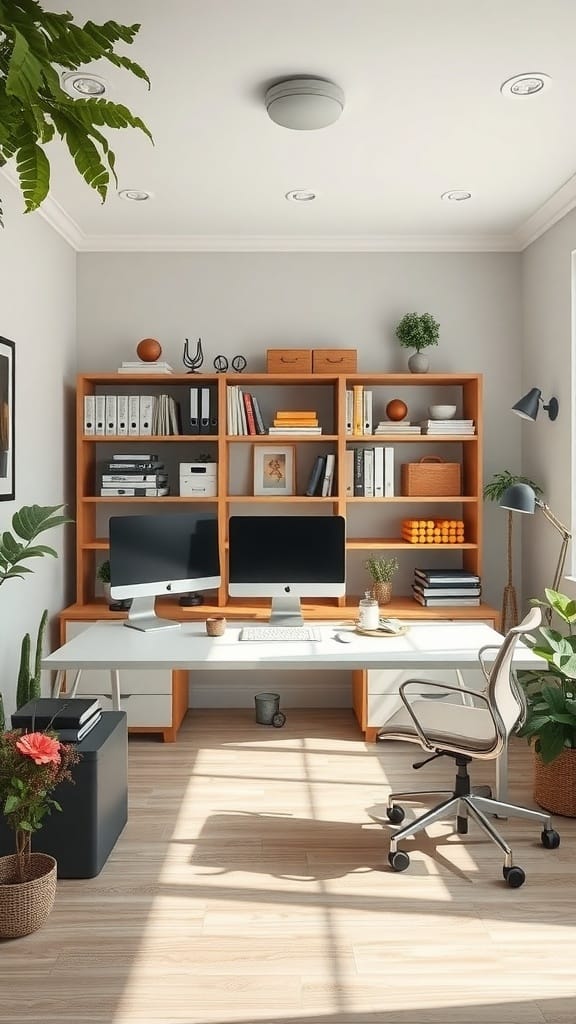
Creating a home office that works for you is key to productivity. The image shows a bright and organized workspace that balances style and function. The light wood flooring and natural light create a welcoming atmosphere.
The desk is spacious, allowing for two monitors, which is great for multitasking. Having everything within reach helps keep distractions at bay. The clean lines of the furniture contribute to a streamlined look.
Storage is essential in any office. The shelves above the desk are perfect for keeping files and books organized. This setup not only looks neat but also makes it easy to find what you need quickly. Adding a few decorative items, like plants and personal touches, can make the space feel more inviting.
Consider your layout carefully. Positioning your desk near a window can boost your mood and energy. The greenery in the image adds a nice touch of nature, which can enhance focus and creativity.
Creating a Mail Station for Incoming Documents
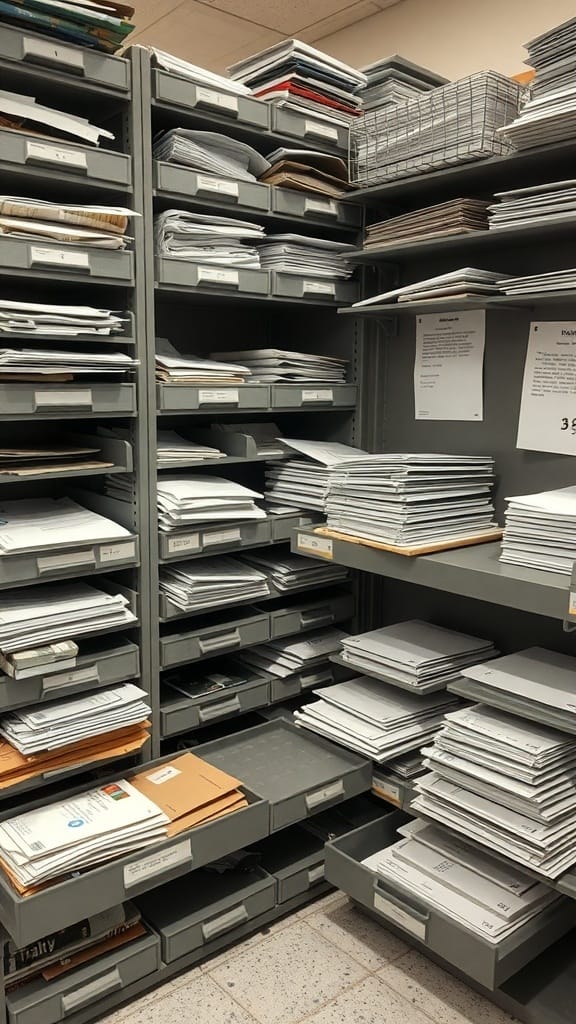
Setting up a mail station can make managing incoming documents a breeze. The image shows a well-organized space with shelves and drawers, perfect for sorting mail. This setup helps keep everything in its place, reducing clutter and stress.
Start by designating a specific area in your home for this station. Use shelves to store different types of mail, like bills, magazines, and important documents. Labeling each section can help you find what you need quickly.
Consider adding trays or bins for items that need immediate attention. This way, you won’t forget to pay that bill or respond to an important letter. A simple system can save you time and keep your space tidy.
Remember, the goal is to create a system that works for you. Feel free to adjust the layout or add personal touches. With a little effort, your mail station can become a functional part of your home.
When incoming papers are not controlled, they quickly pile up and create constant clutter.
This is how to keep everything sorted and easy to manage → home command center ideas
Incorporating Digital Tools for Paperless Organization
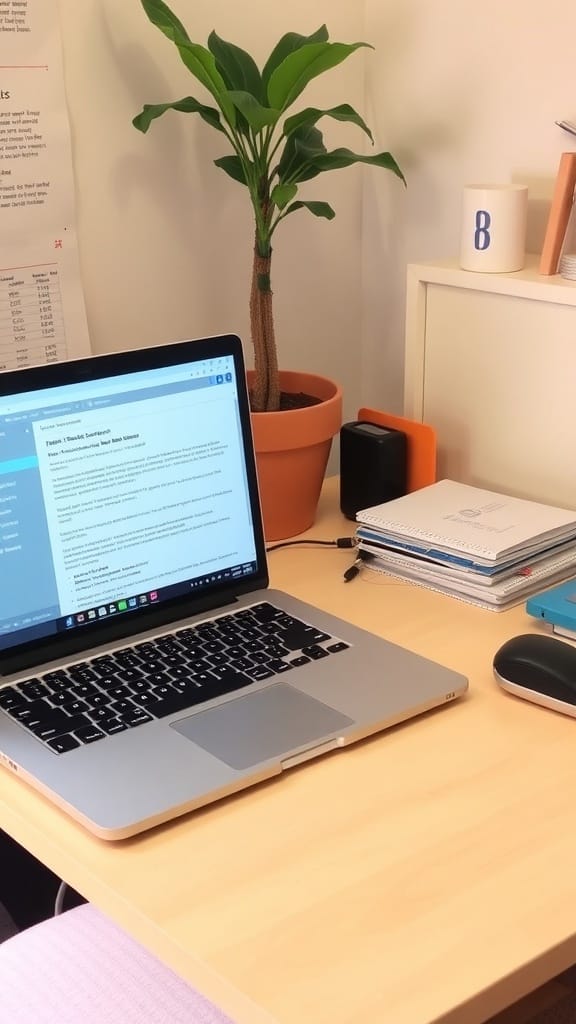
In today’s busy lives, keeping everything organized can feel overwhelming. The image shows a tidy workspace with a laptop, a plant, and some notebooks. This setup is perfect for anyone looking to streamline their paperless organization.
Using digital tools can help you manage your files without the clutter of paper. Apps like Evernote or Notion allow you to take notes, create to-do lists, and store important documents all in one place. This way, you can access everything you need from your laptop or phone.
Having a clean workspace, like the one in the image, also boosts productivity. The plant adds a touch of nature, making the environment more inviting. A simple setup can keep distractions at bay and help you focus on what matters.
Consider scanning important documents and saving them in cloud storage. This not only saves space but also keeps your files secure and accessible from anywhere. Plus, you can easily share them with others when needed.
Overall, embracing digital tools for organization can make your life simpler and more efficient. With a little effort, you can create a paperless system that works for you.
Implementing a Shredder for Sensitive Documents
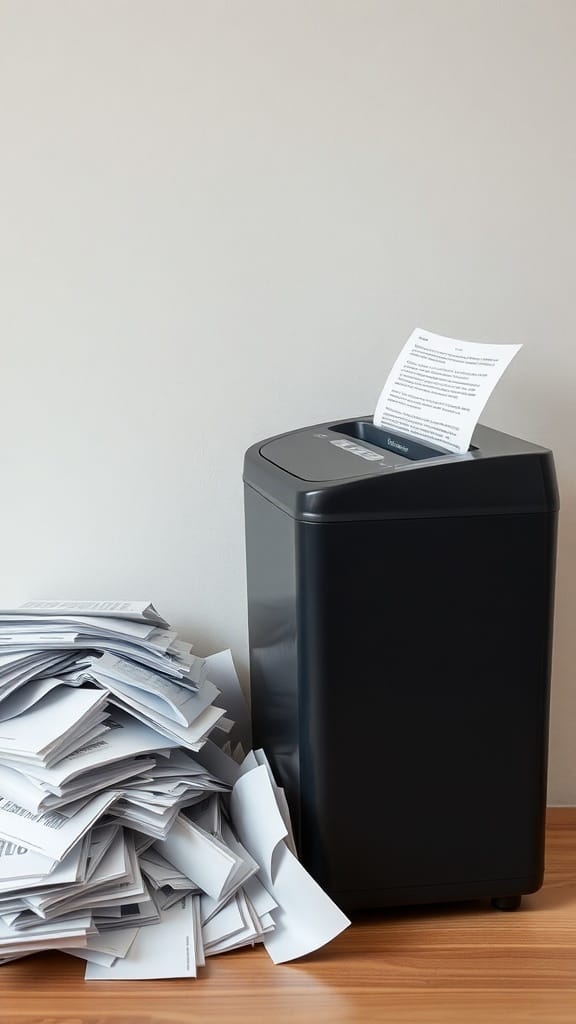
Keeping your home organized includes managing sensitive documents. A shredder is a handy tool for this task. It helps you dispose of papers securely, protecting your personal information from prying eyes.
The image shows a shredder next to a pile of documents waiting to be shredded. This setup highlights the importance of having a dedicated space for document disposal. It’s a simple way to keep your workspace tidy while ensuring that confidential information is handled properly.
When you have a shredder, you can easily turn unwanted papers into tiny pieces. This not only clears clutter but also gives you peace of mind. You won’t have to worry about identity theft or sensitive information falling into the wrong hands.
Make shredding a regular part of your routine. Set aside a few minutes each week to go through your papers. Toss in anything you no longer need and let the shredder do its job. It’s a quick and effective way to maintain an organized home.
Establishing a Daily Sorting Routine
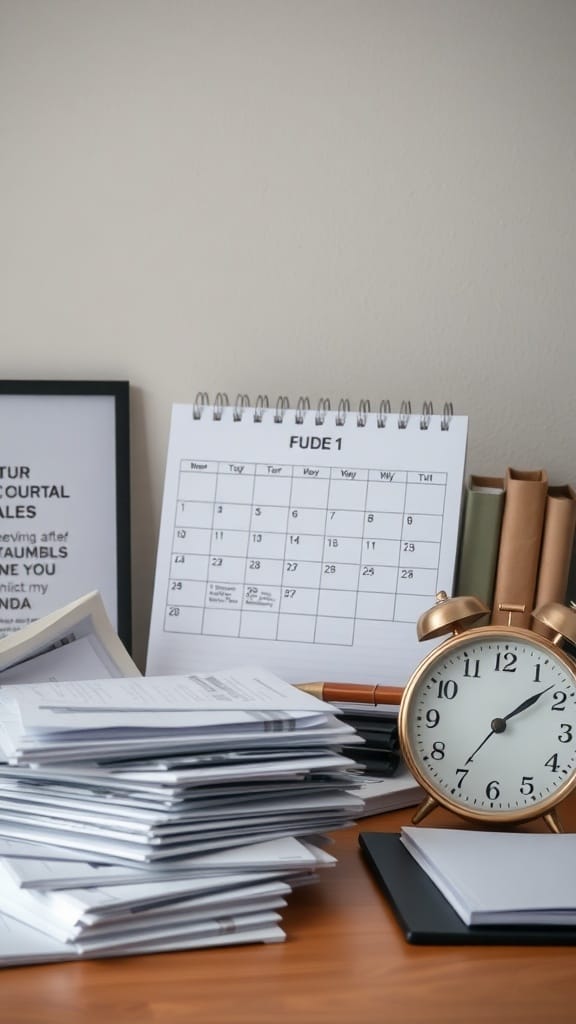
Creating a daily sorting routine can make a big difference in keeping your home organized. The image shows a workspace filled with a calendar, a clock, and stacks of papers. This setup is perfect for establishing a system that works for you.
Start by setting aside a specific time each day to sort through your papers. Use the calendar to mark this time, making it a part of your daily schedule. A consistent routine helps you stay on top of things and prevents clutter from piling up.
The clock in the image reminds us that time management is key. Allocate a short, focused period for sorting. You don’t need hours; even 15 minutes can be effective. Use this time to go through mail, documents, and other papers, deciding what to keep, toss, or file away.
Having a designated spot for important papers is essential. The stacks of papers in the image suggest that organization is needed. Consider using folders or binders to keep everything in order. Labeling these can make finding what you need much easier.
Finally, don’t forget to review your system regularly. Check your calendar to see if your routine is working or if adjustments are needed. A little daily effort can lead to a more organized and stress-free home.
Using Clear Storage Bins for Easy Access
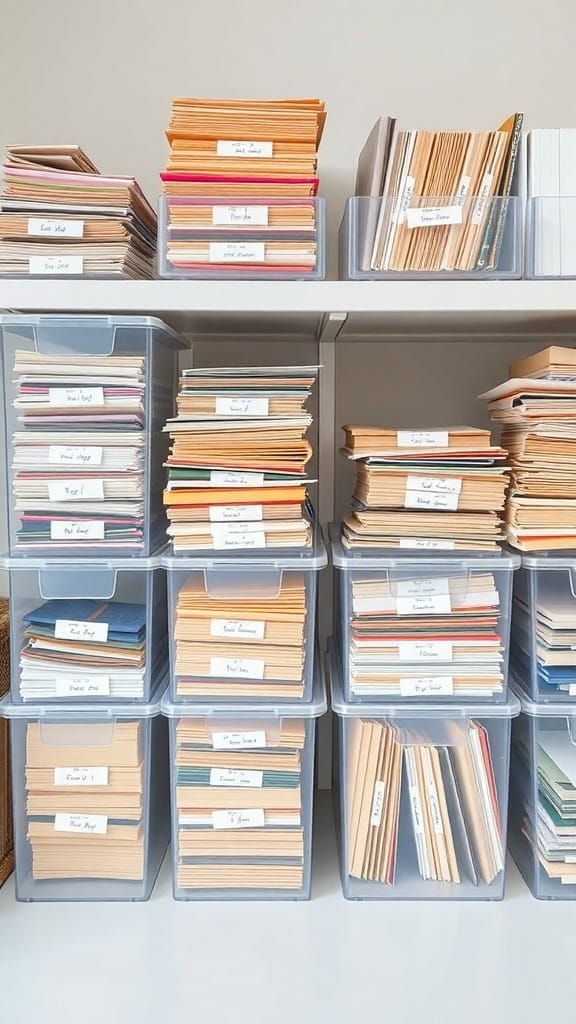
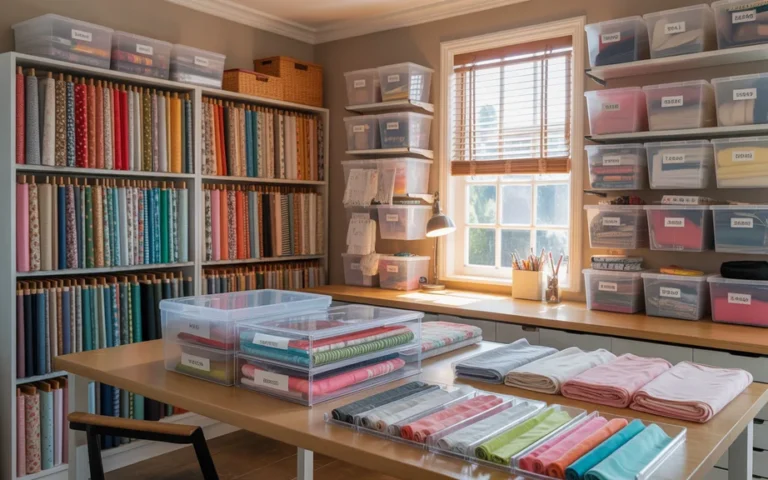
Clear storage bins are a fantastic way to keep your home organized. In the image, you can see a neat arrangement of labeled bins filled with various folders. This setup makes it easy to find what you need without rummaging through piles of papers.
Using clear bins allows you to see the contents at a glance. You won’t have to open every box to find a specific document. This saves time and reduces frustration. The labels on each bin help you quickly identify where everything is stored.
Consider grouping similar items together. For example, you might have one bin for bills, another for important documents, and a third for personal projects. This way, everything has its place, and you can maintain order in your space.
Another benefit of using clear bins is their versatility. They can fit in various spaces, from shelves to closets. Plus, they come in different sizes, so you can choose what works best for your needs. Keeping your home organized with clear storage bins is a simple yet effective solution.
When everything is visible, it becomes much easier to stay organized without things piling up again.
This is what keeps storage systems simple and effective → home organization ideas
Creating a Centralized Filing System

Having a centralized filing system can make a world of difference in your home organization. The image shows a well-arranged workspace with a mix of binders, files, and decorative elements. This setup not only looks tidy but also serves a practical purpose.
Start by choosing a dedicated space for your filing system. The shelves in the image are perfect for storing various documents. Use labeled binders and boxes to categorize important papers. This way, you can easily find what you need without rummaging through piles of paperwork.
Don’t forget to include a few decorative touches, like plants or framed art, to make the space inviting. A comfortable chair and a clean desk area, as seen in the image, can also enhance your productivity. Remember, a well-organized space can help reduce stress and keep you focused on your tasks.
Without a central system, papers spread across different areas and become hard to manage.
This is what actually keeps everything in one place → organization storage ideas
Utilizing Color-Coded Binders
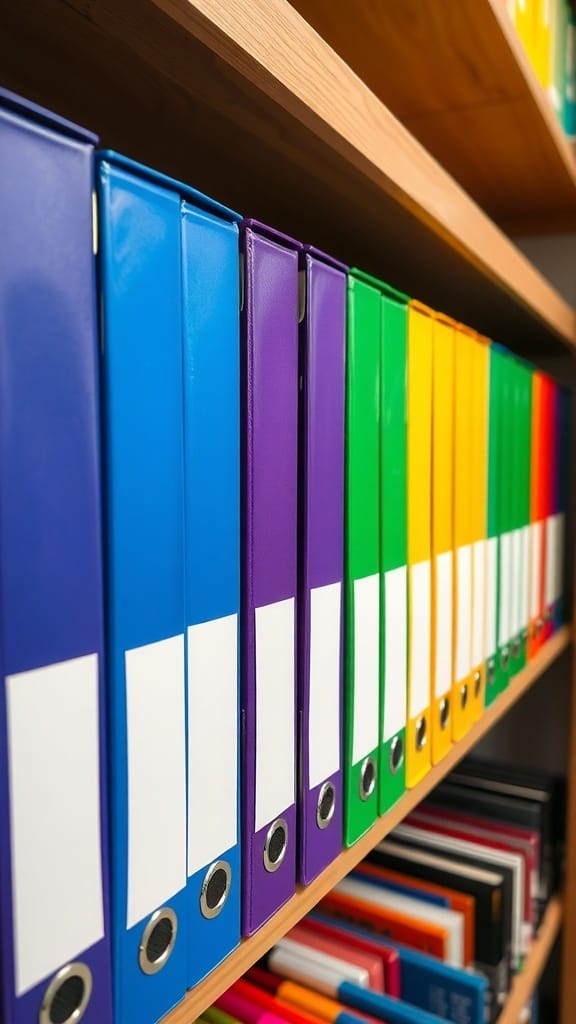
Color-coded binders are a fun and effective way to keep your home files organized. Just look at that vibrant row of binders! Each color can represent a different category, making it easy to find what you need.
For example, you might use blue for financial documents, green for health records, and yellow for school-related papers. This way, when you need to grab something quickly, you can spot the right binder at a glance.
Labeling the binders is just as important. Use clear labels on the spines to identify the contents. This adds another layer of organization and helps everyone in the household know where to find things.
Not only do color-coded binders help with organization, but they also add a pop of color to your space. A neat and colorful shelf can brighten up any room. So, gather your binders, pick some colors, and start sorting!
Incorporating a Family Calendar for Important Dates
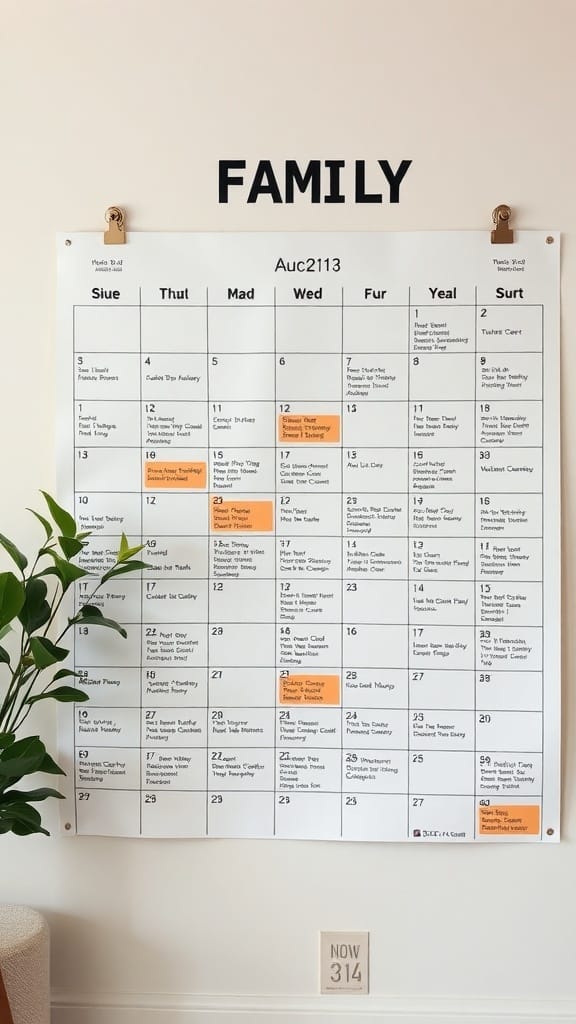
A family calendar is a fantastic way to keep everyone on the same page. The image shows a large calendar prominently displayed on a wall. It’s organized by days of the week and includes various activities and events. This makes it easy for family members to see what’s coming up at a glance.
Using a family calendar helps avoid scheduling conflicts. Everyone can add their important dates, like birthdays, appointments, or family outings. The bright colors used for certain events make it visually appealing and easy to spot important days.
Having a dedicated space for the calendar encourages family members to check it regularly. It can become a part of your daily routine, helping everyone stay informed and connected. Plus, it adds a personal touch to your home organization.
Creating a Yearly Filing Schedule
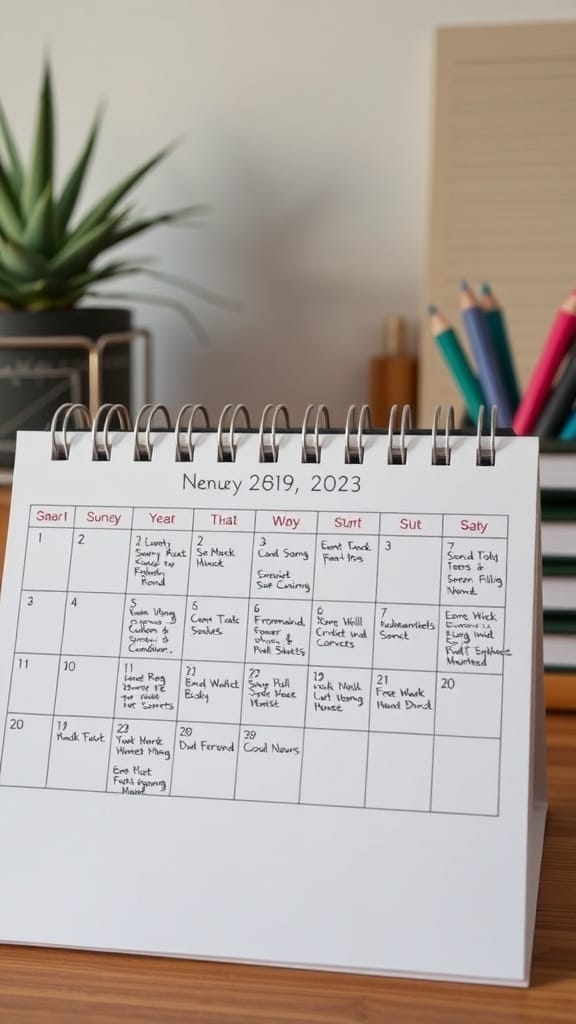
Having a yearly filing schedule can make organizing your home files much easier. The image shows a calendar that can help you plan out when to tackle different filing tasks throughout the year. This way, you won’t feel overwhelmed by everything piling up.
Start by marking important dates on your calendar. For example, set reminders for tax season or when to review your insurance documents. You can also schedule monthly check-ins to sort through papers and files. This will keep everything manageable and up to date.
Consider breaking down tasks into smaller chunks. Instead of trying to organize everything at once, focus on one category each month, like medical records or bills. This approach will help you stay on track without feeling stressed.
Lastly, make sure to keep your calendar visible. Place it in a spot where you’ll see it often, like your home office or kitchen. This will help you stay committed to your filing schedule and keep your home organized.
Creating a Backup System for Important Documents

When it comes to keeping your important documents safe, having a reliable backup system is key. The image shows a sleek external hard drive, a perfect tool for this task. It’s compact and easy to store, making it a great choice for home organization.
Start by gathering all your essential documents, like tax records, contracts, and personal identification. Once you have everything in one place, it’s time to transfer these files to your hard drive. This way, you’ll have a secure copy in case anything happens to the originals.
Don’t forget to label your files clearly. This will help you find what you need quickly. You can also consider using cloud storage for an extra layer of security. This combination of physical and digital backups ensures your documents are safe and accessible.
Establishing a Home Inventory System

Creating a home inventory system is a smart way to keep track of your belongings. The image shows a checklist alongside neatly organized binders, which is a great visual for this process. A checklist helps you stay focused and ensures you don’t miss anything important.
Start by listing all your items. You can categorize them by room or type, like electronics, furniture, or clothing. This makes it easier to find what you need later. The binders in the image suggest a simple yet effective way to store important documents related to your inventory.
Don’t forget to include details like purchase dates and values. This information can be helpful for insurance purposes. The checklist also serves as a reminder to update your inventory regularly, especially after major purchases or decluttering sessions.
Using a system like this can save you time and stress. When everything is organized, you’ll know exactly what you have and where to find it. Plus, it can make moving or downsizing much smoother.
Setting Up a Family Command Center
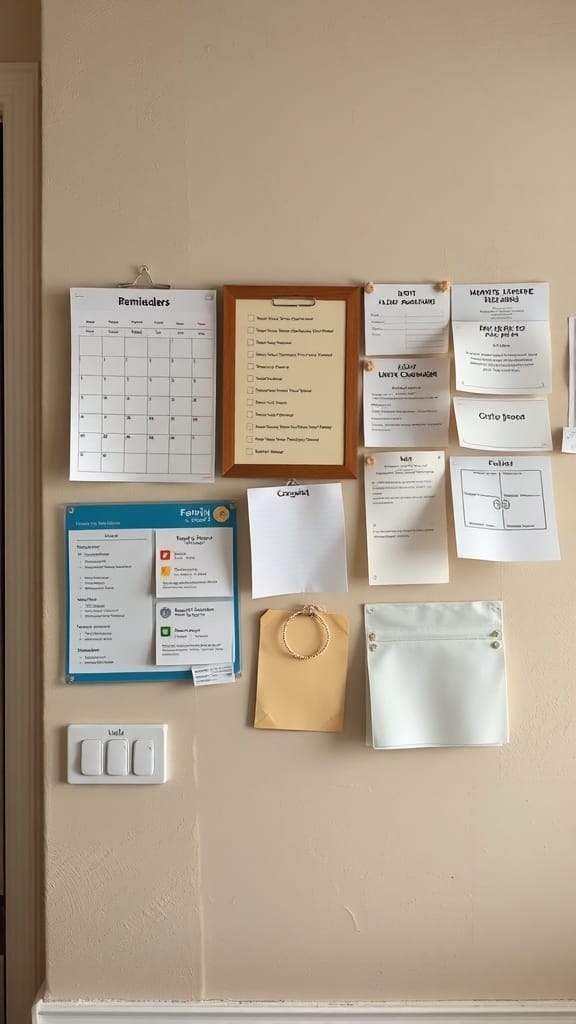
A family command center is a great way to keep everyone organized. The image shows a wall filled with useful tools for managing family life. You can see a calendar, reminders, and various notes all in one place.
The calendar helps everyone keep track of important dates and events. It’s a visual reminder of what’s coming up, so no one misses out. The reminders section is perfect for jotting down tasks that need attention, like appointments or school events.
There are also pockets for holding important papers. This keeps everything tidy and easy to find. Having a designated space for these items reduces clutter and makes it easier to stay on top of daily responsibilities.
Consider adding a whiteboard or chalkboard for quick notes or messages. This can be a fun way for family members to communicate. Overall, a family command center can make home life smoother and more organized.
Utilizing Vertical Space for File Storage

When it comes to organizing files at home, vertical space is your best friend. The image shows a sleek wall-mounted file organizer that makes great use of height. Instead of letting papers pile up on your desk, this design keeps them neatly arranged and easily accessible.
This type of storage solution is perfect for small spaces. By going vertical, you can free up valuable desk space for other tasks. The organizer in the image features multiple compartments, allowing you to categorize files by project or importance. This way, you can quickly grab what you need without digging through a messy stack.
Another benefit of vertical storage is that it can add a stylish touch to your home office. The minimalist design of the organizer shown not only serves a practical purpose but also enhances the overall look of the room. Choosing a design that complements your decor can make organizing feel less like a chore and more like a part of your home’s aesthetic.
Consider placing your file organizer near your workspace for easy access. You can label each section to make finding documents a breeze. With a little creativity, utilizing vertical space can transform your cluttered area into a tidy and efficient workspace.
Organizing Digital Files with Folders and Tags
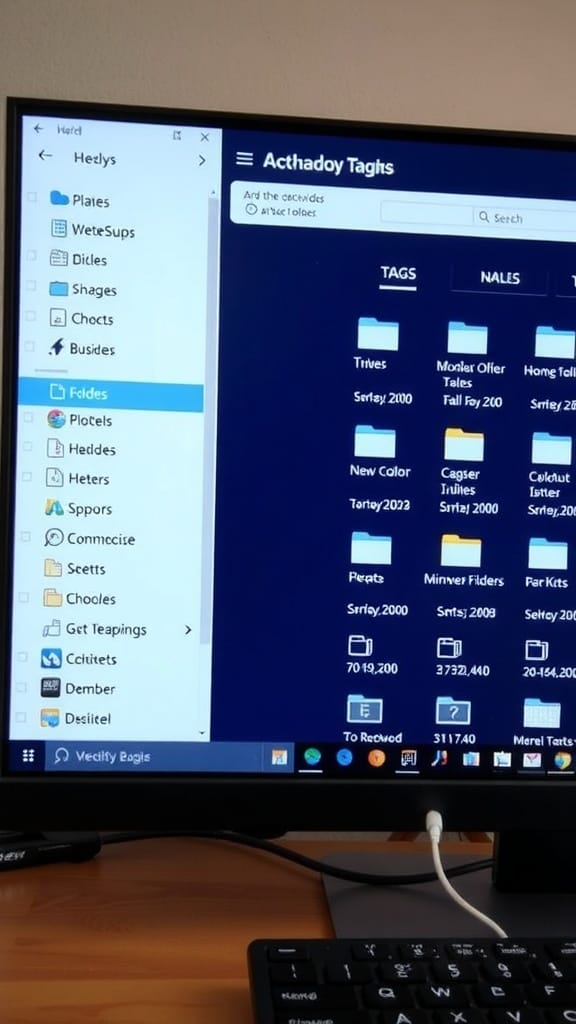
Keeping your digital files organized can make a huge difference in how easily you find what you need. The image shows a computer screen with a file management system. You can see various folders and tags on the left side, which help categorize files efficiently.
Using folders is a classic method for organizing files. You can create main folders for broad categories, like ‘Projects’ or ‘Personal,’ and then add subfolders for more specific topics. This way, everything has its place, and you won’t waste time searching.
Tags are another handy tool. They allow you to label files with keywords, making it easier to locate them later. For example, if you have a document related to multiple projects, tagging it with all relevant project names can save you from digging through several folders.
Combining folders and tags can create a powerful system. You might have a folder for ‘Reports’ and tag each report with the year, type, or project name. This method keeps your files tidy and accessible.
Take a moment to look at your current file organization. If it feels cluttered, consider implementing folders and tags. It’s a simple change that can lead to a more organized digital space.
Labeling Systems for Easy Identification
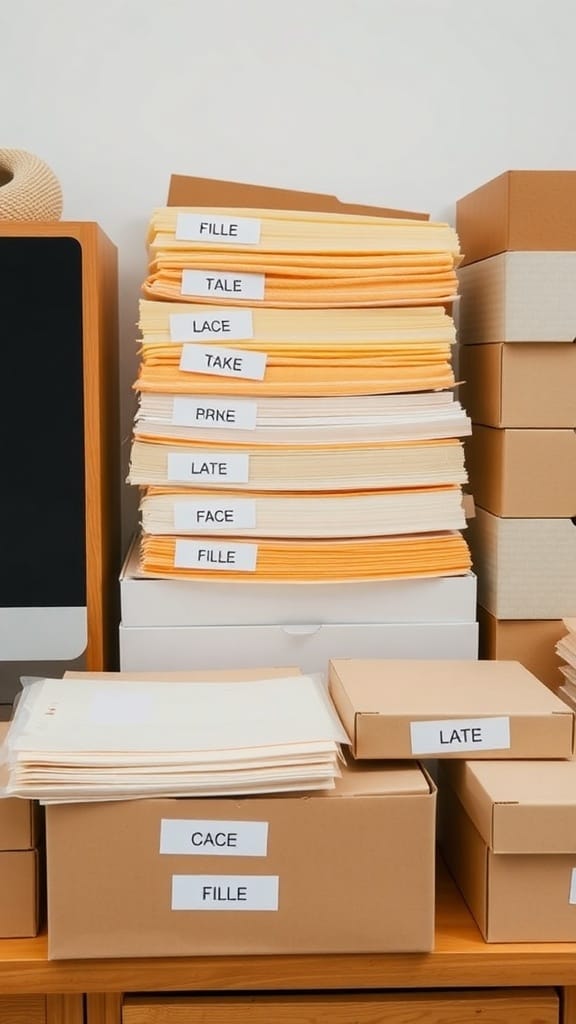
Keeping your home organized can feel like a challenge, but a solid labeling system makes it easier. The image shows a neat arrangement of labeled folders and boxes, which is a great example of how to keep everything in its place.
Each folder and box has a clear label, making it simple to find what you need without digging through piles of paperwork. This method saves time and reduces frustration. You can see different colored folders stacked neatly, each labeled with a word that likely represents its contents.
Using labels is not just practical; it can also be fun! You can choose colors and styles that match your decor or personal taste. This adds a touch of personality to your organization system. Whether you’re sorting documents, craft supplies, or even kids’ artwork, a good labeling system helps maintain order.
So, grab some labels and start organizing! You’ll be amazed at how much easier it is to find things when everything is clearly marked.
Encouraging Regular Decluttering Sessions
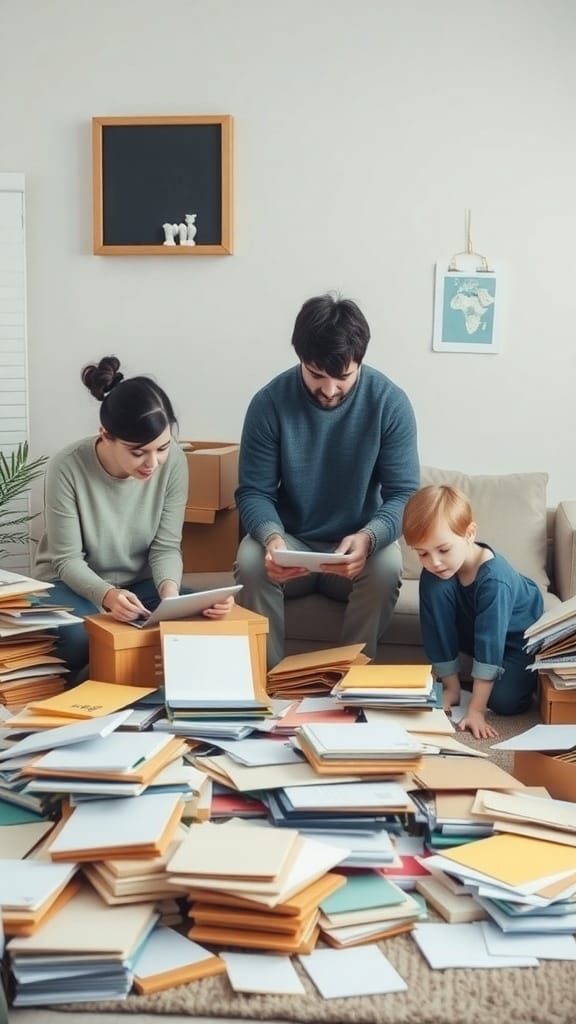
In the image, a family sits together surrounded by piles of papers and boxes. They look focused as they sort through their documents. This scene perfectly captures the essence of regular decluttering sessions. It’s a great reminder that organizing your home can be a family activity.
Decluttering doesn’t have to feel overwhelming. Setting aside time each week or month can make a big difference. When everyone pitches in, it becomes less of a chore and more of a fun family project. Plus, it’s a chance to bond while creating a more organized space.
Start small. Maybe tackle one room or even just a corner of a room. As you sort through items, decide what to keep, donate, or toss. This can help clear out the clutter and make your home feel more inviting.
Encouraging regular sessions not only keeps your space tidy but also helps everyone learn the value of organization. It’s a win-win for the whole family!
Using Drawer Organizers for Small Papers
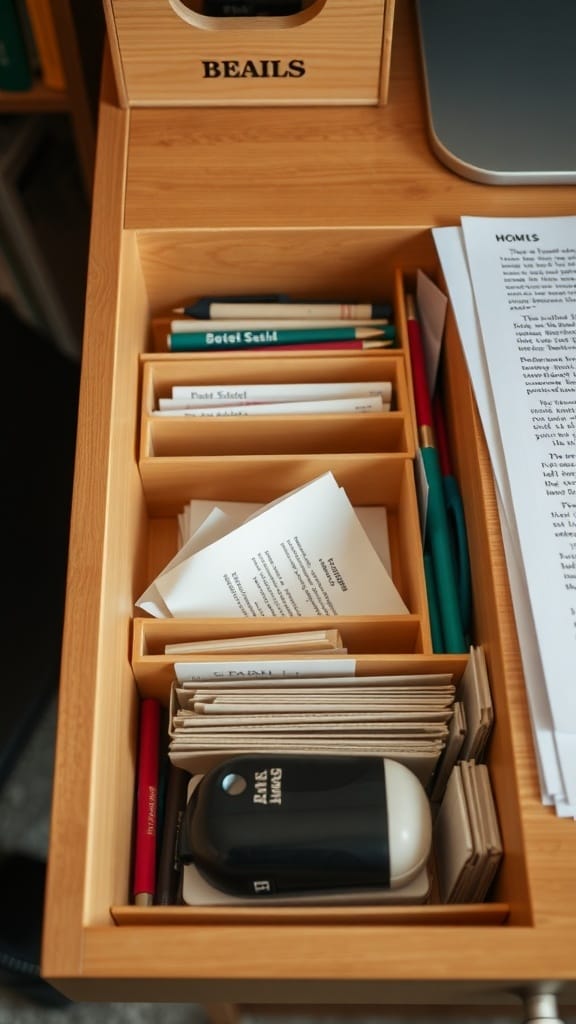
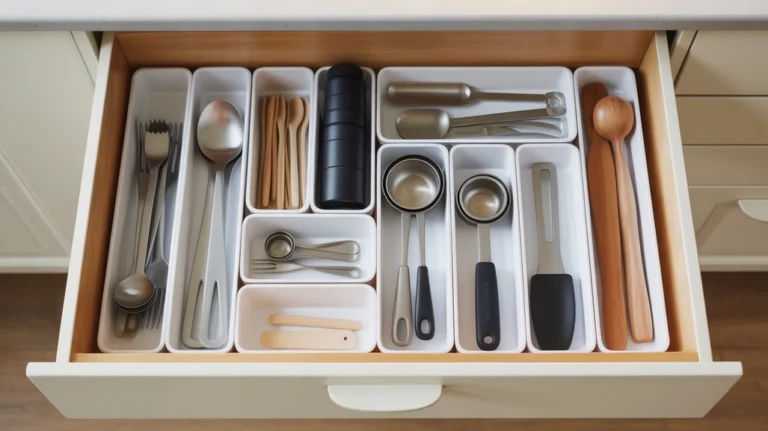
Drawer organizers are a simple and effective way to manage small papers in your home office. The image shows a well-organized drawer filled with various papers, pens, and a label maker. Each item has its own spot, making it easy to find what you need.
Using dividers helps keep everything tidy. You can separate notes, receipts, and business cards, so they don’t get mixed up. This setup not only saves time but also reduces stress when searching for important documents.
Consider labeling each section. This way, you’ll know exactly where to look for specific items. A little effort in organizing can make a big difference in your daily routine.
Incorporating drawer organizers into your workspace can transform it into a more functional area. It encourages productivity and helps maintain a clear mind. So, grab some organizers and start sorting those small papers today!
Small papers create clutter the fastest when they are not controlled properly.
This is how to keep everything sorted and easy to access → drawer organization ideas
Creating a Visual Filing System with Wall Charts
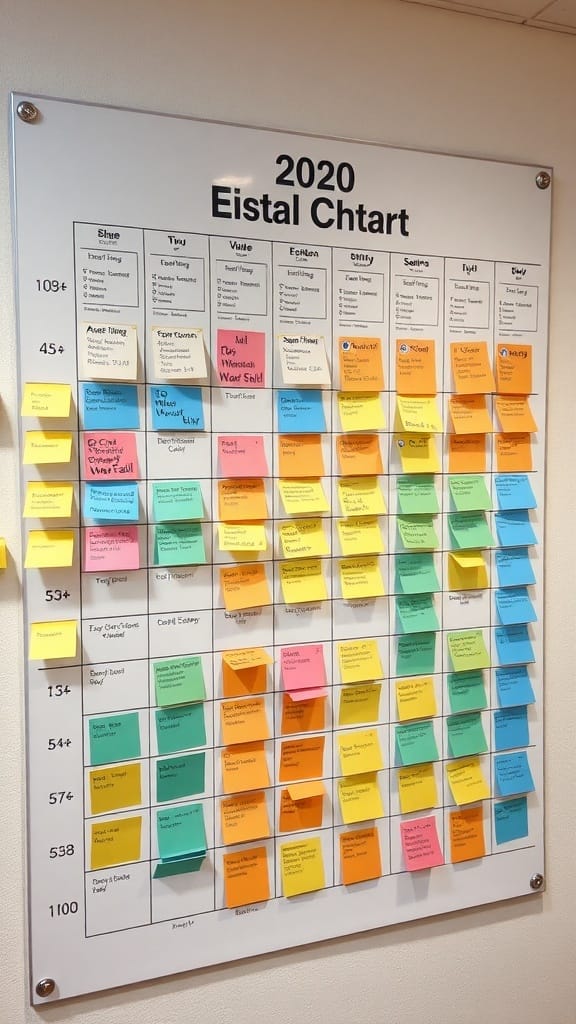
Visual filing systems can make organizing your home a breeze. One fun way to do this is by using wall charts. The image shows a colorful chart filled with sticky notes, each representing different tasks or categories. This method allows you to see everything at a glance, making it easier to manage your time and responsibilities.
Using a wall chart like this can help you prioritize tasks. Each sticky note can be moved around as needed, so you can adapt to changing circumstances. The bright colors also make it visually appealing, turning organization into a creative activity.
To get started, choose a wall space that’s easily visible. Create categories that fit your needs, like “To Do,” “In Progress,” and “Completed.” Use different colors for different categories or priorities. This way, you can quickly identify what needs attention.
Overall, a visual filing system with wall charts can simplify your life. It encourages you to stay organized while adding a splash of color to your space. So grab some sticky notes and start charting your way to a more organized home!
Establishing a Paper-Free Zone in the Home
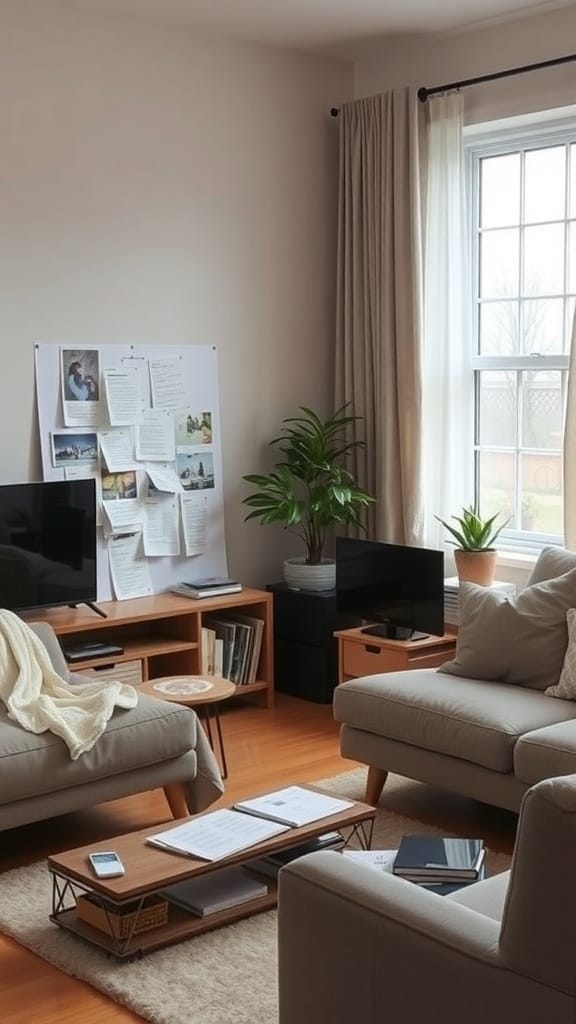
Creating a paper-free zone in your home can be a game changer. Imagine a space where clutter is minimal and everything feels organized. The image shows a cozy living room that embodies this idea perfectly. With a clean layout, the room features a comfortable seating area and a stylish coffee table, making it an inviting spot for relaxation.
On the wall, there’s a bulletin board filled with important notes and reminders. This is a great way to keep track of tasks without the need for piles of paper. Instead of letting papers stack up, you can pin them up where they are easily visible. This method helps maintain a tidy environment while keeping essential information at your fingertips.
The furniture is arranged thoughtfully, allowing for easy movement and a sense of openness. The plants add a touch of life, enhancing the overall atmosphere. To further reduce paper clutter, consider digital alternatives for bills, receipts, and notes. Using apps can help you stay organized while keeping your space neat.
Incorporating these ideas into your home can lead to a more serene and functional living space. A paper-free zone not only looks good but also promotes a clearer mind. So, take a step towards a more organized home and enjoy the benefits of a clutter-free environment!
Conclusion
A well-organized file system can make a noticeable difference in how smoothly your home runs. By using clear storage solutions, consistent routines, and smart filing methods, you can prevent paperwork from becoming overwhelming. Start with one area, build a system that fits your lifestyle, and review it regularly to keep things under control. Over time, these home file organization ideas will help you stay organized, save time, and maintain a clutter-free, functional space.
Once your file system is organized, the next step is making sure clutter does not come back.
This is what keeps everything working long term → pro organizing hacks to declutter your space