
Introduction
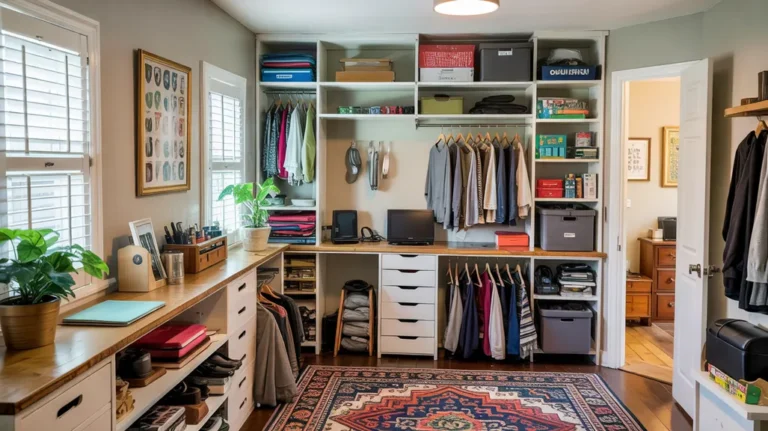
A craft room does not feel messy because of too many supplies. It feels messy when the layout does not match how you actually work.
Tools, materials, and active projects quickly compete for space when there is no clear structure. You spend more time shifting things around than creating, and even a well-stocked room starts to feel inefficient.
The best craft room layout ideas focus on movement, reach, and clear zones so everything stays visible, accessible, and easy to maintain.
When your layout supports your workflow, the space feels calmer, more efficient, and much easier to use for longer sessions.
If your storage still feels unstructured, organizing it properly makes a big difference → craft closet organization ideas
1. Zoned Layouts That Separate Making, Storage, and Prep
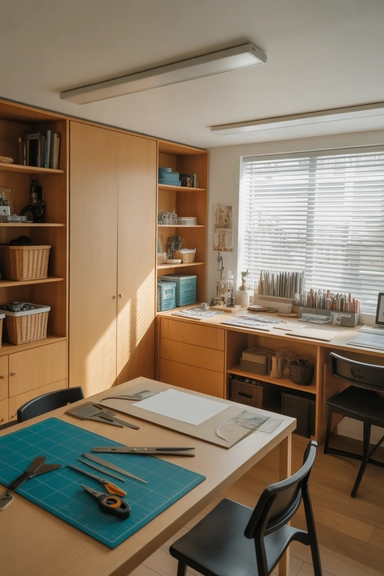
Effective craft room layout ideas often begin with zoning, where different activities are physically separated instead of overlapping. Creating distinct zones for cutting, assembling, storing, and finishing prevents tools from migrating across the room and reduces setup time. When each task has a defined area, the room feels calmer and more predictable. This structure also limits visual noise, because only the materials needed for the current task remain in sight while the rest stay contained.
Zoning does not require walls or dividers; it relies on furniture placement and orientation. Tables, shelving units, or carts can subtly define boundaries while keeping the room open. In smaller craft rooms, zones may share surfaces but remain functionally distinct through positioning. In larger spaces, spacing zones apart improves circulation and prevents crowding. The goal is to support workflow without fragmenting the room.
When everything is mixed together, clutter builds fast and it becomes harder to work.
This is what makes storage actually stay organized → home file organization ideas
2. Central Worktables That Anchor the Craft Room Layout

A central worktable acts as the functional anchor in many successful craft room layout ideas. Positioned away from walls, it allows access from multiple sides and supports tasks that require spreading materials out. This layout encourages flexibility, making it easier to switch between projects without constant clearing. In both small and large rooms, a central surface creates a visual and functional focal point that organizes surrounding storage logically.
The effectiveness of a central table depends on proportion and clearance. Adequate space around the table ensures comfortable movement and prevents congestion. Storage placed along the perimeter complements this layout, keeping frequently used tools within reach while maintaining clear sightlines. When the central table is sized correctly, it reduces reliance on multiple work surfaces and keeps the room from feeling fragmented or chaotic.
3. Perimeter Storage That Keeps the Center Open
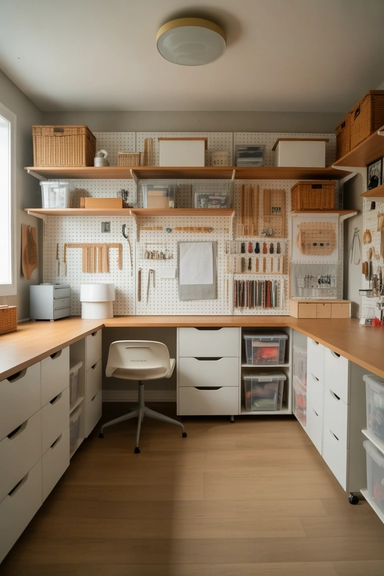
One of the most reliable craft room layout ideas involves pushing storage to the perimeter of the room. Shelving, cabinets, and pegboards placed along walls preserve open space in the center, which improves movement and reduces visual clutter. This approach works especially well in smaller rooms, where every square foot needs to remain functional rather than blocked by furniture or stacked supplies.
Perimeter storage also supports logical organization. Materials can be grouped by type or frequency of use, making retrieval faster and more intuitive. In larger craft rooms, wall-based storage prevents the space from feeling scattered or underutilized. Keeping bulky storage elements against the walls allows the center to remain adaptable, whether for large projects, shared work sessions, or temporary setups.
4. Linear Layouts for Narrow or Shared Craft Spaces
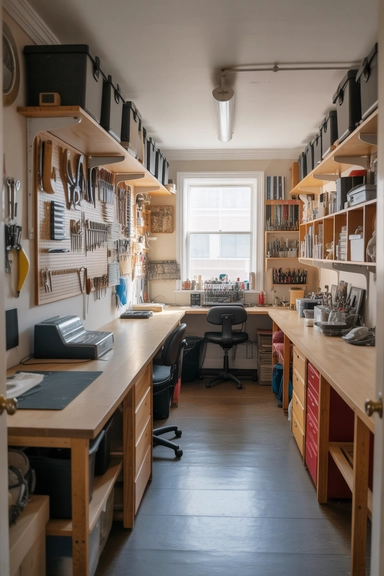
Linear craft room layout ideas are particularly effective in narrow rooms or spaces shared with other functions. By aligning work surfaces, storage, and tools along one or two walls, the layout preserves a clear circulation path and prevents bottlenecks. This arrangement keeps the room feeling open while still supporting a complete crafting workflow, even when square footage is limited.
A linear layout benefits from careful sequencing. Frequently used tools should be placed between preparation and finishing zones to minimize backtracking. Vertical storage becomes especially important, as it compensates for reduced floor space. In larger rooms, linear layouts can still work when one side is dedicated to intensive tasks and the opposite side remains flexible, maintaining balance and order without overcrowding.
5. Flexible Layouts That Adapt to Changing Projects
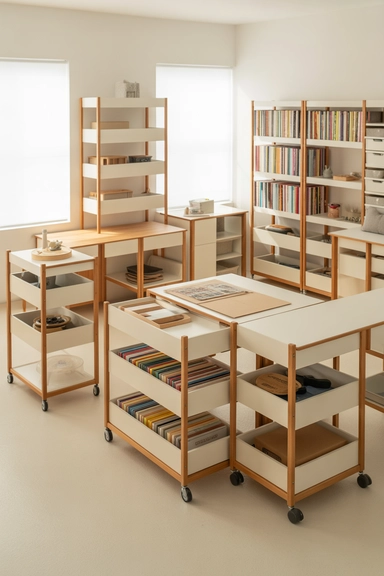
Craft rooms often support multiple hobbies, which makes flexibility a critical component of smart craft room layout ideas. Layouts that rely on modular furniture, movable carts, or adjustable shelving adapt more easily to changing project demands. Instead of forcing every activity into a fixed position, flexible layouts allow the room to evolve without major reorganization.
This adaptability reduces frustration and prevents clutter from accumulating during transitions between projects. In small rooms, flexibility maximizes limited space by allowing temporary expansions when needed. In larger rooms, it prevents unused areas from becoming storage dumps. A flexible layout prioritizes long-term usability, ensuring the craft room remains functional even as tools, materials, and interests change over time.
6. Layouts That Prioritize Reach and Tool Accessibility
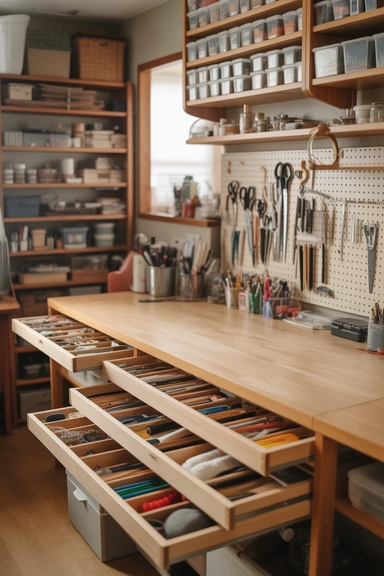
Craft room layout ideas become far more effective when they account for reach rather than storage volume alone. Tools that are used frequently should fall within arm’s reach of primary work surfaces, reducing unnecessary movement and interruptions. When layouts ignore reach, even well-organized rooms feel inefficient because users constantly step away from active tasks. A reach-focused layout keeps momentum intact and supports longer, uninterrupted work sessions.
This approach relies on honest assessment of usage patterns. Items used daily deserve immediate access, while occasional tools can remain in secondary storage. In small craft rooms, this prevents overcrowding by limiting what stays visible. In larger rooms, it stops tools from spreading too far apart. By designing around reach zones, the layout aligns with how hands and eyes move during real work.
7. Vertical Layout Strategies That Expand Usable Space
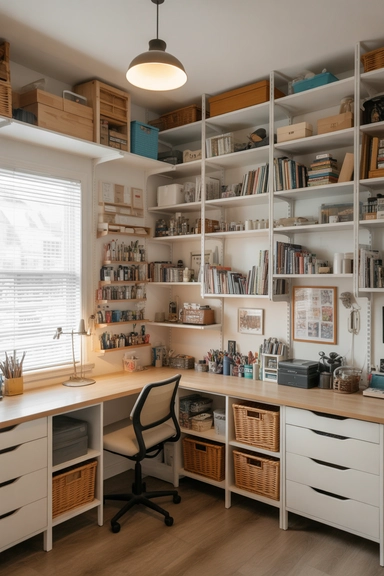
Vertical organization plays a critical role in smart craft room layout ideas, particularly when floor space is limited. Walls offer untapped storage potential that can absorb tools, supplies, and materials without shrinking the working area. When vertical space is used intentionally, the room feels taller, lighter, and more organized rather than cramped.
Effective vertical layouts rely on visual balance. Overloading walls with dense shelving can feel oppressive, especially in smaller rooms. Instead, spacing shelves evenly and mixing open and closed storage keeps the room visually calm.
In larger craft rooms, vertical storage prevents the space from feeling empty or unfinished. The key is treating walls as functional extensions of the layout rather than as afterthoughts.
When space feels limited, using vertical storage properly changes everything.
This is how to make small spaces work better → small room storage ideas
8. Craft Room Layout Ideas That Support Seated and Standing Work
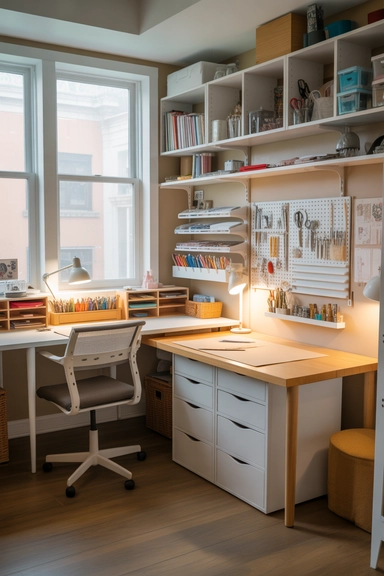
Many craft rooms struggle because layouts assume a single working posture. Smart craft room layout ideas accommodate both seated and standing tasks, recognizing that different activities place different physical demands on the body. Cutting, assembling, sorting, and detailing often require varied heights and positions, and a rigid layout can lead to fatigue over time.
Incorporating surfaces at different heights improves comfort and efficiency. A standing-height table may support cutting or layout work, while a seated desk suits detailed or repetitive tasks. In small rooms, adjustable furniture can serve both purposes. In larger spaces, dedicated zones reduce strain and improve focus. Supporting multiple postures keeps the craft room usable for longer sessions without physical burnout.
9. Layouts That Reduce Visual Clutter Without Hiding Supplies
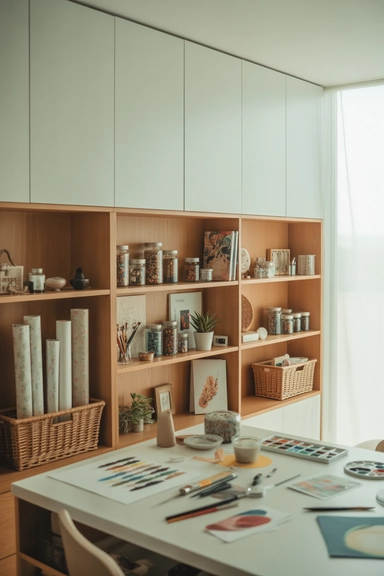
One of the more nuanced craft room layout ideas focuses on managing visual clutter rather than eliminating visible supplies entirely. Creativity often benefits from seeing materials, but too much visual input can overwhelm the space. Effective layouts strike a balance, keeping frequently used items visible while containing excess through thoughtful placement.
This balance is achieved through layered storage. Open shelves near work zones hold active tools, while closed storage farther away absorbs overflow. In small rooms, this prevents visual compression. In larger rooms, it avoids scattered clutter that breaks focus. A visually controlled layout allows inspiration to remain present without allowing materials to dominate the room’s atmosphere.
10. Layouts Designed Around Natural Light and Sightlines
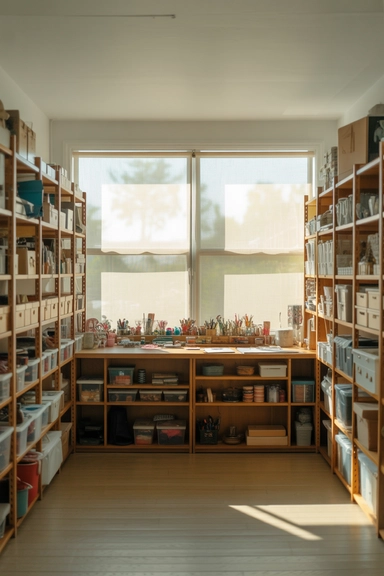
Natural light significantly influences how craft room layout ideas perform in daily use. Positioning primary work surfaces near windows improves visibility and reduces reliance on artificial lighting. However, layout planning must also account for glare, shadows, and the direction of light to avoid discomfort or eye strain during detailed work.
Sightlines matter just as much as light. Clear views across the room help maintain orientation and reduce the feeling of congestion. In small rooms, unobstructed sightlines make the space feel larger. In larger rooms, they provide visual cohesion. Aligning layouts with light sources and views creates a more comfortable, intuitive environment that supports focus and sustained creativity.
11. Compact Layout Solutions for Small Craft Rooms
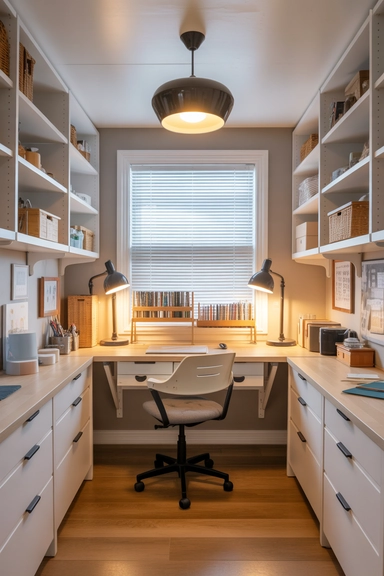
Small spaces demand particularly thoughtful craft room layout ideas because every element must serve multiple purposes. Compact layouts prioritize efficiency, combining storage, work surfaces, and movement paths into a cohesive system. Rather than forcing full-sized furniture into limited square footage, these layouts rely on scaled-down or multifunctional pieces.
Clear circulation is critical in compact rooms. Narrow pathways or blocked access quickly undermine usability. Vertical storage, fold-down surfaces, and mobile carts often replace bulky cabinets.
In these layouts, restraint is essential; only necessary items remain within the room. When compact layouts are planned carefully, small craft rooms can function as smoothly as much larger spaces.
Small spaces fail when storage is not planned properly.
This is what actually makes tight spaces work → small space storage ideas
12. Layouts That Integrate Storage Without Interrupting Workflow
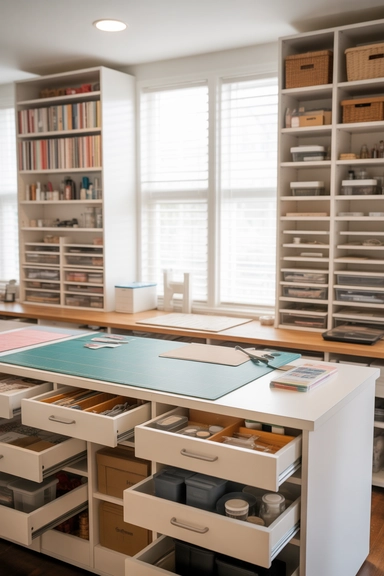
Some craft room layout ideas fail not because of insufficient storage, but because storage interrupts movement and task flow. When cabinets or shelving block access to work surfaces, the room becomes frustrating to use. Effective layouts integrate storage so that it supports activity rather than competes with it. Storage should sit where pauses naturally occur, not where hands and tools are actively in use.
This integration requires understanding task sequences. Materials needed before or after a step belong nearby, while unrelated supplies stay farther away. In small rooms, this prevents constant repositioning. In larger rooms, it avoids unnecessary walking. When storage placement mirrors workflow logic, the room feels intuitive, reducing friction and improving efficiency during longer creative sessions.
13. Craft Room Layout Ideas for Shared or Multi-User Spaces
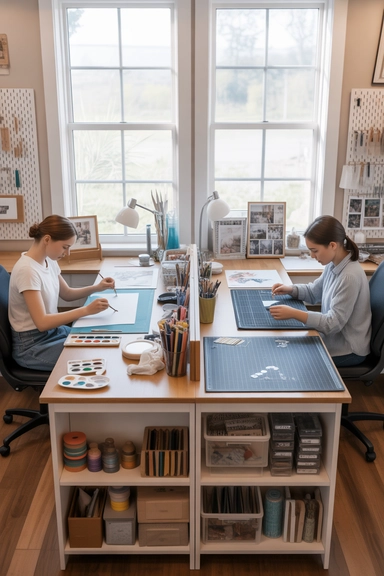
Shared craft rooms introduce additional complexity, making layout decisions even more critical. Craft room layout ideas for multi-user spaces must account for overlapping activities, personal storage needs, and circulation patterns. Without clear spatial boundaries, shared rooms quickly become disorganized and tense. Layouts that anticipate multiple users maintain harmony by defining zones and minimizing interference.
Separate work surfaces are essential, even if they are compact. Shared storage should be centrally located and clearly categorized, while personal supplies remain contained. In small shared rooms, vertical separation often replaces horizontal distance. In larger spaces, spacing zones apart reduces noise and distraction. A well-planned shared layout supports collaboration without sacrificing individual focus.
14. Layouts That Accommodate Large Tools and Equipment
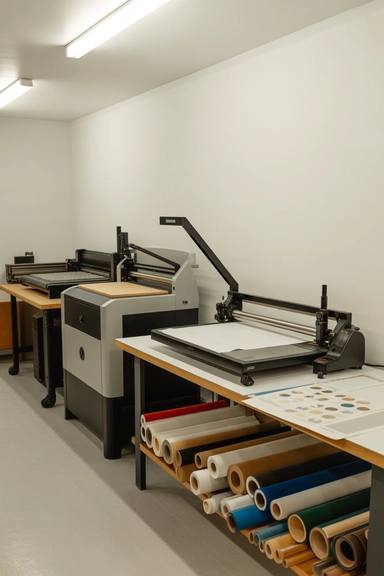
Many craft room layout ideas overlook the spatial demands of large tools such as cutting machines, presses, or sewing equipment. These items require not only storage space but also operational clearance. Layouts that fail to account for this often feel cramped and inefficient, even in rooms with generous square footage.
Effective layouts position large equipment where extension space is available, such as near walls or open corners. Adjacent surfaces support material handling without blocking movement. In small rooms, fold-away or mobile solutions preserve flexibility. In larger rooms, permanent placement prevents repeated setup and teardown. Accounting for equipment dimensions ensures the room supports real use, not just storage.
15. Layouts That Encourage Consistent Organization Habits
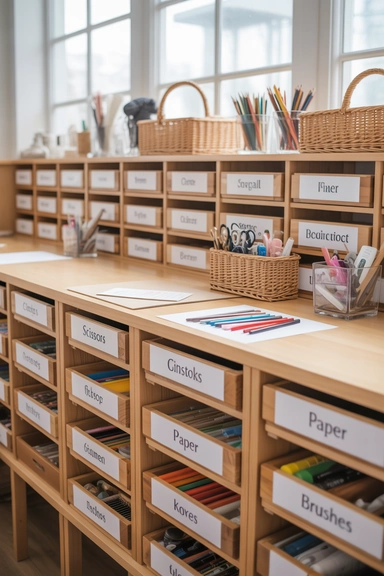
The most successful craft room layout ideas support organization habits rather than relying on discipline alone. When layouts make it easy to return tools and materials to their place, disorder becomes less likely. Poor layouts, by contrast, encourage piling and improvisation, which quickly lead to clutter.
This habit-friendly approach depends on proximity and clarity. Storage locations should be obvious and easy to reach from work zones. Labels, shallow drawers, and open-front containers reduce friction during cleanup. In small rooms, this prevents rapid disorder. In larger rooms, it maintains structure over time. A layout that reinforces good habits keeps the room functional with minimal effort.
16. Layouts That Balance Openness With Containment
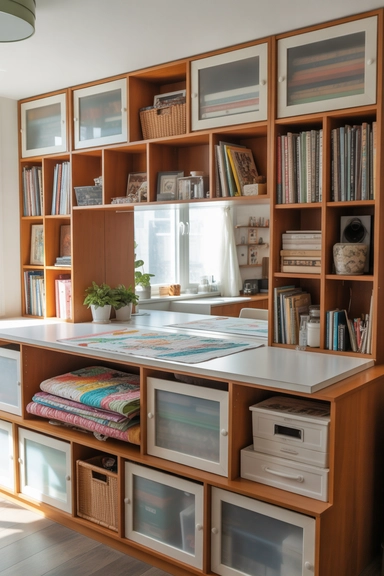
Open layouts feel inviting, but without containment they can quickly become visually overwhelming. Smart craft room layout ideas balance openness with strategic containment, allowing creativity to breathe without letting materials dominate the space. This balance is especially important in rooms used frequently, where projects may remain out for extended periods.
Containment does not require hiding everything. Instead, it relies on grouping and boundaries. Partial enclosures, drawer systems, or dedicated project zones limit visual spread. In small rooms, this prevents claustrophobic clutter. In larger rooms, it avoids a scattered appearance. Balanced layouts maintain clarity while still supporting active, ongoing work.
17. Layouts That Support Long-Term Flexibility and Growth
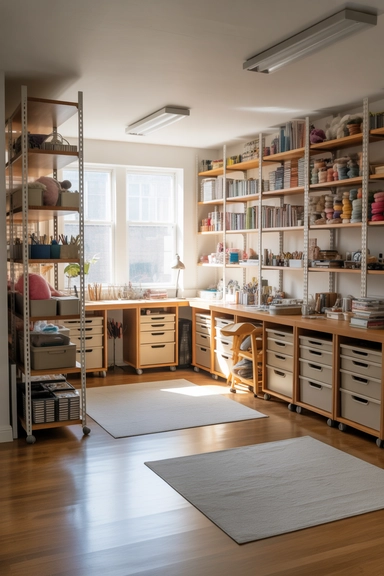
Craft rooms evolve as skills, tools, and interests change, making adaptability a core principle of effective craft room layout ideas. Layouts that are too rigid often become obsolete, forcing constant reorganization. Flexible layouts anticipate growth by leaving room for expansion and adjustment without compromising functionality.
This foresight shows in adjustable shelving, modular furniture, and open zones that can be reassigned over time. In small rooms, flexibility prevents overcrowding as supplies increase. In larger rooms, it ensures unused areas remain purposeful. A layout designed for long-term change protects the investment of time and effort put into organizing the space.
18. Layouts That Control Noise and Visual Distraction
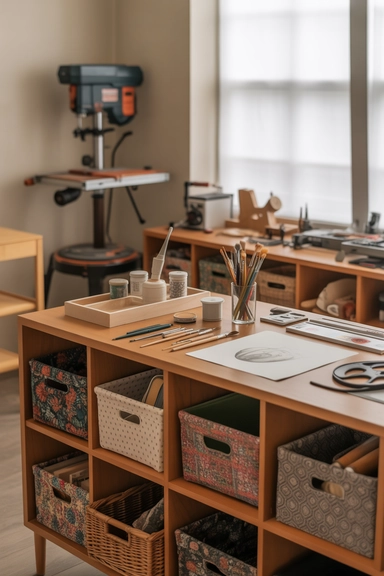
Craft rooms often involve movement, machinery, and layered materials, which can quickly create sensory overload. Smart craft room layout ideas consider how sound and visual activity move through the space. Positioning louder tools away from primary work zones helps maintain concentration, especially during detailed tasks. Visual distraction can be reduced by orienting busy storage away from direct sightlines.
This control improves focus without isolating the room. In small spaces, zoning noisy or visually dense areas prevents the room from feeling chaotic. In larger rooms, distance and orientation do the work. A layout that manages distraction supports longer sessions and makes the space feel composed rather than overstimulating.
19. Layouts That Align Storage Depth With Material Types
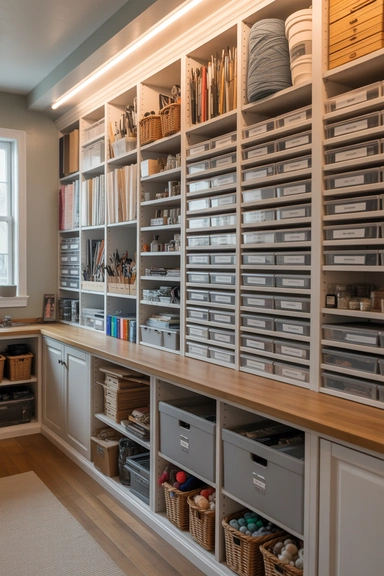
Not all materials require the same storage depth, yet many craft room layout ideas ignore this distinction. Deep storage often swallows small items, while shallow storage fails to accommodate bulky supplies. Effective layouts align storage depth with material dimensions, making retrieval easier and reducing wasted space.
Shallow drawers suit tools and accessories, while deeper cabinets handle fabric, paper stacks, or equipment. In small rooms, this precision prevents overcrowding. In larger rooms, it improves efficiency and prevents storage from becoming disorganized over time. When depth matches function, the layout feels intentional and easy to maintain.
Different materials need different storage or clutter builds quickly.
This is how to keep everything sorted and controlled → drawer organization ideas
20. Craft Room Layout Ideas That Keep Floors Clear and Functional
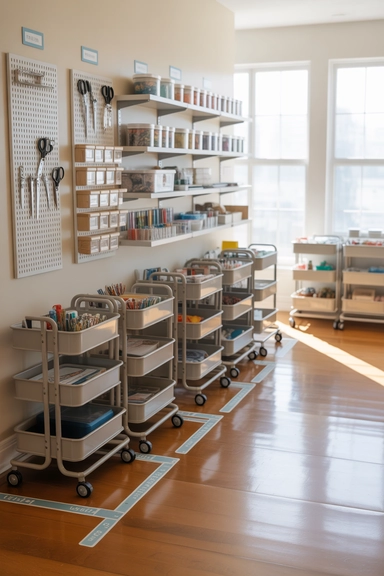
Clear floors are a hallmark of effective craft room layout ideas, regardless of room size. Floor clutter disrupts movement, creates safety hazards, and visually compresses the space. Layouts that lift storage off the floor or integrate it into walls preserve circulation and improve usability.
Mobile elements should return to designated zones when not in use. In small rooms, this keeps pathways open and reduces fatigue. In larger rooms, it maintains spatial clarity and prevents drift. A floor-conscious layout supports both safety and efficiency, allowing the room to function smoothly even during complex projects.
21. Layouts That Encourage Easy Reset Between Sessions
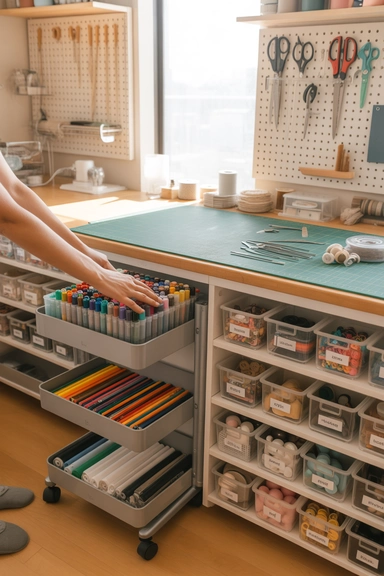
Craft rooms that are difficult to reset tend to remain cluttered, reducing motivation to return. Thoughtful craft room layout ideas make cleanup a natural part of the workflow rather than a separate chore. When tools and materials have obvious, accessible homes, resetting the room becomes quick and frictionless.
This ease depends on layout logic rather than storage quantity. Work zones should connect directly to their supporting storage. In small rooms, this prevents accumulation. In larger rooms, it avoids partial cleanup that leaves projects lingering. A layout that supports easy reset keeps the space inviting over time.
22. Layouts That Make the Room Feel Finished, Not Temporary
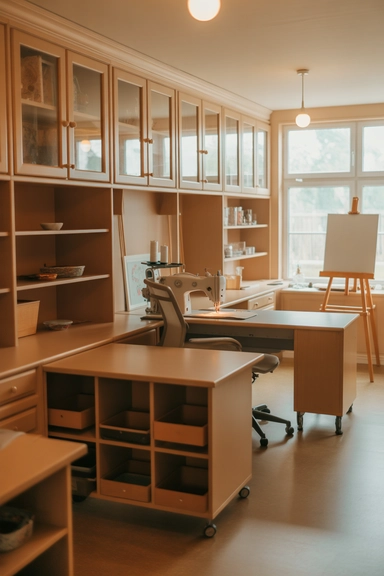
Many craft rooms feel perpetually unfinished because the layout lacks cohesion. The most effective craft room layout ideas treat the space as complete rather than provisional. Furniture alignment, balanced storage, and clear zones give the room a sense of permanence, even when projects change.
This completeness improves how the room is perceived and used. In small spaces, it reduces stress and visual fatigue. In larger rooms, it prevents underutilization. A finished-feeling layout encourages consistent use, reinforcing the room’s role as a functional, dependable creative environment.
Conclusion
Smart craft room layout ideas succeed when they reflect real working habits rather than idealized setups. Layouts that prioritize movement, reach, and clarity transform both small and large spaces into reliable creative environments. By aligning storage, work surfaces, and circulation with how tasks unfold, craft rooms become easier to use and maintain. A well-considered layout reduces friction, supports focus, and adapts over time, ensuring the space remains functional and inviting long after the initial organization is complete.
Once your craft room layout is set, the next step is making sure clutter does not come back.
This is what keeps everything working long term → pro organizing hacks to declutter your space