Your walk-in closet gets smaller every season. You add more hangers, squeeze in another shelf, but somehow everything still looks crammed. The real problem isn’t that you you have less space, it’s the lack of or organization system you use.
Clothes overlap on rods and shoes pile in corners while that back wall storage completely goes wasted. Small walk-in closets fail because people add storage randomly instead of using the actual dimensions they have available. These walk-in closet organization ideas focus on maximizing storage, improving visibility, and making the most of the space you already have.
Skipping small-walk-in-closet-ideas-limited-space is exactly how people end up redoing this twice and wasting money on systems that don’t fit.
The Wall Behind Your Door
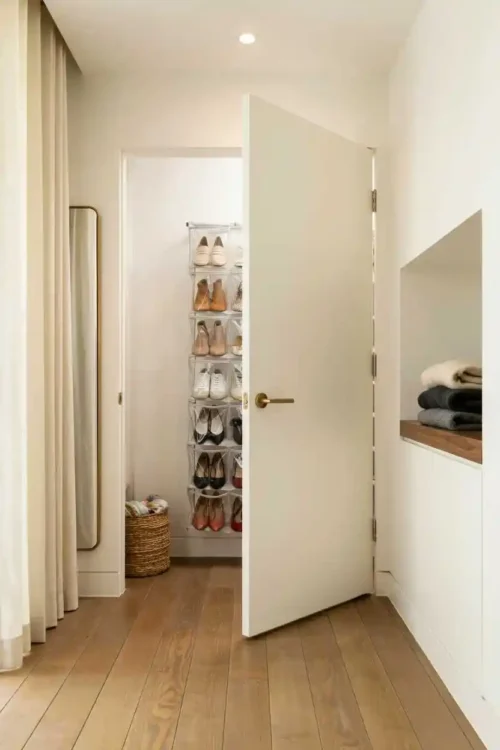
That door wall sits dead while you cram shoes into floor corners and awkward piles grow against the back. A slim over-the-door shoe organizer with 24 pockets holds every pair upright and visible at eye level without eating into your actual closet square footage.
The moment you open the closet you see exactly which shoes you own instead of forgetting about pairs buried in back corners. Nothing stays hidden or lost behind other pieces where it disappears for months.
This single addition pulls shoes completely off the floor where they create walking hazards and make the space feel cramped and cluttered.
Slim Velvet Hangers That Cut Width in Half
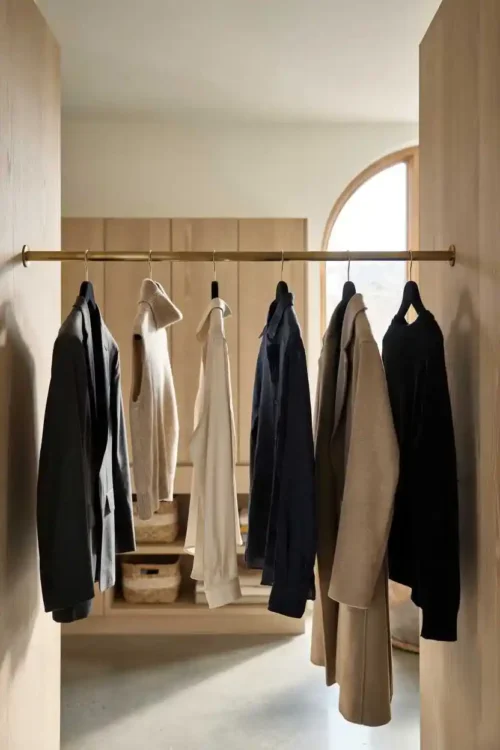
Cheap plastic hangers sprawl three inches wide and force you to space items far apart on the rod. Slim velvet hangers compress to half an inch and grip fabric so nothing slides off even when hangers touch each other.
You suddenly fit twice as many outfits on the same rod length without anything shifting or falling. The closet rod stops looking like a tangled mess of hangers packed too tight together.
This change costs under thirty dollars and transforms how much you can actually hang without feeling compressed.
Vertical Shelving Up One Full Side Wall
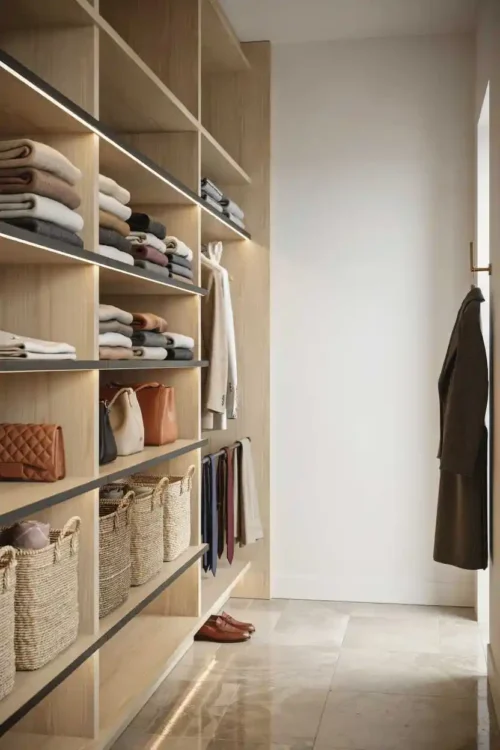
That bare side wall wastes vertical space while your floor collects folded overflow piles that block walkways. A narrow 12-inch-deep shelving unit runs the entire wall height and holds folded sweaters, bins, handbags, and seasonal items in organized tiers.
Each shelf stays shallow enough that you can still walk through without brushing against items or feeling enclosed. Everything you need sits at arm’s reach instead of on the floor where it creates tripping hazards daily.
Most small closets waste one entire wall completely while people struggle to find storage elsewhere.
Double Rods Cut Hanging Space Needs in Half
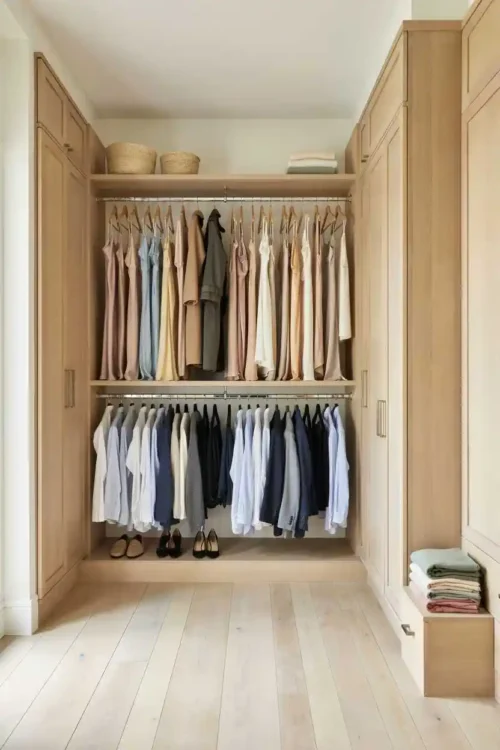
One rod wastes all the vertical space above shorter hanging items like blouses and jackets that don’t reach full closet height. Install a second rod 36 inches below the first and suddenly you double your hanging capacity without adding square footage or construction.
Shirts and blazers hang on the lower rod while pants, dresses, and longer pieces use the upper rod efficiently. You see everything at once instead of having to move things around to find what’s underneath.
This single adjustment solves the “I ran out of hanging space” problem that forces people to hang items double-deep on one rod.
Hanging Organizers Keep Accessories From Tangling
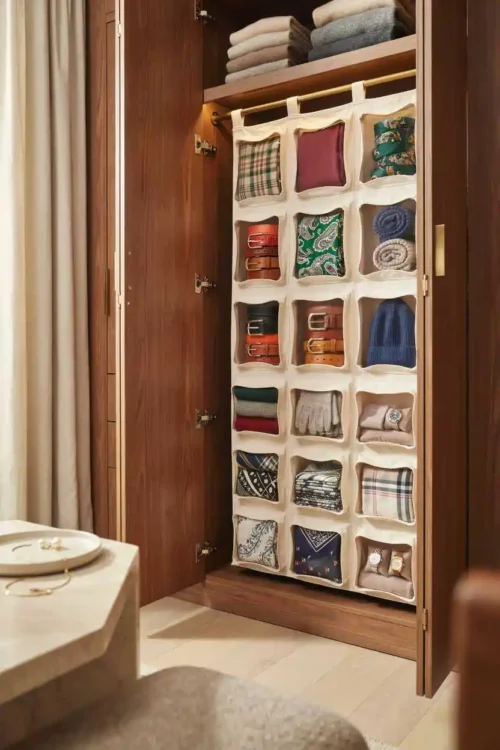
Scarves bunch together in a drawer, belts tangle into knots, and jewelry disappears into the back corner where you never find it. A hanging organizer with multiple pockets clips directly to your rod and holds every accessory visible in one vertical strip.
You grab exactly what you need without unraveling a mess of twisted fabric or digging through piles. Nothing gets lost because everything hangs in its own section and stays visible daily.
Accessories finally stop being the hidden chaos that derails your morning routine when you can’t locate what you’re looking for.
Shallow Pull-Out Baskets Under the Rod
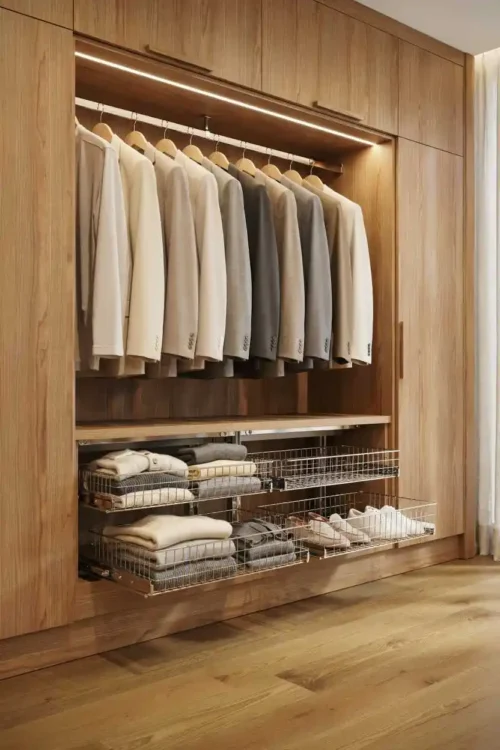
The floor under your hanging clothes collects shoes, fallen items, and clutter because you have no designated spot for anything. Two or three shallow pull-out baskets slide under the hanging section and hold shoes, folded cardigans, or out-of-season pieces without blocking access to hung items.
Baskets glide completely out so you reach items in the back without bending or reaching around hanging clothes and hangers. The dead floor space becomes functional storage instead of a dumping ground where things get forgotten.
This uses the space most closets ignore completely, turning wasted area into daily-use storage.
L-Shaped Corner Shelving Captures Wasted Space
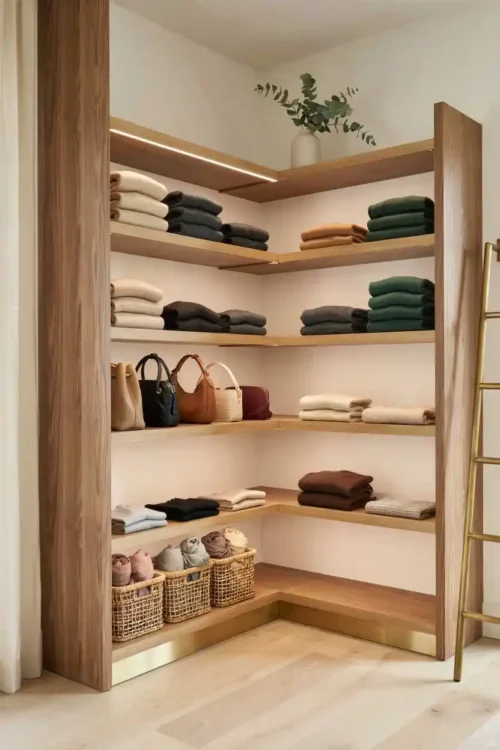
Corners in small closets sit empty or hold awkward stacks because standard shelves don’t fit angles or create dead zones. An L-shaped corner shelf unit wraps both walls and creates two usable surfaces without leaving space nobody can reach.
Folded sweaters stack neatly on one side while handbags sit upright on the other in a way that makes sense. Your eye can reach the back corner without moving things around constantly or losing items.
Corner space stays the hardest place to organize and most people just give up and leave it empty.
Stackable Shoe Cubbies Replace Floor Piles
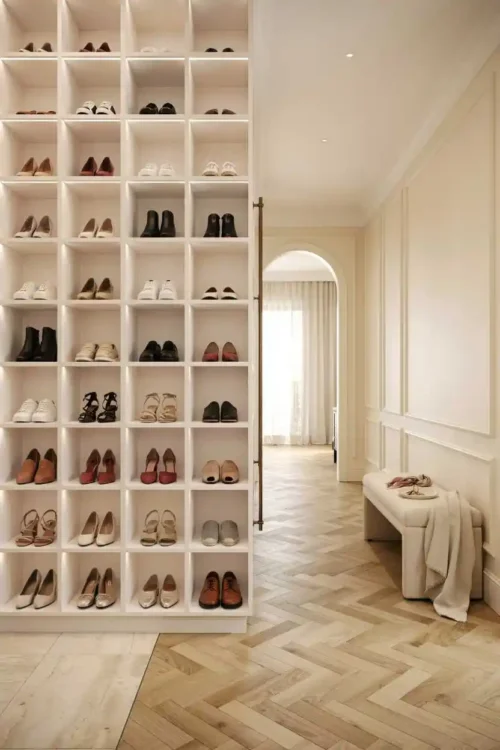
Shoes scatter across the closet floor and steal valuable walking space while you trip over them every morning. Stackable plastic shoe cubbies fit on lower shelves and hold 20 pairs in tight rows where you see each shoe without digging through piles.
You know exactly which shoes you own instead of buying another pair you forgot about because it disappeared under other items. Grabbing shoes takes seconds instead of moving piles around or bending down to search the floor.
Floor clutter disappears the moment you contain shoes vertically instead of letting them sprawl across limited space.
Over-the-Rod Hanging Shelf Adds a Second Tier
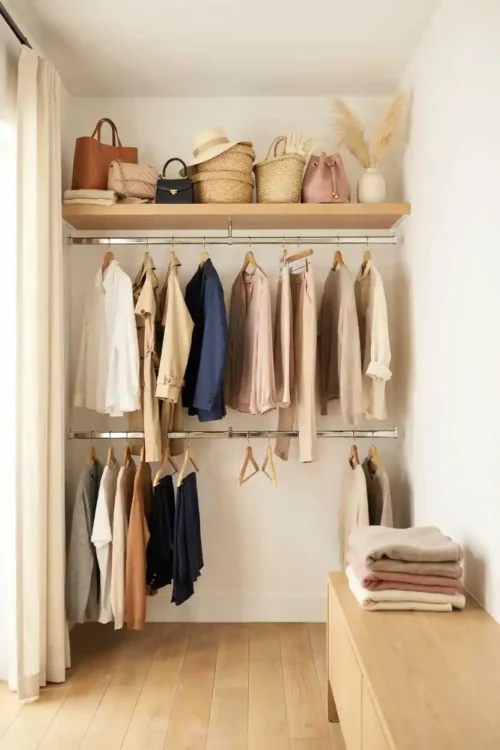
That space 6 inches above your hanging clothes stays dark and inaccessible while you search for storage space elsewhere in the closet. An over-the-rod shelf hangs from your existing rod without installation and creates a second storage tier using space that already exists overhead.
Off-season handbags, rarely worn blazers, or extra items sit up there where you access them once or twice yearly without blocking daily use. Light still reaches hanging items below and nothing blocks your walkway or creates obstacles.
Small closets hide tons of storage space above head height that most people never think to use.
Drawer Dividers Keep Folded Stacks From Collapsing
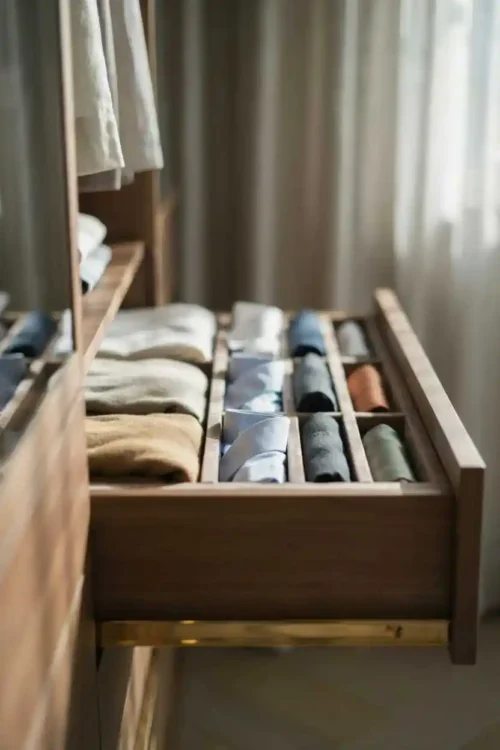
Folded items collapse into tangled piles the moment you reach for something from the middle of the stack. Deep wooden or plastic drawer dividers create individual compartments so each stack of sweaters, pants, or shirts stands upright independently without toppling.
You pull one item without causing a domino collapse of everything next to it or creating a mess. Each category stays separated and visible at a glance so you find what you need instantly.
This prevents the stack-destruction cycle that kills organized systems within a week of implementation.
Cascading Clip Hangers Stack Multiple Items Vertically
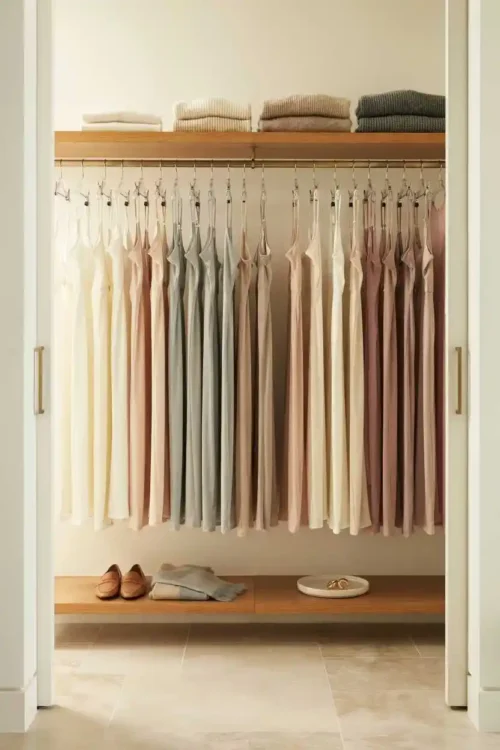
Regular hangers each take one rod slot even though they only hold one item and waste valuable hanging space. Cascading hangers clip one below another and let you hang 5-6 camisoles, tank tops, or lightweight pants in the vertical space of a single hanger.
Similar items stay grouped together so outfits coordinate without searching through a hundred hanging pieces. Rod space suddenly stretches much further than you calculated when planning your closet layout.
This works especially well for anything lightweight that doesn’t stretch hangers or create stress points.
Pant Hangers With Clips Compress Multiple Pairs
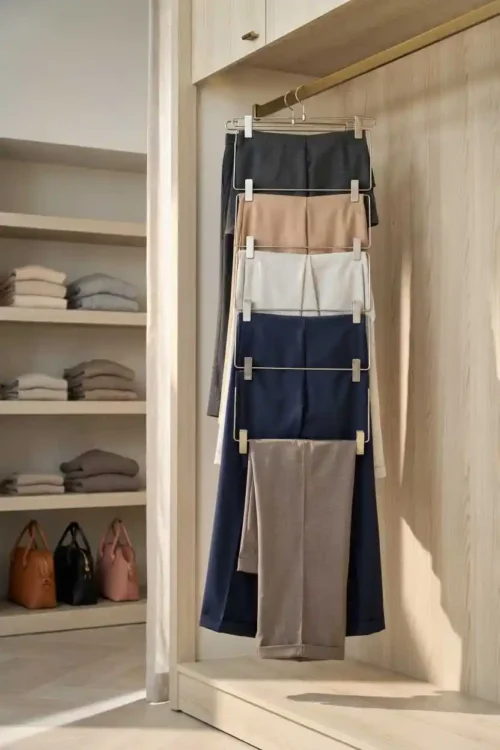
Individual pants hangers waste rod space and force you to hang items one at a time across the entire closet. A clip-style pant hanger holds 5-6 pairs stacked vertically on a single hook, cutting your pants storage space in half while keeping everything accessible and visible.
You flip through pairs like a magazine instead of moving hangers around searching for the right color. Pairs stay folded and wrinkle-free in storage without getting creased or damaged from hanging.
One hanger type transforms how much pant storage you actually need without sacrificing access.
Tiered Shelf Risers Reveal Hidden Folded Items
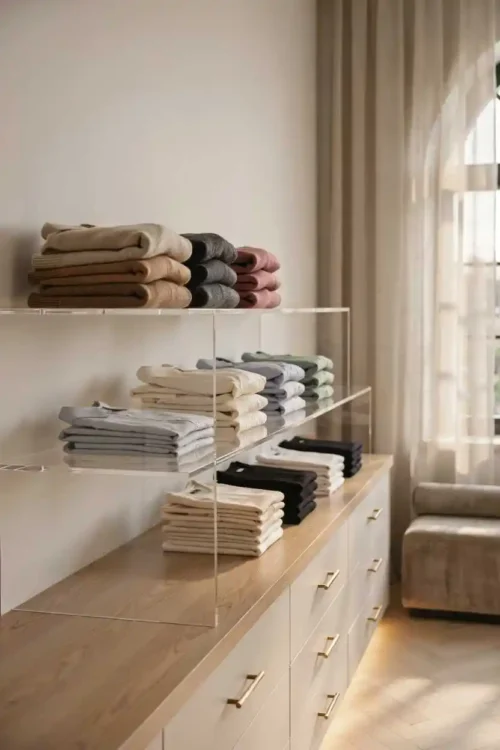
One deep shelf with folded items stacked flat wastes vertical sight lines and hides everything in the back under piles. Tiered risers stack folded pieces at different heights so you see every stack without moving anything or digging through layers.
Items become visible instead of disappearing under other pieces that block sight lines and create forgotten items. Shelf depth gets used vertically instead of forcing you to buy additional shelves or add more storage furniture.
Most organizational failures happen because items literally disappear from view and you forget you own them.
Clear Plastic Boxes Beat Opaque Bins Every Time
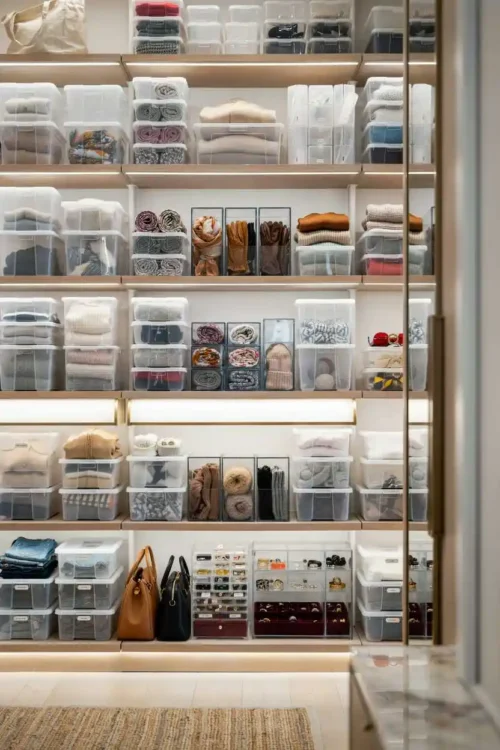
Opaque storage bins in the back corner hide what’s inside and create visual confusion about what’s stored where. Clear plastic boxes show every item at a glance and stack neatly on upper shelves where off-season clothes live safely.
You know exactly what’s stored without opening each bin and creating a mess or disturbing the organized system. Labels on the front make seasonal rotation simple and systematic so you don’t lose track of what goes where.
Off-season items stay organized instead of becoming mystery boxes nobody opens because contents are unknown.
Hooks on Available Wall Space Hold Everything
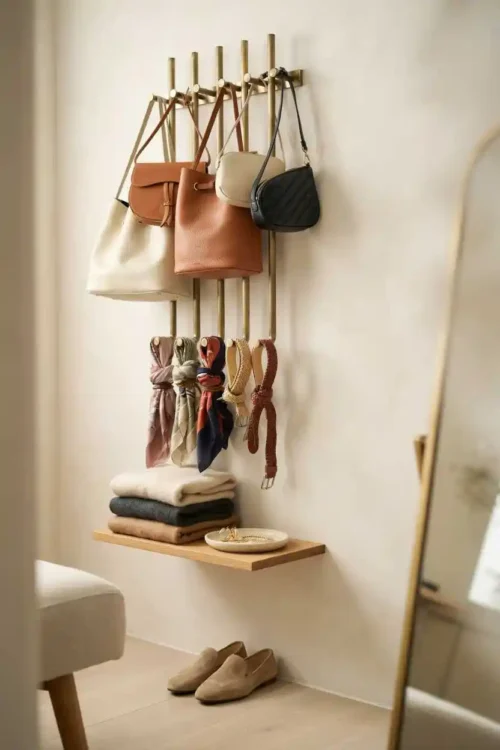
Belts hang loosely on hangers taking up rod space, scarves drape over other items creating visual mess, and bags sit in corners wasting room. Adhesive hooks or small mounted hooks on wall space hold these items without eating into your shelf or rod capacity.
Every hook serves one purpose and items hang visible and protected from getting crushed or wrinkled. Empty wall real estate becomes organized storage instead of blank space where nothing functional happens.
Most small closets waste entire wall surfaces that could hold regular-use items without any installation difficulty.
Slim Rolling Cart for Flexible Overflow Storage
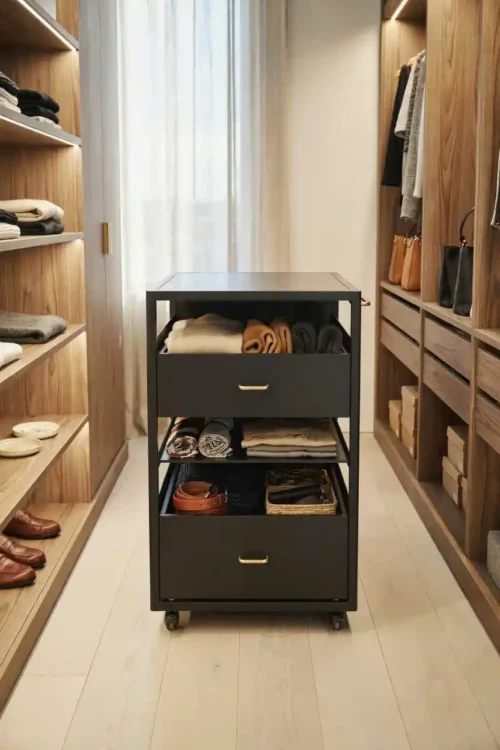
Seasonal items or overflow pieces have nowhere to go when shelves fill up during wardrobe transitions. A slim rolling cart with drawers slides into corner gaps and holds folded items in shallow spaces without taking permanent floor real estate or blocking movement.
It tucks away or moves to the side during off-seasons when you need that corner space back for daily access. Mobility lets you adjust storage as your wardrobe shifts throughout the year without rigid fixed systems.
Small closets need flexible storage that moves instead of permanent structures that trap space and limit options.
Hanging Organizer on the Back Wall Replaces Floor Shoes
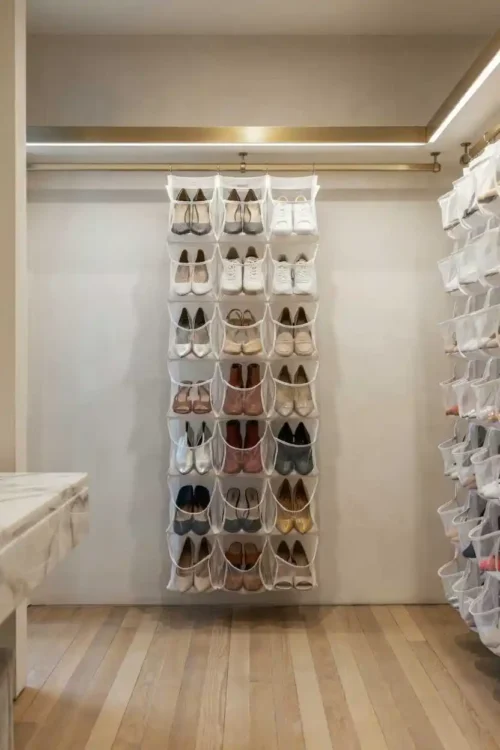
Shoes line the entire closet floor and block your walkway every single day while creating visual clutter. A 24-pocket hanging shoe organizer mounts on the back wall and holds shoes in neat rows at eye level where you find exactly what you need.
You see every shoe without bending down and searching through piles or moving things around. The entire floor opens up and suddenly the closet feels twice as big and much more functional for movement.
This single change transforms how small and cramped the closet actually feels when you reclaim floor space.
Shelf Dividers Keep Stacks Standing Upright
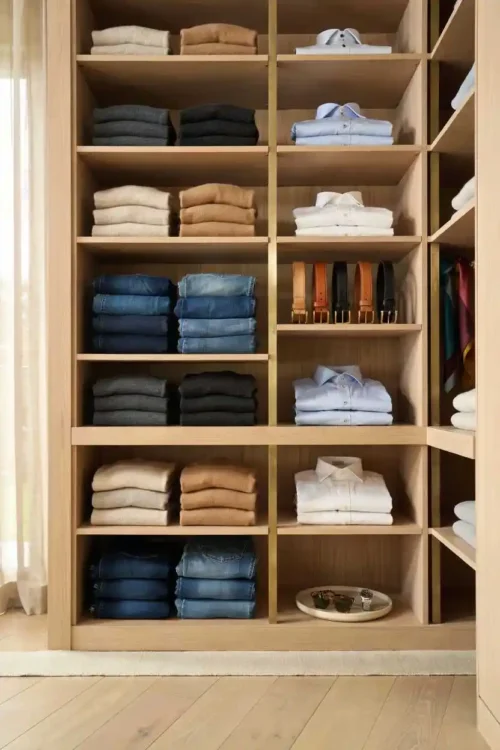
Folded stacks lean and collapse when pressed together without boundaries because nothing stops them from tipping sideways. Wooden shelf dividers create individual compartments so each stack stands upright independently without toppling or cascading.
Everything stays separated and visible when you grab one item without triggering a chain reaction of falling clothes. Stacks won’t cascade sideways and create a domino pile that destroys your organized system instantly.
Dividers prevent the daily collapse problem that makes organized systems feel like they never work properly.
Heavy-Duty Ceiling Hooks Hold Seasonal Bags
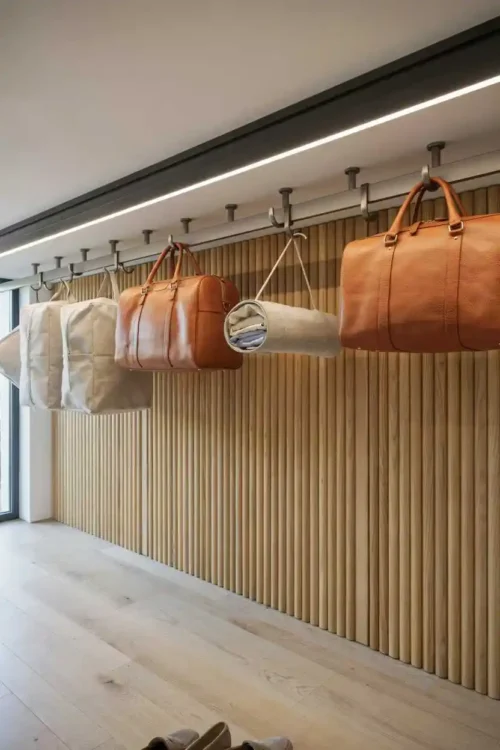
Large luggage and seasonal bags sit on closet floors and consume massive square footage you desperately need for daily items. Heavy-duty ceiling hooks installed in studs hold bags above head height where you see them clearly without taking floor space or blocking access.
Bags stay accessible for trips without blocking your daily walkway or preventing you from moving around freely. The floor opens up completely and the space feels dramatically larger and more functional for everyday use.
Small closets gain invisible storage capacity in the most overlooked spot without any visible clutter.
Matching Hangers Create Instant Visual Calm
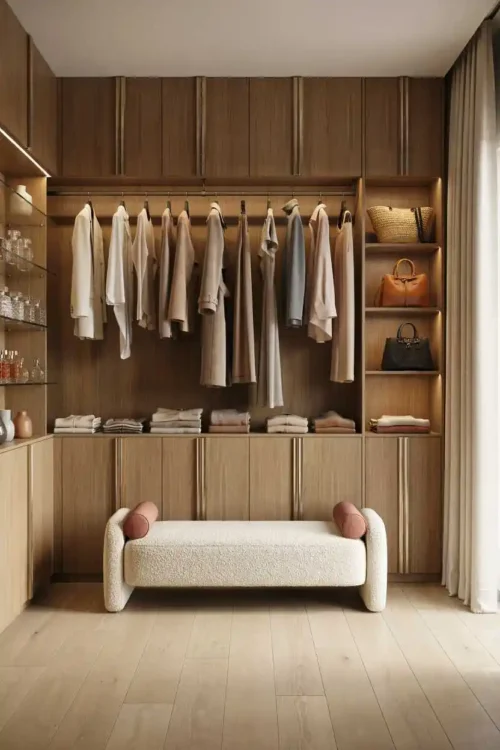
Mismatched hangers in black, white, wood, and plastic colors make the closet feel chaotic even when everything’s folded perfectly and organized well. One hanger type—whether slim velvet or wooden—creates visual simplicity and makes the entire space feel larger and more organized.
Your eye rests instead of jumping between clutter and visual noise that fragments your attention. The closet reads as organized and intentional even when packed with items because the hangers create visual order.
This detail sounds small but shifts how organized a small space actually feels to your brain and perception.
Final Thoughts on Walk-In Closet Organization
Small walk-in closets work when every surface earns its purpose and nothing sits unused or wasted. The goal isn’t adding more storage—it’s using what you have strategically and removing visual noise that makes spaces feel cramped and overwhelming.
Most people reorganize these spaces twice because the first system didn’t match their actual daily routine or how they naturally use items. Think about what you reach for every week, not what sounds organized on paper or looks good in magazine photos.
FAQ About Walk-In Closet Organization
What’s the fastest way to organize a small walk-in closet?
Start with the door and one wall. Add a shoe organizer to the door, install a second rod for hanging, and add one narrow shelving unit along the side. These three moves create more usable space than everything else combined and take a weekend to implement without professional help.
How do I keep a small walk-in closet from feeling cluttered visually?
Use vertical storage instead of floor storage, keep items in matching containers, and hang everything that fits on a hanger. Closed storage bins hide visual clutter while clear bins let you see what’s inside without opening them constantly. Matching hangers also create instant visual simplicity.
Should I fold or hang most of my clothes in a small walk-in closet?
Hang what you wear regularly and fold seasonal or rarely worn items. Hanging takes more space but keeps things visible and accessible for daily decisions. Folding saves space but makes items harder to find and easier to forget about, so reserve it for off-season storage only.
Sarah Mitchell’s Take
I reorganized the same small walk-in closet three times before the second rod idea finally clicked and made everything work seamlessly. Once I stopped fighting the space and worked with the actual closet dimensions instead of trying to force in bigger storage systems, the whole thing stuck and stayed organized for years.