
Introduction
Creating a functional creative area in limited square footage requires thoughtful planning, flexible furniture, and smart storage that keeps tools accessible without overwhelming the room. A well-planned Hobby Room Design Ideas for Small Spaces approach focuses on layout efficiency, layered storage solutions, and adaptable work zones so even compact rooms feel productive and inspiring. Whether you’re building a craft nook, shared office hobby room, or small art station, the goal is to keep everything organized while maintaining visual calm. Pairing vertical systems with intentional layouts — like those used in 21 Craft Room Ideas That Keep Creative Spaces Organized — helps small hobby rooms stay tidy, efficient, and enjoyable to use daily.
1- Create a Layout That Defines a Clear Work Zone
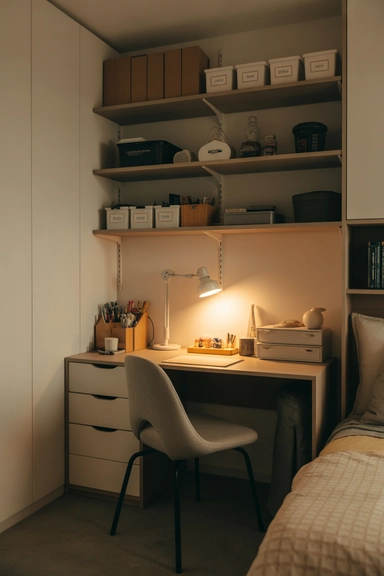
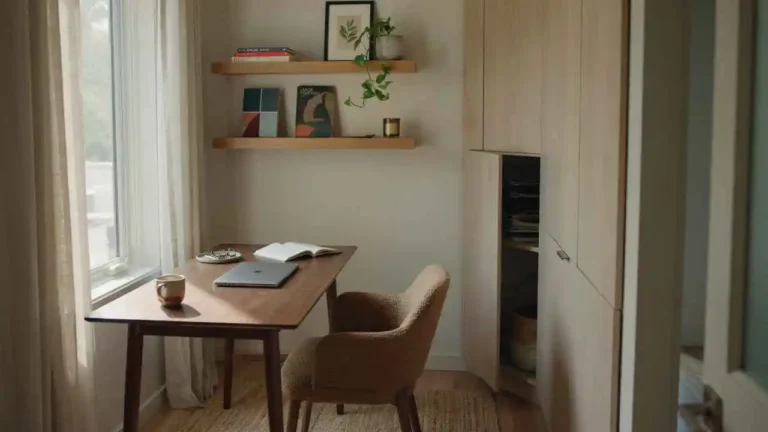
A compact room feels chaotic when supplies spread across multiple surfaces, so start by anchoring a defined workspace. In effective hobby room design ideas for small spaces, one clear desk zone supported by vertical shelving keeps projects contained and prevents tools from drifting into other areas. Position your main surface where natural light reaches it and surround it with reachable storage so everything needed for crafting, painting, or sewing stays within arm’s reach.
Layering the zone with wall storage or a small rug visually separates it from the rest of the room. This makes even a shared office hobby room feel intentional rather than temporary. When the layout directs movement and storage toward a single focal point, the space becomes easier to maintain and far more enjoyable to use regularly. A defined work zone also supports long-term hobby room organization without constant rearranging.
2- Use Vertical Storage to Expand a Small Creative Space
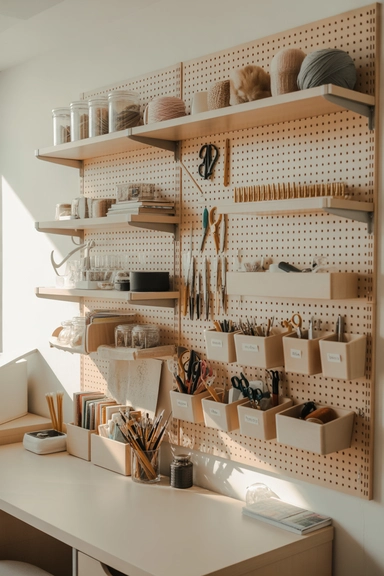
Floor space is limited, but vertical space often goes unused. Installing pegboards, rail systems, or slim shelving instantly improves craft room ideas for small spaces by lifting supplies off the desk and into accessible sightlines. This keeps work surfaces clear while ensuring tools remain easy to grab. In compact creative space layouts, vertical storage prevents clutter from building while still keeping materials visible.
To maintain visual calm, group tools by function and store them in coordinated containers. Consistent finishes help shelving feel cohesive instead of chaotic. Vertical systems also adapt easily as projects evolve, making them one of the most flexible studio organization ideas for small rooms. By using height instead of floor space, the room feels larger and more structured without adding bulky furniture.
3- Choose Furniture That Serves More Than One Purpose
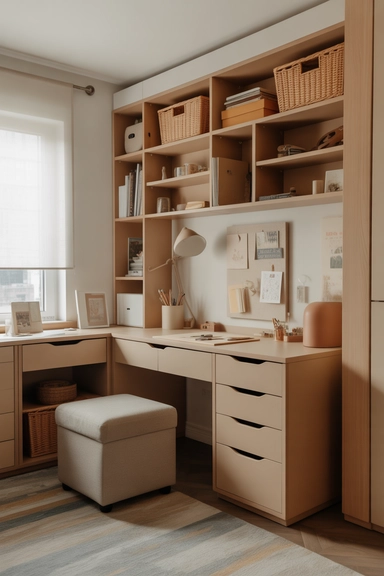
Multi-functional furniture is essential when planning hobby room design ideas for small spaces. Desks with built-in drawers, benches with hidden compartments, or storage ottomans keep materials contained without increasing clutter. In shared rooms, this allows the hobby area to coexist with daily living without overwhelming the layout. A compact desk paired with integrated storage can replace multiple standalone units.
Flexible furniture also helps the room evolve over time. A rolling cabinet can store supplies during projects and tuck away afterward, while a foldable table expands when needed. This adaptability keeps small hobby room ideas practical for changing projects and routines. When each piece of furniture performs multiple roles, the space stays efficient and visually balanced.
4- Organize Supplies by Category for Faster Workflow
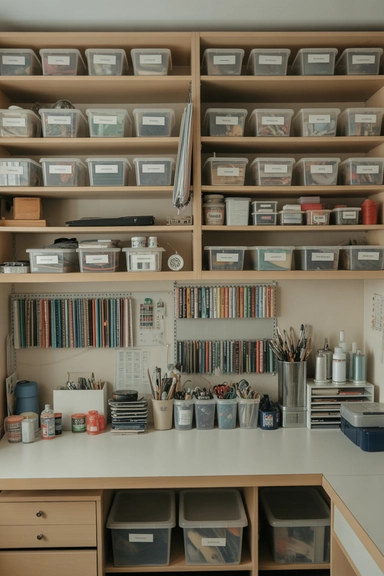
A well-planned craft workstation ideas home setup groups materials by category rather than storing them wherever space allows. Keeping painting tools, paper supplies, or sewing items together reduces search time and keeps projects moving smoothly. This approach is especially useful in compact rooms where scattered storage quickly leads to clutter.
Clear containers, drawer dividers, and labeled bins help maintain this system over time. When everything has a defined home, cleanup becomes faster and daily use feels easier. Category-based organization also supports long-term art and craft organization ideas by preventing overflow into unrelated areas. A structured system makes the room feel calmer and more efficient without requiring constant reorganization.
5- Add Mobile Storage That Moves With Projects
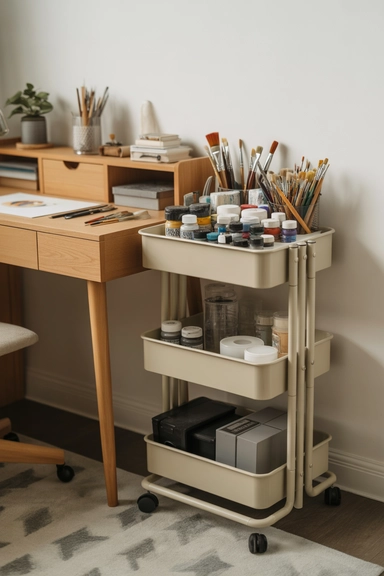
Portable storage can dramatically improve hobby room ideas for small spaces by adding flexibility. A rolling cart or stackable bins allow tools to move closer during active work and slide away afterward. This keeps the main desk clear while still providing quick access to materials. Mobile units are particularly helpful in shared office hobby room setups where space needs to shift between tasks.
Assign each tier or bin a specific purpose so items stay organized as they move. Consistent containers keep the room visually tidy even when storage shifts position. Mobile systems ensure the layout adapts to different projects without requiring a full reorganization. This flexibility keeps the small hobby room functional and comfortable for daily use.
6- Keep Storage Visible but Visually Calm
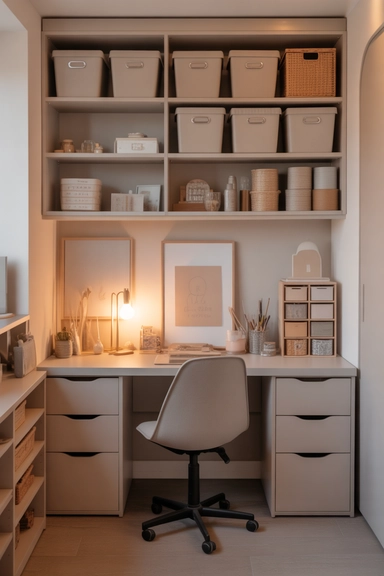
Visible storage helps maintain efficiency, but too much visual noise can overwhelm a compact room. Balancing open shelving with coordinated bins creates a calmer environment. In thoughtful hobby room designs for small spaces, visible tools should feel organized rather than chaotic. Matching containers, neutral tones, and clear labels keep storage accessible without adding distraction.
Limiting the number of colors and materials also helps the space feel cohesive. When storage blends with the overall design, the room looks intentional rather than crowded. This approach supports both productivity and relaxation, making the creative area more inviting for longer sessions. Maintaining visual calm ensures the room remains inspiring without feeling cluttered.
7- Design a Compact Craft Nook That Uses Awkward Corners
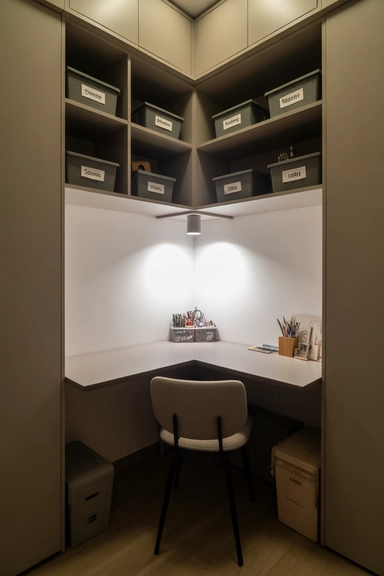
Corners often become wasted space, but in smart hobby room design small spaces, they can transform into efficient work zones. A triangular desk or slim shelving unit can turn an unused corner into a productive craft nook ideas setup without blocking movement through the room. Keeping supplies contained within one corner prevents them from spreading across other surfaces and helps maintain a cleaner overall layout.
Add vertical bins, narrow shelves, or wall hooks above the desk so tools remain accessible without crowding the work surface. This layered storage keeps the corner functional while still feeling visually balanced. A well-planned nook ensures the creative space feels intentional and comfortable rather than improvised. Using corners strategically allows even the smallest rooms to support regular crafting without feeling cramped.
8- Layer Art Desk Storage for Easy Access
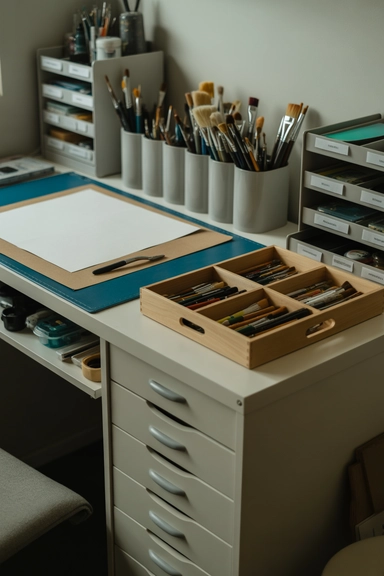
A cluttered desk can slow down any project, so effective art desk storage is key to maintaining flow. Combining drawer dividers, desktop organizers, and vertical shelving ensures tools stay organized without taking over the work surface. In compact rooms, layered storage lets you keep frequently used items close while storing extras out of sight. This keeps the desk clear enough for active projects while still holding everything needed.
Use shallow trays for daily tools and deeper drawers for backup supplies. Grouping materials by function prevents clutter from building over time. When the desk area stays organized, the entire small hobby room feels calmer and easier to maintain. Thoughtful storage around the desk supports faster setup and cleanup, making the room more enjoyable to use consistently.
9- Use Studio Organization Ideas to Manage Supplies
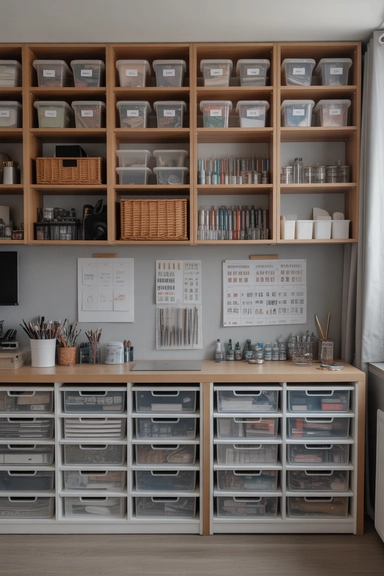
Adapting studio organization ideas to smaller spaces can dramatically improve efficiency. Artists and makers often rely on categorized storage and clear labeling to keep projects running smoothly. Applying the same system in a compact room helps maintain order without adding bulk. Clear bins, labeled drawers, and dedicated zones ensure supplies remain easy to find.
Keeping similar materials together also prevents duplication and unnecessary clutter. This approach supports long-term hobby room organization while keeping the room visually calm. Studio-inspired systems work well because they prioritize workflow and accessibility. Even in limited square footage, these strategies help maintain a professional and productive environment.
10- Blend Office and Craft Zones Without Clutter
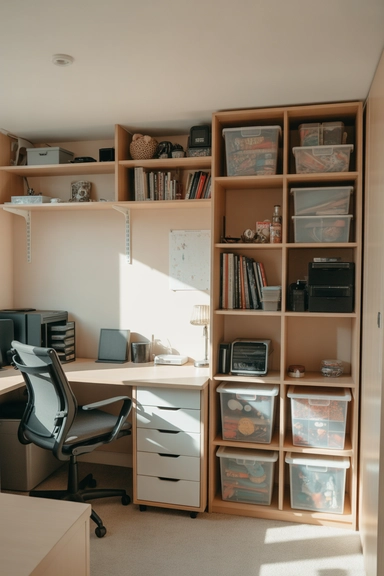
Many homes require a shared office hobby room, which can feel challenging in a small layout. The key is separating functions visually rather than physically. Using trays, containers, or shelving to distinguish work materials from hobby supplies keeps both areas organized without requiring extra space. A single desk can serve multiple purposes when storage is clearly defined.
Keeping daily office items in drawers and creative supplies in nearby bins prevents overlap. This allows the room to transition smoothly between tasks without feeling crowded. A balanced layout ensures both functions remain practical and comfortable. Blending zones carefully keeps the room efficient while maintaining a calm and cohesive design.
11- Choose Storage Solutions That Fit the Room Scale
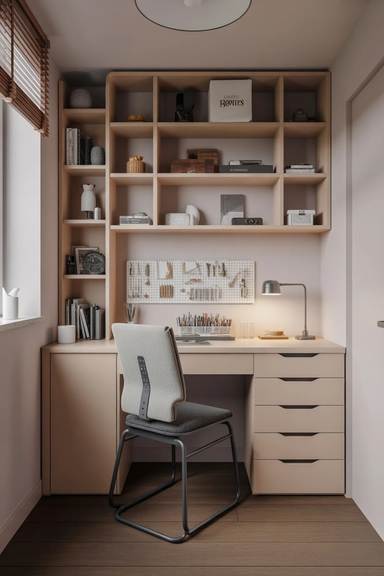
Oversized storage can overwhelm a compact room even if it holds more supplies. Selecting scaled-down storage solutions ensures the space stays balanced and usable. Slim cabinets, stackable drawers, and narrow shelving units provide enough capacity without blocking movement. Choosing storage that matches the room’s size helps maintain openness while still supporting organization.
Using vertical height instead of floor area also keeps the room feeling larger. Matching containers and finishes create visual consistency, which helps reduce clutter perception. Well-proportioned storage keeps the small hobby room ideas functional without making the space feel crowded or heavy. Thoughtful scale ensures the layout remains comfortable over time.
12- Add Color and Texture Without Creating Visual Clutter
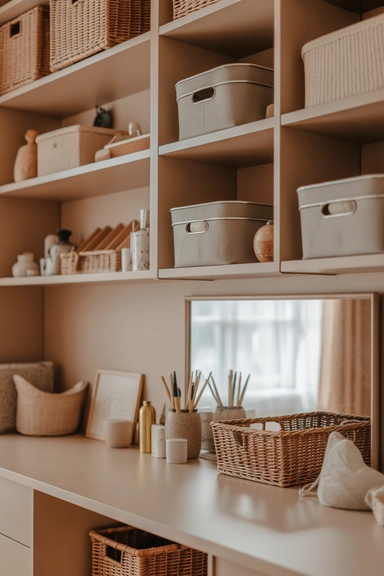
A creative room should feel inspiring, but too many colors or patterns can make a small space feel chaotic. Incorporating controlled color through bins, artwork, or tools adds personality while maintaining order. In balanced hobby room design small spaces, color works best when it’s intentional and repeated across the room.
Use a consistent palette for containers and furniture, then add small accents through tools or decor. This keeps the room visually calm while still reflecting personal style. A balanced mix of texture and color makes the space inviting without overwhelming the layout. Maintaining this harmony ensures the room stays motivating and comfortable for regular creative sessions.
13- Install Over-Desk Shelving to Multiply Storage Without Crowding
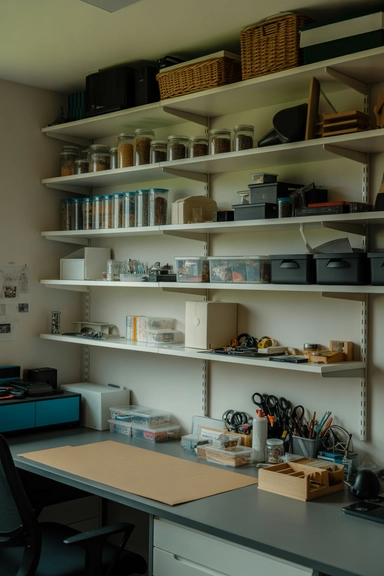
Adding shelving above the work surface is one of the most effective moves in thoughtful hobby room design small spaces. Instead of expanding outward, storage moves upward, keeping the desk clear for actual projects. Slim floating shelves or rail systems allow tools, jars, and small containers to stay visible without occupying valuable tabletop space. This keeps the workflow smooth and prevents clutter from piling up where you need to work.
Use matching bins and labeled containers so the shelving looks organized rather than busy. Keeping frequently used items on the lowest shelf ensures easy access while heavier or seasonal supplies stay higher. This layered system helps a creative space feel structured and intentional. Over-desk shelving also adapts as projects change, making it one of the most flexible studio organization ideas for compact rooms.
14- Use Labeled Containers to Maintain Order Long-Term
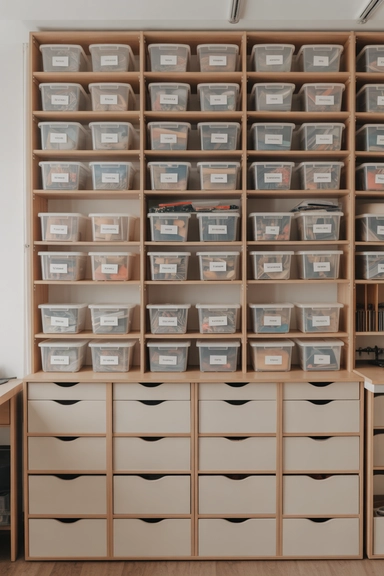
Organization systems only work if they stay consistent over time. In a compact setup, labeled containers keep everything returning to its proper place after each session. This is especially helpful in craft room ideas for small spaces where multiple supplies share limited storage. Clear labels reduce the need to search through bins and make cleanup much faster.
Choose uniform containers so the room maintains a cohesive look even when storage is visible. Grouping materials by category also helps prevent overflow into unrelated areas. A simple labeling system keeps the small hobby room functional and reduces visual clutter. Over time, this structure supports smoother projects and keeps the room ready to use without constant reorganizing.
15- Incorporate Hidden Storage to Reduce Visual Noise
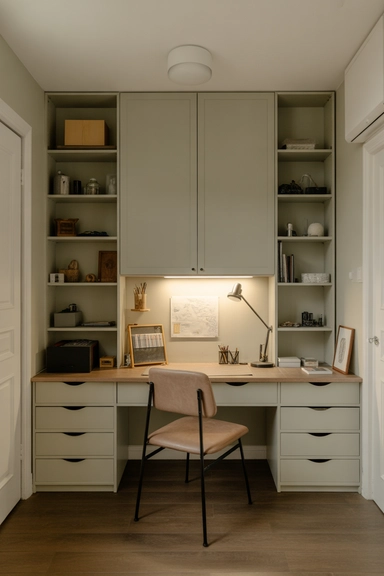
Open storage is practical, but too much of it can overwhelm a small room. Adding hidden storage like cabinets, drawers, or covered bins keeps supplies accessible while maintaining visual calm. In balanced hobby room design small spaces, mixing visible and concealed storage helps the room feel tidy without sacrificing function.
Use hidden compartments for bulk supplies or items that don’t need daily access. This keeps surfaces clear and reduces distractions. When storage is layered thoughtfully, the room feels more spacious and easier to maintain. Hidden storage also allows the office hobby room to transition back to a regular workspace quickly when needed.
16- Build a Flexible Workstation That Adapts to Projects
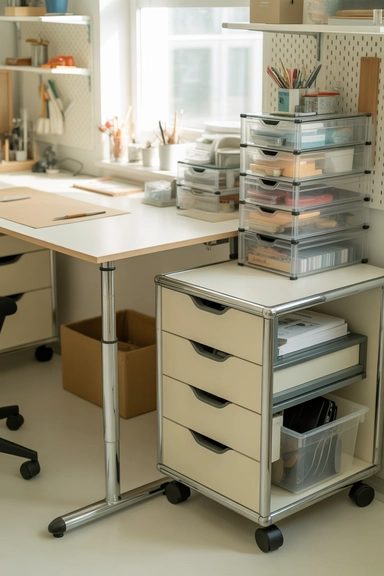
Different hobbies require different tools, so a flexible workstation keeps the room adaptable. Adjustable shelves, movable trays, and modular organizers allow the workspace to shift as projects change. This is especially useful in small hobby room ideas where one area must support multiple activities. Flexibility prevents the need for constant rearranging.
Keeping the workstation modular ensures supplies stay organized even as your interests evolve. Rolling carts or stackable drawers can move closer when needed and tuck away afterward. A flexible setup keeps the room efficient without feeling rigid. Over time, this adaptability makes the creative space easier to maintain and more enjoyable to use.
17- Use Wall Hooks and Rails for Frequently Used Tools
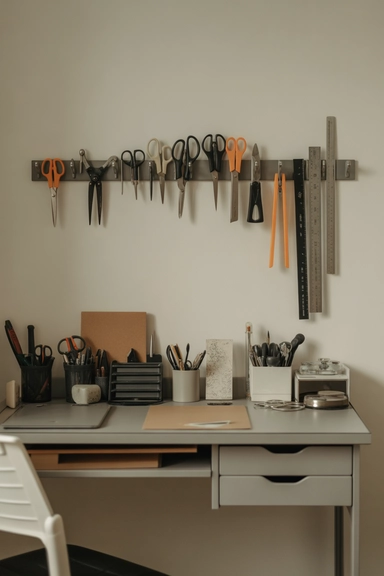
Hooks and rail systems are simple yet powerful additions to compact rooms. They keep tools visible, accessible, and off the desk. In practical craft workstation ideas home, hanging frequently used items prevents them from cluttering drawers while still keeping them within reach. This works especially well for scissors, rulers, or measuring tools.
Spacing hooks evenly and limiting visual clutter helps maintain a balanced look. Using matching finishes also keeps the wall from feeling chaotic. A small rail system can dramatically improve workflow while keeping the room tidy. This approach ensures daily tools remain accessible without taking over valuable storage space.
18- Create a Calm Color Palette That Supports Focus
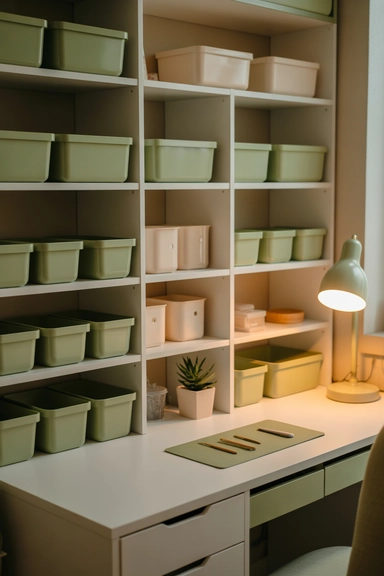
Color affects how a small room feels. Too many contrasting tones can make a compact space feel cluttered even when organized. Choosing a consistent palette for bins, furniture, and decor helps the room feel cohesive. In a well-planned hobby room design small spaces, calm colors support concentration and reduce visual stress.
Use neutral storage containers and add personality through tools or artwork instead of large decor pieces. This keeps the room visually light while still reflecting personal style. A calm palette helps the space feel larger and more comfortable for longer sessions. Maintaining this balance ensures the room remains inspiring without feeling overwhelming.
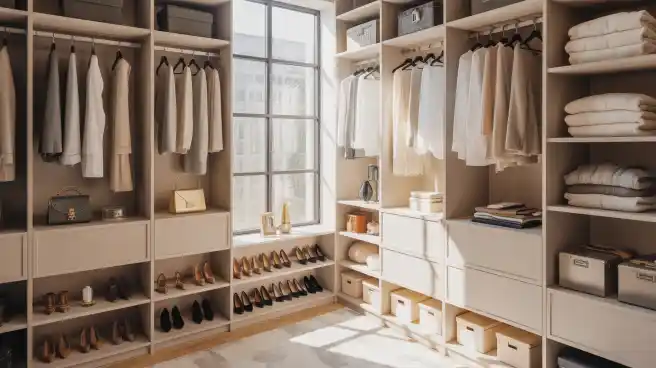
19- Turn a Closet Into a Fully Functional Hobby Station
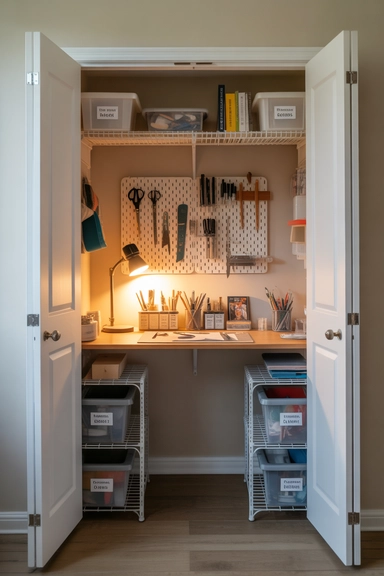
In compact homes, closets often hold untapped potential. Instead of treating them as passive storage, they can become highly efficient work zones when planned with intention. A converted closet allows you to centralize tools, materials, and workspace inside a defined boundary so the rest of the room stays visually calm. This is one of the most practical solutions in thoughtful hobby room design small spaces, especially when the main room must stay tidy for everyday living.
Install adjustable shelving, a narrow desk surface, and layered lighting so the space functions like a miniature studio. Vertical bins and labeled drawers prevent clutter from building while keeping materials easy to access. When doors close, the room instantly returns to a clean state, which is ideal for shared spaces or multi-use rooms. A closet-based system allows a dedicated creative space to exist without requiring an entire spare room, making it one of the most efficient layout strategies for small homes.
20- Use Zoned Storage to Separate Project Types
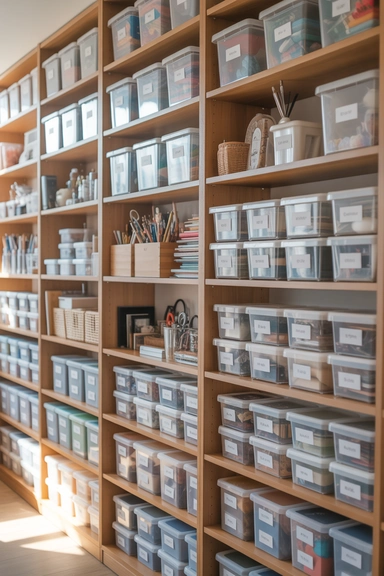
When multiple hobbies share one room, storage must prevent overlap. Zoning supplies by project type helps maintain order and reduces setup time. For example, storing sewing tools separately from painting materials keeps each workflow streamlined. This approach supports long-term hobby room organization because every category has a consistent home rather than shifting across shelves and drawers.
Use labeled bins, drawer dividers, and color-coded containers to reinforce these zones visually. Keeping categories separated also prevents duplicate purchases and makes inventory easier to track. Over time, zoned storage keeps the room efficient even as supplies grow. This structure supports a more professional and productive environment while maintaining visual calm in a compact office hobby room or shared creative area.
21- Design a Lighting Plan That Supports Precision Work
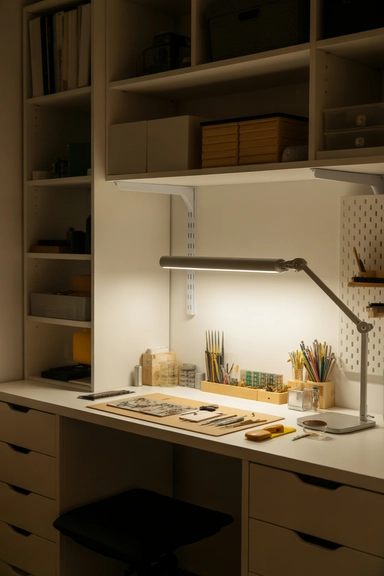
Lighting is often treated as an afterthought, but it directly affects productivity in a creative environment. A layered lighting plan ensures the workspace remains functional at any time of day. Overhead lighting provides general visibility, while adjustable task lights focus on detailed work like cutting, painting, or assembling. In compact rooms, wall-mounted or clamp lighting prevents bulky lamps from crowding the desk.
Position lighting to reduce shadows across the main work surface and avoid glare on materials. A consistent lighting setup improves accuracy and reduces strain during longer sessions. In well-planned hobby room design small spaces, lighting should support both function and comfort. Proper illumination also enhances the room’s overall atmosphere, making it more inviting and easier to use regularly.
22- Keep the Room Flexible for Changing Projects
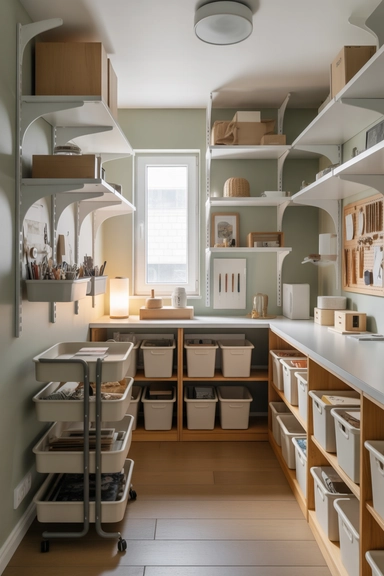
Creative interests evolve, and a rigid setup can quickly become inefficient. Designing flexible storage and movable furniture allows the room to adapt without requiring a full redesign. Rolling carts, stackable bins, and adjustable shelving make it easier to shift layouts as projects change. This flexibility is essential in small hobby room ideas where one area must support multiple activities.
Keeping the layout adaptable prevents clutter from building when new materials enter the space. It also ensures the room remains enjoyable rather than frustrating to use. A flexible system allows supplies to move closer during active work and tuck away afterward. Over time, this adaptability keeps the creative space functional and aligned with changing routines.
23- Maintain Visual Calm So the Space Stays Inviting
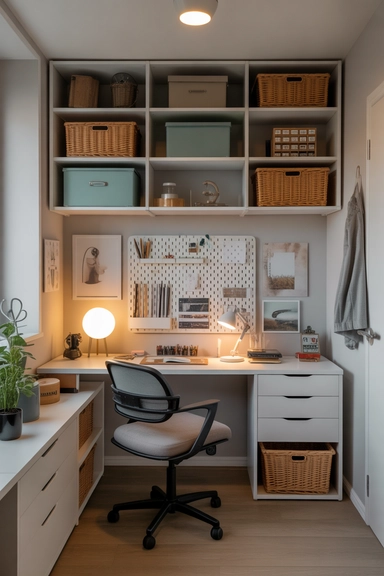
A small creative room must balance function with comfort. Too many visible supplies, colors, or mismatched containers can make the space feel chaotic even when organized. Maintaining visual calm through consistent containers, limited color palettes, and thoughtful spacing keeps the room inviting. This approach supports focus and reduces distraction during projects.
Choosing cohesive finishes and keeping surfaces clear helps the room feel larger and more intentional. When the environment feels calm, it becomes easier to spend time there regularly. A balanced visual approach ensures the room remains inspiring without feeling overwhelming. This final step helps all previous studio organization ideas work together to create a cohesive and enjoyable creative environment.
Conclusion
A well-planned hobby room design small spaces doesn’t depend on square footage as much as it depends on structure, flexibility, and intentional storage. By combining vertical organization, defined work zones, adaptable furniture, and clear supply systems, even the smallest room can support consistent creative work. The goal isn’t to fit everything into the space but to make every element work efficiently together. When layout, storage, and workflow align, the room becomes easier to maintain and far more enjoyable to use. A compact hobby room can feel just as functional and inspiring as a larger studio when every inch is used with purpose.